How Language Teachers Can Use AI to Create Personalized Speaking Practice for Every Student

Speaking practice is the part of language class that students need most and teachers have the least time to give individually. One instructor cannot run twenty simultaneous conversations at CEFR A2, B1, and B2. AI does not replace human judgment—but it can multiply speaking turns, personalize prompts, and surface the exact patterns each learner needs to rehearse before the next live lesson.
This guide shows language teachers how to use AI for personalized speaking practice without turning the classroom into a chatbot free-for-all. You will leave with classroom workflows, prompt patterns, feedback loops, and assessment ideas that keep teachers in charge of pedagogy while AI handles volume, variation, and overnight practice. The focus stays practical: what to assign Monday, how to review Tuesday, and how to make sure every student gets meaningful oral work in the target language.
Ready to Learn a Language?
Try PolyChat's engaging language lessons, interactive learning games and put your new vocabulary to the test!
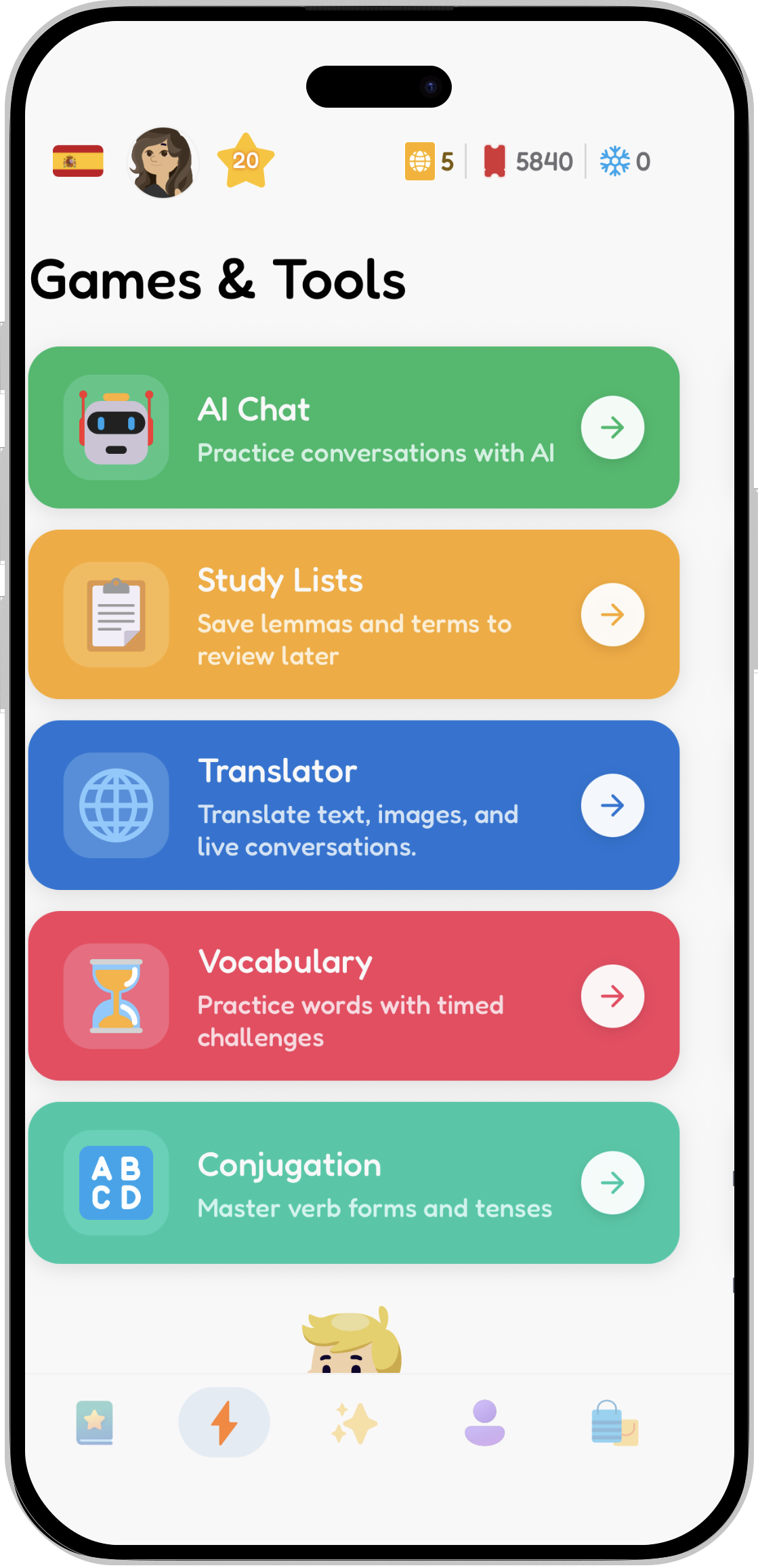
Games & Tools
Tools that every language learner needs at all stages of their learning journey.
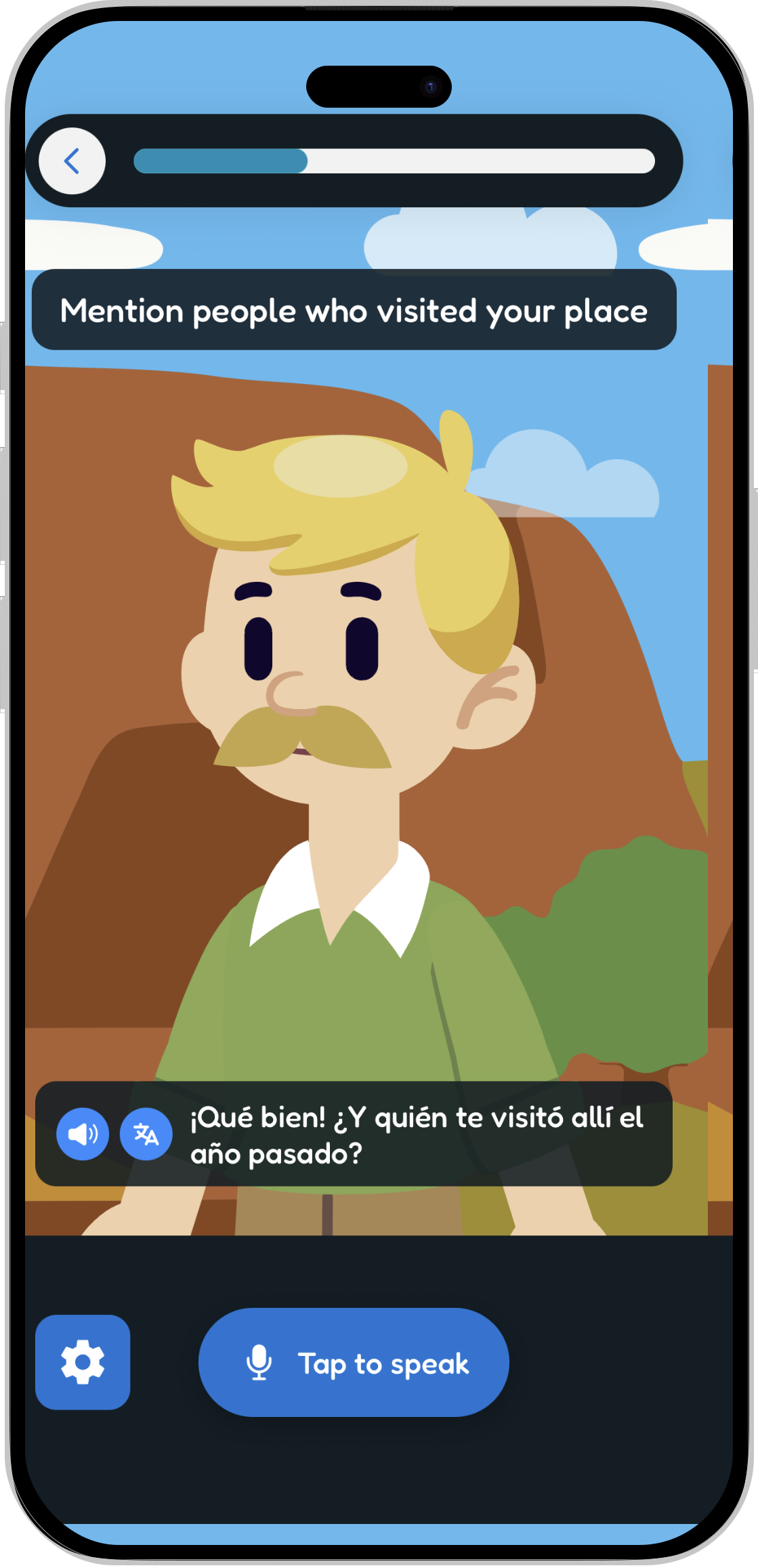
AI Chat Tutor
Practice real conversations with an AI tutor that helps you speak with confidence.
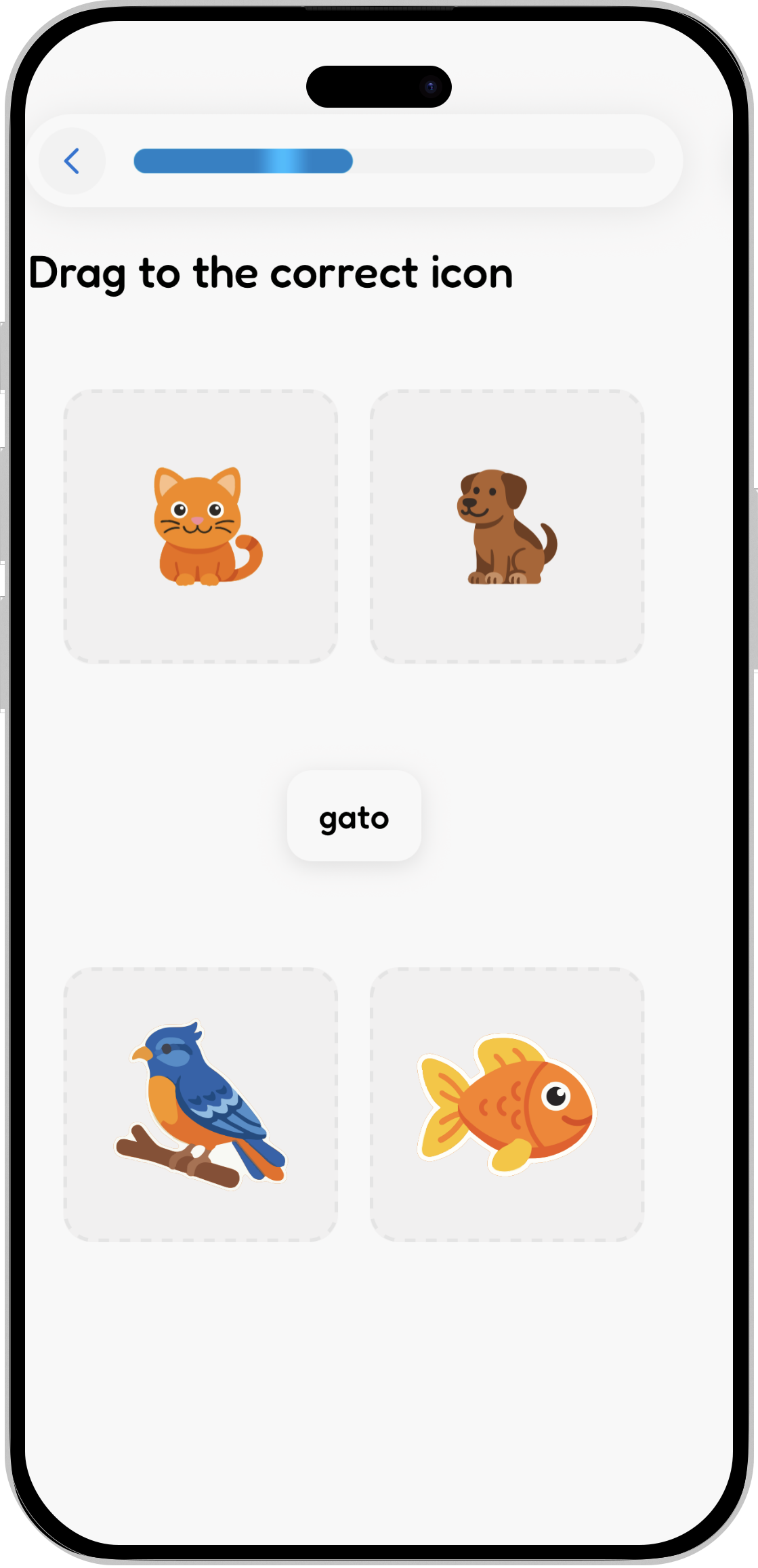
Interactive Games
A variety of games to help you learn and remember new words and phrases.


Why speaking practice breaks at scale
In a typical language period, pair work and group tasks create energy—but not equal access. Confident students dominate. Quiet learners recycle safe phrases. Mixed-ability rooms force teachers to aim at the middle, so advanced speakers plateau and beginners freeze.
Second language research is clear: fluency grows with pushed output—speaking under light pressure, with feedback, in situations that recycle target structures. Textbooks give dialogues; they rarely adapt to this student’s gaps. That is where AI becomes useful for language teachers: not as a permanent substitute interlocutor, but as a tireless practice partner constrained by your syllabus.
When you design the goals and AI supplies the turns, every student can rehearse the same communicative outcome at a different difficulty. That is personalized speaking practice without writing thirty separate scripts by hand—and without abandoning the craft of language teaching.
What “personalized” should mean in a language classroom
Personalization is not random chat. For language teachers, useful AI practice means adjusting at least four dimensions:
- Level — A1 survival talk vs B2 argumentation
- Topic — unit themes, student interests, local context
- Target forms — past tense, subjunctive, discourse markers
- Support — scaffolds, hints, word banks, or zero help
AI can vary all four on demand. Teachers still decide which dimensions matter this week. Without that framing, students wander into fluent but off-syllabus speech, and speaking practice stops serving the language course.
A practical rule: every speaking task powered by AI should name a communicative goal (“order food and handle a missing item”), a language focus (“polite requests + past tense complaints”), and a success check teachers can hear in class the next day. Personalization without a goal is just noise with a microphone.
A classroom model: AI for rehearsal, teachers for performance
Think of AI as the rehearsal studio and teachers as the stage directors. Overnight or in a quiet lab block, students speak with an automated partner. In the next live session, you hear polished performances, diagnose residual errors, and coach pragmatics that models still miss—tone, cultural nuance, turn-taking.
This division of labor solves the scarcity problem. Class minutes stop disappearing on first attempts of basic dialogues. Students arrive having already “failed safely,” so live time becomes higher-value language coaching.
| Phase | Who leads | Goal |
|---|---|---|
| Brief | Teachers | Assign goal, language targets, time box |
| Rehearse | AI + student | High-volume speaking turns |
| Review | Student | Save transcript / note 3 weak spots |
| Perform | Class + teachers | Live speaking, peer feedback |
| Recycle | AI + student | Personalized drills on error patterns |
Used this way, AI increases speaking minutes without reducing the professional role of teachers. The human expert still owns outcomes; the system owns repetition in the target language.
Five speaking formats you can deploy this week
1. Role-play with locked outcomes
Ask AI to play a specific role (hotel clerk, patient, hiring manager) and refuse to jump ahead helpfully. Students must negotiate meaning. Teachers set the ending condition: “You cannot end until you book a room and confirm breakfast.” That constraint keeps the language purposeful and measurable.
2. Spiral interviews
AI asks questions that gradually introduce the week’s grammar. Beginners get short prompts; stronger students get follow-ups that demand elaboration. Paste a short learner profile (“A2, strong listening, weak past tense”) so difficulty personalizes automatically. AI shines here because it never tires of follow-up questions that stretch language output.
3. Error-targeted repair loops
After a live speaking quiz, teachers collect recurring mistakes. Feed three patterns into an AI prompt (“ser/estar confusion,” “missing articles,” “flat intonation on questions”). Students then complete a five-minute repair dialogue. This is personalized language practice grounded in real class data—not generic content from an unrelated course.
4. Pronunciation micro-drills
Many AI tools score pronunciation or at least force oral production. Teachers can assign ten high-frequency phrases from the unit and require two clean recordings before students unlock freer conversation. Pairing form drills with meaning keeps language learning from becoming only chat.
5. Differentiated prompts from one stem
One stem, many versions: “Discuss weekend plans.” Use AI to generate A2, B1, and B2 rewrites with different lexical loads. Assign tracks by group without reinventing the lesson. Differentiation stops being unpaid weekend work for teachers—and every track still targets the same communicative language outcome.
Prompt patterns that keep practice on syllabus
Vague prompts produce vague speech. Strong prompts look like mini lesson plans:
You are a polite café worker. Stay in character. Student level: A2 Spanish. Goal: order two drinks and ask for the bill. Force the student to use quisiera and me puede traer. If they switch to English, reply once in Spanish and wait. End only when the bill is requested. After the chat, list three language improvements in simple Spanish.
Notice what you control: role, level, target forms, interaction rules, and post-task feedback. AI supplies the turns. That is the correct power balance for teachers.
Another pattern for mixed classes:
Adapt difficulty turn by turn. If the student answers in full sentences, raise complexity. If they stall twice, offer a two-word hint, not a full sentence. Keep topic: school cafeteria food. Target language: comparisons (más… que).
Save a small library of these prompts—by unit—and you build a reusable speaking curriculum faster than writing new worksheets. Over a semester, that library becomes departmental capital other language teachers can share when they teach the same language course.
Personalizing for every student without drowning in prep
True personalization does not require unique content for thirty names. It requires a few smart inputs a model can expand:
- Placement snapshot — CEFR band or recent speaking rubric score
- Interest tag — sports, gaming, cooking, jobs
- Error tags — three recurring issues from your notes
- Time budget — five minutes vs twenty
With those fields, AI can generate a speaking card per student in seconds. You skim for appropriateness (age, culture, school policy) and approve. Reviewing is faster than authoring from scratch—and still respects professional judgment about language level and topic fit.
This is also where custom lessons matter. If your class is studying restaurant complaints, local festivals, or workplace small talk, you should be able to build practice around that topic—not wait for a generic course pack to catch up. Platforms that let teachers generate conversations and exercises on any theme turn personalization from a weekend project into a five-minute setup.
For large sections, batch by band: one A2 pack, one B1 pack, one B2 pack, then swap topics using interest tags. Students still feel “this was for me,” while you manage three streams instead of thirty. That is how personalized language practice becomes sustainable for busy teachers who teach multiple language levels in one day.
Building a weekly speaking rhythm
Consistency beats novelty. A reliable weekly rhythm for a secondary or tertiary language course might look like this:
Monday — Launch. Introduce the communicative goal and model one exchange live. Show students the AI prompt they will use, including the locked ending condition and the language forms to prioritize.
Tuesday–Wednesday — Rehearse. Students complete one or two short speaking sessions with AI (8–12 minutes). Require a brief reflection: which language form felt hardest?
Thursday — Transfer. Live partner speaking with the same goal, no screen. Circulate, note patterns, coach strategy the way teachers always have—listening for meaning first.
Friday — Recycle. Short repair task based on Thursday’s errors, optionally regenerated with AI. Celebrate one class-wide language win so motivation stays high.
This cadence makes AI a predictable part of the ecosystem rather than a gimmick. Students know when human performance matters most—and teachers know when to collect evidence of language growth.
Feedback: where automation helps and where humans must step in
Automated partners are strong at spotting missing verbs, agreement errors, and incomplete answers. They are weaker at judging local politeness, humor, or strategic smartness in a second language. Treat AI feedback as a first pass.
A durable workflow:
- Student completes the speaking task with AI.
- The system returns three suggestions about the language used.
- Student rewrites or re-says one response.
- In class, sample two transcripts and coach discourse, not only grammar.
This keeps human language expertise visible. Students learn that AI is a practice tool, not the final authority on communication. When you disagree with machine feedback, say so openly. That models critical digital literacy—an essential skill for modern language learners.
Cap corrections at three per turn. Over-correction kills willingness to speak, whether the feedback comes from AI or from teachers.
Assessment that rewards growth, not chatbot luck
If grades only reward polished final performances, students may over-rely on AI scripts. Design assessment so you measure process and transfer in the target language:
- Process evidence — time-on-task, number of speaking turns, revision notes
- Transfer task — same communicative goal with a human partner, no screen
- Reflection — “Which language form did AI practice force you to reuse?”
Rubrics can score interaction strategies (clarifying, repairing, elaborating) as heavily as accuracy. That aligns with what good language programs already value—and prevents practice from turning into typed essays with a microphone.
Share the rubric before the first AI task so expectations are transparent. Students should know that human performance day carries more weight than chat history alone when language grades are assigned.
Equity, access, and classroom culture
Not every student has a quiet place or a strong device. Schedule some speaking practice inside school hours—lab, headphones cart, or stations—so personalization does not become a homework privilege.
Set norms early: no sharing private chats publicly; no using AI to complete graded live speaking; report weird or unsafe outputs immediately. Treat AI like any other lab resource with rules.
For younger learners or sensitive topics, keep prompts school-safe and prefer platforms with classroom admin controls. Personalized language work never outweighs safeguarding. When policies are unclear, ask leadership before assigning home use of AI for language homework.
A two-week starter plan
Week 1 — Foundations
Day 1: Demo one role-play with the class, then students try a short automated language version.
Day 2–3: Differentiated prompts by level; collect error tags from real language output.
Day 4: Live speaking circle using the same goals without screens.
Day 5: Reflect: what language improved? what still needs coaching?
Week 2 — Personalization
Assign interest-tagged tasks. Students complete two rehearsals. Midweek, run live performances. End with a transfer speaking quiz. Share one class-wide win and one next language target that teachers will recycle next week.
Two weeks is enough for students to see that automated practice feeds real conversation—and for you to refine prompts based on what actually happened. After that cycle, expand to a second unit without reinventing the model.
Tools and workflow tips without vendor lock-in
You do not need one perfect platform. What matters is your prompt library, your rubric, and your habit of transferring practice back to human interaction in the target language. Still, the right tools make that rhythm easier to sustain.
Custom lessons on any topic (PolyChat)
The biggest unlock for personalized speaking is the ability to create lessons around whatever your class actually needs this week. PolyChat lets teachers and learners generate custom lessons—conversations and exercises—on any topic: unit themes, student interests, exam scenarios, or local context. Students can rehearse high-volume speaking turns without hearts or energy caps, then bring that practice back to live class for transfer.
That fits the rehearsal model above: you lock the communicative goal and language focus; the custom lesson supplies the dialogue and drills; Thursday’s live performance stays human.
For schools, language programs, and workplace teams that need more than individual accounts—seat management, industry packs, custom curriculum from your own materials, and reporting—see PolyChat for Business. Admins can assign licenses, track engagement, and optionally commission practice built from training manuals, service scripts, or onboarding docs so speaking work sounds like your context, not a generic tourist dialogue.
Chatbots for guided speaking (Edcafe)
The other unlock for personalized speaking is putting teachers in control of the conversation partner itself. Edcafe lets language teachers build interactive chatbots shaped around specific instructions and grounded in their own lesson materials. Upload unit vocabulary, dialogues, or target structures to the chatbot's knowledge base so every speaking turn stays aligned with your syllabus.
Teachers select from voice actors so the chatbot speaks naturally to learners. For deeper practice, enable read-aloud responses and voice recording—students hear the bot, then reply with their own voice messages, which transcribe back as text.
Share via link, QR code, or LMS integration—no student accounts needed. On the teacher dashboard, review chat sessions in real time. Guardrails flag conversations that drift off-topic or raise concerns, so speaking practice stays purposeful, safe, and tied to the language outcomes you set.
Complementary teacher tools worth knowing
Speaking practice sits inside a wider prep stack. Many language teachers also use education-focused AI to build materials or differentiation before students open a speaking app:
- Twee — built specifically for language educators; paste a topic or text and generate CEFR-aligned readings, dialogues, exercises, and writing prompts you can share or print.
- MagicSchool — broader K–12 teacher suite for lesson planning, differentiation, rubrics, and communication—handy when speaking goals need supporting worksheets or leveled scaffolds.
Use those tools for prep and scaffolding; use a speaking-first app for rehearsal volume. Map whatever you choose to unit goals rather than chasing novelty. Consistency beats tool-hopping.
Document what worked in a shared folder so other teachers in your department can reuse prompts for the same language units. Institutional knowledge compounds faster than individual experimentation.
Common mistakes to avoid
- Unscoped chat — “Talk for 10 minutes” wastes time. Always lock a language goal.
- No transfer — If students never speak to humans afterward, fluency will not stick.
- Feedback overload — Five corrections per turn crush confidence. Cap notes at three.
- Ignoring level — Advanced English to A1 students creates panic, not language growth.
- Skipping review — Spot cultural or factual nonsense before it spreads.
- Grading only polish — Reward strategies and improvement, not perfect first drafts from a chatbot.
Avoid those pitfalls, and automated speaking becomes a reliable assistant for language growth rather than a classroom distraction.
Measuring whether the approach is working
After four to six weeks, look for simple signals: more students volunteering in live discussion; fewer one-word answers; clearer use of the week’s target forms; higher comfort on transfer tasks. Ask students which language goals felt fair and which prompts felt confusing.
If speaking confidence rises but accuracy stalls, add more form-focused micro-drills before free conversation. If accuracy rises but talk stays robotic, loosen scaffolds and require elaboration. Teachers who iterate on evidence—not on hype—get the best results from AI.
Keep a short log: date, prompt used, what went well, what to change. That log becomes your personal research project on speaking pedagogy in the age of AI. Share findings with other language teachers so the department improves together.
Coaching colleagues and building department capacity
One classroom success rarely scales until teachers share prompts, rubrics, and failure stories. Host a thirty-minute lunch demo: show one AI role-play, one transfer task, and one student reflection. Invite colleagues to adapt the same language goal for their level.
Department norms help. Agree that AI speaking homework always includes a human transfer step. Agree that teachers sample transcripts weekly. Agree that sensitive topics stay offline. Shared norms protect students and keep language programs coherent across sections.
New teachers benefit most from a starter kit: five prompts, one rubric, and a sample week plan. Experienced teachers can add advanced moves—debate modes, professional language registers, or exam-style oral cards generated by AI then edited by hand. Mentorship turns individual experiments into a sustainable language culture.
Administrators sometimes ask whether AI is “worth it.” Answer with speaking minutes gained, transfer-task quality, and teacher time saved on worksheet writing—not with novelty. When teachers frame AI as instructional design support for language outcomes, adoption stays grounded.
Frequently Asked Questions
Will AI replace language teachers?
No. AI scales practice; teachers design goals, interpret culture, motivate, and assess transfer. Personalized speaking works best when teachers remain the instructional leaders of the language classroom and use AI as a rehearsal engine.
How much speaking time should students get weekly with AI?
Start with two short sessions (8–12 minutes) plus one live transfer task. Gains come from consistent language turns, not marathon chats. Teachers can increase volume once quality routines exist and AI prompts stay on syllabus.
What if the tool gives wrong grammar advice?
Treat AI as fallible. Sample feedback weekly and correct myths in a mini-lesson. Teaching students to question AI is itself valuable literacy for language learners, and it reinforces that teachers are the final pedagogical authority.
Can beginners use AI for speaking?
Yes—if prompts are tightly scaffolded. A1 students need short turns, word banks, and clear end conditions. Teachers should demo first so beginners know what “good enough” sounds like in the target language before they try AI alone.
How do I personalize for 30 students without burning out?
Personalize by band and interest tag, not by writing unique scripts. Let AI expand templates; teachers approve and monitor. Batching is how sustainable personalization scales for language teachers who already carry full loads.
About the Author
Marc Bolh is Founding Partner at PolyChat, where he works on applied AI for language learning. He writes for teachers and learners about speaking practice, proficiency frameworks, and practical classroom technology that helps every student rehearse the language they need. Connect with Marc on LinkedIn.

Marc Bolh
Founding Partner
Applied AI

Interested in partnering with PolyChat? Click here.