10 Swedish Slang Words for Natural Conversation

You can read textbook Swedish, then freeze when a friend shifts into something casual, local, or emotionally loaded. That's normal. Swedish slang words are not all the same kind of language, some are everyday descriptors, some belong to social rituals, and some sit closer to youth speech or cultural vocabulary than to pure slang. The safest way to learn them is to match each word to its register, then practice it in a sentence that feels real.
This list keeps that in mind. Each entry gives you pronunciation, meaning, register notes, a common mistake, and a short practice task, so you can use the word instead of just recognizing it. If you want extra reinforcement, Polychat can help with unlimited lessons, games, conversation practice, and a personal dictionary, which makes it easier to keep new vocabulary active instead of passive. For a quick comparison of how slang learning can support another language, you can also speak naturally with Italian slang.
Ready to Learn a Language?
Try PolyChat's engaging language lessons, interactive learning games and put your new vocabulary to the test!
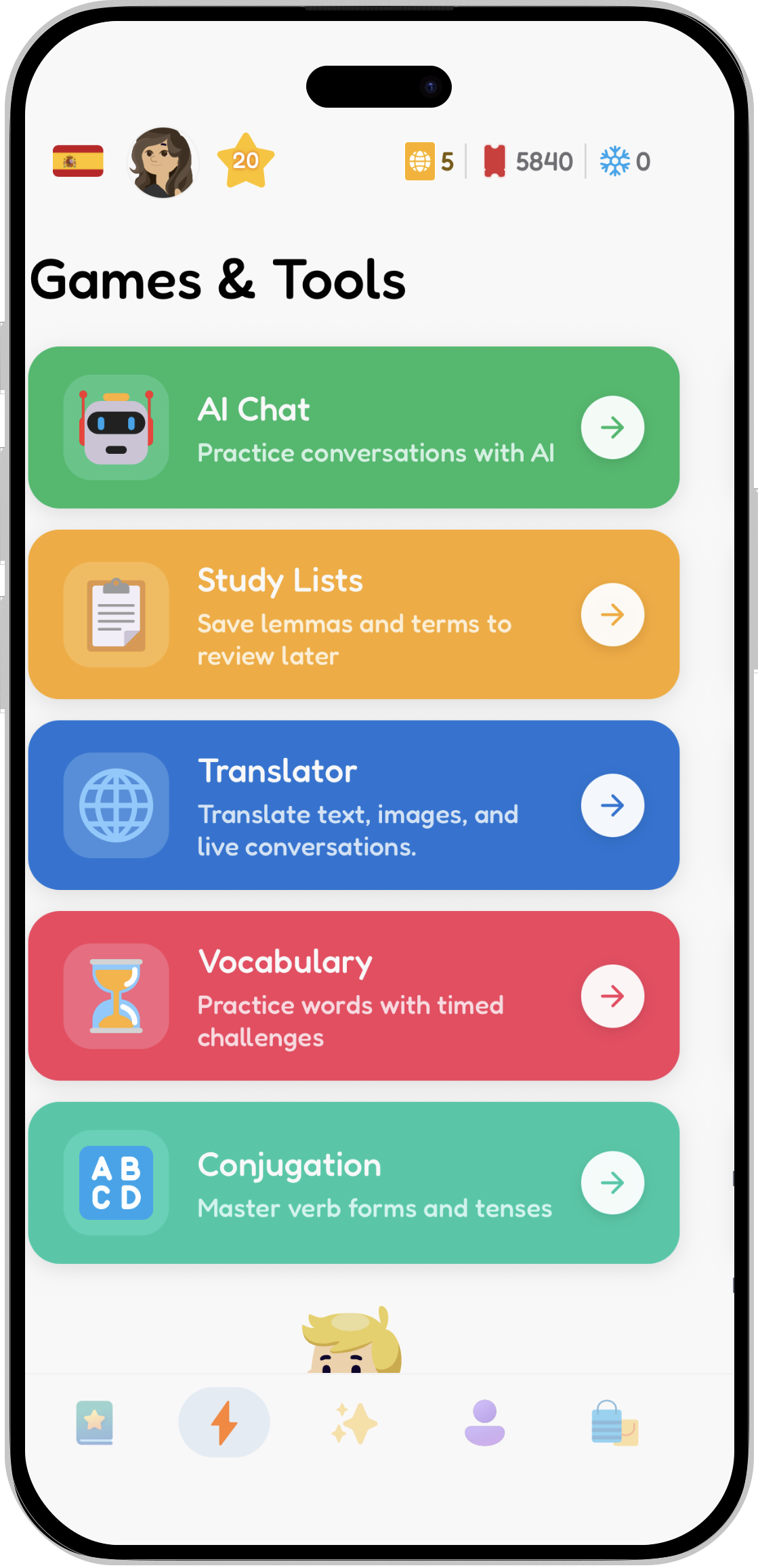
Games & Tools
Tools that every language learner needs at all stages of their learning journey.
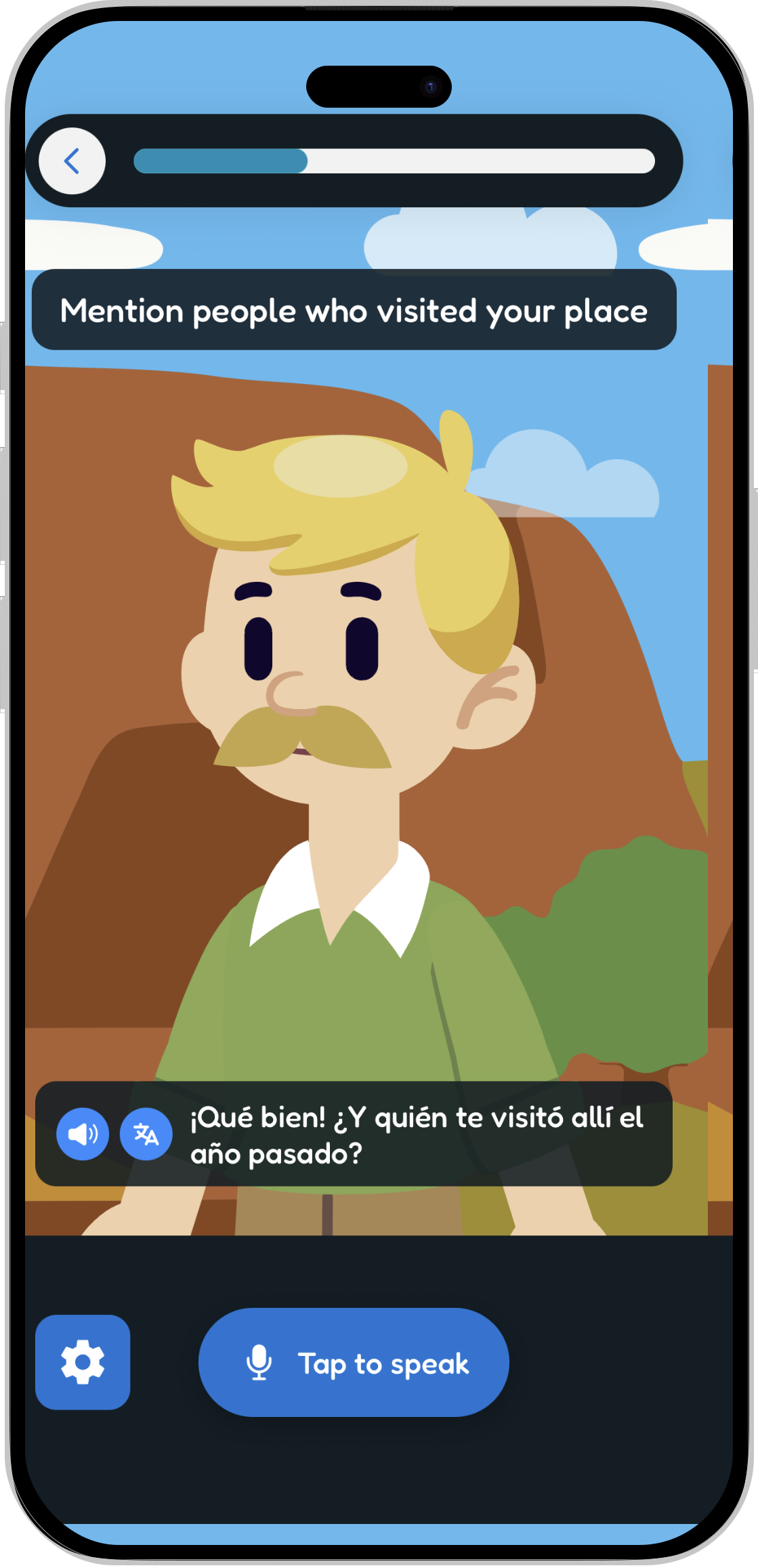
AI Chat Tutor
Practice real conversations with an AI tutor that helps you speak with confidence.
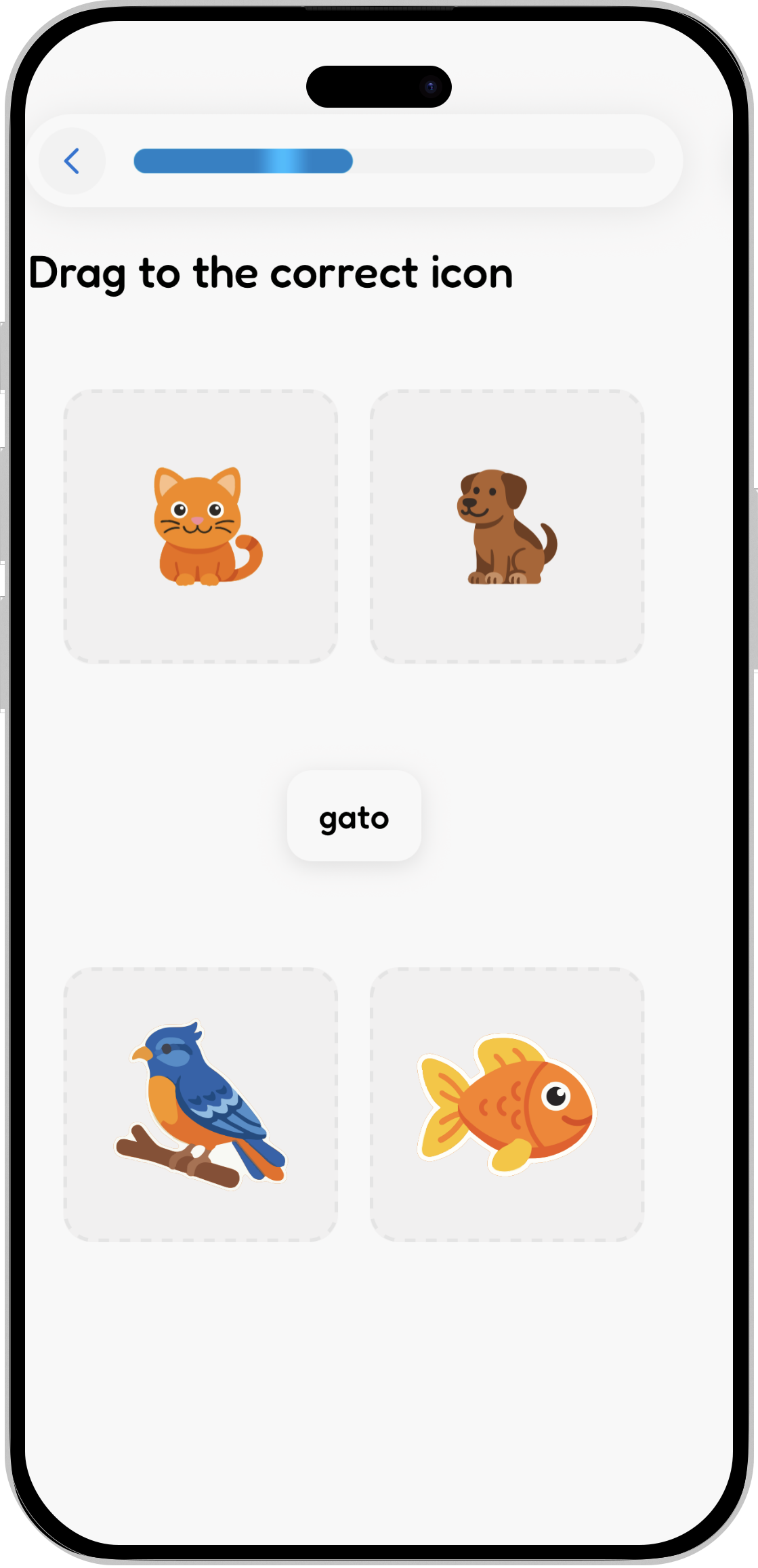
Interactive Games
A variety of games to help you learn and remember new words and phrases.


1. Lagom
Pronunciation: lah-gohm.
Lagom is one of the most useful Swedish words because it describes just the right amount, neither too much nor too little. It shows up in ordinary talk about food, work, temperature, design, and behavior, so it feels more like a cultural habit than a flashy slang item. Swedish has had a named slang tradition for a long time, and historical documentation shows that slang vocabulary has been part of the language for nearly two centuries, which helps explain why words like this carry cultural weight as well as everyday value, as noted in the history of slanguttryck and tjej in Swedish slang tradition (The Local).

A natural English comparison is “balanced,” “moderate,” or “just right,” but lagom is often broader than any single translation. You might use it to describe coffee strength, the amount of salt in food, or how busy a schedule feels. In everyday Swedish, it can sound calm and practical, which is why learners often notice it early.
Practical rule: Use lagom when you want to sound measured, not dramatic.
Example in Swedish: Det var lagom mycket kaffe.
English: That was just the right amount of coffee.
Example in Swedish: Hon arbetar lagom mycket, inte för mycket, inte för lite.
English: She works just the right amount, not too much, not too little.
Common mistake: Don't treat lagom like a direct synonym for “small” or “nice.” It describes balance, not just size or approval.
Practice task: Look around your room and describe three things in Swedish with lagom. Try one food item, one schedule, and one comfort-related detail. If you're using Polychat, add your own lagom examples to the vocabulary builder at learn Swedish with a structured app.
2. Mysig
Pronunciation: mew-see.
If lagom feels measured, mysig feels warm. It means cozy, pleasant, comforting, or snug, and it often describes an atmosphere more than a thing. A candlelit room, a quiet evening with friends, or a winter café can all be mysig, and that emotional softness is part of why the word matters in Swedish everyday life.
A learner mistake is to translate it too narrowly as “cozy” and stop there. In Swedish, mysig can describe the mood of a date, a home, a conversation, or a small gathering. It's useful because it helps you talk about the feeling of an experience, not just the object in front of you.
Example in Swedish: Vill du komma på något mysigt på fredag?
English: Would you like to do something cozy on Friday?
Example in Swedish: Det är så mysigt att sitta här med ett glas vin.
English: It's so cozy to sit here with a glass of wine.
A good way to hear the word naturally is to watch Swedish home, café, or lifestyle content, where people often use mysig for evenings, rooms, and social plans. The word also works well when you describe your own ideal evening, because that makes the meaning stick in a personal way. Polychat's conversation games can be useful here, especially if you practice inviting someone to do something mysigt rather than just memorizing the adjective, as in this Polychat Swedish practice guide.
Common mistake: Don't use mysig for every situation that is simply “good.” It carries comfort and warmth, not just positivity.
Practice task: Finish three prompts in Swedish, “A cozy room is…”, “A cozy Friday is…”, and “A cozy café feels…”. Keep each answer short and concrete.
3. Jantelagen
Pronunciation: yahn-teh-lah-gen.
Jantelagen is not slang in the narrow sense, but it matters for understanding how Swedish speech works in real social settings. The idea emphasizes humility, modesty, and equality, and it discourages people from acting as if they're better than everyone else. In daily conversation, that doesn't mean Swedes never take pride in their work. It means people often present success in a restrained way.
That social style matters for learners. If you translate your own habits too directly from an English-speaking self-promotion style, you can sound louder than intended. In Swedish, a modest phrase often lands better than a big one, especially in workplaces, classrooms, and introductions.
Example in Swedish: Du ska inte tro att du är något särskilt.
English: You shouldn't think you're anything special.
The phrase itself is tied to a broader cultural code, and learners do best when they treat it as a lens rather than a slogan. A Swedish colleague may describe a project with quiet confidence, not self-congratulation. A student may mention a good grade without boasting. That's Jantelagen in practice.
Common mistake: Don't use Jantelagen as if it means “Swedes are unfriendly.” It's more about presentation style than lack of warmth.
In Swedish professional settings, humble phrasing often sounds more natural than loud self-praise.
Practice task: Rewrite three achievements in a modest Swedish style. Start with a plain fact, then soften the tone so it sounds less boastful. If you want to extend this into workplace language, practice with Polychat's lessons on contextual vocabulary and social tone.
4. Påtår
Pronunciation: poh-tore.
Påtår means another cup, usually a refill of coffee. It feels casual, friendly, and very tied to Swedish coffee culture. If someone offers you påtår, they're inviting you to stay a little longer and keep the conversation going. That makes the word small in form but socially important.
You'll hear it most often in homes, cafés, and relaxed visits. It's the sort of word that makes a conversation feel local and unforced. A learner who knows påtår can understand a simple social ritual, not just a vocabulary item.
Example in Swedish: Vill du ha en påtår kaffe?
English: Do you want another cup of coffee?
Example in Swedish: Ja tack, gärna en påtår!
English: Yes, please, I'd love a refill!
A common mistake is to think it refers to any second serving of anything. In practice, it's most strongly associated with coffee, and the social setting matters. If you say it in the wrong context, people may still understand you, but it can sound oddly specific.
The safest way to learn it is through roleplay. Imagine arriving at a friend's kitchen table, finishing your cup, and being offered more. The reply needs to sound relaxed, not formal. That's where påtår becomes useful.
Practice task: Practice two short exchanges out loud, one offering påtår, one accepting it. Keep the rhythm natural, like a quick back-and-forth at a kitchen table.
5. Fika
Pronunciation: fee-kah.
Fika is one of the best-known Swedish social words, and it's more than a coffee break. It refers to a traditional pause for coffee, pastries, and conversation, and many learners meet it early because it is central to Swedish social life. It can function as a noun and a verb in practice, so it's worth learning as a social routine, not just a translation.
The word also has a clear historical and cultural identity. Coverage of fika notes that the term can be traced back to the 19th century, when kaffi was inverted into fika as a slang term, and that helps explain why the word feels both playful and established in modern use (Nordic Visitor). In work settings, invitations to fika often signal a break that is also social time, not dead time.
Example in Swedish: Ska vi ta fika?
English: Shall we take a fika break?
Example in Swedish: Vill du ha något till fikat?
English: Do you want something to go with the fika?

A common learner mistake is to reduce fika to “coffee.” That misses the social logic. It's often a pause, a shared moment, and a reason to talk. In Swedish workplaces, that can matter as much as the drink itself.
Practical rule: If a Swedish person invites you to fika, think “social pause,” not just “grab a beverage.”
Practice task: Write two mini-scenarios, one accepting a fika invitation at work and one inviting a friend at home. Then say both aloud. If you want more examples, Polychat's Swedish fika lesson can help anchor the word in real situations at this fika guide.
6. Trevlig
Pronunciation: trev-lee.
Trevlig means nice, pleasant, or lovely, and it's one of the most versatile adjectives in Swedish. It can describe a person, a day, a meeting, a meal, or a weekend farewell. Because it works in both formal and casual speech, it's a practical word to learn early and keep using often.
The key is to notice its politeness. Saying Trevlig helg! is a normal, friendly way to wish someone a pleasant weekend, and it feels smooth rather than flashy. In conversation, trevlig often gives you a safe, positive tone without sounding exaggerated.
Example in Swedish: Det var en trevlig dag.
English: It was a nice day.
Example in Swedish: Trevlig helg!
English: Have a pleasant weekend!
Example in Swedish: Hon är mycket trevlig.
English: She is very nice.
A common mistake is to assume trevlig always means “friendly” in the personal-character sense. It can, but it also describes experiences and situations. A restaurant, a visit, or a tone of voice can all be trevlig if they feel pleasant.
Common mistake: Don't overuse it as your only positive adjective. If everything is trevlig, your speech can sound flat. Mix it with snäll, duktig, and other words when the meaning changes.
Practice task: Describe your last weekend in three Swedish sentences, using trevlig once for a person, once for an event, and once for a place.
7. Snäll
Pronunciation: snell.
Snäll means kind, nice, or well-behaved, and it often carries more moral warmth than trevlig. If trevlig can mean pleasant, snäll usually points to character, behavior, or considerate action. That makes it especially useful when speaking about children, friends, favors, and polite requests.
Example in Swedish: Han är mycket snäll.
English: He is very kind.
Example in Swedish: Var snäll och hjälp mig.
English: Please help me.
Example in Swedish: Det var snällt av dig.
English: That was kind of you.
A lot of learners blur snäll, trevlig, and vänlig into one general idea. They overlap, but they don't feel identical. Snäll is the best fit when you want to highlight kindness or a gentle attitude. It can also mean well-behaved, which matters in family or school contexts.
Useful comparison: Use snäll for kindness, trevlig for pleasantness, and vänlig when you want a more formal “friendly” or “kind” tone.
Common mistake: Don't use snäll only as praise for children. Adults use it constantly when talking about helpful behavior or a considerate response.
Practice task: Say three kinds of kindness in Swedish, a kind person, a kind action, and a polite request. Keep the sentences short so the meaning stays clear.
8. Duktig
Pronunciation: dook-tig.
Duktig means capable, skilled, competent, or well-behaved, and it's one of those words that carries real social nuance. People use it to praise effort, ability, discipline, or good behavior. In school and family settings, it can sound encouraging. In professional settings, it can sound respectful and practical.
Example in Swedish: Du är mycket duktig på svenska!
English: You're very skilled at Swedish!
Example in Swedish: Hon är en duktig arbetstagare.
English: She is a capable employee.
A common mistake is to treat duktig like a generic “good.” It is more specific than that. When a Swedish teacher says a student is duktig, the word often signals that the student has done something well through effort or competence. It isn't just emotional praise.
Example in Swedish: Det var duktigt jobbat!
English: That was a good job!
The word also works differently from snäll and trevlig. A person can be snäll without being especially duktig, and a person can be duktig without being especially outgoing. That distinction helps you sound more precise.
Practical rule: Use duktig when you want to praise ability or effort, not just general goodness.
Practice task: Write one sentence for a student, one for a coworker, and one for yourself using duktig. Then check whether each sentence praises skill, effort, or behavior.
9. Tjusigt
Pronunciation: choo-seegt.
Tjusigt means beautiful, lovely, or charming, but it usually sounds a bit more stylish than a plain description. You might use it for a dress, a room, a neighborhood, or a well-put-together look. It gives your Swedish a more aesthetic tone, especially when you're talking about design or presentation.
Example in Swedish: Vilken tjusig klänning!
English: What a beautiful dress!
Example in Swedish: Det var ett tjusigt område.
English: That was a lovely area.
Example in Swedish: Hennes hem är tjusigt inrett.
English: Her home is beautifully decorated.
A common mistake is to use tjusigt for every kind of beauty. It tends to feel elegant, tasteful, or neatly styled. If you're praising a person's appearance, other words may be more natural depending on the context, but tjusigt works well for things, spaces, and visual style.
The word is especially useful if you read Swedish fashion, interior design, or lifestyle content. Those contexts often reward precise aesthetic language. A friend's apartment, a café corner, or a polished outfit can all be described with it when you want to sound a little more refined.
Common mistake: Don't use tjusigt when you only mean “pretty” in a childlike or simple way. It carries a slightly more polished feel.
Practice task: Pick three objects in your home and describe them in Swedish as if you were complimenting someone's interior style.
10. Knasigt
Pronunciation: kna-seegt.
Knasigt means weird, strange, quirky, or a bit crazy, and it often sounds playful rather than harsh. You can use it for odd situations, surprising ideas, awkward behavior, or something that doesn't make sense. It's a handy word because it lets you react naturally without sounding too serious.
Example in Swedish: Det är helt knasigt!
English: That's completely crazy!
Example in Swedish: Han är lite knasig, men mysig.
English: He's a bit weird, but cozy.
Example in Swedish: Vilken knasig idé!
English: What a strange idea!
A common learner mistake is to treat knasigt as if it always means offensive “crazy.” It can be critical, but often it's light and conversational. Tone matters a lot here. A grin, a raised eyebrow, or a joking comment can turn it into a friendly judgment instead of a harsh one.
For that reason, it's best in informal speech. Swedish comedians, youth media, and casual group conversations are all good places to hear it. The word also fits well beside other colloquial language, which helps your speech sound more relaxed and less textbook-like.
Practical rule: Use knasigt for something odd or messy, not for serious mental health language.
Practice task: Describe one strange plan, one odd room, and one funny friend in Swedish. Keep your tone light and see how the word changes the mood.
Comparison of 10 Swedish Slang Terms
| Term | 🔄 Complexity | 📊 Resource requirements | ⭐ Expected learning impact | 💡 Ideal use cases | ⚡ Key advantages |
|---|---|---|---|---|---|
| Lagom | Moderate, abstract cultural concept | High, needs cultural examples & media | High, core to Swedish values | Everyday descriptions, lifestyle, workplace balance | Deepens cultural competence; enables authentic phrasing |
| Mysig | Low, emotionally intuitive | Low, lifestyle content & practice | Very High, vital for social conversation | Social gatherings, home atmosphere, invitations | Immediately relatable; improves social fluency |
| Jantelagen | High, multi-rule social code | High, study of principles & workplace examples | Critical, essential for long-term/professional integration | Workplace behavior, self-presentation, cultural analysis | Prevents cultural missteps; guides modest communication |
| Påtår | Low, simple colloquial term | Low, practice in coffee/social scenarios | High, useful for social interactions | Visits, cafes, casual hospitality exchanges | Easy to remember; immediately practical in social settings |
| Fika | Low–Moderate, ritual with nuance | Moderate, etiquette, vocabulary & practice | Very High, central to workplace/social life | Work breaks, invitations, team bonding | Opens doors to social integration at work and socially |
| Trevlig | Low, basic adjective | Low, common usage exposure | High, foundational vocabulary for learners | Greetings, compliments, farewells, general descriptions | Highly versatile; essential for beginners |
| Snäll | Low, basic but nuanced | Low, contextual exposure to nuance | High, key for politeness and character descriptions | Polite requests, compliments, describing people | Useful for polite interaction and social harmony |
| Duktig | Moderate, context-sensitive praise | Moderate, professional/educational examples | High, important in work & school contexts | Praising performance, academic feedback, workplace | Enables meaningful, culture-appropriate praise |
| Tjusigt | Low–Moderate, aesthetic nuance | Low, design/fashion/media exposure | Moderate–High, useful in contemporary speech | Compliments on fashion, interiors, scenery | Elevates descriptive language with modern tone |
| Knasigt | Low, colloquial and playful | Low, informal media & practice | Moderate–High, aids casual fluency | Informal comments, humor, youth conversation | Adds natural, colloquial expressiveness |
Turn Recognition Into Real Swedish
A useful way to group these swedish slang words is by function. Use trevlig, snäll, and duktig when you describe people or give praise. Reach for mysig, tjusigt, and knasigt when you describe mood, style, or oddity. Keep fika, påtår, lagom, and Jantelagen for cultural context, because they tell you how Swedish conversation works socially, not just what a word means.
A seven-day routine makes this vocabulary easier to keep. On day one, record yourself saying each word once with the pronunciation you've learned. On day two, make spaced flashcards with the Swedish word on one side and a short English meaning on the other. On day three, do short recall drills, first Swedish to English, then English to Swedish. On day four, write mini-prompts like inviting someone to fika or describing a room as mysig. On day five, say those sentences out loud and listen back. On day six, mix the words into a short self-introduction, a coffee invitation, and a comment about someone's work. On day seven, review the words you hesitated on and label each one by register and confidence, for example, “safe in daily conversation” or “use with care in informal speech.”
That label matters. A learner who knows a word is friendly, cultural, or youth-coded can choose it with more confidence and avoid awkward overuse. It also helps to keep one small personal dictionary with your own example sentences, because a word feels much more usable once it belongs to your own life. Polychat fits neatly into that kind of repetition, since its vocabulary challenges, conversation games, lessons, and personal dictionary all support repeated practice without making the routine feel heavy.
If you're serious about making Swedish sound natural in real life, visit Polychat and use it to practice these words in short, repeatable conversations. Build the habit with a few minutes a day, keep the register labels in view, and let the words move from recognition to actual use.

Jean-Baptiste Bolh
Co-Founder
Applied AI