10 Dutch Slang Words for Real-Life Conversations

You understand textbook Dutch, but a conversation with friends can still feel like a different language. Someone says gezellig, calls a friend a mafkees, or mentions bitterballen, and the dictionary translation doesn't fully explain the tone, situation, or cultural meaning.
This guide gives you 10 Dutch slang words and informal expressions for real-life conversations. Each entry includes a plain-English meaning, a pronunciation focus, a realistic example, a register note, a safer alternative when needed, and a small practice idea. The list isn't limited to strict slang. It also includes informal verbs, emotional language, cultural concepts, and food vocabulary that help you recognize natural Dutch without using a socially awkward expression by accident.
Dutch slang changes across age groups, cities, online spaces, and multilingual communities. Amsterdam street language, for example, has been documented as a distinct youth register since at least 1999. In René Appel's research, 98 of 133 students reported using street language, and the data included 468 words or expressions with 151 different forms. That early linguistic research helps explain why a learner needs more than a translation list. You need to know who uses a word, how strong it sounds, and when to listen instead of repeat it.
If you enjoy learning informal expressions in other languages, this backpackers guide to Paris slang follows a similar practical idea. Start with these Dutch examples, then test them in short conversations.
Ready to Learn a Language?
Try PolyChat's engaging language lessons, interactive learning games and put your new vocabulary to the test!
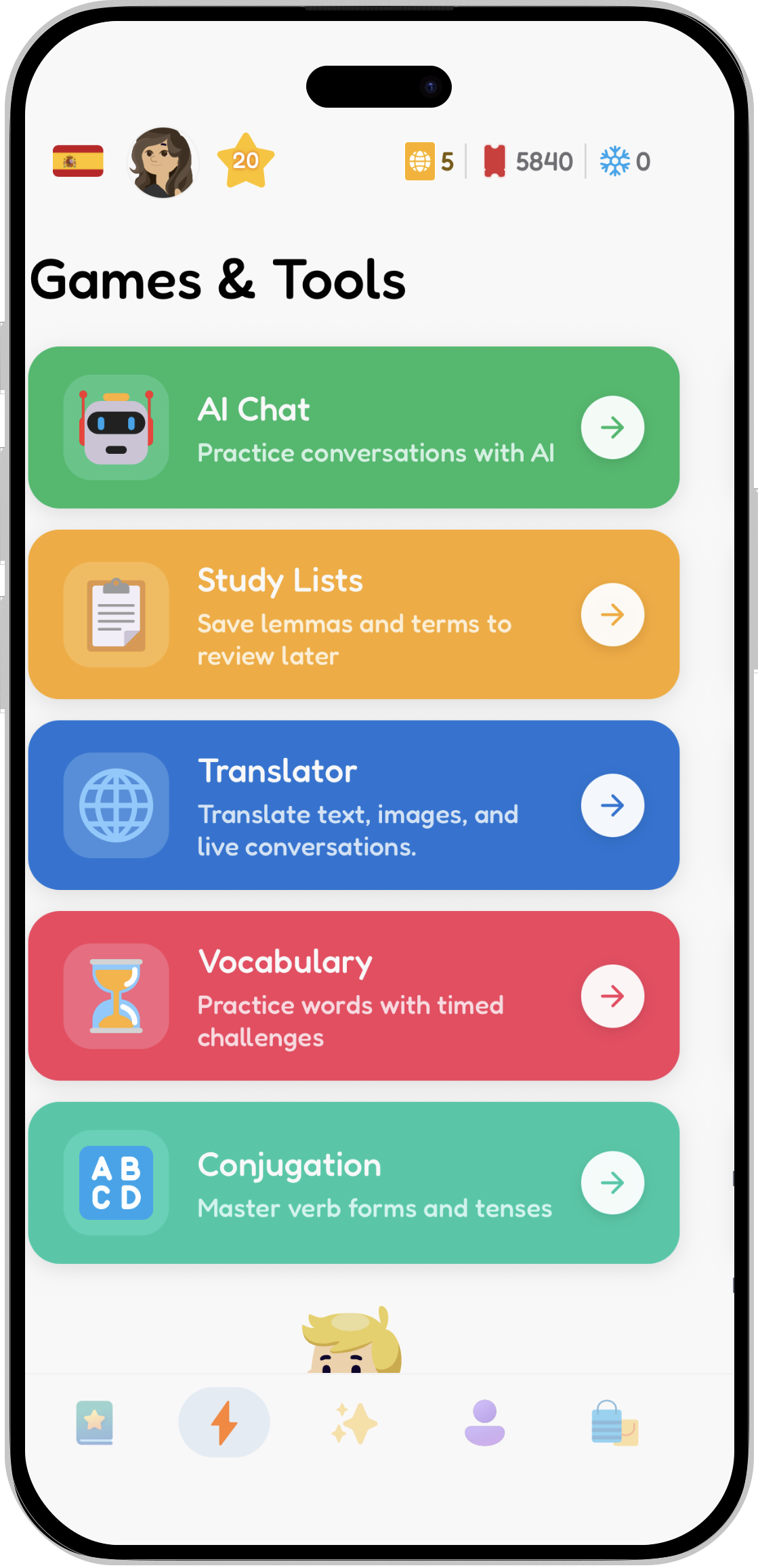
Games & Tools
Tools that every language learner needs at all stages of their learning journey.
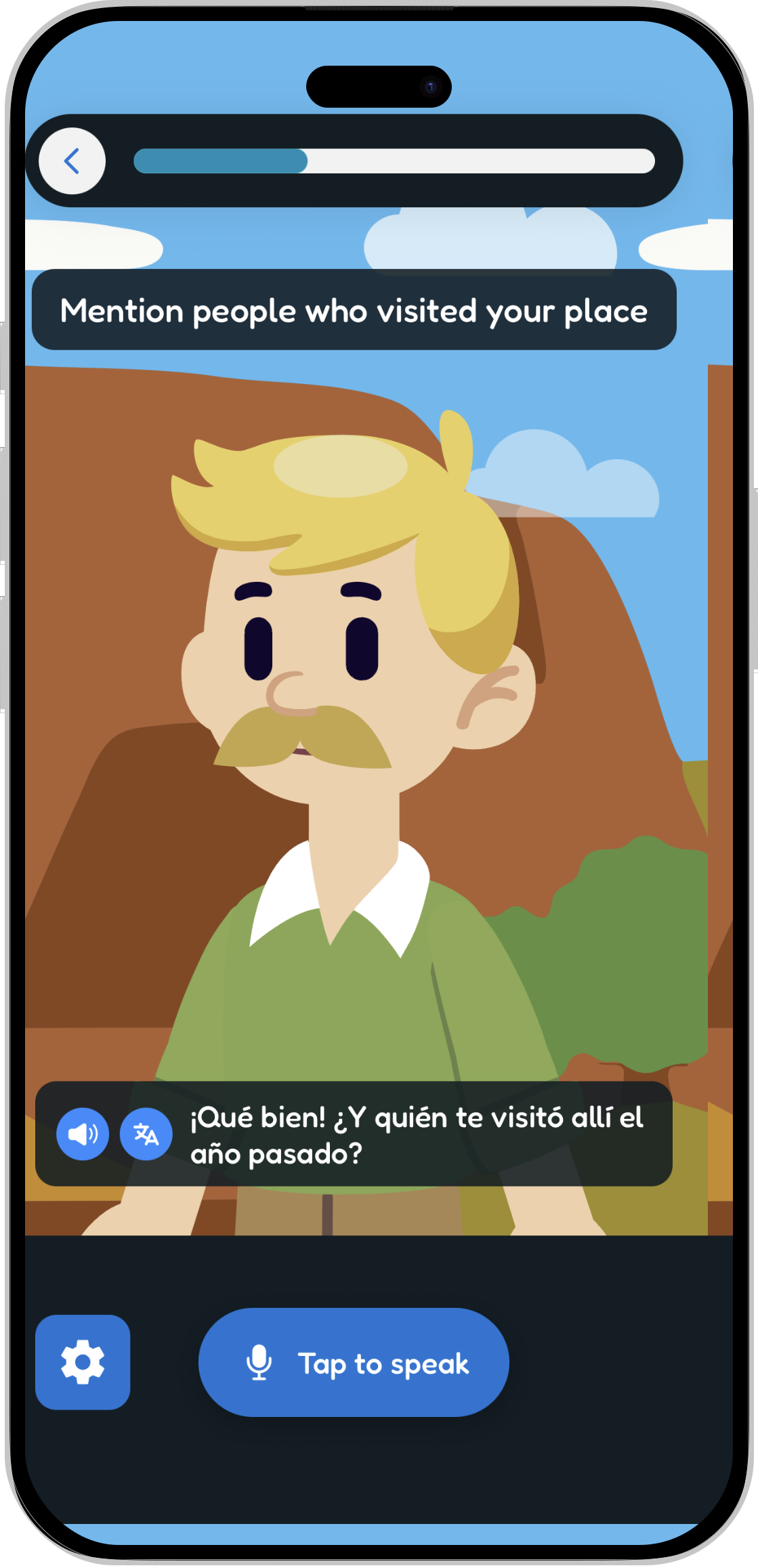
AI Chat Tutor
Practice real conversations with an AI tutor that helps you speak with confidence.
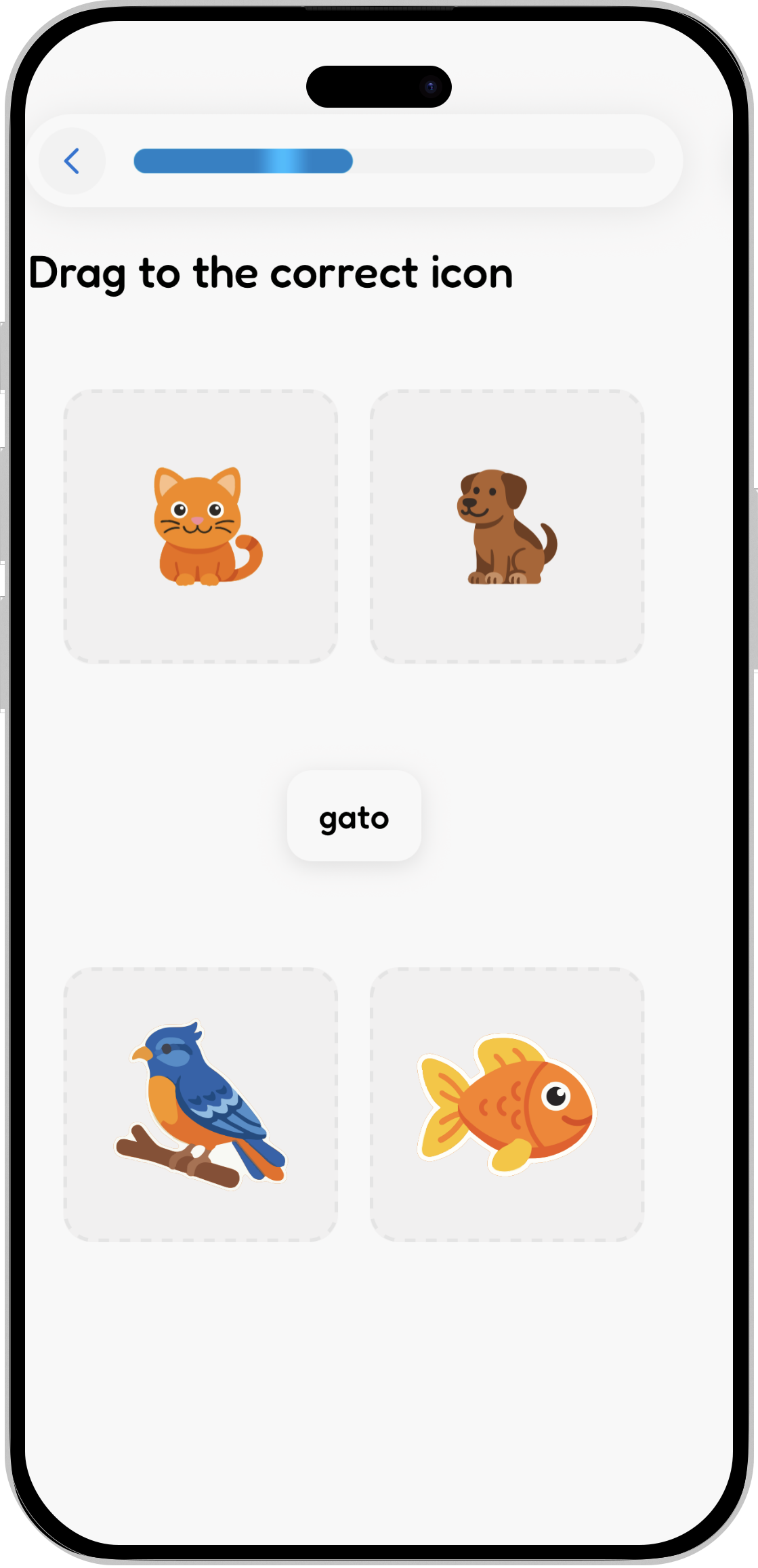
Interactive Games
A variety of games to help you learn and remember new words and phrases.


1. Gezellig
Gezellig is one of the most recognizably Dutch words. It describes a warm, pleasant, friendly atmosphere, especially when people are enjoying time together. English translations such as “cozy,” “nice,” or “fun” capture part of the meaning, but none fully covers the social feeling.
You can use it for a café, an evening with friends, a family gathering, or even a room that feels welcoming. It usually describes the experience or atmosphere, not just physical comfort.
Pronunciation focus: The first syllable sounds roughly like “khuh.” The Dutch g is made in the throat, so don't pronounce it like the English g in “go.”
A natural example is:
Het was echt gezellig gisteravond met vrienden in de kroeg.
“It was really cozy and fun last night with friends at the pub.”
You might also hear someone ask, Was het gezellig?, meaning “Was it nice?” or “Did you have a good time?” A café can be gezellig, but so can a quiet dinner, a lively birthday, or a relaxed conversation at home.
Use it for shared atmosphere
Don't treat gezellig as a direct replacement for every use of “good.” If someone asks how your exam went, gezellig would be strange. If you want to describe a social moment, it works naturally.
Try this practice task: think of a recent meal, walk, or gathering and complete the sentence, Het was gezellig omdat... Then say the full sentence aloud. You can also use Dutch conversation starters to practise bringing the word into a social exchange.
This cultural term often appears in beginner lists because it helps learners understand how Dutch speakers describe togetherness, not just comfort. Use it freely in friendly settings, but listen to the surrounding sentence to learn its exact shade of meaning.
Before practising the next word, notice how gezellig often pairs with food and drinks. A relaxed evening might be both gezellig and lekker, but the two words don't mean the same thing.

2. Krijgen
Krijgen is an everyday Dutch verb meaning “to get” or “to receive,” but learners need to pay attention because it appears in many expressions that don't translate word for word. You can use it for receiving an object, obtaining something, experiencing something, or asking what benefit someone receives.
For example:
Ik krijg een kopje koffie.
“I'll get a cup of coffee,” or, depending on context, “I'll have a cup of coffee.”
Another useful sentence is:
Wat krijg je ervan?
“What do you get out of it?”
The pronunciation has a strong Dutch ij sound, which is difficult to reproduce exactly in English. Listen for the vowel rather than trying to force an English equivalent. The verb is also irregular, so memorising only the infinitive won't be enough.
Notice the conversational patterns
Native speakers use krijgen in short, practical exchanges. Krijgen we nog koffie? can mean “Are we getting more coffee?” or function as a casual request. Ik krijg honger means “I'm getting hungry,” while Ik krijg een bericht means “I receive a message.”
Work on the verb in complete phrases instead of isolated flashcards:
- Ik krijg... for “I get” or “I receive”
- Krijg jij...? for “Do you get...?” or “Are you receiving...?”
- We krijgen... for “We get” or “We receive”
“Learn the phrase around krijgen, not only the English translation.”
Choose three objects around you and make sentences about receiving them. Then create one sentence about a feeling, such as hunger or tiredness. A short Dutch basic vocabulary game can reinforce the word while you practise its forms.
Krijgen isn't slang in the strict sense. It belongs here because informal Dutch relies on versatile verbs like this constantly. Once you recognise its literal and idiomatic uses, casual conversations become easier to follow.
3. Knuffelen
Knuffelen means “to cuddle” or “to hug.” It expresses physical affection and closeness, so its meaning depends strongly on the relationship between the speakers. You might use it with a partner, a child, a close friend, or a pet, but it isn't a neutral word for every kind of public greeting.
Kom hier, ik wil je knuffelen.
“Come here, I want to hug you.”
The word is common in casual speech, messages, and social media. Its pronunciation can feel unusual at first. The uu sound in knuffelen doesn't match the English vowel in “book.” Keep the lips rounded while producing a tighter front vowel.
Choose the relationship carefully
Knuffelen and omhelzen overlap, but they don't always create the same impression. Knuffelen often sounds cuddly, affectionate, or informal. Omhelzen is closer to “embrace” and can sound more deliberate or literary, although context still determines the tone.
You could say:
Mijn nichtje wil altijd met haar hond knuffelen.
“My niece always wants to cuddle with her dog.”
Or:
We hebben elkaar geknuffeld toen ze vertrok.
“We hugged each other when she left.”
Don't use the word with a stranger unless the situation clearly involves affection. A learner may know the translation but miss the social boundary.

For practice, write two sentences, one about a person and one about an animal. Read both aloud and change the subject from ik to wij or zij. This helps you practise the verb while keeping the emotional context clear.
4. Mafkees
Mafkees is a playful word for a silly, foolish, or eccentric person. It can sound affectionate when friends tease one another, but it can also feel insulting if the relationship or tone isn't friendly. The safest translation is usually “goofball,” “silly person,” or “you mad thing,” depending on the situation.
Jij bent een mafkees!
“You're such a goofball!”
The word works best when the speaker is smiling, laughing, or clearly referring to a harmless mistake. A friend who forgets their keys might be called een mafkees. A stranger who makes a serious error probably shouldn't be addressed that way.
Let tone carry the meaning
Dutch informal language often depends on intonation. A warm voice can make mafkees playful. A sharp voice can turn it into criticism. English learners sometimes focus on vocabulary and overlook this social signal.
Practical rule: Understand mafkees before you use it. Use it only with people who already know your sense of humour.
Try making a harmless scenario. Your friend wears two different socks, spills flour while cooking, or dances badly at a party. Say, Wat ben je toch een mafkees, then translate it as “What a goofball you are.” Keep the scenario light.
The word is not appropriate for a formal email, a workplace complaint, or a conversation with someone you don't know. In those situations, describe the action instead: Dat was een beetje onhandig, meaning “That was a little clumsy.” This alternative lets you comment without labelling the person.
Mafkees is useful because it teaches a broader lesson about Dutch slang words. A dictionary can tell you what a term denotes, but only context tells you whether it sounds fond, rude, childish, or funny.
5. Tering
Tering is a casual expletive used to express frustration, surprise, or disbelief. It has a historical connection to a disease reference, but many speakers use it today as a strong informal interjection or intensifier. That history means learners shouldn't treat it as harmless only because friends may use it casually.
Tering, ik ben mijn sleutels kwijt!
“Damn, I've lost my keys!”
You may hear it in informal conversations, online content, films, or music. The strength varies with delivery. A quick Tering! after dropping a phone may express irritation. In another sentence, it can make the whole statement much more vulgar.
Keep it out of formal situations
Don't use tering with a manager, a customer, a teacher, or someone you have just met. Even if a Dutch speaker uses it around you, that doesn't automatically mean it's suitable for you to repeat. Your relationship, age, setting, and pronunciation all affect how it lands.
Safer options include:
- Jammer, for mild disappointment
- Wat vervelend, for “How annoying”
- O nee, for surprise or concern
Try a comprehension exercise rather than a speaking exercise first. Write a short dialogue in which someone loses their keys and reacts. Read the sentence with tering, then replace it with O nee and compare the strength.
The broader Dutch slang “Zo Grof!” corpus includes taboo and offensive language that requires more than a simple glossary. The “Zo Grof!” corpus was created as a resource for socially unacceptable Dutch and includes annotation for offensiveness and targets, making it relevant to moderation and safety work. The corpus overview reinforces an important learning habit: identify sensitive terms before attempting to use them.
6. Boksen
In casual Dutch, boksen can refer to having sex or making out. That meaning is highly context-dependent and can sound blunt, humorous, or vulgar. The literal meaning of boksen is “to box,” so surrounding words and the situation are essential for understanding which sense a speaker intends.
Ze waren gisteravond aan het boksen.
“They were making out or having sex last night.”
This is not a word to introduce casually in a mixed group, a classroom, or a workplace. You may encounter it in youth speech, online conversations, jokes, or entertainment, but recognition is more useful than active production for most learners.
Use a neutral alternative
If you need to discuss relationships or intimacy in a respectful setting, use a clearer and more neutral expression. Ze hadden seks means “They had sex.” Depending on your meaning, Ze waren aan het zoenen means “They were kissing,” while Ze zijn samen means “They're together.”
Don't assume that a playful translation makes the Dutch term safe. Slang about sex can sound different depending on who says it, who is listening, and whether the people being discussed are present.
Practise by sorting sentences into two groups, literal sports language and intimate slang. For example, Hij gaat boksen usually points toward boxing, while the example above signals the informal sexual meaning. This kind of context exercise helps you understand native content without forcing yourself to use the expression.
A useful rule for sensitive Dutch slang words is simple: learn the meaning, identify the register, and wait until a trusted speaker explains how their group uses it. Neutral language will nearly always be the better choice when you aren't sure.
7. Uitwaaien
Uitwaaien describes going outside for fresh air and letting the wind clear your head. English needs a whole phrase to express the idea. The word combines a physical activity with a mental reset, often involving a walk, bicycle ride, or trip to the coast.
Ik ga even uitwaaien, ik heb even wat frisse lucht nodig.
“I'm going to get some fresh air. I need to clear my head.”
You might say this after a stressful day, an argument, too much screen time, or a long period indoors. It doesn't necessarily mean intense exercise. The point is to spend time outside and feel mentally refreshed.
Connect the word to an action
The pronunciation contains the Dutch ui sound, one of the sounds many English speakers find difficult. Don't worry about achieving perfect pronunciation immediately. Listen to a native example, imitate the rhythm, and practise the word inside the full sentence rather than repeating it alone.
A natural scenario would be:
Na die drukke vergadering ga ik even uitwaaien.
“After that busy meeting, I'm going to get some fresh air.”

This word is culturally important, but it isn't youth slang or a rude expression. You can use it with friends, colleagues, or family when the situation is appropriate. A simpler alternative is Ik ga even naar buiten, meaning “I'm going outside for a moment.”
For practice, make a mini diary entry about your next walk. Write where you're going, why you're going, and how you feel afterward. Then say, Ik ga uitwaaien omdat... aloud. The word becomes easier to remember when it describes something you've done.
8. Bitterbal
A bitterbal is a small, deep-fried ball traditionally filled with meat ragout. It isn't slang, but it belongs in a practical guide to Dutch informal conversation because food vocabulary often appears inside social invitations and everyday small talk.
Zullen we een paar bitterballen eten bij het biertje?
“Shall we have some bitterballs with the beer?”
You may encounter bitterballen in a café, at a party, during a reception, or while sharing snacks with friends. They're commonly served with mustard, and the plural form is bitterballen. Since the snack is usually shared, the word can also signal a relaxed social setting.
Learn the phrase, not only the noun
The sentence pattern Zullen we...? means “Shall we...?” and is useful far beyond food. You can say Zullen we koffie drinken?, “Shall we drink coffee?” or Zullen we naar huis gaan?, “Shall we go home?”
When ordering or accepting food, listen for the difference between the singular and plural. Een bitterbal is one snack. Bitterballen means more than one. The final -en is pronounced clearly enough to matter, especially in a noisy café.
Food language is social language. Learn the item together with the invitation, response, and setting.
Practise with a short café dialogue. One person asks, Zullen we bitterballen eten? The other replies, Ja, lekker, or Nee, dank je. You can reinforce related dining vocabulary with Dutch basic food practice.
Don't describe bitterbal as a slang word when speaking to a Dutch teacher. Call it a Dutch snack or food term. That distinction matters because the point of this list is to help you recognise different types of informal language, not place every memorable Dutch word in the same category.
9. Jammer
Jammer is a common, mild way to express pity or disappointment. It can mean “what a shame,” “too bad,” or “that's unfortunate.” Unlike a strong expletive, it fits into many ordinary conversations and is one of the safest informal expressions on this list.
Jammer dat je niet kunt komen.
“It's a shame that you can't come.”
You can also say:
Echt jammer!
“Really too bad!”
The emotion can be gentle or more emphatic. Your intonation does much of the work. A soft voice may show sympathy, while a stressed echt can show stronger disappointment.
Use it when plans change
Imagine a friend cancels dinner because they feel sick. You might reply, Jammer, maar beterschap, meaning “That's a shame, but get well soon.” If a train is delayed, Jammer can acknowledge the inconvenience without sounding aggressive.
The pronunciation is usually straightforward for English speakers, though the Dutch j sounds like the y in “yes.” Keep the word short and clear.
Try a substitution exercise. Start with a sentence about a cancelled plan, a missed event, or bad weather. Say it first with Jammer, then with Echt jammer, and finally with Wat vervelend. The exercise shows how Dutch speakers adjust emotional strength without reaching for a curse word.
Jammer isn't restricted to young people or one city. That makes it more dependable for beginners than highly local or rapidly changing slang. Use it with friends, hosts, classmates, and colleagues when the situation calls for mild disappointment.
This is also a good example of why “informal” doesn't always mean “slang.” Some expressions are normal conversational Dutch. Learning those words gives you a more natural voice without adding unnecessary social risk.
10. Hollen
Hollen means “to run” or “to dash,” often with the idea of hurrying from one place to another. It can describe literal running, but in everyday speech it frequently suggests rushing around because you're late or busy.
Ik moet hollen naar de trein!
“I have to dash to the train!”
You can also say:
Ze hollen de hele dag door het huis.
“They run around the house all day.”
The word sounds more lively and colloquial than a neutral description of movement. It can suggest energy, urgency, or slightly chaotic activity.
Compare it with rennen
Rennen is the more general verb for “to run.” Use it for exercise, a race, or ordinary running. Hollen often adds the idea of rushing or dashing. For example, Ik ren in het park means “I run in the park,” while Ik moet hollen suggests “I need to hurry.”
Practise the verb with different subjects:
- Ik hol naar de trein, “I dash to the train”
- Wij hollen naar buiten, “We run outside”
- Zij holt naar haar afspraak, “She rushes to her appointment”
Pay attention to the vowel and the final consonant, then repeat each sentence at a natural speaking speed. A short timed vocabulary activity can make the urgency easier to feel, but don't sacrifice pronunciation for speed.
You can use hollen with friends, family, or colleagues in an informal conversation. In a formal report, choose a more precise verb such as rennen, haast hebben, or snel lopen, depending on the situation.
10 Dutch Slang Words, Quick Comparison
| Term | 🔄 Learning complexity | 📊 Practice/resources needed | ⭐ Expected outcome | 💡 Ideal use cases | ⚡ Key advantage |
|---|---|---|---|---|---|
| Gezellig | Moderate, cultural nuance and context | Exposure to social settings, listening examples | ⭐⭐⭐⭐, strong cultural fluency | Social gatherings, hospitality, describing ambiance | High communicative payoff for rapport |
| Krijgen | Moderate, irregular conjugations, multiple senses | Conjugation drills + idiomatic examples | ⭐⭐⭐⭐, essential everyday comprehension | Daily transactions, invitations, idioms | Versatile core verb used widely |
| Knuffelen | Low, regular verb with nuance vs "omhelzen" | Pronunciation and roleplay in affectionate contexts | ⭐⭐⭐, clear affectionate meaning | Family, romantic, friendly physical affection | Conveys warmth and intimacy precisely |
| Mafkees | Low, colloquial; tone-sensitive | Informal conversation practice, listening to peers | ⭐⭐⭐, useful for casual banter if used right | Friendly teasing among peers; avoid formal use | Adds playful, colloquial color |
| Tering | Low, single expletive; appropriateness matters | Native media exposure to learn boundaries | ⭐⭐⭐, strong expressive impact in casual speech | Casual exclamations among friends; avoid formal settings | Packs strong emotion in one word |
| Boksen | Low–Moderate, slang for sexual activity; sensitive register | Familiarity with youth registers and context cues | ⭐⭐, limited, context-dependent usefulness | Peer conversations, youth culture, media comprehension | Concise informal term for sexual activity |
| Uitwaaien | Moderate, blends action and mental state | Cultural/lifestyle examples, conversation practice | ⭐⭐⭐⭐, valuable for wellness and lifestyle talk | Discussing self-care, outdoor activities, weather | Encapsulates mental refreshment and activity |
| Bitterbal | Low, concrete food noun, easy to learn | Vocabulary + cultural context (food) practice | ⭐⭐⭐, signals cultural familiarity | Ordering food, social dining, cultural references | Instant cultural touchpoint in social settings |
| Jammer | Low, common exclamation; intonation important | Practice intonation and situational usage | ⭐⭐⭐, versatile for mild disappointment | Everyday conversations expressing pity or regret | Quick, polite way to show empathy |
| Hollen | Low–Moderate, overlaps with other motion verbs | Conjugation practice + routine-based dialogues | ⭐⭐⭐, useful for describing hurry/urgency | Describing rushing, transit, busy schedules | Conveys immediacy of action in casual speech |
Turn Dutch Slang Recognition Into Conversation Skills
These ten words serve different purposes, and that distinction is more useful than memorising them as one flat list. Gezellig and uitwaaien express cultural ideas about social atmosphere and mental refreshment. Krijgen and hollen are everyday verbs that make ordinary conversations easier to follow. Jammer gives you a mild emotional response, while tering expresses stronger frustration and needs more caution.
Mafkees is playful slang that depends on friendship and tone. Boksen is sensitive and can refer to sexual activity, so comprehension should come before active use. Bitterbal is food vocabulary rather than slang, but it appears naturally in relaxed social situations. These categories help you decide not only what a word means, but also whether you should say it yourself.
Dutch slang also reflects a changing language environment. Research from the Meertens Institute reports that street-language terms associated with Amsterdam in the 1990s, including loesoe, chickie, fittie, pasen, patta's, and jonko, remain recognised and used while spreading across the Netherlands. The Meertens Institute report shows why old lists can remain useful for recognition without proving that every term sounds current in every group.
Digital communication adds another layer. One analysis of computer-mediated youth language examined 400,000 digital texts and found that adolescents used significantly more textisms than young adults, while English borrowings made up 15% of vocabulary in tweets. The research source supports a practical lesson for learners: online language may include abbreviations, English borrowings, and group-specific expressions that don't transfer neatly into spoken or formal Dutch.
A short routine for active practice
Use this five-step routine with two expressions at a time:
- Choose two words: Pair one safe expression, such as jammer, with one contextual word, such as gezellig or uitwaaien.
- Say the examples aloud: Copy the rhythm and pronunciation instead of just reading them.
- Write one personal sentence: Describe your own plans, feelings, meal, or social experience.
- Mark the register: Label each word as everyday, informal, playful, cultural, food-related, or sensitive.
- Test the context: Use the safe expression in a conversation activity. For sensitive slang, practise recognition only until a trusted speaker confirms the tone.
Polychat can support this routine through Dutch conversation games, vocabulary lessons, translation practice, a personal dictionary, and conjugation exercises. Its language-learning app includes interactive activities and a dedicated adult mode for slang, dating, and real-world speech, which is relevant when you want to study informal Dutch without confusing it with formal language.
Keep your priority in the right order. First understand the word, then hear how Dutch speakers use it, then practise it in a fitting situation. You don't need to fill every sentence with slang to sound natural. Clear standard Dutch mixed with a few well-chosen informal expressions will usually sound more convincing than a forced list of trendy words, much like a social media slang glossary helps with recognition but can't replace context.
Start today with gezellig and jammer. Say each example aloud, write a sentence about your own life, and listen for both words in your next Dutch conversation or lesson.
Polychat offers Dutch conversation games, vocabulary and translation activities, conjugation practice, a personal dictionary, and lessons that help you move from recognition to real speech. Visit Polychat to practise these Dutch slang words in context and build a structured daily learning routine.

Jean-Baptiste Bolh
Co-Founder
Applied AI