Your Guide to AI Language Learning and How It Really Works
AI language learning is like having a personal language tutor who lives in your pocket, knows exactly where you’re struggling, and is ready to practice 24/7. It's a huge step up from the old one-size-fits-all textbooks, building a learning journey that’s all about you.
Ready to Learn a Language?
Try PolyChat's engaging language lessons, interactive learning games and put your new vocabulary to the test!
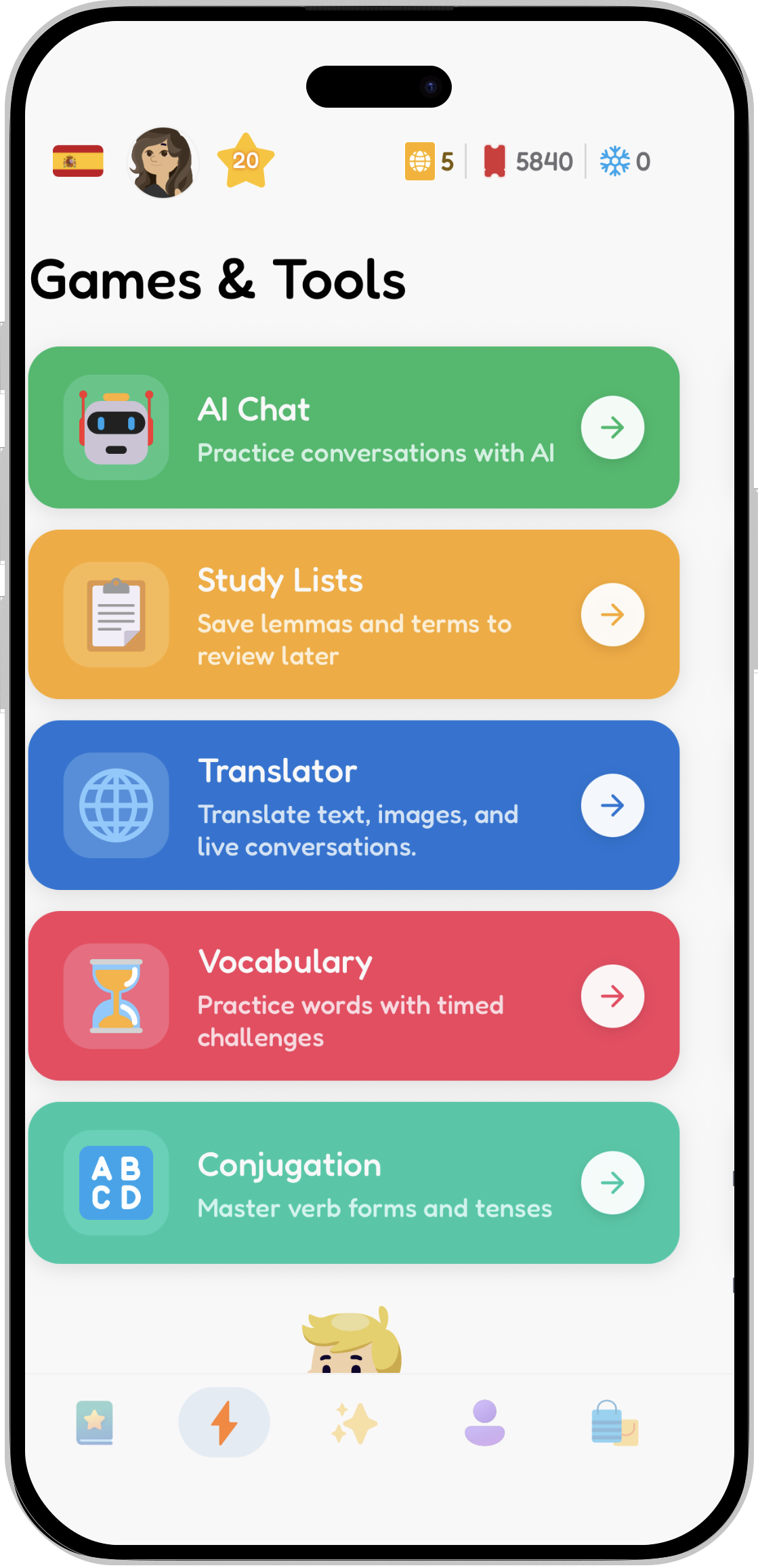
Games & Tools
Tools that every language learner needs at all stages of their learning journey.
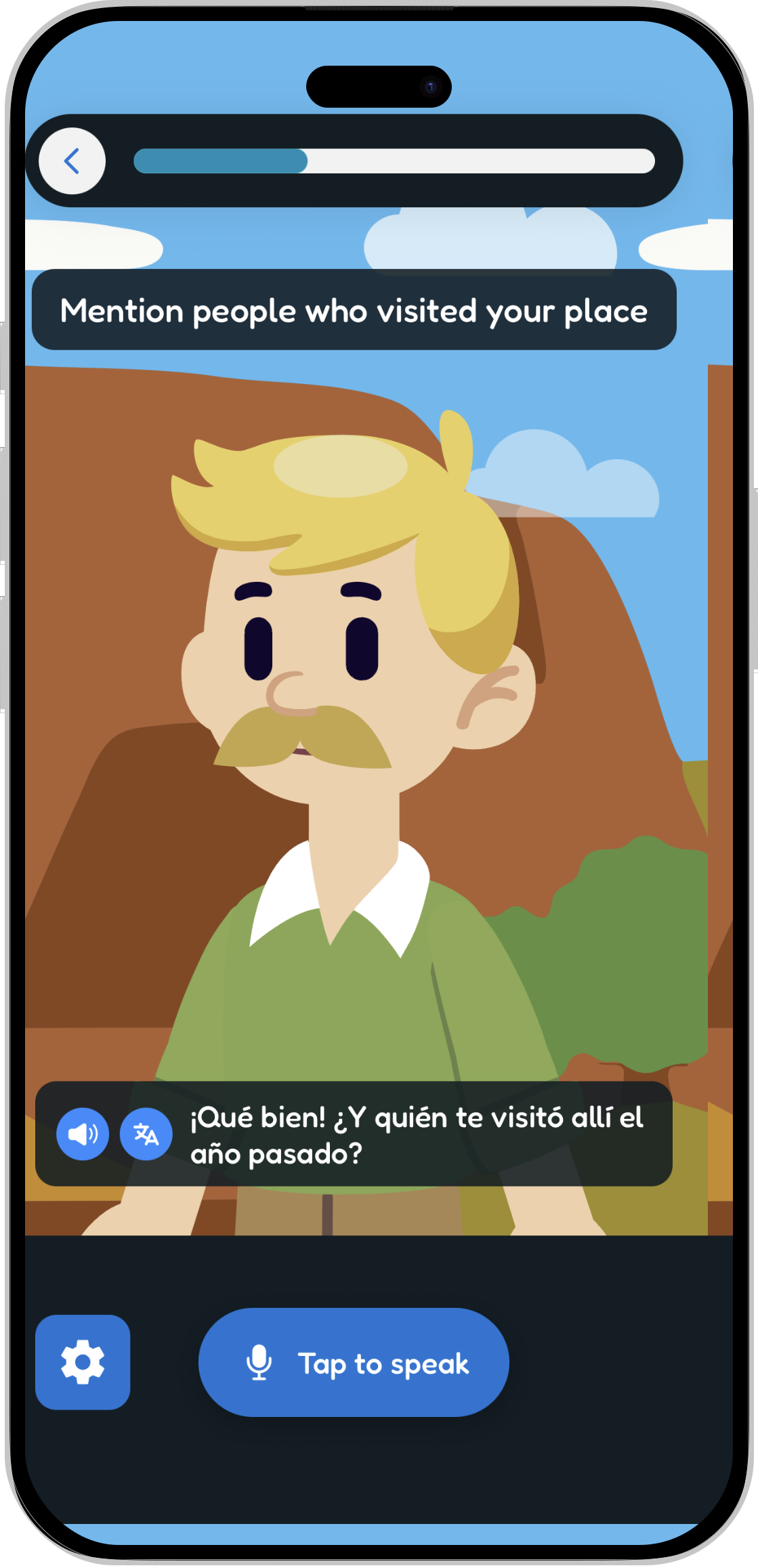
AI Chat Tutor
Practice real conversations with an AI tutor that helps you speak with confidence.
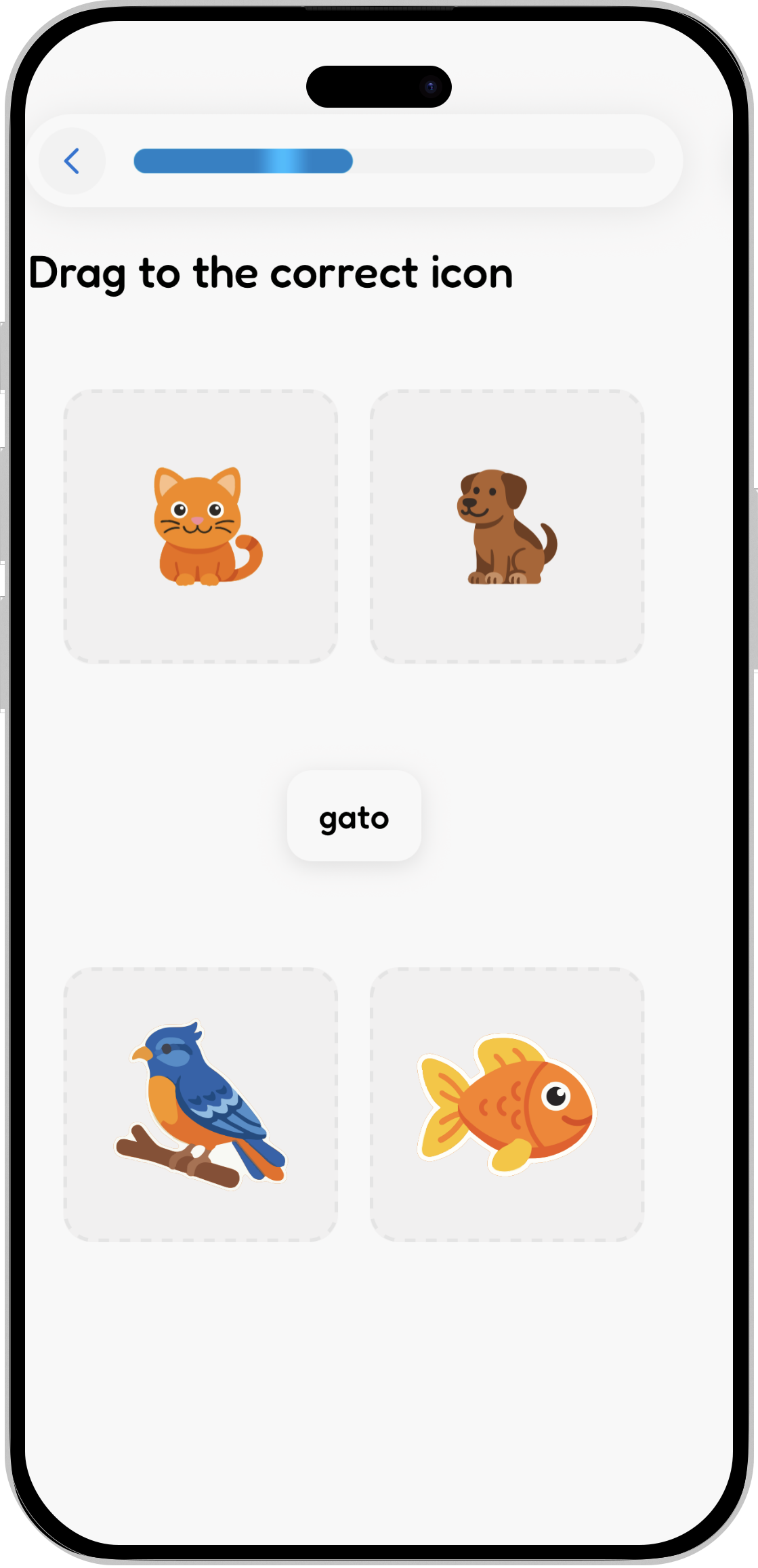
Interactive Games
A variety of games to help you learn and remember new words and phrases.


Why AI Language Learning Matters Now
Think about learning piano from a book that makes every single student play the same songs in the same order, no matter how fast or slow they learn. For a long time, language learning felt just like that—rigid, impersonal, and a bit lonely. AI completely flips that dynamic on its head. It introduces a smart, adaptive guide that moves at your pace.
This isn't about replacing human teachers. It's about giving learners tireless, data-driven support that was never possible before. The goal is to make learning a language more efficient, fun, and accessible. For you, that means no more guessing what to study next or grinding through topics you’ve already mastered.
The Shift from Niche to Mainstream
What started as a futuristic idea has quickly become a core part of modern education. And the numbers back it up. The global digital language learning market was valued at US$26.54 billion in 2024 and is on track to explode to US$116.88 billion by 2033. AI-powered tools are the main engine driving that massive growth. You can read more about the market's acceleration toward AI-driven learning.
This isn't just a trend; it's a fundamental change in how we learn. AI-powered platforms can:
- Give you instant, judgment-free feedback on your accent and grammar.
- Build personalized study plans that hammer away at your weak spots.
- Offer unlimited conversation practice with AI chatbots, so you build real confidence.
- Turn learning into a daily habit with fun games and bite-sized lessons.
AI language learning transforms passive memorization into an active, interactive dialogue. It’s the difference between reading a travel guide and having a local show you the hidden gems of their city.
This evolution has opened the door for a new wave of incredibly smart apps. To see how they stack up, check out our guide to the 12 best language learning apps and how they use technology to get you fluent faster.
Now, let's dive into the specific features that make all of this possible.
The Core AI Features That Are Changing the Game
So, what’s actually happening under the hood of an AI language app? It’s not magic—it's a set of smart, specific tools designed to tackle the biggest headaches language learners have faced for decades. These features work together to create an experience that feels less like a dusty textbook and more like a personal language coach.
The whole idea is to mimic the best parts of having a human tutor—patience, personalized feedback, endless practice—and make it available 24/7, right in your pocket. Each feature is built to solve a specific problem, from the fear of speaking out loud to the struggle of making new words stick.
This map gives you a great visual of how a central AI Tutor can manage everything from your daily schedule to your long-term progress.
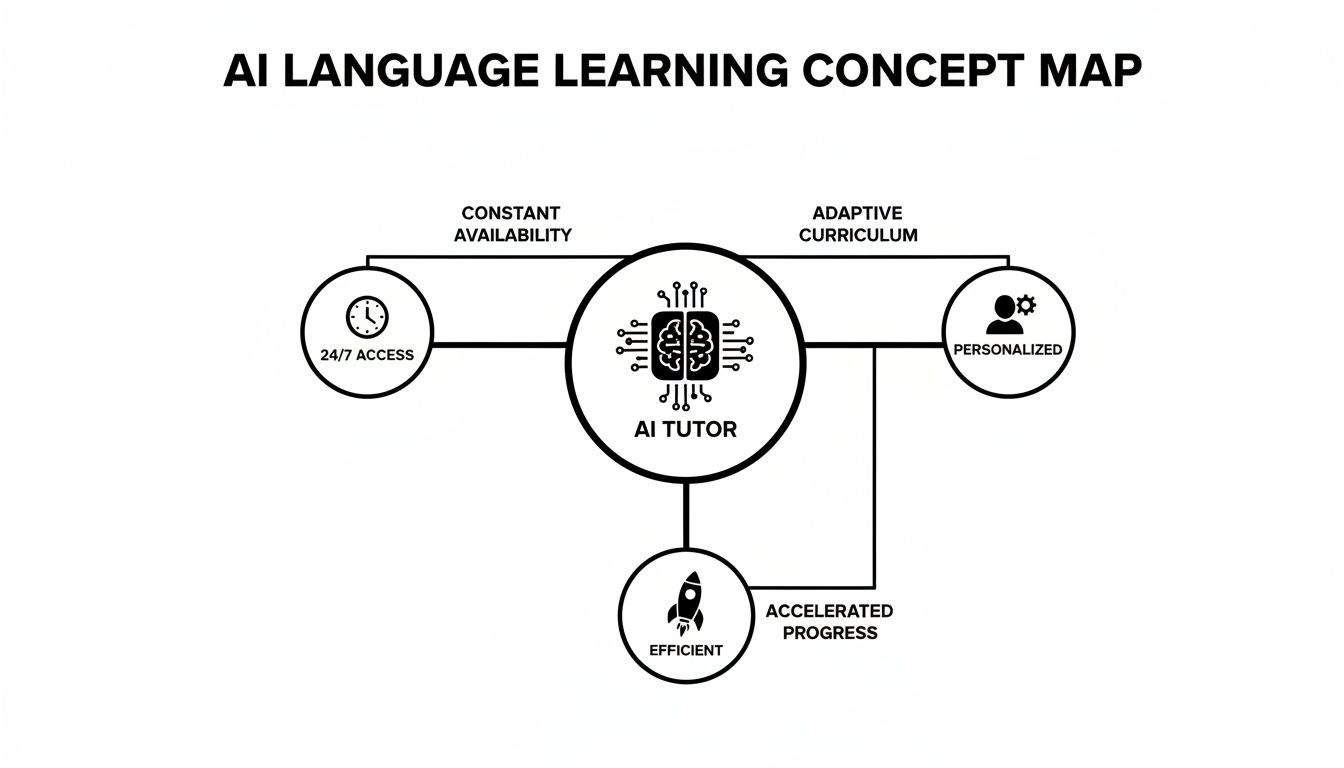
The real power here isn't just one single feature, but how they all combine to create an adaptive and effective learning partner. Let's break down the key players.
To make this clearer, here’s a quick overview of the core features we’re about to dive into, what problem they solve, and how they directly help you.
Core AI Language Learning Features at a Glance
| AI Feature | Learning Problem It Solves | How It Helps You |
|---|---|---|
| AI Chatbots | Fear of speaking and lack of practice partners. | Provides a 24/7, no-judgment space to build conversation confidence. |
| Personalized SRS | Forgetting vocabulary quickly (the "forgetting curve"). | Learns your memory patterns to show you the right word at the right time. |
| Pronunciation Scoring | Not knowing if you sound like a native speaker. | Gives you instant, specific feedback to help you refine your accent. |
| Adaptive Learning Paths | One-size-fits-all lessons that are too easy or too hard. | Creates a custom curriculum that adjusts to your skill level in real-time. |
Now, let's explore exactly how each of these features works to get you fluent, faster.
AI Chatbots: Your Patient Conversation Partner
Let’s be honest: one of the biggest hurdles to fluency is simply not having enough opportunities to talk. AI chatbots solve this problem by giving you a conversation partner who is always available and will never, ever get tired of your questions or judge your mistakes.
You can mess up, ask for a translation, or repeat the same phrase a hundred times without feeling awkward. That freedom is absolutely crucial for building confidence. Instead of just memorizing isolated sentences, you're having real back-and-forth conversations—from ordering a coffee to arguing about your favorite movies.
Personalized Spaced Repetition Systems
Ever feel like you learn a new word one day and it’s gone the next? Our brains are wired to forget information we don't use. A Spaced Repetition System (SRS) is basically a hyper-intelligent flashcard system designed to fight that natural "forgetting curve."
But an AI-powered SRS takes it to another level. It gets to know you.
- It figures out which words you personally struggle with and shows them to you more often.
- It sees which words you've mastered and pushes them further out, so you don't waste time reviewing what you already know.
- It’s designed to bring a word back right at the moment you’re about to forget it, locking it into your long-term memory.
This adaptive system makes sure your study time is razor-focused on what actually matters, moving you forward much more efficiently.
Real-Time Pronunciation Scoring
Nothing crushes your confidence faster than saying something and getting a blank stare in return. Nailing an accent is tough because it requires immediate, accurate feedback—something that’s almost impossible to get outside of a classroom.
This is where advanced speech recognition, like OpenAI's Whisper AI model, comes in. These systems listen to you speak, analyze your pronunciation against a native speaker's, and give you instant, actionable feedback.
It means you can see exactly which sounds you’re getting wrong and drill them until they’re perfect. It's like having a pronunciation coach in your pocket, helping you polish your accent one word at a time. This rapid feedback loop is the key to speaking clearly and confidently.
Adaptive Learning Paths and Content Generation
Traditional language classes put everyone on the same track, regardless of their background or learning speed. AI completely flips that script by creating a unique curriculum for every single user. It gauges your starting level and then constantly tweaks the difficulty based on how you're doing.
Crushing the grammar exercises? The AI will move you to more complex topics faster. Tripping over a specific verb tense? It will generate more practice activities focused on that exact weak spot. This keeps you in that sweet spot of learning—always challenged, but never overwhelmed.
How AI Language Tutors Work in the Real World

Knowing the theory is one thing, but seeing how these AI features actually come alive inside an app is what really matters. The best platforms don't just hand you a box of tools; they build experiences that feel like you're stepping into the language itself.
It’s the difference between knowing a chatbot exists and actually using one to confidently order tapas in Spanish without breaking a sweat. When you see AI language learning in action, you can start picturing how it fits into your own study routine. You stop being a passive user and become an active learner who knows exactly which feature will get you the results you want.
From Theory to Tangible Practice
So, let's ground all this in reality. The top language apps all put their own unique spin on these core AI features, which really shows how flexible the technology is. Each one offers a different flavor of AI-driven practice designed to solve a specific piece of the fluency puzzle.
An app like PolyChat, for example, uses its AI chatbot to drop you into practical, role-playing scenarios. You're not just having a random, pointless chat; you're put in a specific situation, like trying to check into a hotel or figuring out the train system. You can see for yourself how PolyChat integrates these advanced AI features to build real conversational muscle.
Another great example is Duolingo Max, which uses an AI Roleplay feature to simulate chats with different characters. This gets you practicing in all sorts of social situations, from making weekend plans to debating a topic, all with an AI that intelligently adapts to whatever you say.
Real-World Scenarios in Action
To really get a feel for this, let's walk through what a typical study session could look like.
- Immersive Role-Playing: Let's say you're getting ready for a trip to Paris. Instead of just memorizing phrases from a book, you fire up a scenario where you're at a French bakery. The AI plays the part of the baker, asking what you'd like and responding naturally to your orders. It’s a safe, repeatable space to build confidence for the real world.
- Adaptive Feedback on the Fly: You try to order a croissant, but you mispronounce it. The app’s pronunciation scoring doesn't just mark you wrong. It might highlight the exact syllable you stumbled on and let you try again until you nail it. That immediate, specific feedback is how you actually start refining your accent.
- Personalized Drill Sessions: After your bakery adventure, the app’s personalized SRS flags "pâtisserie" (pastry shop) as a new, tricky word for you. It automatically schedules it for review at the perfect time, making sure it sticks in your long-term memory instead of fading away.
The whole point of these apps is to bridge the massive gap between knowing a language and actually using it. AI tutors create a playground where you can fail, learn, and succeed without the pressure of a real-life conversation.
The engagement numbers really tell the story. Speak, an AI-first platform, saw its 10 million registered users speak a staggering 1 billion sentences in just one year. That shows you just how much practice people are getting, and you can discover more insights about market growth. These examples prove that AI isn't just a gimmick; it's a powerful engine for active, hands-on learning.
To really get the most out of any tool, you have to know what it’s good at—and what it’s not. AI language tutors are a powerful ally on your learning journey, but they aren't a magic wand. Understanding their pros and cons is the key to building a study strategy that actually works.
The biggest win? Unlimited, judgment-free practice. An AI tutor is on call 24/7, ready to run through a coffee shop role-play or drill verb conjugations whenever you have a spare five minutes. This completely removes the fear of making mistakes in front of another person, creating a safe space to mess up, try again, and build real confidence.
On top of that, AI is brilliant at personalization. It remembers every single answer you give, figures out your specific weak spots, and serves up lessons designed to tackle them head-on. This adaptive learning means you're not wasting time on things you already know; every minute is spent on what you need most.
Key Strengths of AI Tutors
- Always Available: Practice speaking at midnight or during your lunch break. There’s no need to schedule a session with a real person.
- Deeply Personal: The AI creates a learning path just for you, constantly adapting to your progress and homing in on the grammar or vocabulary you struggle with.
- No-Fear Practice Zone: Making mistakes is how we learn, but it can be embarrassing. With AI, you can get things wrong and repeat exercises as many times as you need without a shred of judgment.
- Instant Corrections: Get immediate feedback on your pronunciation, grammar, and word choice. This tight feedback loop helps you fix errors before they become bad habits.
AI’s impact on learning isn’t just hype; it's measurable. Studies show that AI features can boost retention by up to 41% for younger learners. This kind of efficiency is why AI is adding a +3.8% uplift to the online language learning market, which is already valued at a massive USD 21.06 billion. You can dive deeper into this trend in the full market analysis.
Current Limitations to Keep in Mind
But let’s be real—AI tutors still have their shortcomings. One of the biggest is the lack of true cultural nuance. An AI can teach you the phrase for "please," but it can't explain the subtle social cues of when to use it, or why one phrasing might sound more polite than another in a very specific situation.
Conversations can also feel a bit… scripted. AI is great at following patterns, but it’s not so great with the spontaneous, creative spark of a real human chat. It won’t get your witty joke or follow an unexpected conversational detour. This makes it an amazing tool for structured practice, but a less-than-perfect substitute for genuine human connection. And on a technical level, a critical factor is speech to text accuracy, which directly determines how useful the pronunciation feedback can be.
By understanding this balance, you can use AI language learning for what it does best: providing tireless, personalized drills to build a rock-solid foundation. Then, you can take that foundation out into the real world to gain the cultural fluency and spontaneity that only come from talking to real people.
How to Build a Smarter Language Study Routine with AI

Just downloading an AI language app and poking around isn't a strategy. If you really want to make progress, you need a plan that turns passive screen time into active, focused practice. A smart routine is what separates people who just use an app from those who strategically direct their own learning.
The real trick is to treat your AI tutor less like a game and more like a specialized tool designed to hammer out your personal weak spots. It’s all about being intentional with every single session.
Set Specific and Achievable Goals
A vague goal like "practice Spanish" will get you nowhere. You need to get hyper-specific with what you want to accomplish each time you study. This gives your practice a clear purpose and, more importantly, makes your progress easy to see.
Before you even open the app, decide on a concrete micro-goal. For instance:
- For Conversation: "I'm going to complete one AI role-play about ordering food. I will make sure to use at least five new vocabulary words."
- For Pronunciation: "I'll spend 10 minutes working on the French 'r' sound. I'm not stopping until the AI gives me an 80% accuracy score."
- For Grammar: "Today is all about the past tense. I'll have the AI generate five sentences for me to conjugate and then check my work."
This goal-first approach changes random practice into a targeted workout for your brain. It makes sure every minute you spend with your AI tutor is actually pushing you closer to fluency.
Combine Digital Tools with Real-World Practice
An AI tutor is your training ground, but the real world is where it all counts. The most successful learners use AI to build a solid foundation and then actively look for chances to apply their skills in real life.
This blended approach is what makes the language stick—you don't just know it, you know how to use it. Think of your AI app as a flight simulator; real conversations are you actually flying the plane. This mix is especially powerful for younger learners. In fact, a whopping 73% of learners under 30 use AI-powered mobile apps, loving features like instant feedback that get them ready for the real thing. You can explore the full market report on learner habits to see the data for yourself.
Make Your Routine Engaging and Consistent
Consistency beats intensity. Every single time. A few short sessions every day are way more effective than one long, painful study marathon on a Sunday. AI tools are taking off because they're great at making learning feel less like a chore.
Features like points, leaderboards, and progress bars tap into our natural drive for achievement, making it way easier to build a daily habit. If you’re curious about the psychology behind this, you can learn more about how gamification in language learning keeps you coming back. By weaving these fun, AI-driven activities into your day, you create a routine you actually want to stick with.
What's Next for AI in Language Education?
The AI tools we have today are just scratching the surface. What's coming next is a move beyond simple chatbots and flashcards into learning experiences that are genuinely immersive and intuitive. The line between digital practice and real-world conversation is about to get very blurry.
Imagine this: you step into a hyper-realistic virtual reality (VR) simulation of a bustling Parisian café. You won’t be typing your order from a multiple-choice list. You'll actually speak to a virtual barista, navigate the busy environment, and hear the ambient sounds of the city all around you. This is the kind of contextual, situational practice that current apps can only dream of.
The Rise of More Human-Like AI Tutors
It's not just about realistic environments. The next generation of AI tutors will also be far more emotionally intelligent. We're heading toward systems that can sense when you're getting frustrated with a tough concept.
Instead of just drilling you with the same exercise over and over, a truly advanced AI could:
- Sense your hesitation in your voice and offer a bit of encouragement.
- Detect a tired tone and suggest switching to a short, fun game.
- Slow the lesson's pace when it senses you're feeling overwhelmed.
The goal is to create an AI partner that doesn't just teach you a language, but also understands your state of mind. This makes the entire process feel more supportive and, well, more human.
This evolution makes one thing clear: AI language learning isn't just a fleeting trend. It’s a foundational shift that will continue to make picking up a new language more engaging, intuitive, and deeply effective than ever before.
A Few Common Questions About AI Language Learning
As you start exploring AI language tools, a few practical questions always pop up. Let's tackle some of the most common ones head-on.
Can AI Really Replace a Human Teacher?
Not entirely, and probably not anytime soon. Think of an AI tutor as the ultimate training partner—it's endlessly patient, available 24/7 for practice, and gives you instant feedback on your pronunciation and grammar. It’s perfect for drilling vocabulary and building conversational confidence.
But a great human teacher offers something different: deep cultural nuance, empathy, and the creative spark to explain a concept in a way that just clicks for you. They can read your body language and sense your frustration. The best approach? Use AI for the reps and a human for the relationship and deeper understanding.
Is This Stuff Actually Good for Absolute Beginners?
Yes, it's often a fantastic starting point. Stepping into a real conversation can be terrifying when you only know five words. AI platforms provide a safe, judgment-free zone to get the basics down.
You can practice saying "hello" a hundred times without annoying anyone, get a feel for the basic sentence structure, and build a foundation of vocabulary. It’s a huge confidence booster.
The best way to use an AI language tool is as a tireless training partner. It’s the perfect place to build foundational skills and confidence before you take them into real-world conversations.
How Do I Pick the Right AI Language App?
The key is to match the app's strengths to your personal goals. Don't just download the first one you see.
- Want to get better at speaking? Look for an app with a really strong AI chatbot, role-playing scenarios, and top-notch pronunciation analysis.
- Need to build vocabulary? Find one with a smart, adaptive Spaced Repetition System (SRS) that learns how you forget things.
- Struggling with grammar? Check for apps that offer interactive exercises and clear, contextual explanations when you make a mistake.
Most of the best apps have free trials. Play around with a couple of them for a few days. See which one’s teaching style feels right and whose interface you actually enjoy using. The one that keeps you coming back is the right one for you.
Ready to see how a smart, gamified AI tutor can fit into your routine? With PolyChat, you get unlimited lessons, advanced AI conversation practice, and fun challenges designed to make learning stick. Download it for free and start your journey today at https://www.polychatapp.com.

Jean-Baptiste Bolh
Co-Founder
Applied AI