Aller Conjugation: Vais, Suis Allé, Irai and Every Tense (Chart)
Aller means "to go." Even though it ends in -er, it's highly irregular: the present is je vais, tu vas, il va, nous allons, vous allez, ils vont, the future stem is ir- (j'irai), and the subjunctive is que j'aille. The passé composé uses être: je suis allé(e).
Ready to Learn a Language?
Try PolyChat's engaging language lessons, interactive learning games and put your new vocabulary to the test!
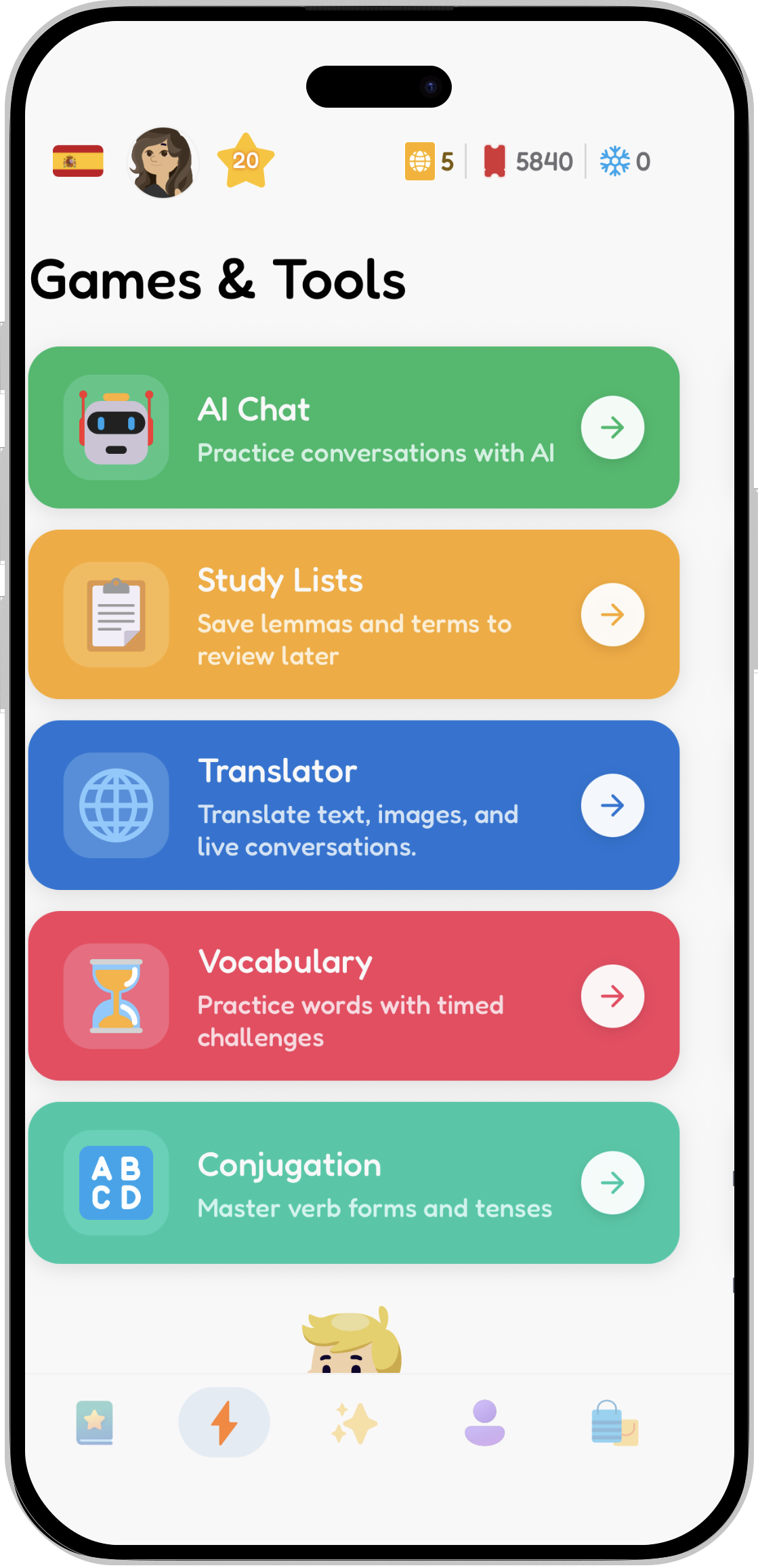
Games & Tools
Tools that every language learner needs at all stages of their learning journey.

AI Chat Tutor
Practice real conversations with an AI tutor that helps you speak with confidence.
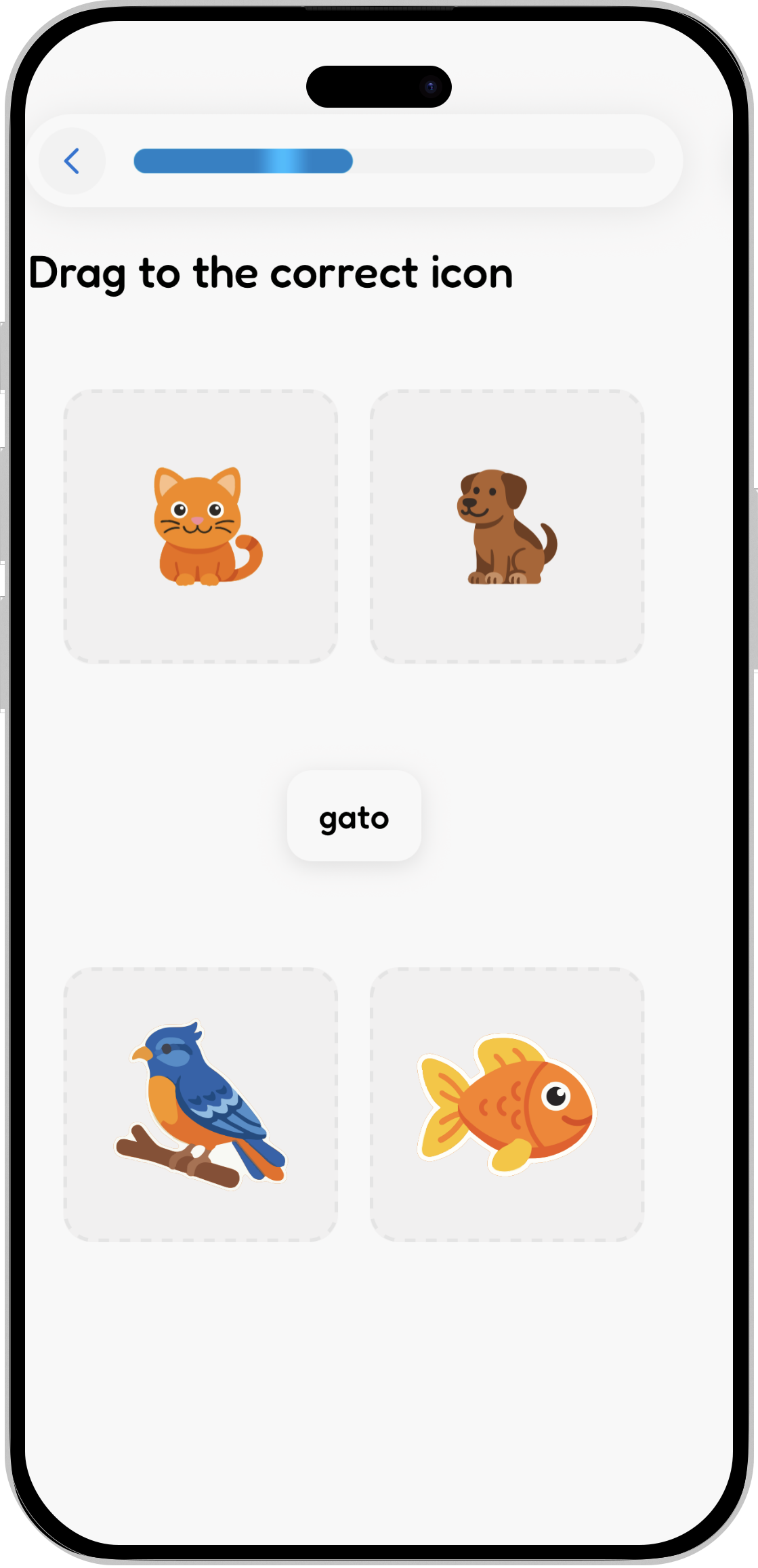
Interactive Games
A variety of games to help you learn and remember new words and phrases.


Aller Conjugation Chart
In every table, il also stands for elle and on, and ils also stands for elles.
Indicative: present, passé composé and imparfait
| Present (présent) | Passé composé | Imperfect (imparfait) |
|---|---|---|
| je vais | je suis allé(e) | j'allais |
| tu vas | tu es allé(e) | tu allais |
| il va | il est allé(e) | il allait |
| nous allons | nous sommes allé(e)s | nous allions |
| vous allez | vous êtes allé(e)(s) | vous alliez |
| ils vont | ils sont allé(e)s | ils allaient |
Future and conditional
| Future (futur simple) | Conditional (conditionnel) |
|---|---|
| j'irai | j'irais |
| tu iras | tu irais |
| il ira | il irait |
| nous irons | nous irions |
| vous irez | vous iriez |
| ils iront | ils iraient |
Subjunctive and imperative
| Present subjunctive (subjonctif) |
|---|
| que j'aille |
| que tu ailles |
| qu'il aille |
| que nous allions |
| que vous alliez |
| qu'ils aillent |
| Person | Imperative (impératif) |
|---|---|
| tu | va ! |
| nous | allons ! |
| vous | allez ! |
Present participle: allant · Past participle: allé · Auxiliary: être (je suis allé(e))
What Makes Aller Irregular
Aller mixes three different stems:
- v- in most of the present: vais, vas, va, vont.
- all- in nous and vous, and in the imparfait: nous allons, vous allez, j'allais.
- ir- in the future and conditional: j'irai, j'irais.
The subjunctive is que j'aille, que tu ailles, qu'il aille, qu'ils aillent, but que nous allions, que vous alliez. The tu imperative is va, which becomes vas-y ("go on," "go ahead") before y.
Because aller is a verb of movement, it takes être in compound tenses, and the participle agrees with the subject: elle est allée, nous sommes allés.
How to Use Aller
Aller is used for going places and for health:
- Movement: Je vais à Paris, On va au cinéma. Use en for feminine countries (en France) and au for masculine ones (au Canada).
- Health and wellbeing: Comment allez-vous ? (How are you?), Ça va bien.
- The futur proche: aller + infinitive is the everyday way to talk about the future: Je vais manger (I'm going to eat). It's more common in speech than the futur simple.
Common Expressions With Aller
| Expression | Meaning | Example |
|---|---|---|
| ça va | it's fine / how are you? | Ça va ? — Oui, ça va bien. |
| s'en aller | to leave, to go away | Je m'en vais demain. |
| allons-y | let's go | Tout le monde est prêt ? Allons-y ! |
| aller chercher | to go get, to pick up | Je vais chercher les enfants à l'école. |
| aller bien à | to suit (someone) | Cette robe te va bien. |
| aller de soi | to go without saying | Ça va de soi. |
Aller in Example Sentences
- Je vais au travail en vélo. (I go to work by bike.)
- Nous sommes allés au Maroc l'été dernier. (We went to Morocco last summer.)
- Quand j'étais étudiant, j'allais souvent au théâtre. (When I was a student, I often went to the theater.)
- Tu vas adorer ce film. (You're going to love this movie.)
- J'irai te voir la semaine prochaine. (I'll come and see you next week.)
- Il faut que j'aille à la banque. (I have to go to the bank.)
Common Mistakes With Aller
- "J'ai allé" instead of je suis allé. Aller takes être in the passé composé.
- Forgetting agreement. A woman writes je suis allée; a group writes nous sommes allés.
- "Je vais à la France." Use en France for feminine countries.
- "Je vais à la maison" vs "je rentre." Both are correct, but for going home, French speakers usually say je rentre or je vais chez moi.
Frequently Asked Questions
Does aller take être or avoir?
Aller always takes être in compound tenses: je suis allé, j'étais allé, je serai allé.
What is the future of aller?
J'irai, tu iras, il ira, nous irons, vous irez, ils iront.
What is the subjunctive of aller?
Que j'aille, que tu ailles, qu'il aille, que nous allions, que vous alliez, qu'ils aillent.
What is the futur proche?
The futur proche is aller in the present + an infinitive: je vais partir (I'm going to leave). It's the most common way to talk about the future in spoken French.
Keep Practicing
The quiz below mixes pronouns and tenses from the chart above. For more practice, these guides pair well with aller:

Jean-Baptiste Bolh
Co-Founder
Applied AI