10 Good Apps to Learn Languages for 2026

Monday morning. You open a language app on the train, finish a few quick exercises, and hit the same wall a lot of learners hit: a usage limit, another round of repetitive drills, or the feeling that you’re getting faster at the app instead of better at the language.
That usually points to an app mismatch, not a discipline problem.
A good language app has to fit the way you study. Commuters need lessons they can use with their eyes off the screen. Beginners often need enough structure to avoid guessing their way through grammar. More serious learners usually care less about streaks and more about getting enough practice without artificial limits. If you want AI-heavy practice, start with this guide to AI language learning apps for speaking and daily study.
That’s the angle of this list. It is not just a ranking. It matches each app to a specific learner and a specific job. One app may be right for the driver who wants audio-first lessons. Another may suit the student who wants clear grammar explanations. Another may work best for someone who wants a lot of gamified practice across multiple languages without being slowed down by heart systems or session caps.
I’ve tested these apps as tools, not as entertainment products. Some are polished but shallow. Some are effective but clunky. Some are cheap until you try to use them seriously. Others justify the price if they solve the right problem.
You’ll see the trade-offs clearly, along with who each app is for.
This guide focuses on apps because they’re where most people start—but a language learning program is any structured system that moves you from exposure to usable skill. That can be an app, a tutor, a classroom course, or an immersion experience. The format matters less than the structure: what you study, how you practice, how you get feedback, and whether the program keeps you moving when motivation dips. The global language learning market was valued at $70.69 billion in 2022 and is projected to reach $187.69 billion by 2028, according to Kent State’s overview of language learning trends. A strong program handles four jobs: builds vocabulary, teaches structure, creates output, and corrects mistakes before they harden into habits.
A modern language learning application is best understood as a pocket tutor with software habits. It presents language in small pieces, watches how you respond, and decides what to show you next. Strong apps combine several jobs that used to be separate: teacher, coach, drill partner, notebook, and planner. Think of it like a gym—the app isn’t your strength; it’s where training happens.
Most learners need an app that answers three basic questions: what to study today, why an answer was wrong, and whether they can keep going when motivation is there. For a broader look at what fluency actually involves, see this guide on how to become fluent in a language.
Practical rule: Don’t judge an app by how exciting day one feels. Judge it by whether you can still use it calmly and consistently on day thirty.
Most people think they’re comparing apps. They’re usually comparing learning systems. A flashcard deck helps with recall. A tutor marketplace helps with conversation. A full platform tries to combine lessons, review, progress tracking, and enough variety to keep you practicing after the first week. Mobile-first study has become the default entry point: the global language learning market is projected to grow from about USD 4.21 billion in 2023 to USD 16.2 billion by 2033, with mobile apps capturing over 62% of revenue, according to language learning app market statistics. If you’ve only used vocabulary drills, it helps to understand how gamification in language learning works when it supports repetition instead of replacing it.
| Type | Good for | Usually missing |
|---|---|---|
| Flashcard app | Vocabulary recall | Grammar sequence, listening, guided progression |
| Tutor marketplace | Conversation, accountability | Daily reinforcement, structured review |
| Translation tool | Quick support on the go | Long-term skill building |
| Full platform | Routine, progression, mixed practice | Sometimes depth in one specialized area |
Before you pick from the list below, match the platform to your actual goal:
| If your goal is... | Prioritize... | Apps that often fit |
|---|---|---|
| Travel phrases and listening comfort | Audio-heavy, scenario drills | Pimsleur, Memrise, Mango |
| School-style depth and grammar clarity | Structured paths and explanations | Babbel, Rosetta Stone, Busuu |
| Workplace communication | CEFR-style progression and writing/speaking depth | Babbel, italki, PolyChat for daily reps |
| Multi-language maintenance | Review tools and long study sessions | PolyChat, LingQ, Memrise |
Strong platforms also tend to share four traits worth checking: a curriculum that builds instead of circling, exercises that force recall and not just recognition, tracking that reflects real skill growth, and review woven into the main flow rather than treated as a separate chore.

Different apps run on different teaching DNA. Gamified platforms lower the friction to start. Spaced repetition systems optimize memory timing. Immersive tools train comfort with ambiguity. Structured grammar platforms suit analytical learners. Communicative systems push usable phrases fast. Pick the style that compensates for your weakness, not the one that flatters your preference:
| If you tend to... | You'll probably like... | Watch out for... |
|---|---|---|
| Quit when study feels heavy | Gamified systems | Shallow progress signals |
| Forget words quickly | Spaced repetition | Lack of context |
| Hate long explanations | Immersive learning | Fuzzy grammar control |
| Need rules to feel secure | Structured grammar | Analysis without speaking |
| Need quick real-world use | Communicative practice | Gaps in deeper structure |
For professional learners, vague progress bars are not enough. Teams with CEFR B2+ proficiency have been linked to faster cross-border collaboration when technical communication gets clearer, according to Preply’s discussion of language training KPIs. If work is the mission, look for writing practice, speaking correction, and progression you can map to a real level—not just streaks.
Memory works less like a bucket you fill and more like a path through grass. Walk it once, and it fades. Walk it again just as it starts to disappear, and the route becomes easier to find next time. That’s the logic behind spaced repetition—and why recognition alone isn’t enough. If an app mostly asks you to pick the right answer from a list, you may feel confident without being able to produce the language yourself. According to Business of Apps data on the language learning app market, spaced repetition can improve memory retention by 200–300% compared with traditional study, while recall can fall to 20% within 24 hours without reinforcement but stay above 90% with algorithmically timed reviews. For the mechanics behind timed review, see this guide to spaced repetition for language learning.
Gamification isn’t automatically shallow. Streaks and daily targets can support consistency when they keep you practicing. Problems start when the reward system becomes the main event, or when hearts and energy bars interrupt repetition right when it would do the most good. Helpful gamification rewards recall, supports short sessions, and keeps effort visible. Manipulative gamification blocks practice with hearts or energy limits, prioritizes streak anxiety over skill growth, and traps you in shallow matching loops. According to the 2025 Duolingo Language Report, AI accounts for 33.5% of digital language learning revenue, and 48% of people aged 18 to 24 actively use language learning applications. AI is useful when it targets weak spots instead of flooding you with explanations—Knack’s overview of language learning app design links adaptive systems to 30 to 50% improvements in learning outcomes compared with static curricula. For a deeper look at that shift, this article on AI language learning is a useful companion.
| Feature | What it helps with | Common limitation |
|---|---|---|
| Pronunciation checks | Sounds and confidence | Can reward approximate speech |
| Prompted speaking | Sentence recall | Often too predictable |
| Role-play chat | Realistic response practice | Quality depends on guidance |
| Review system | Memory retention | Weak apps review too randomly |
A feature is worth keeping only if it helps you do one of three things better: understand, remember, or use the language. When comparing options, look for active recall, review logic that reintroduces older material at useful moments, clear correction on wrong answers, depth beyond basics (grammar, verb forms, full sentences), and low-frustration design that doesn’t punish motivated learners for wanting another round.
| Learner type | What matters most | Watch out for |
|---|---|---|
| Traveler | Fast phrase access, listening, speaking prompts | Too much grammar too early |
| Student | Clear explanations, structured review, conjugation practice | Game layers that distract from coursework |
| Professional | Role-play, formal vocabulary, flexible review | Apps that stay too casual |
| Hobbyist or polyglot | Depth, freedom, broad language support | Systems that become repetitive or restrictive |
If you’re stuck between two or three options, run this quick test: state your goal in one sentence, check whether the app’s practice matches that task, see whether the path deepens after the beginner honeymoon phase, and ask whether you’ll actually open it on a tired weekday. Also ask: do I want a guided path or room to roam? How much grammar explanation do I need? Will I actually use the speaking tools? Can I study when motivation shows up—not only when the app allows it? Does review bring back hard material at the right time?
Ready to Learn a Language?
Try PolyChat's engaging language lessons, interactive learning games and put your new vocabulary to the test!
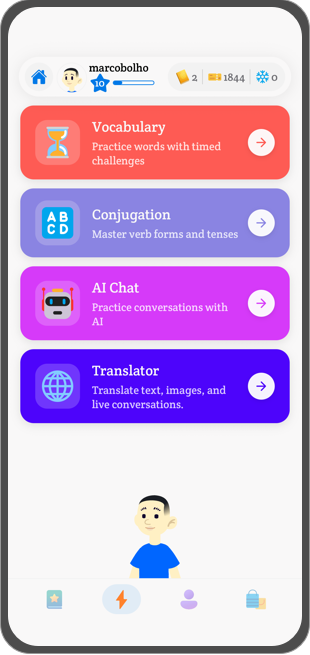
Games & Tools
Essential tools for every learner
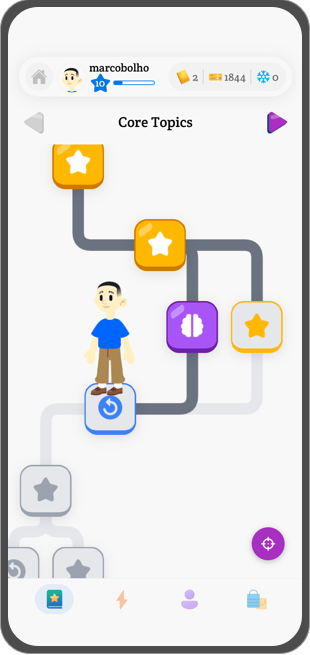
Thousands of Lessons
From beginner to fluent
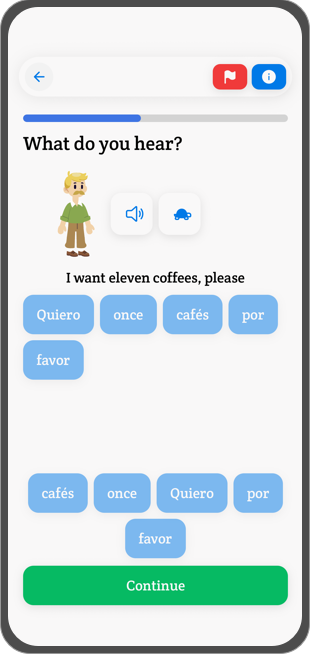
Interactive Exercises
Practice vocabulary & conjugation


Beyond Apps: Four Program Types
Most learners eventually need more than one format. Apps are the easiest entry point, but tutoring, classes, and immersion each solve problems apps rarely handle well on their own.

| Program Type | Best For | Typical Cost | Flexibility | Feedback Loop |
|---|---|---|---|---|
| Self-study apps | Busy learners, beginners, habit builders | Free to subscription-based | High | Fast for quizzes, limited for nuanced speaking |
| Tutoring services | Conversation practice, correction, accountability | Pay per session or package | Medium | Fast and personalized |
| Classroom courses | Learners who want structure and deadlines | Course fee or tuition | Low to medium | Slower, but consistent |
| Immersion programs | Rapid real-world use, motivated learners | Often high due to program and travel costs | Low | Constant and immediate |
- Choose apps if you need flexibility, habit-building, and low-friction repetition.
- Choose tutoring if you want speaking gains, correction, and accountability—use tutor time for live output, not what an app can do cheaply.
- Choose classes if you need deadlines, curriculum, and external structure.
- Choose immersion if you’re ready to use the language in messy real conditions—ideally on top of some prior study.
The online language learning market is projected to reach $115 billion by 2025, and in the U.S. only 20% of K-12 students study a foreign language, with Spanish the focus of 25% of learners, according to Preply’s global language learning report. Many mainstream programs still overlook less commonly taught languages, which make up less than 25% of world language enrollments in U.S. higher education, as noted by Cornell’s discussion of teaching less commonly taught languages.
1. PolyChat

Open a language app during a lunch break, finish a few exercises, and want to keep going. Serious learners know what often happens next. A limit kicks in, the session stalls, and the app starts managing your behavior instead of supporting your study. PolyChat is a better fit for the learner who wants to keep practicing while the motivation is there.
I’d put PolyChat near the top for one specific persona: the learner who wants high-volume daily practice across one or several languages without hearts, energy systems, or hard session caps getting in the way. That makes it a practical choice for exam prep, maintenance study, and polyglots who rotate between languages during the week. If you’re comparing apps in that category, this guide to Duolingo alternatives for more flexible daily practice gives useful context.
Best for unlimited gamified practice
PolyChat pulls several study modes into one place. You get timed vocabulary work, translation and conversation games, structured lessons, progress tracking, a built-in translator, and a personal dictionary that grows with use. It also lets you learn one foreign language through another, which is very useful for multilingual learners who do not want English as the default bridge. PolyChat is also noticeably stronger for learners outside the usual Spanish–French lane, with solid support for languages such as Dutch, Swedish, Danish, Norwegian, Romanian, Polish, Czech, Croatian, Catalan, Albanian, and Vietnamese—where many mainstream apps feel thin after the beginner layer.
That last point matters more than many rankings admit.
In my testing, PolyChat worked best for learners who benefit from repetition but still want variety inside a single session. You can drill vocabulary for ten minutes, switch to translation, then review saved words without changing apps. For conjugation-heavy languages, that matters because verb practice is treated as a recurring skill, not a side feature.
Practical rule: If an app loses you the moment it interrupts a good study session, choose the one that lets you keep going.
Unlimited practice matters most when you’re building control, not just recognition—fixing adjective agreement, reviewing a growing vocabulary list, or repeating drills until phrasing feels natural. In those moments, stopping the session early breaks the learning loop. Motivation arrives unpredictably; a good app should let you use it while it’s there.
PolyChat is strongest in four use cases:
- Multi-language learners: You can keep several languages active without being pushed into short, restricted sessions.
- Students who need extra reps: The mix of games and lessons makes it easy to add review around a class or textbook.
- Busy professionals and travelers: Short drills and the built-in translator are convenient when study time comes in fragments.
- Grammar-focused learners: Conjugation gets more attention here than it does in many mainstream apps.
The trade-off is clear. PolyChat is better at giving you a lot of practice than at giving you live human interaction. If your main problem is speaking spontaneously with native speakers, you will still want tutoring, language exchange, or another speaking-first tool alongside it. Pricing also deserves a quick check in the app store before you commit, since the site focuses more on access and features than on spelling out every purchase tier.
For readers who want a broader look at where PolyChat fits among similar tools, its own comparison of language learning apps and common app limitations is a useful companion piece. If your priority is AI-assisted study in particular, PolyChat’s breakdown of what makes the best AI language app useful in practice is also worth reading.
2. Duolingo
Duolingo is still the default recommendation for a reason. It’s approachable, polished, and very good at getting people to open the app every day. If someone says they want to “just get started,” Duolingo is often the lowest-friction answer.
It also has unmatched visibility in the category. In July 2024 alone, Duolingo recorded about 14.3 million downloads worldwide. That kind of scale usually means two things for users: the app is doing something right with habit formation, and it has the product maturity that comes from serving a huge audience.
Best for beginners who need momentum
Duolingo works best when your real challenge is consistency, not optimization. The streak system, short lessons, and clear progression make it easy to do a little every day. For complete beginners, that matters.
Its paid tiers also push further into AI. Duolingo Max adds roleplays and explanations in select languages, which can make the app feel more interactive than the classic tile-tapping format.
What doesn’t work as well is long, focused study. The hearts model in the free version can interrupt momentum right when you want to keep going. That’s fine if you’re using it for ten minutes a day. It’s frustrating if you’re trying to do real volume.
Duolingo is excellent at making practice feel easy. It’s less reliable as a one-app solution once your goals become more serious.
If that frustration sounds familiar, this guide to apps like Duolingo for learners who want different trade-offs is a useful next read.
Best use case
Use Duolingo if you want a polished on-ramp, a strong daily habit loop, and lots of language options. Don’t rely on it alone if you need deep grammar support, unlimited practice, or advanced speaking development.
3. Babbel

Babbel is what I usually recommend to adults who want something that feels more like a course than a game. It has a steadier, more classroom-like structure than Duolingo, but without becoming dry.
That matters because a lot of learners don’t want endless gamification. They want to know what they’re learning, why they’re learning it, and how the grammar fits together. Babbel is stronger on that than most mainstream apps.
Best for guided learners who want explanations
Babbel’s lessons are short, but they’re built around real-life dialogue and practical language use. The grammar support is clearer than in most app-first products, and that makes it easier to understand patterns instead of memorizing isolated phrases.
It’s also worth noting that Babbel has expanded beyond solo app study. Corporate-focused Babbel offerings launched in late 2024, which signals where the product is especially useful: professionals who need structured, practical communication rather than just casual app engagement.
For busy adults, that’s a strong fit. You can move lesson by lesson without designing your own system from scratch.
Trade-offs that matter
Babbel is less playful than PolyChat or Duolingo, and that’s both a strength and a weakness. If you need fun to stay consistent, you may find it less sticky. If you’re tired of games and want more direct instruction, it feels more efficient.
A few quick realities:
- Better for structure than exploration: Babbel gives you a path. It’s not ideal if you want lots of sandbox-style practice.
- Better for adults than kids: The tone is practical and mature.
- Better for dialogue than immersion media: It teaches useful language well, but it isn’t a native-content platform.
Babbel makes the most sense for someone who wants guided progress, cleaner grammar explanations, and a course-like feel without hiring a tutor right away.
4. Busuu
Busuu sits in a useful middle ground. It’s more output-oriented than many habit-building apps, but it’s still efficient enough for regular mobile use. If you want structured lessons and more speaking-related features inside the same app, Busuu is one of the better fits.
Its premium tiers matter here. The higher plans add AI Conversations, pronunciation feedback, and more speaking tools, which changes the experience a lot compared with the free version.
Best for learners who want to speak earlier
A common problem with app study is that learners stay in recognition mode too long. They can identify words and finish exercises, but they freeze when they need to produce language. Busuu does a better job than many competitors of pushing learners toward output.
Offline mode also helps. If your routine includes flights, trains, or patchy connectivity, Busuu is practical in a way some browser-heavy tools aren’t.
If you know your weak spot is speaking, don’t choose an app that only rewards correct taps. Choose one that asks for more output.
Where Busuu fits
Busuu works well for learners who want a balanced curriculum with a stronger speaking angle than average. It’s especially good for people who want one mobile app to cover self-study, some pronunciation work, and a more active learning style.
The trade-offs are fairly straightforward:
- Smaller language catalog: You’ll find many major languages, but not the same breadth some competitors offer.
- Feature differences across plans: The best parts are more compelling once you move above the free tier.
- Good all-rounder, not the deepest specialist: It covers a lot well, but it’s not the strongest app for immersion media, live tutoring, or unlimited gamified drilling.
For learners who want a practical, app-contained system with a stronger push toward speaking, Busuu deserves a serious look.
5. Memrise

Memrise is one of the better choices if your brain learns through repeated exposure to natural speech rather than formal explanation. It leans heavily on native-speaker video and bite-sized drills, which makes it feel more alive than many text-first apps.
I like Memrise most for learners who need help moving from “textbook language” to “how people sound.”
Best for listening pattern recognition
The strength here is simple. You hear real people, not just polished synthetic examples, and you build familiarity through repetition. That’s useful early on because many beginners underestimate how different real spoken language feels compared with app sentences.
The app is also easy to fit into short sessions. That makes it a strong companion app even if it isn’t your only app.
Where it falls short is grammar depth. Memrise can help you absorb phrases, rhythm, and common wording, but it won’t always explain the system behind what you’re hearing in enough detail for analytical learners.
Who should use it
Memrise is a good match for:
- Beginners who get overwhelmed by dense grammar
- Learners who want more natural listening early
- People who already use another app and need better listening support
- Anyone who likes quick, repeatable sessions
It’s a weaker fit if you want explicit grammar teaching, a highly structured curriculum, or advanced production practice. Think of Memrise as a very useful layer in a broader setup, especially for listening and phrase acquisition.
6. Rosetta Stone

Rosetta Stone still appeals to a specific kind of learner. If you want a highly structured, step-by-step program with a calm, polished feel, it delivers that better than many newer apps.
Its immersive method is the selling point. You work through the language with less reliance on direct translation, and the speech-recognition features add pronunciation practice inside the same system.
Best for learners who want a classic structured program
Rosetta Stone is strongest when you want a guided routine and don’t want to piece together multiple tools. The progression is clear. The interface is stable. You know what you’re supposed to do next.
That’s valuable for learners who don’t enjoy experimentation.
The trade-off is just as clear. The immersion-first method can feel light on explicit grammar explanation. Some learners thrive with that. Others get irritated when they can sense a pattern but aren’t shown the rule directly.
Real-world fit
Rosetta Stone works well for cautious beginners, returners who want a clean restart, and learners who value pronunciation support. It’s less compelling for people who want authentic media, flexible drills, or lots of speaking interaction with real humans.
If you like polished structure and don’t mind inferring some grammar from context, Rosetta Stone still holds up. If you want faster movement into real conversation or media, you’ll probably outgrow it sooner.
7. Pimsleur

Pimsleur is the easiest recommendation on this list if your life is busy and your hands are usually occupied. If you drive a lot, walk a lot, or can’t stare at a screen for another half hour, Pimsleur solves a real problem that many other apps don’t.
Its method is audio-first and recall-heavy. You’re prompted to produce language out loud, not just recognize it.
Best for commuters and speaking confidence
Pimsleur’s biggest advantage is format. You can study while driving, walking, cooking, or doing chores. That makes it one of the most practical good apps to learn languages for people who otherwise struggle to carve out dedicated study time.
The speaking focus is also real. You build recall under pressure, which is much closer to actual conversation than passive review.
That said, Pimsleur is not visually rich, and it won’t satisfy learners who want charts, lots of written examples, or detailed grammar breakdowns. Some people find that liberating. Others find it too narrow.
Use Pimsleur when your schedule blocks screen time, not when you want a complete all-skills curriculum.
When it’s the right pick
Choose Pimsleur if your main goal is speaking confidence and your schedule favors audio learning. Pair it with another tool if you also need reading practice, conjugation drills, or visible grammar explanations.
It’s one of the best examples of an app doing one job very well instead of trying to do everything.
8. Mango Languages

Mango Languages is the app I bring up whenever someone wants a practical option and doesn’t care whether it feels trendy. It often flies under the radar, but it’s useful, broad, and frequently available through public libraries in the US.
That library access point is a major reason to check it before paying for something else.
Best for budget-conscious learners and families
Mango focuses on conversation-first material and steady lesson progression. It feels more instructional than game-like, which can be a plus if you want practical travel or daily-life language without a lot of bells and whistles.
It’s also one of the more institution-friendly platforms. Families, schools, and libraries can use it without much friction, and that gives it a different role than app-store-first products built mainly around streaks and subscriptions.
The downside is that Mango isn’t especially gamified, and it doesn’t lean into the latest AI-heavy feature set. If you want a slick, high-energy experience, it may feel plain.
Best use case
Mango makes sense when value matters, when you want practical dialogues, or when you can get access through your library, school, or employer. It’s not the flashiest option here, but it’s dependable and often overlooked.
For many learners, “available and useful” beats “impressive on a landing page.”
9. LingQ

LingQ is the most self-directed tool on this list. It’s built for learners who want to spend their time with real content such as podcasts, articles, ebooks, and imported media, then mine that content for vocabulary and phrases.
For the right learner, it’s excellent. For the wrong learner, it feels messy fast.
Best for intermediate learners who want real input
If you’re past the absolute beginner stage, LingQ can accelerate vocabulary growth because you’re learning from real material instead of only app-authored lessons. You save words and phrases, review them later, and gradually turn native content into study material.
That’s powerful because at some point every serious learner needs to leave the protected app environment and engage with the language as it’s used in reality.
The catch is complexity. LingQ has more moving parts than the average beginner app, and new users often need time to understand the workflow. If you need a clean, guided path, it can feel like too much administration.
The honest trade-off
LingQ is not the best app for beginners who need hand-holding. It is one of the best tools for learners who already know enough to learn from authentic input and want control over what they consume.
Use it when you’re ready to turn YouTube, podcasts, and articles into your classroom. Don’t use it as your only foundation if you still need basic structure.
10. italki

italki isn’t a course app in the usual sense. It’s a marketplace for lessons, and that changes everything. If your biggest problem is that you understand a lot but can’t speak smoothly, italki can fix the exact bottleneck that app-only study leaves behind.
At this stage, many learners finally start making their passive knowledge active.
Best for direct speaking practice and accountability
The biggest advantage of italki is targeted human feedback. You can book a professional teacher for structured instruction or a community tutor for more relaxed conversation practice. That means you can train for very specific goals: accent work, test prep, business language, or simple speaking fluency.
Unlike all-in-one apps, italki doesn’t pretend one learning path fits everyone. You pick the teacher, schedule, style, and budget.
The trade-off is inconsistency. Tutor quality varies, teaching style varies, and you need to do some vetting. A great tutor can change your progress. A mediocre one can waste time and money.
Who should use it
italki is the best fit for learners who already study independently and need live speaking practice layered on top. It’s also ideal for anyone preparing for interviews, exams, presentations, or relocation.
A few practical points:
- Best when paired with self-study: Let apps handle repetition. Use teachers for correction and live output.
- Best after a few trial lessons: Don’t commit too fast. Fit matters.
- Best for specific goals: You’ll get more value if you know what you need.
If speaking is the priority, this roundup of language learning apps for speaking practice is a useful companion to italki.
Top 10 Language Learning Apps Comparison
Pick the wrong app and the problem shows up fast. The commuter ends up with a visual app they cannot use on the train. The serious learner hits practice limits after ten minutes. The intermediate student gets stuck repeating beginner phrases instead of working with real content.
That is why a flat top-10 list only gets you part of the way. The better question is simpler: which app fits your study style, schedule, and frustration tolerance?
| Product | Core focus ✨ | Best fit / real advantage 🏆 | Quality ★ | Price / Value 💰 | Target audience 👥 |
|---|---|---|---|---|---|
| PolyChat 🏆 | Gamified lessons, vocabulary and conjugation practice, AI tools, built-in translator ✨ | Unlimited practice, broad language support, especially strong for learners who want long study sessions without hard daily limits | ★★★★★ (5/5 App Store) | 💰 Free to download; core features free (check store for premium) | 👥 Students, polyglots, travelers, educators, professionals |
| Duolingo | Bite-sized gamified lessons, streaks, XP ✨ | Strong habit builder with a huge course catalog. Best for learners who need a daily nudge more than deep explanation | ★★★★ | 💰 Freemium; Super/Max subscriptions | 👥 Beginners, casual daily learners |
| Babbel | Structured courses with grammar support ✨ | Clear explanations and orderly progression. A good fit for adults who want lessons to feel like a course, not a game | ★★★★ | 💰 Subscription (monthly/annual/lifetime options) | 👥 Busy adults wanting guided progress |
| Busuu | Self-study paths plus speaking and pronunciation tools ✨ | Useful mix of solo study and outside feedback. Works well for learners who want app structure with some correction built in | ★★★★ | 💰 Freemium; Premium / Premium Plus tiers | 👥 Speaking-focused learners, commuters |
| Memrise | Native-speaker video clips and spaced repetition vocabulary ✨ | Better than many apps for hearing everyday speech early. Good for learners who need listening exposure, not just text prompts | ★★★★ | 💰 Freemium; paid tiers for full access | 👥 Beginners, listening/comprehension learners |
| Rosetta Stone | Immersive, step-by-step lessons; TruAccent speech ✨ | Polished and consistent. Best for learners who like immersion and do not mind learning with fewer explicit grammar explanations | ★★★★ | 💰 Paid plans & Lifetime option | 👥 Learners preferring immersion and structure |
| Pimsleur | Audio-first graduated-interval speaking drills ✨ | Excellent hands-free option for spoken recall. Strong match for commuters, walkers, and anyone who studies away from a screen | ★★★★ | 💰 Subscription or per-course purchases (All Access available) | 👥 Commuters, audio-focused learners |
| Mango Languages | Conversation-first courses for many languages ✨ | Practical dialogues and strong value if your library includes it. A smart pick for budget-conscious learners | ★★★★ | 💰 Library access free for many; individual plans available | 👥 Budget-conscious learners, library users, travelers |
| LingQ | Learning from authentic media, with imported podcasts and videos ✨ | Best for learners ready to spend serious time reading and listening to real material. Less beginner-friendly, very useful later on | ★★★★ | 💰 Freemium; Premium for unlimited imports/tools | 👥 Intermediate to advanced, input-focused learners |
| italki | 1-on-1 lessons marketplace, tutor selection ✨ | Direct tutor feedback, flexible pricing, specific exam and speaking coaching | ★★★★ | 💰 Pay-per-lesson; teacher rates vary | 👥 Learners needing speaking practice, exam prep, tutors |
A few trade-offs matter more than the star ratings. Duolingo is easier to stick with than Babbel for many beginners, but Babbel usually gives clearer explanations. Pimsleur is more useful than most screen-based apps if your study time happens in the car. LingQ can do far more for an intermediate learner than a beginner app can, but it asks for patience and self-direction. PolyChat stands out for learners who want repeated drills, broad language access, and longer practice sessions without feeling pushed into constant upsells or hard stop points.
Use the table to match the app to the learner, not to chase a winner. That usually leads to better results.
Pricing and Access Models
Price shapes behavior, not just your wallet. Freemium apps work for casual learners but frustrate focused study when hearts or lesson caps interrupt momentum. Subscriptions remove most restrictions and suit regular users. Lifetime purchases appeal to learners who hate recurring billing—but only if the product fits how you study. Tutoring and classes charge for live time, structure, and accountability.
According to Tutorbase language learning statistics, speech-recognition technology in apps can support up to 2.4x faster progress toward conversational fluency and reduce common error rates by 40% in three months when learners get real-time pronunciation correction. Before paying, ask: will this let me practice enough? Am I paying for better outcomes or just fewer ads? Does this model match my study style?
Practical Study Habits With Any App
Even a strong app can’t study for you. A few habits make the difference between tapping through lessons and actually building skill.
Keep sessions small enough to repeat. Ten focused minutes you can do daily beats a heroic hour you never repeat.
Reuse what you learn, don’t just complete lessons. Say new phrases aloud even when the exercise didn’t ask you to. Write one variation—change the subject, tense, or object. Turn generic examples into personal ones. Store useful phrases, not just isolated words.
Build around weak spots, not preferences. Vocabulary feels measurable, but your real bottleneck may be listening, sentence formation, or verb endings. Lean into what breaks under pressure.
Study when your connection isn’t ideal. Travel and patchy internet break habits fast. According to Market Reports World’s language learning application market overview, offline capabilities in hybrid online-offline architectures are linked to 20 to 30% higher lesson completion rates—because continuity matters when you’re on a train, plane, or in a low-connectivity area.
Use the app as a base, not the whole world. Pair app study with short posts, simple videos, easy audio, or self-talk so words stop feeling like quiz items and start feeling like real language. Use apps for repetition, tutors for speaking correction, and classes for external structure. Set process goals (“practice for 15 minutes”) instead of vague ones (“be fluent”). Revisit old material—if you only chase new lessons, you’ll build a pile of half-learned words.
Common Mistakes When Choosing Apps
Even a good app fails if you use it the wrong way. Four traps show up constantly:
App hopping feels productive and isn’t. Every switch resets context. Use one main platform, one secondary support tool at most, and review your setup after a meaningful stretch of use—not after one bad week.
Vocabulary-only study creates a false ceiling. Words need grammar, word order, and context. Balance recognition with listening, speaking, writing, and deliberate review each week.
Unrealistic intensity leads to burnout. A schedule you can repeat beats a heroic plan that collapses by Thursday.
Passive use can look like study. Tapping through lessons while distracted or listening without attention does little. Say answers aloud, write full sentences sometimes, and review mistakes—not just completed lessons.
Your Next Step From App to Action
Start with purpose, not features. Write one concrete sentence: “I need this language for…”—meetings, family conversations, relocation, exam prep, or media without subtitles. Then match the format:
- For habit building and early vocabulary, use a self-study app.
- For speaking and correction, add tutoring or conversation practice.
- For external structure, choose a class.
- For pressure and real use, move toward immersion when you’re ready.
Test for friction before you commit: open the app when you’re busy, try a hard activity (not just onboarding), get something wrong on purpose to see if feedback teaches you, and check what happens when you want more practice. Pick the program you’ll keep opening when motivation is average, not the one that impressed you during a perfect trial session.
| Decision factor | What to look for |
|---|---|
| Goal fit | Does it train the skill you actually need next? |
| Practice depth | Can you move past beginner recognition work? |
| Feedback quality | Does it explain mistakes or just mark them? |
| Access model | Will limits interrupt serious study? |
| Language coverage | Does it support your target language well? |
The right app isn’t the one with the loudest marketing. It’s the one you’ll keep using when the novelty wears off.
That’s why a flat ranking only helps so much. Different learners need different things. If you commute, Pimsleur may fit your life better than any visual app. If you want a course-like structure and clean grammar explanations, Babbel makes more sense than a game-first platform. If you’re already intermediate and want to live inside real content, LingQ can do more for you than another beginner path.
The same goes for motivation. Some people need game mechanics to stay engaged. Others find those mechanics distracting after the first month. Some learners want an all-in-one app they can trust every day. Others need one main app plus a speaking layer like italki.
The biggest mistake I see is choosing based on popularity alone. Popular apps are popular because they solve common problems well, not because they solve every problem well. Duolingo is great at building a habit. That doesn’t automatically make it the best choice for a learner who wants long practice sessions, stronger conjugation work, or multi-language study without interruption. Rosetta Stone is polished and structured. That doesn’t make it the best pick for someone who wants messy, real-world media and flexible input. Mango is practical and often accessible. That doesn’t make it the best option for a learner who needs high-energy gamification.
If you want the shortest version of the decision, use this:
- Choose a conversation-focused app if your main goal is speaking without freezing.
- Choose a grammar-focused app if classwork, exams, or writing accuracy matter most.
- Choose an unlimited-practice model if forced stopping points regularly break your concentration.
- Choose an all-in-one app if you want lessons, review, games, and reinforcement in one place.
Then match the app to your situation:
- Choose PolyChat if you want unlimited gamified practice, strong conjugation work, and room to study hard without artificial limits.
- Choose Duolingo if your first priority is building a daily habit with minimal friction.
- Choose Babbel if you want a guided course feel with stronger explanations.
- Choose Busuu if you want more speaking-oriented app features.
- Choose Memrise if listening to natural speech is your weak point.
- Choose Rosetta Stone if you want a polished, highly structured immersive path.
- Choose Pimsleur if your study time happens in the car or on the move.
- Choose Mango Languages if budget and practical dialogue matter most.
- Choose LingQ if you’re ready to learn from authentic content.
- Choose italki if live speaking practice is the thing you’re missing.
One more point matters. You do not need a perfect system before you start. You need a usable one. Analysis paralysis kills more language learning than the wrong app ever will. If two options both look good, pick the one that fits your routine with the least resistance.
Then do something small today. Download one app. Set up one lesson. Practice for ten minutes. A short session done now beats a better plan you never begin.
Frequently Asked Questions
Can a language learning app make me fluent on its own?
Usually, no. A strong app can take you far in vocabulary, grammar, listening, and routine. Fluency also depends on handling unpredictable language from real people, so most learners eventually need conversation, longer-form listening, reading, or live practice.
How much time should I spend on an app each day?
Spend an amount you can repeat without resentment. For many people, a focused short daily session beats occasional marathon study. Attention quality matters more than the number on the clock.
Are free apps good enough, or should I pay?
Free tiers are often enough to test fit and support casual goals. Paying makes more sense when limits block momentum, when you need more depth, or when better review and progress tools would keep you consistent.
Should I use one app or several?
Start with one main app. Add another tool only to solve a specific gap—speaking practice, reading support, or tutoring. Too many tools create overhead, and overhead kills routine.
What’s the biggest sign an app isn’t right for me?
You keep showing up, but your practice doesn’t resemble your goal. If you want conversation and the app mostly gives you tapping drills, the mismatch is structural, not motivational.
If you want a language app that stays fun without slowing you down, try PolyChat. It’s especially strong for learners who want unlimited daily practice, gamified drills, conjugation support, and flexible study across multiple languages without hearts or energy caps getting in the way.

Jean-Baptiste Bolh
Co-Founder
Applied AI