Best free language learning apps: Top picks for 2026 to boost fluency

Most free language apps are only free until you hit a lesson cap, a speaking limit, or a paywall in week one. These apps still give meaningful practice before asking for money, with clear notes on what each free tier lets you do, especially if you're comparing the best free language learning apps for beginners and daily practice.
One reason this category matters so much now: free-to-start language apps have proven they can reach massive scale. Duolingo alone reported 56.5 million daily active users and 137.8 million monthly active users in Q1 2026, according to its Q1 2026 shareholder update. That kind of adoption explains why so many learners begin with a free app first and only upgrade later if the method works for them.
Ready to Learn a Language?
Try PolyChat's engaging language lessons, interactive learning games and put your new vocabulary to the test!
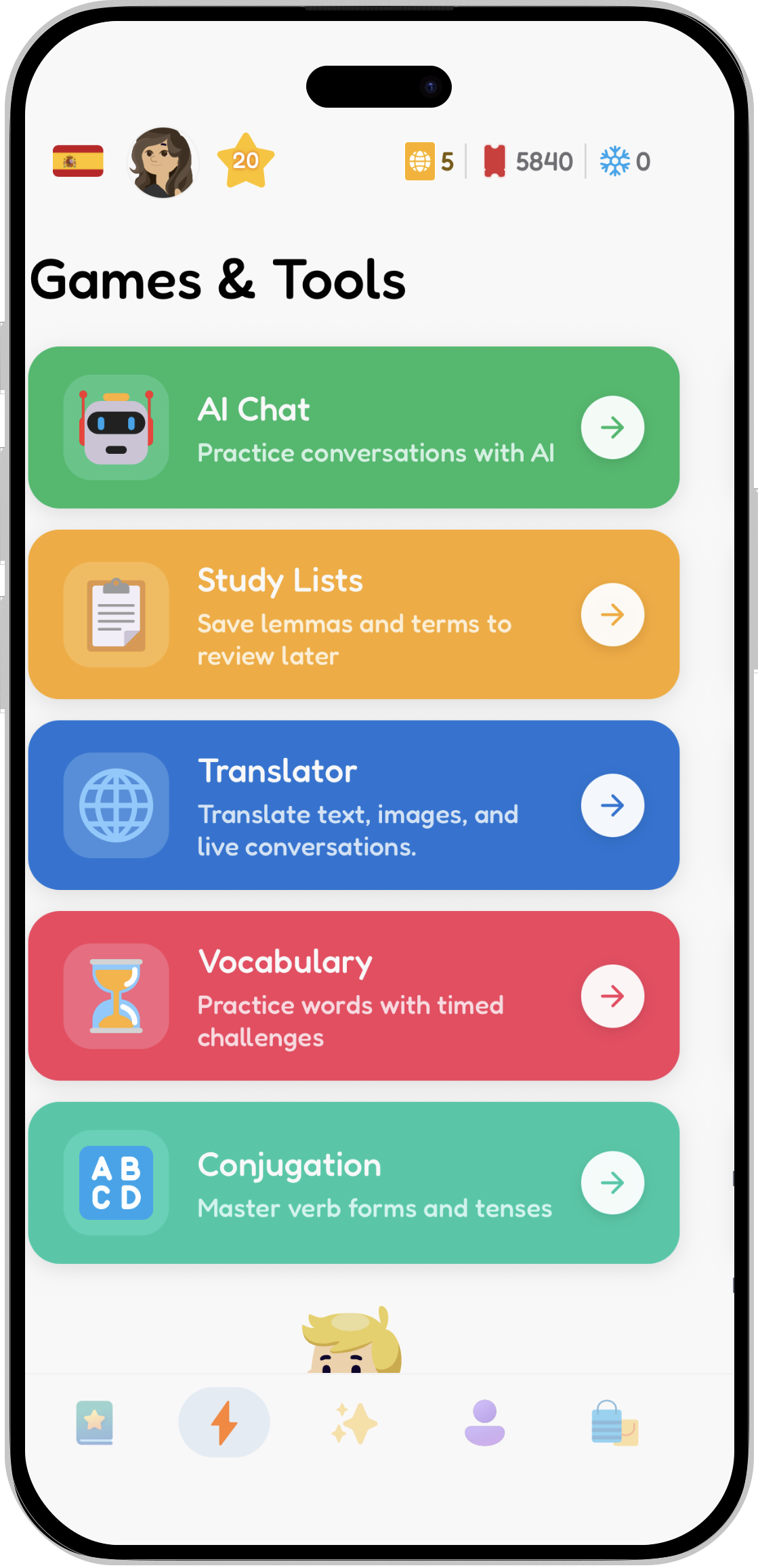
Games & Tools
Tools that every language learner needs at all stages of their learning journey.
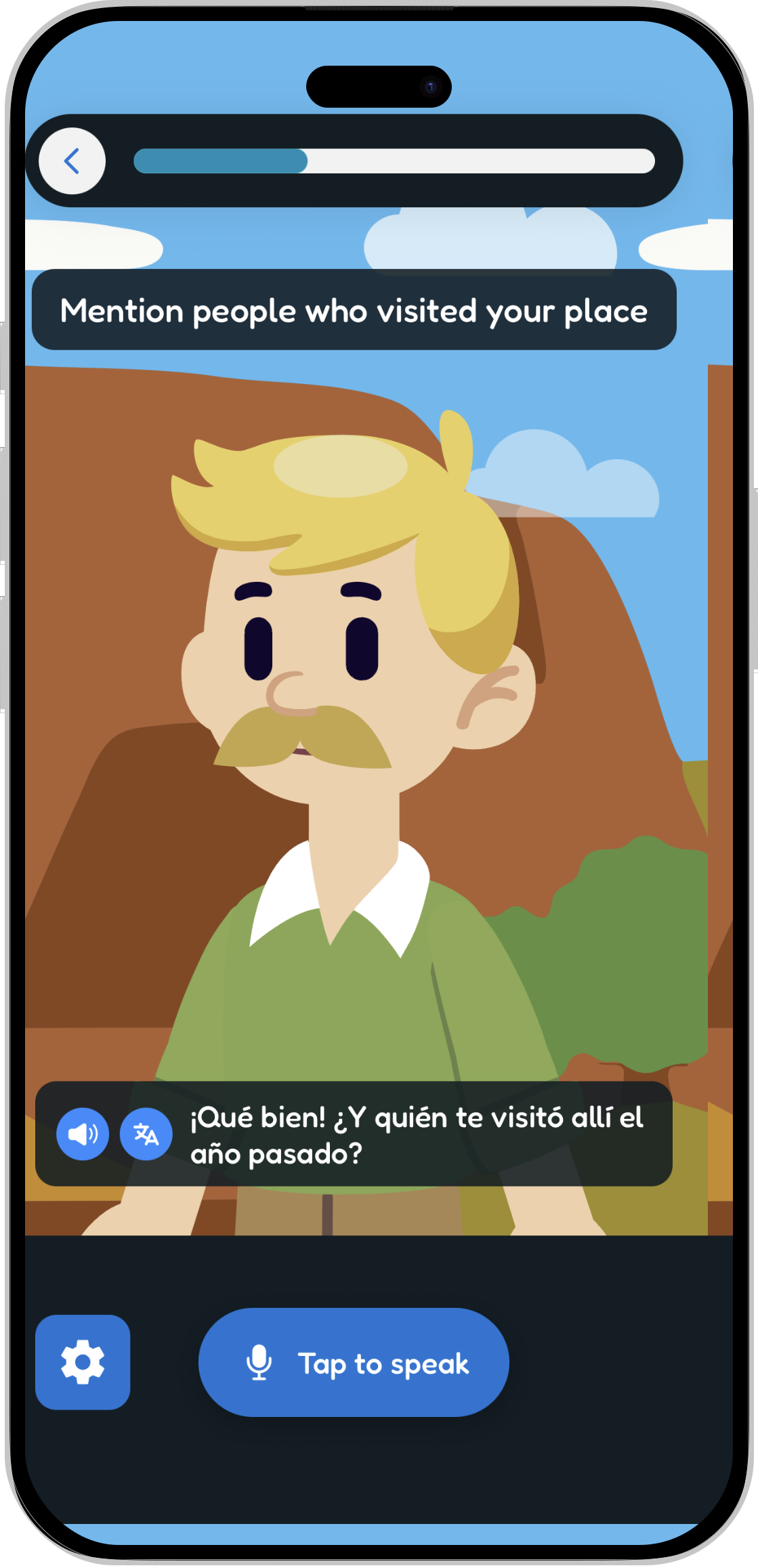
AI Chat Tutor
Practice real conversations with an AI tutor that helps you speak with confidence.
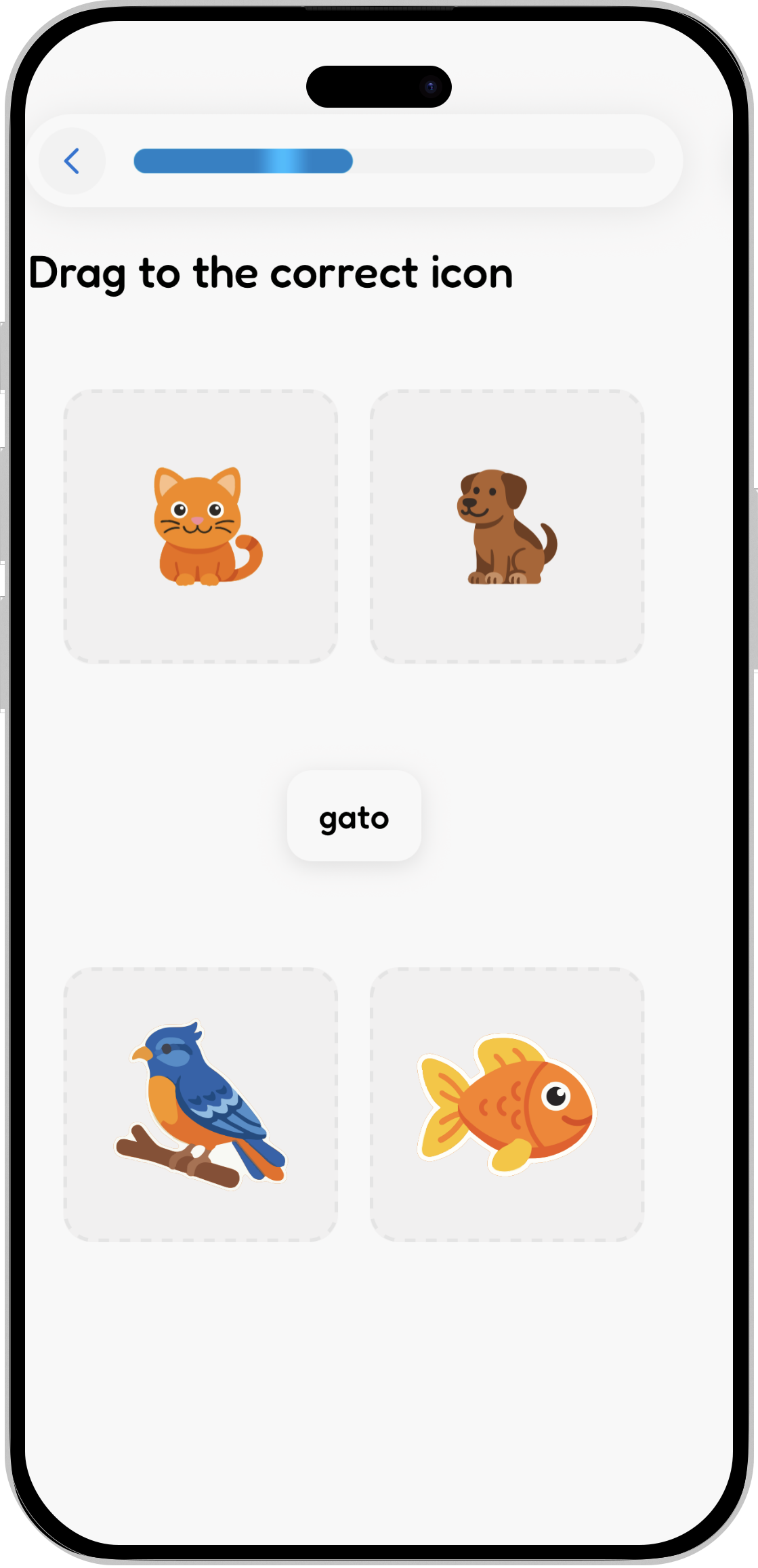
Interactive Games
A variety of games to help you learn and remember new words and phrases.


Quick Picks: Which Free Language Learning App Is Best for You?
If you want the short version, start here:
- Best for complete beginners: Duolingo, easiest first step, clear daily structure, very low friction.
- Best for unlimited drill practice: PolyChat, no hearts-style stoppages, strong conjugation and review tools.
- Best for real conversations: HelloTalk, fastest route to messaging and voice notes with native speakers.
- Best for memorization-heavy study: Anki / AnkiWeb, unmatched for custom flashcards and long-term retention.
- Best for listening to natural speech: Memrise, native-speaker videos make pronunciation feel less robotic.
- Best for structured study plus human corrections: Busuu, solid lessons with community feedback.
My own rule of thumb after reviewing these tools: if you quit apps easily, start with Duolingo or PolyChat; if you already know some basics and need to speak, skip straight to HelloTalk or Tandem.
1. PolyChat: The All-in-One Powerhouse for Unlimited Practice
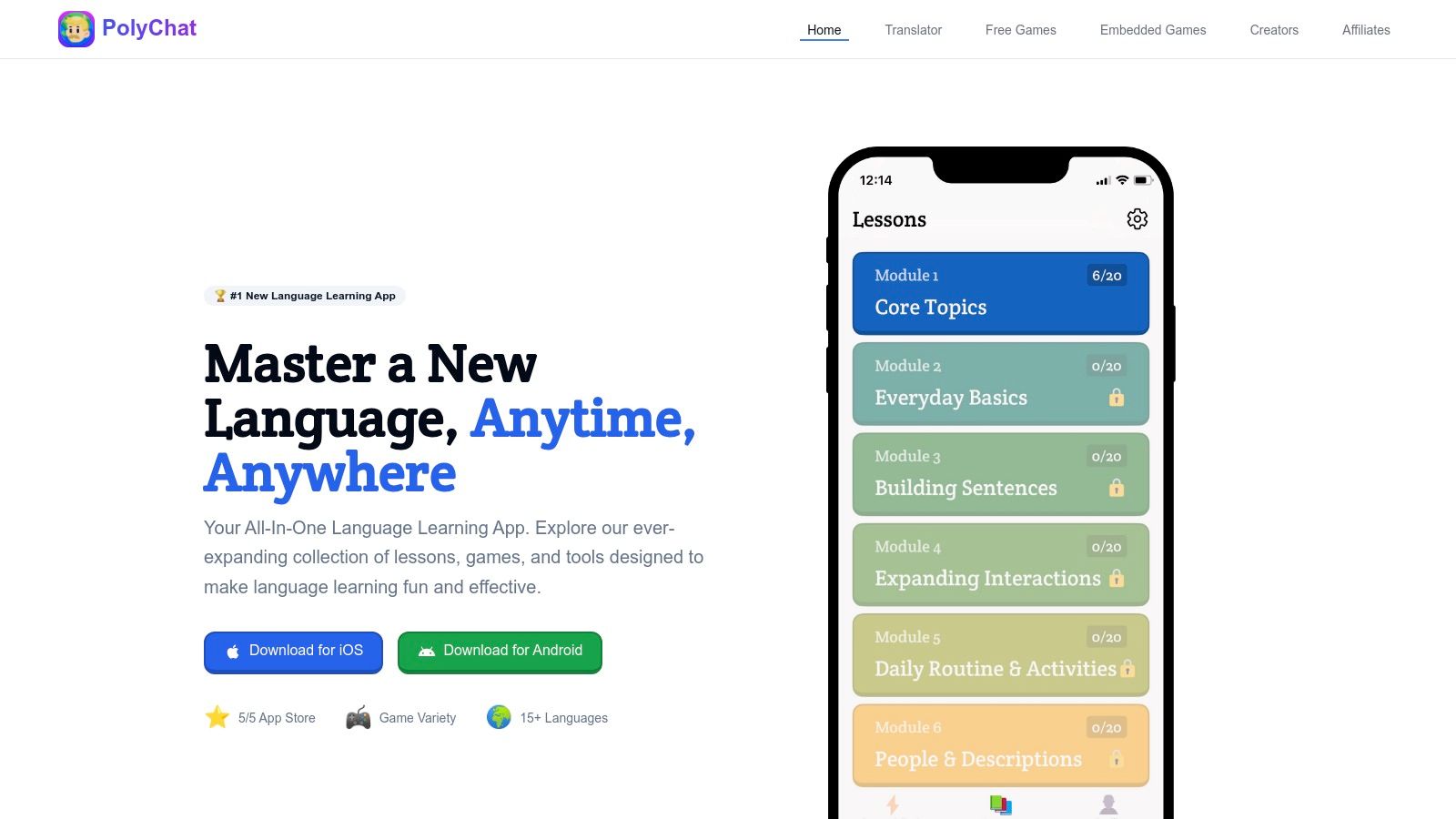
PolyChat distinguishes itself in a crowded market by directly addressing a primary frustration among users of free language learning apps: artificial limits on daily use. Where many platforms employ "hearts" or "energy" systems that halt your progress, PolyChat provides a completely unrestricted experience. This foundational difference makes it a premier choice for dedicated learners who want to study extensively without being forced to wait or pay.
The platform is engineered as an all-in-one solution that merges structured lessons with addictive, gamified practice. Its core philosophy revolves around empowering users to learn as much as they want, whenever they want. This makes it an ideal fit for anyone from ambitious beginners building a foundation to intermediate learners looking to accelerate their fluency through sheer volume of practice.
Why It Stands Out
PolyChat’s strength lies in its comprehensive feature set, offered without the typical free-tier limitations. The combination of unlimited plays, a wide language base, and powerful review tools creates an exceptionally high-value platform.
- Unlimited Practice: The ability to engage in endless lessons, timed vocabulary challenges, and conversation games without interruption is PolyChat's killer feature. This is perfect for immersion sessions or cramming before a trip.
- Flexible Language Pairing: Supporting 17 languages, the platform offers a unique cross-language learning function. For example, a native Spanish speaker can learn German directly, a feature rarely found in free apps which often default to an English base.
- Exceptional Review Tools: As you progress, PolyChat automatically builds a personal dictionary of words you've learned. This, combined with its best-in-class conjugation practice tool and custom vocabulary challenges, ensures long-term retention.
- Gamified Engagement: The app keeps users motivated through progress tracking, leaderboards, and bite-sized challenges, turning the often tedious task of memorization into an enjoyable game.
Best For & Key Considerations
This platform is a top contender for learners who prioritize high-volume, self-directed practice. It excels for polyglots managing multiple languages and anyone frustrated by the "pay-to-continue" model of other apps.
However, its focus is squarely on vocabulary, grammar, and conjugation drills. While it has interactive conversation games, it does not offer live tutoring or extensive community features for real-time practice with native speakers. The website also lacks clear information on its premium tier or potential ads, and there is no mention of an offline mode, which could be a limitation for travelers without consistent internet access.
Website: https://www.polychatapp.com
2. Clozemaster
Clozemaster is the strongest replacement for a generic app-store listing because it answers a real learner question: what should you use when Duolingo feels too gamey, but Anki feels too manual? Its method is simple but effective. You learn words in full sentences, filling in the missing term and seeing vocabulary in context instead of as isolated flashcards.
What the free plan actually includes
The free plan gives you enough to have a productive first week. You can start drilling thousands of sentence-based items, choose from many language pairs, and practice in listening, multiple-choice, and text-entry modes. In my review pass, the best part was how quickly it moved from recognition to recall; it felt less like tapping cartoon exercises and more like actual language exposure.
Where beginners hit limits
Clozemaster is free to start, but it is not the gentlest app for someone learning their first 50 words. The interface is dense, and because the app emphasizes sentence context, absolute beginners can feel dropped into the deep end. Some advanced features and smoother study controls sit behind Clozemaster Pro, and the overall experience is less polished than Duolingo or Busuu.
Choose this over Duolingo or PolyChat if...
Pick Clozemaster over Duolingo if you already know the basics and want faster vocabulary growth through repetition in context. Pick it over PolyChat if your main goal is sentence exposure rather than broad drill variety and conjugation practice. If you need a true beginner ramp, Duolingo is still easier to start; if you want unlimited structured practice across drills, PolyChat is the better fit.
Compared with Memrise, Clozemaster is less visual and less focused on native-speaker clips, but stronger for sheer volume of sentence reps. Compared with Anki, it requires less setup and gets you practicing immediately, though Anki remains more customizable for long-term deck building.
3. LingQ
LingQ works best for learners who want to grow through reading and listening rather than step-by-step mini-lessons. Instead of walking you through a traditional course, it pushes you into short texts, transcripts, and audio, where you save unknown words and review them as you go. That makes it much closer to immersion study than a conventional beginner app.
Learning method and free-tier reality
On the free plan, you can explore lessons, read imported content, and test whether the system clicks with you. Week one is usually enough to understand the core loop: read, mark unfamiliar terms, review, and return to the content. I found LingQ more rewarding than expected for intermediate learners, but also more restrictive on free accounts than the homepage implies.
The catch for free users
The biggest limit is that serious vocabulary saving and long-term use quickly push you toward a paid tier. That matters because LingQ’s value depends on repeated interaction with saved words across content. Offline access and the fullest version of the reading workflow are better on paid plans, so the free tier functions more like an extended trial than an unlimited free study system.
Best fit learner profile
LingQ is not my first recommendation for absolute beginners, because it assumes you can tolerate ambiguity and learn from exposure. It is a better pick for learners who already know basic grammar and want to retain more through real input. Compared with Busuu, it offers less hand-holding; compared with Memrise, it is less guided but stronger for learners who prefer articles, podcasts, and transcripts over app-native lessons.
4. Drops
Drops earns a spot here because its free tier is useful for a very specific type of learner: someone who wants short, visual vocabulary sessions without paying upfront. The app teaches through quick swipes, picture-word associations, and themed sets, making it one of the easiest tools to open for five minutes and use.
What you can do for free
The free version gives you short daily sessions that are enough to build a habit and learn high-frequency vocabulary in small bursts. For week-one use, that’s often enough to sample several categories, test pronunciation support, and decide whether the visual method sticks. For nervous beginners, it feels less intimidating than jumping into grammar-heavy lessons.
What is locked
The limitation is obvious: session caps are the product. If you want longer study blocks, faster review, or uninterrupted progress, you will run into the premium plan quickly. There is also less grammar depth than in Duolingo or Busuu, so Drops works better as a supplement than as a stand-alone path to fluency.
Editorial verdict
Choose Drops over Duolingo if you hate long lesson paths and mainly want bite-size vocabulary practice. Choose it over Busuu if grammar explanations are not your priority. Choose it over Memrise when you want a cleaner, more visual beginner experience. I would not choose it over PolyChat for intensive daily study, but for habit-building and low-friction word acquisition, it is one of the better no-commitment options.
5. Duolingo
As one of the world's most recognizable and downloaded education apps, Duolingo has gamified language learning for millions. It offers a highly structured, game-like path with short, bite-sized lessons that make starting a new language feel approachable and fun. Its vibrant interface, character-driven stories, and competitive leaderboards are designed to keep you motivated and coming back daily.
Why It's a Top Resource
Duolingo's core strength lies in its accessibility and motivation mechanics. The platform breaks down complex grammar and vocabulary into manageable daily exercises, while its "streak" feature encourages consistent practice. The free version provides access to the full learning path for over 40 languages, supported by ads and a "hearts" system that limits mistakes. This makes it an excellent entry point for absolute beginners looking to build a foundational vocabulary without any initial financial commitment. While many users eventually seek more depth, few apps succeed in making the first steps of language learning as engaging.
- Best For: Absolute beginners who thrive on gamification, daily goals, and a structured, linear learning path.
- Key Strength: An engaging, game-like interface and a massive user community that foster daily practice habits.
- Limitations: The free tier is ad-heavy and the heart system can interrupt learning flow. Its curriculum often lacks the depth required for intermediate to advanced conversational fluency. For learners hitting these limits, exploring Duolingo alternatives can provide more advanced practice.
Pro Tip: Turn off leaderboard notifications if you find them more stressful than motivating. Focus on completing one "level" of a skill (turning it gold) before moving on to ensure you've solidified the concepts.
6. Memrise
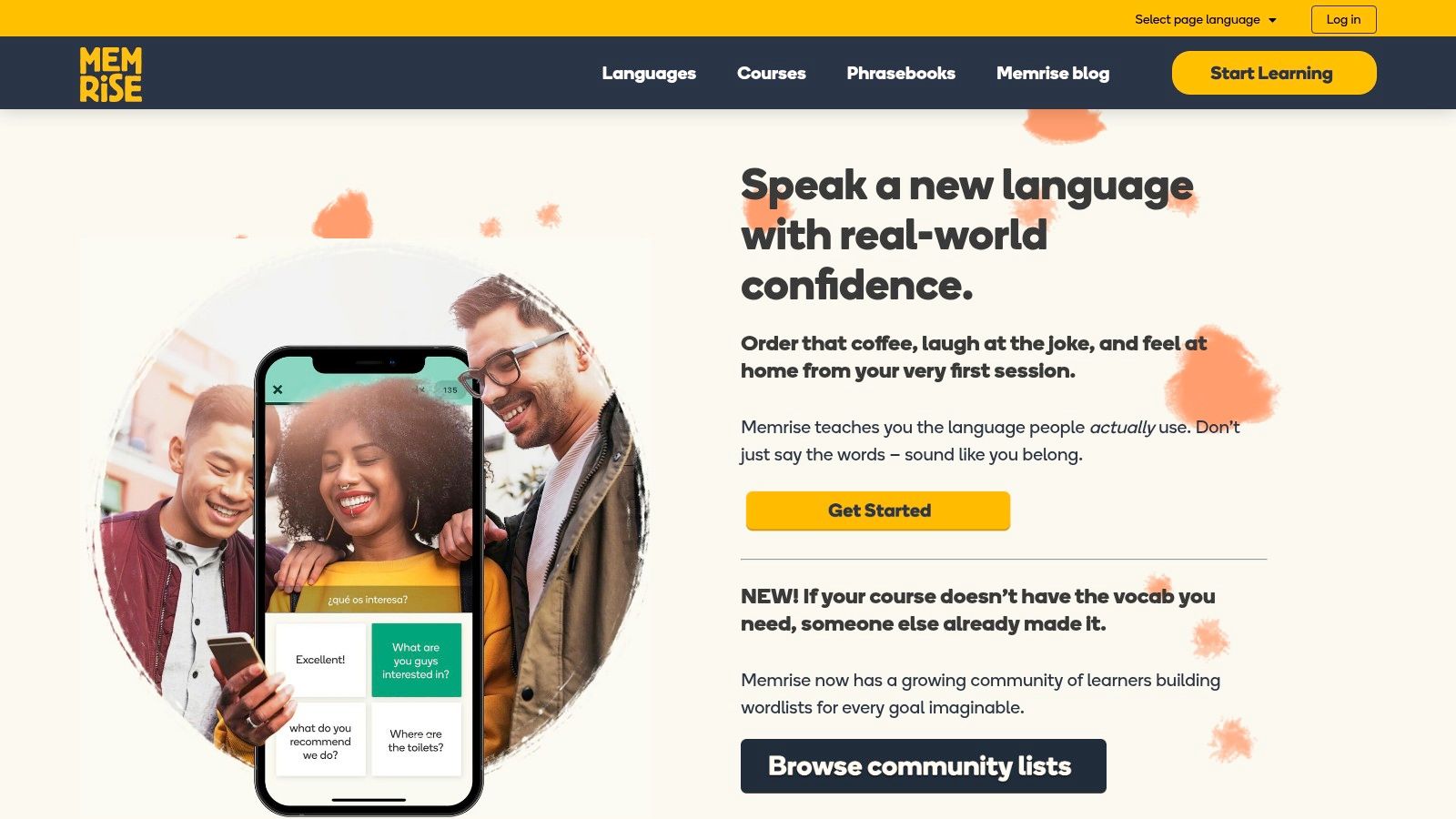
Memrise distinguishes itself by centering its learning method around authentic, real-world video clips of native speakers. This approach moves beyond robotic text-to-speech, immersing you in the natural flow, intonation, and pronunciation of a language as it's spoken. The platform combines these clips with a scientifically-backed spaced-repetition system to help you commit new words and phrases to long-term memory.
Why It's a Top Resource
The core strength of Memrise lies in its video-based learning, which is a fantastic tool for training your listening comprehension. By watching native speakers in everyday situations, you pick up on nuances that traditional, text-based lessons often miss. The free tier offers a substantial amount of content to get started, allowing you to build a foundational vocabulary across various languages. Its use of gamified elements also keeps the learning process engaging, a key principle that makes it one of the best free language learning apps available. Learn more about the power of gamification in language learning.
- Best For: Learners who want to improve their listening skills and learn vocabulary from real-world, contextual video clips.
- Key Strength: Use of thousands of native speaker video clips for authentic pronunciation and context.
- Limitations: The most powerful features, including an AI coach and offline access, are locked behind a PRO subscription. The free version can feel limited for learners aiming for advanced fluency.
Pro Tip: Focus on the "Learn with Locals" feature to maximize your exposure to authentic accents. Re-watch videos multiple times to catch subtle differences in tone and speed that you might have missed the first time.
7. Busuu
Busuu combines structured, lesson-based learning with a powerful community element, setting it apart from more gamified apps. It offers a curriculum mapped to the Common European Framework of Reference for Languages (CEFR), giving users a clear path from beginner (A1) to upper-intermediate (B2) levels. The free version provides access to a significant portion of these lessons and its standout community feature.
Why It's a Top Resource
Busuu’s key strength is its integrated community feedback system. As you complete writing or speaking exercises, you can submit them for correction by native speakers. This real-world interaction provides practical, nuanced feedback that AI-driven tools often miss, helping you sound more natural. The platform’s lessons are well-structured, covering vocabulary, dialogue, and quizzes to reinforce learning. While many core features are available for free, the most powerful tools like offline access, grammar lessons, and official certificates are reserved for Premium subscribers.
- Best For: Learners who want structured courses combined with practical feedback from a global community of native speakers.
- Key Strength: Peer-to-peer corrections from native speakers offer authentic, real-world language practice.
- Limitations: The free plan has significant restrictions; core grammar lessons, offline mode, and advanced review features require a paid subscription.
Pro Tip: Actively participate in the community by correcting exercises for others learning your native language. This not only helps them but also encourages more native speakers to review your own submissions, maximizing the platform's unique benefit.
8. HelloTalk
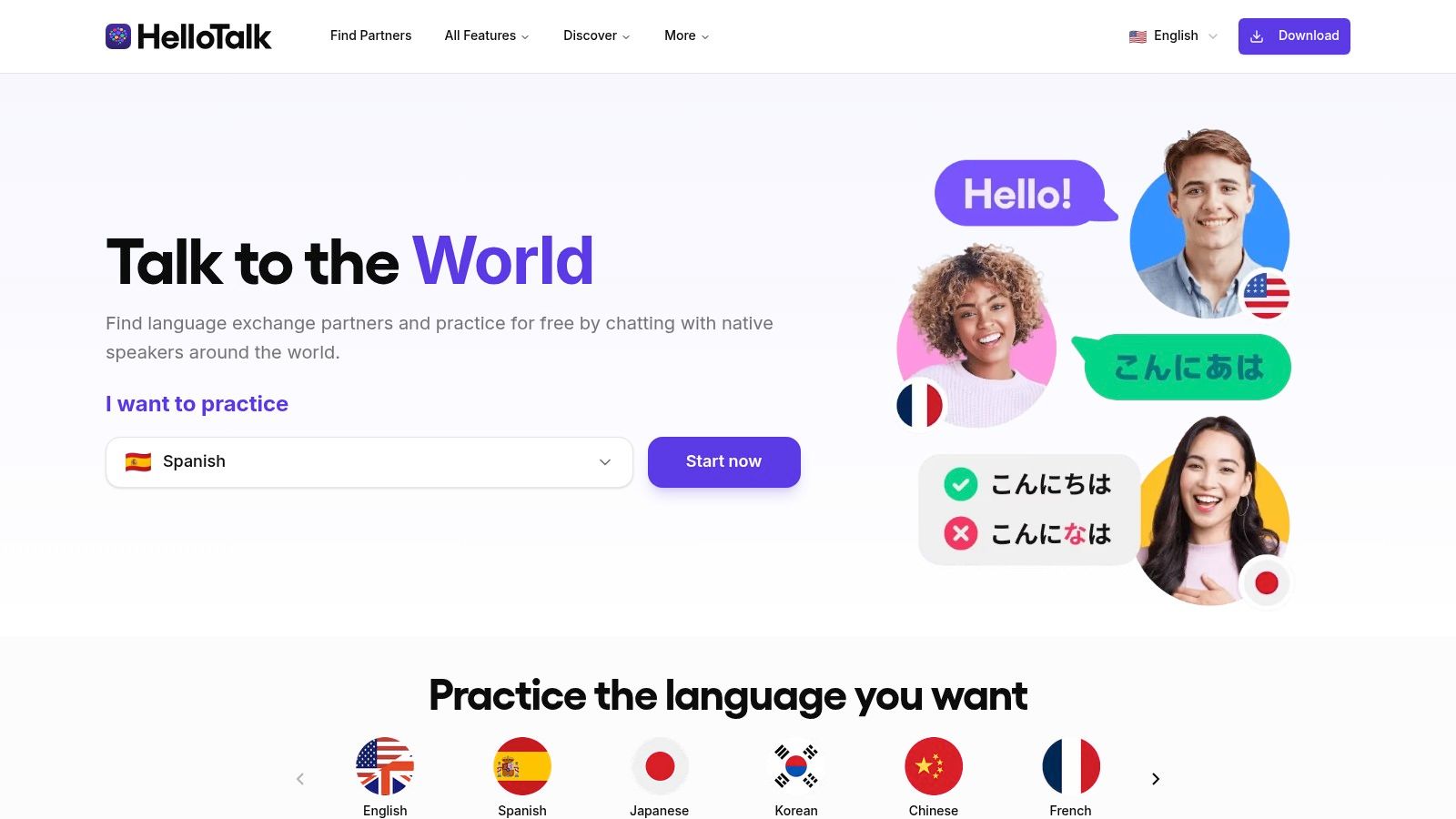
HelloTalk moves beyond structured lessons and brings language learning into the social sphere. It’s a language exchange app that connects you directly with native speakers from around the world for real, authentic conversation practice. Instead of memorizing phrases, you use them in live text chats, voice messages, and even audio or video calls, turning your language journey into a global friendship.
Why It's a Top Resource
HelloTalk’s standout feature is its integrated suite of learning tools built directly into the chat interface. You can correct your partner’s messages with a single tap, use a built-in translator for tricky words, and even have messages read aloud to perfect your pronunciation. This immediate, contextual feedback from native speakers is invaluable for building conversational fluency and confidence. The platform also includes public "Moments" (like social media posts) and live Voicerooms for group practice, providing diverse ways to engage. For more tips on building conversational ability, check out our guide on how to improve speaking skills.
- Best For: Intermediate to advanced learners who need to transition from textbook knowledge to real-world conversational skills.
- Key Strength: Direct access to a massive community of native speakers for authentic, contextual practice and corrections.
- Limitations: The free version has daily limits on translations and the number of new people you can contact. The social media format may be distracting for some learners.
Pro Tip: Be an active and helpful partner. Correcting others' posts and messages in your native language will encourage them to do the same for you, creating a mutually beneficial exchange.
9. Tandem
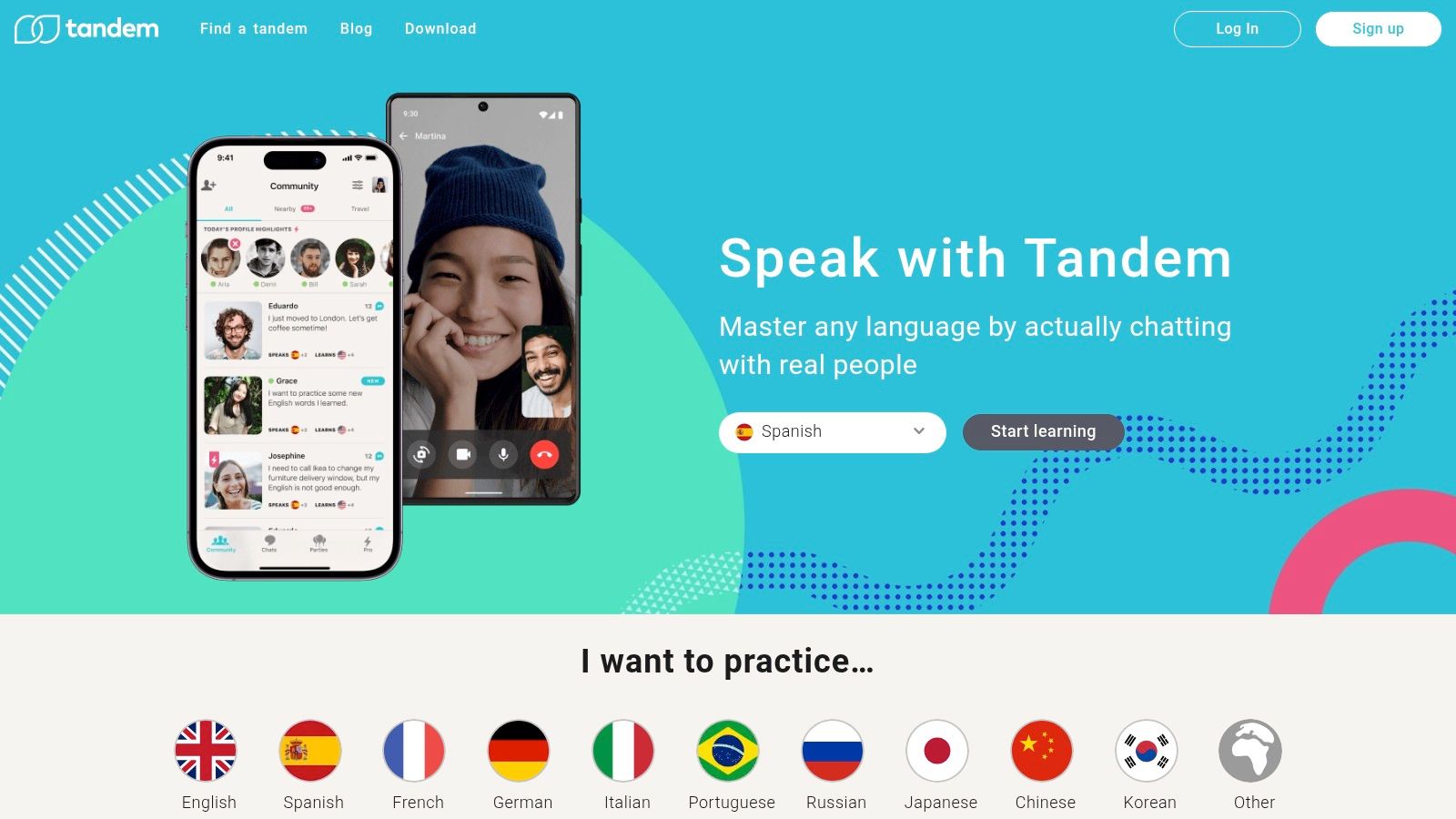
Tandem shifts the focus from structured lessons to real-world conversation by connecting you with native speakers. This language-exchange platform functions like a social network for learners, allowing you to find partners who are fluent in the language you're studying and want to learn your native tongue. The core experience of finding, messaging, and calling partners is completely free, providing an invaluable resource for practical application.
Why It's a Top Resource
Tandem's main advantage is its massive, active community and its emphasis on safety. Unlike random chat platforms, every user profile is reviewed, which helps maintain a high-quality environment focused on genuine learning. The app includes built-in correction tools, allowing your partner to easily fix your mistakes in-line, and integrated translation features to help you when you get stuck. This combination of real human interaction and helpful tools makes it one of the best free language learning apps for overcoming the fear of speaking.
- Best For: Intermediate to advanced learners who need to move beyond textbook exercises and gain real-world conversational fluency.
- Key Strength: Direct access to a large, vetted community of native speakers for authentic practice via text, audio, and video.
- Limitations: The free version has limits on in-app translations and lacks advanced filters to find partners in your city or near you. Finding a dedicated, long-term partner can sometimes take trial and error.
Pro Tip: Fill out your profile completely with your interests and learning goals. This makes it much easier for the right partners to find you and initiates more engaging conversations than a simple "hello."
10. Mondly by Pearson
Mondly by Pearson provides a welcoming entry point into language learning, focusing on practical vocabulary and conversational phrases through daily, bite-sized lessons. The app covers over 40 languages and uses speech recognition to help you practice pronunciation from your very first lesson. Its themed units, such as travel, family, and business, make learning relevant to real-world scenarios.
Why It's a Top Resource
Mondly stands out for its beginner-friendly approach and broad language selection. While the free version is limited, offering a daily lesson and occasional access to chatbot conversations, it provides a solid taste of the platform's core mechanics. The interface is clean and engaging, syncing progress across your phone, tablet, and the web app. It’s one of the few platforms that occasionally offers promotional lifetime deals through third-party partners, making it a potentially cost-effective long-term tool if you decide to upgrade.
- Best For: Absolute beginners who want a structured, gentle introduction to a new language with a focus on practical vocabulary.
- Key Strength: Beginner-friendly daily lessons and frequent promotions for its premium version.
- Limitations: The free plan is quite restrictive; access to most lessons, chatbot conversations, and advanced features requires a paid subscription.
Pro Tip: Maximize the free daily lessons to build a consistent learning habit. Keep an eye out for third-party websites that offer promotional lifetime deals for Mondly, as this can be a much cheaper alternative to a standard subscription if you enjoy the platform.
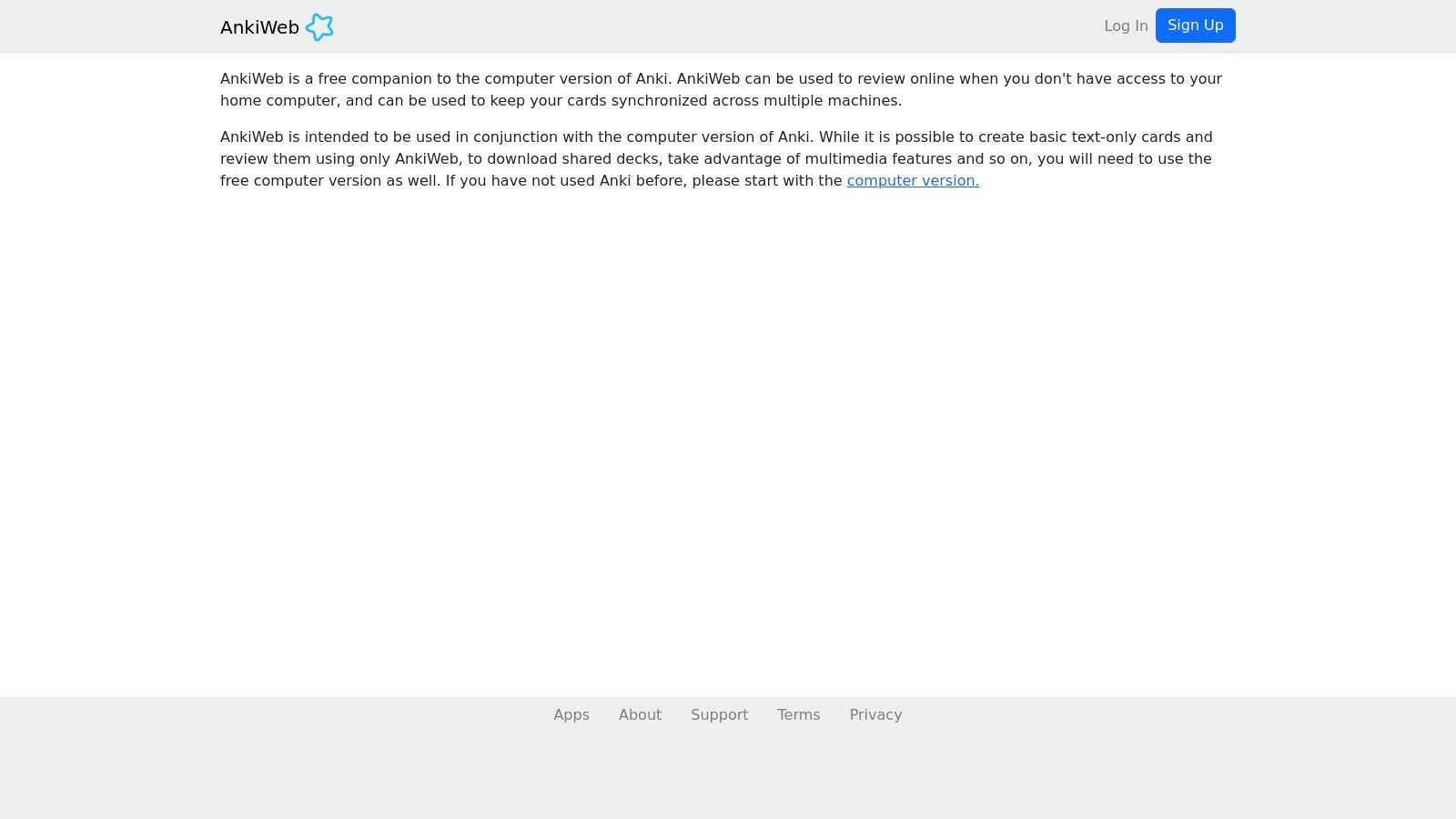
11. Anki / AnkiWeb
Anki is less an app and more a powerful, open-source engine for memorization. It uses an advanced spaced repetition system (SRS) algorithm to show you flashcards just before you're about to forget them. While it lacks the game-like interface of other apps, it remains highly effective for burning vocabulary, grammar rules, and characters into long-term memory, making it a strong choice for serious learners.
Why It's a Top Resource
Anki's strength lies in its infinite customizability and scientific approach to learning. You are not locked into a pre-made curriculum; you can create your own flashcards with text, images, and audio, or download thousands of high-quality, community-made decks for free. The desktop and Android (AnkiDroid) versions are completely free, syncing seamlessly through the free AnkiWeb service. This makes it one of the most powerful and cost-effective tools available. Its research-backed algorithm adapts to your personal memory patterns, ensuring your study time is highly efficient.
- Best For: Dedicated learners who want a powerful, scientific tool for long-term vocabulary and grammar retention.
- Key Strength: Highly effective spaced repetition system (SRS) and immense customization with community-shared decks.
- Limitations: The user interface has a steep learning curve compared to more polished apps. The official iOS app is a one-time paid purchase, which supports the project's development.
Pro Tip: Don't feel you have to build every deck from scratch. Search the "Shared Decks" on the AnkiWeb site for your target language to find popular, ready-made decks that can give you thousands of flashcards to start with immediately.
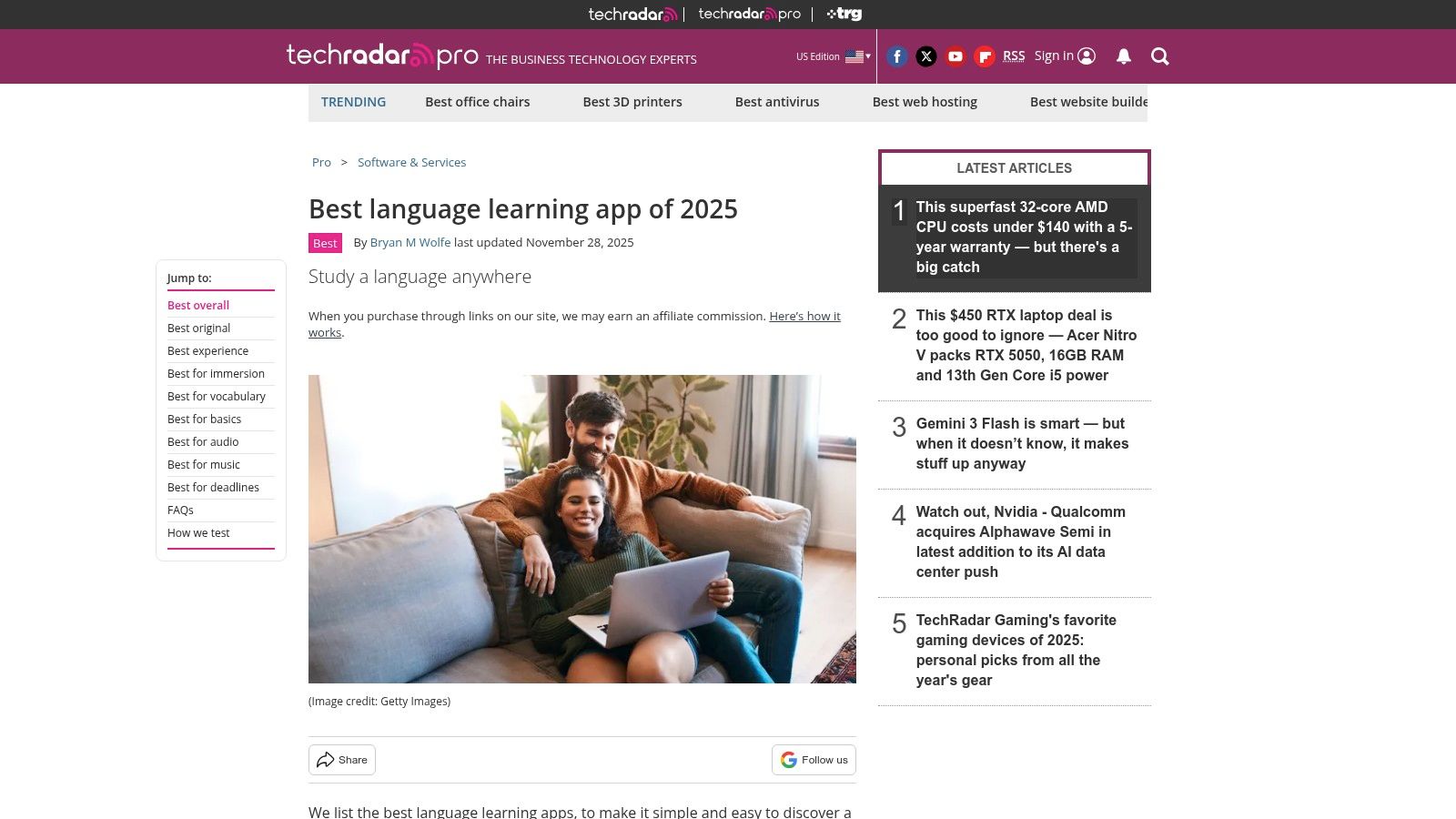
12. TechRadar – Best Language-Learning Apps
Rather than being a learning tool itself, TechRadar's curated roundup of the best language-learning apps serves as a valuable meta-resource. It provides independent, editorial-driven comparisons that help you navigate the crowded app marketplace. The team regularly tests and summarizes the leading platforms, highlighting which ones offer genuinely useful free tiers versus those that are heavily restricted.
Why It's a Top Resource
TechRadar's primary advantage is its balanced, third-party perspective. The editors analyze the trade-offs of each app, presenting side-by-side comparisons of strengths, limitations, and ideal use cases. This saves you significant time by pre-vetting popular options, allowing you to focus your hands-on testing on a smaller, more relevant list of candidates. Their articles often include direct links to official download pages, simplifying the process of finding and trying the tools that catch your eye. For readers interested in how mobile products are positioned and evaluated more broadly, Hooked's page gives useful industry context around mobile apps as a category.
- Best For: Learners who want to save time by reading expert, side-by-side comparisons before committing to downloading multiple apps.
- Key Strength: Up-to-date editor testing and a balanced editorial perspective on the pros and cons of popular free options.
- Limitations: Articles provide summaries but cannot replace your own hands-on experience with an app. Editorial picks can change, so it's wise to check the article's publication date for relevance.
Pro Tip: Use their analysis to create a short list of 2-3 apps that seem to fit your learning style. Spend a day trying each one to see which interface and methodology you prefer before investing more time.
Visit TechRadar – Best Language-Learning Apps
Top 12 Free Language-Learning Apps Comparison
| App | How much is free | Ads or usage limits | Offline access | Languages | Speaking / conversation features | Best for beginners? |
|---|---|---|---|---|---|---|
| PolyChat | Core practice appears broadly free with no daily lesson cap | No hearts-style stop system noted; premium details unclear | Not clearly stated | 17 | Conversation games, drills, translator tools | Yes — especially for learners who want lots of repetition |
| Clozemaster | Large amount of sentence-based practice on free plan | Free tier is usable, but advanced controls and smoother study options push Pro | Limited on free tier compared with paid use | 50+ language pairs | Listening and text-entry practice, but not live conversation | Better after the basics |
| LingQ | Good for testing the method, limited for heavy long-term free use | Free tier feels trial-like once you start saving lots of words | Better with paid plan | 40+ | Strong listening with transcripts, no partner chat | Not ideal for true beginners |
| Drops | Short daily sessions are free | Session caps are the main limit | Typically tied to paid tier for fuller use | 50+ | Pronunciation support, no live conversation | Yes for low-pressure vocab building |
| Duolingo | Full path available free | Ads plus hearts can interrupt longer sessions | Limited unless paid | 40+ | Speaking exercises in some courses; no native-speaker exchange | Yes — easiest starting point for most people |
| Memrise | Solid free core to start vocab and listening | Premium gates AI tools and some extras | Offline locked to PRO | 20+ | Native-speaker videos and pronunciation practice | Yes |
| Busuu | Basic lessons and community correction access | Many grammar and review tools gated; premium required for more | Offline paid | 10+ major languages | Writing/speaking exercises corrected by natives | Yes |
| HelloTalk | Core exchange features free | Limits on translations and new contacts | Not a strong offline option | 150+ interface/community combinations | Text, voice notes, calls, public posts | Better once you know some basics |
| Tandem | Messaging and partner search free | Translation and discovery filters restricted on free plan | Not built for offline study | 300+ language communities | Text, audio, video with language partners | Better for lower-intermediate and up |
| Mondly | Daily lesson and some sample features | Most content locked behind subscription | Limited on free use | 40+ | Speech recognition and chatbot samples | Yes, but free plan is narrow |
| Anki / AnkiWeb | Fully free on desktop and Android; web sync free | No ad limits, but setup takes effort | Yes, depending on platform/app | Any, if you build or download decks | None built in for conversation | Not the easiest first app |
| TechRadar roundup | Free article, not a study app | No practice features | N/A | N/A | N/A | Useful for comparing options before downloading |
If you want the fastest recommendation by scenario: choose Duolingo for a clean beginner on-ramp, PolyChat for unlimited drill practice, HelloTalk for native-speaker interaction, and Anki if memorization is your bottleneck. My testing bias here is practical: the best app is the one that still feels usable on day seven without forcing an upgrade, and that standard eliminates a lot of otherwise popular tools.
| Product | Core features ✨ | UX / Quality ★ | Price / Value 💰 | Target audience 👥 | USP / Why choose 🏆 |
|---|---|---|---|---|---|
| PolyChat 🏆 | Gamified lessons, timed vocab, conjugation drills, built‑in translator | ★★★★★ — engaging, progress tracking | 💰 Free core; premium unclear, no daily limits | 👥 Beginners→Advanced, travelers, students, polyglots | ✨ Unlimited daily practice; cross‑language learning; market’s best conjugation tool |
| Apple App Store | Curated editor picks, app pages, privacy & IAP labels | ★★★★ — strong curation & security | 💰 Free to browse; apps may use IAPs | 👥 iPhone / iPad users | ✨ Curated picks, vetted apps & safe payments |
| Google Play Store | Large catalog, top charts, reviews, IAP info | ★★★ — huge selection; variable quality | 💰 Free to browse; many free apps with IAP | 👥 Android users | ✨ Largest Android selection; granular reviews |
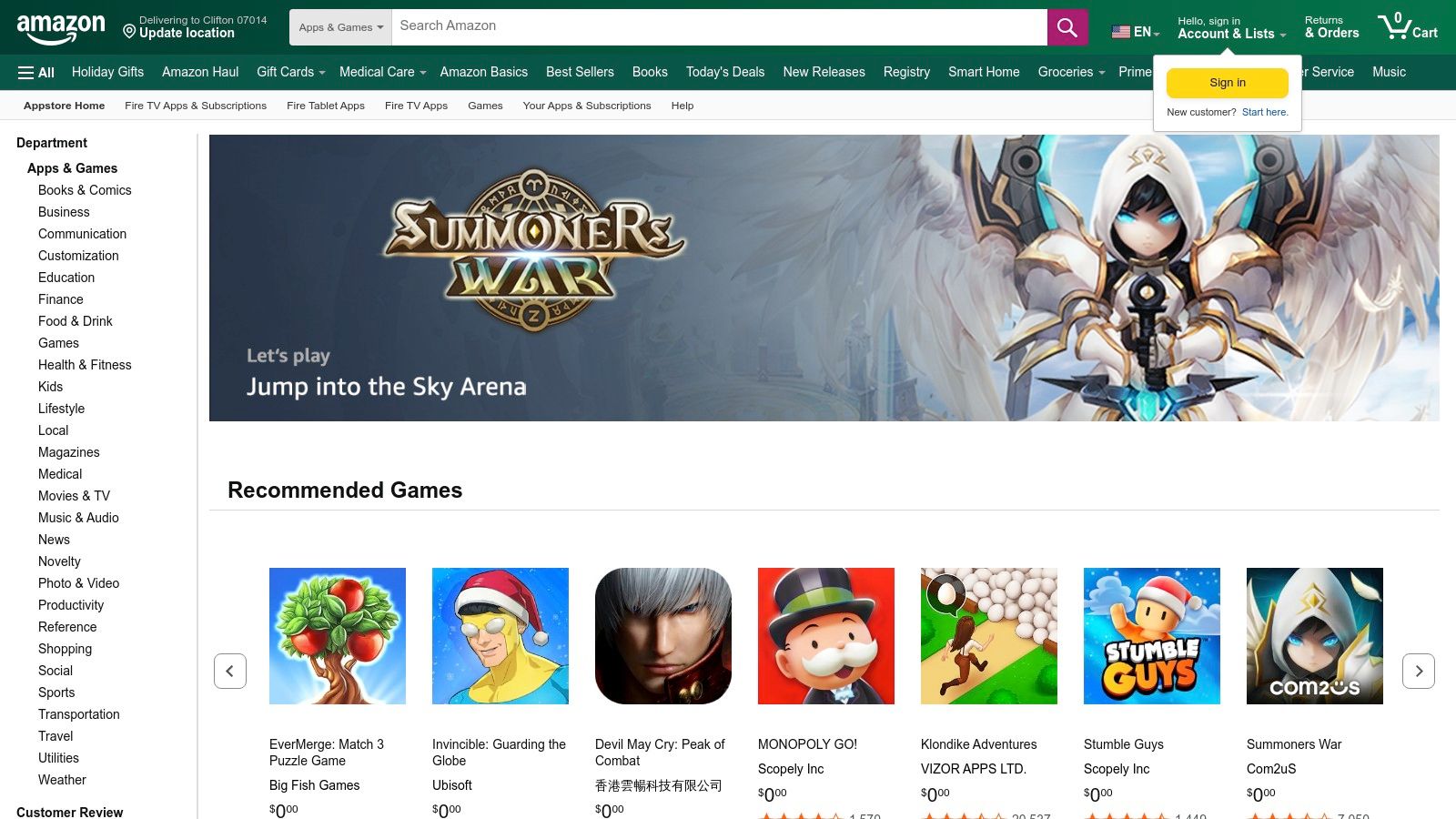
| Amazon Appstore | Fire device compatibility, localized pricing | ★★★ — smaller catalog, Fire‑optimized | 💰 Free downloads; IAPs vary | 👥 Fire tablet/TV households | ✨ Optimized for Amazon devices; parental controls |
| Duolingo | Short gamified lessons, streaks, leaderboards | ★★★★ — very approachable, addictive | 💰 Free w/ ads & hearts; Super/Max paid tiers | 👥 Beginners, casual learners | ✨ Massive community, frequent updates |
| Memrise | Native‑speaker videos, spaced‑repetition review | ★★★★ — strong listening/speaking focus | 💰 Free core; PRO unlocks AI coach & extras | 👥 Learners prioritizing listening & vocab | ✨ Real videos + SRS for retention |
| Busuu | Structured courses, peer corrections, review tools | ★★★★ — community feedback improves output | 💰 Free basic; Premium adds offline & certificates | 👥 Learners wanting feedback & credentials | ✨ Peer corrections + certificates (paid) |
| HelloTalk | Text/voice exchange, corrections, live rooms | ★★★ — real practice; moderation varies | 💰 Free core; VIP for filters & higher limits | 👥 Language‑exchange seekers | ✨ Direct native speaker conversations |
| Tandem | Profile matching, messaging, calls, safety onboarding | ★★★★ — good safety & matching | 💰 Free core; Pro for advanced discovery | 👥 Learners seeking matched partners | ✨ Interest‑based matching & community safety |
| Mondly (Pearson) | Speech recognition, themed lessons, business packs | ★★★ — beginner‑friendly, polished | 💰 Free download; subscriptions & promos | 👥 Beginners & casual learners | ✨ Speech‑recognition + business content |
| Anki / AnkiWeb | Research‑backed SRS, custom decks, add‑ons | ★★★★ — excellent retention; steeper UX | 💰 Free on desktop/Android; iOS paid one‑time | 👥 Serious learners & advanced memorization | ✨ Highly customizable SRS for long‑term retention |
| TechRadar – Roundup | Editorial tests, side‑by‑side comparisons | ★★★★ — balanced editor reviews | 💰 Free articles; links to official pages | 👥 Users researching best app options | ✨ Independent comparisons & buying guidance |
Crafting Your Perfect Free Learning Stack: The PolyChat Advantage
Navigating the world of the best free language learning apps can feel overwhelming, but the key to success isn't finding one single "perfect" app. Instead, the most effective learners build a personalized and dynamic toolkit, or a "learning stack," by combining the unique strengths of several platforms to create a well-rounded and engaging study routine.
Your journey might start with the gamified, foundational lessons of an app like Duolingo or Mondly to get a feel for the basics. From there, you could integrate a powerful tool like Anki to relentlessly drill and retain important vocabulary through its spaced repetition system. For conversational practice, turning to a language exchange platform like HelloTalk or Tandem is essential to apply your knowledge with native speakers. Each tool serves a distinct and vital purpose.
However, managing this multi-app strategy can introduce its own set of challenges, including fragmented progress tracking, conflicting learning methodologies, and the sheer mental effort of juggling different interfaces. A strategic core application becomes invaluable.
Consolidating Your Core Learning with PolyChat
While a diverse stack is powerful, having a central, consolidated platform simplifies the process significantly. This is the advantage PolyChat offers. It was designed to address the common pain points of fragmented learning by integrating the most critical components into one cohesive system. Instead of switching between a grammar app, a vocab builder, and a separate conjugation tool, PolyChat provides these functions under one roof.
The most significant differentiator is its commitment to uninterrupted learning. The absence of a restrictive "hearts" or energy system means you can practice as intensively and as often as you wish, especially during those moments of peak motivation. This empowers you to push through difficult concepts without being forced to stop, wait, or pay.
Consider these key takeaways when building your stack:
- Identify Your Core Need: Are you focused on conversational fluency, passing an exam, or building a foundational vocabulary? Your primary goal should dictate your primary app. For learners seeking an intensive experience, PolyChat serves as an excellent starting point.
- Supplement Strategically: Once your core app is in place, identify its limitations and fill those gaps. If PolyChat is your core for drills and grammar, a platform like Tandem is the perfect supplement for real-time, human interaction. You get the best of structured, AI-driven practice and the unpredictability of genuine conversation.
- Embrace Authentic Content: To internalize a language, you must engage with materials made for native speakers. This could mean listening to podcasts, watching movies, or reading articles in your target language. To complement your learning and engage with authentic materials, consider exploring dedicated tools like the best audio translation tools that can help you understand spoken content.
Ultimately, the best free language learning apps are the ones that align with your personal learning style and keep you consistently engaged. The journey to fluency is a marathon, not a sprint. It requires a blend of structured practice, real-world application, and the right digital tools to guide you. By thoughtfully constructing your learning stack with a powerful, unlimited core like PolyChat and supplementing it with specialized apps, you create an efficient, cost-effective, and highly personalized path toward mastering your new language.
Frequently Asked Questions
Is there a better free app than Duolingo?
Yes, depending on what you need. If Duolingo’s hearts and ads break your focus, PolyChat is a better pick for unlimited drilling, while HelloTalk is better for actual conversation. In my experience, Duolingo is easiest to start, but it stops being the best option once your priority shifts from habit-building to deeper practice.
Which study app is 100% free?
Anki on desktop, AnkiWeb, and AnkiDroid are among the closest things to a free long-term study system, though they require more setup. PolyChat also stands out because it does not appear to use the common stop-and-wait mechanics that limit practice in many free apps. Most mainstream apps are better described as free to start rather than fully free forever.
Is Babbel really free?
Babbel is not generally considered a fully free language-learning app. You may get a short sample lesson or promotional access, but the core course experience is paid. If staying on a free plan matters, the apps in this list offer more usable no-cost study time.
What is the best app for complete beginners?
Duolingo remains the easiest first app because the onboarding is simple and the lesson path is obvious. If you want a beginner-friendly option with fewer interruptions once you get going, PolyChat is a strong alternative. Drops is also a comfortable starting point for learners who want vocabulary first and minimal pressure.
Are free language learning apps enough to become fluent?
They can take you surprisingly far, especially for vocabulary, reading practice, and daily consistency, but fluency usually requires more than app exercises alone. You will eventually need real listening, real speaking, and exposure to native material. A stack that combines drills, conversation, and authentic content works better than relying on one app forever.
Which free app is best for speaking practice?
HelloTalk and Tandem are the strongest options here because they put you in contact with real people instead of simulated dialogues. Busuu is also useful if you want speaking tasks corrected by native speakers without committing fully to exchange-style chatting. For shy beginners, I usually suggest starting with structured apps first, then adding one conversation app once basic phrases feel comfortable.
Ready to build a stronger learning foundation without limits? Download PolyChat today and experience unlimited access to advanced AI conversations, conjugation drills, and engaging vocabulary games. Stop waiting for hearts to refill and start learning on your own terms.
Jean-Baptiste Bolh
Co-Founder
Applied AI
Jean-Baptiste Bolh on LinkedIn

Jean-Baptiste Bolh
Co-Founder
Applied AI