A Polyglot's Guide on How to Learn Multiple Languages

Lots of people think learning multiple languages is some kind of superpower, but it’s really a skill built on a smart framework, not a special talent. It all boils down to a few key ideas: choosing the right languages in the right order, creating a study schedule you can actually stick with, and using proven techniques to keep everything from blurring together in your head.
Once you nail these, the path to becoming a polyglot gets a whole lot clearer.
Ready to Learn a Language?
Try PolyChat's engaging language lessons, interactive learning games and put your new vocabulary to the test!
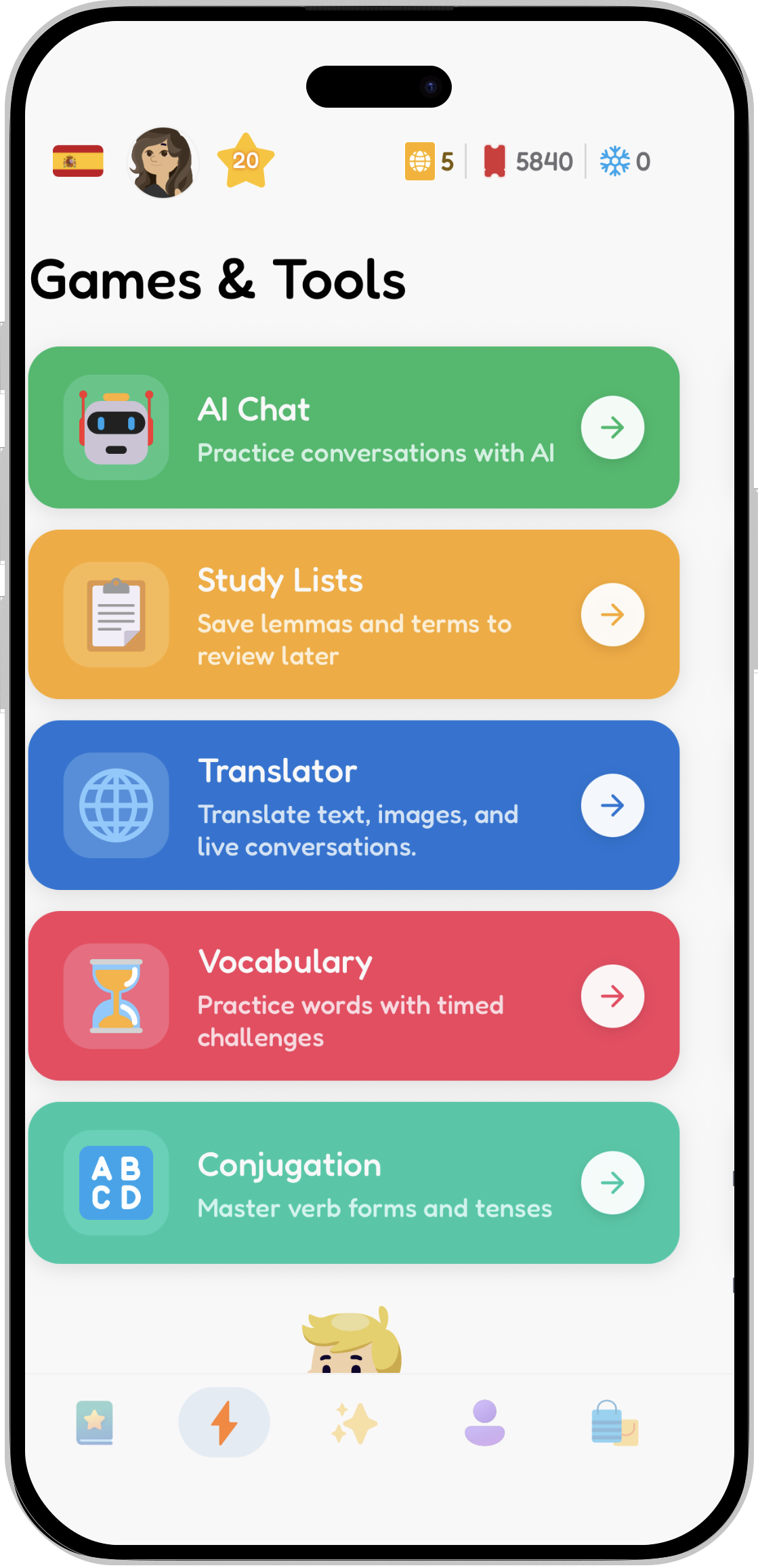
Games & Tools
Tools that every language learner needs at all stages of their learning journey.
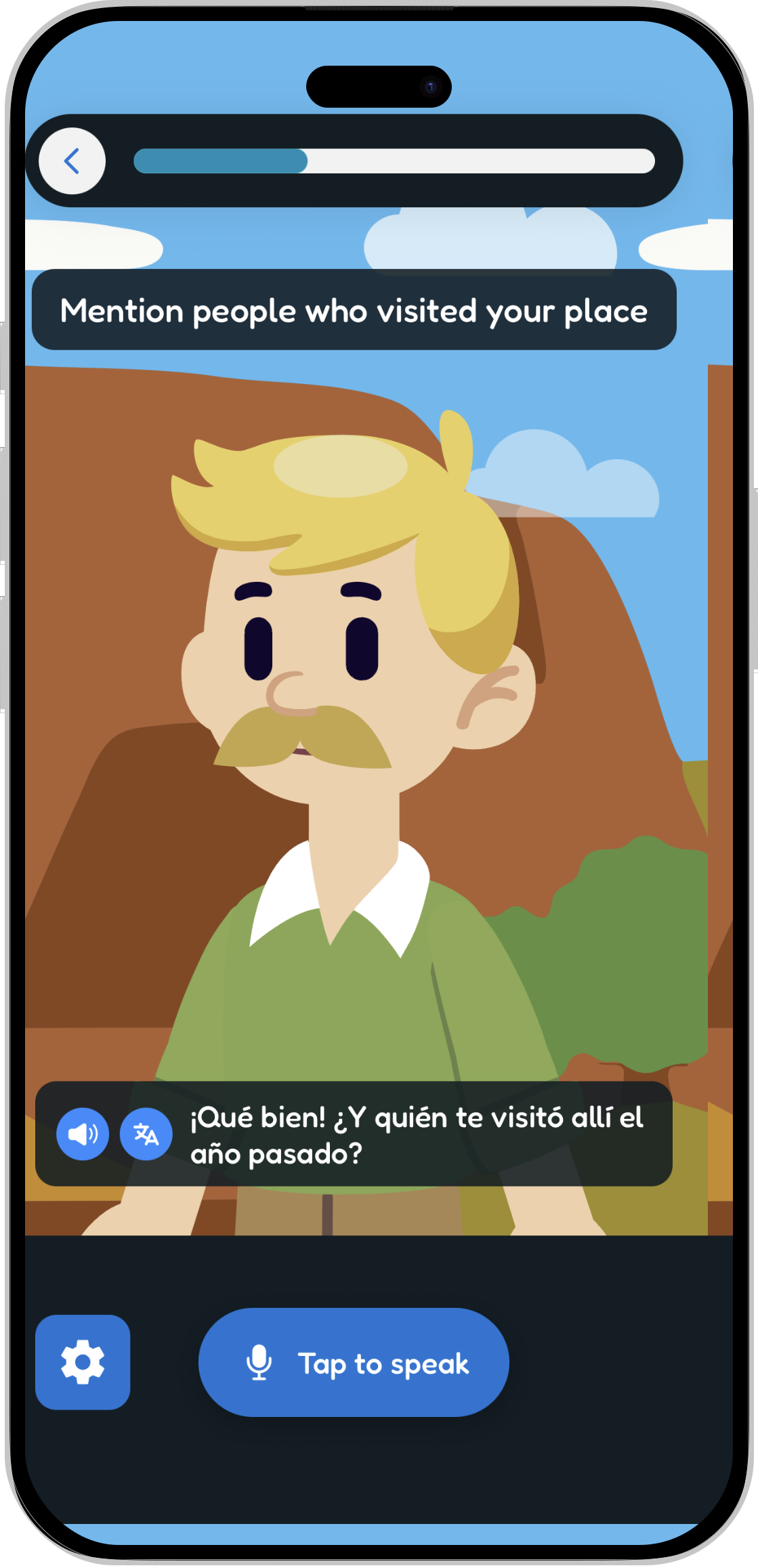
AI Chat Tutor
Practice real conversations with an AI tutor that helps you speak with confidence.
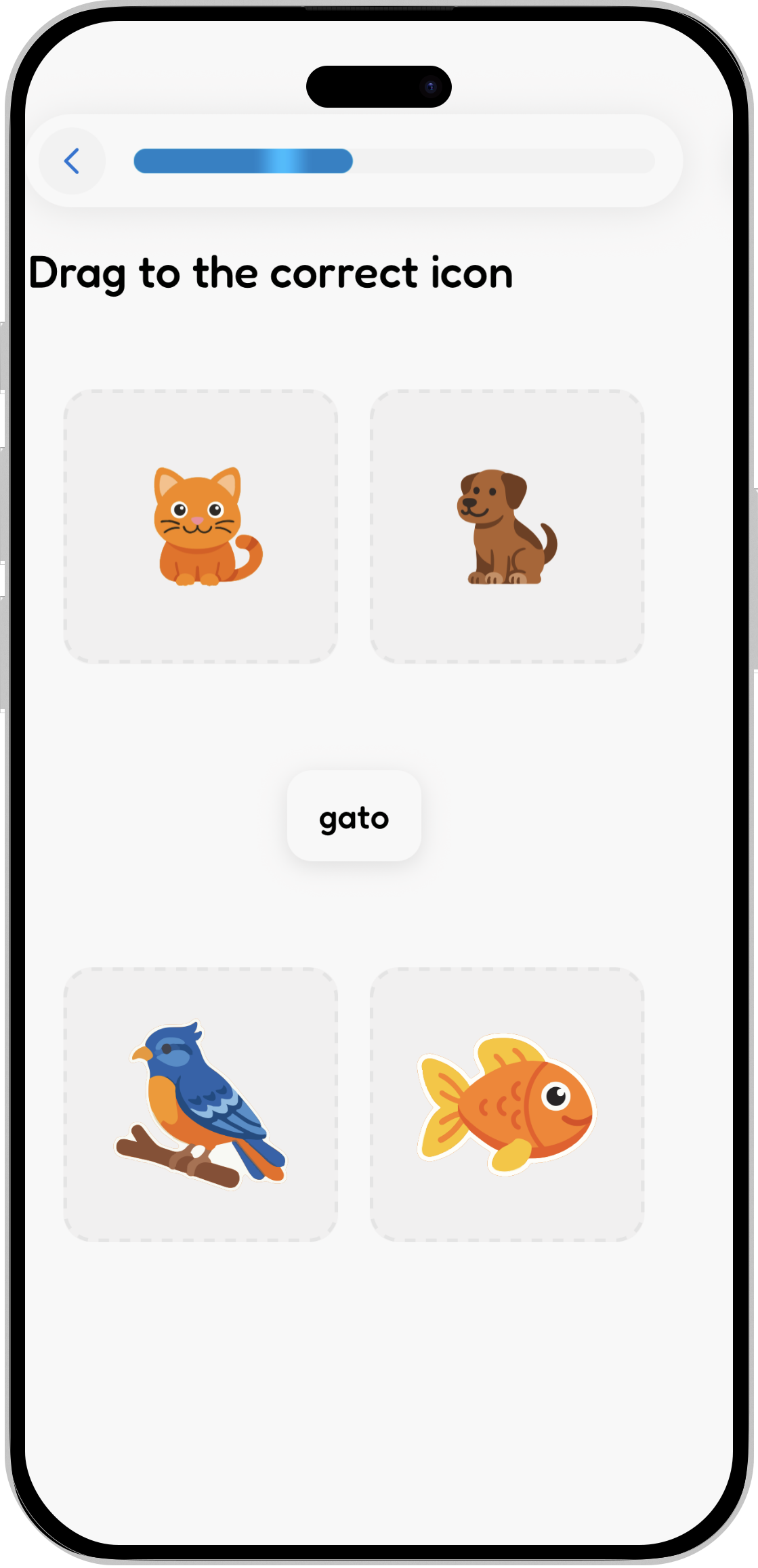
Interactive Games
A variety of games to help you learn and remember new words and phrases.


Your Journey to Becoming a Polyglot Starts Here

So many aspiring polyglots dive in headfirst with tons of enthusiasm, only to hit a wall. They try to learn everything at once and inevitably burn out. The secret to long-term success isn't having a "language gene" or studying eight hours a day. It's about having a practical, sustainable approach that fits into your real life.
This guide is designed to get you past the generic advice and give you a concrete system. We'll show you how to structure your learning to keep languages from getting mixed up and build a routine that feels motivating, not like a chore.
The Power of a Strategic Approach
Thinking like a polyglot means understanding that you can't give every language the same amount of attention all the time. You might be actively studying one primary language, while just maintaining two others by listening to music or watching shows. This tiered system is what prevents mental overload and keeps you moving forward.
The benefits here are huge. Learning multiple languages opens up a world of communication. For instance, if you master both English and Spanish, you can chat with nearly 2 billion people worldwide. Throw in Chinese, and that number jumps to over 2.4 billion. You can discover more insights about the world's most spoken languages and see how your choices can connect you with a massive part of the global population.
The real secret is that polyglots don't study all their languages every single day. They use them regularly in ways that are natural and enjoyable, shifting their focus based on what they want to achieve right now.
Before we get into the nitty-gritty, let's look at the foundational ideas that will guide your journey. This table breaks down the core concepts that every successful multi-language learner builds their routine on.
Quick-Start Principles for Learning Multiple Languages
| Principle | Key Action | Why It Matters |
|---|---|---|
| Strategic Goal Setting | Define clear, realistic goals for each language. | Vague goals lead to vague results. A specific target like "Reach A2 Spanish in six months" gives you a clear finish line to run towards. |
| Tiered Learning | Prioritize one language for active study while maintaining others with lighter, enjoyable activities. | This prevents burnout and cognitive overload, making your learning sustainable for the long haul. |
| Smart Scheduling | Create a consistent weekly schedule that dedicates specific, manageable blocks of time to each language. | Structure is your best friend. It creates a habit and ensures no language gets neglected for too long. |
| Interference Management | Use techniques to keep languages separate in your mind, especially when they are similar. | Actively managing "language transfer" stops you from mixing up grammar and vocabulary between, say, Spanish and Italian. |
| Curated Resources | Choose a core set of tools and resources that align perfectly with your learning style and goals for each language. | The right tools make learning efficient and fun. The wrong ones just create clutter and frustration. |
Think of these principles as your compass. They'll help you make smart decisions as you build a learning system that’s effective, sustainable, and tailored just for you.
Building Your Language Learning Roadmap
Enthusiasm is a great starting point, but if you want to succeed at learning multiple languages, you need a solid plan. Think of it like a road trip—you wouldn't just start driving without a map. A good language learning roadmap keeps you from getting lost and makes sure you actually reach your destination.
This all starts with one simple but critical question: Why? Your motivation is everything. It dictates which languages you choose and how you learn them. Vague goals like "I want to be a polyglot" just don't have the same staying power as specific, tangible ones.
Define Your Real-World Goals
Before you even download an app, get brutally honest about what you want to achieve. Are you learning with a specific purpose in mind?
- For your career? Maybe you need business-level German to close a deal or conversational French to transfer to the Paris office. This means your focus should be on professional vocabulary and formal communication from day one.
- For family and heritage? A lot of people learn a language to connect with relatives or understand their own cultural roots. If this is you, your priority will likely be conversational fluency and the informal slang used around the dinner table.
- For travel? If you’re planning a backpacking trip through Southeast Asia, your goal might be learning just enough Vietnamese to navigate markets and order street food with confidence.
Having a clear "why" turns a vague hobby into a meaningful project. It's what will keep you going when the initial excitement inevitably fades.
Simultaneous vs. Sequential Learning
One of the biggest choices you'll make is whether to learn languages at the same time (simultaneously) or one after the other (sequentially). There's no single right answer here, but there are definitely some smart guidelines to follow.
Simultaneous learning can work, but usually only if the languages are completely different, like Japanese and Spanish. The lack of overlap in grammar and vocabulary helps reduce confusion. Be warned, though: this approach requires serious time management and mental discipline.
Sequential learning is almost always the safer and more effective bet, especially if you're just starting out. The strategy is simple: get one language to a comfortable intermediate level (like a B1) before you even think about starting the next. This gives you a solid foundation, prevents you from mixing up basic grammar, and provides a huge confidence boost from hitting a major milestone.
A classic mistake is trying to learn two very similar languages, like Italian and Spanish, from scratch at the same time. The overlap in vocabulary and sentence structure creates a ton of interference, which will slow down your progress in both.
Set Realistic Tiered Goals
Let's be real: you cannot give 100% effort to three different languages at once. That's just a fast track to burnout. Successful polyglots don't try to do it all; they use a tiered system to manage their focus.
Think of your languages in levels:
- Primary Focus Language: This is your top priority. It gets the most active study time—you’re completing lessons, drilling grammar, and practicing speaking. The goal here is to make big, measurable progress.
- Secondary Maintenance Languages: These are languages you already have a foundation in. Your goal isn't rapid growth, but simply keeping them fresh with low-effort, enjoyable activities like listening to music, watching movies, or reading articles.
For example, your roadmap could be actively studying German to get from A1 to A2, while maintaining your B1 Spanish by watching a Netflix series and chatting with a language partner once a week. This balanced approach is one of the best ways to learn a new language without feeling completely overwhelmed.
Try the Language Laddering Technique
Once you have a solid grip on a second language (your L2), you can use it as a stepping stone to learn a third (L3). This technique is known as language laddering, and it’s incredibly effective because it forces you to actively use your L2 while you’re acquiring your L3.
Here’s how it works in practice. Let's say your native language is English and you've hit an intermediate level in Spanish. Instead of learning French from English, you’d find resources designed to teach French to Spanish speakers. You’d use Spanish-French dictionaries, watch French tutorials explained in Spanish, and start thinking in Spanish to grasp French concepts.
This method does two powerful things at once: it reinforces your Spanish skills while you build your French knowledge. It’s a super-efficient strategy that helps your brain compartmentalize languages, which reduces interference and speeds up your whole journey.
Designing a Study Schedule That Actually Works
A brilliant language roadmap falls apart without a realistic schedule to bring it to life. This is where we move from big ideas to daily action, crafting a routine that fits into your actual life, not some fantasy version of it. Consistency is everything when you're learning multiple languages, and a smart schedule is your best friend.
Your schedule has to be sustainable. Trying to cram two hours of intense study every single day after a long workday is just a recipe for burnout. The real goal is to build a system you can stick with for months or even years by weaving it into the habits you already have.
It's all about figuring out how to best spend your time and energy across your target languages.
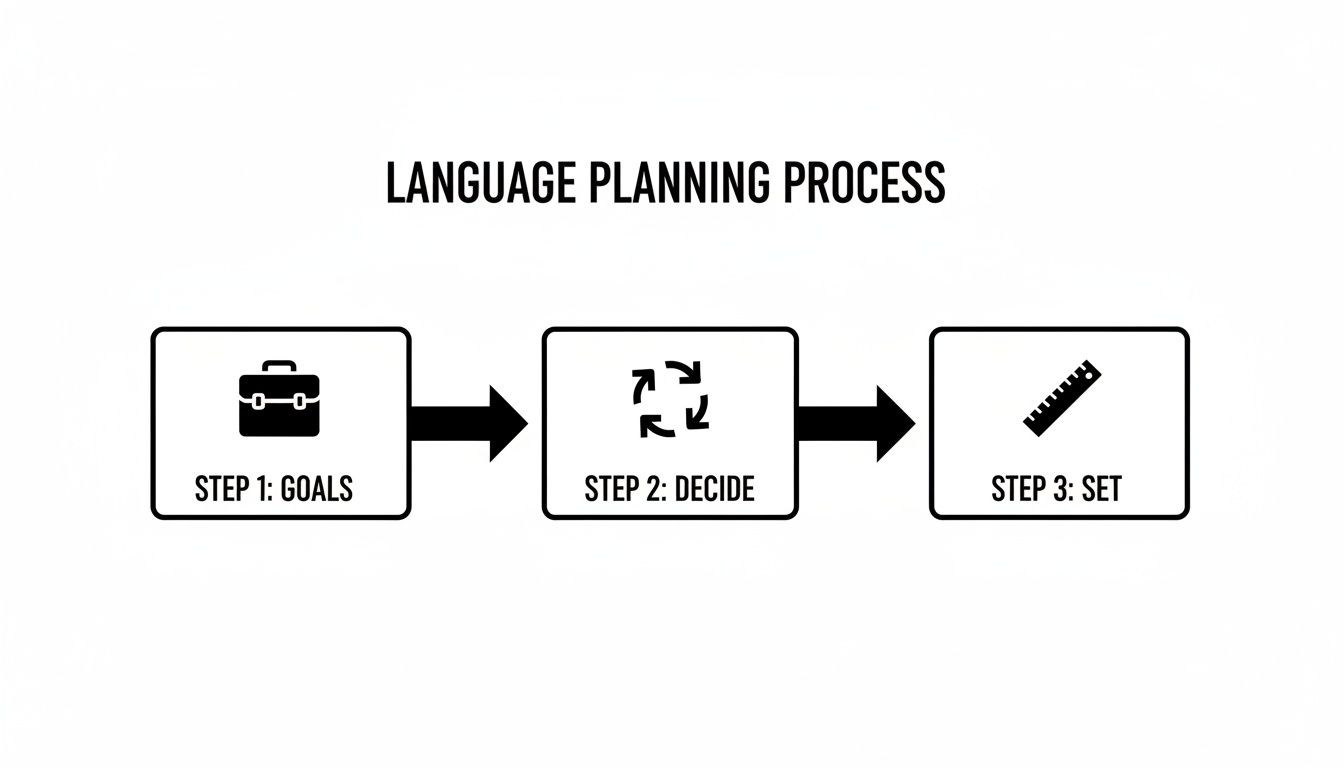
This breaks it down perfectly: your schedule is the final, crucial piece that’s built on a solid foundation of clear goals and a smart learning path.
Choosing Your Scheduling Model
When it comes to structuring your week, you’ve got two main options: language rotation or daily micro-practice. Neither one is better than the other; the right choice comes down to your personality, how you learn best, and what your daily life looks like.
Language Rotation: This is a popular method where you give specific days to specific languages. Maybe you study Spanish on Monday, Wednesday, and Friday, then German on Tuesday, Thursday, and Saturday. This approach lets you get into a deeper focus during each session since you aren't constantly switching gears.
Daily Micro-Practice: With this model, you touch on each of your languages every single day, just for a much shorter burst of time. This might look like 15 minutes of French vocab in the morning, a 10-minute German podcast on your commute, and a quick 15-minute Spanish grammar lesson in the evening. It's a fantastic way to maintain momentum and keep everything fresh.
The best schedule is the one you don't even have to think about. It should become as automatic as brushing your teeth. If you find yourself constantly dreading or skipping sessions, your schedule isn't working for you—it's working against you.
Integrating Active and Passive Learning
A classic mistake is thinking "study time" only means sitting at a desk with a textbook. An effective schedule needs to blend active, focused study with passive, enjoyable input. This balance is what keeps learning from feeling like a chore and really speeds up your comprehension.
- Active Learning: This is your dedicated, high-effort time. Think completing lessons in an app, drilling verb conjugations, writing sentences, or practicing with a tutor.
- Passive Learning: This is all about exposing yourself to the language in a low-pressure way. It could be listening to music, watching movies, or having a podcast on in the background while you cook or drive.
Your schedule should carve out time for both. For example, your active learning might be a 30-minute PolyChat session, while your passive learning is a French news podcast during your gym workout. Combining these ensures you’re both building new skills and reinforcing them through natural exposure. Beyond just scheduling, understanding how to study for exams effectively can give you science-backed techniques that translate perfectly to language learning.
Sample Schedules for Real-Life Scenarios
Theoretical advice is one thing, but seeing it in practice is what really helps. Here are a few sample schedules to show you how different people might structure their week. Use them as a jumping-off point to build your own.
Of course, a great schedule is much easier to stick to with the right tools. To find a platform that complements your routine, check out our guide on the best language learning apps—it can help you find resources that fit perfectly into your active study blocks: https://www.polychatapp.com/blog/best-language-learning-apps
Sample Weekly Language Rotation Schedules
Here are a few ways you could structure a language rotation schedule, depending on your lifestyle. Find the one that feels most like you.
| Schedule Model | Monday-Wednesday-Friday | Tuesday-Thursday-Saturday | Best For |
|---|---|---|---|
| The Busy Professional | Language 1 (Primary): 20 min active study on commute (app), 30 min passive listening (podcast) at lunch. | Language 2 (Maintenance): 15 min review (flashcards), listen to music during workout. | Individuals with limited, predictable blocks of free time who need to maximize short bursts of focus. |
| The Full-Time Student | Language 1 (Primary): 60 min active study (grammar/speaking practice). | Language 2 (Secondary): 45 min active study (vocabulary/reading). | Learners who have longer, more flexible blocks of time and can handle more intensive, focused sessions. |
| The Balanced Hobbyist | Language 1 (Primary): 30 min active study (mix of activities). Watch a movie in the evening. | Language 2 (Secondary): 30 min active study (mix of activities). Chat with a language partner. | Someone who wants to make steady progress without an intense academic focus, balancing learning with entertainment. |
Remember, these are just templates. The most important thing is to be honest with yourself about how much time you can realistically commit. Start small—even 15 minutes a day is incredibly powerful when done consistently. You can always add more time later once the habit is locked in. Think of your schedule as a living document; review it weekly and tweak it as needed to fit your life.
Getting the Core Techniques Down for Smarter Learning

When you're juggling more than one language, learning smarter beats learning harder every single time. The right methods do more than just get you to the next level faster; they help you build a solid, lasting foundation in each language. This isn't about memorizing lists—it's about genuinely absorbing grammar, vocabulary, and pronunciation.
Think of it as being strategic. Instead of just grinding through lessons, you can use proven techniques that help your brain form stronger, more distinct pathways for each language. This is the secret to learning efficiently and dodging the common traps that trip up so many aspiring polyglots.
Keep Your Languages From Bleeding Into Each Other
If you’re learning languages from the same family—say, Spanish and French—your brain will naturally try to take shortcuts. This is called language transfer, and it can feel like a superpower. You’ll spot similar words (cognates) and grammar patterns, giving you a serious head start.
But there's a flip side: interference. This is when you accidentally blurt out a Spanish word in a French sentence or try to apply Italian grammar to Portuguese. The trick is to manage this process consciously instead of letting it run the show.
A brilliant way to do this is through compartmentalization. Basically, you create separate mental "boxes" for each language.
- Use different notebooks for each one.
- Study them in different places (Spanish at your desk, French on the sofa).
- Tie each language to a specific activity, like listening to a German podcast while you're out for a walk.
These little environmental cues help your brain switch gears more cleanly, cutting down on mix-ups and reinforcing each language’s unique identity.
Use Spaced Repetition to Actually Remember Things
Let's be honest: your brain is designed to forget stuff it deems unimportant. It's why you can drill 20 words one day and draw a blank on half of them the next. Spaced Repetition Systems (SRS) are built to fight this "forgetting curve" by showing you information right as you're about to forget it.
This is a total game-changer for learning multiple languages. Instead of just cramming vocabulary, an SRS algorithm schedules flashcards for each language based on how well you know them. You'll see the tricky words more often and the easy ones less frequently, making your study time incredibly efficient.
Here's a pro tip: Keep your SRS decks separate for each language. Tossing your Spanish and German cards into one massive deck is a recipe for chaos. Stick to dedicated decks to help strengthen those mental compartments we talked about.
The whole point is to push vocabulary from your short-term memory into your long-term memory. Before you know it, you’ll find yourself recalling words and phrases without even trying. That’s a massive step toward real fluency.
Get the Input vs. Output Balance Right
So many learners get stuck in the "passive consumption" trap. They'll spend hundreds of hours listening to podcasts and binge-watching shows (input) but almost zero time actually speaking or writing (output). While input is absolutely crucial for building comprehension, it won't make you fluent by itself.
You have to find a balance, right from the beginning. Language is a skill, and like any skill, it demands active practice. One of the best ways to do this is to implement retrieval practice to boost your learning; this means actively pulling information from your memory, which strengthens the neural connections you need for language recall.
Here's a simple, practical way to balance your input and output:
- Consume (Input): Read a quick article or listen to a short podcast episode in your target language.
- Process: Pinpoint 3-5 new words or phrases that you think are useful. Pop them into your SRS deck or a personal dictionary, like the one built into PolyChat.
- Produce (Output): Immediately try to use them. Write a couple of sentences about your day with the new words, or just say them out loud as if you were in a conversation.
This little cycle makes sure you’re not just a passive sponge but an active participant. It connects what you understand with what you can actually do, which is the whole point of learning to communicate. For more ideas, check out our guide on how to improve speaking skills; it's packed with exercises for turning that passive knowledge into an active skill.
How to Troubleshoot Common Polyglot Problems
Even with the perfect roadmap, the path to learning multiple languages is never a straight line. You're going to hit walls. You'll get frustrated. Some days, you'll even feel like you're going backward.
This is completely normal. The real skill isn't in avoiding these bumps in the road, but in knowing how to navigate them when they pop up. Think of these challenges as milestones, not roadblocks. Pushing through them is what forges you into a resilient, confident polyglot.
Tackling Language Interference Head-On
One of the first hurdles you'll likely face is language interference. This is when you're trying to speak Italian, but Spanish words keep hijacking your sentences. It's your brain trying to be efficient by borrowing from a language it knows better, but man, is it frustrating.
The key is to build stronger mental walls between your languages. It’s all about creating distinct contexts for each one.
- Color-Code Your Learning: Assign a specific color to each language. Maybe French is blue and German is green. Use these colors for your notebooks, flashcards, and digital notes. It’s a simple visual cue that helps your brain switch to the right "mode."
- Designate Study Spaces: If you can, study each language in a different spot. French might be your desk language, while Spanish is reserved for the comfy chair in the living room.
- Assign Specific Times: Give each language its own time slot. A morning session for one and an evening session for another helps your brain know what to expect.
These little tricks create powerful mental triggers, helping your brain keep each language in its own lane.
A fantastic way to actively fight interference is with "contrastive drills." Just spend five minutes writing sentences that highlight the differences between your languages. For example, put "I have 25 years" in Spanish (Tengo 25 años) and French (J'ai 25 ans) side-by-side to really drill in their unique structures.
Breaking Through the Dreaded Learning Plateau
Every single language learner hits a plateau. You know the feeling: you’re putting in the hours, but you feel stuck. Your vocabulary isn’t growing, conversations feel repetitive, and your motivation starts to nose-dive.
When you hit this wall, it's a signal that you need to change your methods, not just try harder. Your brain has gotten used to your current routine and is craving a new challenge.
It’s time to shake things up.
- Shift Your Focus: Been grinding grammar flashcards? Drop them for a week and immerse yourself in listening comprehension. Only been reading? Find a language exchange partner and dedicate all your time to speaking.
- Go Niche: Instead of broad, general study, dive deep into a topic you genuinely love. Learn every vocabulary word related to vintage cars, baking, or astronomy. This targeted approach can reignite your passion and give you a real, tangible sense of progress.
- Introduce New Media: Are you bored to tears with your textbook? Start binging a TV series, read a graphic novel, or follow YouTubers who create content in your target language.
A plateau isn't a dead end. It’s a sign that it’s time for your learning strategy to evolve. Introduce something new, and you'll get back on that upward curve.
Managing the Feeling of Being Overwhelmed
Juggling multiple languages is a serious mental workout, and sometimes, it just feels like too much. You start to think you're mediocre at all of them instead of getting good at one. This feeling of being overwhelmed is a huge reason why people give up.
When this happens, the answer isn’t to push harder. It's to pull back and simplify.
The goal is sustainability, not burnout. If you’re feeling fried, it’s a clear sign you’ve taken on too much at once. Give yourself permission to scale things down. Maybe that means pausing one of your "maintenance" languages for a few weeks to focus on your primary one. Or maybe it just means cutting your daily study time from an hour to thirty minutes, swapping intense grammar drills for something more relaxing like listening to music.
Learning multiple languages is a marathon, not a sprint. Knowing when to ease off the gas is just as important as knowing when to accelerate.
Your Top Language Learning Questions, Answered
Even with the best game plan, a few questions always pop up. Let's tackle some of the most common ones that aspiring polyglots ask.
How Many Languages Can I Realistically Learn at Once?
This is the big one, but the honest answer is: it depends entirely on you. For most people just starting out, the sweet spot is one active language and one or two maintenance languages. Trying to tackle two brand-new languages from scratch is a fast track to burnout and painfully slow progress in both.
A much smarter approach is to get one language to a solid intermediate level (think B1) before you even think about adding another. This builds a strong foundation in one and prevents the mental gymnastics that can completely kill your motivation. It's a marathon, not a sprint.
The real limit isn’t some magic number; it's the amount of quality, focused time you can actually commit each week. A seasoned polyglot juggling five languages might only spend 15-30 minutes a day on their "maintenance" ones, saving the bigger time blocks for their main focus.
Which Language Should I Learn First?
When you're mapping out your language journey, the order really does matter. If you have a choice, it’s often a good move to start with a language known for being more accessible to English speakers, like Spanish or French. These languages share a surprising amount of vocabulary and grammar with English, which can give you some quick wins and build that crucial early confidence.
Another pro strategy is picking a "gateway" language. For instance, learning a Romance language like Spanish first makes picking up Italian, Portuguese, or French down the line significantly easier. You’re essentially getting a head start on the next one.
Are Language Learning Apps Enough to Become Fluent?
Language apps are amazing tools, but they’re just one piece of the puzzle. Think of an app as your personal trainer—it’s fantastic for building foundational vocabulary, drilling grammar, and making daily practice a non-negotiable habit.
But to reach real fluency, you have to get out of the gym and play the game. That means mixing app-based learning with real-world input and output.
- Listen: Get lost in podcasts, music, and movies.
- Read: Dive into news articles, books, and blogs in your target language.
- Speak: Find a language exchange partner or a tutor and just start talking.
- Write: Keep a simple journal or start chatting with native speakers online.
Your app builds the foundation, but true fluency is built by using the language in context.
How Do I Stay Motivated for the Long Haul?
Here’s a secret: motivation is fickle. It comes and goes. The key to long-term success isn’t forcing yourself to feel motivated every single day—it’s building a system of habits that carries you through the inevitable slumps.
One of the best tricks is to connect your learning to things you already love. If you’re a gamer, switch your favorite game’s language setting. If you love to cook, start looking up recipes and watching cooking shows in your target language. When practice feels like a reward instead of a chore, you’ve cracked the code.
The explosion in digital learning has made this easier than ever. The online language learning market hit a staggering $13.90 billion in 2024 and is on track to reach $16.62 billion in 2025. That’s a clear sign of the massive demand for better learning tools. You can discover more insights about these language training marketing statistics on amraandelma.com and see how this boom is creating more resources for learners like us.
Ultimately, your "why" is your strongest anchor. Constantly remind yourself why you started—whether it's to connect with family, supercharge your career, or prepare for the adventure of a lifetime.
Ready to build a language learning habit with a tool designed for polyglots? PolyChat offers multi-language paths, gamified challenges, and powerful tools like a personal dictionary and AI-assisted practice to keep you engaged. Start your journey and see how fun and effective learning multiple languages can be.

Jean-Baptiste Bolh
Co-Founder
Applied AI