How to Learn Multiple Languages at Once A Practical Polyglot Guide

So, can you actually learn multiple languages at once? The short answer is yes, absolutely. But let's be real—it's not for the faint of heart. This is a serious goal for dedicated learners, and success comes down to having a smart, structured approach. Forget the old myth that you have to master one language before you even think about starting another.
Ready to Learn a Language?
Try PolyChat's engaging language lessons, interactive learning games and put your new vocabulary to the test!
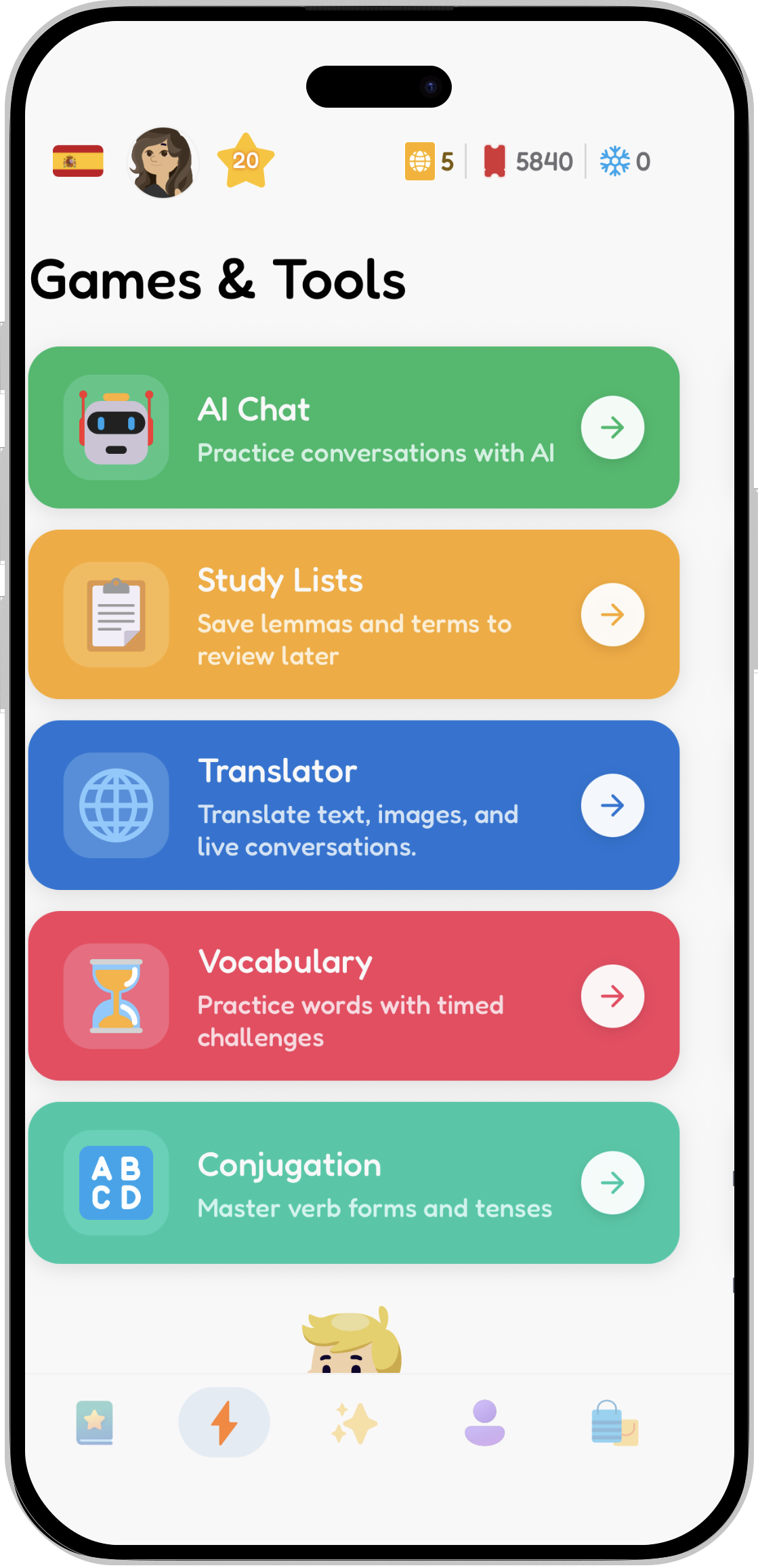
Games & Tools
Tools that every language learner needs at all stages of their learning journey.
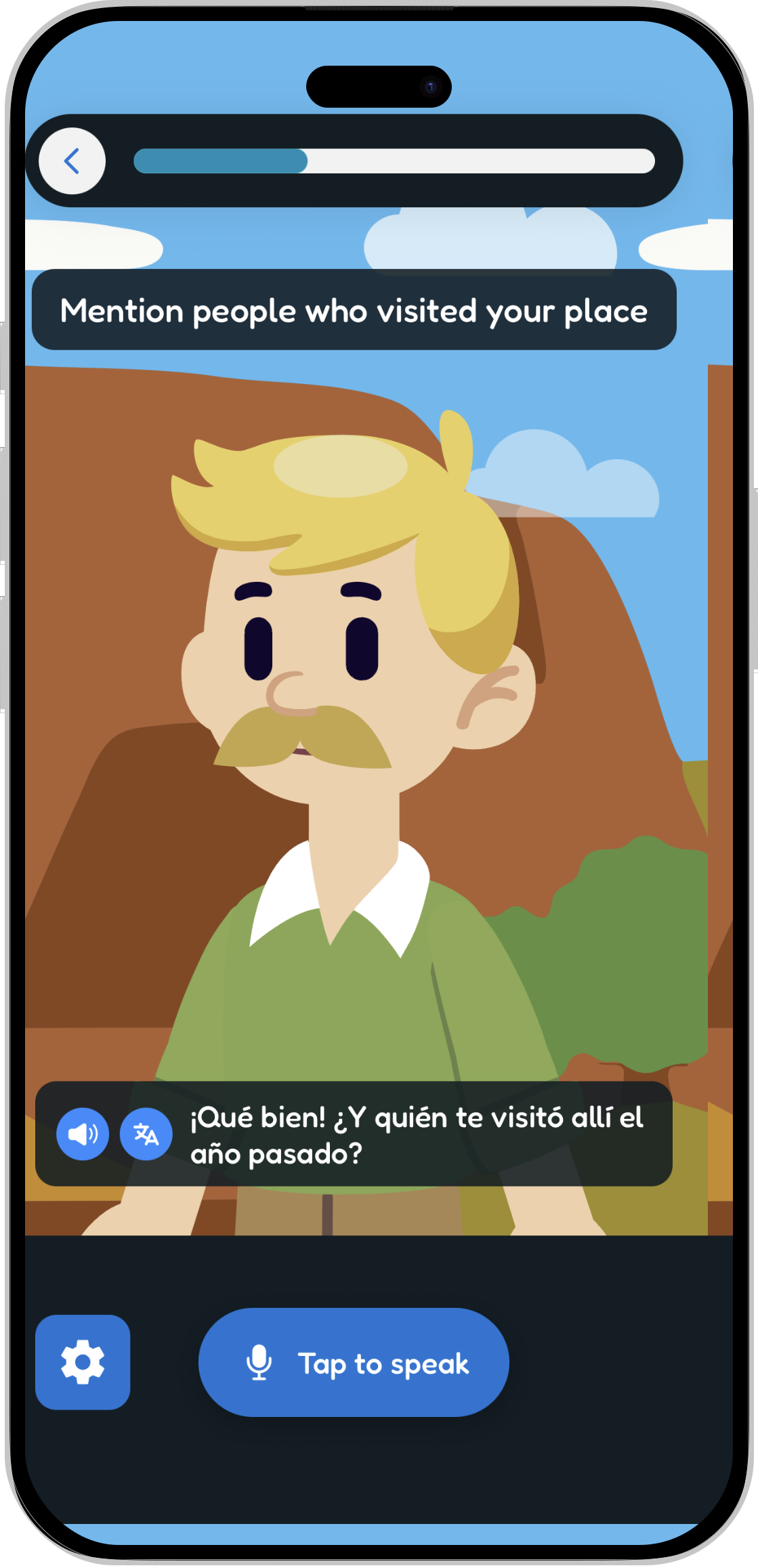
AI Chat Tutor
Practice real conversations with an AI tutor that helps you speak with confidence.
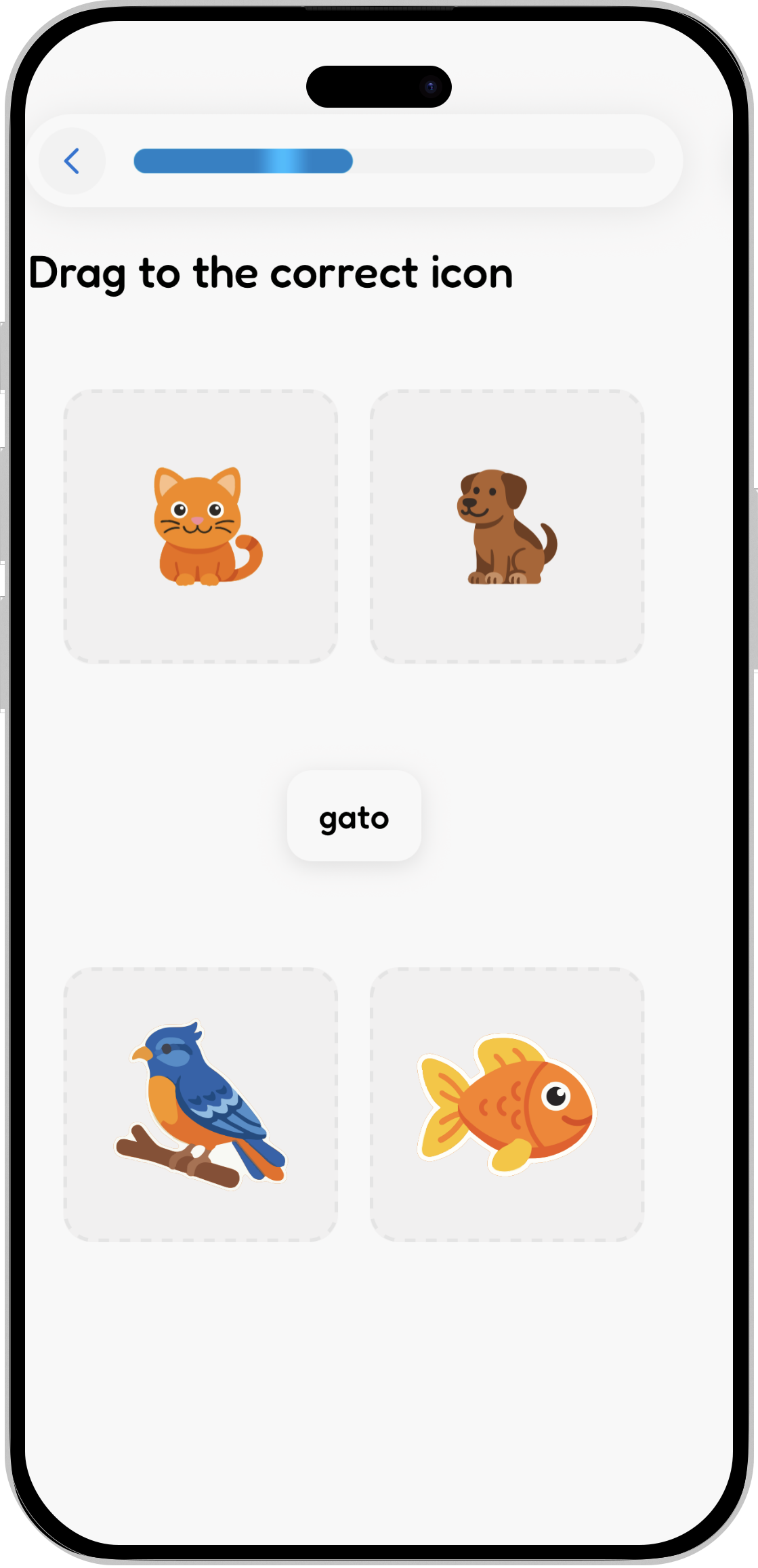
Interactive Games
A variety of games to help you learn and remember new words and phrases.


Why Learning More Than One Language at a Time Isn't as Crazy as It Sounds
The image of someone learning several languages at the same time often brings to mind some kind of linguistic genius, but that's a tired stereotype. Honestly, it has far less to do with raw talent and much more to do with building a solid, sustainable learning system that actually fits into your real life.
And you wouldn't be alone. In a world where over 1.5 billion people are learning a foreign language, there's a growing community of hyper-polyglots tackling three, four, or even more languages at once. Some countries, like Finland, are full of learners studying multiple languages on platforms like Duolingo. It's a global trend, and if you want to dig deeper, you can learn more about these global learning trends from recent reports.
Your Brain on Multiple Languages
Taking on more than one language does way more than just beef up your communication skills; it literally changes how your brain operates. Think of it as a full cognitive workout.
- You become more mentally flexible. Constantly switching between different grammar rules and vocab sets is like mental gymnastics. It seriously improves your ability to multitask and process new information.
- Your pattern-recognition skills get a huge boost. You start noticing the subtle (and not-so-subtle) connections between languages. This skill makes it easier to decode new linguistic structures, creating a snowball effect where each new language makes the next one a little easier to pick up.
- You get better at solving problems. At its core, learning a language is one giant problem-solving puzzle. When you're juggling two or three, you’re sharpening your analytical skills in a way that translates to all other areas of your life.
The ability to maintain multiple languages isn’t some special gift. It’s the result of creating effective systems that work for you. Anyone can build this capacity by finding methods that click with their lifestyle and personality.
The Real-World Proof Is Everywhere
If you need more proof, just look around the world. In huge parts of Europe, Africa, and Asia, being multilingual isn't a hobby—it's just normal life. It’s not uncommon for people to speak three or four languages out of pure necessity and cultural immersion.
These communities show us that the human brain is more than up to the task. For them, language isn't some dusty academic subject; it's a living, breathing tool they use every single day. They get good at it by weaving it into the fabric of their lives, which is a core idea we'll keep coming back to.
Your ambition to learn multiple languages isn't just a wild dream. It’s a totally achievable goal.
Are You Ready to Take the Plunge?
Before you dive in, it’s worth doing a quick self-check to see if you have the right foundation in place. This isn’t a test, but an honest look at what it takes to succeed without burning out.
Simultaneous Language Learning Feasibility Checklist
This table helps you quickly assess if you're ready to learn multiple languages by outlining the key factors for success.
| Factor | Why It Matters for Multilingualism | Your Self-Assessment (Yes/No) |
|---|---|---|
| Time Commitment | Learning one language takes time; learning two or more requires a significant, consistent time investment each week. | |
| Strong Motivation | You need a powerful "why" for each language. Without it, you'll likely drop one when things get tough. | |
| Existing Language Skills | Having at least one language at an intermediate (B1) level provides a stable base and reduces confusion. | |
| Good Study Habits | You already need a solid, disciplined routine. Juggling languages requires excellent organization and consistency. | |
| Patience and Resilience | Progress will feel slower. You need to be okay with a marathon, not a sprint, and not get discouraged easily. |
How did you do? If you answered "Yes" to most of these, you're in a great position to start your multilingual journey. If you had a few "No" answers, don't worry—it just means you'll want to focus on strengthening those areas first before you add a second or third language to the mix.
Alright, let's lay the groundwork.
Jumping into multiple languages without a plan is like trying to build a house without a blueprint. It's the fastest way to get overwhelmed and give up. Before you even think about downloading an app or cracking open a textbook, you need a solid strategy. This isn't just about what you want to learn, but how you're going to learn it in a way that doesn't lead to burnout.
Success starts with the very first decision you make: which languages to pair together. The combination you choose will massively influence your learning curve and the kind of hurdles you'll face down the road.
Choosing Your Language Cocktail
There are really two schools of thought on this, and neither is right or wrong—it just depends on what you're optimizing for.
The first approach is to pair similar languages, like Spanish and Italian, or maybe Dutch and German. This gives you a huge head start. You'll recognize tons of cognates (words that look and mean the same thing) and the grammar will feel familiar. It can feel like a "two-for-one" deal in the beginning, which is a fantastic motivator.
The big catch, though, is language interference. This is that frustrating moment when your brain gets its wires crossed and you blurt out a Spanish word in the middle of an Italian sentence. For a beginner, this can be a real confidence killer.
The other route is to pair wildly different languages—think French and Japanese. The beauty here is that there's almost zero interference. The sounds, writing systems, and grammar are so distinct that your brain naturally puts them in separate mental boxes. The flip side? You're starting from scratch on both fronts. No shortcuts, no freebies.
My two cents: For most people starting out, a balanced approach is golden. Try pairing one language from a family you already know (like a Romance language if you're an English speaker) with one that's completely alien. This gives you the best of both worlds: the quick wins to keep you motivated and a fresh challenge that won't get muddled with your other language.
Set Goals That Don't Suck
Let's be real: vague goals like "I want to be fluent" are totally useless. They're immeasurable and just set you up for disappointment. To build real momentum, you have to get specific about what success actually looks like for you.
Instead of aiming for some fuzzy concept of fluency, set a clear, time-bound objective based on a real-world standard.
Here's how you turn a lame goal into a powerful one:
- Vague Idea: "Learn German."
- Actionable Goal: "Get to an A2 level in German in six months so I can handle basic travel situations, like ordering a coffee and asking for directions, without breaking a sweat."
See the difference? This new goal is specific, measurable, and has a deadline. It gives you a clear finish line to run toward, which is absolutely critical for staying in the game when you're juggling more than one language.
The 70/30 Rule of Prioritization
Trying to give two new languages equal attention is a classic rookie mistake and a fast track to burnout. The most successful polyglots I know almost always pick a primary and a secondary language.
Your primary language gets the lion's share of your focus—most of your structured study time and your best mental energy. Your secondary language gets the leftovers, often in a more relaxed, playful way.
This stops you from splitting your focus 50/50, which usually just means you make frustratingly slow progress in both. By pouring 60-70% of your effort into your primary language, you'll hit meaningful milestones much faster. That feeling of success then creates a positive feedback loop, fueling your motivation to keep dabbling with your secondary language.
It's a smart strategy that also happens to align with what's happening in the global economy. With 96% of global conversations involving at least one non-native speaker, getting really good at a high-demand language like English, German, French, or Spanish is an incredibly valuable asset. You can find more cool stats about language learning trends over at Kent.edu.
Crafting a Realistic Multilingual Study Schedule
A brilliant strategy is just a nice idea until you build a schedule that brings it to life. Forget those rigid, hour-by-hour plans that fall apart the second your day gets a little messy. When you're learning more than one language at once, the secret is an adaptable system that bends without breaking. Consistency, not intensity, is the name of the game.
The goal isn't to cram eight hours of study into one day; it's to find a sustainable rhythm. You'd be amazed at what you can achieve with just 30-45 minutes of focused time per language each day. That’s where your planning turns into real, tangible progress.
This simple flow is the core of the strategy: start by pairing your languages, get crystal clear on your goals, and then decide on a primary focus to channel your energy effectively.
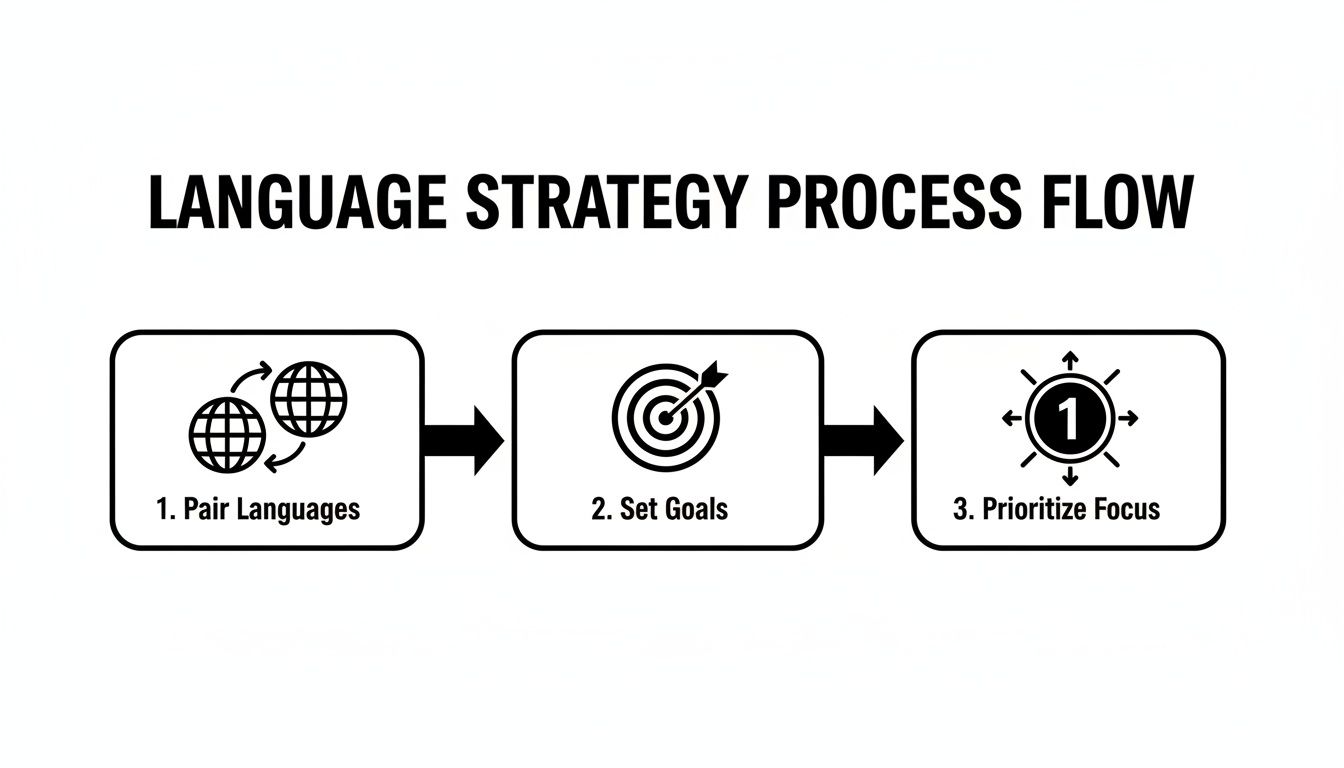
This process makes sure your schedule is built on a solid foundation, saving you from bouncing around randomly. Now, let’s look at two tried-and-true models for putting this into action.
The Language Days Method
The "Language Days" approach is a fantastic starting point for beginners or anyone who thrives on deep, focused work. The idea is dead simple: you dedicate entire days of the week to a single language. This creates a powerful mental separation between your languages, which is a huge help in cutting down on interference.
A week might look something like this:
- Monday, Wednesday, Friday: Primary Language (e.g., German)
- Tuesday, Thursday: Secondary Language (e.g., Japanese)
- Saturday: A mix of both, but keep it fun and low-pressure. Think music, movies, or casual chats.
- Sunday: Rest day or a quick, light review session.
This structure lets you immerse yourself in one language’s world for a full 24 hours. You're not just drilling grammar; you’re thinking, listening, and engaging with one linguistic mindset at a time, which helps build some serious momentum.
The Alternating Blocks Method
If you're a bit further along in your journey or just prefer shorter, more frequent study sessions, the "Alternating Blocks Method" might be your style. This model involves touching both languages every day, but in separate, dedicated blocks of time. It’s perfect for keeping both languages fresh in your mind.
A typical day could be structured like this:
- Morning (30 mins): Primary Language (e.g., German grammar and vocab).
- Evening (30 mins): Secondary Language (e.g., Japanese listening and speaking practice).
The trick here is to create a clean break between the blocks. Don’t jump straight from German flashcards into a Japanese podcast. Give your brain a buffer—take a short walk, grab a coffee, or listen to a song in your native tongue. This little reset is crucial for preventing mental overlap.
Sample Weekly Polyglot Study Schedules
Not sure which model fits you best? Here's a side-by-side look at how these two approaches play out over a week. Model A is great for creating clear separation, while Model B is all about consistent daily contact with each language.
| Day | Model A Language Days (Beginner) | Model B Alternating Blocks (Intermediate) |
|---|---|---|
| Monday | German (45 min) | Morning: German (30 min) Evening: Japanese (30 min) |
| Tuesday | Japanese (45 min) | Morning: German (30 min) Evening: Japanese (30 min) |
| Wednesday | German (45 min) | Morning: German (30 min) Evening: Japanese (30 min) |
| Thursday | Japanese (45 min) | Morning: German (30 min) Evening: Japanese (30 min) |
| Friday | German (45 min) | Morning: German (30 min) Evening: Japanese (30 min) |
| Saturday | Review/Fun Mix (Music, Movies - 30 min) | Review/Fun Mix (Choose one or both - 30 min) |
| Sunday | Rest or Light Review | Rest or Light Review |
The takeaway? The best schedule is the one you can actually stick to. Try one for a week, then try the other. See what feels more natural for your energy levels and lifestyle. There’s no magic one-size-fits-all solution here.
How to Structure Your Daily Study Sessions
No matter which schedule you pick, what you do inside each study block is what really counts. A well-designed 30-minute session is worth more than an hour of passively scrolling through an app. For well-rounded progress, you need to hit different skills each time.
Here's a simple but effective template for a 45-minute study block:
- Warm-up (5 minutes): Get your brain in the zone. Flip through flashcards, do a quick spaced repetition review, or glance over notes from your last session.
- New Material (20 minutes): This is your core learning time. Zero in on one new grammar point or a small, manageable set of vocabulary. Go for depth over breadth.
- Active Practice (15 minutes): Put what you just learned to work immediately. Write sentences with the new grammar, say the new words out loud, or try to spot them in a short text.
- Wrap-up (5 minutes): Do a final, quick review of the new material you just covered. This helps lock it into your memory before you step away.
This balanced approach makes sure you’re actively using the language, not just consuming it. The right tools can make this whole process a lot smoother. If you're looking for apps to integrate into this routine, our guide on the best language learning apps for adults is a great place to start.
Learning Faster and Keeping Your Languages Straight
One of the biggest anxieties for anyone learning multiple languages is language interference. It’s that facepalm moment when you’re trying to speak German and a Spanish word sneaks out, or you catch yourself applying French grammar to an Italian sentence.
To juggle languages successfully, you need more than just brute force memorization. You need smart, proactive strategies to build separate mental file folders for each language. This isn't about raw talent; it’s about creating systems that work with your brain's natural tendencies, not against them.
Build Mental Firewalls with Context
A surprisingly powerful trick is to use context-based learning. This just means you deliberately associate each language with a specific environment, activity, or even a time of day. Our brains are wired to link memories to context, and you can absolutely use this to your advantage.
- Assign physical spaces: Maybe you only study Spanish in your home office and French on the living room couch.
- Link languages to activities: Perhaps you only listen to German podcasts while working out or cook using recipes written in Italian.
- Use time blocking: Dedicate mornings to one language and evenings to another. This creates a clean mental break.
This technique turns your daily routine into a powerful reinforcement tool. When you step into your "German" space or start your "Italian" activity, your brain gets a strong cue to switch into the right mode, making recall smoother and interference far less likely.
The secret sauce here is consistency. Once your brain learns to expect a certain language in a certain context, it stops trying to grab words and rules from the other languages you're studying.
Create Visual Separation in Your Notes
Don't underestimate the simple things. Your study materials can either add to the chaos or help create order. A ridiculously effective tactic is color-coding. Assign a unique color to each language and stick to it religiously across all your notes, flashcards, and digital files.
For example, maybe all your German materials—pens, highlighters, notebook covers—are blue, while everything for Japanese is green. This small visual cue creates a strong, subconscious separation between the languages, making your review sessions more focused and way more efficient.
Master Spaced Repetition for Multiple Languages
Spaced Repetition Systems (SRS) are a polyglot's best friend, but only if you use them correctly. Tossing vocabulary from two different languages into the same flashcard deck is a recipe for disaster.
The non-negotiable rule is to maintain separate, dedicated SRS decks for each language.
This ensures you’re only ever reviewing one language at a time, reinforcing those distinct mental pathways we talked about earlier. It’s a methodical approach, but it’s absolutely essential for locking in vocabulary long-term without causing confusion. If you're new to this memory hack, it's worth understanding how spaced repetition for language learning can seriously level up your game.
Ultimately, the goal isn't just to know a language, but to use it. To get there, you need to actively improve verbal communication skills so you can speak with confidence. These study techniques are what build that strong foundation.
Reinforce Learning with Focused Practice
Regular, focused practice is where the magic happens. This is where tools designed for polyglots, like PolyChat, can make a huge difference. Being able to jump into gamified challenges and targeted exercises for each language individually helps solidify what you’ve learned and keeps that mental "cross-talk" to a minimum.
For instance, you could drill French verb conjugations without any risk of Spanish endings creeping in. Or, you could play timed vocabulary games in German to strengthen your recall under pressure. Think of these focused activities as precision strikes—they reinforce knowledge for one language at a time, building a stronger, more reliable foundation for each.
Using PolyChat for Gamified Multilingual Mastery
Connecting your grand strategy to the right tools is what turns a good plan into a great one. When you're learning multiple languages at once, an app built for that exact ambition—one that ditches frustrating roadblocks like energy systems—can become your secret weapon. It’s all about weaving smart, fun practice into the little pockets of your day, not just scheduling another chore.
More and more learners are proving the old myth wrong—you absolutely don't have to master one language before starting another. In fact, multilingualism is booming, with the global language learning market expected to hit a massive $101.5 billion by 2026. PolyChat was designed for this new wave of learners, offering unlimited lessons in 17 languages like Portuguese, Polish, and Catalan, all powered by AI and games that help you juggle multiple languages every day.
Take a look. This is how gamified learning can make something notoriously tricky, like verb conjugations, feel more like a quick challenge than a homework assignment.

The whole point is getting that instant feedback and seeing your progress tick up, turning a common learning hurdle into an engaging part of your daily routine.
A Day in the Life of a PolyChat Polyglot
So, how does this actually fit into a real schedule? You don't need to blow up your entire day. Instead, you just thread targeted, bite-sized practice into those moments you'd otherwise lose. The goal is consistent, low-effort engagement.
Here’s what a typical day might look like:
- Morning Coffee (10 mins): You knock out a French lesson, focusing on a new grammar rule. The app’s structured path means you don't waste time figuring out what to study—you just open it and go.
- Lunch Break (15 mins): Instead of scrolling social media, you play a few rounds of a timed German vocabulary game. It’s a fast, fun way to keep your primary language sharp.
- Running Errands (5 mins): While waiting in line at the store, you use the app's translator to look up a few Spanish words for things around you, adding them to your mental word bank.
This approach transforms dead time into productive, genuinely enjoyable learning sessions. Progress starts to feel almost automatic.
By swapping mindless scrolling for quick, gamified language drills, you can easily rack up hours of productive practice each week without ever feeling like you're "studying."
Using Smart Features to Progress Faster
A truly great app does more than just offer lessons. It gives you specialized tools to attack the unique challenges that come with learning multiple languages, helping you isolate and strengthen weak spots in each language independently.
For instance, say you're learning Italian from your existing Spanish knowledge—a classic language-laddering move. You can actually set Spanish as your base language in the app. This frames all the new Italian grammar and vocabulary in a context you already get, which can seriously speed things up.
Or think about verb tenses, a pain point for almost everyone. Instead of grinding through manual drills, you can fire up a dedicated conjugation practice tool. This lets you focus intensely on German verbs one day and French the next, preventing that frustrating mental overlap that happens with similar languages. The game-like format keeps it from feeling like a chore. You can see how this works by checking out PolyChat's variety of language games.
This kind of targeted practice is crucial. It helps you build strong, distinct neural pathways for each language—the ultimate goal for any aspiring polyglot. It’s about working smarter, not just harder, to make your multilingual dreams a reality.
Your Questions About Learning Multiple Languages, Answered
Jumping into the world of polyglotism is exciting, but let's be real—it brings up a lot of questions. Worries about time, motivation, and getting your wires crossed are totally normal. So, let's tackle the most common ones head-on with some practical, no-nonsense advice.
How Many Languages Can I Realistically Learn at Once?
For most people diving into this for the first time, two is the sweet spot. This gives you a serious challenge that sharpens your learning skills but keeps things manageable enough that you don't burn out. It's a delicate balance.
If you're already a seasoned language learner with solid study habits locked in, you might be able to juggle three. But the real question isn't about the number of languages; it's about the amount of focused, quality time you can sink into each one.
A good rule of thumb: Make sure you can commit at least 30-45 minutes of dedicated study time per language on most days. If that sounds like a stretch, you're far better off making real, tangible progress in one or two languages than frustratingly slow progress in four.
Should I Learn Similar or Completely Different Languages?
Ah, the classic dilemma. There are solid arguments on both sides.
Learning similar languages—like Spanish and Portuguese—gives you an incredible head start. You get to ride the wave of shared vocabulary and familiar grammar, which can be a massive confidence boost right out of the gate.
The catch? This path dramatically increases the risk of language interference. You'll almost certainly find yourself mixing up words or grammar rules. It's a common and sometimes maddening hurdle when languages are kissing cousins.
On the flip side, tackling completely different languages, like German and Japanese, pretty much eliminates that interference. Your brain neatly files them into separate cabinets. The trade-off is that you get zero shortcuts. You're starting from square one with each, which demands more mental energy upfront.
My advice for beginners is to find a happy medium:
- Pick one language from a family you know. For English speakers, that could be a Romance language like French or a Germanic one like Dutch.
- Pair it with something totally different. Think a language with a new script or grammar system, like Korean or Arabic.
This approach gives you the best of both worlds: the quick, motivating wins from a familiar language and a fresh challenge that won't get tangled up with the other one.
What's the Best Way to Track My Progress Across Multiple Languages?
When your attention is split, tracking your progress is non-negotiable. It's the fuel that keeps you going. The key is to use a mix of tools to get a 360-degree view of your growth in each language.
For building vocabulary, an app like PolyChat is perfect. Its built-in trackers and personal dictionary feature automate the process, giving you clear, satisfying metrics on how many new words you've mastered.
For your core skills, try keeping a simple weekly journal. Just rate your confidence on a scale of 1-5 in these four areas for each language you're studying:
- Speaking
- Listening
- Reading
- Writing
Most importantly, set tangible, real-world goals. Ditch the vague ideas and define what success looks like. Think "Hold a 5-minute conversation in French" or "Get the main idea of a German news podcast." Recording yourself speaking once a month is also a game-changer—it provides undeniable proof of how far you've come and is an amazing source of motivation.
How Do I Stay Motivated When Progress Feels Slow in One Language?
It's going to happen. You'll have a massive breakthrough in one language while hitting a brick wall in another. This is totally normal. The trick is to see this as a signal to adjust your strategy, not to quit.
Instead of grinding away at a tough grammar point, give yourself permission to shift your focus. Lean into the language where you're currently flying; the confidence boost you get will often spill over and help you break through the plateau in the other one.
For the language that feels stuck, just change the activity. If you've been hammering grammar drills, spend the next week simply enjoying it. Watch movies, listen to music, or find a funny YouTuber. Your goal is to reconnect with why you wanted to learn it in the first place.
And always, always celebrate the small wins. Did you understand a new phrase you overheard? Did you form a sentence without overthinking it? Acknowledge it. This whole thing is a marathon, and recognizing those small victories is what keeps you in the race.
Ready to put these strategies into action with a tool built for ambitious learners? PolyChat offers unlimited lessons and gamified practice in 17 languages, with no restrictive energy systems to slow you down. Start building your multilingual routine today at https://www.polychatapp.com.

Jean-Baptiste Bolh
Co-Founder
Applied AI