How to Become Fluent in a Language A Practical Guide

So, you want to become fluent in another language. That's not some far-off dream—it's the end result of a smart, consistent routine. The whole journey really boils down to three core ideas: surrounding yourself with the language every day, working on all your skills at once (speaking, listening, reading, and writing), and actually using it in real conversations.
This guide is your roadmap. We’re going to break it down and make fluency feel completely within your reach.
Ready to Learn a Language?
Try PolyChat's engaging language lessons, interactive learning games and put your new vocabulary to the test!
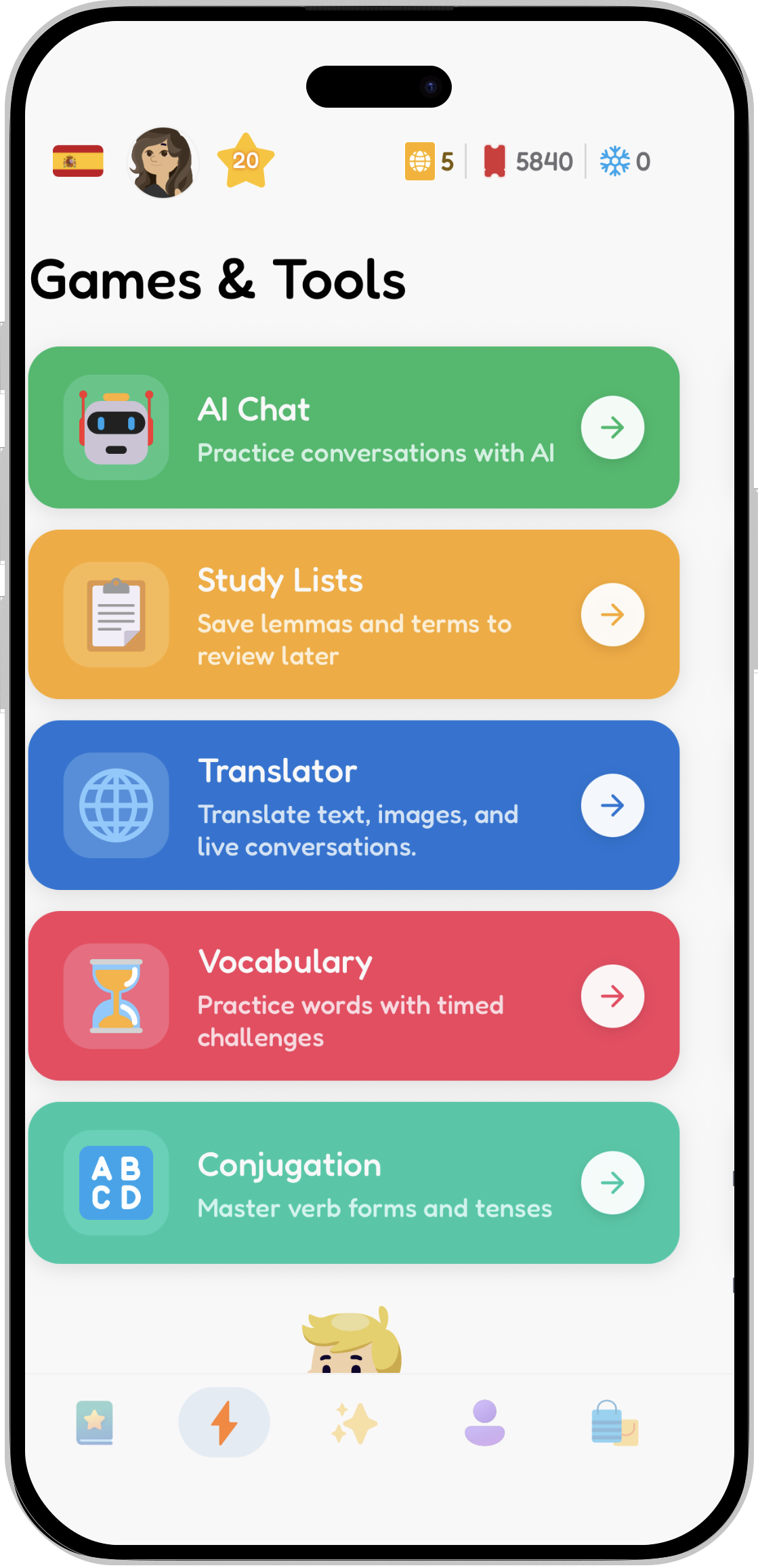
Games & Tools
Tools that every language learner needs at all stages of their learning journey.
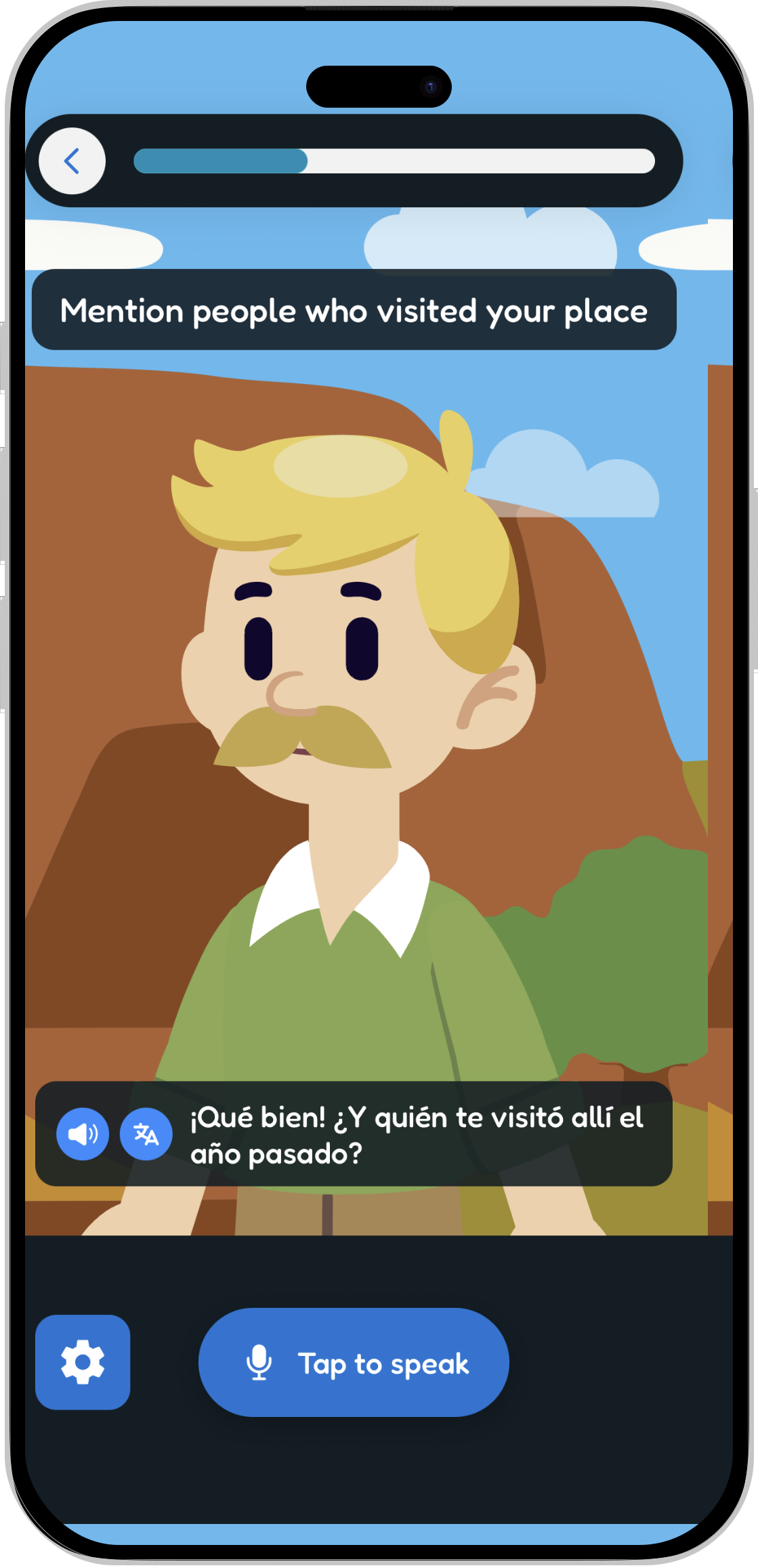
AI Chat Tutor
Practice real conversations with an AI tutor that helps you speak with confidence.
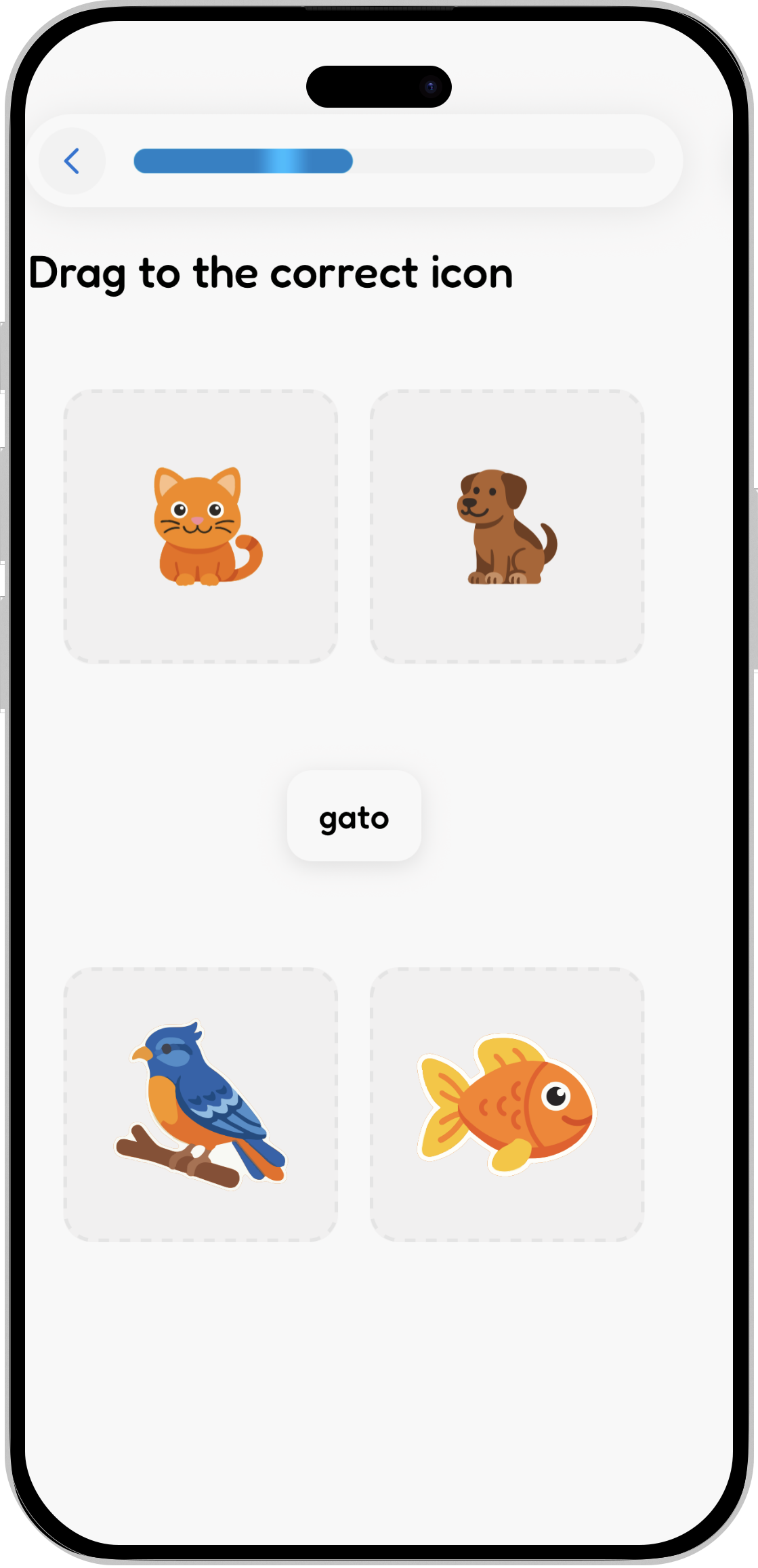
Interactive Games
A variety of games to help you learn and remember new words and phrases.


Charting Your Course to Fluency

A lot of people think fluency is a rare talent, something you're either born with or not. That couldn't be more wrong. Getting fluent is far less about natural ability and way more about having the right mindset and a sustainable strategy. It's about weaving the language into the fabric of your life, not just cramming for an hour here and there.
True fluency isn’t about memorizing flashcards until your eyes glaze over. It's about being able to think, react, and express yourself without constantly translating in your head. This guide is here to demystify the whole process, turning abstract advice into concrete steps you can start taking today.
The Three Pillars of Language Fluency
To build a routine that actually works, it helps to focus on three fundamental pillars. Each one is crucial, and they all work together to build momentum. Think of them as the legs of a stool—if one is missing, the whole thing wobbles.
Here’s a quick breakdown of what these pillars are and why they're so important for building a solid foundation.
| Pillar | Core Activity | Why It Matters |
|---|---|---|
| Consistent Daily Immersion | Surrounding yourself with the language (music, movies, phone settings). | Makes the language feel familiar and normal, training your brain to recognize patterns without active effort. |
| Balanced Skill Development | Actively practicing listening, speaking, reading, and writing. | Creates a well-rounded ability. You can't just speak; you need to understand, read signs, and write messages. |
| Meaningful Interaction | Using the language to communicate with real people (or advanced AI). | This is the final step. It turns passive knowledge into an active skill and builds true conversational confidence. |
These three areas are your new focus. By consciously building habits around each one, you create a powerful system that reinforces itself, making your progress faster and more sustainable.
The biggest mistake learners make is waiting until they feel "ready" to start speaking. The truth is, you'll never feel perfectly ready. The fastest way to build confidence is to dive in, make mistakes, and learn from using the language in the real world from day one.
The journey is a marathon, not a sprint. Research often points to 600-750 hours of deliberate practice as the benchmark for reaching professional working proficiency. With an estimated 1.5 billion people learning a new language right now, the tools and methods have never been better. You can read more about modern language learning trends to see how things have evolved. By focusing on these three pillars, you’re not just studying—you're building a system for success.
Laying the Groundwork for Success
Before you even think about downloading an app or memorizing vocabulary lists, you need to do something far more important: build a solid foundation. So many learners burn out, and it's usually not because they aren't trying hard enough. It’s because they lack a clear direction and a real, personal reason to keep going.
The journey to fluency doesn't start with your first word. It starts with why.
Your motivation is the fuel that will get you through tough grammar lessons and those inevitable moments of self-doubt. A fuzzy goal like "I want to learn Spanish" is a recipe for quitting. To make it stick, you have to get specific and tie the language to something you actually care about.
Find Your Real Motivation
Why this language, right now? Is it to finally have a real conversation with your grandmother, who you've only ever been able to smile and nod at? Maybe it’s for a job that involves international clients, or for that dream trip where you want to order food and chat with locals without frantically swiping through a translation app.
Your "why" needs to be tangible and have some emotional weight. This connection is what turns a chore into a passion project, making it way more likely you’ll stick around when the initial excitement wears off.
A goal without a strong emotional driver is just a wish. The difference between "I should learn French" and "I will learn French to explore my family's heritage in Quebec" is the difference between giving up in a month and actually reaching fluency.
Once you’ve got a powerful reason, the next step is to turn that feeling into a concrete plan. This is where you move from a vague dream to a structured roadmap with clear, achievable targets.
Map Your Journey with CEFR Milestones
One of the biggest mistakes learners make is aiming for "fluency" without ever defining what that even looks like. This is where the Common European Framework of Reference for Languages (CEFR) becomes your best friend. It’s a simple system that breaks down language skill into clear levels, from A1 (Beginner) all the way up to C2 (Mastery).
Using this framework, you can set goals you can actually measure.
- A1 (Beginner): You can introduce yourself and handle simple, everyday situations.
- A2 (Elementary): You can talk about your background, your immediate surroundings, and basic needs. This is a perfect goal for a traveler.
- B1 (Intermediate): You can deal with most situations you’d encounter while traveling and describe experiences, dreams, and ambitions.
- B2 (Upper-Intermediate): You can chat with native speakers with a good degree of spontaneity, making conversation feel natural for everyone involved.
Instead of a nebulous goal like "become fluent," you can set a specific target: "Reach A2 in three months so I can feel confident on my trip to Italy." Now you have a clear finish line. This makes your progress trackable and helps you work backward to build a system that fits your life.
Choosing Your Learning Toolkit
With a clear goal in hand, you can start putting together your resources. The trick is to find a mix of tools that match how you like to learn and, most importantly, keep you coming back for more. There’s no single "best" method—the best one is the one you’ll actually use.
Think about a blended approach:
- A Core App: Use a structured app like PolyChat for your daily lessons, vocabulary building, and fun, gamified practice. The latest advances in AI language learning have made these tools incredibly good at building a strong base.
- Immersion Content: Find podcasts, music, and TV shows in your target language that you would enjoy anyway. This turns listening practice from a chore into entertainment.
- Conversation Practice: Make time for a tutor, find a language exchange partner, or use an AI conversation tool. This is how you turn all that passive knowledge into an active, real-world skill.
By figuring out your motivation, setting CEFR-based goals, and picking a toolkit that supports you, you’re not just hoping to learn a language. You're building a deliberate, sustainable system designed for success.
Crafting Your Daily Learning Ritual

Here’s a hard truth: the difference between someone who gets fluent and someone who gives up is almost always a consistent daily ritual. But I'm not talking about grinding away for two hours every single night. That’s a recipe for burnout.
The real key is finding small, repeatable pockets of time to weave the language into your life. It needs to become an effortless habit, not just another chore on your to-do list. When you integrate learning into your existing routine, you remove all the friction that makes you want to quit.
Build a Ritual That Actually Fits Your Life
Let's be real—a one-size-fits-all study plan is destined to fail. Your daily ritual has to be built around your schedule, your energy levels, and your commitments. The magic lies in finding those little moments you normally waste and claiming them for your language practice.
Think of these as starting points you can tweak:
- The Busy Professional: Your day is a blur of meetings and deadlines. Your ritual could be a 15-minute podcast in your target language during your commute, 10 minutes of vocab drills on PolyChat during your coffee break, and a quick 5-minute review of key phrases right before bed.
- The Student: Your schedule might be flexible, but it's packed. Try listening to music in your target language while walking across campus, hitting a 20-minute structured lesson right after class, and then spending 15 minutes writing a journal entry in the evening.
- The Stay-at-Home Parent: Your time comes in unpredictable chunks. You could listen to a language-learning audiobook while doing chores, practice on a gamified app while in the school pickup line, and then unwind with a 30-minute show in your target language after the kids are asleep.
The common thread isn't intensity; it's consistency. These small, daily actions compound like crazy over time. This "microlearning" approach is incredibly powerful. Just 15 minutes a day of focused practice can completely change your progress. In fact, learners who hit 1,000 hours of practice through immersive apps often reach conversational skill up to 70% faster than those stuck in traditional classroom settings.
The Power of Spaced Repetition
One of the smartest techniques you can build into your ritual is the Spaced Repetition System (SRS). Our brains are wired to forget, but SRS hacks this "forgetting curve." It’s a simple but brilliant way to make vocabulary stick for good.
Here’s how it works: you learn a new word, and an SRS algorithm shows it to you again right before your brain is about to forget it. As you keep getting it right, the time between reviews gets longer and longer—from minutes to days, then weeks, and eventually months.
This method forces you to spend your precious study time on the words you're actually struggling with, instead of wasting time on vocab you already know cold. It’s the ultimate efficiency hack for learning.
Most modern language apps have this built right in, automating what used to be a tedious manual flashcard process.
Gamification: Your Secret Weapon Against Boredom
Let’s face it, drills can get painfully boring. That’s where gamification comes in. By turning learning into a game—with points, leaderboards, and challenges—you tap directly into your brain's reward system. It makes practice feel less like work and more like play, which is absolutely essential for long-term motivation.
Gamified learning keeps you hooked by giving you instant feedback and a real sense of accomplishment. Nailing a timed challenge or seeing your score jump gives you a little dopamine hit that makes you want to keep going.
Look for apps with features that make learning fun:
- Timed Vocabulary Challenges: Race against the clock to translate words.
- Interactive Conversation Games: Practice real-world dialogues in a zero-pressure environment.
- Conjugation Practice Tools: Master those tricky verb forms with engaging exercises.
When you combine a custom-fit schedule, smart tools like SRS, and the fun of gamification, you create a sustainable habit you actually look forward to. For anyone tackling a language with a tricky reputation, check out our guide on how to learn German language fast for more specific strategies. This powerful trifecta is the core of how to become fluent in a language without burning out.
Developing Your Core Language Skills

Having a daily ritual is great for consistency, but if you really want to get fluent, you need a balanced attack. You can't just drill vocabulary lists and expect to hold a decent conversation. Think of fluency as a four-legged table—if one leg is shorter than the others, the whole thing gets wobbly.
Those four legs are listening, speaking, reading, and writing. Neglecting one will always hold the others back. The goal here is to move from being a passive learner who just consumes the language to an active communicator who can actually use it. It’s about building a well-rounded skill set so you can understand a joke, order a coffee, read a menu, and text a friend with equal confidence.
Master the Art of Active Listening
Listening is so much more than just hearing a foreign language. It's about processing meaning in real time. Sure, having a Spanish radio station on in the background (passive listening) doesn't hurt, but active listening is where the real magic happens. It’s the difference between hearing a song and actually understanding the lyrics.
So, how do you sharpen this skill? You have to engage your brain on purpose.
- Start with Comprehensible Input: Find podcasts or YouTube channels made for learners. The speech is usually a bit slower and clearer, which gives your brain a fighting chance to catch up and notice patterns without getting totally overwhelmed.
- Graduate to Native Content: Once you're comfortable, jump into content made for native speakers. Watch movies in their original language, but—and this is key—turn on the subtitles in that same language. This creates a powerful connection between the spoken words and their written form.
- Practice Active Recall: Don't just be a sponge. After listening to a short segment of a podcast, hit pause and try to summarize what you just heard out loud. This forces your brain to retrieve the information, which really cements it in your memory.
The real breakthrough happens when you stop translating every single word in your head. Aim for the gist. Let your brain fill in the gaps from context, just like you do in your native language. That’s the key to fluid comprehension.
Find Your Voice Through Speaking Practice
Let's be honest: speaking is usually the most intimidating part. But it’s also the most rewarding. It’s where all your abstract knowledge becomes real, tangible communication. So many learners are held back by the fear of making mistakes, but speaking from day one is hands-down the fastest way to improve.
One of my favorite techniques is shadowing. Find a short audio clip of a native speaker and try to mimic them in real time. Copy their pronunciation, rhythm, and intonation as closely as you can. It feels weird at first, but it’s an incredible workout for your accent and mouth muscles.
Another powerful tool is already in your pocket. Use your phone to record yourself speaking on a simple topic for just 60 seconds. Listen back, notice where you stumbled, and re-record it. This creates a zero-pressure feedback loop that helps you self-correct and see your progress over time. To find the right tools for this, check out some of the best language learning apps that have built-in recording features.
Build Comprehension by Reading Widely
Reading is a fantastic way to vacuum up new vocabulary and see grammar working in its natural habitat. Unlike a fast-moving conversation, a book or an article lets you set your own pace, look up words, and reread tricky sentences until they finally click.
The trick is to read stuff you actually find interesting.
If you’re a beginner, graded readers are a lifesaver. These are books rewritten for different learner levels, so you can enjoy a real story without grabbing a dictionary every five seconds. As you get better, move on to authentic materials.
- Read news articles about topics you already follow.
- Find blogs or forums dedicated to your hobbies.
- Switch your phone or social media apps into your target language. This is a game-changer!
This turns reading practice from a chore into a seamless part of your day. You're not "studying"—you're just consuming content you love.
Solidify Your Knowledge Through Writing
Writing forces you to slow down and actively construct the language. It makes you think critically about word choice, sentence structure, and grammar rules. It's where everything you've learned passively from listening and reading finally solidifies.
You don't need to write a novel. Start small to build the habit.
- Daily Journaling: Just write three sentences a day. What did you do? What did you eat? How are you feeling? It’s simple but incredibly effective.
- Social Media Engagement: Find creators who post in your target language and leave comments. It’s a low-stakes way to practice real communication.
- Use Writing Prompts: Find a simple prompt online, like "Describe your favorite food," and just write a short paragraph.
For engaging exercises that cover all these skills, you can also leverage interactive language learning materials via Lumi H5P Cloud. By dedicating focused time to each of these four areas, you build a robust, flexible fluency that prepares you for anything.
Making the Leap to Real Conversation

This is the moment of truth. Every vocabulary drill and grammar exercise has been leading up to this single, crucial step: turning what you know into what you can say. For a lot of people, this is the most intimidating part of the journey. The fear of making a mistake can be paralyzing.
But here’s a secret every fluent speaker knows: they all started out fumbling through their first conversations. The trick is to reframe how you think about it. You aren’t taking a test; you’re connecting with another person. Mistakes aren't failures; they're just proof that you're in the game.
The goal isn't perfection. It's connection. Once you really embrace that idea, the fear starts to melt away, and the real learning kicks in.
Finding Your Conversation Partners
Book smarts will only get you so far. To truly internalize the rhythm and natural flow of a language, you have to actually use it with other humans. The good news is that finding people to talk to has never been easier.
You’ve got several great options, depending on your comfort level and budget:
- Online Tutors: Platforms like iTalki or Preply are goldmines. They connect you with native-speaking tutors for one-on-one lessons, giving you personalized feedback in a structured, supportive space.
- Language Exchange Meetups: Check out sites like Meetup.com for local groups. These are usually casual, fun gatherings—a fantastic way to practice in a relaxed social setting and meet people who share your passion.
- Language Exchange Apps: Apps like Tandem or HelloTalk are brilliant. They pair you with native speakers learning your language, so you can help each other improve through texts, voice notes, or video chats.
The key is to find something you genuinely enjoy and can stick with. Consistent speaking practice, even just 30 minutes a couple of times a week, will absolutely fast-track your progress.
The biggest barrier to speaking isn't a lack of vocabulary—it's a lack of confidence. The only way to build that confidence is to start speaking, even when you feel you're not ready. You'll surprise yourself with how much you already know.
Rehearse for Reality with AI
Imagine practicing how to order coffee, ask for directions, or handle a business negotiation a dozen times before you ever have to do it for real. This is where AI conversation partners become an incredible asset.
AI-powered apps like PolyChat give you a judgment-free zone to build your speaking muscles. You can run through specific, real-world scenarios whenever you want, without the pressure of a live audience. This is perfect for working through hesitations and practicing key phrases until they feel second nature. For professionals communicating across borders, it's also worth seeing how real-time translation tools can bridge communication gaps.
This kind of low-stakes rehearsal is a total game-changer for getting over speaking anxiety.
Keeping the Conversation Flowing
Okay, so you’ve started a conversation. Now what? The next challenge is keeping it from dying out. Don't worry about sounding like a poet; just focus on being an engaged and active participant.
Here are a few practical tips to help the chat flow naturally:
- Ask Open-Ended Questions: Ditch questions that get a simple "yes" or "no." Instead, ask things that start with "why," "how," or "what do you think about..." These invite longer, more interesting answers.
- Learn Conversation Fillers: Every language has them. Pick up a few simple filler phrases like "umm," "let's see," or "that's a good question." They buy you a second to think and make you sound much more natural.
- Be a Good Listener: This one is huge. Pay close attention to what the other person says. Not only is it respectful, but it also gives you plenty of material for follow-up questions, which keeps the dialogue moving forward organically.
By actively looking for these opportunities and using a few simple strategies, you make the leap from learner to speaker. This is easily the most rewarding part of the whole process—and the true sign that you're on your way to fluency.
Navigating Plateaus and Staying Motivated
Every single person learning a language hits a wall. It’s not a question of if, but when. One day you’re riding high on a wave of progress, and the next, it feels like you’ve been running in place for weeks on end.
Welcome to the infamous intermediate plateau. It’s a completely natural, and frankly, unavoidable part of the journey to fluency.
More importantly, it’s actually a good sign. Hitting this wall means you’ve moved beyond the easy beginner wins and are now wrestling with the tougher, more nuanced parts of the language. The trick is to see it for what it is—a temporary slowdown, not a dead end.
Breaking Through the Intermediate Plateau
When your progress grinds to a halt, your first instinct is probably to just study harder. But that’s a fast track to burnout. The real solution isn't more effort; it's different effort. Your brain has adapted to your current routine, and it's time to shake things up to forge new neural pathways.
Instead of drilling the same old vocabulary lists, try a completely new approach. If you’ve been living inside structured app lessons, go pick up a novel written for native speakers. If you’ve only been listening to podcasts for learners, switch to a popular TV series in your target language. This is how you expose yourself to new words and sentence structures in a fresh, engaging context.
A plateau is your brain’s way of asking for a new challenge. It’s gotten comfortable with your current methods, so you need to introduce novelty to kickstart the learning process again.
Another powerful tactic is to zoom in on a single skill. Dedicate an entire week to nothing but improving your listening comprehension. Or finally perfect that tricky grammatical tense you’ve been avoiding. This kind of targeted, focused practice can create a breakthrough that pulls all your other skills up along with it.
How to Overcome Common Language Learning Hurdles
Spotting a problem is the first step to solving it. Most of us run into the same handful of challenges along the way, and knowing how to react is what separates those who succeed from those who quit.
Here’s a quick guide to some of the most common hurdles you'll face.
Overcoming Common Language Learning Hurdles
| Common Hurdle | What It Feels Like | Actionable Solution |
|---|---|---|
| Motivation Fade | The initial excitement is gone, and practice feels like a chore. | Reconnect with your "why." Watch a film from a country you want to visit or chat with a native speaker to remember your goal. |
| Feeling Overwhelmed | There’s too much to learn, and you don’t know where to focus. | Go back to basics for a day. Review simple, foundational concepts to rebuild confidence and give yourself an easy win. |
| Fear of Speaking | You understand a lot but freeze up when you try to talk. | Use a low-stakes environment. Practice with an AI partner like PolyChat or write out what you want to say before a conversation. |
Knowing what to do when you feel stuck is a superpower. It keeps you moving forward even when the path gets steep.
Preventing Burnout and Staying Consistent
The journey to fluency is a marathon, not a sprint. The learners who make it aren't always the ones who study the most; they’re the ones who find a sustainable pace and stick with it.
That means building rest and celebration into your routine is absolutely non-negotiable.
Schedule planned breaks. Taking a few days or even a week off isn’t lazy—it’s strategic. It gives your brain time to consolidate everything it has learned and helps you return to your studies feeling refreshed and re-energized.
Equally important is celebrating your small victories. Did you understand a joke in a movie for the first time? Did you successfully order food without pointing at the menu? You have to acknowledge these moments. They are tangible proof that you’re moving forward, even on the days it doesn't feel like it. This kind of positive reinforcement is the fuel for long-term motivation.
Ready to break through plateaus with a tool designed for consistent, engaging practice? PolyChat offers gamified challenges and unlimited lessons to keep you motivated every step of the way. Start your journey and discover a more fun way to learn on polychatapp.com.

Jean-Baptiste Bolh
Co-Founder
Applied AI