10 Best Ways to Learn a New Language: A 2026 Deep Dive

Learning a new language feels like unlocking a superpower. It opens up new cultures, careers, and connections, forging pathways to understanding that were previously closed. But with countless apps, books, and courses promising fluency overnight, finding a path that genuinely works can feel overwhelming. The internet is saturated with advice, yet many learners find themselves stuck in a cycle of starting, stalling, and giving up.
The secret to success isn't a single magic bullet; it's about building a sustainable system. The best ways to learn a new language involve combining proven strategies that align with your personal learning style, schedule, and specific goals. Forget the myth of the "language gene." Fluency is an achievable skill built through consistent, intelligent effort and the right set of tools.
This guide cuts through the noise. We will break down the ten most effective, evidence-backed methods for language acquisition. For each strategy, you will find a clear explanation of why it works, actionable steps to implement it immediately, and insights into how modern tools like PolyChat can streamline and accelerate your progress. We will cover everything from immersive techniques and spaced repetition to structured study and gamified practice. By the end, you won't just have a list of ideas; you'll have a practical, customizable roadmap to becoming conversational, confident, and ultimately, fluent in your target language.
Ready to Learn a Language?
Try PolyChat's engaging language lessons, interactive learning games and put your new vocabulary to the test!
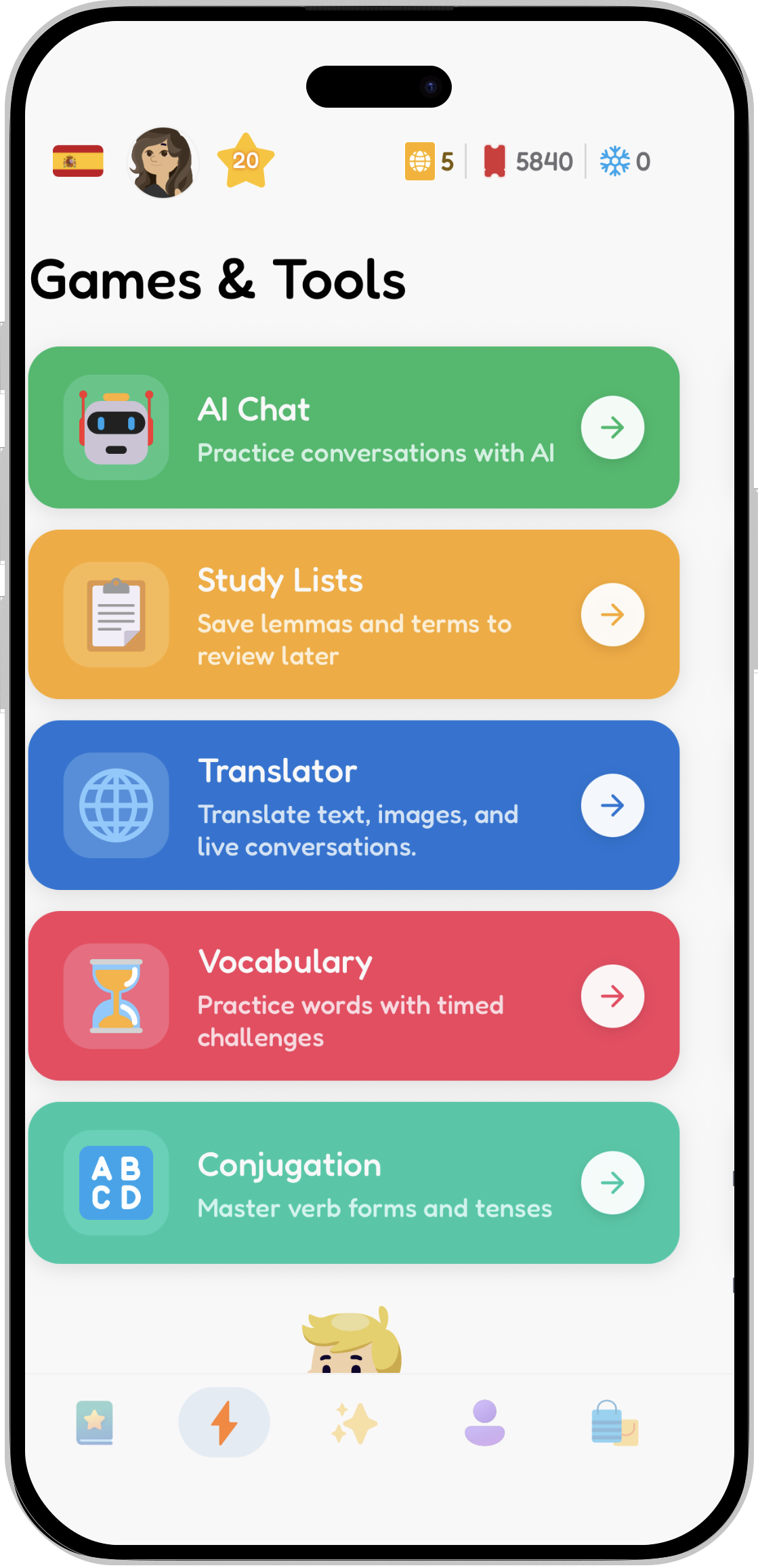
Games & Tools
Tools that every language learner needs at all stages of their learning journey.
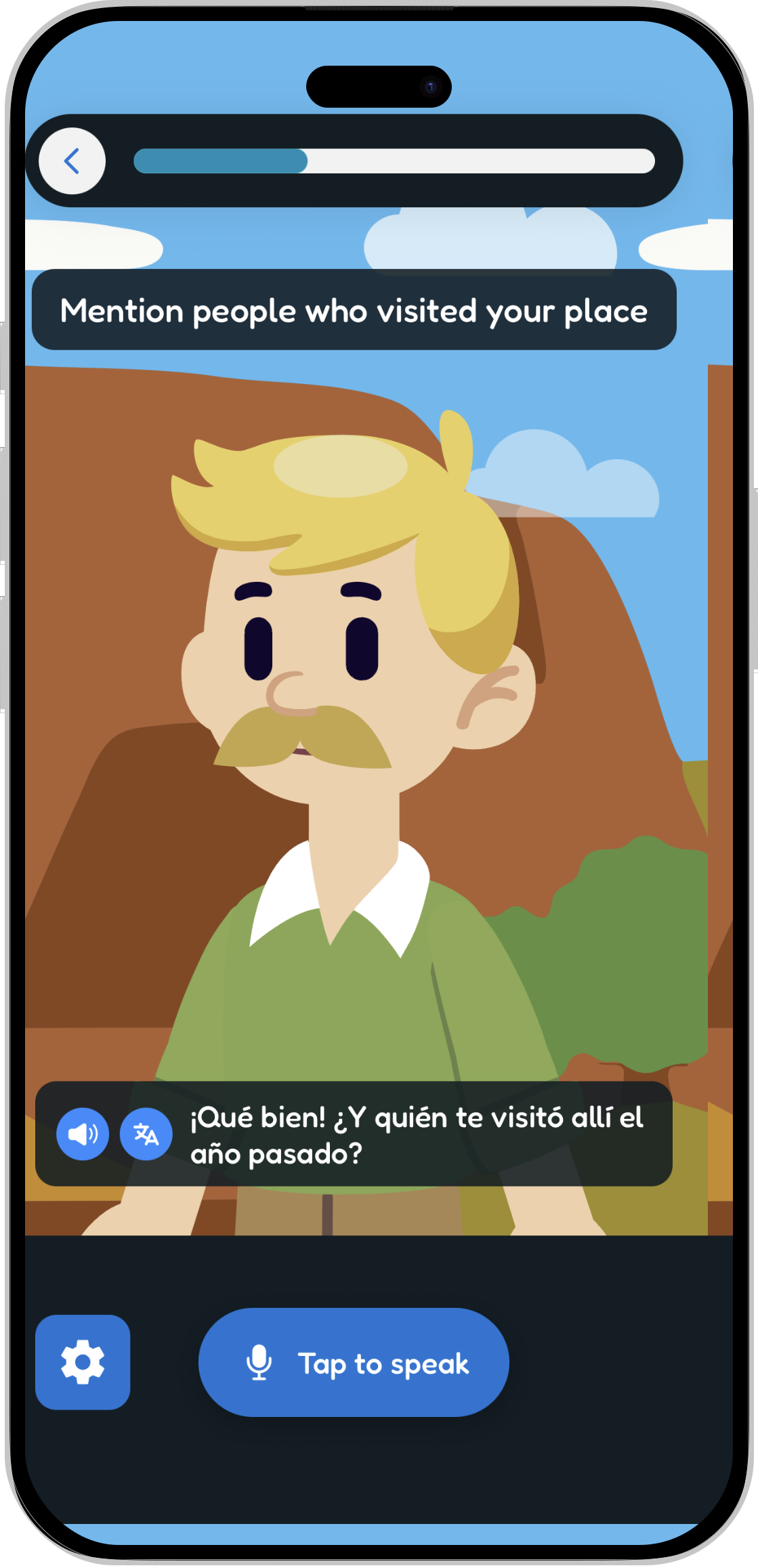
AI Chat Tutor
Practice real conversations with an AI tutor that helps you speak with confidence.
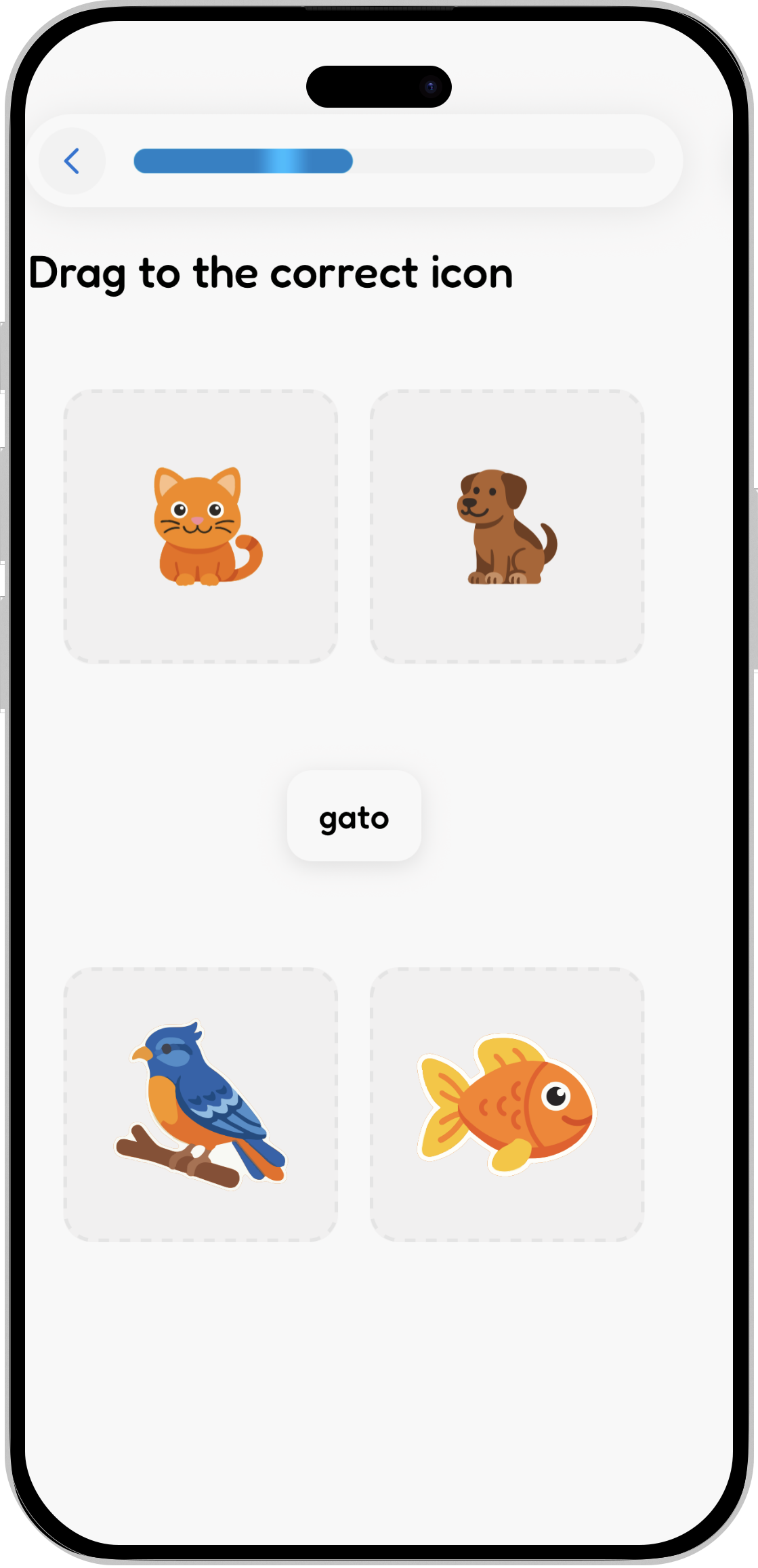
Interactive Games
A variety of games to help you learn and remember new words and phrases.


1. Immersion Learning: Living the Language
Immersion is widely considered one of the best ways to learn a new language because it forces your brain to operate entirely outside its comfort zone. The method involves surrounding yourself with the target language so completely that it becomes the primary medium for your daily thoughts, actions, and communications. This constant exposure mimics the natural process by which we acquire our native tongue, building intuitive connections between words, concepts, and contexts rather than relying on translation.
How to Implement Immersion
True immersion goes beyond just listening to music or watching movies. It requires a deliberate, multi-faceted approach to re-wiring your daily habits.
- Digital Immersion: Change the language settings on all your devices: phone, computer, and social media apps. Your daily digital interactions, from checking the weather to navigating to a new address, become mini-lessons.
- Media Immersion: Consume all your entertainment in the target language. Watch local news channels, listen to popular podcasts, and read books from local authors. This exposes you to authentic slang, cultural references, and natural conversation speed.
- Physical Immersion: If possible, travel to or live in a country where the language is spoken. Programs like Erasmus+ or IES Abroad offer structured experiences. For a deeper dive, consider a homestay with a native family over living with other students.
Common Pitfalls and How to Avoid Them
The biggest challenge with immersion is the temptation to revert to your native language. When abroad, it's easy to fall into an "expat bubble." To avoid this, actively seek out local clubs, sports teams, or volunteer opportunities that force you to interact with native speakers. If you're immersing yourself from home, find a conversation partner online and commit to only speaking the target language during your sessions.
Key Insight: Successful immersion isn't just about passive exposure; it’s about active participation. You must force yourself to speak, write, and think in the new language, even when it feels difficult and you make mistakes.
2. Spaced Repetition Systems (SRS): Hacking Your Memory
Spaced Repetition Systems (SRS) are a powerful, evidence-based method for learning that directly combats the brain's natural tendency to forget. This technique uses a smart algorithm to show you flashcards or vocabulary items at increasing intervals over time. Each correct answer pushes the next review further into the future, while an incorrect one brings it back sooner, optimizing your study schedule based on the principles of the "forgetting curve." This makes it one of the best ways to learn a new language by ensuring information is efficiently moved from short-term to long-term memory.

How to Implement Spaced Repetition
Implementing SRS is less about scheduling and more about choosing the right tools and creating effective materials. It’s a method built for consistent, daily practice.
- Choose Your Tool: Download a dedicated SRS application like Anki (highly customizable and free) or Quizlet (user-friendly with pre-made sets). These platforms handle all the scheduling for you.
- Create High-Quality Cards: Instead of isolated words, create cards with full example sentences to provide context. Enrich your cards by adding images and audio clips of native pronunciation to engage multiple senses.
- Study in Short Bursts: The beauty of SRS is its efficiency. Commit to a daily review session of just 15-20 minutes. Consistency is far more important than cramming.
Common Pitfalls and How to Avoid Them
The most common mistake with SRS is creating a massive, disorganized "everything" deck. This quickly becomes overwhelming and demotivating. To avoid this, create smaller, themed decks focused on specific topics like "Restaurant Vocabulary" or "Past Tense Verbs." Also, avoid the passive trap of only recognizing answers; actively try to recall the word or phrase before you flip the card to truly test your memory.
Key Insight: Spaced repetition is not about the quantity of time you spend studying, but the quality of your recall at precisely the right moment. The system works for you, so your job is to be consistent and create meaningful, context-rich flashcards.
3. Conversational Exchange and Language Partners
Active conversation is where language learning truly comes alive, and engaging with a language partner is one of the best ways to learn a new language by putting theoretical knowledge into practice. This method pairs you with a native speaker of your target language who is, in turn, learning your native language. It creates a mutually beneficial exchange focused on authentic communication, helping you develop fluency, listening skills, and conversational confidence in a low-pressure setting.

How to Implement Conversational Exchange
Finding a partner is easier than ever thanks to dedicated platforms and communities. The key is to establish a consistent and structured routine for your practice.
- Find Your Partner: Use apps like Tandem or websites like ConversationExchange.com to find partners who match your interests and availability. Local options include university language programs or language exchange events found on Meetup.
- Structure Your Sessions: Don't just "chat." Agree to split the time evenly between languages, for instance, 30 minutes in their language and 30 minutes in yours. Prepare topics or questions in advance to keep the conversation flowing and goal-oriented.
- Leverage Technology: Use video calls to pick up on non-verbal cues and practice real-time interaction. Use built-in chat functions to type out new words or corrections, creating a log you can review later. If you're looking for more ways to enhance your skills, you can learn more about improving speaking skills on polychatapp.com.
Common Pitfalls and How to Avoid Them
The most common issue is a lack of structure, leading to unproductive sessions or fizzled-out partnerships. To prevent this, be clear about your learning goals from the start. Ask your partner for specific types of feedback: do you want to be corrected on every mistake, or only major ones? Also, be patient and supportive of your partner's learning journey; a strong rapport makes the exchange more effective and enjoyable for both of you.
Key Insight: A language exchange is a two-way street. The goal isn't just to practice speaking but to become a better listener and a more supportive learning partner, which deepens your own understanding of the communication process.
4. Active Immersion Through Content (Movies, Shows, Podcasts)
Active immersion through content is one of the best ways to learn a new language by integrating it into your daily entertainment habits. This method leverages compelling media like films, TV series, and podcasts to create a rich, context-driven learning environment. Instead of rote memorization, you absorb grammar, vocabulary, and cultural nuances naturally, just by engaging with content you genuinely enjoy. It’s a powerful application of Stephen Krashen’s "comprehensible input" theory, which posits that we acquire language by understanding messages.

How to Implement Active Content Immersion
The goal is to turn passive consumption into an active learning session. This requires intentional choices about what you watch and how you watch it.
- Curate Your Content: Start with material designed for learners, such as the Easy Languages YouTube channel or the Coffee Break Languages podcast series. As you progress, move to native content like popular Netflix series or local news broadcasts.
- Use Smart Subtitles: Begin by watching with subtitles in the target language, not your native one. This helps connect spoken words with their written forms. Tools like the Language Reactor browser extension can add dual-language subtitles for deeper analysis.
- Engage Actively: Don't just watch. Pause the video to look up new words, jot down interesting phrases, and repeat lines out loud to practice pronunciation. The key is active engagement rather than passive viewing.
Common Pitfalls and How to Avoid Them
The biggest mistake is choosing content that is too difficult, leading to frustration and burnout. To avoid this, select media that is slightly challenging but still mostly understandable. Focus on grasping the overall context before getting stuck on individual words. For those looking to understand content beyond their current proficiency, exploring video translation tools can bridge the gap. Another pitfall is inconsistent practice. Schedule "language-learning" movie nights or make a target-language podcast part of your daily commute to build a sustainable habit.
Key Insight: The effectiveness of this method comes from combining high-frequency exposure with genuine interest. When you care about the story or topic, your brain is more motivated to decode the language and acquire new vocabulary.
5. Structured Language Courses and Formal Education
For learners who thrive on clarity and a defined path, structured language courses and formal education provide a systematic and reliable framework. This method is one of the best ways to learn a new language because it offers a logical progression through grammar rules, vocabulary, and practical skills. Guided by certified instructors and a clear curriculum, you build a strong foundation, moving from basic concepts to complex structures with measurable milestones and feedback.
How to Implement Structured Learning
Engaging with a formal course means more than just showing up to class or logging into an app. It requires active participation and strategic selection to match your learning style and objectives.
- Choose the Right Program: Select a course that aligns with your end goal. University programs and certified institutions like the Instituto Cervantes are ideal for academic or professional credentials. For flexible, self-paced learning, platforms like Rosetta Stone or Babbel offer comprehensive curricula. Explore some of the best language learning apps to see which structured digital courses fit your needs.
- Active Classroom Participation: Don't be a passive student. Ask questions, participate in group activities, and complete all assignments. The structure is there to guide you, but progress depends on your engagement.
- Leverage Modern Assessments: Many modern courses are moving beyond traditional tests. For those engaging in structured courses, innovative assessment methods like video assignment submissions in formal education can significantly enhance learning and feedback by focusing on practical speaking skills.
Common Pitfalls and How to Avoid Them
The most significant risk in a structured environment is becoming overly reliant on the textbook and classroom, which can lead to "academic" fluency that doesn't translate to real-world conversation. To avoid this, supplement your formal studies with real-world practice. Join a language exchange meetup, consume media in your target language, and use your new skills in unstructured, spontaneous conversations as often as possible.
Key Insight: A structured course provides the "what" and "why" of a language. It’s your responsibility to apply that knowledge in authentic contexts to master the "how" of natural communication.
6. Reading and Written Expression
Engaging with a language through reading and writing is a powerful method for developing a deep and nuanced understanding. This approach moves beyond basic conversation, building a strong foundation in grammar, vocabulary, and sentence structure. By consuming written content and producing your own, you actively engage with the formal and informal registers of the language, accelerating your path from intermediate comprehension to advanced proficiency.
How to Implement Reading and Writing
A successful reading and writing strategy involves a balanced mix of consumption and creation, tailored to your current skill level.
- Start with Graded Readers: Begin with materials designed for learners, such as the Penguin Readers or Oxford Bookworms series. These books use simplified vocabulary and grammar, allowing you to build confidence and reading stamina.
- Consume Authentic Media: As you advance, transition to content created for native speakers. Read articles on news sites like BBC Mundo or Deutsche Welle, explore blogs on platforms like Medium, and dive into classic literature available for free on Project Gutenberg.
- Practice Active Writing: Make writing a daily habit. Start a journal, write short stories, or participate in online forums related to your hobbies. The goal is consistent practice, not perfection.
- Seek Feedback: Find a language exchange partner on a platform like Tandem or Interpals and agree to correct each other's written work. This provides invaluable insight into natural phrasing and common errors.
Common Pitfalls and How to Avoid Them
The most common pitfall is feeling overwhelmed by complex texts or discouraged by writing mistakes. To avoid this, select reading material that genuinely interests you; motivation is key. When you read, keep a dedicated vocabulary journal to log new words and phrases. For writing, embrace imperfection. Focus on expressing your ideas first and worry about correcting grammar later. Joining an online book club or a writing group can provide the structure and community support needed to stay on track.
Key Insight: Reading exposes you to the language in its most polished form, while writing forces you to actively construct it yourself. Combining these two activities creates a powerful feedback loop that solidifies grammar, expands vocabulary, and refines your expressive capabilities.
7. Gamification and Game-Based Learning
Gamification turns the often-rigorous process of language acquisition into an engaging and motivating experience. This method applies game-design elements like points, leaderboards, and achievement badges to educational tasks. By tapping into our natural desire for competition, reward, and accomplishment, gamified learning transforms vocabulary drills and grammar exercises from chores into addictive challenges, making it one of the best ways to learn a new language for those who thrive on interactive feedback.
How to Implement Gamification
Integrating game-based learning into your routine is straightforward with the abundance of available tools, but strategic use is key to making real progress.
- Foundation Building: Use apps like Duolingo or Busuu for daily, structured lessons. These platforms are excellent for building foundational vocabulary and understanding basic sentence structures through repetitive, game-like exercises.
- Vocabulary Reinforcement: Supplement your core learning with apps like Memrise, which uses spaced repetition and competitive leaderboards to help you memorize new words efficiently.
- Interactive Practice: Engage with platforms like Kahoot! to test your knowledge against others in real-time quizzes. For a more immersive experience, you can even find language-learning mods for popular games like Minecraft.
Common Pitfalls and How to Avoid Them
The main danger of gamification is focusing more on winning the game than on actually learning the language. It's easy to get caught up in chasing high scores or maintaining a streak while mindlessly tapping through exercises. To avoid this, set learning-focused goals, such as being able to form five new sentences with the day's vocabulary. Use these apps as a consistent supplement to other methods like immersion or conversation practice, not as your sole source of learning.
Key Insight: The true power of gamification lies in its ability to build consistent daily habits. Use the reward systems to keep you motivated and disciplined, but ensure your focus remains on comprehension and application, not just points.
8. Grammar Study and Language Rules Mastery
While modern methods often prioritize conversation over rules, a deliberate study of grammar provides the essential framework upon which fluency is built. This approach involves the systematic learning of a language's structure, including verb conjugations, sentence patterns, and syntax. Understanding the "why" behind language rules empowers you to construct your own sentences accurately and confidently, moving beyond simple memorization to true comprehension.
How to Implement Grammar Study
Effective grammar study isn't about rote memorization; it's about understanding patterns and applying them actively. A balanced approach is crucial for building a solid foundation.
- Rule-Based Learning: Use a dedicated grammar textbook or a comprehensive online guide. Focus on one concept at a time, such as verb tenses or noun cases. Complete the associated exercises to solidify your understanding before moving on.
- Contextual Application: Immediately apply new grammar rules in your own writing and speaking. After learning the past tense, for example, write a short paragraph about your previous day or tell a story to a language partner.
- Pattern Recognition: Use tools that highlight grammatical structures. For instance, PolyChat's conjugation tool helps you visualize verb patterns, making it easier to internalize complex rules without tedious memorization. If you're tackling Spanish, understanding the fundamentals is key. To get started, you can explore more about basic Spanish grammar on polychatapp.com.
Common Pitfalls and How to Avoid Them
The most significant danger of focusing too heavily on grammar is "analysis paralysis," where fear of making a mistake prevents you from speaking. To avoid this, treat grammar as a tool, not a barrier. Dedicate specific time for study (e.g., 20% of your total learning time) and spend the rest actively communicating, even if your grammar isn't perfect. Don't let the quest for perfection stall your progress in real-world communication.
Key Insight: Grammar is the skeleton of a language. While you can't see it, it provides the structure necessary for all communication. Use it to build a strong foundation, but don't forget to put flesh on the bones with active, conversational practice.
9. Pronunciation and Phonetic Training
Focusing on pronunciation from the very beginning is one of the best ways to learn a new language with confidence. This specialized method goes beyond simply mimicking sounds; it involves a conscious effort to understand the mechanics of how sounds are produced, a practice known as phonetics. By training your mouth to form new shapes and your ear to recognize subtle differences, you build a strong foundation for clear communication and can significantly reduce a foreign accent.
How to Implement Pronunciation Training
Mastering phonetics requires deliberate practice and a multi-pronged strategy. You must actively train both your production (speaking) and your reception (listening) of the language's unique sounds.
- Study the Sound System: Start by learning the phonetic inventory of your target language. Familiarize yourself with sounds that don't exist in your native tongue and pay close attention to the International Phonetic Alphabet (IPA) charts for that language.
- Practice with Minimal Pairs: Use minimal pairs, which are words that differ by only one sound (e.g., "ship" and "sheep" in English), to train your ear to distinguish between similar-sounding phonemes.
- Utilize Pronunciation Tools: Leverage platforms like Forvo, where you can hear words pronounced by native speakers, or Speechling, which provides feedback on your spoken recordings from real coaches.
- Record and Compare: A crucial step is to record yourself speaking words and phrases and then compare the recordings directly against a native speaker's. This practice reveals discrepancies in your intonation, rhythm, and individual sounds that you might not otherwise notice.
Common Pitfalls and How to Avoid Them
The most significant pitfall is neglecting pronunciation until bad habits have become ingrained, making them much harder to correct later. Many learners prioritize vocabulary and grammar, assuming pronunciation will improve naturally over time, which is rarely the case. To avoid this, dedicate specific, short practice sessions to pronunciation every day from the start. Another challenge is the fear of sounding silly. Overcome this by practicing alone first, focusing on the physical movements of your mouth, tongue, and lips without pressure.
Key Insight: Excellent pronunciation isn't just about sounding native; it's about being understood. Focusing on the core sounds, stress, and intonation of a language ensures your message is delivered clearly, which builds confidence and encourages more meaningful interactions.
10. Travel and Real-World Interaction
Combining travel with language learning is arguably one of the most effective and rewarding ways to achieve fluency. This method leverages real-world necessity to accelerate learning, transforming every interaction, from ordering coffee to asking for directions, into a practical lesson. Unlike classroom settings, travel provides immediate, contextual feedback and creates strong emotional and memory links to new vocabulary and phrases, making them far more likely to stick.
How to Implement Real-World Interaction
The goal is to turn a vacation into a dynamic learning experience. This requires a shift from a passive tourist mindset to that of an active language participant.
- Pre-Travel Prep: Before you go, use a conjugation tool to master essential verbs for travel situations like "to go," "to need," "to ask," and "to buy." Create a list of scenario-specific phrases for restaurants, hotels, and transportation.
- Structured Learning on the Go: Book a short-term language course for the first week of your trip. This provides a structured foundation and connects you with fellow learners and local teachers who can offer insider tips.
- Seek Authentic Experiences: Opt for a homestay or Couchsurfing over a hotel to interact with locals. Eat at neighborhood restaurants instead of tourist traps, and join local meetups or volunteer for a day to engage in genuine conversations.
Common Pitfalls and How to Avoid Them
The most common mistake is defaulting to English or staying within a tourist bubble where your native language is widely spoken. To counter this, make a conscious rule to always try the target language first, no matter how simple your sentence is. Carry a small notebook or use a digital translator to look up critical words on the spot, then immediately use them in conversation. This shows effort and encourages native speakers to engage with you in their language.
Key Insight: True language acquisition through travel happens when you prioritize connection over comfort. Embrace the awkwardness of making mistakes; each error is a stepping stone to a memorable conversation and deeper cultural understanding.
Top 10 Language-Learning Methods Comparison
| Method | 🔄 Implementation Complexity | ⚡ Resource Requirements | ⭐📊 Expected Outcomes | 💡 Ideal Use Cases | ⭐ Key Advantages |
|---|---|---|---|---|---|
| Immersion Learning | High — intense lifestyle change | High — time, travel, relocation costs | ⭐⭐⭐⭐⭐ · 📊 Rapid conversational fluency, natural accent (4–12 weeks) | Study abroad, full relocation, immersion camps | Natural pronunciation; fastest acquisition; deep cultural context |
| Spaced Repetition Systems (SRS) | Low–Medium — setup + daily reviews | Low — device/time; initial setup cost | ⭐⭐⭐⭐ · 📊 Strong long-term vocabulary retention (2–3 weeks visible) | Vocabulary building, review between activities, busy schedules | Extremely efficient retention; measurable progress; time-saving |
| Conversational Exchange & Partners | Medium — matchmaking + scheduling | Low — mostly time; possible paid tutors | ⭐⭐⭐⭐ · 📊 Faster speaking confidence and comprehension (4–6 weeks) | Speaking practice, cultural exchange, conversation fluency | Authentic interaction; immediate feedback; low-cost options |
| Active Immersion Through Content | Low — easy to start; needs active engagement | Low — many free media options | ⭐⭐⭐ · 📊 Improved listening, idioms, accent recognition (3–4 weeks) | Listening comprehension, passive daily exposure, accent training | Enjoyable, sustainable, exposes varied accents and colloquialisms |
| Structured Language Courses & Formal Ed. | Medium–High — organized curriculum | Medium–High — tuition, materials, time | ⭐⭐⭐⭐ · 📊 Comprehensive competence and certification (6–12 months) | Exam prep, systematic learners, credential needs | Professional guidance; structured progression; assessments |
| Reading & Written Expression | Low–Medium — self-directed or class-based | Low — books, subscriptions, time | ⭐⭐⭐ · 📊 Advanced reading/writing skills and vocabulary (2–3 months) | Academic study, advanced proficiency, introverted learners | Deep grammar/vocab knowledge; improved writing accuracy |
| Gamification & Game-Based Learning | Low — easy onboarding, ongoing engagement | Low — apps/free tiers; optional paid features | ⭐⭐ · 📊 Rapid habit formation and basic vocab (1–6 weeks) | Beginners, daily practice, motivation boosters | Highly engaging; encourages consistency; short sessions |
| Grammar Study & Rules Mastery | Medium — systematic study and drills | Low–Medium — books, courses, time | ⭐⭐⭐ · 📊 Strong rule-based accuracy; limited spontaneous speech (4–8 weeks) | Accuracy-focused learners, exam prep, refining advanced skills | Clear understanding of patterns; prevents fossilized errors |
| Pronunciation & Phonetic Training | Medium — focused drills and feedback | Medium — apps, coaches, recording tools | ⭐⭐⭐⭐ · 📊 Noticeable pronunciation gains and intelligibility (2–4 weeks) | Accent reduction, professional speaking, clarity improvement | Targeted, efficient; improves intelligibility and confidence |
| Travel & Real-World Interaction | Medium–High — planning + social effort | High — travel costs and time | ⭐⭐⭐⭐ · 📊 Practical conversational ability and memory-forming learning (2–4 weeks) | Short intensive trips, survival language, experiential learners | Necessity-driven learning; memorable, high motivation |
Crafting Your Perfect Learning System
You've just explored ten of the most effective, evidence-backed strategies for mastering a new language. From the deep cognitive rewiring of full immersion to the precision of a Spaced Repetition System (SRS), the path to fluency is not a single, straight road. Instead, it’s a dynamic, interconnected network of techniques you can weave together to create a powerful, personalized learning ecosystem.
The core takeaway is this: there is no single "best" way to learn a new language. The most successful learners are not those who rigidly adhere to one method, but those who become architects of their own learning journey. They understand that different skills require different tools.
The Power of the Poly-Method Approach
Think of the methods we've covered not as isolated options, but as ingredients. Your goal is to find the right recipe for your specific needs, personality, and lifestyle. The journey to fluency is a marathon, not a sprint, and relying on a single approach is like trying to run that marathon on one leg. It’s unsustainable and often leads to burnout.
The most effective language learners create a balanced diet of activities:
- They might use SRS for daily vocabulary drills during their morning commute.
- They engage in Active Immersion by watching a series in their target language in the evening.
- They schedule a Conversational Exchange with a language partner twice a week.
- They reinforce tricky grammar points with Structured Study on the weekends.
This "poly-method" approach keeps the process engaging, targets different linguistic skills simultaneously (listening, speaking, reading, writing), and builds resilience into your routine. When one method starts to feel stale, you can lean more heavily on another, ensuring your momentum never completely stalls.
From Passive Knowledge to Active Skill
A common pitfall for language learners is accumulating passive knowledge without developing the ability to actively use it. You might recognize hundreds of words when you read them but struggle to produce a single sentence in conversation. This is where the distinction between knowing about a language and using a language becomes critical.
Key Insight: Fluency is not just about what you know; it's about what you can do under pressure, in real time. The best ways to learn a new language are those that consistently push you from passive recognition to active production.
This is why methods like Conversational Exchange, Real-World Interaction, and even game-based learning that requires quick recall are so vital. They bridge the gap between theory and practice. They force your brain to retrieve information, construct sentences, and adapt on the fly, transforming fragile knowledge into a robust, reflexive skill. Tools like PolyChat’s gamified quizzes and conjugation drills are designed specifically to facilitate this transition, making active recall a core part of your daily practice.
Your Action Plan: Building Your System Today
The sheer number of options can feel overwhelming, but starting is simpler than you think. Don't try to implement all ten methods at once. Instead, build your system incrementally.
Here are your next steps:
- Choose Your Core: Select one or two foundational methods from the list that align with your primary goal. If your goal is conversational fluency, make Conversational Exchange your cornerstone. If it's academic proficiency, start with Structured Courses and Reading.
- Add a Supplement: Pick a third, low-friction method you can integrate daily. Gamification or SRS are perfect for this, as they can be done in short, 5-10 minute bursts. This is your consistency engine.
- Schedule It: Allocate specific, non-negotiable time slots in your calendar for each activity. Treat these appointments with the same seriousness as a work meeting.
- Review and Adapt: After 30 days, assess your progress and enjoyment. What’s working? What feels like a chore? Don't be afraid to swap out a method that isn’t serving you for a new one. Your perfect system is one that evolves with you.
The journey to multilingualism is one of the most rewarding intellectual adventures you can undertake. It opens doors to new cultures, new friendships, and new ways of seeing the world. By thoughtfully combining the strategies we've discussed, you are not just learning a language; you are building a new piece of your own identity. The path is laid out before you. The time to begin is now.
Ready to build the core of your new learning system? PolyChat combines the power of gamification, spaced practice, and grammar mastery into one seamless platform, making it the perfect hub to anchor your daily language habits. Start transforming your learning from a chore into a compelling adventure by visiting PolyChat today.

Jean-Baptiste Bolh
Co-Founder
Applied AI