Master basic spanish grammar: Quick Rules for Fluent Spanish
When you first start learning Spanish, it can feel like you're just collecting a bunch of random words—a verb here, a noun there. But without knowing how they fit together, you just have a jumble of puzzle pieces.
So what's the picture on the box? That's basic Spanish grammar. It’s the set of rules that turns individual words into clear, meaningful communication. We're talking about core concepts like verb conjugation, noun gender, and sentence structure.
Ready to Learn Spanish?
Try PolyChat's engaging language lessons, interactive learning games and put your Spanish vocabulary to the test!
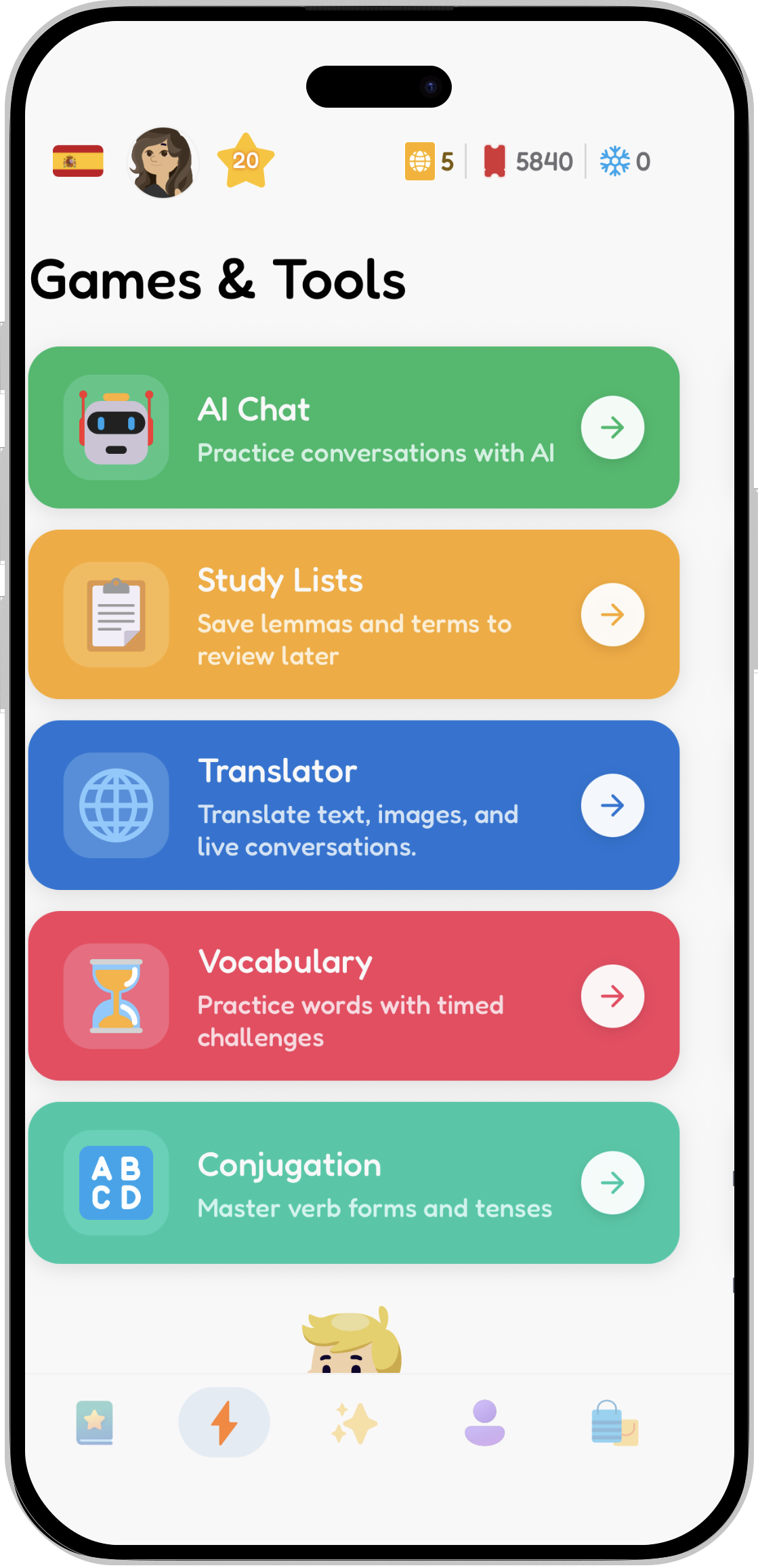
Games & Tools
Tools that every language learner needs at all stages of their learning journey.
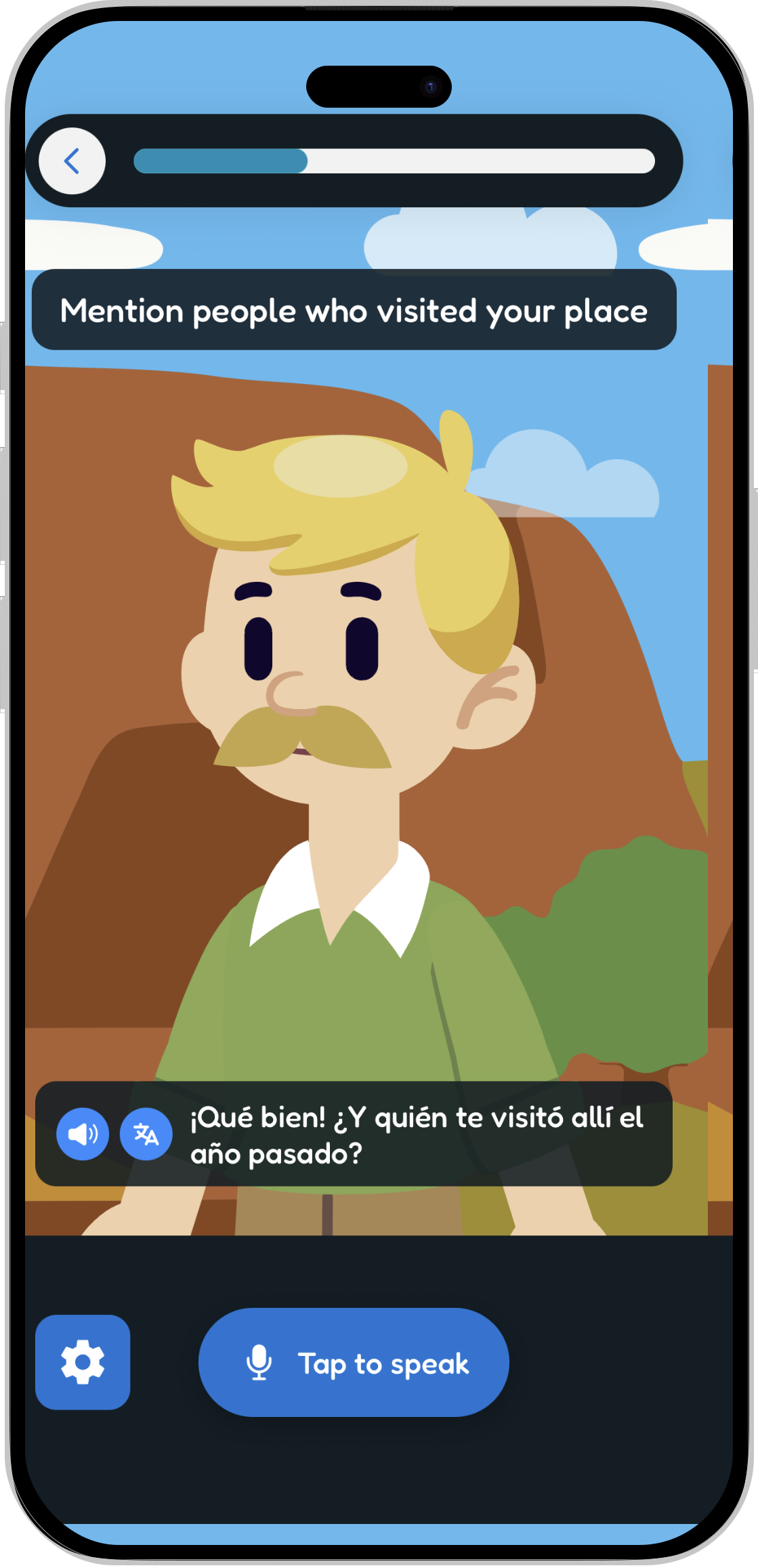
AI Chat Tutor
Practice real conversations with an AI tutor that helps you speak with confidence.
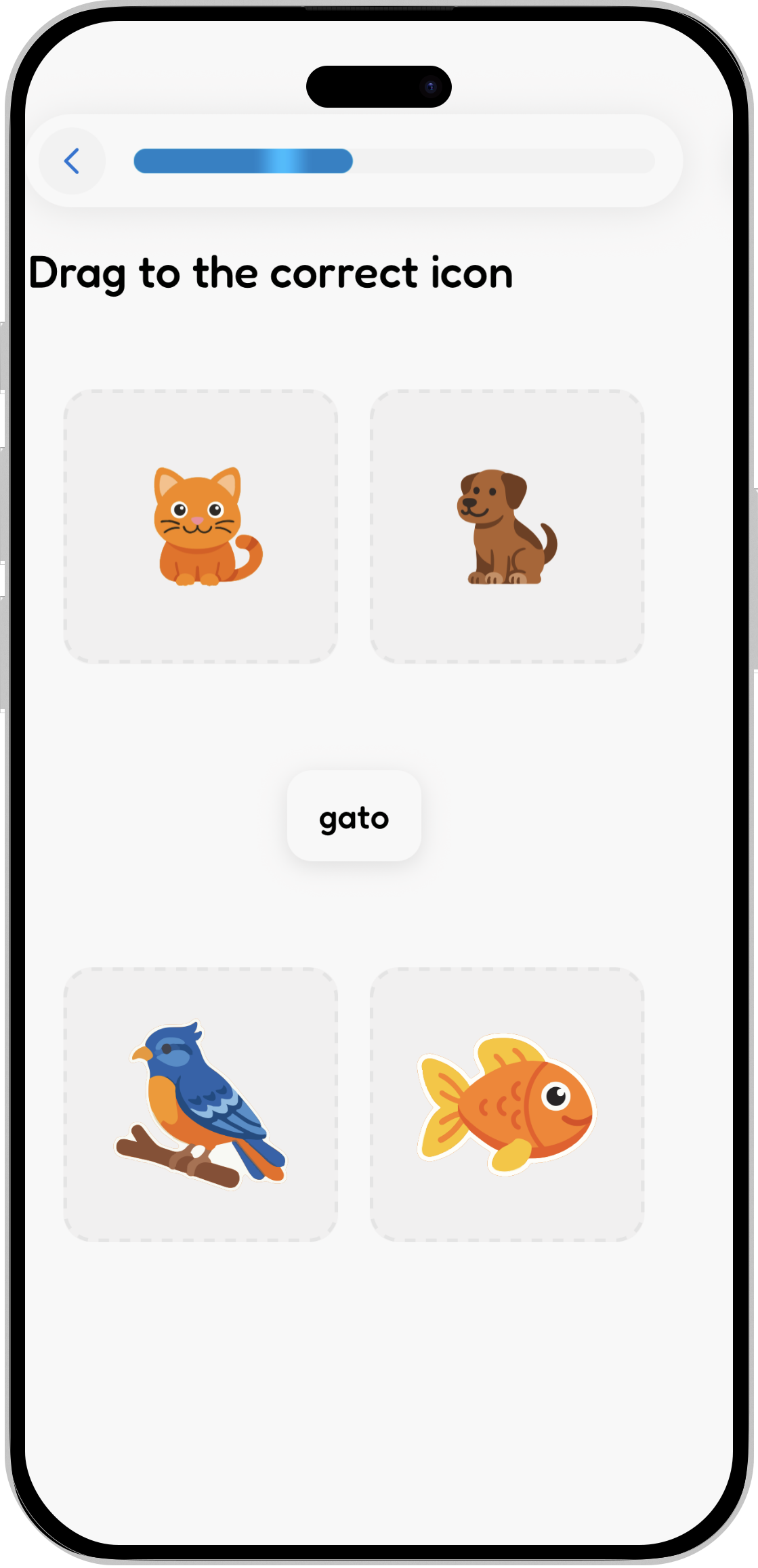
Interactive Games
A variety of games to help you learn and remember new words and phrases.


Why Basic Spanish Grammar Is Your Foundation for Fluency

Think of grammar as the framework that gives your vocabulary its power. It’s the difference between saying "eat I apple" and "I eat an apple." One is just a list of words; the other is a complete thought.
Instead of seeing it as a boring hurdle you have to clear, treat grammar as the secret key to unlocking the language. Mastering these fundamentals is the fastest way to start expressing your own ideas clearly and confidently.
The True Value of a Grammatical Foundation
Learning the grammar early on gives you a massive advantage. It means you can build your own sentences from scratch instead of just repeating phrases you've memorized from a textbook.
With a solid grasp of the basics, you can adapt to new situations, describe things with more accuracy, and understand what native speakers are saying much more easily. This core knowledge is what separates someone who just knows some Spanish from someone who can actually use it.
The goal isn't perfection, it's progress. A solid handle on basic grammar empowers you to communicate effectively from day one, giving you a strong base for more complex conversations down the road.
This skill is incredibly valuable when you realize just how global Spanish is. As an official language in over 20 countries, its community is massive, with total speakers approaching 600 million people worldwide—that's roughly 7.5% of the global population.
That's a whole lot of people you can connect with, whether for travel, business, or just making new friends. If you're eager to get going, our guide on how to learn Spanish fast can help you build momentum. This foundation in basic grammar is your key to unlocking all those global conversations.
Nouns, Articles, and Gender Agreement
Alright, let's tackle one of the first—and weirdest—concepts for English speakers: grammatical gender. In Spanish, every single noun has a gender. I’m not just talking about people; I mean everything. A book, a table, a car, even an idea is either masculine or feminine.
Think of it like sorting everything in the world into two big boxes. It feels a little strange at first since we don't think of a chair as a "she." But once you get the hang of which box a noun goes into, the rest of the sentence starts falling into place. This is a foundational piece of the puzzle.
How to Spot a Noun's Gender
So, how do you know if libro (book) is a "he" or a "she"? Luckily, Spanish leaves a lot of clues. While there are always a few rebels, these two rules will get you pretty far.
- Masculine Nouns: Most of the time, words ending in -o are masculine. Think el libro (the book) or el bolígrafo (the pen).
- Feminine Nouns: And words ending in -a are usually feminine. For example, la casa (the house) or la mesa (the table).
Of course, you'll run into exceptions almost immediately. El día (the day) is masculine, and la mano (the hand) is feminine. Don't sweat these; you’ll learn the common ones as you build your vocabulary, and they'll start to feel natural over time.
Making Everything Agree: The Golden Rule
Here’s where it all comes together. Those little words like "the" or "a" are called articles, and in Spanish, they have to match the noun's gender and number (whether it's singular or plural). This isn't optional—it's one of the core rules of Spanish grammar.
Let's break down the two main types of articles.
1. Definite Articles (aka 'the')
You use these when you’re talking about a specific thing. The car you bought, the chair I’m sitting in.
- el (masculine, singular) -> el coche (the car)
- la (feminine, singular) -> la silla (the chair)
- los (masculine, plural) -> los coches (the cars)
- las (feminine, plural) -> las sillas (the chairs)
2. Indefinite Articles (aka 'a,' 'an,' or 'some')
Use these for non-specific things. A dog I saw in the park, some cats that live down the street.
- un (masculine, singular) -> un perro (a dog)
- una (feminine, singular) -> una gata (a cat)
- unos (masculine, plural) -> unos perros (some dogs)
- unas (feminine, plural) -> unas gatas (some cats)
To help you see it all laid out, here's a simple table that puts everything in one place.
| Spanish Definite and Indefinite Articles | | :--- | :--- | :--- | :--- | :--- | | Type | Masculine Singular | Masculine Plural | Feminine Singular | Feminine Plural | | Definite ('the') | el | los | la | las | | Indefinite ('a'/'an'/'some') | un | unos | una | unas |
Keep this table handy. It's your cheat sheet for making sure your articles always match your nouns perfectly.
Getting this agreement right is a huge step toward sounding more natural. Always double-check that your article matches your noun in both gender and number. It's a small detail that makes a massive difference in how clear and correct your Spanish sounds.
How to Master Ser vs Estar
For English speakers diving into Spanish grammar, this is the big one. Few concepts cause as much confusion as the verbs ser and estar. Both mean "to be," but they are absolutely not interchangeable.
Using the wrong one can completely change the meaning of your sentence, sometimes in pretty awkward ways. It can turn a compliment into an unintended insult, so it's a distinction worth mastering early.
Think of it like this: ser is like a permanent painting; it describes the essential, unchanging qualities of something. In contrast, estar is like a temporary photograph, capturing a specific state, condition, or location at a single moment.
Ser for Permanent Traits and Identity
When you want to describe a fundamental characteristic of a person or object, you'll use ser. This verb deals with the "what" and "who" of things—their core identity.
To keep it straight, a lot of learners use the acronym DOCTOR.
- Description: Ella es alta. (She is tall.)
- Occupation: Yo soy profesor. (I am a teacher.)
- Characteristic: Mi hermano es simpático. (My brother is nice.)
- Time: Son las tres de la tarde. (It is three in the afternoon.)
- Origin: Somos de México. (We are from Mexico.)
- Relationship: Él es mi padre. (He is my father.)
These are the qualities that define someone or something. They're the things you can generally count on to be stable and long-lasting.
Estar for Temporary States and Location
Now, let's flip over to estar. This verb is all about temporary conditions, feelings, and where something is physically located. It answers the question "how" or "where" something is right now.
The handy acronym for estar is PLACE.
- Position: El libro está en la mesa. (The book is on the table.)
- Location: Estamos en el parque. (We are in the park.)
- Action (Present Progressive): Ella está corriendo. (She is running.)
- Condition: Yo estoy cansado. (I am tired.)
- Emotion: Tú estás feliz. (You are happy.)
These states can, and almost always will, change. You might be tired now, but you won't be tired forever. The book is on the table at this moment, but someone can easily move it.
The key takeaway here is that your choice of verb adds a crucial layer of meaning. Saying "Soy aburrido" (I am boring) is a statement about your fundamental personality. But saying "Estoy aburrido" (I am bored) just describes how you feel at this moment. Big difference!
Getting this right is a huge step toward sounding more natural. With over 24 million people studying Spanish globally, the demand for clear, practical explanations like this has never been higher. You can get a sense of the language's worldwide reach from the data on global Spanish language learners.
This decision tree shows how to select the right Spanish article based on a noun's gender.
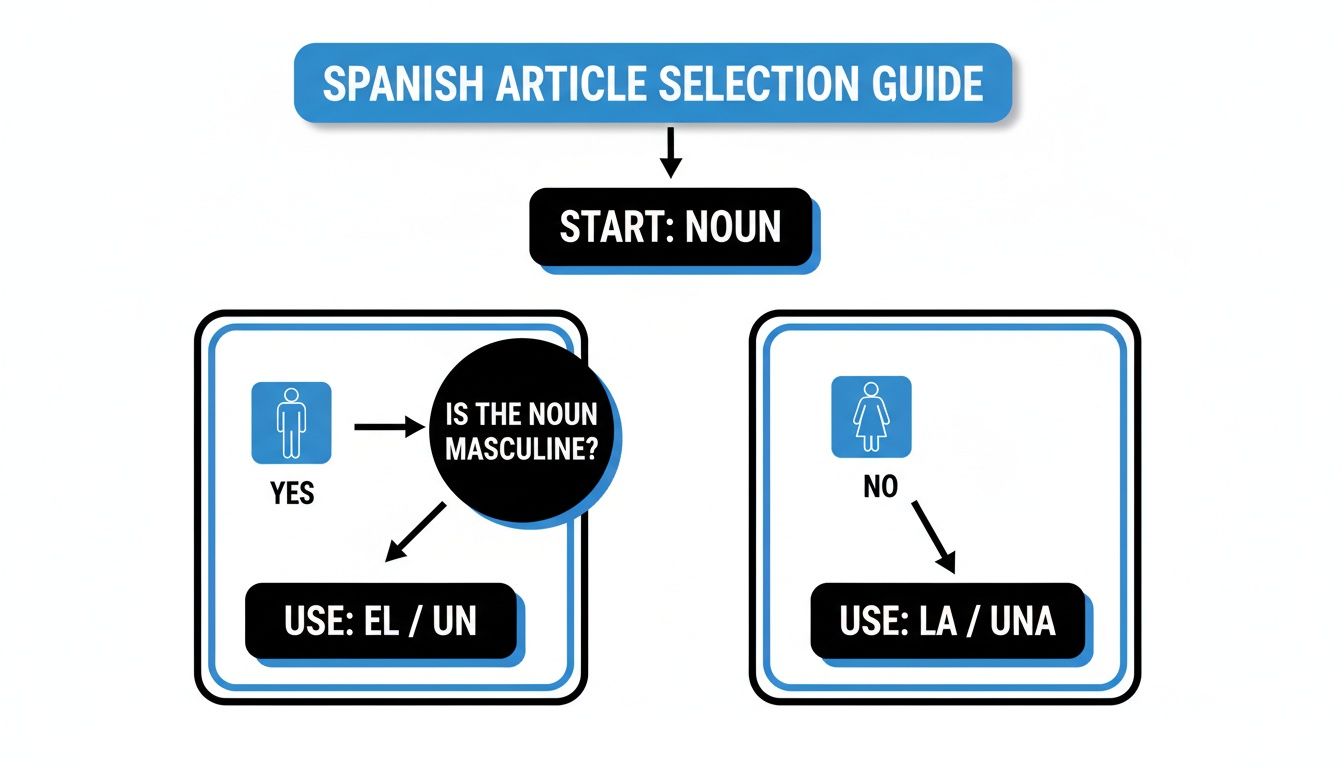
This visual guide reinforces the core rule that articles must always agree with the noun they describe.
Present Tense Verb Conjugation Made Simple
If nouns and articles are the building blocks of Spanish, verbs are the engine that makes your sentences actually go. This brings us to verb conjugation, a core concept in basic Spanish grammar that sounds way more intimidating than it is.
So, what is it? It’s just changing a verb's ending to match who is doing the action.
Think of it this way: in English, we do this without even noticing. We say, "I speak," but "he speaks." That little "-s" is a conjugation! Spanish just takes this idea a bit further by giving each subject its own unique verb ending, which makes the language incredibly precise.
The Three Verb Families
Almost every single verb in Spanish belongs to one of three families. You can tell which family a verb belongs to by looking at the last two letters of its infinitive form (the basic "to ___" version of the verb).
- -ar verbs: This is the biggest and most common group. You'll see them everywhere. Think hablar (to speak), caminar (to walk), and estudiar (to study).
- -er verbs: The second most common crew. This family includes essentials like comer (to eat), beber (to drink), and aprender (to learn).
- -ir verbs: The smallest of the three regular groups. It includes verbs like vivir (to live) and escribir (to write).
Getting these categories down is your first big step. Each family follows its own predictable pattern of endings, so once you learn the pattern for one, you've unlocked the ability to use thousands of other verbs.
How to Conjugate Regular Verbs
Let's see this system in action with a regular -ar verb, hablar (to speak). The process is beautifully simple: just drop the -ar ending from the infinitive and add the new ending that matches your subject.
| Subject Pronoun | Ending | Example: Hablar (to speak) |
|---|---|---|
| Yo (I) | -o | Yo hablo (I speak) |
| Tú (You, informal) | -as | Tú hablas (You speak) |
| Él/Ella/Usted (He/She/You, formal) | -a | Él habla (He speaks) |
| Nosotros/Nosotras (We) | -amos | Nosotros hablamos (We speak) |
| Vosotros/Vosotras (You all, informal) | -áis | Vosotros habláis (You all speak) |
| Ellos/Ellas/Ustedes (They/You all) | -an | Ellas hablan (They speak) |
See the logic? The pattern for -er verbs is very similar. To get the full picture, check out our detailed guide on how to conjugate -er verbs in Spanish.
A Quick Look at Irregular Verbs
While most verbs play by the rules, some of the most common ones are rebels. These are called irregular verbs, and they have unique conjugations that you simply have to memorize. Don't let that scare you—you'll use them so often they'll become second nature faster than you think.
A few you'll meet on day one are:
- Tener (to have): Yo tengo (I have)
- Ser (to be): Yo soy (I am)
- Estar (to be): Yo estoy (I am)
- Ir (to go): Yo voy (I go)
Getting the hang of verb conjugations is a huge milestone in your Spanish journey. It's the mechanism that lets you finally start forming your own thoughts and expressing actions—the absolute key to having a real conversation.
This foundational grammar is crucial. With projections showing that Hispanics could make up nearly 27.5% of the U.S. population by 2060, the ability to communicate effectively in Spanish is becoming more important than ever. You can discover more insights about the importance of supporting Spanish learners on carnegielearning.com.
How to Construct Your First Spanish Sentences
Alright, you’ve got the building blocks: nouns, verbs, and articles. Now it’s time for the fun part—actually putting them together to say something. The great news is that building your first Spanish sentences is surprisingly simple, mostly because the basic word order often feels very familiar.
Spanish typically follows the same Subject-Verb-Object formula we use in English. This is a huge win for beginners. It means you don’t have to completely rewire your brain to form a basic, logical thought. You can start communicating right away.
For instance, "The dog eats the apple" translates almost word-for-word: El perro come la manzana. This comfortable starting point helps you build confidence fast, letting you create simple sentences without getting tangled up in complex rules.
The Big Twist: Adjective Placement
While the core structure is your friend, here's the first major twist you’ll run into: where to put the descriptive words. In Spanish, adjectives almost always come after the noun they’re describing.
Think of it like you're presenting the main character first (the noun) and then adding the details about it (the adjective). This is the complete opposite of English, where we'd say "the red house."
- English: The red car is fast.
- Spanish: El coche rojo es rápido. (Literally: "The car red is fast.")
This is a fundamental rule in basic Spanish grammar. Honestly, getting this right is one of the quickest ways to make your Spanish sound less like a textbook and more like a real conversation. It's a small mental flip that pays off big time.
Just remember this simple rule: Noun first, description second. Once this clicks, you've cleared one of the biggest hurdles for English speakers. It’s the key to moving beyond single words and into flowing, natural-sounding sentences.
How to Make a Sentence Negative
Turning a positive sentence into a negative one is beautifully simple in Spanish. Forget about needing words like "don't," "doesn't," or "isn't." You just need one tiny, powerful word: no.
All you have to do is place no directly before the main verb. That's the whole rule. It works for every verb and every subject, making it one of the easiest grammar points you'll ever learn.
Let's take a look at how straightforward this is compared to English.
Basic Sentence Structure: English vs. Spanish
This table shows just how similar the basic structures are—and how simple it is to negate a sentence.
| Sentence Type | English Example | Spanish Example | Key Difference |
|---|---|---|---|
| Affirmative | I speak Spanish. | Yo hablo español. | The structure is identical. |
| Negative | I do not speak Spanish. | Yo no hablo español. | Spanish just adds no before the verb. |
This elegant simplicity is a huge relief for learners. It’s no surprise that Spanish is so popular, with roughly 24 million people studying it worldwide. The United States alone has 8.6 million learners, which is why clear, simple grammar guides are so important. If you're curious, you can find more stats about the rise of Spanish learning on carnegielearning.com.
Practical Tips for Your Learning Journey
Knowing the rules of basic Spanish grammar is one thing. Actually using them in a real conversation without freezing up? That's a whole different ball game.
The trick is to make the language a part of your daily life. You want those grammar rules to become second nature, not just abstract concepts you have to recall from a textbook. A great way to start is by mapping out a simple study path. Don't try to drink from the firehose. Focus on one thing at a time—maybe noun genders this week, then regular "-ar" verbs the next—until it really sinks in.
Make Practice Part of Your Routine
Small, consistent actions are far more powerful than cramming for hours once a week. Here are a few dead-simple habits that actually work:
- Label Your World: Seriously, grab some sticky notes. Slap la mesa on your table and el libro on your book. You'll be reinforcing noun genders every time you walk through your house.
- Use Spaced Repetition: Flashcard apps are your best friend for verb conjugations. The spaced repetition algorithm interrupts the natural process of forgetting, effectively locking those patterns into your long-term memory.
- Form One New Sentence Daily: Challenge yourself to create just one original Spanish sentence a day using a new word or grammar rule you've just learned.
Consistency is your greatest tool. The goal isn't immediate perfection but steady, daily engagement with the language. This approach builds a strong, lasting foundation.
This is especially true when you start running into regional differences. For instance, researchers found that about 63% of U.S. Latinos use "Spanglish," blending English and Spanish in ways that definitely shape everyday grammar. Being aware of these nuances helps you understand the language as people actually speak it.
As you start stringing rules together, it can be helpful to create personalized study guides quickly with modern tools to keep everything organized. And when you're ready to take the next step, check out our guide on the best way to learn conversational Spanish to put all these tips into action.
Spanish Grammar Questions You're Probably Asking
As you start getting the hang of the basics, a few questions always seem to pop up. Let's tackle some of the most common ones that learners have as they move from beginner to the next level. This should help clear things up and give you a solid game plan.
What's the Hardest Part of Spanish Grammar for English Speakers?
If you're coming from English, two hurdles tend to trip people up the most: verb conjugations and the whole Ser vs. Estar puzzle.
English verbs are pretty chill—they don't change much. Spanish, on the other hand, wants a different verb ending for almost every single subject. Getting used to that just takes a ton of practice. There's no way around it.
Then there's the "to be" issue. English has one verb, but Spanish has two. Figuring out the subtle differences between Ser (for more permanent, defining traits) and Estar (for temporary states and locations) is something that clicks over time with lots of real-world exposure.
My Advice: Don't chase perfection right out of the gate. Seriously. Get comfortable with the main patterns for regular verbs and the core uses of Ser and Estar. Fluency is built from using the language in context, not just staring at conjugation charts until your eyes glaze over.
How Long Does It Realistically Take to Learn the Basics?
This totally depends on your study habits, but most people can get a solid grip on the fundamentals within 2 to 4 months of consistent work. "Consistent" is the key word here—think 30-60 minutes a day of focused learning.
It’s all about consistency over intensity. A little bit every day beats a massive cramming session once a week. This steady approach is what builds a strong foundation that you can actually rely on when you start tackling more complex grammar.
Should I Learn Grammar or Vocabulary First?
Honestly? You have to learn them together. They're like two sides of the same coin.
Vocabulary gives you the words, but grammar is the scaffolding that lets you build actual, meaningful sentences with them. Without one, the other is pretty useless.
Think of it this way: when you learn a new word like mesa (table), you should immediately learn its gender too (la mesa). The very next step is to plug it into a simple sentence you already know, like La mesa es grande (The table is big). This integrated approach makes your learning immediately practical and gets you communicating way faster.
Ready to stop just memorizing rules and actually start speaking? With PolyChat, you can practice everything you've learned—verb conjugations, new vocabulary, and sentence building—through fun, interactive games that feel less like studying and more like playing. Download the app and start speaking Spanish with confidence today at https://www.polychatapp.com.

Jean-Baptiste Bolh
Co-Founder
Applied AI