A Practical Guide on How to Learn Spanish Fast
Forget the magic tricks. The secret to learning Spanish fast isn't some hidden hack; it’s a smart, focused strategy that throws passive memorization out the window. If you want real momentum—the kind that gets you into actual conversations in just a few weeks—you need to prioritize active communication from day one.
Ready to Learn Spanish?
Try PolyChat's engaging language lessons, interactive learning games and put your Spanish vocabulary to the test!
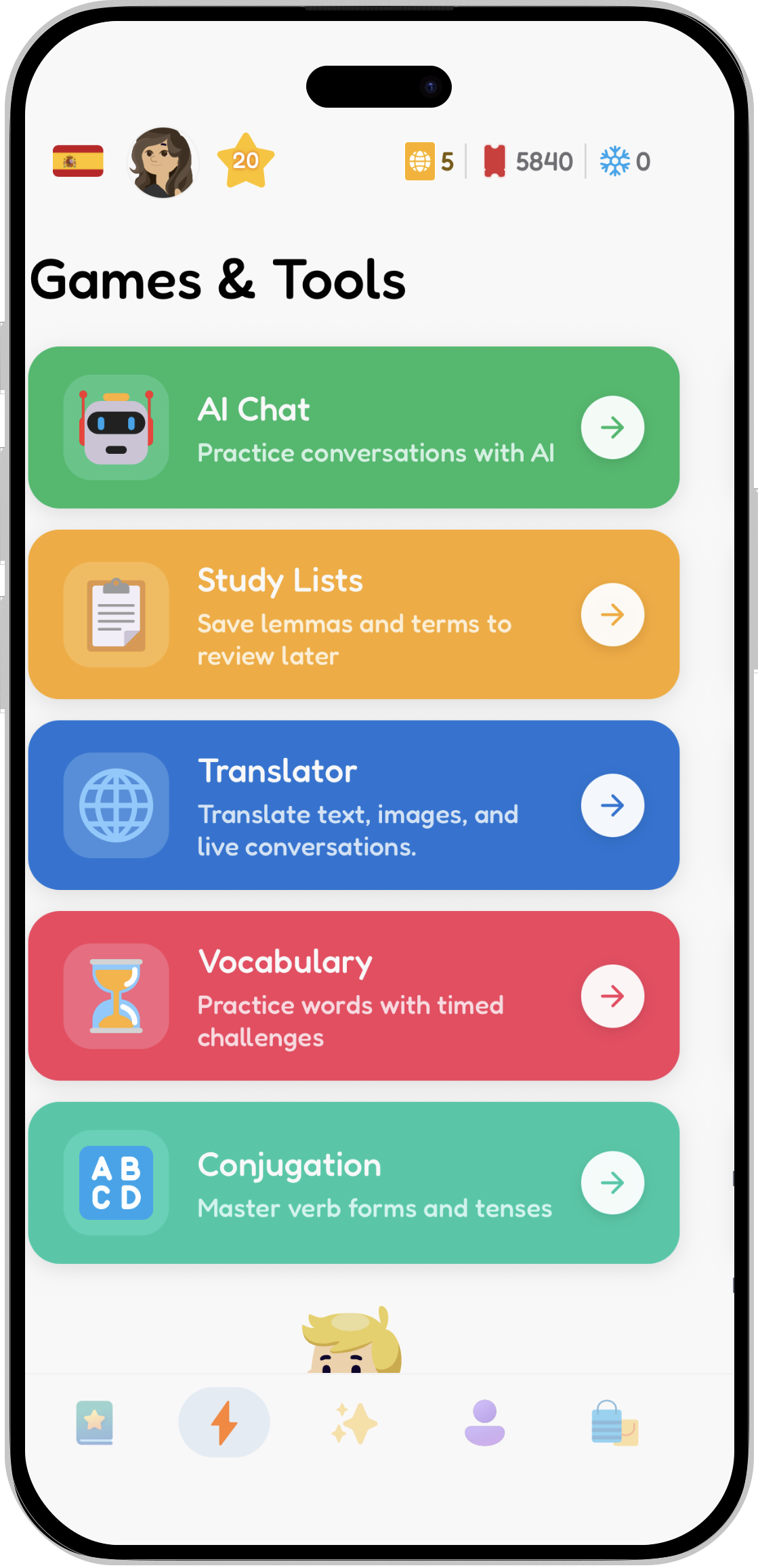
Games & Tools
Tools that every language learner needs at all stages of their learning journey.
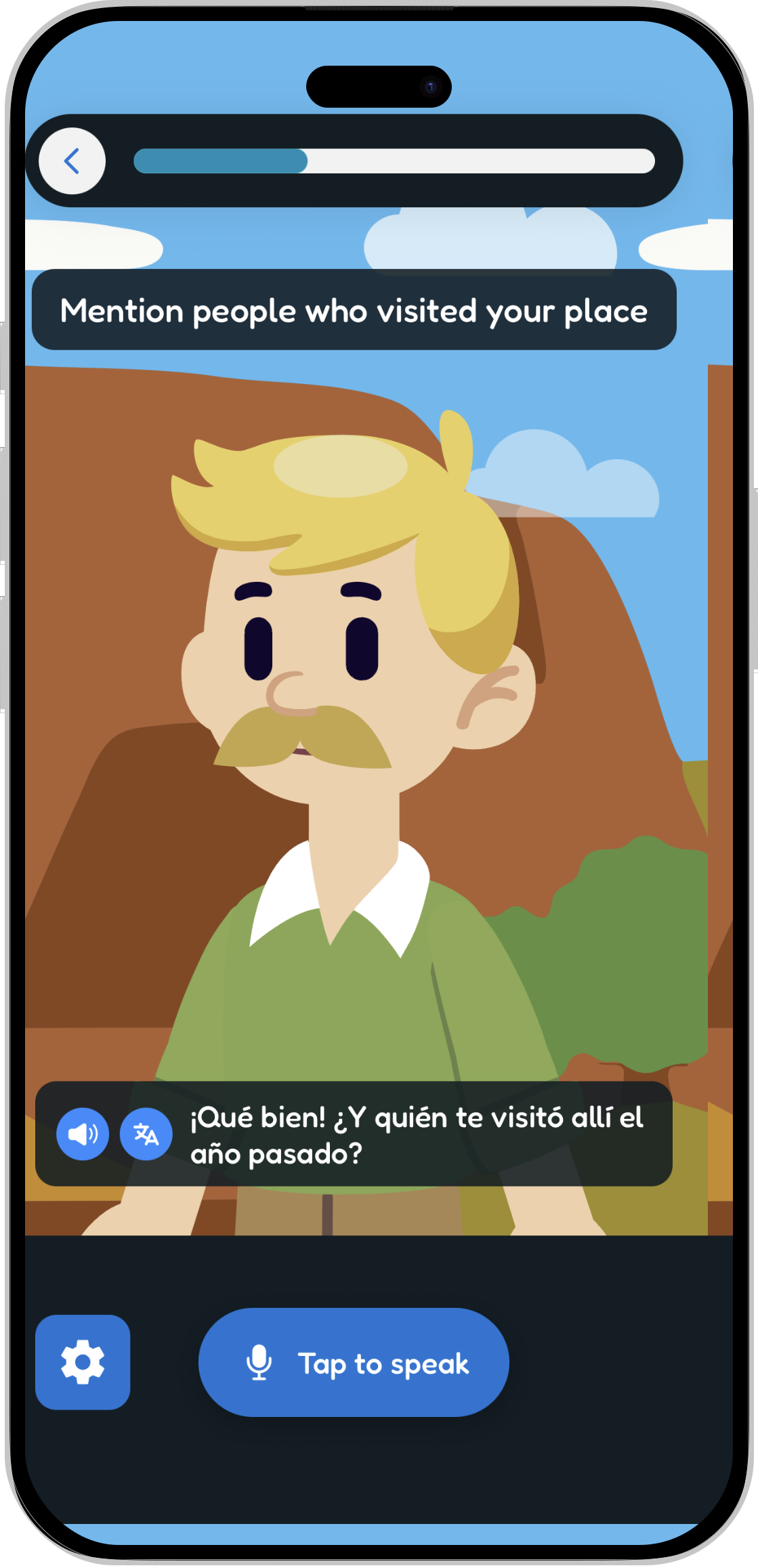
AI Chat Tutor
Practice real conversations with an AI tutor that helps you speak with confidence.
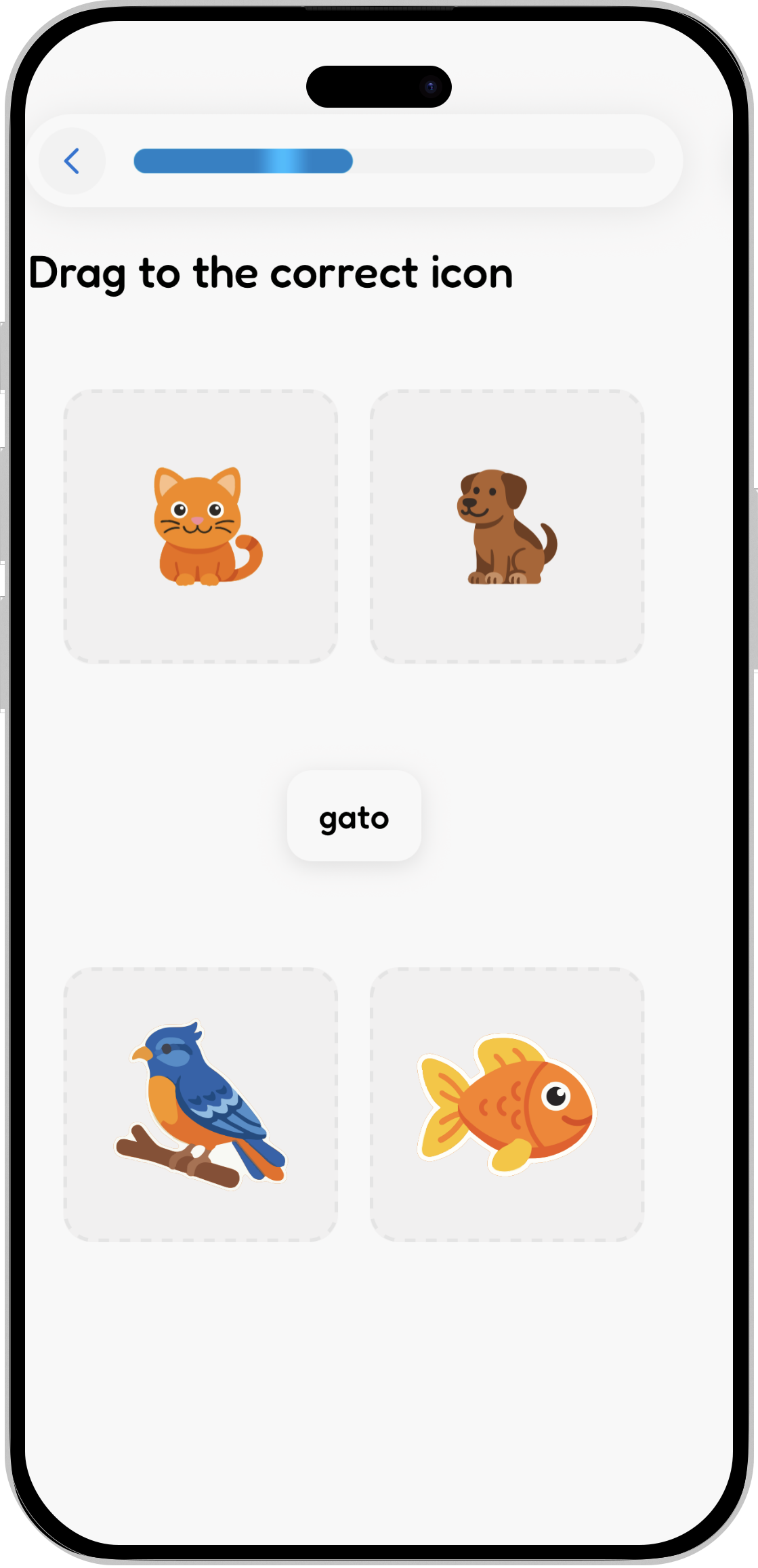
Interactive Games
A variety of games to help you learn and remember new words and phrases.


Your Realistic Path to Speaking Spanish Quickly
Let's ditch the old classroom model that makes you wait months before you're "allowed" to speak. This is a modern blueprint for getting to real-world proficiency, fast. It’s all built on one simple, powerful idea: you have to speak Spanish to learn Spanish.
This requires an immediate shift in your mindset. Your goal is communication, not perfection. Honestly, it’s far better to stumble through "Yo querer agua" (I want water) with the wrong verb conjugation than to say nothing because you're scared of making a mistake. Confidence comes from trying, not from flawless grammar.
Adopt an Active Learning Mindset
The core of this whole system is creating a high-intensity immersion environment, no matter where you live. You don't need to book a flight to Madrid or Mexico City. You just need to be intentional about surrounding yourself with Spanish every single day.
This is all about active engagement. You’ll learn how to apply the 80/20 rule to your vocabulary, zeroing in on the high-frequency words that unlock the vast majority of daily conversations. This is the real answer to how to learn Spanish fast—you learn what actually matters first.
You'll also see why daily speaking practice is completely non-negotiable. Even talking to yourself in Spanish for five minutes a day builds crucial neural pathways. It makes recalling words and phrases feel automatic, training your brain and your mouth to finally work together. That’s a skill that reading from a textbook will never give you.
Leverage Modern Learning Tools
Technology is your single greatest ally here. Tools like PolyChat are built for exactly this kind of active, high-intensity learning. They take the necessary but repetitive tasks—like drilling vocabulary and memorizing verb conjugations—and turn them into games you actually want to play.
The real value in learning a language lies in being able to connect with people from different cultures. It's a bridge that turns travel into an experience and strangers into friends.
And you'll be connecting with a massive global community. As of 2025, an estimated 496.6 million people speak Spanish as their native language, making it the second most spoken native language on the planet. Your effort opens a door to communicating with this huge, diverse population. You can learn more about the global reach of Spanish speakers and see a full breakdown of the numbers.
To get you started, the table below maps out your entire first week. It’s a clear, actionable plan designed to build a solid foundation and get you feeling that incredible sense of momentum right away.
Your First 7 Days to Speaking Spanish
This daily breakdown is designed to give you a balanced diet of skills. By combining focused study with active practice and fun immersion, you'll build a routine that's not just effective, but sustainable.
| Day | Vocabulary Focus (PolyChat Spaced Repetition) | Grammar Focus (PolyChat Conjugation Trainer) | Active Practice (PolyChat Conversation Games) | Immersion Activity |
|---|---|---|---|---|
| 1 | Learn 20 common greetings and survival phrases (e.g., hola, adiós, gracias, por favor, ¿dónde está el baño?) | Present tense of ser (to be - permanent) and estar (to be - temporary) | Practice introducing yourself and asking someone their name | Listen to a 5-minute podcast for beginners like Coffee Break Spanish |
| 2 | Master 20 essential nouns (e.g., agua, comida, casa, hombre, mujer) | Basic noun gender rules (-o for masculine, -a for feminine) | Simulate ordering a coffee and a pastry | Switch your phone's language setting to Spanish for one hour |
| 3 | Learn numbers 1-20 and key question words (e.g., qué, quién, cuándo, dónde, por qué) | Present tense of regular -AR verbs (e.g., hablar, trabajar) | Practice asking for prices and simple directions | Watch one episode of a show like Extra en Español on YouTube |
| 4 | Focus on 15 common verbs (e.g., querer, tener, ir, hacer, poder) | Present tense of regular -ER verbs (e.g., comer, beber) | Role-play a simple phone call asking when a store closes | Create a Spotify playlist of popular Spanish music (e.g., artists like Shakira, Bad Bunny) |
| 5 | Add 20 adjectives to your vocabulary (e.g., grande, pequeño, bueno, malo, caliente, frío) | Basic sentence structure (Subject-Verb-Object) | Practice describing simple objects around your room | Narrate your morning routine out loud in Spanish |
| 6 | Learn days of the week and time-related phrases (e.g., hoy, mañana, ayer, ahora) | Present tense of regular -IR verbs (e.g., vivir, escribir) | Simulate making plans with a friend for the weekend | Watch a familiar movie in Spanish with Spanish subtitles |
| 7 | Review all vocabulary from the week and add 10 new emotion words (e.g., feliz, triste, cansado) | Review ser vs. estar with different adjectives | Combine all skills in a general "getting to know you" conversation game | Have a 5-minute conversation with yourself about your day |
Stick with this for a week, and you’ll be amazed at how much you've learned—and more importantly, how much you can actually say.
Tackle High-Frequency Words and Core Grammar First
If you want to learn Spanish quickly, the first thing you need to do is drop the idea of memorizing the entire dictionary. That’s not how language works.
The real key is something called the 80/20 principle. For language learning, it means you can understand roughly 80% of a typical conversation by knowing just the most common 20% of the words.
In Spanish, this boils down to mastering the 1,000 most frequently used words. This isn't a flimsy shortcut; it's a strategic move. Focusing your energy here gives you the biggest possible return on your time, letting you start piecing together sentences and understanding conversations almost right away.
This is where a smart tool is your best friend. Instead of blindly guessing which words to learn, you can use a system built around this very principle. PolyChat’s lessons are specifically designed to drill you on this high-frequency vocabulary, so you know every minute spent is on words that actually matter.
The Magic of Spaced Repetition
Just trying to memorize a list of 1,000 words with old-school flashcards is a recipe for frustration. Our brains aren't built for that. To move information from your short-term to your long-term memory, you need a smarter method: spaced repetition.
It’s a simple but powerful idea. The system shows you a new word right around the time you’re about to forget it. As you get better at remembering it, the time between reviews gets longer. This technique is scientifically proven to be one of the absolute best ways to burn information into your brain.
PolyChat’s gamified lessons and vocab challenges have a spaced-repetition system built right in. As you learn, the app tracks how well you know each word and automatically schedules it for review at the perfect moment. It removes all the guesswork from studying and makes building that core vocabulary feel more like a game than a chore.
The goal isn’t just to passively recognize words on a screen. It’s to be able to pull them out of your head instantly in a real conversation. Spaced repetition builds that recall speed, turning dead knowledge into a live, active skill.
You stop the endless cycle of cramming and forgetting. Instead, you build a solid foundation, one useful word at a time.
Stick to Only the Essential Grammar
Just like with vocabulary, you can be strategic with grammar. So many learners get bogged down trying to master every obscure verb tense and subjunctive mood right from the start. It’s a classic mistake that completely kills your momentum.
To start speaking fast, you just need a functional grammar toolkit, not a perfect one.
Here’s what to focus on first:
- Present Tense Verbs: Learn how to conjugate regular -ar, -er, and -ir verbs. This alone lets you talk about your daily routine, what’s happening now, and general facts. It’s a massive unlock.
- Ser vs. Estar: Nailing the difference between these two "to be" verbs is non-negotiable. Ser is for more permanent things (who you are, where you're from), while estar is for temporary states (how you feel, where you are). Getting this right instantly makes you sound more natural.
- Noun Genders: Just get the basics down. Words ending in -o are usually masculine (el libro), and words ending in -a are usually feminine (la casa). Don't sweat the exceptions yet.
- Basic Sentence Structure: Good news! Spanish word order is pretty similar to English (Subject-Verb-Object). This makes it feel much more intuitive to start building your own simple sentences from day one.
Turn Your Grammar Practice into a Game
Let’s be honest, staring at verb conjugation charts is draining. This is precisely why turning it into a game works so well—it transforms a tedious task into something you actually want to do.
PolyChat's conjugation trainer was made for this. It turns the boring drill of practicing verb endings into a fast-paced challenge. When you're racing against the clock or trying to beat your high score, you're lighting up different parts of your brain, which helps lock in the patterns way faster than just reading them. And to get a better feel for spoken Spanish, using an AI-powered Spanish audio translator can help you process and learn from real-world audio.
This kind of active practice builds the "muscle memory" you need for verbs, so you don't have to mentally pause and run through a chart every time you speak. The words just come out. This focused, high-intensity approach to both vocabulary and grammar is the real engine behind learning Spanish fast.
Start Speaking Confidently From Day One
Here's the single biggest thing that separates fast learners from frustrated ones: the confidence to open your mouth and just speak. So many people get stuck in a passive learning loop, waiting for a perfect moment that never arrives. If you want to learn Spanish fast, you have to break that cycle and start talking from day one.
The fear of making mistakes is what holds most people back. It’s time to reframe that fear completely. Your goal isn't flawless grammar; it’s communication. Native speakers are way more patient than you think and will appreciate you making the effort to connect with them.
Focus on Communication, Not Perfection
You have to embrace the idea that mistakes aren't just okay—they are essential. Every single error is a data point showing you exactly where you need to improve. When you stumble over a verb or use the wrong gender for a noun, you're actively wrestling with the language and building the muscle memory you need for fluency.
The real magic of learning a language isn't about acing a test. It's about connecting with people, turning a vacation into an adventure, and making strangers feel like friends.
This shift in mindset is everything. Instead of just flipping through flashcards silently, say the words out loud. Start narrating your day in simple Spanish: "Yo como una manzana" (I eat an apple) or "Abro la puerta" (I open the door). This one simple habit starts turning passive knowledge into an active skill.
Master the Sounds of Spanish First
One of the best confidence hacks is getting comfortable with Spanish pronunciation. The good news for English speakers is that Spanish sounds are incredibly consistent. Once you know the rules, you know the rules.
- The Five Pure Vowels: Unlike English with its dozen or so vowel sounds, Spanish has just five pure vowel sounds: A (ah), E (eh), I (ee), O (oh), U (oo). Nail these, and your accent will instantly sound clearer.
- The Rolled 'R': Ah, the infamous rolled 'R' (rr). It can be tricky, but it's learnable. Try placing the tip of your tongue on the ridge right behind your top teeth and vibrating it as you exhale, almost like a cat purring.
- Shadowing Technique: This is a seriously powerful exercise. Find a short audio clip of a native speaker. Listen once. Then, play it again and try to speak along with them, mimicking their rhythm, intonation, and pronunciation as closely as you can.
This kind of focused practice on the physical act of speaking makes the language feel more natural in your mouth. You'll find words flow more easily when you aren't second-guessing every sound. For some extra help, finding one of the best online Spanish teachers can give you personalized feedback that makes all the difference.
Use Safe Spaces to Practice Actively
Knowing you should speak is one thing. Finding a low-pressure place to actually do it is another. This is where the right tools become your best friend. You need a space where you can practice without the anxiety of a real-life conversation staring you down.
This is exactly what the conversation games inside the PolyChat app are for. They simulate real-world dialogues—like ordering food at a restaurant or asking for directions—giving you a training ground to practice common exchanges over and over again until they feel second nature.
This active, hands-on practice is what builds true conversational skill. You're not just memorizing lines; you're internalizing the natural back-and-forth of a real conversation, building confidence with every tap.
Build Your Own Spanish Immersion Bubble at Home
You don’t need a plane ticket to get fluent. Seriously. One of the most powerful things you can do to learn Spanish fast is to create a rich immersion environment right where you live, turning all that passive downtime into active learning.
The whole point is to surround your brain with Spanish. By weaving the language into your everyday life, you train your ear, scoop up new words, and absorb the natural rhythm of the language without ever feeling like you're studying. It’s a low-effort, high-impact way to build real familiarity and confidence.
Make Your Digital World Spanish
Your phone is probably the first thing you see in the morning and the last thing you see at night. That makes it the perfect tool for effortless immersion. Changing your phone's language to Spanish is one of the single most effective tweaks you can make.
Suddenly, everyday actions—unlocking your screen (deslizar para desbloquear), checking the weather (el tiempo), or opening an app (abrir)—become tiny, recurring vocabulary lessons. It might feel a little weird for the first day or two, but you’ll adapt fast, and the constant exposure is priceless.
But don't just stop at your phone:
- Social Media: Follow Spanish-speaking creators, news outlets, or even meme accounts. Your feed will start to naturally sprinkle Spanish content into your daily scroll.
- Web Browser: Change the default language on Chrome or Safari. Websites will begin showing you their Spanish versions by default.
- Your Favorite Apps: Many apps have their own language settings. Switch your most-used ones to Spanish for even more exposure. Finding the best language learning apps to pair with this strategy will give you a more structured path to follow.
Curate a Personal Spanish Soundtrack
Your commute, your workout, or the time you spend washing dishes is a golden opportunity for auditory immersion. Instead of your usual playlist or podcast, make the switch to Spanish-language content. This kind of passive listening is fantastic for getting your ear accustomed to the sounds, speed, and cadence of native speakers.
Music is a great place to start. The rhythm and repetition make lyrics easier to latch onto over time. Throw together a playlist with popular artists like Bad Bunny, Rosalía, or Shakira. Don't stress about understanding every single word—just let the sounds wash over you.
Once you’re feeling it, move on to podcasts made for learners. Shows like Duolingo Spanish Podcast or Coffee Break Spanish serve up compelling stories at a pace you can actually follow. This trains your listening comprehension in a way that feels more like entertainment than study.
Don't underestimate the power of passive listening. Even when you're not actively focused, your brain is still picking up on patterns, intonations, and common phrases. It's laying a subconscious foundation that will be there for you when you start speaking.
Turn Movie Night into a Learning Session
Watching TV shows and movies is another brilliant way to immerse yourself, but you have to do it right. The key is to avoid using English as a crutch.
Here’s the most effective progression I've found for learners:
- Start with Spanish audio AND Spanish subtitles. This is the magic combination. By reading and hearing the language at the same time, you connect the written word to its spoken sound. This will supercharge both your reading speed and your pronunciation.
- Rewatch stuff you already know. Kick things off with a movie or show you’ve seen a million times in English. Since you already know the plot, you can focus all your mental energy on the language itself without getting lost.
- Explore native Spanish content. Once you feel more confident, it’s time to dive into shows originally made in Spanish. Netflix is a goldmine for this, with massive hits like La Casa de Papel (Money Heist) or Élite.
This immersion strategy is more popular than ever. Recent bilingualism statistics reveal that Spanish is the top language choice for learners across North America, with nearly a quarter of learners in the U.S. and Canada focusing on it. This trend is fueled by demographic shifts and the simple fact that Spanish is becoming more present in daily life. You can discover more insights about bilingualism trends on preply.com to see why so many people are jumping in. By creating your own immersion bubble, you're tapping into a vibrant, expanding linguistic world.
Your Intensive 30-Day Spanish Learning Plan
Okay, enough with the theory. A great idea is useless without a plan, and if you’re serious about learning Spanish fast, you need a schedule that turns your ambition into daily, automatic habits. This is where we tie it all together into a concrete, day-by-day routine built for massive results in just one month.
The point isn't to burn you out. It's about creating a sustainable rhythm that combines focused study with genuine immersion. A solid plan kills the daily "what should I do now?" paralysis and replaces it with clear, actionable steps that build on each other. Consistency is the engine here, and this is your roadmap.
How To Structure Your Daily Learning Blocks
The best way to stay on track without frying your brain is to break up your day into manageable chunks. Forget trying to power through one marathon study session. That's a recipe for burnout. Instead, aim for three distinct, high-impact periods.
-
Morning (30–45 mins): Fire up your brain with active learning. This is the perfect time to use PolyChat’s gamified lessons and spaced-repetition flashcards to lock in new vocabulary. Follow that up with the conjugation trainer to drill whatever grammar point you're focusing on. This primes your mind with new material when it’s sharpest.
-
Midday (20–30 mins): Switch gears to listening. Your lunch break or commute is a golden opportunity to train your ear. Pop in some headphones and listen to a Spanish podcast for learners. It’s a low-pressure way to get used to the natural speed and rhythm of the language.
-
Evening (30–60 mins): Time for output and immersion. Jump into PolyChat’s conversation games to actually use the words and grammar you learned earlier. Or, if your brain is tired, just kick back and watch a Spanish TV show or movie (with Spanish subtitles!) to let the language wash over you in a fun, relaxing way.
If you want a little more inspiration for building your own schedule, check out these actionable learning plan samples for some great structured ideas.
This is all about layering your immersion progressively. You start small, then build up to more engaging content. It feels completely natural.
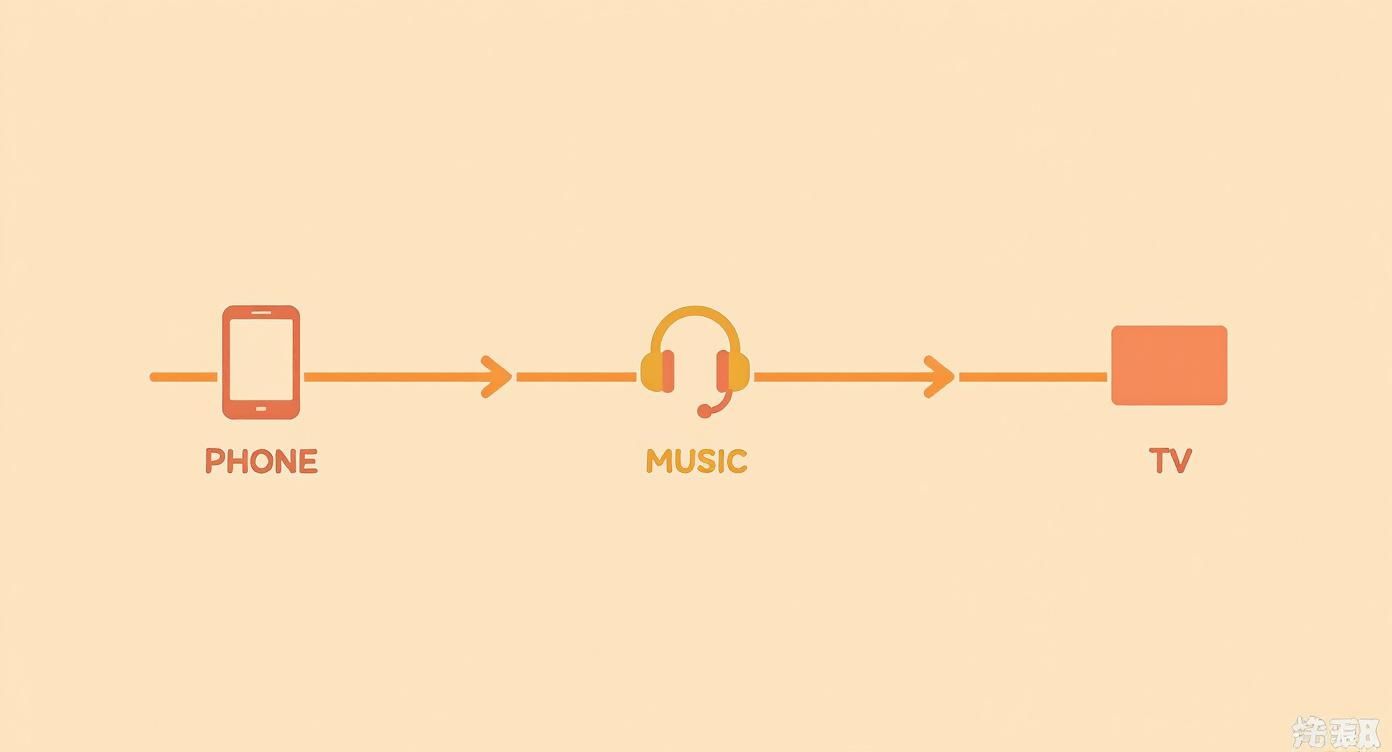
As you can see, you don't have to jump into the deep end. You build your immersion bubble one piece at a time, making the whole process feel manageable and—dare I say—fun.
30-Day Spanish Fluency Sprint
Here's a sample schedule to get you started. Think of it as a roadmap for your first month, with clear weekly goals and daily tasks to keep you on track. Remember, it’s all about consistent daily effort, not weekend cram sessions.
This table breaks down your mission for the next four weeks.
| Week | Daily Time Commitment | Key Focus Areas | PolyChat Feature to Use | Measurable Goal |
|---|---|---|---|---|
| 1 | 1.5 Hours | Greetings, survival phrases, present tense of -AR verbs, ser vs. estar, basic nouns and adjectives. | Spaced Repetition, Conjugation Trainer, Conversation Games. | Hold a 2-minute introductory conversation. Learn 150 core words. |
| 2 | 1.5 - 2 Hours | Daily routines, ordering food, asking for directions, present tense of -ER and -IR verbs, common prepositions. | Spaced Repetition, Conversation Games, Personal Dictionary. | Navigate a restaurant scenario. Learn an additional 200 words. |
| 3 | 1.5 - 2 Hours | Making plans, expressing opinions, introduction to the simple past tense (pretérito), key connectors. | Conjugation Trainer, Conversation Games, Vocabulary Challenges. | Describe your weekend plans and past activities. Reach 500 total words. |
| 4 | 2 Hours | Discussing hobbies and interests, comparing things, introduction to the imperfect past tense, reflexive verbs. | All features, focusing on complex conversation scenarios. | Have a 5-minute conversation on a familiar topic. Reach 700+ total words. |
Let's be real: you won't be fluent after 30 days—nobody is. But you will have a rock-solid conversational foundation. You'll be able to handle essential travel situations, introduce yourself with confidence, and catch the gist of many everyday conversations. It’s amazing how much of a difference one focused month can make.
A Few Common Questions About Learning Spanish Fast
When you decide to go all-in on learning Spanish, a bunch of questions immediately pop up. It's totally normal to wonder about timelines, what roadblocks you might hit, and how to actually spend your time. Let's clear the air and tackle some of the most common questions I hear.
Getting your expectations straight from the beginning is half the battle. If you know what's realistic and what traps to sidestep, you'll stay motivated and on the fastest path to speaking confidently.
How Long Does It Really Take to Learn Spanish Fast?
The word "fluency" can feel like a moving target, but getting to a solid conversational level is probably way faster than you think. This isn't about years of study; it's about smart, consistent effort.
If you commit to the kind of focused, immersion-based plan we're talking about—shooting for 1-2 hours of practice every single day—you can realistically handle basic conversations in just 30 to 60 days. That means introducing yourself, ordering a coffee, or asking for directions without breaking a sweat.
Getting to an intermediate level, where you can handle most day-to-day situations and share more complex ideas, usually takes about 3 to 6 months of that same consistent work. The secret is active, daily practice—not weekend cram sessions. This is where a tool like PolyChat really shines, by making that daily dose of vocabulary and grammar not just efficient, but genuinely fun.
What’s the Single Biggest Mistake to Avoid?
Easy. The biggest mistake is obsessing over perfect grammar instead of just trying to communicate. It’s a classic trap that I’ve seen countless learners fall into. You get stuck in "study mode," just flipping through verb charts and flashcards without ever opening your mouth.
This obsession creates a paralyzing fear of making mistakes, and that fear is the ultimate progress-killer. To learn fast, you have to start speaking. From day one.
Embrace your mistakes. They’re a sign you're trying. Your goal is to be understood, not to sound like a textbook. Prioritizing active output (speaking) over passive input (reading) is the cheat code for rapid progress.
The moment you start speaking, you’re building the active recall skills that passive study can never touch.
Can I Get Fluent Using Just a Language App?
A great app like PolyChat is the perfect engine for your learning, but it works best as the core of a bigger plan. Think of it as your high-powered accelerator for drilling core vocabulary, nailing verb conjugations, and building sentences. It’s incredibly efficient.
But for true, well-rounded fluency, you need to mix that daily app practice with the other immersion tactics in this guide. The app builds your foundation and gives you the confidence to try; real-world immersion is what makes it all stick.
- Mix your tools: Use PolyChat for your structured, daily practice, then go listen to a Spanish podcast or watch a Netflix show in Spanish to see it all in action.
- Create a feedback loop: Practice a conversation scenario in one of PolyChat's games, then try a similar, low-stakes interaction in real life.
The app is your gym, where you build the muscle. The real world is the field where you actually play the game.
Which Spanish Dialect Should I Learn First?
Honestly, for a beginner, the difference between Castilian Spanish (from Spain) and Latin American Spanish is tiny. The core grammar and vocabulary are virtually identical, and speakers from both regions understand each other perfectly.
The best strategy is to just pick one and stick with it at the beginning to keep things simple. Most modern learning tools, PolyChat included, tend to focus on a neutral Latin American accent because it's spoken by far more people globally. For a deeper dive, check out our guide on avoiding Spanish pronunciation mistakes.
Ultimately, your choice should come down to your goals. Planning a trip to Madrid? Seek out Castilian resources. Otherwise, a Latin American focus is a safe, practical bet. Once you build a strong foundation, you'll be amazed at how easily you can understand and adapt to other dialects.
Ready to stop wondering and start speaking? PolyChat is built to help you create a powerful learning habit. With gamified lessons, a top-notch conjugation trainer, and interactive conversation games, every minute you spend is a minute you’re moving forward.

Jean-Baptiste Bolh
Co-Founder
Applied AI