The 12 Best App for Learning Spanish Options for 2026
With countless applications promising fluency, choosing the best app for learning Spanish can feel like navigating a maze. The ideal tool for a busy professional needing conversational skills for a business trip is vastly different from what a university student needs for grammar-intensive coursework. Similarly, a traveler seeking practical phrases for immersion has different requirements than a polyglot dedicated to mastering complex verb conjugations. The "best" app isn't a one-size-fits-all solution; it's the one that aligns perfectly with your specific goals, learning style, and daily schedule.
This guide is designed to cut through the marketing jargon and provide a clear, in-depth analysis of the top contenders. We move beyond simple feature lists to offer a comprehensive breakdown of each platform's core teaching methodology, from Pimsleur's audio-based approach to PolyChat's AI-driven conversation practice. We will explore standout features, honest limitations, and practical use-case scenarios to illustrate who each app truly serves best.
By understanding the fundamental principles of how to learn effectively, you can better leverage the technology these apps offer. Our goal is to equip you with the insights needed to select a digital partner that not only teaches you vocabulary but also keeps you engaged and motivated. Below, you will find detailed reviews, complete with screenshots and direct links, to help you confidently begin your journey toward Spanish proficiency.
Duolingo remains the default starting point for many learners: Spanish is its most-studied language, and in July 2024 the app recorded roughly 14.3 million global downloads in a single month, according to ElectroIQ language app statistics. Scale does not guarantee fit—it explains why so many learners eventually add a second tool once habits outgrow beginner drills.
Quick comparison
| App | Key strength | Typical pricing | Best for |
|---|---|---|---|
| Duolingo | Gamified bite-sized drills | Free / ~$7–13 per month (Super/Max) | Casual beginners building a daily habit |
| Babbel | Structured grammar + dialogues | ~$14–18 per month | Intermediate structure and real-world phrases |
| Memrise | Native-speaker video + spaced repetition | Free / ~$9–15 per month | Vocabulary and listening exposure |
| PolyChat | AI conversation + conjugation drills | Free app; check stores for premium | Unlimited practice and speaking output |
For a faster routine-focused overview, see how to learn Spanish fast.
1. PolyChat
Best For: All-around learning, from vocabulary and grammar to conversation.
PolyChat positions itself as a powerful, all-in-one solution and a top contender for the best app for learning Spanish. It successfully merges gamified learning with robust pedagogical principles, creating an environment that feels both fun and academically sound. Its core strength lies in its unrestricted learning model; unlike many popular apps that use a "hearts" or energy system to limit daily use, PolyChat allows for unlimited practice. This design is ideal for motivated learners who want to immerse themselves in back-to-back lessons without artificial interruptions.
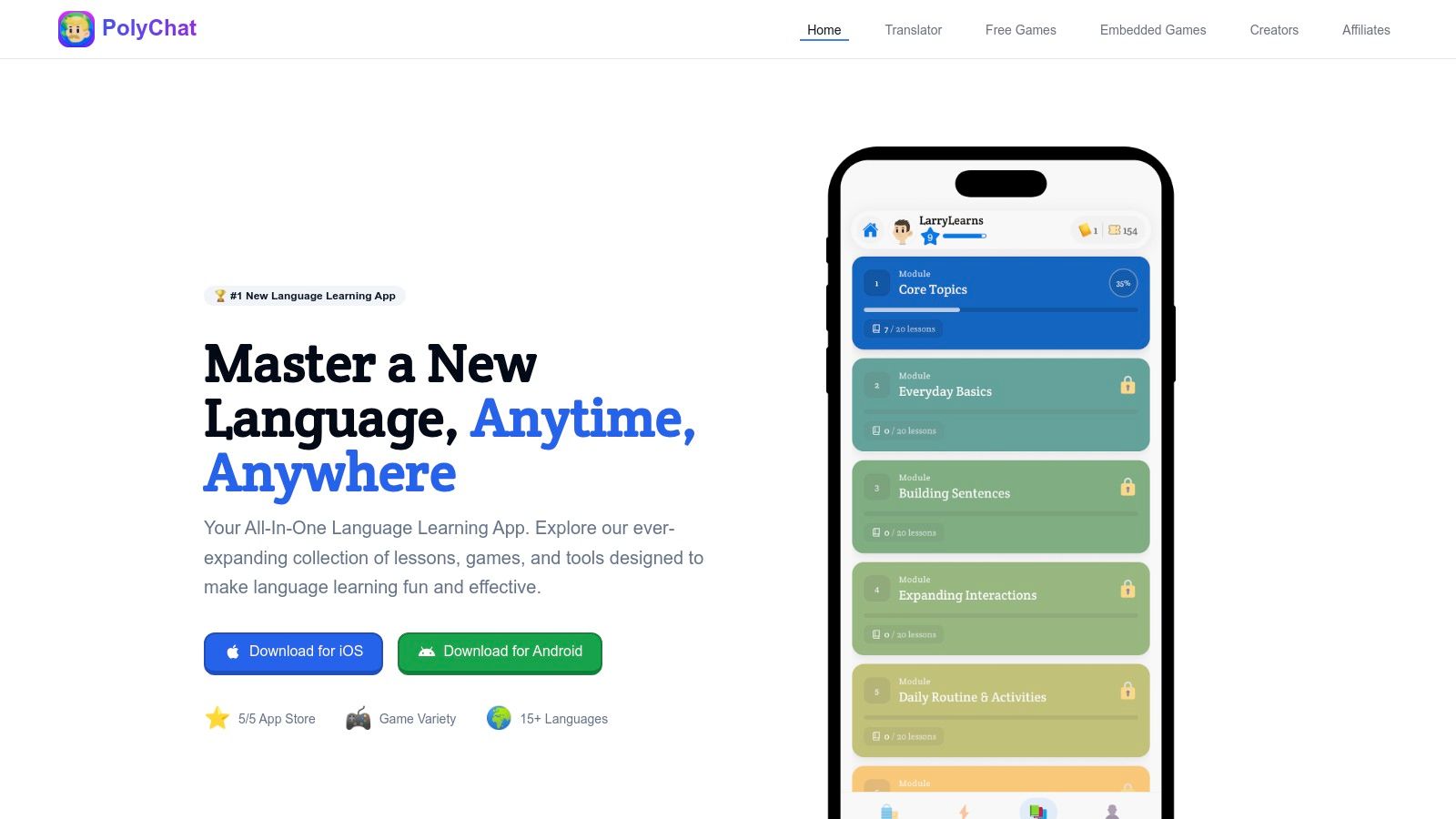
The platform offers a comprehensive suite of tools designed to build well-rounded fluency. Users can engage in timed vocabulary challenges, interactive translation games, and simulated conversations. As you progress, the app automatically builds a personal dictionary of mastered words, providing a clear, measurable record of your vocabulary growth. This structured approach, combined with hundreds of lessons spanning from beginner to advanced levels, ensures a clear path toward proficiency.
Standout Features
One of PolyChat's most notable tools is its dedicated conjugation practice module. Mastering verb conjugations is often a major hurdle for Spanish learners, and this feature provides the focused, repetitive practice needed to achieve fluency. This specific emphasis on a common pain point demonstrates a deep understanding of the language acquisition process.
Additionally, the app supports 17 languages, including less-common options like Catalan and Albanian. A unique benefit for polyglots is the ability to learn a new language from any other supported language, for example, learning Spanish from an Italian base. This flexibility is rarely seen in mainstream apps and caters to a global user base.
Practical Use and Considerations
- Availability: Free on iOS and Android.
- Pros:
- Unlimited Learning: No restrictive "hearts" or energy systems.
- Comprehensive Toolset: Excellent blend of vocabulary games, conversation practice, and a standout conjugation tool.
- Multi-language Support: Learn Spanish from English or another source language.
- Built-in Tools: Includes a free translator and a personal dictionary to track progress.
- Cons:
- Pricing Transparency: Information regarding premium features or paid tiers is not clearly detailed on its website.
- Unverified Claims: Marketing claims like "#1 New Language Learning App" are not substantiated with third-party verification.
Learn more at PolyChat
2. Duolingo
Duolingo is arguably the most recognizable name in language learning, making it a strong contender for the best app for learning Spanish, especially for absolute beginners. Its core philosophy revolves around gamification, turning the often-daunting task of learning a new language into a fun, daily habit.
The platform uses a "learning path" structure, where users complete bite-sized lessons to unlock new levels and topics. These lessons focus on vocabulary, basic grammar, and sentence construction through a series of interactive exercises like matching pairs, fill-in-the-blanks, and simple translations. The inclusion of streaks, quests, and leaderboards provides constant motivation to keep practicing every day.
User Experience and Ideal Learner
Duolingo’s interface is bright, intuitive, and designed to be addictive in a positive way. Streaks and timed challenges bring many newcomers back—industry analyses have cited strong early retention tied to that daily loop. A typical session might involve completing a five-minute lesson on the bus, reviewing vocabulary during a lunch break, or competing against friends on the weekly leaderboard. It's an excellent starting point for learners who thrive on structure, visual progress, and positive reinforcement.
- Best For: Casual learners, absolute beginners, and users who need strong motivational tools to build a consistent study habit.
- Not Ideal For: Learners seeking deep grammatical explanations or advanced conversational practice from the start.
Pricing and Access
Duolingo’s main draw is its robust free tier, which offers access to the entire Spanish course. This version is ad-supported. For an uninterrupted experience and additional features like a dedicated Practice Hub and unlimited "hearts," users can upgrade to Super Duolingo (starting around $12.99/month) or Duolingo Max, which incorporates AI-powered features for a higher price.
While Duolingo is a powerful tool for building a foundational vocabulary, some users eventually seek more depth. You can explore a detailed comparison of apps that offer different features than Duolingo to understand what to look for next.
Visit Duolingo
3. Babbel
Babbel takes a more traditional, pedagogy-focused approach, positioning itself as one of the best apps for learning Spanish for those who want structured, expert-designed courses. Unlike purely gamified apps, Babbel’s lessons are built around practical, real-world conversations, ensuring that what you learn is immediately useful for travel, work, or daily interactions.
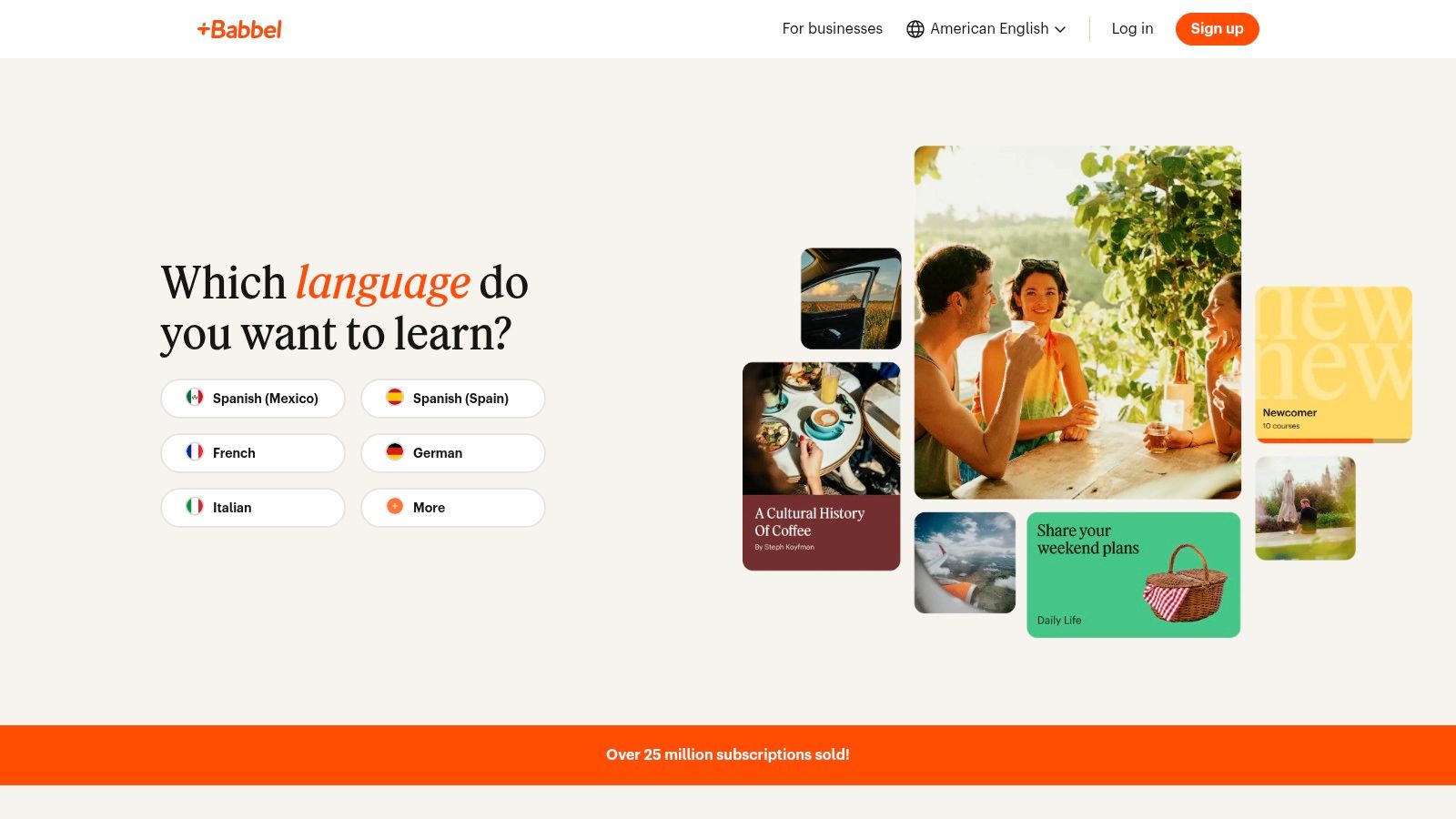
The platform’s strength lies in its curriculum, which introduces grammar and vocabulary within the context of dialogues you might actually have. Lessons are short (10-15 minutes) and incorporate spaced repetition to help you effectively move new words into your long-term memory. It also includes supplemental content like podcasts, games, and live classes to create a well-rounded learning experience.
User Experience and Ideal Learner
Babbel’s interface is clean, professional, and straightforward, focusing on the lesson content without excessive distractions. A typical session involves a dialogue-based lesson followed by a review of key vocabulary and grammar rules. Its structure is perfect for learners who appreciate a clear path from beginner to advanced levels and want to understand the "why" behind the language rules. This is helpful when you need to master concepts like the rules for using the Spanish imperfect tense correctly.
- Best For: Serious beginners and intermediate learners who prefer a structured, curriculum-based approach to learning.
- Not Ideal For: Users seeking a free learning tool or a highly gamified, socially competitive experience.
Pricing and Access
Babbel is a subscription-based service, with no free tier for its core course content. Pricing often involves paying upfront for a set term (e.g., 3, 6, or 12 months), with costs starting around $14.95 for a single month and decreasing with longer commitments. A lifetime plan is also available. Babbel offers a 20-day money-back guarantee, allowing users to try it risk-free.
Visit Babbel
4. Rosetta Stone
Rosetta Stone is a legacy name in language learning, and its app remains a solid choice for those seeking a structured, immersive experience. Its core methodology avoids direct translation, instead teaching Spanish (both Latin American and Castilian) through a dynamic immersion process where you connect words and phrases with images and context, mimicking natural language acquisition.
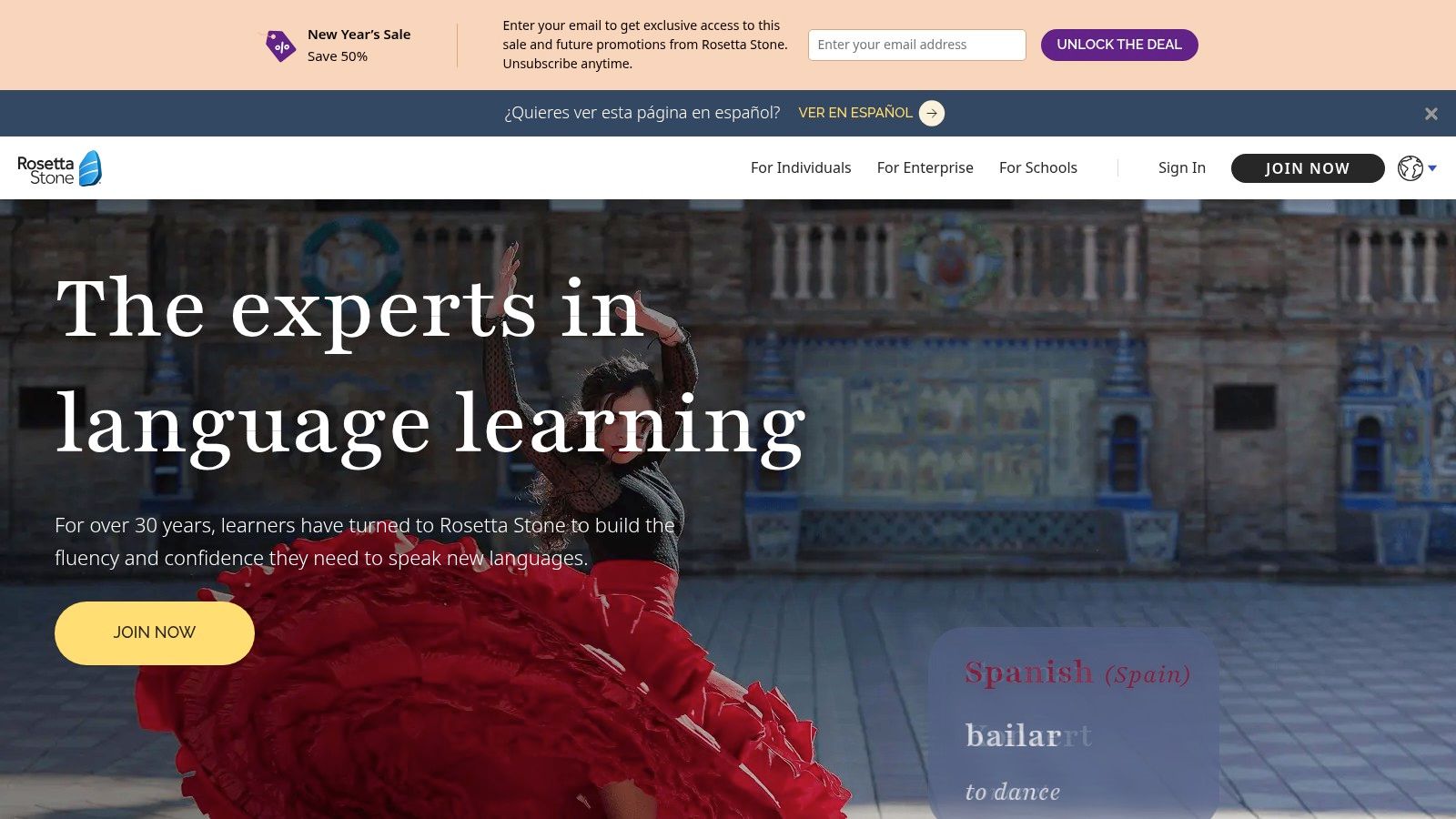
The platform is renowned for its TruAccent speech recognition engine, which provides instant feedback on your pronunciation to help you sound more like a native speaker. Lessons are comprehensive, covering everything from core vocabulary and grammar to situational conversations, and your progress syncs seamlessly between mobile and desktop devices, allowing for flexible learning.
User Experience and Ideal Learner
The Rosetta Stone interface is polished and professional, presenting a clear, scaffolded learning path that guides you from one concept to the next without feeling overwhelming. The immersion method can be challenging initially but is highly effective for building intuitive language connections. It's a great app for learning Spanish if you prefer a serious, academic-style approach over gamification.
- Best For: Beginners who want a structured curriculum, learners focused on perfecting their pronunciation, and those who prefer an immersive, no-translation learning style.
- Not Ideal For: Learners who want explicit grammar explanations or those looking for a free, game-like experience.
Pricing and Access
Rosetta Stone operates on a subscription model, and while it's a premium product, it frequently offers significant discounts on its lifetime access plan, which includes all languages. Subscription options typically start around $11.99/month for a 12-month plan, but the best value is often found in their lifetime subscription, which is frequently promoted. They also offer a 3-day free trial and a 30-day money-back guarantee.
Visit Rosetta Stone
5. Busuu
Busuu positions itself as a comprehensive Spanish learning platform that combines structured lessons with a unique community-driven approach. It offers a well-defined course curriculum that covers everything from beginner A1 to upper-intermediate B2 levels, according to the Common European Framework of Reference for Languages (CEFR).
What truly sets Busuu apart is its interactive community feature, where learners can submit writing or speaking exercises and receive feedback directly from native Spanish speakers. This peer-to-peer correction system provides invaluable, real-world insight into natural phrasing and pronunciation. The lessons themselves are a blend of vocabulary drills, grammar explanations, and short dialogues, creating a balanced learning experience that builds practical communication skills.
User Experience and Ideal Learner
The Busuu interface is clean and professional, guiding users through a logical progression of topics. Each lesson is relatively short, making it easy to fit into a busy schedule. The combination of self-paced lessons and human interaction makes it a strong candidate for learners who want structured content but also crave authentic feedback to ensure they are on the right track.
- Best For: Intermediate learners, users seeking feedback from native speakers, and those who appreciate a CEFR-aligned curriculum.
- Not Ideal For: Learners looking for a completely free, gamified experience or advanced C1-level content.
Pricing and Access
Busuu offers a free basic plan with limited access to lessons. To unlock all features, including advanced grammar units, offline mode, and official certificates, a Premium subscription is required. The Premium Plus tier adds a personalized study plan and access to the native speaker feedback community. Pricing is flexible, with 1, 6, and 12-month plans often available, though costs can vary depending on promotions and the platform used for purchase.
Visit Busuu
6. Pimsleur
Pimsleur offers a time-tested, audio-first approach that makes it a unique candidate for the best app for learning Spanish. Its methodology is built around 30-minute core audio lessons designed to get you speaking and understanding from day one. Instead of focusing on grammar rules, Pimsleur uses a spaced repetition system to introduce new words and phrases in the context of real conversations, prompting you to recall and speak them aloud.
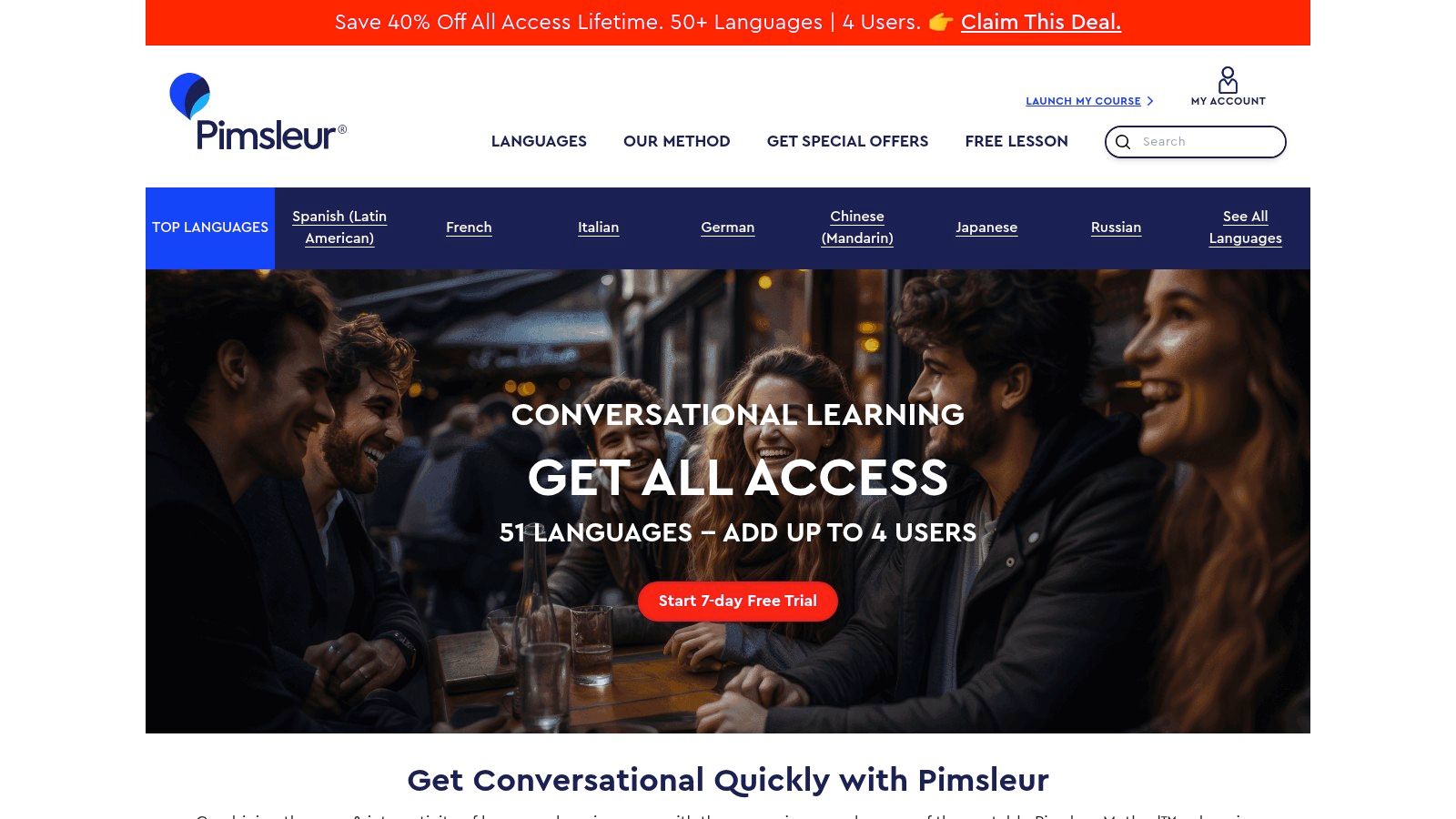
This method excels at developing a strong accent and instinctive conversational skills. With dedicated courses for both Latin American and Castilian Spanish, you can choose the dialect that best suits your goals. The platform is especially powerful for hands-free learning, with integrations for CarPlay, Android Auto, and Alexa, making it perfect for commuters or anyone who learns best by listening.
User Experience and Ideal Learner
The Pimsleur experience is straightforward: complete one 30-minute audio lesson per day. This clear structure removes the guesswork from your study routine. The app complements the audio with reading lessons, flashcards, and interactive practice, but the core remains the spoken word. It’s ideal for learners who want to build conversational confidence quickly without getting bogged down in visual exercises or complex grammar tables.
- Best For: Auditory learners, commuters, and anyone who wants a structured, hands-free method to practice speaking and listening.
- Not Ideal For: Visual learners or users who prefer deep dives into grammar rules and written exercises.
Pricing and Access
Pimsleur operates on a subscription model. An audio-only subscription costs $14.95 per month for one language. The Pimsleur Premium plan, which includes interactive app-based features, is $19.95 per month. A Pimsleur All Access plan, covering all 51 languages, is available for $20.95 per month. You can often start with a 7-day free trial to experience the method firsthand.
Visit Pimsleur
7. Memrise
Memrise distinguishes itself by moving beyond vocabulary drills and into real-world language acquisition. Its core feature, "Learn with Locals," presents thousands of short video clips of native speakers using phrases in natural contexts. This approach makes it a strong candidate for the best app for learning Spanish if your primary goal is to understand and replicate authentic pronunciation and intonation from day one.
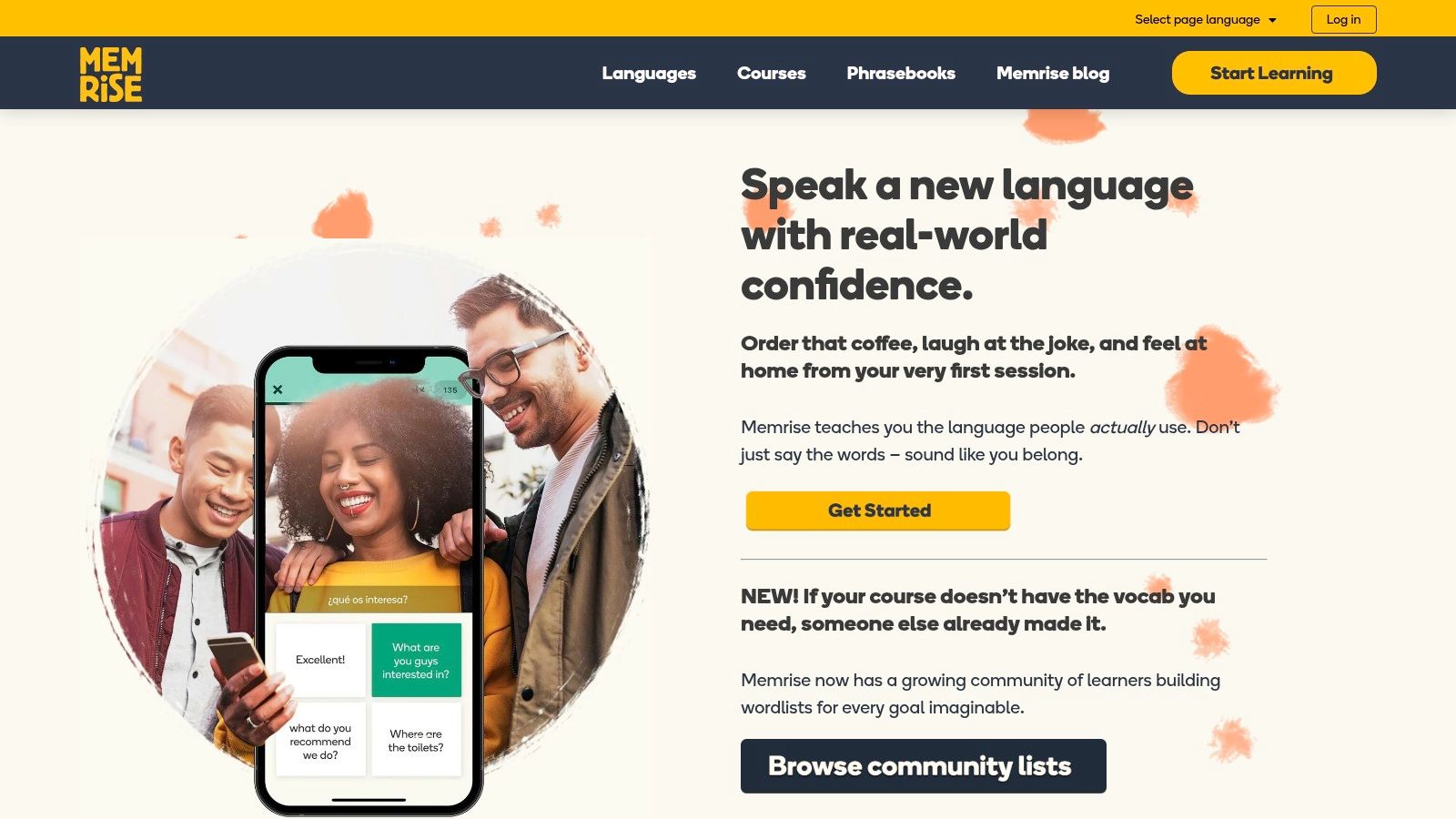
The platform combines these videos with spaced repetition flashcards and AI-powered speaking practice to help you commit new vocabulary and phrases to long-term memory. It's designed to teach you functional language quickly, focusing on how people actually speak rather than just textbook grammar rules.
User Experience and Ideal Learner
The Memrise interface is clean and engaging, encouraging users to complete short daily sessions focused on listening and repetition. A typical workflow involves watching several native speaker clips, practicing the pronunciation yourself with the AI "MemBot," and then reviewing the phrases at scheduled intervals. This method is highly effective for auditory learners and those preparing for travel.
- Best For: Learners who want to develop a good accent and listening comprehension early on, as well as those who find traditional flashcards boring.
- Not Ideal For: Users who require a heavily structured, grammar-first curriculum or in-depth grammatical explanations.
Pricing and Access
Memrise offers a free tier that provides access to a limited number of lessons per day. To unlock all courses, unlimited learning, and advanced features like the AI speaking practice, users must upgrade to Memrise Pro. Pricing for the Pro plan is often subject to promotions but typically starts around $14.99 per month, with significant discounts available for annual or lifetime subscriptions.
Visit Memrise
8. Mango Languages
Mango Languages offers a unique, conversation-based methodology that makes it a practical choice as one of the best apps for learning Spanish. Its lessons are built around real-world dialogues, deconstructing sentences to teach vocabulary, grammar, pronunciation, and cultural nuances in context. This approach helps learners quickly build conversational skills for practical situations.
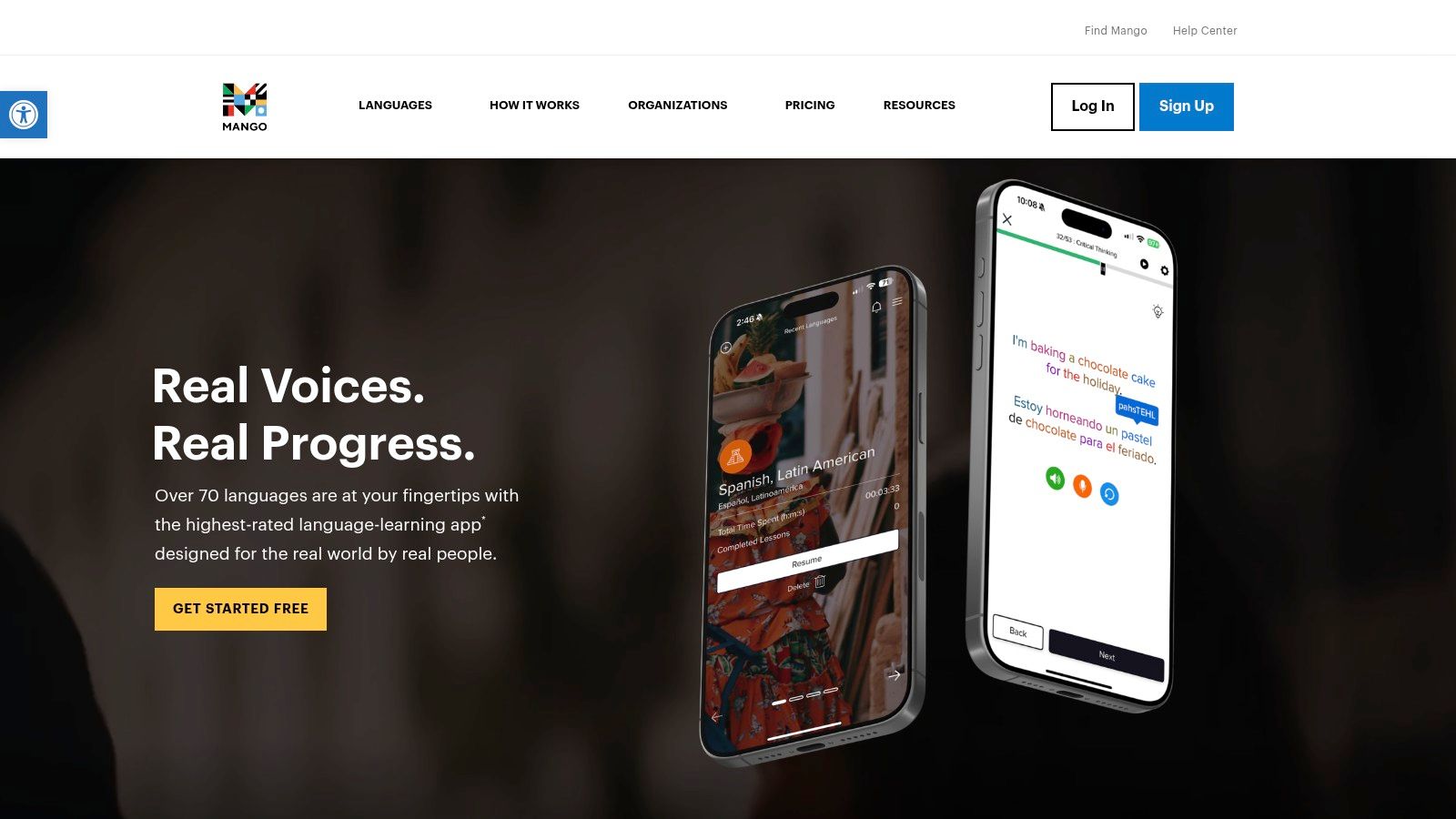
A standout feature is its color-coded system that breaks down literal and implied meanings, helping you understand sentence structure intuitively. Mango Languages offers distinct courses for both Latin American and Castilian Spanish, allowing you to focus on the specific dialect you need.
User Experience and Ideal Learner
The platform has a clean, professional interface that guides you through structured chapters. Each lesson uses voice comparison tools to help you perfect your accent and provides insightful culture notes that add depth to your learning. It's less about gamification and more about structured, goal-oriented progress.
- Best For: Practical learners, travelers, and anyone who wants to gain conversational fluency through structured, dialogue-based lessons. Also ideal for budget-conscious learners with library access.
- Not Ideal For: Users who prefer a highly gamified experience with points, streaks, and leaderboards.
Pricing and Access
Many users can access Mango Languages completely free through their local public library, university, or school. The platform provides a search tool to see if your institution is a partner. For direct subscribers, an individual plan costs around $7.99/month, with a family plan available that supports up to five profiles. Both paid plans include access to all languages.
Visit Mango Languages
9. Mondly
Mondly stands out in the crowded language-learning market by integrating modern tech features like augmented reality (AR) and chatbot conversations into its Spanish curriculum. The platform is designed around daily lessons, weekly quizzes, and monthly challenges to create a structured and consistent learning path that feels fresh and interactive.
A core feature is its focus on practical, real-world phrases presented from day one. Mondly uses professional voice actors and a speech recognition engine to help you practice pronunciation and get immediate feedback. The chatbot feature allows you to simulate conversations, which is an excellent way to build confidence before speaking with native speakers. It's an app that often appeals to tech-savvy learners looking for an engaging experience.
User Experience and Ideal Learner
Mondly’s interface is clean and visually driven, with a map-based progression system that guides you through different topics. Its biggest draw is the novelty of its AR and VR components, where you can bring a virtual teacher into your room. It is a solid choice for learners who enjoy high-tech tools and a more futuristic approach to study.
- Best For: Visual learners, tech enthusiasts, and beginners who want to practice conversational phrases from the very beginning.
- Not Ideal For: Learners who prefer in-depth grammar lessons or a more academically rigorous curriculum.
Pricing and Access
Mondly offers a limited free version with daily lessons. Full access requires a premium subscription, with pricing that often varies between the app store and its website. The platform is known for its frequent and aggressive promotions, especially for annual and lifetime plans, making it a potentially cost-effective option if you catch a sale. A single subscription often grants access to all 41 languages offered.
Visit Mondly
10. HelloTalk
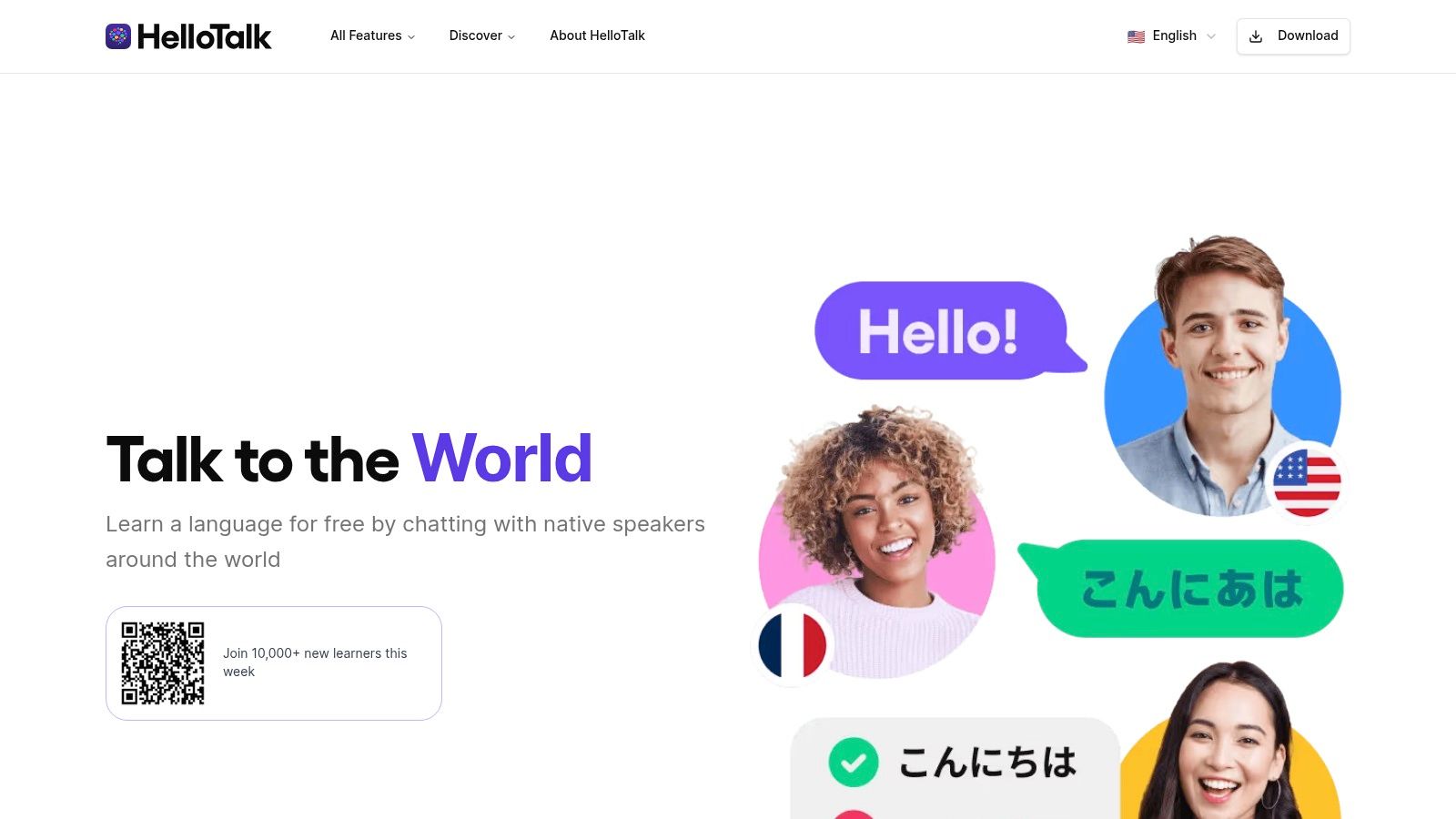
HelloTalk takes a community-first approach, positioning itself as a top contender for the best app for learning Spanish through direct human connection. Instead of structured lessons, it connects you with native Spanish speakers from around the world who are, in turn, learning your native language. This tandem exchange model facilitates authentic communication practice.
The core of the app is its 1-on-1 chat interface, which includes powerful built-in tools for translation, transliteration, and text-to-speech to help you understand and correct your partner in real time. Beyond individual chats, HelloTalk features a social feed similar to a timeline where users can post "Moments," ask questions, and interact with the wider community, creating an immersive, social learning environment.
User Experience and Ideal Learner
The user experience feels like a blend of a messaging app and a social media platform. It's designed for learners who are ready to move beyond flashcards and start applying their knowledge. A typical session involves finding a language partner, initiating a conversation via text or voice message, and helping each other with corrections.
- Best For: Intermediate to advanced learners looking to build conversational fluency and confidence by talking to real people.
- Not Ideal For: Absolute beginners who need a structured introduction to vocabulary and grammar fundamentals.
Pricing and Access
HelloTalk offers its core language exchange features for free, which is sufficient for many users. For more advanced tools like unlimited translations, the ability to search for partners near you, and an ad-free experience, users can subscribe to a VIP membership. Pricing varies but typically starts around $12.99/month, with discounts for longer commitments.
For learners focused specifically on practical dialogue, HelloTalk offers an excellent way to practice. You can discover more tips on the best way to learn conversational Spanish to complement your app-based learning.
Visit HelloTalk
11. Preply
Preply shifts the focus from app-based exercises to human connection, positioning itself as a leading marketplace for finding one-on-one Spanish tutors. Instead of a pre-set curriculum, Preply offers a vast database of over 10,000 Spanish tutors, allowing learners to find an instructor who matches their specific goals, budget, and learning style.
The platform excels at personalization. You can filter tutors by their country of origin (to focus on Spanish from Spain vs. Latin America), specialty (DELE exam prep, business Spanish, accent reduction), and price. This makes it an invaluable tool for learners who have hit a plateau with app-only methods and need tailored feedback and real-time conversation practice to progress further.
User Experience and Ideal Learner
The experience revolves around finding the right tutor. Users can watch introductory videos, read reviews, and book a trial lesson at a discounted rate. Once you find a match, you schedule and pay for lessons in subscription blocks. This model is ideal for motivated learners who want to take control of their education and need the accountability of a live instructor.
- Best For: Intermediate to advanced learners, those preparing for exams like the DELE, and anyone needing specialized or accent-specific instruction.
- Not Ideal For: Casual learners looking for a free, game-like experience or those who prefer self-paced, app-based learning.
Pricing and Access
Preply operates on a per-hour basis, with prices set by individual tutors. Rates can vary significantly, from as low as $5 to over $40 per hour. After a trial lesson, users purchase a subscription package of 4, 8, 12, or 20 hours of lessons, which auto-renews monthly. While this can be more expensive than a standard app subscription, the personalized instruction is often worth the investment for serious students.
Visit Preply
12. LingQ
LingQ champions an input-heavy approach, making it one of the best apps for learning Spanish through authentic content immersion. Instead of structured, gamified lessons, it provides a massive library of articles, podcasts, news stories, and videos created by and for native speakers. Its core feature is the ability to read and listen to this content while instantly looking up unknown words.
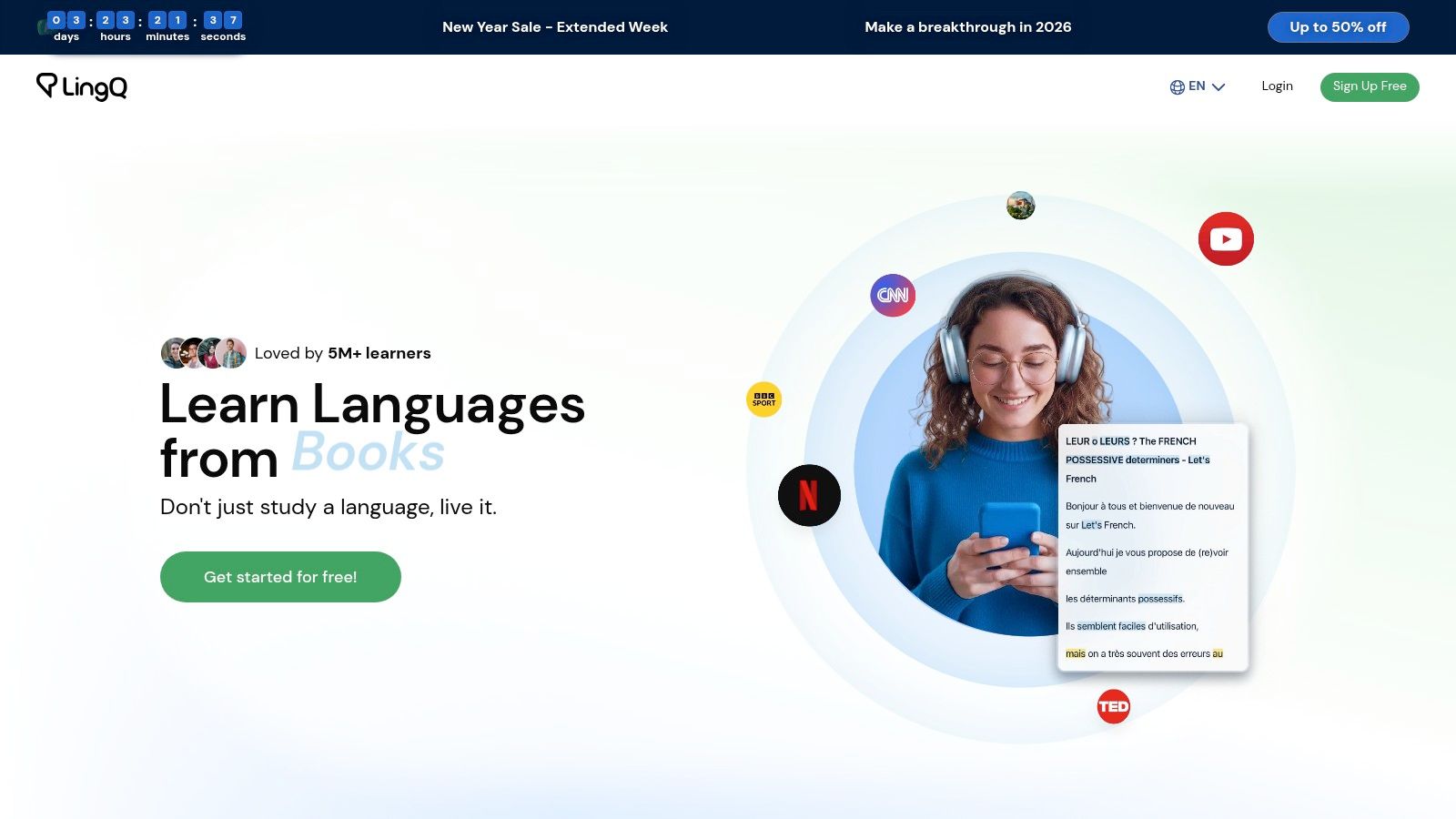
As you read, you create "LingQs" by clicking on words you don't know, which saves them to a personalized database for review via spaced repetition. The platform's real power comes from its browser extension, which lets you import content from YouTube, Netflix, and news sites, turning almost anything on the web into an interactive Spanish lesson. This high degree of customization ensures you are always learning with material that genuinely interests you.
User Experience and Ideal Learner
The interface is focused on reading and statistics, tracking your known words and listening hours to show tangible progress. LingQ is built for self-directed learners who are tired of textbook exercises and want to dive headfirst into real-world Spanish. It requires discipline but offers an incredibly rewarding path to fluency by focusing on comprehension through massive exposure.
- Best For: Intermediate to advanced learners, self-motivated students, and anyone who wants to learn Spanish using materials they find personally engaging.
- Not Ideal For: Absolute beginners needing a structured path or users who prefer a heavily guided, game-like experience.
Pricing and Access
LingQ offers a free tier with significant limitations on how many LingQs you can create and which features you can access. To unlock its full potential, including unlimited vocabulary saves, offline access, and the ability to import your own content, a Premium plan is necessary (starting around $12.99/month). A Premium Plus plan offers additional live tutoring credits.
Visit LingQ
Also worth considering: Rocket Spanish
Rocket Spanish is not in our main twelve, but it fills a gap for learners who want long audio dialogues and in-depth grammar explanations in one paid package. Lessons often run 20–30 minutes, which suits weekend study blocks more than five-minute drills. Pricing is typically a $150+ lifetime-style purchase rather than a low monthly subscription—best if you know you will commit to audio-heavy study for months, not days.
- Best for: DELE prep, structured grammar review, and immersive listening outside gamified apps.
- Pair with: PolyChat or HelloTalk for speaking output after audio lessons.
When to use each app
Match the tool to the moment—not every app fits every goal.
| Scenario | Time available | Apps that fit |
|---|---|---|
| Commuter / coffee break | 5–10 minutes | Duolingo, Memrise, PolyChat conjugation drills |
| DELE or classroom exam prep | 15–30 minutes | Babbel grammar modules, Rocket Spanish audio, PolyChat speaking practice |
| Travel survival phrases | 10–20 minutes | Mango Languages, Memrise clips, PolyChat role-play |
| Deep grammar review | 15–30 minutes | Babbel, LingoDeer-style structure (if you add one), Rocket Spanish, then PolyChat to apply rules in dialogue |
Practical rule: Use short apps for momentum and longer sessions for depth—then speak what you studied the same day.
Pairing PolyChat with your main app
Most learners improve faster with a stack than with one icon on the home screen:
- Core lesson (Duolingo, Babbel, Busuu, or Pimsleur) for structure.
- PolyChat session (3–10 minutes) on the same topic—travel phrases, past tense, restaurant language.
- Weekly review of missed words in your personal dictionary or flashcards.
Example week: Babbel dialogue on Monday → PolyChat café role-play that evening → Busuu or HelloTalk for human correction on Friday. Research on mixed practice often shows better retention when learners alternate structured drills with real output than when they rely on drills alone.
Top 12 Spanish-Learning Apps Comparison
| Platform | Core features ✨ | Quality ★ | Price/value 💰 | Audience 👥 | Standout 🏆 |
|---|---|---|---|---|---|
| PolyChat 🏆 | Unlimited games & lessons; AI tools; top conjugation practice; personal dictionary; built‑in translator | ★★★★★ (5/5 App Store) | Free app; premium details unclear 💰 | Beginners→Advanced: students, travelers, polyglots, educators 👥 | No hearts/energy limits; learn one language from another; gamified, measurable progress ✨ |
| Duolingo | Bite‑size gamified lessons; streaks, quests; mobile + web | ★★★★ | Free core; Super/Max removes ads & adds tools 💰 | Casual daily learners; beginners; large community 👥 | Extremely accessible; short sessions for busy users ✨ |
| Babbel | Level‑based curriculum; spaced repetition; podcasts & speaking practice | ★★★★ | Subscription with frequent discounts 💰 | Learners seeking structured, practical conversation 👥 | Expert‑designed lessons focused on real conversation ✨ |
| Rosetta Stone | Immersive lessons; TruAccent pronunciation; offline sync | ★★★★ | Paid subscription; promos & guarantees 💰 | Beginners focused on pronunciation & scaffolded learning 👥 | Strong pronunciation feedback & immersion approach ✨ |
| Busuu | Community feedback; grammar/vocab review; AI conversations | ★★★ | Free + Premium/Premium Plus tiers 💰 | Learners wanting native‑speaker feedback & certificates 👥 | Community corrections and flexible billing options ✨ |
| Pimsleur | Audio‑first 30‑min lessons; hands‑free integrations (CarPlay/Alexa) | ★★★★ | Subscription or purchase per course 💰 | Commuters and aural learners who want speaking practice 👥 | Audio‑focused, convenient for multitasking learners ✨ |
| Memrise | Native‑speaker video clips; AI speaking practice; spaced reviews | ★★★★ | Free tier; Pro unlocks advanced features 💰 | Practical listening/speaking learners; phrase learners 👥 | Real‑world video clips for natural listening exposure ✨ |
| Mango Languages | Structured dialogues; culture & pronunciation notes; library access | ★★★ | Subscription; often free via libraries 💰 | Cost‑conscious learners; schools & library users 👥 | Free access through many public libraries; cultural notes ✨ |
| Mondly | Daily lessons, chatbots, speech recognition; AR/VR options | ★★★ | Frequent discounts; monthly/annual/lifetime deals 💰 | Tech‑curious learners seeking extra features 👥 | AR/VR and chatbot practice; wide language support ✨ |
| HelloTalk | 1:1 text/voice chats; social feed; Live practice | ★★★ | Free core; VIP subscription available 💰 | Learners wanting real conversational exchange & partners 👥 | Real native‑speaker exchange and live community practice ✨ |
| Preply | Marketplace for 1:1 tutors; trial lessons; flexible scheduling | ★★★★ | Pay‑per‑hour (varies by tutor) 💰 | Learners seeking personalized tutoring & specialist prep 👥 | Wide tutor choice (DELE, business, accents); flexible budgets ✨ |
| LingQ | Real‑content immersion; importer for YouTube/Netflix; SRS | ★★★★ | Free + paid tiers for AI/import features 💰 | Self‑directed learners who prefer immersion & custom content 👥 | Import/transcribe real media; strong input‑based learning ✨ |
Feature pillars at a glance
| App | Engagement | Grammar depth | Conversation practice | Typical cost |
|---|---|---|---|---|
| Duolingo | Streaks, timed challenges | Light tips | Limited AI (Max tier) | Free / ~$7.99+ per month |
| Memrise | Points, native clips | Moderate SRS | MemBot + community | Free / ~$9+ per month |
| Babbel | Dialogues, review scheduler | Structured modules | Role-play exercises | ~$13.95+ per month |
| Rocket Spanish | Audio-heavy lessons | In-depth explanations | Guided conversations | Lifetime ~$150+ |
| PolyChat | Timed vocab + games | Conjugation drills | AI-driven chats | Free app; check stores |
Frequently asked questions
Free vs premium—which do you need?
Free tiers (Duolingo, Memrise, Busuu basic, HelloTalk core) are enough to build a habit. Upgrade when you hit daily caps, need offline lessons, or want unlimited speaking tools. Most paid plans cluster around $7–15 per month; lifetime or tutor marketplaces (Preply, Rocket Spanish) cost more upfront.
How do I get real speaking practice?
Vocabulary apps alone rarely build speaking endurance. Add PolyChat for daily AI dialogue, HelloTalk or Preply for human interaction, and Pimsleur if you learn best by repeating aloud on commutes.
Can I use multiple apps without burning out?
Yes—if you assign roles, not duplicate tasks. Example: Duolingo (5 minutes, habit) + Babbel (grammar) + PolyChat (speaking). Block calendar slots so each app has a job. Track simple metrics: words learned, streak length, and conversation turns per week.
Making Your Final Choice and Committing to Consistency
We've journeyed through a comprehensive landscape of digital tools, from the conversational prowess of PolyChat to the community-driven feedback of Busuu and the auditory immersion of Pimsleur. Navigating this sea of options can feel overwhelming, but the goal is not to find a universally perfect app. The true mission is to identify the single best app for learning Spanish for you—the one that aligns seamlessly with your goals, learning style, and daily routine.
The most advanced, feature-rich platform is useless if you never open it. Conversely, a simple, focused app that you use for 15 minutes every single day will yield remarkable results over time. Your choice is a deeply personal one, hinging on what truly motivates you to stay engaged.
Recapping the Core Pathways to Fluency
To simplify your decision, let's distill our findings into a few core learning archetypes. This framework will help you pinpoint which platform, or combination of platforms, will serve you best on your path to mastering Spanish.
-
For the Conversationalist: If your primary goal is to speak confidently and handle real-world interactions, your focus should be on apps that prioritize dialogue. PolyChat stands out here, offering unlimited, AI-powered conversation practice that simulates everything from ordering coffee to navigating a business meeting. This is complemented well by HelloTalk or Preply, which introduce the human element for cultural nuance and spontaneous interaction.
-
For the Structured Learner: If you thrive on clear lesson plans, grammar rules, and a defined curriculum, your ideal app will have a strong pedagogical backbone. Babbel excels with its grammar-first, culturally relevant lessons. Busuu offers a similar structure but enhances it with feedback from native speakers, providing a critical layer of validation for your written and spoken exercises.
-
For the Gamified Enthusiast: Motivation for you comes from streaks, leaderboards, and a sense of playful progress. While Duolingo is the undisputed king of gamification, consider PolyChat as a powerful alternative that merges game-like features with advanced conversational AI, making practice feel less like a chore and more like an engaging challenge. Memrise also uses spaced repetition and entertaining videos to make vocabulary acquisition feel like a game.
-
For the Auditory Learner and Commuter: If your learning time is confined to your drive, workout, or daily walk, an audio-centric approach is non-negotiable. Pimsleur is the gold standard, building your conversational skills almost entirely through listening and repeating. It’s a powerful method for internalizing pronunciation and sentence structure without ever looking at a screen.
Beyond the App: The Art of Effective Learning
Choosing the right app is just the first step; true progress comes from consistent application of effective learning strategies. To optimize your Spanish learning, it's crucial to understand and implement general principles of memory and retention. Learn more about science-backed study methods that can help you turn short practice sessions into long-term knowledge, regardless of the tool you choose. Remember, the app provides the content, but your study habits determine your success.
The ultimate takeaway is that the best app for learning Spanish is the one that becomes an integral, enjoyable part of your daily life. Don't be afraid to experiment. Many of these platforms offer free trials. Test-drive two or three of your top contenders for a week. See which one you're most excited to open each morning. That's your winner.
Use this checklist when you add or swap tools:
| Priority | If this matters most… | Start with |
|---|---|---|
| Daily habit on a budget | Duolingo or Memrise free tier | |
| Clear grammar path | Babbel or Busuu | |
| Speaking under time pressure | Pimsleur or PolyChat | |
| Real people + culture | HelloTalk or Preply | |
| Immersion through content | LingQ |
Revisit the list when you hit intermediate milestones—what worked at A1 often stalls at B1 without more conversation volume.
Your journey to fluency is a marathon, not a sprint. It’s built on the foundation of small, consistent actions. By selecting a tool that genuinely resonates with you and committing to daily practice, you are setting yourself up for incredible success. The vibrant, rich world of the Spanish language is waiting for you.
¡Adelante!
Ready to move beyond flashcards and start having realistic conversations today? PolyChat leverages cutting-edge AI to provide unlimited, judgment-free speaking practice on any topic, helping you build confidence faster than any other method. Try PolyChat and discover the most engaging way to learn Spanish.

Jean-Baptiste Bolh
Co-Founder
Applied AI