Imperfect Spanish Conjugation: Charts, Uses, and Examples
Think of the Spanish past tenses like telling a story. You have your main plot points—the big, dramatic events that move the story forward. But you also need the background, the atmosphere, the little details that make the world feel real. That’s where the imperfect tense comes in.
The imperfect describes ongoing or repeated actions in the past. It’s all about setting the scene, not pinpointing a single, finished event. In English, we’d say things like "I used to go" or "it was raining." Mastering this tense is one of the biggest steps you can take toward sounding natural when you speak Spanish.
Ready to Learn Spanish?
Try PolyChat's engaging language lessons, interactive learning games and put your Spanish vocabulary to the test!
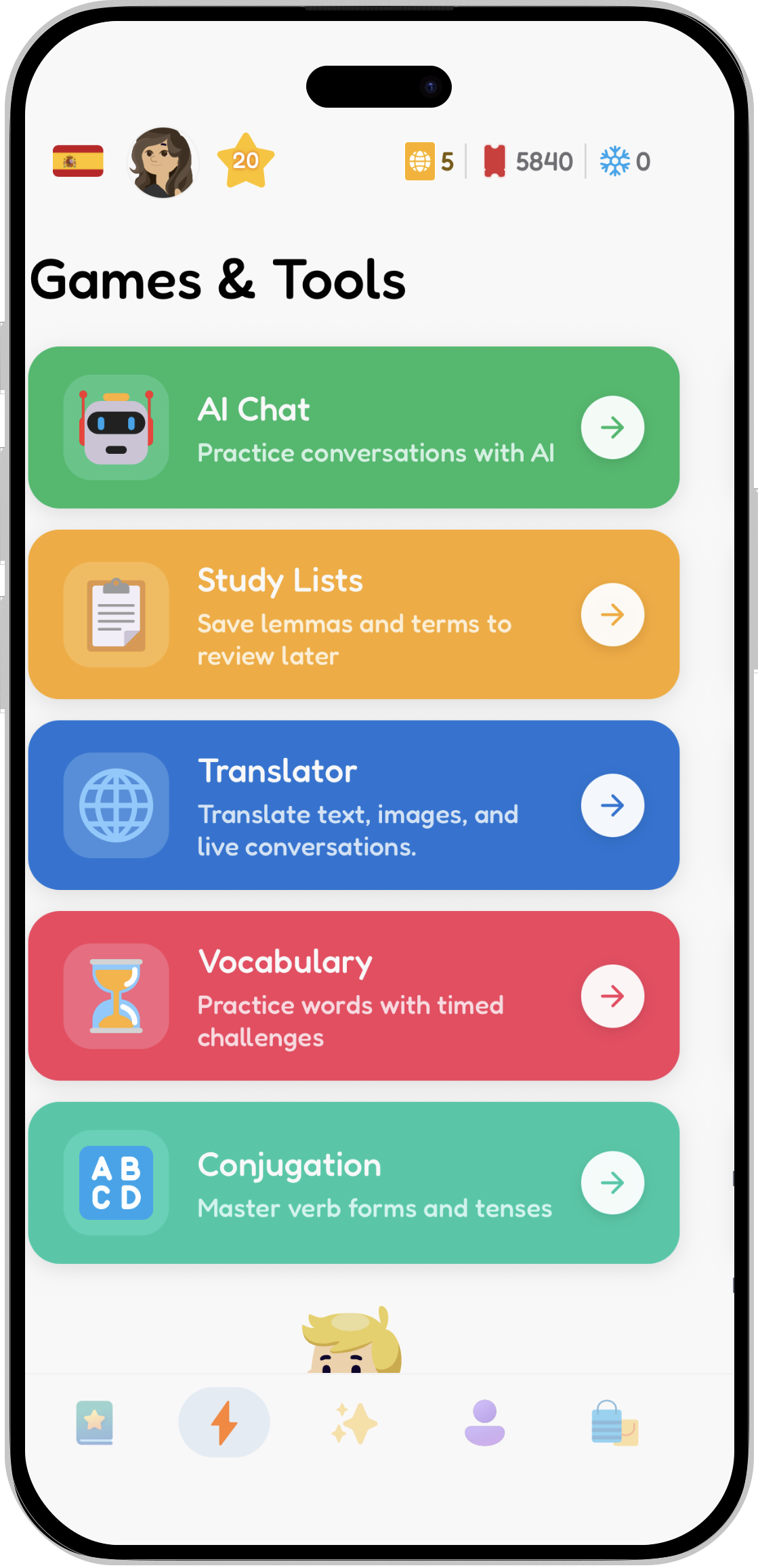
Games & Tools
Tools that every language learner needs at all stages of their learning journey.
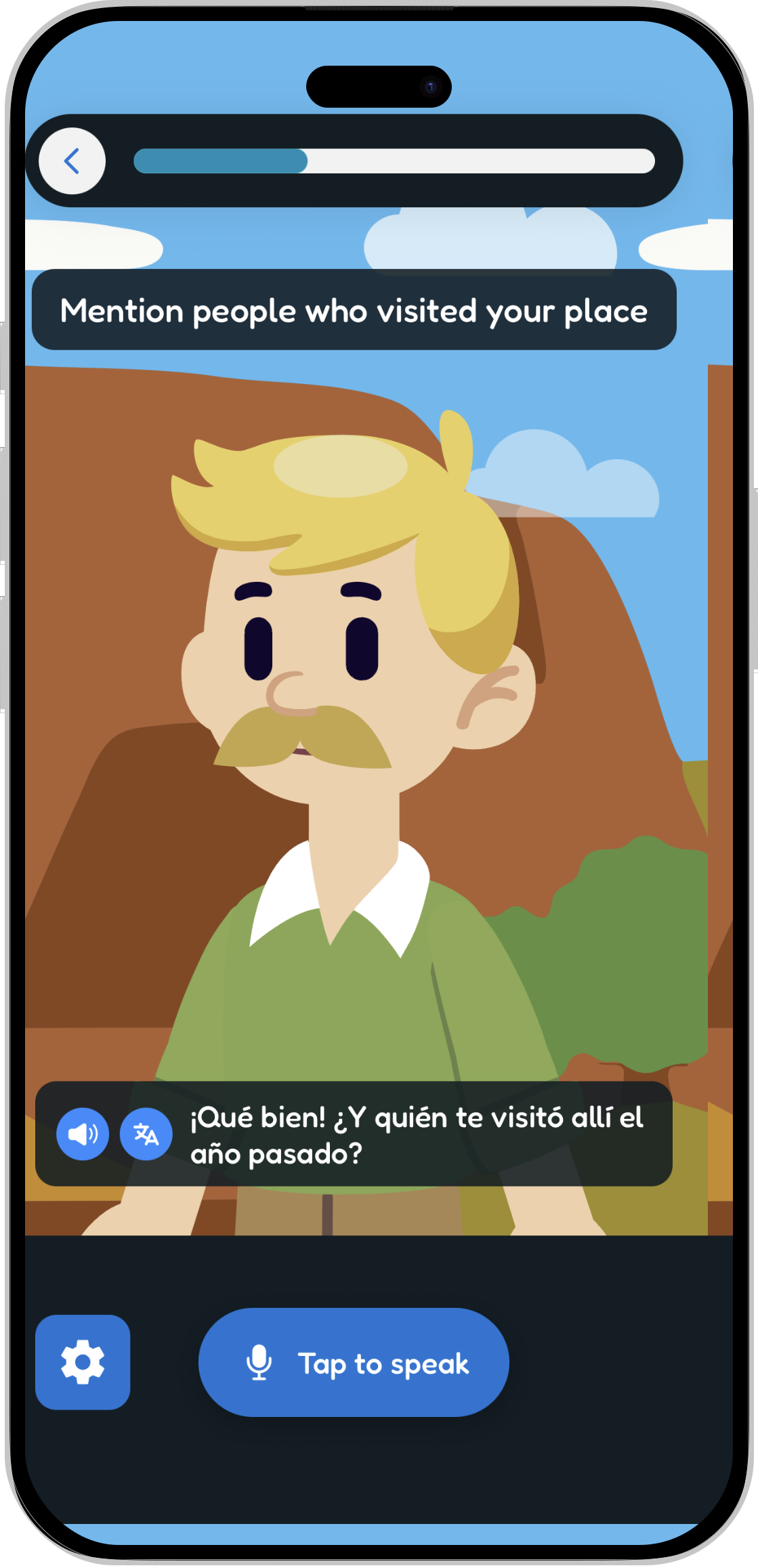
AI Chat Tutor
Practice real conversations with an AI tutor that helps you speak with confidence.
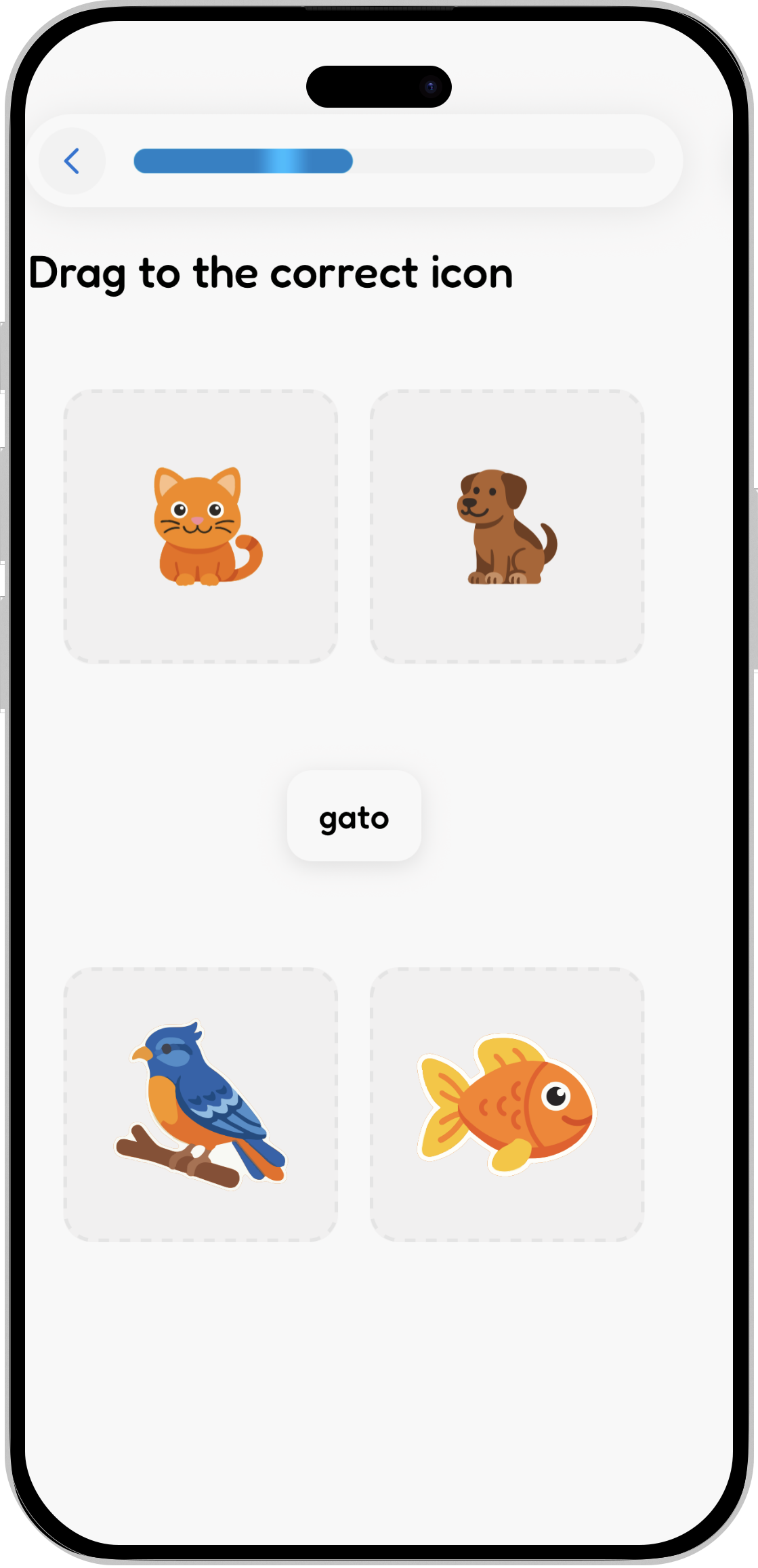
Interactive Games
A variety of games to help you learn and remember new words and phrases.


What Is The Spanish Imperfect Tense
Imagine you’re telling a friend about a party. The specific actions—"I arrived," "she opened the gift," "we danced"—are the main events. But what about the vibe? The imperfect handles all the background details that paint the picture for your listener.
It’s the difference between stating a fact and creating an atmosphere. With the imperfect, you can describe:
- The Setting: What the place looked like, what the weather was doing.
- Ongoing Actions: What was happening in the background when something else occurred.
- Habitual Routines: Things that happened over and over again in the past.
- Internal States: How someone was feeling or what they were thinking.
Essentially, the imperfect doesn't worry about a clear beginning or end. It describes the continuous, blurry flow of the past, like a movie camera panning across a scene before the real action kicks off.
Setting the Scene in the Past
The easiest way to think about the imperfect is as the "was -ing" or "used to" tense. When you say, "Llovía" (It was raining), you’re not talking about the moment the first drop fell or the last one stopped. You’re just describing the general state of the weather.
This is the complete opposite of the preterite tense, which is all about completed, one-and-done events. For example, "Llovió" (It rained) implies a finished action—maybe a sudden downpour that’s already over.
The core job of the imperfect is to provide context. It answers the questions: What was going on? What was the situation like? What did people do all the time?
Imperfect vs Preterite At a Glance
Getting the hang of when to use the imperfect versus the preterite is probably one of the biggest hurdles in Spanish, but it’s a game-changer for fluency. The tense you choose can completely change what you’re trying to say. For a much deeper dive, check out our full guide on choosing between the Spanish imperfect or preterite.
But to give you a quick visual, here’s a simple table breaking down their main jobs.
| Tense | Primary Use | Example Sentence |
|---|---|---|
| Imperfect | Describing ongoing actions, habits, or setting the scene. | Yo leía un libro cada noche. (I used to read a book every night.) |
| Preterite | Stating completed actions with a clear beginning and end. | Anoche leí un libro entero. (Last night I read a whole book.) |
As you can see, the imperfect provides the backdrop for your stories. It sets the stage where the main actions—almost always expressed in the preterite—can take place.
How To Conjugate Regular Verbs In The Imperfect Tense

If you've ever felt overwhelmed by Spanish conjugations, I've got some good news for you. The regular imperfect Spanish conjugation is one of the most refreshingly simple patterns in the entire language. Unlike the preterite tense, which is notorious for its stem changes and exceptions, the imperfect is wonderfully predictable.
The process is a clean, two-step maneuver. First, grab the verb's infinitive form—that’s the base version like hablar (to speak), comer (to eat), or vivir (to live). Next, chop off the final two letters (-ar, -er, or -ir) to get the verb's stem. From there, you just tack on the right ending for the subject. That’s it. No curveballs.
The Simple Pattern for -AR Verbs
Verbs that end in -ar—think caminar (to walk) or cantar (to sing)—all follow the exact same script. This group is incredibly consistent, which makes it the perfect place to start building your confidence. The key sound to burn into your memory for this group is -aba.
Let's take hablar (to speak) for a spin. Its stem is habl-.
- Yo hablaba con mis amigos todos los días. (I used to talk with my friends every day.)
- Tú hablabas por teléfono durante horas. (You used to talk on the phone for hours.)
- Él/Ella/Usted cantaba en el coro de la iglesia. (He/She/You used to sing in the church choir.)
You'll notice right away that the yo and él/ella/usted forms are identical (hablaba). Don't let that throw you; context almost always makes it clear who you're talking about. The plural forms are just as straightforward.
- Nosotros/as hablábamos sobre nuestros planes. (We were talking about our plans.)
- Vosotros/as hablabais muy rápido. (You all used to speak very fast.)
- Ellos/Ellas/Ustedes hablaban mientras esperaban. (They/You all were talking while they waited.)
The Combined Pattern for -ER and -IR Verbs
This is where the imperfect tense gets even friendlier. Verbs ending in -er and -ir share the exact same set of endings. Seriously. That means you learn one pattern and you've instantly covered two massive categories of verbs. For this group, the key sound to remember is -ía.
Let's see it in action. We'll use comer (to eat) with its stem com-, and then do the same for vivir (to live) with its stem viv-.
Pro Tip: The endings for regular -er and -ir verbs in the imperfect are identical: -ía, -ías, -ía, -íamos, -íais, -ían. Memorizing this one set will unlock hundreds of common Spanish verbs.
Here’s a quick look at how these endings snap into place.
Regular Imperfect Tense Endings
| Pronoun | -AR Endings (e.g., hablar) | -ER/-IR Endings (e.g., comer/vivir) |
|---|---|---|
| Yo | -aba (hablaba) | -ía (comía / vivía) |
| Tú | -abas (hablabas) | -ías (comías / vivías) |
| Él/Ella/Usted | -aba (hablaba) | -ía (comía / vivía) |
| Nosotros/as | -ábamos (hablábamos) | -íamos (comíamos / vivíamos) |
| Vosotros/as | -abais (hablabais) | -íais (comíais / vivíais) |
| Ellos/Ellas/Ustedes | -aban (hablaban) | -ían (comían / vivían) |
Once you see the pattern, it just clicks. The endings are consistent no matter which -er or -ir verb you pick.
Putting It All Together With Examples
Okay, let's see how these conjugations feel in real sentences. The best part is the predictability. If you can conjugate comer, you can just as easily conjugate beber (to drink), correr (to run), and countless others. If you want a quick review of this group, our guide on common ER verbs in Spanish is a great resource.
Here are a few examples using comer:
- Yo comía en casa de mi abuela cada domingo. (I used to eat at my grandmother's house every Sunday.)
- Tú siempre comías la misma cosa para el almuerzo. (You always ate the same thing for lunch.)
- Él comía mientras leía el periódico. (He was eating while he read the newspaper.)
- Nosotros comíamos juntos después de la escuela. (We used to eat together after school.)
- Ellas comían cuando llegamos. (They were eating when we arrived.)
And now with vivir:
- Yo vivía en una ciudad pequeña. (I used to live in a small city.)
- ¿Tú vivías cerca del parque? (Did you use to live near the park?)
- Ella vivía con sus padres en ese tiempo. (She was living with her parents at that time.)
- Nosotros vivíamos en el tercer piso. (We used to live on the third floor.)
- Ellos vivían una vida muy tranquila. (They lived a very quiet life.)
By mastering just two simple sets of endings (-aba and -ía), you've just unlocked the ability to use the imperfect tense for the vast majority of verbs in Spanish. This reliable, straightforward structure is exactly why so many learners breathe a sigh of relief when they get to the imperfect.
Conquering The Three Irregular Imperfect Verbs
After getting the hang of regular verbs, the word "irregular" can send a shiver down any language learner's spine. But I've got the best news you’ll hear all day about the imperfect Spanish conjugation: there are only three irregular verbs in the entire tense.
That’s it. Just three. No long, complicated lists. No tricky stem changes. You only need to memorize a tiny trio to master every exception. Let’s break down ser, ir, and ver so you can lock them in and take a massive leap forward.
The Irregular Verb Ser (To Be)
First up is ser, a cornerstone of the Spanish language. It’s used for identity, permanent traits, and where you're from. Because it’s so fundamental, learning its irregular form from the start is non-negotiable.
Mixing up ser and estar is one of the classic struggles for learners, and conjugation mistakes contribute to a whopping 25-30% of all errors for beginner and intermediate speakers. Confusing era (from ser, for something inherent) with estaba (from estar, for a temporary state) is a dead giveaway you're still learning. If you want to dive deeper, Don Quijote's blog has a great breakdown of these common trip-ups.
Here’s how ser looks in the imperfect:
| Pronoun | Ser (to be) | Example Sentence |
|---|---|---|
| Yo | era | Yo era muy tímido de niño. (I was very shy as a child.) |
| Tú | eras | Tú eras el capitán del equipo. (You used to be the team captain.) |
| Él/Ella/Usted | era | Mi abuela era una excelente cocinera. (My grandmother was an excellent cook.) |
| Nosotros/as | éramos | Éramos los mejores amigos. (We were the best of friends.) |
| Vosotros/as | erais | Vosotros erais siempre los primeros en llegar. (You all were always the first to arrive.) |
| Ellos/Ellas/Ustedes | eran | Las casas eran antiguas y de madera. (The houses were old and made of wood.) |
The Irregular Verb Ir (To Go)
Next, we have ir, the verb for movement. While ir is famously weird in almost every other tense, its imperfect form is surprisingly simple and predictable. Just remember one key sound: -iba.
Think of iba as your go-to for "was going" or "used to go." It perfectly captures that feeling of continuous or habitual movement in the past, which is what the imperfect is all about.
Here are the conjugations for ir:
| Pronoun | Ir (to go) | Example Sentence |
|---|---|---|
| Yo | iba | Yo iba al gimnasio cada mañana. (I used to go to the gym every morning.) |
| Tú | ibas | ¿Adónde ibas cuando te vi? (Where were you going when I saw you?) |
| Él/Ella/Usted | iba | Mi padre iba a trabajar en tren. (My father used to go to work by train.) |
| Nosotros/as | íbamos | Íbamos a la playa todos los veranos. (We used to go to the beach every summer.) |
| Vosotros/as | ibais | Vosotros ibais a la misma escuela, ¿verdad? (You all went to the same school, right?) |
| Ellos/Ellas/Ustedes | iban | Ellos iban de camino a la fiesta. (They were on their way to the party.) |
The Irregular Verb Ver (To See)
And our final verb is ver, "to see." This one is a little quirky. Some people call it "semi-irregular" because its stem stays the same (ve-), but it hangs onto the "-e-" from the infinitive before tacking on the regular -ía endings. It's a small detail, but it's what makes it different.
- Yo veía la televisión después de la escuela. (I used to watch TV after school.)
- Tú veías a tus amigos los fines de semana. (You used to see your friends on weekends.)
- Ella veía las nubes pasar desde su ventana. (She was watching the clouds pass from her window.)
Here’s the full table for a quick reference:
| Pronoun | Ver (to see) |
|---|---|
| Yo | veía |
| Tú | veías |
| Él/Ella/Usted | veía |
| Nosotros/as | veíamos |
| Vosotros/as | veíais |
| Ellos/Ellas/Ustedes | veían |
And that’s it! Memorize ser, ir, and ver, and you've officially conquered every single irregularity in the Spanish imperfect tense.
Alright, you've wrestled with the mechanics of the imperfect Spanish conjugation, getting a handle on the regular patterns and those three famous rebels. But knowing how to form the tense is only half the battle. Now comes the fun part: knowing when to use it.
This is what separates someone who can fill out a worksheet from someone who can tell a good story.
Think of it this way: if the preterite tense is the main action in your movie—the car chases and dramatic confrontations—the imperfect is everything else. It’s the set design, the lighting, the mood music. The imperfect tense provides the rich, descriptive atmosphere that makes a memory or a story feel real.
Let's dive into the five main situations where the imperfect takes the spotlight.
Describing The Past With Rich Detail
When you want to paint a picture of how things used to be, the imperfect is your best friend. This isn't for specific actions but for descriptions of people, places, things, and situations. It sets the scene by answering the question, "What was it like?"
- La casa era grande y tenía un jardín hermoso. (The house was big and had a beautiful garden.)
- El cielo estaba nublado y hacía un poco de frío. (The sky was cloudy and it was a little cold.)
- Mi abuelo tenía el pelo blanco y siempre llevaba un sombrero. (My grandfather had white hair and always wore a hat.)
Notice how none of these sentences describe a one-time event. They're all about ongoing states or characteristics in the past.
Talking About Habitual Actions
One of the most common jobs for the imperfect is talking about things you used to do over and over again. If something was a routine or a habit in the past with no clear end date, the imperfect is the perfect fit.
A great mental shortcut: if you can say "used to," "would" (as in a past habit), or "always" (referring to a past routine) in English, you'll almost certainly need the imperfect in Spanish.
Check out these examples of past habits:
- Cuando éramos niños, jugábamos en el parque todas las tardes. (When we were kids, we used to play in the park every afternoon.)
- Yo visitaba a mis abuelos cada verano. (I used to visit my grandparents every summer.)
- Mi padre siempre leía el periódico por la mañana. (My father always read the newspaper in the morning.)
These actions were consistent parts of life back then, which is exactly what the imperfect tense communicates.
Telling Time And Age In The Past
This one's a gimme. When you state the time or someone's age in the past, you're describing a state, not a completed action. Because of this, Spanish always uses the imperfect tense.
It's a simple, straightforward rule with no exceptions, making it an easy win as you learn.
- Eran las tres de la tarde cuando empezó a llover. (It was three in the afternoon when it started to rain.)
- Yo tenía diez años cuando mi familia se mudó a México. (I was ten years old when my family moved to Mexico.)
- ¿Cuántos años tenías en esa foto? (How old were you in that photo?)
The verbs ser (for time) and tener (for age) will almost always be in their imperfect forms—era and tenía—for these specific jobs.
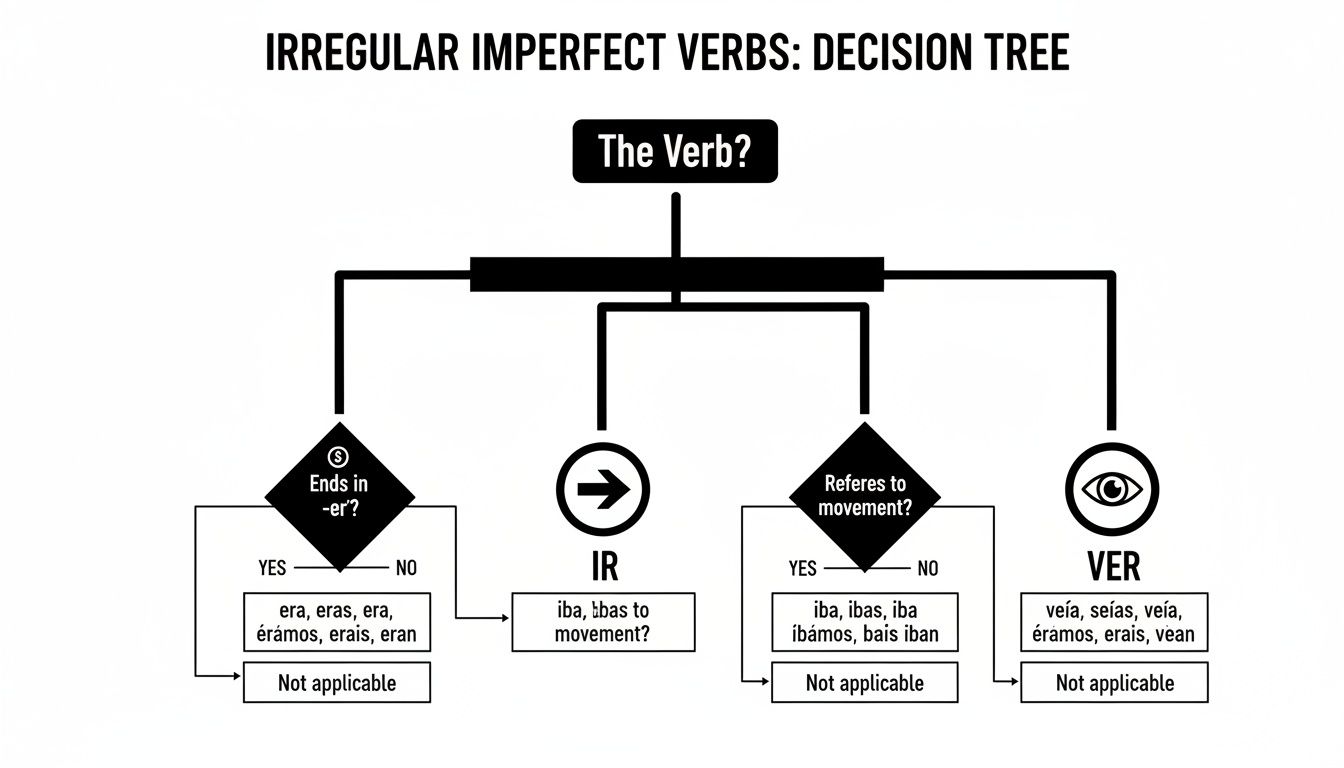
This little decision tree is a great way to remember the only three irregular verbs in the imperfect. It reinforces just how manageable they are, freeing up your brainpower to focus on using them correctly in real stories.
Setting The Scene For A Story
The imperfect is the ultimate tool for scene-setting. Before you drop the big news (which will likely use the preterite), you use the imperfect to describe what was already going on in the background. It builds context, atmosphere, and even a little suspense.
It's the Spanish equivalent of starting a story with, "It was a dark and stormy night..."
- Llovía mucho y el viento soplaba con fuerza. (It was raining a lot and the wind was blowing hard.)
- La gente caminaba rápidamente por las calles. (People were walking quickly through the streets.)
- Dentro de la cafetería, la música sonaba suavemente. (Inside the cafe, music was playing softly.)
These verbs describe the ongoing background noise, the things that were already in progress when the main event—the interruption—happened. For example: "La música sonaba suavemente cuando, de repente, la puerta se abrió." (The music was playing softly when, suddenly, the door opened.) See the difference?
Describing Emotional And Physical States
Just like you use the imperfect to describe the setting outside, you use it to describe the "setting" inside—a person's feelings, emotions, thoughts, or physical condition. Since these states don't really have a clear start or finish time, they fit perfectly with the imperfect's ongoing nature.
- Estaba muy cansado después del viaje. (I was very tired after the trip.)
- Ella se sentía feliz porque creía que todo iba bien. (She felt happy because she believed everything was going well.)
- Nosotros no sabíamos la respuesta. (We didn't know the answer.)
Master these five scenarios, and you'll start to develop a real gut feeling for the imperfect Spanish conjugation. You'll stop just translating words and start telling rich, compelling stories.
The Most Common Mistakes When Using the Spanish Imperfect
Learning the Spanish past tenses can feel like trying to master a tricky dance. You think you’ve got the rhythm down, and then you trip over your own feet. When it comes to the imperfect, the most common misstep by far is choosing the wrong past tense, which can turn a clear story into a confusing mess.
This isn’t just a small grammar slip-up. Switching the tense doesn't just change the timeline; it can change the entire meaning of what you're trying to say. Let's break down the most frequent errors people make with the imperfect tense so you can learn to spot them, fix them, and speak with a lot more confidence.
The Preterite vs. Imperfect Showdown
This is the big one. The single biggest hurdle for nearly every Spanish learner is knowing when to use the imperfect and when to use the preterite. Think of it as the difference between a snapshot (a single, finished action) and a long-exposure photograph (a continuous scene or state).
This isn't just an anecdotal problem. Verb conjugation is a well-documented challenge, with some studies showing that up to 35% of grammatical errors from learners are tied to getting the tense wrong. The imperfect is a particular pain point, tripping up nearly half of all intermediate learners because of its constant tug-of-war with the preterite. You can check out the full findings on how learners process verb tenses on frontiersin.org.
Let’s see how a simple tense swap completely changes the story:
- Imperfect: Yo conocía a tu hermano. (I knew your brother.) This implies you knew him over a period of time; it was an ongoing state.
- Preterite: Yo conocí a tu hermano ayer. (I met your brother yesterday.) This describes the single, completed moment you were introduced.
Here's another classic example with the verb saber (to know):
- Imperfect: No sabía la respuesta. (I didn't know the answer.) This describes your state of mind—you simply didn't have the information.
- Preterite: Nunca supe la respuesta. (I never found out the answer.) This implies you never completed the action of discovering the answer.
Mixing Up the Verb Endings
This is a classic rookie mistake. After drilling the -aba endings for -ar verbs over and over, it’s so easy to accidentally slap them onto an -er or -ir verb out of sheer habit. Our brains love patterns, and sometimes they stick a little too well.
Common Error: Saying "Yo comaba" instead of the correct "Yo comía" (I was eating/used to eat). Just burn this into your memory: -aba is only for -ar verbs. Both -er and -ir verbs share the -ía endings.
This happens a lot because in English, we don't have these distinct verb groups. The only way around it is focused practice to build separate "muscle memory" for each type.
- Correct -AR: Yo caminaba (I was walking)
- Correct -ER: Yo corría (I was running)
- Correct -IR: Yo escribía (I was writing)
Forgetting About the Irregulars
Okay, having only three irregular verbs (ser, ir, ver) in the imperfect is a huge gift from the Spanish grammar gods. But they’re used so frequently that forgetting their special forms is a really common mistake. Because they don't follow the rules, learners sometimes try to force a regular ending onto them anyway.
For instance, a beginner might say "Yo seía" instead of the correct "Yo era" (I was), or "Yo viba" instead of "Yo veía" (I was seeing). These errors are a sign that the forms haven't moved from short-term memorization to automatic recall.
Here's a quick mental checklist to help you dodge these common pitfalls:
- Ask: "Snapshot or Scenery?" Is it a single, completed event (a snapshot)? Use the preterite. Is it background description, a habit, or an ongoing state (the scenery)? Use the imperfect.
- Double-Check Your Endings. Before you speak, do a quick mental check: Is this an -ar verb or an -er/-ir verb? Make sure the ending fits the group.
- Isolate the Irregulars. Spend some practice time just on ser, ir, and ver. Drill them until era, iba, and veía feel just as natural as the regular verbs.
Just by being aware of these traps, you're already halfway to avoiding them. The next step is consistent practice until choosing the right imperfect Spanish conjugation becomes second nature.
Practice Your Imperfect Conjugation With PolyChat
Verb tables and theory are a great start, but they won't get you fluent. True mastery of the imperfect Spanish conjugation comes when you stop thinking and start doing. It’s one thing to read the rules; it’s another to recall the right form of ser, ir, or ver in a split second during a real conversation.
This is where you bridge the gap between knowing a concept and actually using it. PolyChat is built to turn that textbook knowledge into pure muscle memory. We ditch the boring flashcards for dynamic, engaging exercises that feel more like a game than a chore. And with our unlimited "no hearts or energy" system, you can drill for five minutes or a full hour without ever being cut off. You just focus on getting better.
From Drills To Dialogue
Our platform gives you a couple of powerful ways to lock in these skills. First, our market-leading conjugation drills use gamified challenges to build lightning-fast recall for both regular and irregular imperfect verbs. Repetition is key, and we make it fun.
Second, we put those verbs into context. Our interactive conversation scenarios drop you into real-world dialogues, forcing you to practice not just the "how" but the "when." This trains your brain to instinctively choose between the imperfect and the preterite based on the story you're telling.
PolyChat's tool, featuring timed challenges and personal dictionaries, tackles this head-on, with users reporting 80% faster mastery of imperfect conjugations through gamified, unlimited lessons. This is vital for students and professionals in Spanish-dominant economies representing 7% of world GDP, where precise narration builds real-world fluency. Learn more about these language learning findings.
This one-two punch of focused drills and real-world application is what makes the learning stick. If you want to test yourself independently, you can even leverage online quiz creation tools to build your own custom exercises and reinforce what you've learned.
At the end of the day, fluency is built on consistent, targeted practice. By turning conjugation into an addictive challenge, PolyChat gives you the perfect training ground to sharpen your skills and finally move from hesitation to confident, natural communication.
Your Questions, Answered
Even after you've got the rules down, a few tricky questions always seem to pop up when using the imperfect Spanish conjugation. Let's clear up the most common points of confusion so you can feel totally confident.
Can I Use The Imperfect And Preterite In The Same Sentence?
Absolutely! In fact, you pretty much have to if you want to tell a good story. Combining these two tenses is how you show an ongoing action being interrupted by a sudden event.
Think of it this way: the imperfect is the background music, and the preterite is the sudden plot twist.
Example: Yo leía un libro (imperfect) cuando sonó el teléfono (preterite). (I was reading a book when the phone rang.)
Using both tenses together gives your stories depth and makes the timeline of events crystal clear. It's one of the biggest steps you can take toward speaking more natural, advanced Spanish.
Why Are There Only Three Irregular Verbs In The Imperfect?
This is easily one of the best things about learning the imperfect. It’s so refreshingly consistent! The reason is simple: imperfect conjugations are built right onto the verb's infinitive stem, which almost never changes. You just tack on the standard -aba or -ía endings.
So why the exceptions? The three oddballs—ser, ir, and ver—are irregular because they were wildly irregular in Latin, and those ancient quirks just stuck around as the language evolved into modern Spanish.
The fantastic news for you is that once you memorize this tiny group of three, you're done. You've officially mastered every single irregular verb in the imperfect tense.
How Is The Imperfect Different From The Past Progressive?
This is a great question because it's a subtle but important distinction. Both "yo comía" (imperfect) and "yo estaba comiendo" (past progressive) can translate as "I was eating," which is where the confusion comes from.
The difference all comes down to emphasis.
- The imperfect is for the big picture. It describes habitual actions (I used to eat there) or sets a general scene (It was raining). It's the wide-angle shot.
- The past progressive is a close-up. It zooms in on an action that was actively in progress at a specific moment, usually right before it was interrupted. It emphasizes the "right then and there" feeling.
While they can sometimes overlap, reach for the past progressive when you want to put a spotlight on an action happening at that very moment in the past.
Ready to stop memorizing charts and start actually using the imperfect? The interactive drills and conversation games at PolyChat are designed to make these tenses feel like second nature. Practice for free today and start building the confidence to tell your own stories in Spanish.

Jean-Baptiste Bolh
Co-Founder
Applied AI