The Best Way to Learn Spanish for Beginners
If you're wondering what the absolute best way to learn Spanish is, especially as a beginner, the answer isn't a secret app or a magic shortcut. It's building a simple, consistent daily habit.
Forget trying to cram for hours on the weekend. The real secret to making progress that actually sticks is weaving small, manageable chunks of Spanish into your everyday life.
Ready to Learn Spanish?
Try PolyChat's engaging language lessons, interactive learning games and put your Spanish vocabulary to the test!
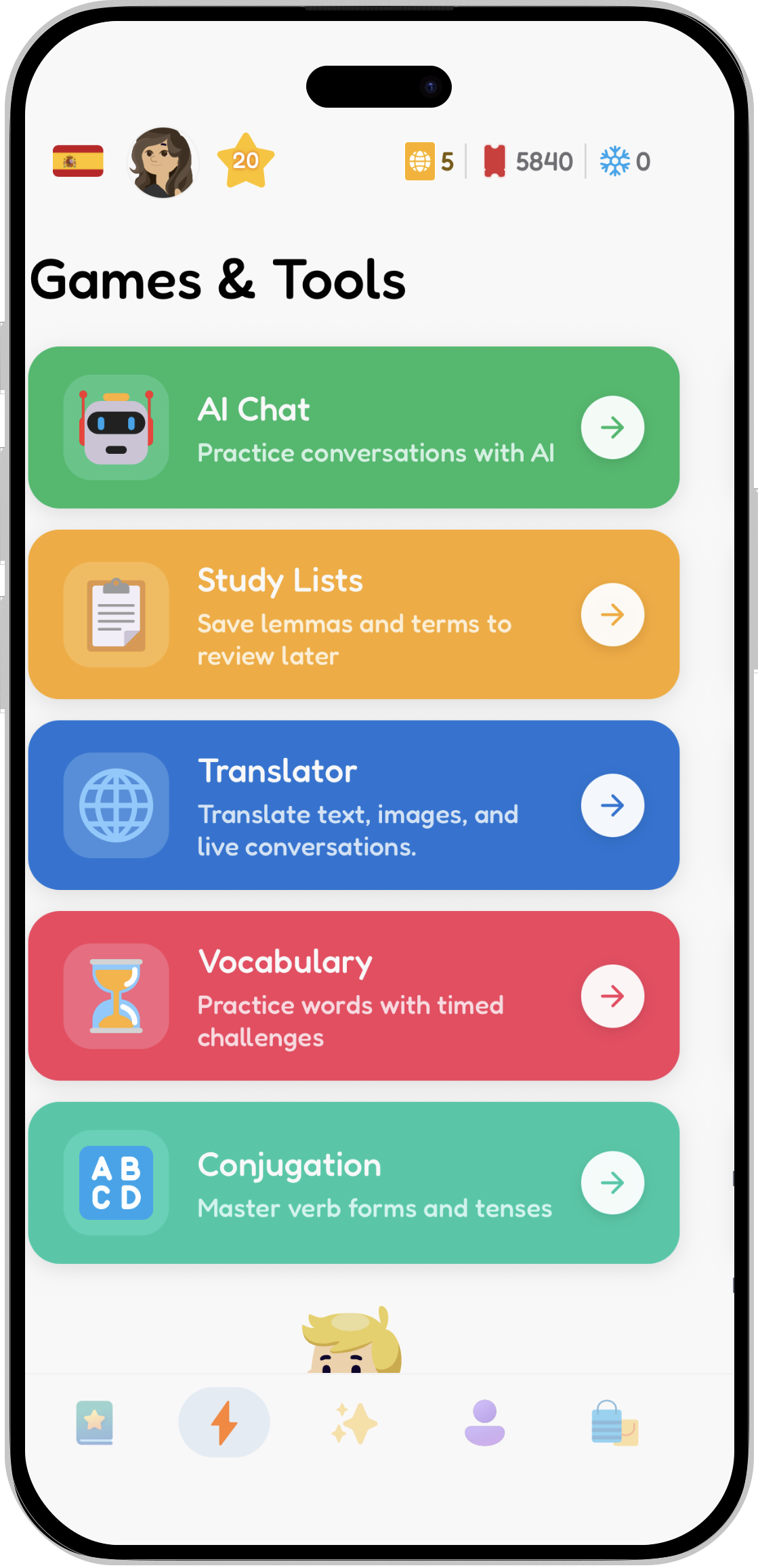
Games & Tools
Tools that every language learner needs at all stages of their learning journey.
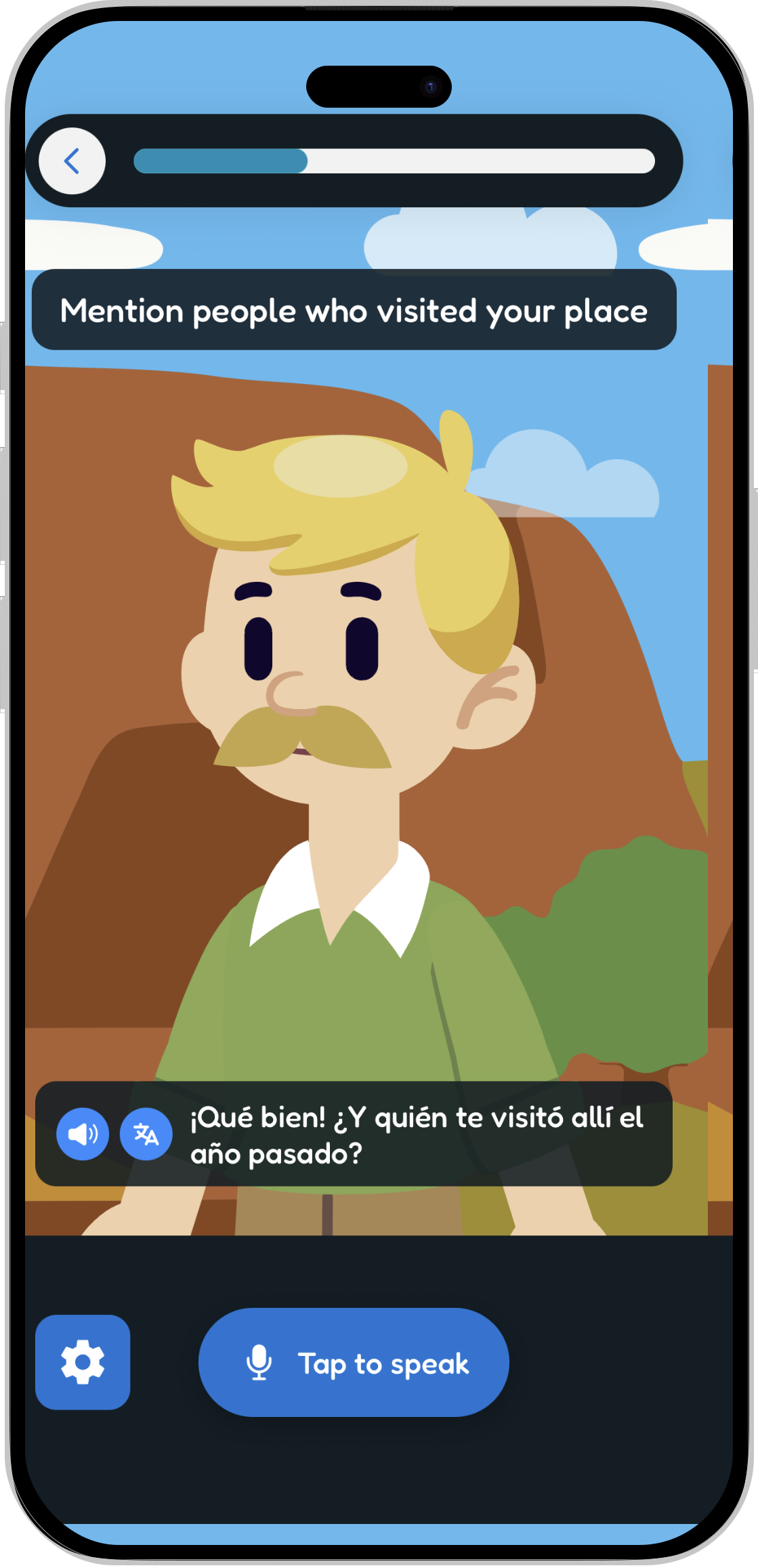
AI Chat Tutor
Practice real conversations with an AI tutor that helps you speak with confidence.
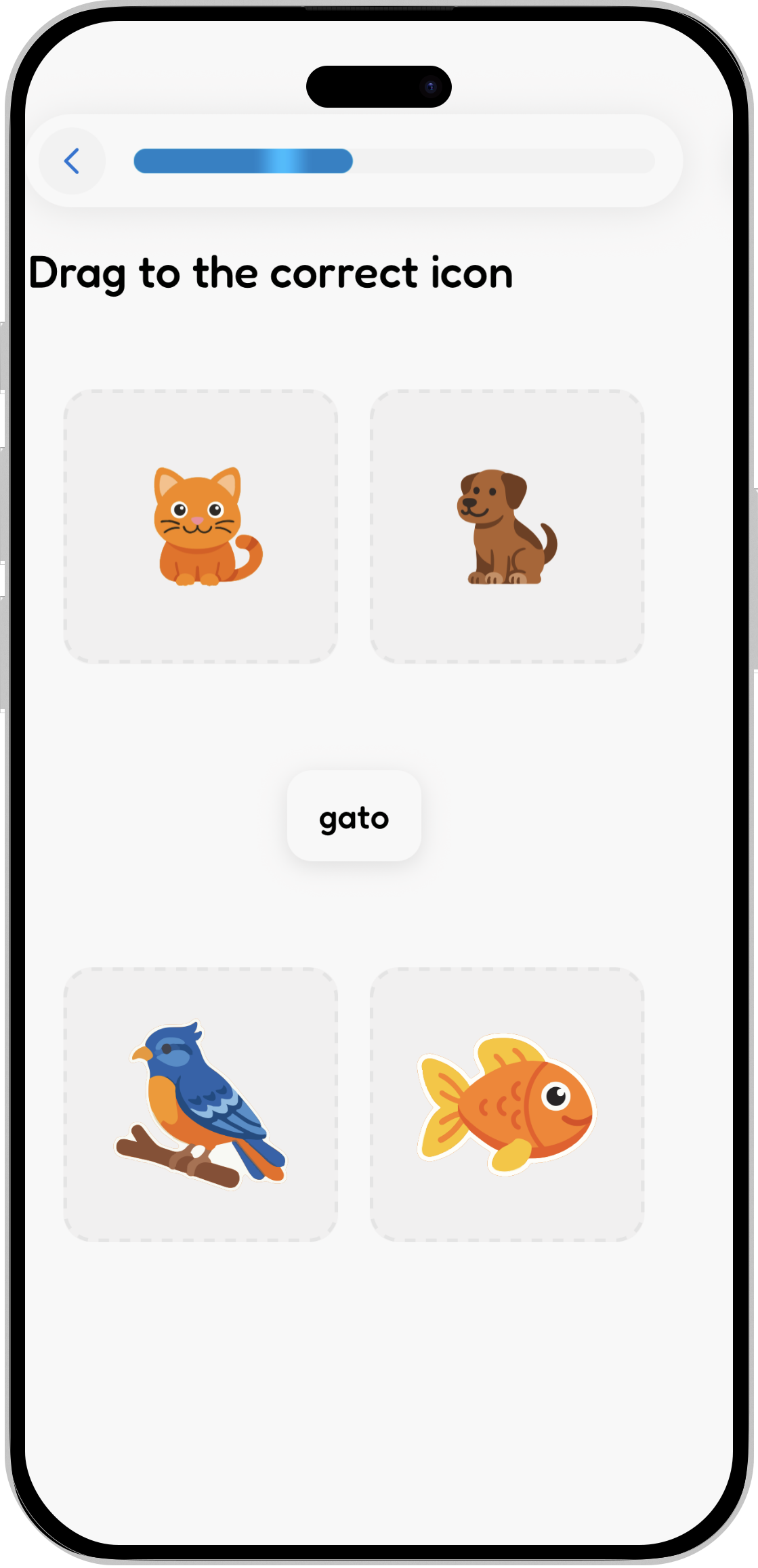
Interactive Games
A variety of games to help you learn and remember new words and phrases.


Building Your Daily Spanish Habit

Starting a new language can feel like staring up at a mountain. You don't need a helicopter to get to the top—you just need to take the first few steps on the trail, and then a few more the next day. A balanced routine you can actually stick with is what separates people who succeed from those who give up.
This means you can't just rely on one thing. If you only use a grammar app, you'll freeze up when you hear a native speaker talk. If you only watch movies, you'll be lost when you try to form your own sentences. The real power comes from mixing it all together.
The Three Pillars of Your Daily Routine
A strong daily habit rests on three core activities. Think of them as a three-legged stool—you need all of them to stay balanced and keep from falling over.
-
Learn the Rules: This is your foundation. Spend some time with a structured tool like the PolyChat app or a good textbook. This is where you'll learn the why behind the language—the grammar patterns, verb endings, and core vocabulary that hold everything together.
-
Soak it In: This is where you connect the rules to the real world. Listen to Spanish music on your commute, find a beginner-friendly podcast, or follow some Spanish-speaking creators on TikTok. This trains your ear to the natural rhythm and flow of the language.
-
Actually Use It: Knowledge only becomes a skill when you put it into practice. You have to speak. It can feel awkward at first, but it’s crucial. Talk to yourself, describe the room you’re in, or repeat phrases you hear. This is how you build the muscle memory for real conversation.
The goal isn't to be perfect. It’s to make small, daily contact with Spanish. A little bit of consistent effort is far more powerful than a heroic, all-day study session once a month.
Your First Month Spanish Learning Blueprint
To make this concrete, here’s a simple blueprint for your first month. It’s designed to be manageable, focusing on short bursts of activity that cover all the essential skills without feeling overwhelming.
| Focus Area | Daily Activity (15-20 mins) | Weekly Goal |
|---|---|---|
| Vocabulary | Learn 5-7 new core words (nouns, verbs) using flashcards or a vocabulary game in an app. | Master 30-40 essential words and use them in simple sentences. |
| Grammar | Complete one short lesson on a core concept like sentence structure or present tense verbs. | Understand how to form basic positive and negative sentences. |
| Listening | Listen to a 5-minute slow-Spanish podcast or a song two or three times. | Be able to pick out at least 10-15 familiar words by ear. |
| Speaking | Read your new vocabulary words aloud or practice basic greetings in front of a mirror. | Confidently say "hello," "goodbye," and introduce yourself. |
| Reading/Writing | Write down 2-3 simple sentences using your new vocabulary for the day. | Be able to write a short paragraph about yourself or your day. |
This isn't about hitting every single box perfectly every single day. It's about creating a rhythm. If you miss a speaking practice one day, just pick it back up the next. The key is consistency over intensity.
Setting a Realistic Pace
Don't aim for hours of study right away. That's a surefire path to burnout. Instead, commit to 30 to 60 minutes a day, broken into smaller chunks. A 15-minute grammar lesson on PolyChat in the morning, a podcast on your drive to work, and 10 minutes of vocabulary practice before bed is a powerful and sustainable routine.
The good news? You’ve picked a great language to learn. With an estimated 585–636 million speakers worldwide, Spanish is the second-largest native language on the planet. This huge global community means there is an endless supply of music, shows, and potential practice partners out there. This access to authentic content is a massive advantage that helps you immerse yourself from day one. You can read more about the incredible growth of Spanish learners at LanguageMagazine.com.
By blending these pillars into a brief daily schedule, you create a powerful learning engine that turns small efforts into real, lasting progress.
Building Your 60-Minute Daily Spanish Habit
Forget marathon cram sessions. When it comes to learning a new language, consistency beats intensity every single time. A solid, one-hour daily routine is far more powerful than a frantic five-hour study binge once a week. It creates momentum and keeps you from burning out.
The real secret is to divide and conquer. Breaking that hour into four focused, 15-minute blocks ensures you hit every core skill without getting overwhelmed. By applying some effective time management techniques, you can make that 60 minutes incredibly productive and build a well-rounded foundation in Spanish.
First 15 Minutes: New Concepts (Grammar & Vocab)
Always start with the heavy lifting—the new stuff. Your brain is fresh and ready to tackle new grammar rules and vocabulary. This is the perfect time to fire up a structured app like PolyChat that guides you through a logical learning path.
The goal here isn't just to click through lessons; it's active engagement.
- Grammar Focus: Knock out one short, focused lesson on a key concept like verb endings or basic sentence structure. Make sure you say the example sentences out loud.
- Vocabulary Building: Learn 5-7 new high-frequency words. Don't just stare at a list. Create your own simple sentence for each new word you learn.
This focused, app-driven start sets a productive tone for the rest of your session. And it works. Studies have shown that learners who use an app for just 10–30 minutes a day retain hundreds of words and grammar concepts within a few months, often outpacing those in traditional classroom settings.
Next 15 Minutes: Listening Practice
Time to switch gears. After actively learning, your brain needs a moment to process. Listening is the perfect way to let those new concepts marinate while tuning your ear to the natural rhythm and sound of Spanish.
Don't worry about understanding every single word. The point is to get used to the flow.
Choose audio designed for beginners:
- A podcast in slow, clear Spanish.
- A kids' show or cartoon.
- A song with easy-to-follow lyrics (then look up the words!).
Listen actively. Can you pick out any of the words you just learned? Do you recognize greetings or common verbs? This is how you start bridging the gap between knowing a word and recognizing it in the wild.
Third 15 Minutes: Speaking Practice
This is probably the most important—and for most beginners, the scariest—part of the routine. You absolutely have to get the words out of your head and into the air. Speaking is a physical skill, and the only way to get better is by, well, speaking.
You don't even need a conversation partner to get started.
- Shadowing: Find a short audio clip, listen to a sentence, and immediately repeat it. Try to mimic the speaker's pronunciation, rhythm, and intonation exactly.
- Narrating Your World: Look around the room and describe what you see, out loud. "Esta es mi mesa. La mesa es grande. Tengo un libro sobre la mesa." (This is my table. The table is big. I have a book on the table.)
- Answering Prompts: Use your language app to find questions and practice answering them aloud.
Key Takeaway: The goal here is production, not perfection. Getting comfortable with the simple act of making Spanish sounds is the first major hurdle. Make this a non-negotiable part of your daily practice.
Final 15 Minutes: Reading & Writing
Wrap up your hour by connecting all the dots. Reading and writing reinforce what you've just heard and said, locking it into your memory.
Keep it simple and stick to your level.
- Reading: Read a short text from a beginner's news site, a story from a graded reader, or just the dialogue from one of your app lessons. This is great for seeing new vocabulary used in context.
- Writing: The best thing you can do is summarize what you just did. Write two or three sentences in Spanish about the podcast you listened to or the new words you learned. This forces you to actively recall information, which is key for long-term retention.
This balanced, 60-minute routine ensures you’re developing all your language skills in tandem. By rotating through these four modes of learning, you create a powerful cycle that makes your study time incredibly efficient. For more tools to support this routine, check out our guide on the best app for learning Spanish and find the ones that fit your style.
Practical Techniques for Each Core Skill
Alright, let's get practical. Mastering Spanish isn't just about cramming vocabulary lists. To actually communicate, you need to actively train the four core skills: listening, speaking, reading, and writing. Think of them as four muscles; you need to work all of them to get strong.
At first, it helps to focus on them one by one. But you'll quickly find they all start to support each other. Better listening makes you a better speaker. Better reading expands the vocabulary you can use in your writing. It's a powerful cycle. Let's break down how to tackle each one.
Sharpening Your Listening Skills
Listening is the unsung hero of language learning. For most beginners, it's the skill that gets the least attention, yet it's the bedrock of any real conversation. The goal here is to move from just hearing Spanish to actually understanding it.
The secret is to start with material that's just a tiny bit challenging. You're aiming for comprehension, not perfection. Don't sweat it if you only catch 30% of what's being said at first. That's totally normal. Your brain is hard at work, picking up on rhythms, patterns, and familiar words. That's a huge win.
Here are a few simple ways to practice active listening:
- Use Graded Audio: Jump on YouTube or find a podcast made for learners. Shows like "Coffee Break Spanish" or "Español con Juan" are fantastic because they speak clearly and at a manageable pace.
- Listen with a Mission: Before you press play, give yourself a small goal. It could be anything: "I'm going to identify five new words," or "I'll try to write down one full sentence I understand."
- Transcribe Short Clips: Find a 30-second audio clip—a podcast intro, a line from a show—and try to write down exactly what you hear. Listen as many times as you need. This is like a high-intensity workout for your ears.
The real game-changer for listening is consistency. Just 10-15 minutes of focused listening every single day will do more for you than a single, two-hour cram session on the weekend.
Building Confidence in Speaking
Ah, speaking. This is where the anxiety kicks in for most people, but it’s also where you get the biggest payoff. The fear of sounding silly or making a mistake holds so many learners back. The fix? Start talking in places where mistakes don't matter.
Your first goal isn’t to debate philosophy in Spanish. It’s just to get your mouth comfortable making the sounds and stringing together a few words. It’s a physical skill, kind of like learning guitar chords. You need to build that muscle memory.
Try these techniques to get the ball rolling:
- Narrate Your Life: This sounds goofy, but it works. As you go about your day, say what you're doing out loud in Spanish. "Ahora, abro la puerta." (Now, I'm opening the door.) "Preparo mi café." (I'm making my coffee.)
- Use AI for Practice: This is where an app like PolyChat becomes your best friend. It's a completely judgment-free zone. You can play its conversation games, respond to prompts, and build sentences without the pressure of a live person waiting for your reply.
- Record Yourself: Grab your phone and record yourself reading a short paragraph. When you listen back, you’ll start to notice your own pronunciation quirks and hear yourself improve over time.
For more deep-dive strategies on getting over that initial hump, check out our guide on how to improve your speaking skills.
Making Reading an Effective Tool
Reading is an incredible way to see grammar in action and Hoover up new vocabulary. But if you're constantly stopping to look up every single word you don't know, it just becomes a chore. That’s the fastest way to kill your motivation.
The key is to read things at your level. This lets you figure out new words from the surrounding context, which is how you actually remember them long-term.
Here’s how to make reading work for you:
- Start with Graded Readers: These are books written specifically for learners, sorted by difficulty level. They use simpler grammar and a limited vocabulary, so you can actually enjoy the story without hitting a wall every two sentences.
- Read What You Already Know: Try reading a summary of a movie you love or a children's story you know by heart. Since you already know the plot, your brain can focus entirely on the Spanish.
Solidifying Knowledge Through Writing
If speaking is a performance, writing is the final exam. It forces you to pull vocabulary and grammar rules from your memory without any help. It’s one of the best ways to lock in what you’ve learned.
Don’t feel like you need to write a masterpiece. Short, simple, and consistent is the name of the game.
- Keep a Simple Journal: Every day, just write two or three sentences. Describe your day. Give an opinion on something. Write down your plans for the weekend. That's it.
- Summarize What You Learn: After you listen to a podcast or read a short article, try to write a one-paragraph summary in your own words. This process of active recall is a scientifically-backed way to make information stick.
To get the most out of your study time, it's worth looking into how to learn effectively and retain information from any source. By giving each of these four skills a little bit of dedicated time, you'll build a well-rounded ability to actually use Spanish in the real world.
How to Create an Immersion Environment at Home

You don’t have to pack your bags for Madrid or Mexico City to get the benefits of immersion. Honestly, one of the best ways to learn Spanish as a beginner is to transform your own home into a personal language lab. The idea is to weave Spanish into the fabric of your daily life in small, natural, low-pressure ways.
The goal here is simple: see and hear more Spanish every day. This constant, almost passive, exposure reinforces your active study sessions. Before you know it, your brain starts making connections on its own, which is a huge step toward actually thinking in Spanish. It’s a simple trick with a massive payoff.
Digitally Switch Your World to Spanish
Think about it: your phone is probably the first thing you see in the morning and the last thing you see at night. That makes it your single most powerful immersion tool. Changing one setting here creates a ripple effect across your entire day.
Start by switching your phone's language to Spanish. Yes, it’ll feel weird for a day or two, but you already know where everything is from icons and muscle memory. All of a sudden, unlocking your phone, checking the weather, or setting an alarm become tiny, effortless Spanish lessons. You’ll learn words like Ajustes (Settings), Mensajes (Messages), and Llamar (Call) without even trying.
From there, you can expand your digital bubble:
- Change your social media language settings. Seeing "Me gusta" instead of "Like" 100 times a day will make that vocabulary stick, guaranteed.
- Update your web browser's language. Websites will start showing you their Spanish versions by default, surrounding you with authentic text.
- Curate your social feeds. Follow Spanish-speaking creators on Instagram, TikTok, or YouTube who post about things you already love—cooking, gaming, fashion, you name it.
Turn Your Home Into a Learning Zone
Next up, let's bring the language off the screen and into your physical space. This is where learning becomes tangible. The classic method? Labeling everything with sticky notes.
It sounds almost too simple to work, but it’s incredibly effective. Slap a note that says la puerta on your door. Label la ventana (the window), el espejo (the mirror), and la silla (the chair). Every time you walk past these items, you get a quick, visual vocabulary flashcard. This method forges a direct link between the object and its Spanish name, helping you bypass the need to translate from English in your head.
By making Spanish a constant visual presence, you’re training your brain to associate objects with their Spanish names first. This is a crucial step toward thinking directly in the language, rather than constantly translating back and forth from English.
Once you’ve got the single words down, level up. Instead of just "coffee maker," write a full sentence on the note. A note on your coffee machine might say, “Preparo mi café aquí cada mañana” (I make my coffee here every morning).
Integrate Spanish Into Your Hobbies and Routines
Immersion works best when it doesn't feel like studying. The real secret is to do the things you already love, just in Spanish. This turns practice from a chore into something you genuinely look forward to, which is the key to staying motivated long-term.
Take a look at your daily habits and find a spot to inject some Spanish.
If you enjoy cooking:
- Find a simple recipe online—in Spanish—for gazpacho or arroz con pollo.
- Watch a cooking show on YouTube from a Spanish or Latin American chef. You'll pick up food vocabulary and commands in a totally natural context.
If you love music or podcasts:
- Create a playlist of Spanish-language artists. Start with singers who have clear pronunciation, like Juanes or Julieta Venegas.
- Swap one of your regular English podcasts for a beginner-level Spanish one on your commute.
If you like to unwind with TV or movies:
- Rewatch a movie you know by heart, but switch the audio to Spanish and turn on Spanish subtitles. Since you already know the plot, you can focus completely on connecting the spoken words to the written text.
This process is sometimes called "habit stacking"—tacking a new Spanish activity onto a habit you already have. By layering language practice over your established routines, learning becomes a seamless and sustainable part of your life. And as technology evolves, this is getting even easier; you can read more about what's next in our article on the future of AI language learning.
These small, consistent touchpoints add up, creating a rich immersion experience without ever leaving your house. It’s the fast track to making your path to fluency quicker and a whole lot more fun.
Staying Motivated and Tracking Your Progress
The initial rush of learning Spanish is an amazing feeling, but let's be real—that "new language energy" won't last forever. The road to fluency is a marathon, full of exciting breakthroughs and the occasional frustrating plateau.
The real secret to success, the thing that separates people who become conversational from those who give up, is finding a way to stay motivated and actually see your own progress.
Without some way to measure how far you've come, it's incredibly easy to feel like you're just spinning your wheels. This is where a little structure can make all the difference, creating a powerful feedback loop that keeps you hungry for more.
Set Goals You Can Actually Reach
Vague goals like "I want to be fluent" are motivation killers. Why? They're immeasurable and feel impossibly far away. Instead, you need to break that huge ambition down into small, specific objectives. This turns an overwhelming quest into a series of satisfying wins.
Your goals should be concrete and have a deadline. Think in terms of weeks and months, not years.
Here are some examples of powerful, motivating goals for a beginner:
- Within two weeks: Learn the 50 most common Spanish words and use them in simple sentences.
- By the end of this month: Hold a simple, five-minute conversation with an AI tutor like PolyChat about your daily routine.
- Within six weeks: Watch a 10-minute episode of a kids' show in Spanish and understand the main plot without subtitles.
- Within three months: Write a 100-word journal entry about your weekend without looking up more than five words.
See the difference? Each of these is specific, measurable, and has a clear timeline. When you hit one, you get a real sense of accomplishment that fuels you to tackle the next.
The Underestimated Power of a Language Journal
Seriously, a simple notebook might be the most effective tool you have. A language journal isn't for writing perfect prose; it’s a living document of your journey. It gives you concrete, physical evidence of your growth that you can flip through when you're feeling stuck.
Your journal can be a mix of anything and everything related to your Spanish practice.
What to include in your journal:
- New Vocabulary Lists: Don't just list words. Write a sample sentence for each one to give it context.
- "Aha!" Moments: Did a tricky grammar rule finally click? Write it down in your own words.
- Mistakes and Corrections: Jot down funny mistakes you've made. It’s proof that you’re trying, learning, and pushing your boundaries.
- Daily Sentences: Write just one or two sentences about your day, every day. After a month, you'll be amazed looking back at the difference.
A journal turns abstract progress into a concrete artifact. On days you feel like you're getting nowhere, reading your entries from a month ago is the ultimate proof that you are, in fact, moving forward.
Make Your Progress Visible (and Audible)
Sometimes you're just too close to your own learning to notice the improvements. That's why you need objective ways to measure your progress, especially for a skill as tricky to quantify as speaking.
Record Yourself Speaking
Okay, this might feel awkward at first, but it's an incredibly powerful technique. Once a month, grab your phone and record yourself reading the same short paragraph or answering the same simple questions (e.g., "What's your name? What did you do today?").
When you listen to your recording from month one and compare it to month three, the improvement will be undeniable. You'll hear your pronunciation getting clearer, you'll hesitate less, and your rhythm will sound more natural. This is hard evidence you can hear with your own ears.
Track Your Stats in an App
Modern language apps are fantastic for motivation because they essentially gamify the learning process. An app like PolyChat provides instant feedback and tracks key metrics for you automatically.
- Words Learned: Seeing your known vocabulary count climb from 50 to 500 is a massive confidence booster.
- Lessons Completed: It gives you a visual representation of the ground you've covered.
- Practice Streaks: Maintaining a daily streak becomes a mini-game in itself, which is a great trick to encourage consistency.
By combining personal journaling with objective tracking like audio recordings and app stats, you build a complete picture of your growth. This system is what will carry you through the tough spots and keep you on the path to becoming a confident Spanish speaker.
Common Questions for Spanish Beginners
Jumping into a new language always kicks up a few questions. When you’re just starting out, some of the practical stuff can feel like huge roadblocks, but trust me, the answers are usually simpler than you think. Let's clear the air on some of the most common questions that pop up for anyone trying to learn Spanish.
Getting these answers straight from the start helps you set realistic goals and keeps you from getting stuck on details that just don't matter right now.
How Long Does It Realistically Take to Become Conversational?
This is the big one, right? The honest, no-fluff answer is: it all comes down to consistency. But for a dedicated beginner who puts in about an hour a day, reaching a basic conversational level (A2 on the CEFR scale) usually takes somewhere between 6 and 9 months.
So, what does "basic conversational" actually mean? It means you can handle simple, everyday chats about familiar topics. You'll be able to introduce yourself, order a coffee, ask where the bathroom is, and talk about your hobbies. The real X-factors here are the quality of your daily practice and how willing you are to actually open your mouth and speak—not just the raw number of hours you put in.
Should I Learn Spanish from Spain or Latin America?
For someone who is brand new to the language, this distinction is a complete non-issue. The core grammar, the sentence structure, and all the essential vocabulary are virtually identical.
Worrying about "Castilian" vs. "Latin American" Spanish at this stage is just a clever form of procrastination. It will only slow you down.
Don't let this decision paralyze you. The best thing you can do is learn standard, neutral Spanish first. You'll naturally pick up on different accents and regional slang through music, movies, and podcasts anyway. Once you have a solid foundation, you can easily lean into a specific dialect if you move somewhere or fall in love with a certain culture.
What Are the Most Common Mistakes Beginners Make?
Almost every new Spanish learner trips over the same few hurdles. Knowing what they are from day one can help you sidestep them and keep your motivation high.
Here are the top three pitfalls to watch out for:
- Fearing Speaking: This is, without a doubt, the single biggest mistake. So many learners wait until they feel "ready" to speak, but that day never comes. You have to speak from day one—even if it's just to your cat—to build real confidence and skill.
- Relying on a Single Tool: A great app is an amazing starting point, but it can't be your entire universe. If you only use an app and neglect real-world listening practice with podcasts or music, you're building a very shaky foundation. It’s a surefire way to hit a plateau.
- Inconsistent Study Habits: A four-hour cram session once a week is way, way less effective than doing 30 minutes every single day. Consistency is what builds momentum and helps move what you're learning from your short-term memory into your long-term memory, where it actually sticks.
Are Free Resources Enough or Should I Pay for a Course?
Honestly, a mix of both is where the magic happens. While the internet is overflowing with fantastic free resources, they often lack a clear, logical structure, which is absolutely critical when you're just starting out.
Think of it this way: a quality paid app or a structured course should be the backbone of your learning plan. It gives you a clear roadmap, making sure you learn concepts in an order that makes sense. Then, you supplement that core curriculum with tons of free stuff—YouTube channels, language exchange apps, podcasts, and music—for real-world immersion.
The structure from a paid resource provides the "what" and "when," while free tools provide the invaluable context that makes the language actually come alive.
Ready to build a structured, effective, and fun learning habit? The PolyChat app gives you the perfect backbone for your daily routine, with guided lessons, conjugation practice, and AI-powered conversation games to build your confidence from day one. Start your Spanish journey with PolyChat today!

Jean-Baptiste Bolh
Co-Founder
Applied AI