12 Best language learning apps for speaking You Should Know

You've spent hours with flashcards and grammar drills, yet when it's time to actually speak the language, the words get stuck. This is a common frustration for language learners. While many apps teach you to read and write, finding the best language learning apps for speaking requires a different approach. The goal isn't just to know the words, but to use them confidently in real conversations.
This guide moves beyond generic app reviews to focus exclusively on what matters for spoken fluency. We've tested a dozen platforms, from AI conversation partners like PolyChat to tutor marketplaces like italki, to identify the specific features that will get you talking. Forget endless multiple-choice questions; we are concentrating on tools that provide pronunciation feedback, simulate real-world dialogues, and connect you with native speakers.
Inside, you'll find a detailed analysis of each app, including:
- Speaking-Centric Features: A clear breakdown of conversation practice tools, speech recognition accuracy, and feedback mechanisms.
- Best-For Scenarios: Whether you're preparing for a business trip, a vacation, or aiming for long-term fluency, we'll tell you which app fits your goals.
- Actionable Advice: Practical tips on how to use each app's features to maximize your speaking practice and build confidence.
We provide screenshots, direct links, and honest pros and cons for every option. Our goal is to help you cut through the noise and select the right tool to turn your passive vocabulary into active, conversational skill. This resource is designed to help you find the platform that finally gets you speaking your target language.
Ready to Learn a Language?
Try PolyChat's engaging language lessons, interactive learning games and put your new vocabulary to the test!
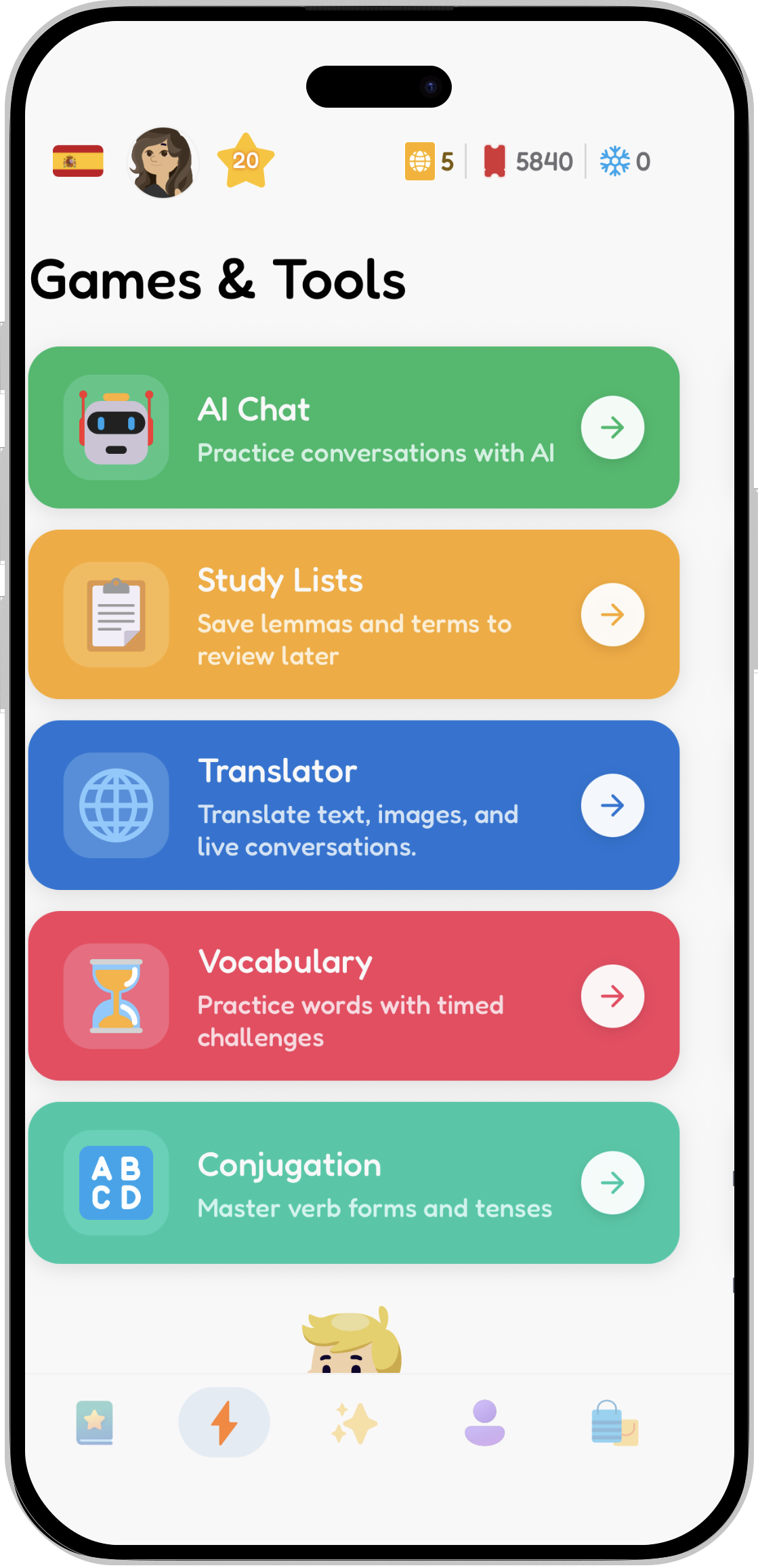
Games & Tools
Tools that every language learner needs at all stages of their learning journey.
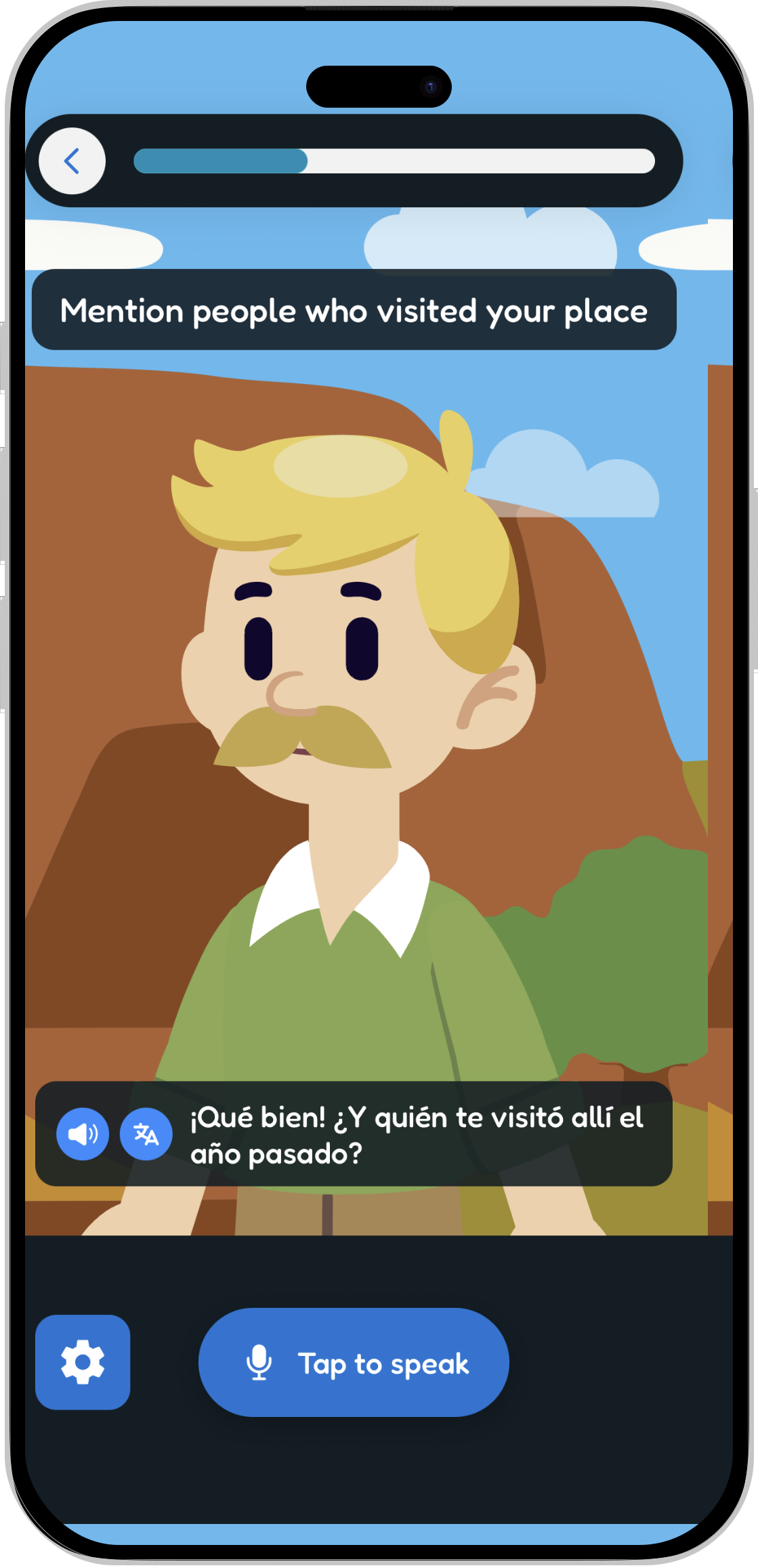
AI Chat Tutor
Practice real conversations with an AI tutor that helps you speak with confidence.
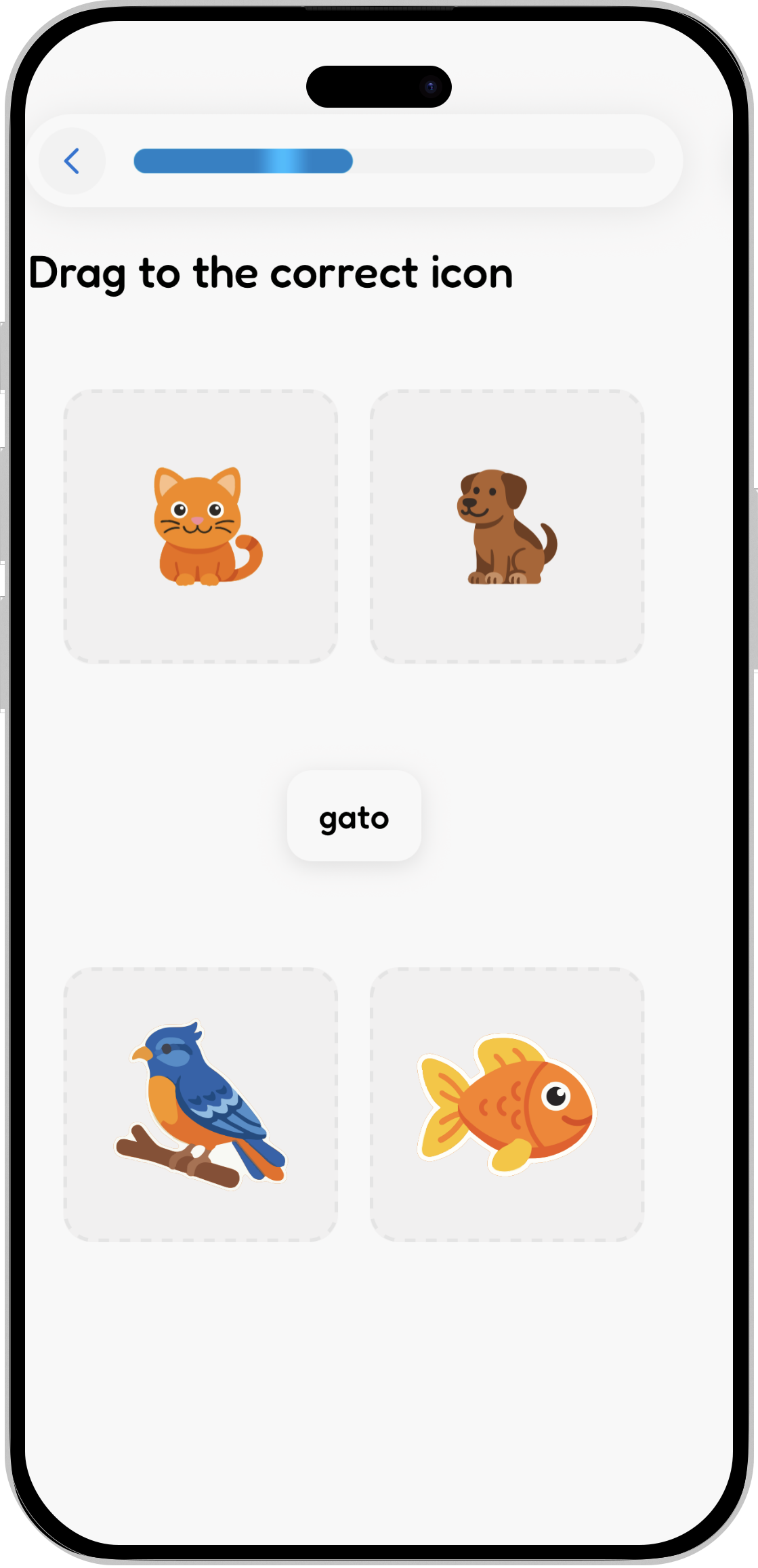
Interactive Games
A variety of games to help you learn and remember new words and phrases.


1. PolyChat
PolyChat earns its top spot by offering a robust, all-in-one learning environment that directly addresses the biggest frustrations learners face with other apps. It removes practice limitations, such as hearts or energy systems, allowing for truly unlimited daily engagement. This design philosophy makes it one of the best language learning apps for speaking, as it encourages consistent, high-volume practice of vocabulary and conversational structures, which are the building blocks of verbal fluency.

The platform is engineered around active-learning principles. Instead of passive memorization, users are thrown into timed challenges and interactive games that compel them to recall and apply language under slight pressure, mimicking real-life conversation. This method helps solidify neural pathways, making words and phrases more accessible when you need them in a spontaneous chat. Its combination of structured lessons and quick, gamified exercises means you can follow a clear learning path or just squeeze in five minutes of productive practice on the go.
Key Strengths for Speaking
What truly distinguishes PolyChat for speaking practice is its focus on the core components of sentence formation. The app includes interactive conversation and translation games that simulate dialogue, forcing you to think on your feet and construct responses. Furthermore, its conjugation practice tool is exceptional, helping learners master verb forms-a common stumbling block that can halt a conversation dead in its tracks. By mastering conjugations, you can express yourself more accurately and confidently across different tenses.
A standout feature is the ability to learn a new language from any of its other supported languages, not just English. This is a massive benefit for polyglots or non-native English speakers who want to learn a third language from their native tongue, making the learning process more intuitive.
Practical Tips for Use
- Daily Conjugation Drills: Dedicate 10 minutes each day to the conjugation tool. Mastering verbs is the fastest way to improve conversational flexibility.
- Use the Translator Proactively: When you encounter a new phrase you want to use, type it into the built-in translator and add it to your personal dictionary. Quiz yourself on these custom words later.
- Embrace the Timed Challenges: Don't shy away from the timed vocabulary games. The pressure helps build rapid-recall skills essential for speaking without long pauses.
Website: https://www.polychatapp.com
| Feature | Details |
|---|---|
| Speaking Focus | Interactive conversation games, translation challenges, market-leading conjugation drills. |
| Languages | 15–17, including Spanish, French, German, and Vietnamese, with cross-language learning. |
| Pricing | Free to download and use with unlimited practice; details on premium features are not explicit. |
| Best For | Learners seeking unlimited, gamified practice and strong vocabulary and verb conjugation training. |
Pros:
- No daily limits: The absence of hearts or energy caps allows for intensive, unrestricted practice sessions.
- Excellent active-learning tools: Timed challenges and interactive games keep engagement high and reinforce knowledge effectively.
- Cross-language learning: Unique ability to learn a new language starting from a non-English base language.
Cons:
- Unclear pricing model: It's difficult to determine if advanced features are locked behind a paywall without downloading the app.
- Supplements, not replaces: The app is a powerful self-study tool but does not replace live conversation practice with native speakers.
2. Pimsleur
Pimsleur is a conversation-first program built around its legendary 30-minute audio lessons. The core method prompts you to speak words and phrases aloud from the very first minute, using a graduated-interval recall system to move information from your short-term to long-term memory. This audio-centric approach makes it one of the best language learning apps for speaking if you want to build foundational conversational skills quickly and confidently.

The modern app supplements the audio lessons with features aimed directly at improving spoken fluency. The "Speak Easy" role-play challenges put you into scripted conversations, allowing you to practice dialogues in context. Additionally, the AI-powered Voice Coach provides instant feedback on your pronunciation, helping you fine-tune your accent.
Why It's a Top Pick for Speaking
Pimsleur’s strength lies in its ability to make beginners comfortable with speaking. The spaced repetition within real dialogues helps you build recall without tedious memorization drills. The "Driving Mode" is a standout feature, enabling hands-free, screen-free learning during commutes, making it easy to build a consistent daily habit.
Key Benefit: Pimsleur’s 30-minute daily lessons are habit-forming and designed for recall, getting you to speak and understand core conversational phrases faster than many other apps.
How to use it for speaking practice:
- Commit to one 30-minute lesson daily. Say every response aloud, even if you’re just whispering.
- Use Driving Mode. Turn your commute into productive practice time.
- Drill with the Voice Coach. After a lesson, use the tool to perfect the pronunciation of difficult words from the dialogue.
Pros & Cons:
| Pros | Cons |
|---|---|
| Gets beginners speaking immediately | Less focus on explicit grammar rules and writing |
| Habit-friendly 30-minute lessons | Pricing is often only visible during the in-app checkout process |
| Excellent for hands-free and offline use (Driving Mode) | Can feel repetitive for intermediate or advanced learners |
| AI Voice Coach and role-plays directly support speaking |
Pricing: Pimsleur offers a 7-day free trial. After that, a Pimsleur Premium subscription costs $20.95/month for one language or $21.95/month for access to all 50+ languages.
3. Babbel
Babbel offers a highly structured, course-based approach that integrates speaking practice from the very beginning. Its lessons are built around practical, real-world dialogues, prompting you to speak words and phrases using its built-in speech recognition tool. This makes it a strong contender for learners who want a clear, step-by-step path to holding everyday conversations.

The platform focuses on getting you conversation-ready with short, digestible lessons that fit into a busy schedule. Recent additions like Babbel Speak introduce AI-powered conversations, allowing you to practice responding to prompts in a more free-form setting. This combination of structured drills and simulated dialogues makes Babbel one of the best language learning apps for speaking if you appreciate a predictable and effective learning routine.
Why It's a Top Pick for Speaking
Babbel's main strength is its curriculum design. Lessons progress logically, building on each other to give you confidence in specific situations like ordering food or asking for directions. The constant review system ensures you retain what you learn, while the dialogue drills and speech recognition directly target your pronunciation and conversational comfort.
Key Benefit: Babbel provides a clear, incremental learning path with a focus on practical vocabulary and situations, making it easy to see your progress and apply what you've learned in real life.
How to use it for speaking practice:
- Complete the dialogue exercises aloud. Don't skip the speaking portions of the lessons; use the speech recognition to check your pronunciation.
- Use the Review feature daily. Speak the review flashcards aloud to reinforce vocabulary and phrases.
- Practice with Babbel Speak. Use the AI conversation feature to test your ability to recall and use phrases without on-screen prompts.
Pros & Cons:
| Pros | Cons |
|---|---|
| Clear, incremental path with daily review | Speech recognition quality can vary by device and language |
| Practical, travel and life-situation focus | Live class availability and other offerings can change over time |
| Short, 10-15 minute lessons are easy to fit into a schedule | Less focus on cultural nuances compared to other platforms |
| AI-powered conversational practice |
Pricing: Babbel offers the first lesson for free. A subscription for one language starts at $14.95/month, with discounts for longer commitments (e.g., a 12-month plan costs around $7.45/month). A Babbel Lifetime plan for all languages is also available for a one-time payment of $349.
4. Busuu
Busuu offers a unique blend of structured course material and real-world interaction, making it a powerful choice for learners who want to build and test their speaking skills. The platform's courses are aligned with the Common European Framework of Reference (CEFR), giving you a clear path from A1 to B2. This guided curriculum is paired with a massive global community of native speakers.
For direct speaking practice, Busuu integrates AI-powered "Conversations" that simulate dialogues and adapt to your input. The standout feature, however, is its community feedback system. You can record yourself completing speaking exercises and receive corrections and encouragement from native speakers, providing authentic, human-powered pronunciation help. This combination makes it one of the best language learning apps for speaking if you value both structure and genuine feedback.
Why It's a Top Pick for Speaking
Busuu excels at bridging the gap between learning a phrase and using it confidently. The community feature removes the fear of making mistakes, as you get supportive corrections from real people, not just an algorithm. The AI conversations provide a safe space to practice before you engage with the community, creating a well-rounded speaking practice loop.
Key Benefit: Busuu’s blend of CEFR-aligned lessons with community corrections from native speakers lets you learn new concepts and immediately get authentic feedback on your pronunciation and usage.
How to use it for speaking practice:
- Complete the speaking exercises at the end of lessons and submit them to the community for review.
- Use the AI Conversation tool to practice responding in realistic scenarios without pressure.
- Pay it forward. Correct exercises for learners of your native language to better understand common mistakes and engage with the community.
Pros & Cons:
| Pros | Cons |
|---|---|
| Combines structured lessons with authentic peer feedback | The best speaking features are locked behind the Premium subscription |
| Community corrections from native speakers are invaluable | Feature availability can sometimes differ between iOS and Android |
| AI Conversations provide adaptive, on-demand practice | Quality of peer feedback can vary |
| CEFR-aligned courses provide a clear learning path |
Pricing: Busuu offers a free basic version with limited features. Busuu Premium starts at around $13.95/month, with discounts for longer-term plans, unlocking all lessons and features like community feedback.
5. Duolingo
Duolingo is a globally recognized gamified app that integrates short speaking exercises into its core lesson structure. While primarily known for its vocabulary and sentence-building drills, it encourages users to speak phrases aloud using their device's microphone. This makes it an accessible entry point for practicing pronunciation on a daily basis.
The app's Super and Max subscription tiers are where its speaking tools get more interesting. The Duolingo Max plan, powered by GPT-4, introduces an "AI Roleplay" feature. This allows you to have text-based conversations with an AI character in various scenarios, providing low-pressure practice. Although it's not voice-based, it helps build the muscle for forming sentences in real time.
Why It's a Top Pick for Speaking
Duolingo’s main strength is its massive user base and gamified system, which makes building a daily learning habit incredibly easy. The speaking prompts, though simple, ensure you're vocalizing the language from early on. For subscribers, the AI features add a new dimension, though their availability is limited. If you find its speaking practice insufficient, you can explore several Duolingo alternatives for speaking that offer more advanced tools.
Key Benefit: Duolingo’s gamification and streak-based system make it one of the easiest apps to stick with, ensuring you get consistent, if basic, speaking exposure every day.
How to use it for speaking practice:
- Enable speaking exercises. Ensure they are turned on in your settings and don't skip them.
- Repeat every sentence aloud. Even when it’s a listening or writing exercise, repeat the phrase to reinforce pronunciation.
- Explore AI Roleplay (if you have Max). Use this feature to practice constructing responses for common situations.
Pros & Cons:
| Pros | Cons |
|---|---|
| Free version is highly functional for daily practice | Speaking practice depth varies significantly by course |
| Gamified structure makes learning feel fun and habit-forming | AI Max features have limited language and regional availability |
| AI Roleplay offers interactive, low-pressure conversation practice | Not a dedicated tool for improving conversational fluency |
Pricing: Duolingo offers a robust free version with ads. Super Duolingo (ad-free) starts at $6.99/month. Duolingo Max, which includes AI features, is priced higher and varies by region, but often starts around $29.99/month.
6. Rosetta Stone
Rosetta Stone is a long-standing immersion program that teaches you to speak and listen through its core Dynamic Immersion method. By pairing images with words and phrases without translation, it forces you to think in your target language from the start. This makes it a solid choice among the best language learning apps for speaking, particularly for beginners who want to build a strong intuitive connection between objects, actions, and foreign words.

The platform’s proprietary TruAccent speech recognition engine is central to the speaking experience. It provides real-time feedback and a score on your pronunciation for every word or phrase you repeat. This is supplemented with Phrasebooks for travel-specific vocabulary and audio Stories read by native speakers, which help you absorb the natural rhythm and intonation of the language. To dive deeper into the features of specific platforms, you can find a detailed comparison of Duolingo on our site.
Why It's a Top Pick for Speaking
Rosetta Stone shines in its ability to build a learner's pronunciation confidence from the ground up. The constant repetition and immediate feedback from TruAccent train your mouth to form new sounds correctly and consistently. The immersion method, while challenging for some, bypasses translation and helps you associate sounds directly with meaning, a key skill for spontaneous speech.
Key Benefit: The Dynamic Immersion and TruAccent speech engine work together to build strong foundational pronunciation skills and encourage you to think directly in the new language.
How to use it for speaking practice:
- Trust the process. Fully engage with the immersion method by repeating everything aloud and trying not to translate in your head.
- Aim for a high score. Use the TruAccent feedback to repeat words and phrases until you can consistently get a good score.
- Listen and mimic. Use the Stories feature to listen to native speakers, then read the stories aloud yourself, trying to copy their accent and cadence.
Pros & Cons:
| Pros | Cons |
|---|---|
| Highly polished, speech-heavy beginner experience | Less explicit grammar instruction may frustrate some learners |
| TruAccent engine is great for shaping a consistent accent | Method can feel repetitive and slow-paced for some |
| Immersion method helps build intuitive speaking skills |
Pricing: Rosetta Stone offers a 3-day free trial. After the trial, you can choose a subscription: 3 months for $47.97 ($15.99/month), 12 months for $143.88 ($11.99/month), or a Lifetime subscription for a one-time payment of $399 (often discounted) that grants access to all languages.
7. Speak
Speak is an AI-powered tutor designed from the ground up to get you talking. It moves beyond simple flashcards by offering free-form conversations with a 24/7 AI partner. The entire experience is built around active speech production, making it a powerful tool for learners who want to overcome the fear of speaking and build conversational muscle memory.

The app's core feature is its AI tutor, which you can chat with about any topic, just like a human conversation partner. It also provides a personalized curriculum with targeted drills to improve specific skills. As you talk, Speak delivers instant, line-by-line feedback on your pronunciation and word choice, correcting you in a supportive way.
Why It's a Top Pick for Speaking
Speak excels at providing low-pressure, high-repetition speaking practice without the cost or scheduling difficulties of finding a human tutor. Its strong focus on actual speech output makes it one of the best language learning apps for speaking if your main goal is to improve fluency and conversational confidence. The AI is impressively responsive and can adapt to keep a natural conversation flowing.
Key Benefit: Speak gives you a judgment-free space to practice real conversations anytime, anywhere, with instant AI feedback to help you improve your pronunciation and phrasing on the spot.
How to use it for speaking practice:
- Engage in a free-form conversation with the AI tutor for 10-15 minutes daily. Talk about your day or a topic you're passionate about.
- Follow the curriculum lessons. Use the structured drills to target and strengthen weak points in your speaking.
- Pay attention to the line-by-line feedback. After a mistake, try repeating the corrected phrase a few times to build the correct habit.
Pros & Cons:
| Pros | Cons |
|---|---|
| On-demand conversation practice without scheduling | Smaller language catalog compared to other apps |
| Instant, specific feedback on pronunciation and grammar | Best results require consistent speaking, not just quick taps |
| Strong focus on active speech output over passive learning | Can feel less engaging for users who prefer gamification |
| AI tutor feels natural and can discuss a wide range of topics |
Pricing: Speak offers a free version with limited features. The Premium subscription, which unlocks unlimited practice and all features, costs $13.99/month. Prices may vary by region.
8. ELSA Speak
ELSA Speak is a highly specialized, English-only coach designed to perfect your pronunciation, intonation, and speaking fluency. It uses advanced AI to listen to your speech and provide instant, phoneme-level feedback, highlighting exactly which sounds you need to improve. This detailed approach makes it one of the best language learning apps for speaking if your goal is to reduce your accent and sound more like a native English speaker.

The app offers a personalized curriculum based on an initial assessment test. You can practice with thousands of short lessons, from individual word sounds to complex conversational role-plays. It even allows you to select a target accent (e.g., American, British) and provides bilingual explanations, a feature that distinguishes it among the best AI language learning apps.
Why It's a Top Pick for Speaking
ELSA Speak’s strength is its incredible precision. While other apps might give you a simple "correct" or "incorrect" on pronunciation, ELSA breaks down your speech by individual sound, showing you exactly how to adjust your tongue and mouth. Its focus on prosody, including word stress and intonation, is critical for achieving natural-sounding speech and is often overlooked by other platforms.
Key Benefit: ELSA provides granular, AI-driven feedback that acts like a personal dialect coach, helping you refine your English pronunciation with a level of detail unmatched by most general language apps.
How to use it for speaking practice:
- Take the assessment test. Let the AI build a learning plan that targets your specific weaknesses.
- Focus on one sound per day. Use the dictionary feature to practice your target phoneme in different words.
- Practice with role-play scenarios. Apply your pronunciation skills to dialogues related to work, travel, or daily life.
Pros & Cons:
| Pros | Cons |
|---|---|
| Very precise, phoneme-level feedback on pronunciation | English-only; not a multi-language platform |
| Excellent for accent reduction and improving intonation | Works best alongside a course that teaches grammar and vocabulary |
| Useful tools for professionals and exam prep (IELTS/TOEFL) | Can feel like a tool rather than a comprehensive learning experience |
| AI creates a personalized learning path |
Pricing: ELSA Speak offers a limited free version. ELSA Pro costs approximately $15.99/month or $94.99/year, with lifetime plans also available. Prices may vary by region.
9. Speechling
Speechling is a nonprofit platform built on a simple, powerful premise: get feedback from a real human coach. Instead of relying solely on AI, Speechling has you record yourself mimicking native speaker sentences. Within 24 hours, a certified language coach provides personalized feedback on your pronunciation, rhythm, and intonation. This direct-correction model makes it one of the best language learning apps for speaking if your main goal is to sound more natural.

The platform’s core is a vast sentence bank, letting you hear words in context from both male and female native speakers. You can listen, record your version, and compare it side-by-side. The real value comes from submitting your recordings and receiving actionable advice, creating a clear feedback loop that targets your specific weaknesses.
Why It's a Top Pick for Speaking
Speechling’s strength is providing expert human guidance without the cost or scheduling hassle of live tutoring. The "before and after" history of your submissions allows you to hear your own improvement over time, offering powerful motivation. It’s less of a game and more of a structured workout for your mouth, requiring discipline but delivering measurable results.
Key Benefit: Speechling connects you with a real coach for pronunciation feedback, offering a highly affordable way to get the personalized corrections needed to refine your accent and sound more authentic.
How to use it for speaking practice:
- Submit recordings daily. Consistency is key. Even 10 submissions a day will build muscle memory.
- Listen to your feedback carefully. Don’t just read the notes; listen to the coach’s audio corrections and try to mimic them.
- Use the sentence bank as a listening tool. Shadow the native audio to practice rhythm and flow before you even hit record.
Pros & Cons:
| Pros | Cons |
|---|---|
| Direct feedback from a real human coach | Less game-like and requires self-discipline |
| Affordable access to unlimited coaching | Not a complete course; focuses almost exclusively on speaking |
| Clear record of your progress with before/after audio comparisons | Feedback is not instant (usually within 24 hours) |
| Extensive sentence library with native audio |
Pricing: Speechling offers a free tier with a limited number of monthly coaching sessions. The Unlimited Plan, which includes unlimited, one-on-one coaching, costs $19.99/month.
10. Tandem
Tandem is a massive language exchange community built on one simple principle: the best way to learn a language is by speaking with a native. The platform connects you with partners for real conversations via text, voice notes, audio calls, and video calls. It moves beyond structured lessons into the realm of authentic, spontaneous communication, making it an excellent app for intermediate learners ready to test their skills in real-time.

The platform’s strength is in its partner-matching algorithm, which helps you find people who share your interests and learning goals. You can practice as casually or as formally as you like. Key features include built-in correction tools to help your partner fix your mistakes, making it a dynamic and interactive learning environment. This direct feedback loop is fundamental if you want to know how to improve speaking skills with a native speaker.
Why It's a Top Pick for Speaking
Tandem excels at providing authentic, unscripted speaking practice that apps with canned dialogues can't replicate. It forces you to think on your feet, use the vocabulary you've learned, and navigate the natural flow of a real conversation. The ability to switch between text, audio notes, and live calls gives you a flexible way to build confidence at your own pace.
Key Benefit: Tandem provides direct access to a global community of native speakers for authentic speaking practice, helping you build real-world conversational fluency and cultural understanding.
How to use it for speaking practice:
- Start with voice notes. Exchange short audio messages to get comfortable with your partner before moving to a live call.
- Set clear goals. Agree with your partner to spend half the time in your target language and half in theirs.
- Use the correction tool. Actively ask your partners to correct your messages so you can learn from your mistakes.
Pros & Cons:
| Pros | Cons |
|---|---|
| Real interaction with native speakers is highly authentic | Conversation quality depends on finding good, reliable partners |
| Flexible practice without formal lessons | Requires effort to curate safe and productive exchanges |
| Multiple communication modes (text, audio, video) | Free version has limitations; some users may not be serious learners |
| Free to find partners and start chatting |
Pricing: The core features of Tandem are free. Tandem Pro, which offers unlimited translations, no ads, and profile visitor insights, costs $13.99/month, with discounts for 3-month ($31.99) and 12-month ($79.99) subscriptions.
11. italki
italki is not an app in the traditional sense, but a global marketplace connecting you with thousands of human language teachers for live, one-to-one video lessons. Because every session involves speaking directly with a native or advanced speaker, it offers one of the most effective and direct paths to conversational fluency. It’s an indispensable resource for getting real-time practice and personalized corrections.

The platform allows you to filter teachers by price, availability, and even country of origin, so you can focus on a specific accent. You can choose between professional teachers with structured lesson plans or community tutors for more casual conversation practice. The pay-as-you-go model and discounted trial lessons make it easy to find the right fit without a big commitment.
Why It's a Top Pick for Speaking
italki’s main strength is providing authentic, human interaction that no AI can fully replicate. It’s the ultimate solution for overcoming the fear of speaking and practicing real-world conversations on your own schedule. This direct feedback loop-speaking, getting corrected, and trying again-is crucial for moving past the intermediate plateau and refining your accent and flow.
Key Benefit: italki provides unparalleled access to affordable, one-to-one speaking practice with real people, allowing you to get personalized feedback and build conversational confidence on your own terms.
How to use it for speaking practice:
- Book several trial lessons. Find a few teachers you connect with before committing to lesson packages.
- Specify your goals. Tell your teacher you want to focus exclusively on conversation, pronunciation, or preparing for a specific event.
- Book a community tutor. Use these more affordable, informal sessions purely for conversational practice between structured lessons.
Pros & Cons:
| Pros | Cons |
|---|---|
| Real-time, tailored speaking practice with immediate feedback | Quality varies by teacher; requires vetting profiles |
| Wide price range fits most budgets, from casual to professional | Scheduling is required and depends on teacher availability |
| Supports hundreds of languages, including niche dialects | Costs can add up with frequent lessons |
| Excellent for targeting specific accents or conversational topics | Requires a stable internet connection for video calls |
Pricing: italki is a marketplace with no subscription fee. Teachers set their own rates, typically ranging from $5 to $80+ per hour. Many offer 30-minute trial lessons for a reduced price (often $1-$10). You pay per lesson or buy discounted lesson packages.
12. Cambly
Cambly offers a direct and simple solution for improving spoken English: on-demand video calls with native-speaking tutors. Its core strength is removing friction. You can find an available tutor and start a conversation in minutes, making it incredibly easy to fit spontaneous practice into a busy schedule. Tutors are available 24/7, and you can filter them by accent, personality, or specialty, like business English or IELTS preparation.

The platform is designed entirely around live conversation. While some tutors use structured lesson materials, many sessions are informal chats, which are perfect for building confidence and fluency. A key feature is the ability to record your sessions (with permission), allowing you to review your conversations later, take notes on corrections, and listen for repeated mistakes in your own speech.
Why It's a Top Pick for Speaking
Cambly’s power lies in its immediate access to real, unscripted conversation. It solves the common problem of "I have no one to practice with" instantly. The ability to “just speak” with a native speaker at any time of day makes it one of the best language learning apps for speaking if your goal is to overcome hesitation and gain real-world conversational experience in English.
Key Benefit: Cambly provides nearly instant, 24/7 access to native English speakers for low-pressure conversation, making it one of the most flexible and direct ways to practice speaking.
How to use it for speaking practice:
- Use the "spontaneous call" feature. Don't overthink it; just jump into a 15-minute chat to build a daily habit.
- Come prepared. Bring one or two topics to a session to ensure you have something to discuss.
- Review your recorded lessons. Watch yourself speak and pay attention to tutor corrections to identify recurring errors.
Pros & Cons:
| Pros | Cons |
|---|---|
| Extremely low friction to start speaking with a native speaker | English-only platform |
| Consistent 24/7 access to tutors across all time zones | Cost increases with more minutes per week |
| Filter tutors by accent, specialty, and personality | Quality of tutors can vary; finding the right fit may take time |
| Session recordings are great for review and self-correction |
Pricing: Cambly operates on a subscription model based on minutes per week and number of days. Plans start from around $25/month for 30 minutes per week and increase from there. They often run promotions offering discounts.
Top 12 Speaking Apps — Side-by-Side Comparison
| Product | Core features | Quality (★) | Price / Value (💰) | Target (👥) + USP (✨) |
|---|---|---|---|---|
| 🏆 PolyChat | Gamified lessons, timed vocab, market‑leading conjugation tool, built‑in translator, 17 languages | ★★★★★ | 💰 Free app (some premium features possible) | 👥 Students, travelers, polyglots — ✨ Unlimited daily practice; top conjugation & bite‑sized reinforcement |
| Pimsleur | 30‑min audio dialogues, AI Voice Coach, offline/driving mode | ★★★★ | 💰 Subscription / paid courses | 👥 Beginners wanting to speak fast — ✨ Conversation‑first, hands‑free practice |
| Babbel | Level‑based courses, speech recognition, Babbel Speak (AI) | ★★★★ | 💰 Subscription | 👥 Practical learners/travelers — ✨ Clear sequencing & daily review |
| Busuu | CEFR‑aligned lessons, community corrections, AI Conversations | ★★★★ | 💰 Freemium; Premium for advanced features | 👥 Learners wanting feedback — ✨ Peer corrections + adaptive speaking |
| Duolingo | Gamified lessons, speaking prompts, Duolingo Max (AI) | ★★★★ | 💰 Free + Super/Max tiers | 👥 Casual learners / beginners — ✨ Huge language catalog & gamification |
| Rosetta Stone | Dynamic Immersion, TruAccent speech scoring, native Stories | ★★★★ | 💰 Subscription or lifetime plans | 👥 Accent/immersion seekers — ✨ Strong accent shaping & listening focus |
| Speak | 24/7 AI tutor, personalized speaking curriculum, instant feedback | ★★★★ | 💰 Subscription | 👥 Speaking‑focused learners — ✨ Free‑form AI conversations & line‑by‑line correction |
| ELSA Speak | Phoneme‑level feedback, accent options, exam role‑plays (EN only) | ★★★★ | 💰 Subscription (English‑only) | 👥 Professionals/test‑takers — ✨ Very precise pronunciation coaching |
| Speechling | Human coach corrections, native audio sentence bank, tracking history | ★★★★ | 💰 Free + affordable unlimited coaching | 👥 Learners seeking human feedback — ✨ Coach‑guided, measurable corrections |
| Tandem | Partner matching, voice notes/calls/video, in‑app corrections | ★★★★ | 💰 Free + Pro features | 👥 Language‑exchange users — ✨ Authentic conversation with natives |
| italki | Marketplace for 1:1 lessons, filters, trial lessons & packages | ★★★★ | 💰 Pay‑per‑lesson (wide range) | 👥 Learners needing tailored tutoring — ✨ Real human lessons, flexible pricing |
| Cambly | On‑demand native English tutors, instant calls, session recordings | ★★★★ | 💰 Subscription/minute packs | 👥 English learners seeking immediacy — ✨ Instant drop‑in speaking practice |
Final Thoughts
We've explored a wide array of tools, from AI-powered conversation partners like PolyChat to tutor marketplaces like italki, and established methods like Pimsleur. The central takeaway is clear: the path to spoken fluency no longer requires a classroom or a plane ticket. The best language learning apps for speaking are those that get you producing the language, making mistakes, and receiving feedback in a consistent, low-stakes environment.
What once seemed like a distant dream – practicing real conversations anytime, anywhere – is now a reality accessible from your pocket. The key is to shift your focus from passive consumption (like endlessly flipping flashcards) to active production. This is where speaking-centric apps truly shine.
Choosing Your Speaking Companion
Selecting the right app depends entirely on your personal learning style, goals, and current proficiency. To make the best choice, consider these questions:
- What is my primary roadblock? If it's fear of speaking, an AI partner like PolyChat or Speak offers a judgment-free zone. If it's a lack of authentic conversation partners, a community exchange app like Tandem is a great starting point.
- What is my budget? Free options like Speechling (with its limited monthly coaching) and the free tiers of Tandem or Busuu are excellent for starting out. However, a modest subscription to a service like Pimsleur or Babbel can provide the structure needed to make significant progress.
- How much time can I commit? If you only have 15 minutes a day, the bite-sized lessons of Babbel or the quick AI chats in PolyChat are perfect. If you can set aside dedicated 30-minute blocks, a Pimsleur audio lesson or a session on Cambly would be more effective.
- Do I need pronunciation-specific help? For learners struggling with specific sounds and accent reduction, specialized tools like ELSA Speak and Speechling are designed to diagnose and correct these exact issues with remarkable precision.
Putting Your App to Work: A Strategy for Success
Simply downloading an app is not enough. To truly improve your speaking skills, you must integrate it into a consistent practice routine. Here are some actionable steps to get the most out of your chosen tool:
- Schedule It: Treat your speaking practice like an important appointment. Block out 15-30 minutes on your calendar each day specifically for using your app.
- Speak Out Loud, Always: Even when an app doesn't require it, repeat phrases and answer questions aloud. The physical act of forming the words is critical for building muscle memory. Don't just think the answer; say it.
- Embrace Repetition: Don't be afraid to repeat the same lesson or conversation scenario multiple times. Spaced repetition is a powerful learning principle that solidifies new vocabulary and grammatical structures in your long-term memory.
- Record and Review: Many of these apps allow you to record yourself. Listen back to your recordings to self-diagnose issues with rhythm, intonation, and pronunciation. For advanced learners or those looking to meticulously review their speaking practice, utilizing audio transcription software can help turn spoken words into text for detailed analysis of pronunciation and fluency.
- Combine Your Tools: No single app is a magic bullet. Consider using a structured course like Babbel for your foundation, an AI app like PolyChat for daily conversation practice, and a tutor on italki for weekly, in-depth feedback. This layered approach covers all bases.
Ultimately, the journey to confident speaking is a marathon, not a sprint. The digital tools we've covered are designed to make that journey more engaging, efficient, and accessible. The most important step is the one you take right now: choose a tool that excites you, commit to a small daily habit, and start speaking today. Your future fluent self will thank you.
Ready to stop memorizing and start speaking? PolyChat offers a judgment-free space to practice real conversations with an advanced AI tutor, available 24/7. Move beyond flashcards and build real-world confidence by visiting PolyChat to start your first conversation today.

Jean-Baptiste Bolh
Co-Founder
Applied AI