Understanding CEFR Language Levels

If you have ever seen A2, B1, or B2 on a résumé, a university application, or inside a language app, you were looking at the CEFR—the Common European Framework of Reference for Languages. The CEFR is the most widely used international standard for describing what a learner can do in a foreign language at each level of skill. Whether you are studying for travel, work, immigration, or personal growth, understanding CEFR language levels helps you set realistic goals, choose the right materials, and explain your progress to employers and schools.
This guide explains what the CEFR is, how its six levels work, how they compare to other systems, and how major apps—including Duolingo and PolyChat—map their content to those levels. By the end, you will know what each CEFR band means in practice and how to use the framework to plan your next steps in any language you are learning.
What Is the CEFR?
The CEFR was developed by the Council of Europe and published in 2001 (with updates in following years). It was designed so that educators, employers, and learners across Europe—and eventually worldwide—could talk about language ability using the same vocabulary. Instead of vague labels like "conversational" or "fluent," the CEFR describes competence through can-do statements: what you can understand, say, read, and write at each level.
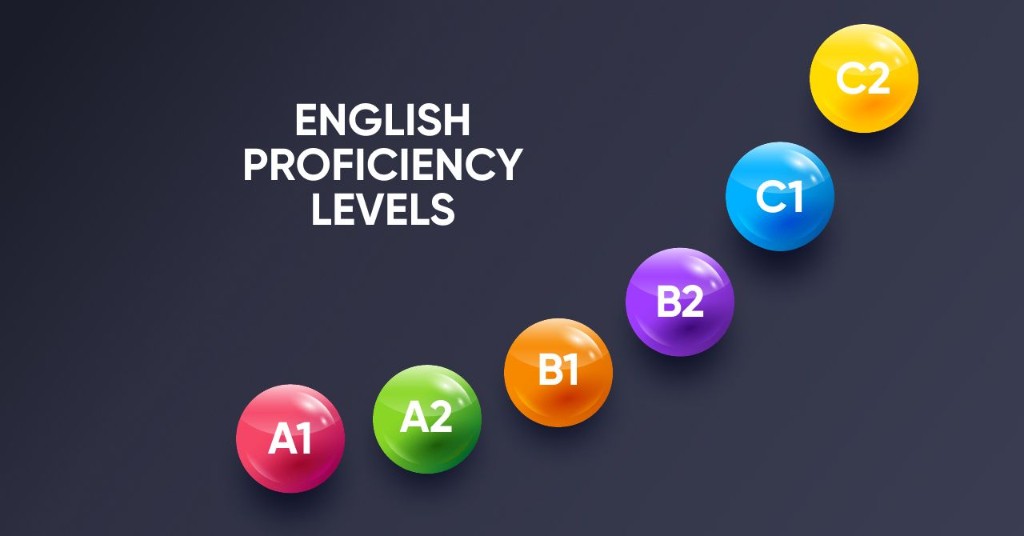
The framework divides proficiency into three broad groups, each split into two levels:
| Group | CEFR levels | Typical label |
|---|---|---|
| Basic user | A1, A2 | Beginner to elementary |
| Independent user | B1, B2 | Intermediate to upper-intermediate |
| Proficient user | C1, C2 | Advanced to mastery |
Every level on the scale covers four skills—listening, reading, spoken interaction, spoken production, and writing—though exams and apps may weight them differently. The framework does not prescribe a single curriculum; it describes outcomes. That is why two courses both labeled "B1" can feel different while still targeting the same level descriptors.
Why the CEFR matters: When a job posting asks for "B2 German" or a university requires "CEFR C1 English," they are pointing at specific, testable abilities—not a subjective feeling of fluency.
Today the framework influences textbooks, national school systems, university placement, corporate language training, and most serious language learning apps. Even outside Europe, programs in the Americas, Asia, and Africa often align certificates and course outcomes to these levels because employers and institutions recognize the CEFR standard.
The Six CEFR Language Levels in Detail
Each level builds on the previous one. Moving from A1 to C2 is a long journey—often hundreds to well over a thousand hours depending on the language and your background—but the levels give you milestones you can actually hit and verify.
A1 – Breakthrough (Beginner)
At A1, you are a beginner who can manage very simple, formulaic communication. You can introduce yourself, ask and answer basic personal questions, and handle short interactions if the other person speaks slowly and clearly.
Typical A1 abilities in your target language:
- Understand familiar words and phrases when people speak slowly
- Read simple signs, menus, and short messages
- Write a brief postcard or fill in basic forms
- Use present-tense patterns for immediate needs (ordering food, asking prices)
Study focus at this level: pronunciation, core vocabulary, high-frequency verbs, and survival phrases. Apps and courses aligned to A1 emphasize repetition, clear audio, and short dialogs rather than open-ended debate.
A2 – Waystage (Elementary)
A2 is still a beginner level, but you are no longer limited to isolated phrases. You can describe your background, family, shopping, work, and immediate environment in simple terms. You can handle routine tasks that require a direct exchange of information.
At A2 you typically:
- Understand sentences on familiar topics (work, leisure, travel)
- Read short, straightforward texts
- Converse in simple, routine situations; describe past events briefly
- Write short notes and personal letters
Many travelers aim for A2 in a language before a trip. It is enough to navigate daily life with preparation, though fast native speech and abstract topics remain difficult.
B1 – Threshold (Intermediate)
B1 is the level where many learners start to feel genuinely independent in everyday situations. You can deal with most travel scenarios, describe experiences and ambitions, give brief reasons, and discuss plans.
B1 learners generally:
- Understand the main points of clear standard speech on familiar matters
- Read texts that use everyday language (work, school, leisure)
- Produce connected text on topics that are familiar or of personal interest
- Describe events, dreams, hopes, and opinions in simple terms
B1 is a common target for "conversational" goals. You will still make errors, but you can sustain many social and practical exchanges without switching to another language.
B2 – Vantage (Upper-Intermediate)
B2 is a major professional milestone. At this level, you can interact with native speakers with a degree of fluency and spontaneity that makes regular conversation possible without strain for either party. You can read and listen to material on concrete and abstract topics in your field.
B2 abilities include:
- Understanding extended speech and lectures if the topic is reasonably familiar
- Reading articles and reports; appreciating viewpoint in contemporary prose
- Writing clear, detailed text on a wide range of subjects
- Presenting advantages and disadvantages of various options
Employers often treat B2 as "working proficiency"—enough to participate in meetings, email colleagues, and handle customer-facing roles with preparation. University pathways in some countries also reference B2 for undergraduate study in the language of instruction.
C1 – Effective Operational Proficiency (Advanced)
C1 is an advanced level. You can understand demanding, longer texts and recognize implicit meaning. You can express yourself fluently and flexibly for social, academic, and professional purposes without obvious searching for words.
C1 learners typically:
- Follow complex lines of argument in spoken and written form
- Write well-structured, detailed texts with controlled style
- Use language effectively for professional and academic goals
- Adapt register (formal vs informal) with confidence
Reaching C1 in a foreign language usually requires extensive input—reading, listening, and production—beyond textbook drills alone.
C2 – Mastery (Proficiency)
C2 is the highest level on the scale. You can understand virtually everything heard or read with ease. You can summarize information from different sources, reconstruct arguments, and express yourself spontaneously, very fluently, and precisely—even in complex situations.
C2 does not mean "never making a mistake." It means your errors are rare, minor, and unlikely to derail communication. Native-like nuance, humor, and specialized registers may still take years of domain-specific exposure, but C2 on the CEFR scale describes near-complete functional mastery for most purposes.
| CEFR level | One-line summary | Approximate guided hours (varies by language) |
|---|---|---|
| A1 | Survival phrases and basics | 60–100 |
| A2 | Simple routine communication | +100–150 |
| B1 | Everyday independence | +150–200 |
| B2 | Work and study readiness | +200–250 |
| C1 | Advanced, flexible use | +250–300 |
| C2 | Near-native precision | +250+ |
Hour estimates are rough guides cited in many language schools; your pace depends on related languages you already know, immersion, and study quality.
How CEFR Levels Describe the Four Skills
The scale uses can-do descriptors for listening, reading, speaking, and writing. When you assess your level, consider all four—not only how well you speak.
Listening: At lower levels, you need slow, clear speech. By B2, you follow much standard media and workplace discussion. At C1–C2, you handle fast native input, accents, and implied meaning.
Reading: A1–A2 texts are short and concrete. B1–B2 adds connected argument and specialized articles. C1–C2 includes dense academic or literary material with subtle tone.
Speaking: Early levels rely on memorized patterns. Mid levels support narration and opinion. Upper levels require negotiation, persuasion, and register control.
Writing: Progress runs from forms and simple messages to reports, essays, and professional documents aligned to your CEFR target level.
Practical tip: If your app scores speaking highly but you rarely read, your real-world level may be uneven. Balance skills to avoid gaps that show up in exams or at work.
CEFR vs Other Language Frameworks
The Common European Framework is not the only way to measure language ability. In the United States, ACTFL proficiency guidelines and ILR scales are common in government and academia. In Canada, CLB/NCLC aligns with immigration. Asian contexts may reference JLPT (Japanese), HSK (Chinese), or TOPIK (Korean)—each tied to a specific language rather than a universal scale.
Approximate correspondences are useful but never perfect:
| CEFR | ACTFL (approx.) | Notes |
|---|---|---|
| A1–A2 | Novice Low–High | Basic survival and formulaic speech |
| B1 | Intermediate Mid–High | Independent in familiar contexts |
| B2 | Advanced Low–Mid | Workplace and academic participation |
| C1–C2 | Superior–Distinguished | Professional and academic mastery |
When you compare apps or exams, look for explicit mapping to the CEFR rather than marketing terms like "advanced track." A course labeled "intermediate" without a stated level may sit anywhere from A2 to B2.
Official Exams Aligned to CEFR Levels
Many learners validate their level with standardized tests. Common exams linked to the six levels include:
- DELE (Spanish), DELF/DALF (French), Goethe-Zertifikat (German), CELI/CILS (Italian), CAPLE (Portuguese)
- IELTS, TOEFL, Cambridge English (English), mapped to CEFR bands
- TELC, TestDaF, and regional school-leaving exams across Europe
Each exam lists which level it certifies on the CEFR scale. Institutions often require B2 or C1 for employment or degree programs. Check the specific organization's requirements—some accept equivalent scores from different tests for the same band.
Self-assessment is a starting point only. Free online placement tools can suggest a proficiency band, but formal proof usually requires a proctored exam when stakes are high.
How Language Apps Use CEFR Levels
Digital language products increasingly advertise alignment with international levels so learners know how far a course can take them. Alignment quality varies: some apps label units based on linguist review against the CEFR; others use approximate mapping from internal scores.
Duolingo’s recent B2 expansion
In April 2026, Duolingo announced a major expansion: B2-level lessons are now available for free across nine of its most popular languages—English, Spanish, French, German, Italian, Portuguese, Japanese, Korean, and Chinese. Previously, much of Duolingo’s free path topped out around A2 (Duolingo Score 59) for many learners; the update pushes advanced content toward CEFR B2 (Duolingo Score 100–129), including Advanced Stories and DuoRadio for richer reading and listening practice in each language.
That shift matters for job seekers and students who need B2 working proficiency. It also highlights how industry leaders treat standardized levels as the public shorthand for "advanced enough to use this language seriously." Duolingo’s blog frames B2 as the level where many learners can pursue knowledge work in the target language—a claim that only makes sense because employers already think in CEFR terms.
Duolingo’s move does not cover every language on the platform, and it stops at B2 on the scale—not C1 or C2. Learners who want the highest levels still need additional resources, immersion, and long-term input beyond any single gamified course. If you are studying a less common language on Duolingo, check whether B2 content has rolled out for that path yet.
PolyChat version 5: beginner through CEFR C2
PolyChat is taking a different approach with version 5, which maps a full learning path across all six levels from beginner fundamentals through proficiency. The release includes over 5,000 lessons per language, designed to carry learners from first words toward CEFR C2—true mastery on the scale—rather than stopping at upper-intermediate content.
For serious students, that breadth matters. Reaching C2 requires far more vocabulary, discourse skill, and practice volume than reaching B2 in any language. An app that documents its curriculum against the full scale gives you a long-term roadmap: you can see which level you are working on, what comes next, and how daily practice accumulates toward proficiency across thousands of structured activities.
PolyChat combines structured lessons, games, conversation practice, and review tools without the session limits that interrupt study on some other apps. If your goal is not only to survive a trip (A2) or pass a B2 hiring bar but to approach full professional and academic command of a language, aligning with an app that explicitly builds toward C1 and C2 is a practical way to structure years of learning rather than hitting a ceiling at intermediate levels. Whether you study one language deeply or rotate between several, version 5 is built so each language track can support the same full range of levels.
| Platform | Recent focus | Approximate top level |
|---|---|---|
| Duolingo (2026 expansion) | Free B2 content in 9 major languages | CEFR B2 |
| PolyChat v5 | 5,000+ lessons per language, full pathway | CEFR C2 (proficiency) |
| Babbel / Busuu (typical) | Structured courses with standard labels | Often up to B2; some C1 options |
When choosing tools, ask: Which level do I need for my goal, and does this app actually teach to that band with enough depth in my target language?
Setting Goals Using CEFR Language Levels
Vague goals like "become fluent" stall progress. Standardized levels turn goals into deadlines you can plan.
Example goals by level:
- A1: Introduce yourself and handle a 3-day trip with phrasebook backup
- A2: Manage housing, shopping, and simple bureaucracy abroad
- B1: Hold sustained social conversations and follow mainstream media with effort
- B2: Work or study in the language with manageable strain
- C1: Present, negotiate, and write professionally with nuance
- C2: Operate at near-native standard in demanding contexts
Work backward from your target level. Estimate weekly study hours, choose apps and tutors that target that band, and schedule periodic self-checks (practice tests, tutor feedback, or official exams).
Remember: Moving one full level on the CEFR scale often takes several months of consistent study for related languages—longer for languages very different from your own.
Matching Your Language Goals to CEFR Levels
Not every learner needs C2. The right level depends on why you are studying a given language in the first place.
Travel and short stays: Many travelers target A2 in the local language. That level supports restaurants, transport, hotels, and polite small talk. You may still switch to English or a regional language under stress, but A2 removes the feeling of being helpless abroad.
Relocation and family: Expats often need B1 within the first year and B2 within two to three years for work, school meetings, and healthcare. If you are raising bilingual children, your productive level in the community language affects how fully you participate in school and neighborhood life.
University study: Degree programs taught in a foreign language frequently require B2 or C1 at entry, as outlined in resources such as the University of Oxford Language Centre’s CEFR descriptors. Research-heavy graduate work may assume C1 reading and writing even when conversational norms are looser.
Career and business: Client-facing roles in multinational teams often list B2 as the minimum language requirement. Specialist roles—legal, medical, or academic publishing—may need C1 precision in terminology and tone.
Personal passion: Hobby learners may be satisfied at B1 or B2 for media consumption and friendships, while polyglots chasing depth in multiple languages may pursue C1 or C2 in one language at a time.
Write your goal in one sentence, map it to a CEFR band, then choose one primary language resource and one speaking outlet. Splitting attention across three languages without a clear level target in each usually slows progress.
Study Strategies for Each CEFR Level
At A1–A2: Prioritize high-frequency words, clear audio, and pronunciation. Short daily sessions beat occasional marathons. Use beginner courses aligned to the scale and repeat until patterns feel automatic in your target language.
At B1: Expand input—graded readers, podcasts for learners, simple news. Start writing paragraphs and recording yourself. Seek tutors who push past rehearsed phrases.
At B2: Add authentic media, professional vocabulary, and debate. Practice writing emails and summaries. Take mock exams for your target level to find weak skills.
At C1–C2: Immerse in ungraded content: literature, technical docs, full-speed podcasts. Write and speak on abstract topics. Fine-tune register, idioms, and domain-specific language for your field.
Across all levels, spaced repetition, active recall, and real conversation reinforce what lessons teach. The framework describes outcomes; your habits determine how fast you reach each level in the language you care about most.
Building a Weekly Study Plan by Level
A language plan that respects your current level is easier to sustain than a vague promise to "study more."
Sample week at A2 (5–7 hours): Three short app sessions for vocabulary and listening; two 15-minute speaking drills (tutor or AI); one graded reader chapter; one journal paragraph using new words.
Sample week at B1 (7–10 hours): Daily input (podcast or series with subtitles); structured grammar review twice; one tutoring session; writing practice (email or message templates); weekend review of weak flashcards.
Sample week at B2 (10+ hours): Mix workplace or academic reading in the target language; debate or presentation practice; timed writing; mock listening tests; one long conversation without switching languages.
Sample week at C1–C2: Mostly authentic materials in your field; corrective feedback on writing samples; presentations recorded and re-recorded; minimal beginner drills unless maintaining a second language in parallel.
Adjust hours to your schedule, but keep contact with the language daily if possible. Levels advance through accumulated exposure, not cramming the night before an exam.
CEFR Levels in Schools, Work, and Immigration
Governments and universities increasingly reference standard levels in policy. European language portfolios, integration courses, and Erasmus mobility often assume bands on the CEFR scale as described by the European Commission. Multinational employers use B2 as a hiring threshold for client-facing roles in a regional language.
Immigration systems may cite framework equivalents or language tests mapped to them. Requirements change by country—always verify current rules for the required level and accepted exams.
In corporate training, shared levels help Learning and Development teams measure ROI: moving a cohort from A2 to B1 is a different investment than pushing B2 holders toward C1. The framework makes progress legible to managers who are not linguists, especially when training spans several languages in one organization.
Common Misconceptions About CEFR Language Levels
Myth: These levels are only for European languages.
The framework describes proficiency in any language. Exams and courses worldwide use the same scale for Spanish, Arabic, Mandarin, and more.
Myth: One app level equals one official level automatically.
Internal unit numbers are not certification. Trust transparent mapping to the CEFR and external validation when it matters.
Myth: C2 means perfect, native-like speech always.
C2 is functional mastery, not omniscience. Specialized legal or medical discourse may still require extra study in any language.
Myth: You must study in Europe to reach higher levels.
Self-study, tutors, and apps anywhere can target framework outcomes if materials are aligned to your language goals.
How to Estimate Your Current CEFR Level
Use this checklist honestly:
- Read the official self-assessment grid for your language (Council of Europe resources and exam board summaries), or use university placement guides such as the Harvard Language Center’s course-placement overview to compare your skills against standard descriptors.
- Compare your abilities to A1–C2 descriptors for each skill.
- Take a placement test from a major exam provider or a reputable app with CEFR labeling.
- Book a tutor session for a spoken evaluation at a claimed level.
- If required, sit a formal exam for certification.
Your productive level (speaking/writing) is often lower than your receptive level (listening/reading). Plan study to lift the weaker skill so your overall profile matches your goal in that language.
If you want a quick estimate without booking a formal exam, PolyChat includes an intake exam in the app that assesses your listening, vocabulary, and production skills and estimates your CEFR level before you start lessons. The result helps place you on the right path in the curriculum so you are not repeating material you already know or jumping into content that is too advanced. It is not a replacement for official certification, but it is a practical way to align your study plan with the levels described in this guide.
Frequently Asked Questions
What does CEFR stand for?
CEFR stands for Common European Framework of Reference for Languages. It standardizes language proficiency descriptions from A1 (beginner) to C2 (mastery).
How many CEFR levels are there?
There are six CEFR levels: A1, A2, B1, B2, C1, and C2. Each level defines what learners can do in real communication.
What CEFR level is considered fluent?
Many people call B2 or C1 "fluent." B2 is strong independent use; C1 is advanced fluency for professional and academic settings. CEFR C2 is near-native mastery.
How long does it take to reach B2?
For languages related to your own, B2 often requires roughly 500–600+ guided hours spread over months or years. Less related languages typically take longer.
Is Duolingo B2 the same as CEFR B2?
Duolingo maps its advanced content to CEFR B2 (Score 100–129). That indicates curriculum design toward B2 outcomes; official certification on the scale still requires standardized exams if you need formal proof.
Can PolyChat help me reach CEFR C2?
PolyChat version 5 is built to support learners from beginner material through CEFR C2 with over 5,000 lessons per language. Reaching C2 still demands sustained practice, immersion, and time—but the app’s level pathway is designed for that full range in each language rather than stopping at B2.
Which CEFR level do employers want?
Many international employers cite B2 as minimum professional language ability on the CEFR scale; academic and specialist roles may require C1. Always confirm role-specific requirements for the language you need.
Understanding CEFR language levels turns an overwhelming journey into measurable steps. Whether you are aiming for A2 travel confidence, B2 career readiness, or C2 proficiency, the CEFR gives you a shared map—and modern tools, from Duolingo’s new B2 courses to PolyChat’s comprehensive version 5 path, are aligning their languages and lessons to that map more openly than ever.
Ready to see where you stand and what the next level requires? Explore PolyChat and build a study plan tied to the levels you actually need in your target language.

Marc Bolh
Founding Partner
Applied AI

Interested in partnering with PolyChat? Click here.