Learning French for Beginners: Complete Guide to Mastering the Language of Love

French is often called the “language of love,” but it is also the language of diplomacy, international business, fashion, art, cuisine, philosophy, and global culture. Spoken by more than 300 million people across five continents, French opens doors to travel, career opportunities, and meaningful cultural experiences. Whether your dream is to stroll through Paris ordering pastries in flawless French, study abroad in Montréal, understand French cinema without subtitles, or simply challenge yourself intellectually, there has never been a better time to learn French.
For beginners, learning French can feel intimidating at first. The pronunciation seems unfamiliar, verb conjugations appear endless, and silent letters make many newcomers wonder whether they are reading the same word they are hearing. However, French is actually one of the most accessible languages for English speakers to learn. English and French share thousands of cognates — words with similar spelling and meaning — because of centuries of linguistic influence after the Norman Conquest. Words like “important,” “restaurant,” “nation,” and “information” already exist in both languages.
The key to success is not talent. It is consistency, immersion, and using the right learning methods. Many beginners make the mistake of trying to memorize enormous vocabulary lists without practicing listening or speaking. Others spend months studying grammar without ever having a conversation. The most effective way to learn French combines reading, listening, speaking, writing, and cultural immersion in a balanced routine.
French also rewards learners with rich cultural experiences. You can explore the literature of Victor Hugo, the philosophy of René Descartes, the films of François Truffaut, and the culinary traditions that helped shape modern gastronomy. Learning French allows beginners to connect more deeply with the cultures of France, Belgium, Switzerland, Canada, Senegal, Morocco, and many other francophone regions.
Modern technology has also transformed how beginners learn French. Today, learners can access free university courses, podcasts, YouTube channels, language exchanges, AI-powered learning tools, pronunciation apps, and online tutors from anywhere in the world. Organizations such as the Alliance Française and institutions like MIT OpenCourseWare provide outstanding educational resources for learners of all levels.
This complete guide will help beginners understand how to learn French effectively from day one. You will discover the best strategies for pronunciation, vocabulary building, grammar, listening comprehension, speaking confidence, study schedules, immersion techniques, and long-term fluency. By the end of this guide, you will have a practical roadmap to master French step by step. For a broader fluency plan beyond the beginner stage, see our guide on the best way to learn French.
Ready to Learn French?
Try PolyChat's engaging language lessons, interactive learning games and put your French vocabulary to the test!
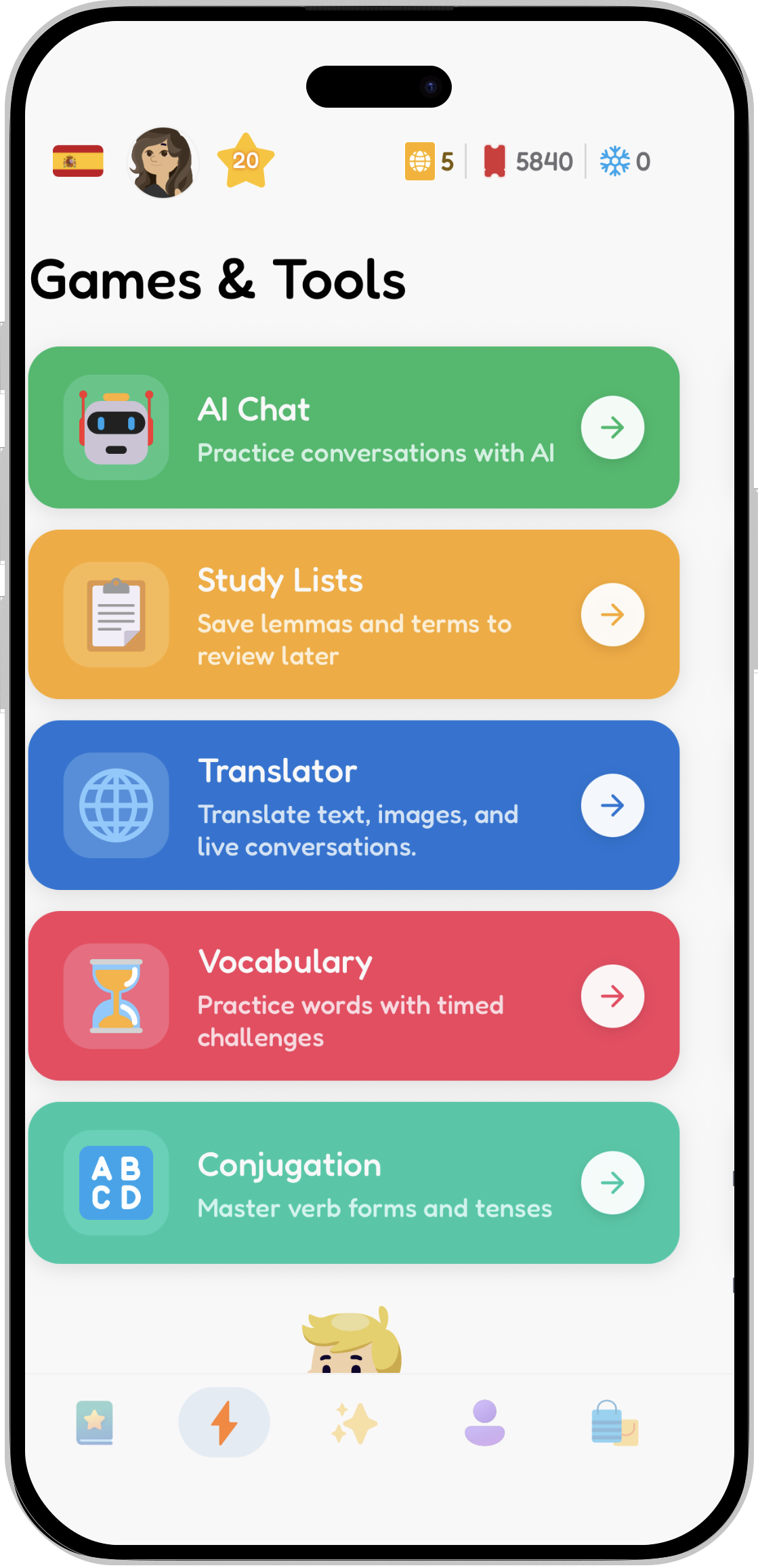
Games & Tools
Tools that every language learner needs at all stages of their learning journey.
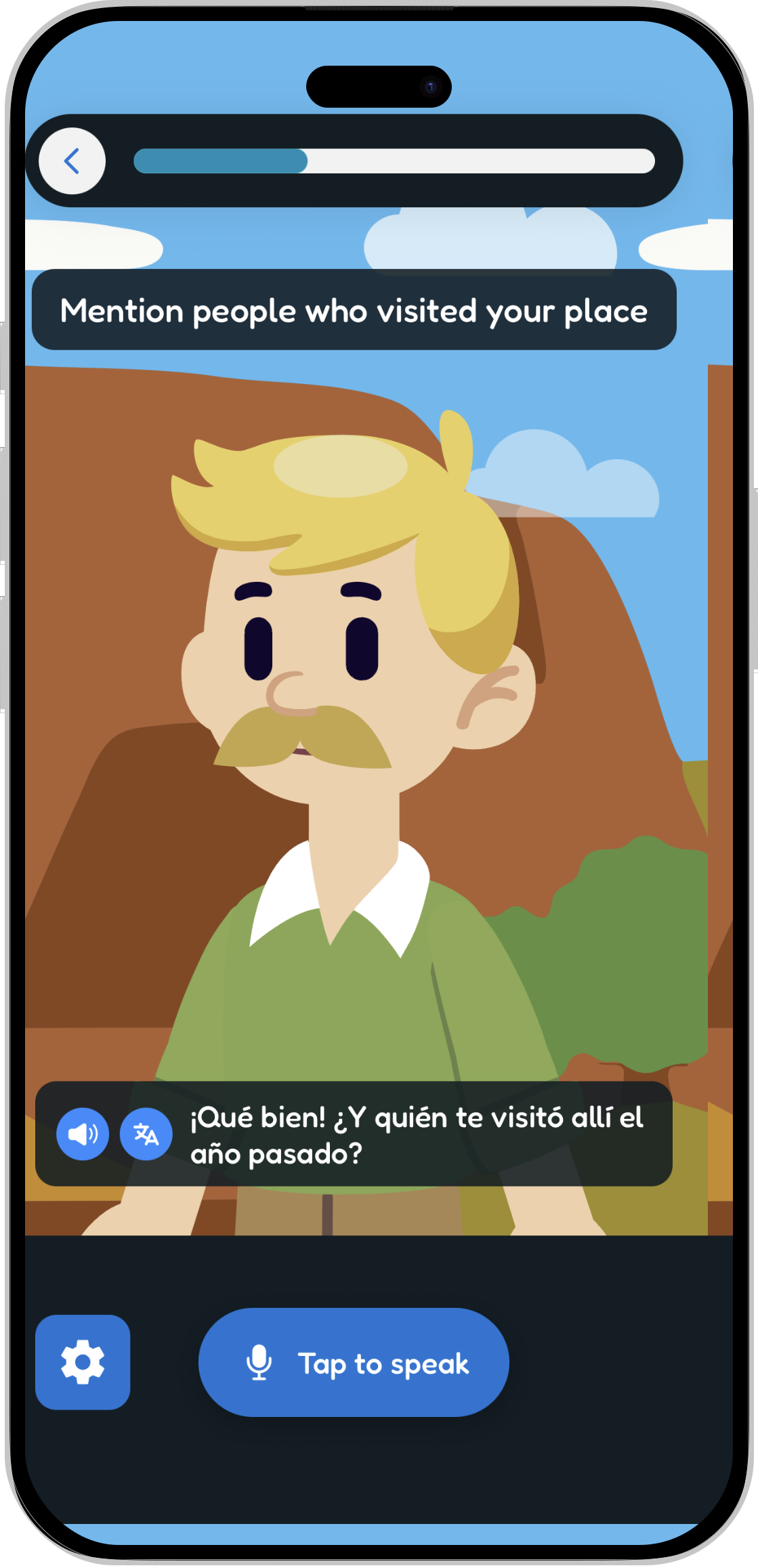
AI Chat Tutor
Practice real conversations with an AI tutor that helps you speak with confidence.
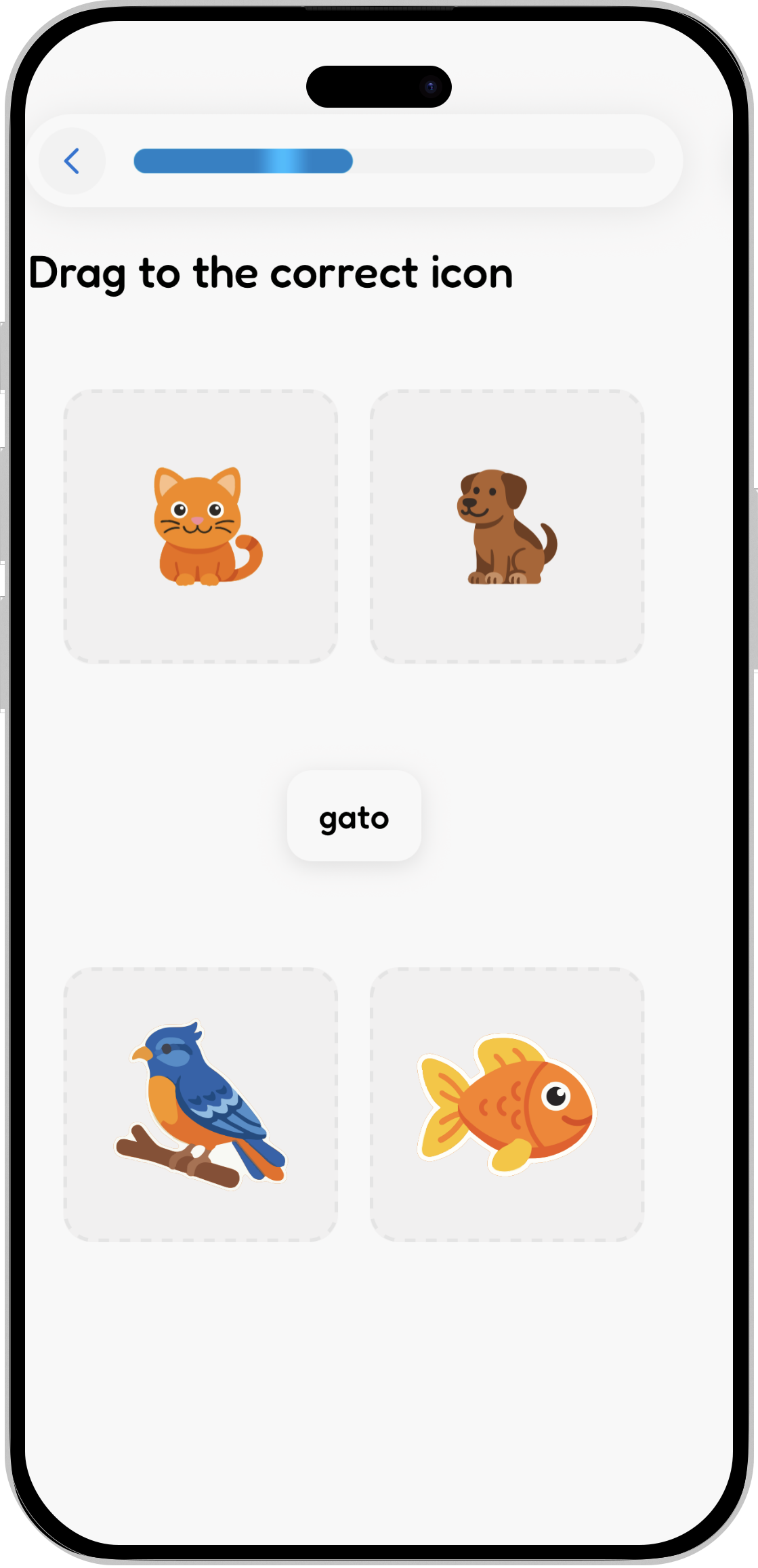
Interactive Games
A variety of games to help you learn and remember new words and phrases.


Why Learn French?
There are many reasons beginners choose to learn French. Some want to travel confidently through France and other francophone countries. Others need French for work, academics, or immigration opportunities. Many people simply love the sound and culture of the language.
French is an official language in organizations including the United Nations, the European Union, NATO, UNESCO, and the International Olympic Committee. It is one of the most widely taught second languages in the world and remains highly valuable in diplomacy and international business.
Learning French also improves cognitive abilities. Studies from institutions like Harvard University suggest that bilingualism may enhance memory, multitasking, and mental flexibility. Language learning strengthens problem-solving skills and can even help delay cognitive decline later in life.
For beginners, French offers a particularly rewarding experience because of its cultural richness. Once you learn French, you gain access to classic literature, music, film, cuisine, philosophy, and art in their original form. Reading Albert Camus or listening to French chansons becomes much more meaningful when you understand the language directly.
French is also practical for travelers. French-speaking regions exist across Europe, North America, Africa, and the Caribbean. Knowing even basic French can dramatically improve travel experiences by helping beginners communicate with locals, navigate transportation systems, and appreciate cultural nuances.
Is French Difficult for Beginners?
Many beginners worry that French is one of the hardest languages to learn. In reality, French is considered relatively accessible for English speakers compared to languages with entirely different writing systems or grammatical structures.
The U.S. Foreign Service Institute classifies French as a Category I language for English speakers, meaning it is among the easiest languages for English speakers to learn. French typically requires fewer study hours than languages such as Mandarin, Arabic, or Japanese.
However, beginners often encounter several challenges:
- Pronunciation and nasal vowels
- Silent letters
- Verb conjugations
- Gendered nouns
- Listening comprehension with native speakers
- Complex spelling patterns
These challenges are manageable with consistent exposure. Beginners who regularly listen to spoken French, practice pronunciation early, and engage with authentic content tend to progress quickly.
One important thing to remember is that beginners do not need perfection to communicate effectively. Language learning is about gradual improvement. Mistakes are a natural and necessary part of learning French.
The French Alphabet and Pronunciation
Before beginners can confidently learn French vocabulary and grammar, they need familiarity with pronunciation. French pronunciation can initially feel difficult because many letters are silent and certain sounds do not exist in English.
The French alphabet uses the same 26 letters as English, but pronunciation differs significantly. Beginners should focus on mastering sounds rather than memorizing spelling rules immediately.
Important French Sounds
French contains several sounds unfamiliar to English speakers:
- Nasal vowels such as “on,” “an,” and “in”
- The French “r”
- Rounded vowels like “u”
- Liaison between words
- Silent endings
For example:
- Bonjour
- Français
- Merci
- Croissant
These words are often pronounced very differently from how beginners expect.
The best way to learn French pronunciation is through active listening and imitation. Beginners should use audio resources from trusted organizations like the BBC Languages French Guide or the Lawless French website.
Tips for Better Pronunciation
- Listen before speaking.
- Repeat phrases aloud daily.
- Shadow native speakers.
- Record yourself speaking French.
- Focus on rhythm and intonation.
- Learn pronunciation rules gradually.
French pronunciation becomes easier over time as beginners train their ears to recognize patterns.
Essential French Greetings for Beginners

Greetings are one of the first things beginners should learn in French because they are practical and immediately useful.
Common French Greetings
| English | French |
|---|---|
| Hello | Bonjour |
| Hi | Salut |
| Good evening | Bonsoir |
| Goodbye | Au revoir |
| See you later | À bientôt |
| Thank you | Merci |
| You're welcome | De rien |
| Please | S’il vous plaît |
| Excuse me | Excusez-moi |
| Yes | Oui |
| No | Non |
French culture places strong emphasis on politeness. Beginners should learn formal and informal expressions early.
For example:
- “Tu” is informal.
- “Vous” is formal or plural.
Using the correct level of politeness helps beginners communicate respectfully.
Building Your First French Vocabulary
Vocabulary acquisition is one of the most important parts of learning French. Beginners should prioritize high-frequency words and practical phrases instead of obscure vocabulary.
Focus on Useful Vocabulary Categories
Beginners should learn French vocabulary related to:
- Greetings
- Numbers
- Days and months
- Food
- Travel
- Family
- Directions
- Shopping
- Emotions
- Common verbs
Learn Cognates First
English speakers already know many French words because of shared linguistic history.
Examples include:
- Information
- Restaurant
- Important
- Culture
- Nation
- Music
- Animal
Recognizing cognates helps beginners quickly expand comprehension.
Use Spaced Repetition
Apps and flashcard systems using spaced repetition can dramatically improve memory retention. Beginners who review vocabulary consistently in short sessions tend to retain French words more effectively than those who cram. For a deeper look at why timing matters, read our guide on spaced repetition for language learning.
Excellent tools include:
Understanding Basic French Grammar
Grammar intimidates many beginners, but French grammar becomes manageable when learned progressively.
Gendered Nouns
Every French noun has grammatical gender:
- Masculine
- Feminine
Examples:
- Le livre (the book)
- La table (the table)
Beginners should memorize nouns with their articles.
Articles
French articles include:
- Le
- La
- Les
- Un
- Une
- Des
Verb Conjugation
French verbs change depending on subject and tense.
Example with “être”:
| Subject | Verb |
|---|---|
| Je | suis |
| Tu | es |
| Il/Elle | est |
| Nous | sommes |
| Vous | êtes |
| Ils/Elles | sont |
Beginners should first focus on the most common verbs:
Regular -er verbs are another early win. Our guide to French verbs ending in -er walks through patterns that unlock hundreds of everyday sentences.
Sentence Structure
French sentence structure resembles English in many cases:
Subject + Verb + Object
Example:
- Je mange une pomme.
As beginners learn French grammar gradually, patterns become increasingly intuitive.
The Best Study Methods for Beginners
Not all learning methods are equally effective. Beginners often waste time using passive techniques instead of active learning.
Effective Ways to Learn French
1. Daily Practice
Consistency matters more than intensity. Studying French for 30 minutes daily is better than studying five hours once per week.
2. Active Listening
Beginners should regularly listen to French audio:
- Podcasts
- YouTube videos
- French radio
- Audiobooks
Recommended Podcasts
- Coffee Break French
- InnerFrench
- Français Authentique
3. Speaking Early
Many beginners delay speaking because they fear mistakes. This slows progress significantly.
The sooner beginners speak French, the faster confidence develops.
4. Reading Simple Content
Beginners should start with:
- Children’s books
- Graded readers
- Simple news articles
Excellent beginner news resources include RFI Français Facile.
5. Writing Practice
Writing helps reinforce grammar and vocabulary. Beginners should keep a small French journal.
Best Apps and Online Resources to Learn French
Technology has revolutionized language learning. Beginners can now access high-quality French learning resources from anywhere.
Popular French Learning Apps
PolyChat
PolyChat combines structured lessons, vocabulary games, conjugation drills, and AI conversation practice without hearts or energy limits. For beginners who want daily practice without artificial caps, it is one of the most flexible ways to build a consistent French habit.
Duolingo
Duolingo is popular among beginners because it gamifies language learning. If you are comparing major apps, our Duolingo vs Babbel breakdown explains where each one shines.
Babbel
Babbel emphasizes practical conversation skills.
Busuu
Busuu combines structured lessons with community feedback.
TV5MONDE
TV5MONDE Apprendre le Français provides excellent authentic learning content.
Alliance Française
The Alliance Française network offers structured French courses worldwide.
Free University Resources
Beginners can also access free educational content from universities including:
- Yale Open Courses
- The Open University
For a wider roundup of no-cost options, see our guide to the best learn French app free picks.
Listening Skills: Understanding Spoken French
Listening comprehension is one of the biggest challenges for beginners. Native French speakers often speak quickly and blend words together.
Why French Sounds Fast
French pronunciation includes:
- Liaison
- Silent letters
- Reduced syllable stress
- Connected speech
Beginners often understand written French before spoken French.
How to Improve Listening
Listen Every Day
Even passive listening helps beginners become familiar with French sounds.
Use Subtitles
Watch French content with French subtitles first rather than English subtitles.
Slow Audio Down
Many apps allow beginners to slow French audio.
Repeat Short Clips
Repetition helps train listening comprehension.
French listening ability develops gradually through repeated exposure.
Speaking French with Confidence

Speaking is often the most intimidating part of learning French. Many beginners understand vocabulary and grammar but freeze during conversation.
Common Speaking Mistakes
Beginners often:
- Translate mentally from English
- Fear making mistakes
- Speak too little
- Avoid conversations
How to Improve Speaking
Practice Simple Conversations
Beginners should master basic conversational patterns first.
Use Language Exchanges
Excellent platforms include:
Think in French
Beginners can gradually train themselves to think directly in French instead of translating.
Accept Mistakes
Mistakes are essential to language learning. Fluency comes through communication, not perfection.
Reading in French for Beginners
Reading helps beginners expand vocabulary, reinforce grammar, and improve comprehension.
Best Reading Materials
Beginners should start with:
- Graded readers
- Comics
- Children’s books
- Simple news articles
Recommended Beginner Books
- Le Petit Prince
- French short stories for beginners
- Dual-language readers
Online Reading Resources
Useful websites include:
Beginners should avoid constantly translating every word. Focus on understanding general meaning first.
Writing in French
Writing strengthens grammar, vocabulary recall, and sentence formation.
Beginner Writing Exercises
- Daily journal entries
- Social media posts
- Short descriptions
- Email practice
- Dialogue creation
Correcting Your Writing
Beginners can receive corrections using:
Writing consistently helps beginners internalize French grammar structures.
French Culture and Immersion
Language and culture are deeply connected. Beginners who immerse themselves culturally often learn French faster.
French Films
Watching French cinema improves listening and cultural understanding.
Recommended films include:
- Amélie
- Les Intouchables
- La Haine
French Music
Music helps beginners learn pronunciation and rhythm.
Artists to explore include:
- Édith Piaf
- Stromae
- Angèle
French Cuisine
Cooking French recipes helps beginners learn vocabulary naturally.
Virtual Immersion
Even beginners who cannot travel can immerse themselves by:
- Changing devices to French
- Following French social media
- Watching French YouTube channels
- Listening to French podcasts daily
Learning French Through Travel
Travel provides one of the most powerful ways to learn French.
Best French-Speaking Destinations
- France
- Québec
- Belgium
- Switzerland
- Morocco
- Senegal
Beginners who travel while learning French gain real-world conversational experience.
Travel Tips for Beginners
- Learn survival phrases.
- Practice ordering food.
- Ask for directions in French.
- Stay with locals when possible.
- Avoid switching immediately to English.
Even short travel experiences can dramatically improve confidence.
How Long Does It Take to Learn French?
One of the most common questions beginners ask is how long it takes to learn French fluently.
The answer depends on:
- Study consistency
- Immersion level
- Practice frequency
- Learning methods
- Personal goals
According to the Foreign Service Institute, English speakers generally need around 600–750 hours to achieve professional working proficiency in French.
Estimated Milestones
| Level | Approximate Time |
|---|---|
| Basic conversation | 3–6 months |
| Intermediate fluency | 1–2 years |
| Advanced fluency | 3+ years |
Beginners who study French consistently every day progress much faster than those who study irregularly.
Common Mistakes Beginners Make
Many beginners unknowingly slow their progress with ineffective habits.
Mistake 1: Obsessing Over Grammar
Grammar matters, but communication matters more.
Mistake 2: Avoiding Speaking
Speaking early accelerates learning.
Mistake 3: Translating Everything
Beginners should gradually learn French directly rather than constantly translating.
Mistake 4: Inconsistent Practice
Daily exposure matters enormously.
Mistake 5: Fear of Mistakes
Mistakes are essential for improvement.
Creating the Perfect French Study Plan
A balanced study plan helps beginners progress steadily.
Sample Daily Routine
| Activity | Time |
|---|---|
| Vocabulary review | 15 min |
| Listening practice | 20 min |
| Reading | 15 min |
| Speaking practice | 15 min |
| Grammar study | 15 min |
Consistency is far more important than long marathon study sessions.
Weekly Goals
Beginners should aim to:
- Learn 30–50 new words
- Practice speaking several times
- Listen to French daily
- Read simple French content
- Review old material regularly
French Exams and Certifications
Some beginners eventually pursue formal French certifications.
Popular French Exams
- DELF
- DALF
- TEF
- TCF
Organizations like France Éducation international administer recognized proficiency exams.
Certifications can help with:
- Immigration
- Employment
- University admissions
- Academic programs
Advanced Strategies for Faster Progress
Once beginners establish a foundation, they can accelerate learning through immersion techniques.
Shadowing
Repeat audio simultaneously with native speakers.
Extensive Reading
Read large amounts of comprehensible content.
Sentence Mining
Collect useful real-world French phrases.
Immersion Days
Dedicate entire days to French-only exposure.
Conversation Practice
Frequent speaking dramatically improves fluency.
Research from language-learning communities consistently shows that beginners who prioritize listening and speaking alongside grammar progress faster than learners who focus only on textbooks. Gamified apps can help with habit-building when used well — see gamification in language learning for how streaks and rewards actually affect long-term progress.
Staying Motivated While Learning French
Motivation naturally fluctuates during long-term language learning.
Tips for Staying Motivated
- Set realistic goals
- Celebrate small wins
- Track progress
- Join communities
- Consume enjoyable French media
- Practice regularly
Beginners who enjoy the learning process tend to stick with French longer.
The Future Benefits of Learning French
French can enrich nearly every area of life.
Benefits include:
- Better travel experiences
- Career opportunities
- Cultural understanding
- Cognitive development
- Access to global communities
- Academic opportunities
- Personal confidence
French also serves as a gateway to learning other Romance languages such as Spanish, Italian, and Portuguese.
For beginners, the most important thing is simply to begin. Fluency develops through thousands of small daily interactions with the language. If you want structured lessons, games, and unlimited daily practice in one place, start with PolyChat on iOS or Android.
Frequently Asked Questions
Is French a good language for beginners to learn?
Yes. French is considered one of the easier languages for English speakers to learn because of shared vocabulary and similar grammatical structures.
How long does it take beginners to learn French?
Most beginners can hold simple conversations within several months of consistent study. Intermediate fluency often takes one to two years.
What is the best app to learn French?
Popular choices include PolyChat, Duolingo, Babbel, and Memrise. The best option depends on your learning style and goals.
Should beginners focus on grammar or speaking first?
Beginners should balance both, but speaking and listening should begin early. Communication skills develop faster through active use.
Can adults successfully learn French?
Absolutely. Adults can successfully learn French through consistent practice, immersion, and effective study habits.

Marc Bolh
Founding Partner
Applied AI

Interested in partnering with PolyChat? Click here.