12 Best Apps Similar to Duolingo for Serious Learners in 2026

Duolingo made language learning accessible with its gamified, bite-sized lessons, making it easier than ever to start a new language. But as your goals change, you might find yourself hitting its limits. Perhaps the "heart" system feels restrictive, you're looking for deeper grammar explanations, or you need more structured conversation practice to build real-world confidence. Many serious learners eventually reach this point and start searching for apps similar to Duolingo that can take them to the next level.
If you're ready for what's next, this guide is your answer. We've created a detailed resource covering the best Duolingo alternatives available today. Forget generic marketing blurbs; we provide an honest, in-depth analysis of each platform based on actual usage. This isn't just a list, it's a decision-making tool.
Inside, you will find a comprehensive breakdown of each app, including:
- Who it's best for: From absolute beginners to advanced polyglots.
- Key features and limitations: An honest look at what works and what doesn't.
- Pricing and platform availability: So you know exactly what to expect.
We'll explore everything from Babbel's conversation-focused curriculum to Memrise's unique use of native speaker videos and HelloTalk's language exchange model. Each entry includes screenshots and direct links to help you compare your options efficiently. Our goal is simple: to help you find the perfect app that matches your specific learning style and pushes you closer to fluency. Let's find the right fit for your language journey.
Ready to Learn More?
Try PolyChat's interactive language learning games and put your new vocabulary to the test!
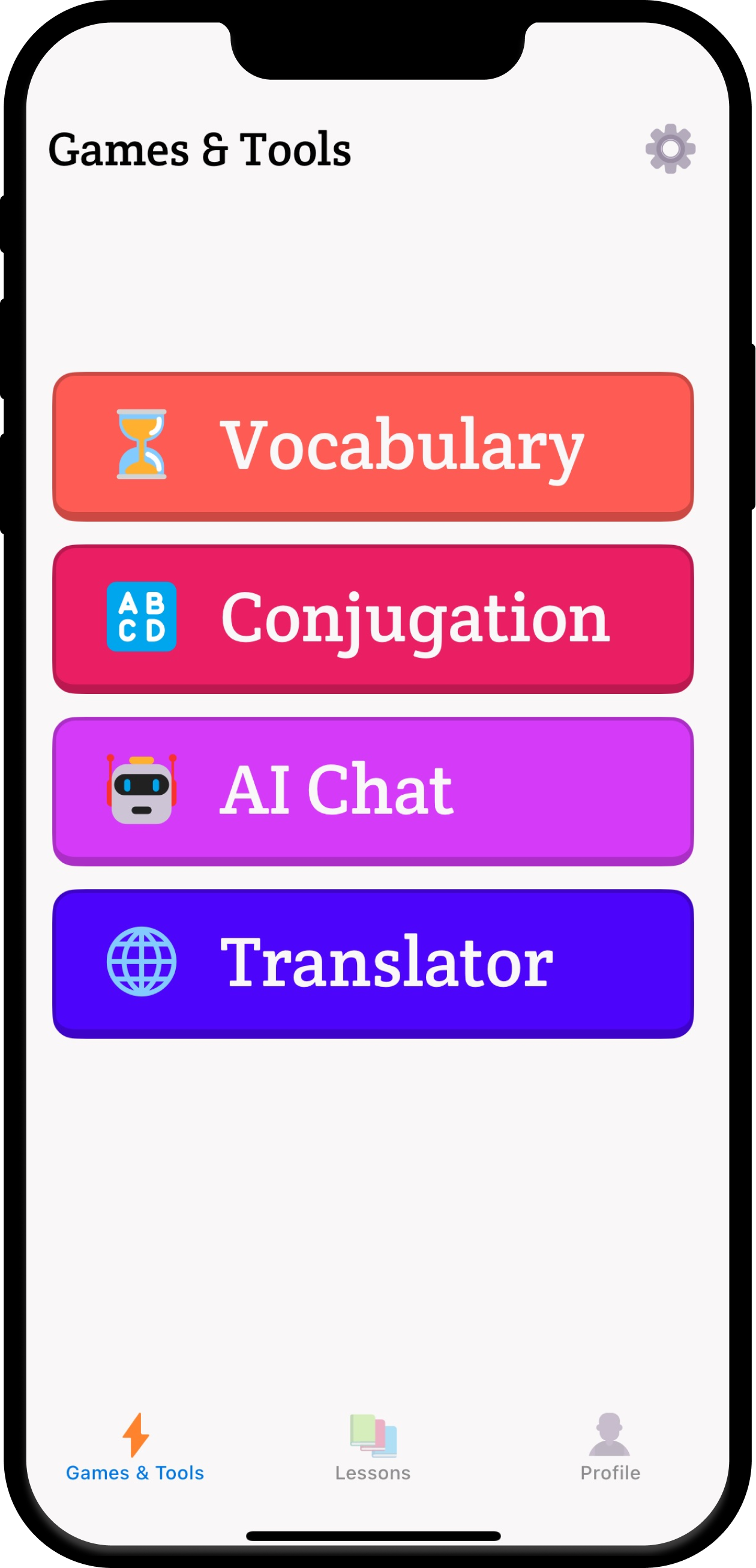
Games & Tools
Essential tools for every learner
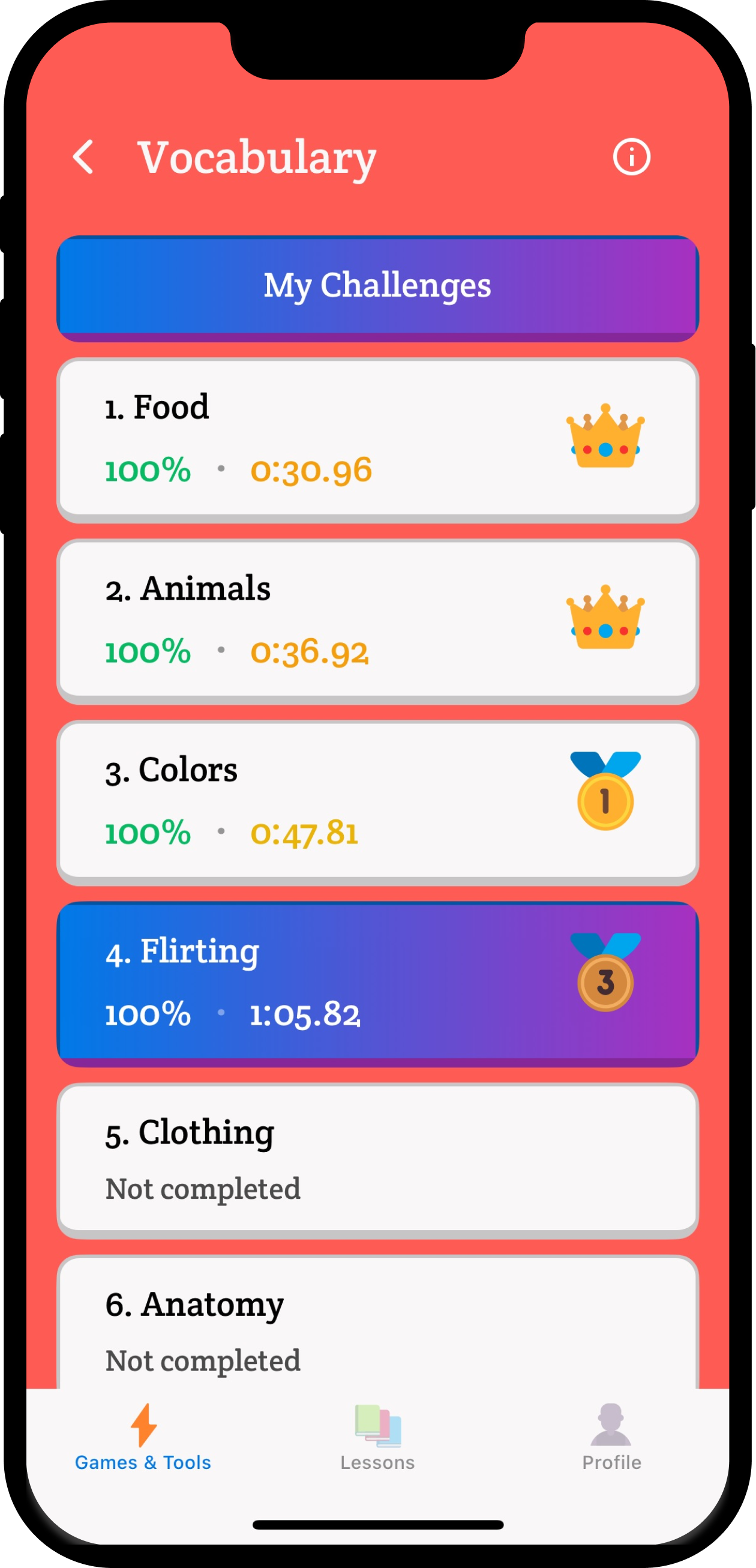
Timed Challenges
Practice vocabulary & conjugation
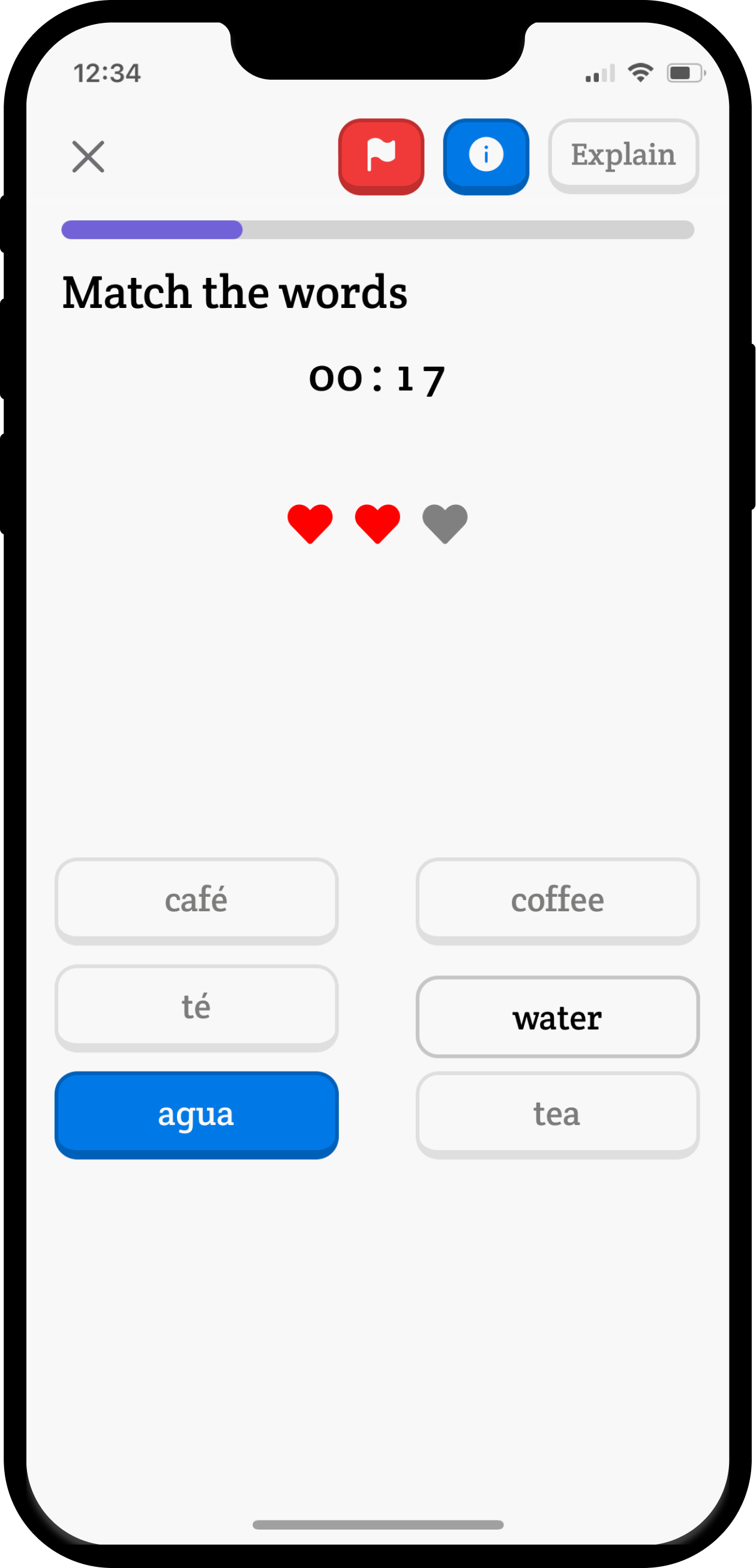
Interactive Games
Learn through engaging gameplay
1. Polychat
For learners seeking a well-rounded and unrestricted experience, Polychat emerges as a standout choice among apps similar to Duolingo. It effectively blends proven teaching methods with modern gamification and AI-powered tools, creating a daily practice routine that feels both productive and engaging. Its core philosophy centers on removing the artificial limits, like the heart system, that often frustrate dedicated learners.
Polychat distinguishes itself with a robust feature set designed for continuous, measurable progress. The app supports over 15 languages, and its unique cross-language learning model allows you to learn any supported language from any other, a fantastic tool for polyglots or non-English natives. This flexibility is a significant advantage over many competitors.
Standout Features
The platform’s strength lies in its practical and effective learning tools.
Key Takeaway: Polychat's most compelling advantage is its unlimited-play model. By removing daily limits, it empowers learners who want to practice intensively without interruption, making it ideal for serious students, travelers, and anyone aiming for rapid progress.
Key capabilities include:
- Unlimited Practice: The absence of a "heart" or "energy" system means you can learn and play for as long as you want, whenever you want. This is perfect for immersion days or cram sessions.
- Advanced Grammar Tools: It boasts what the site calls the market’s best conjugation practice tool. This focus on verb forms and grammar rules provides a solid foundation that some gamified apps overlook.
- Engaging Mini-Games: Lessons are broken down into bite-sized games, timed vocabulary challenges, and interactive conversation exercises. This variety keeps practice from feeling repetitive.
- AI-Powered Practice: The app integrates AI to facilitate dynamic exercises. For those interested in the role of artificial intelligence in education, you can discover more about AI in language learning on their blog.
Practical Use Cases & User Experience
Polychat is particularly useful for students who need to master verb conjugations or for professionals preparing for real-world conversations. The app builds a personal dictionary as you learn, aiding long-term retention. Its mobile-first design for iOS and Android ensures a smooth user experience, backed by a 5/5 App Store rating and positive testimonials praising its educator-friendly approach. The inclusion of a free translator adds on-the-go utility.
Pricing and Availability
Polychat is advertised as a free-to-download app on its website. While the core experience appears generous, you should check the App Store or Google Play listings for specifics on any in-app purchases or potential premium subscription tiers, as this information is not detailed on the main site.
Quick Comparison: Polychat vs. Duolingo
| Feature | Polychat | Duolingo |
|---|---|---|
| Practice Limits | None (No "Heart" System) | Yes (Heart System in Free Tier) |
| Grammar Focus | Strong, with dedicated conjugation tools | Lighter, more implicit grammar |
| Cross-Language Learning | Yes (e.g., learn Spanish from Italian) | Limited to learning from English |
| Language Selection | 15+ European & Asian Languages | 40+ Languages |
Pros & Cons
Pros:
- Unlimited practice without a restrictive heart or energy system.
- Flexible cross-language learning lets you learn from a non-English base.
- Strong focus on grammar, especially verb conjugations.
- Bite-sized, gamified lessons and a built-in personal dictionary.
- Includes a free translator and has high user ratings.
Cons:
- Website lacks detailed pricing information for premium features.
- Language selection is smaller than some larger platforms.
Website: https://www.polychatapp.com
2. Babbel
For learners who find Duolingo’s gamified approach a bit light on substance, Babbel offers a more structured, course-based alternative. This app is designed for serious students who want to build real-world conversational skills grounded in a solid understanding of grammar. Instead of just matching words, Babbel’s lessons, created by in-house linguists, are centered around practical dialogues you might actually have while traveling or meeting new people. This makes it one of the most effective apps similar to Duolingo for achieving conversational fluency.

Babbel’s core strength lies in its explicit grammar instruction, a feature often lacking in purely game-based apps. Each 10 to 15-minute lesson introduces new concepts through dialogue, then breaks down the grammar and vocabulary with clear explanations. The platform includes speech recognition to help you refine your accent and a spaced repetition system for reviewing what you’ve learned. Its learning paths are aligned with the Common European Framework of Reference for Languages (CEFR), providing a clear progression from beginner to intermediate levels. The first lesson in each course is free, but full access requires a subscription.
Babbel at a Glance
| Feature | Details |
|---|---|
| Pricing | Subscription-based; monthly, quarterly, or yearly plans. Lifetime access also available. |
| Availability | Web, iOS, Android |
| Core Features | Conversation-focused lessons, CEFR-aligned paths, speech recognition, spaced repetition review. |
| Best For | Learners wanting structured grammar lessons alongside practical conversational practice. |
Pros:
- Practical, dialogue-based lessons for real-world use.
- Strong focus on grammar rules and sentence structure.
- High-quality, curated content from language experts.
Cons:
- Fewer languages offered than Duolingo.
- The free version is very limited, essentially a trial.
Website: https://www.babbel.com
3. Busuu
Busuu combines structured lessons with a powerful social component, creating a unique learning environment that bridges the gap between self-study and real-world practice. While it offers CEFR-aligned courses similar to more academic apps, its standout feature is the community. Users can submit writing or speaking exercises and receive personalized feedback directly from native speakers, a practical touch that helps build confidence and correct mistakes that an automated system might miss. This blend makes it one of the most well-rounded apps similar to Duolingo for learners who want both structured content and human interaction.
The platform provides a clear learning path with placement tests to start you at the right level. Lessons are broken into manageable chunks covering vocabulary, grammar, and dialogue, with a "Smart Review" feature that uses spaced repetition to reinforce tricky concepts. Busuu even offers official certificates from McGraw Hill Education upon completing each CEFR level, adding a formal credential to your learning achievements. While a free version exists, the core social feedback and certification features require a premium subscription.
Busuu at a Glance
| Feature | Details |
|---|---|
| Pricing | Freemium model; Premium and Premium Plus subscriptions available monthly, semi-annually, or annually. |
| Availability | Web, iOS, Android |
| Core Features | Community feedback from native speakers, CEFR-aligned courses, official certificates, personalized study plans, Smart Review. |
| Best For | Learners who value feedback from native speakers and want a structured path with optional certification. |
Pros:
- Feedback from a community of native speakers is incredibly practical.
- Structured courses aligned with CEFR standards, including certificates.
- Good balance of vocabulary, grammar, and conversational practice.
Cons:
- The most valuable features, like community corrections, are behind a paywall.
- Subscription pricing and promotions can vary significantly by platform and region.
Website: https://www.busuu.com
4. Rosetta Stone
A long-standing name in language education, Rosetta Stone offers a pure immersion methodology that stands in stark contrast to Duolingo’s translation-heavy approach. The platform is designed to mimic how we learn our first language, by associating words directly with images and context, without relying on your native tongue for support. This makes it one of the most unique apps similar to Duolingo, pushing learners to think in their target language from the very first lesson. Its strength lies in building foundational intuition and developing a strong accent.

Rosetta Stone's core is its TruAccent speech recognition engine, which provides immediate feedback on pronunciation by comparing your voice to that of native speakers. Lessons are presented as a sequence of image-matching and sentence-building exercises that progressively introduce vocabulary and grammatical structures. While this method is excellent for beginners to internalize sounds and basic phrases, the lack of explicit grammar explanations can be a hurdle for some learners. Progress syncs across devices, and lessons can be downloaded for offline learning. A subscription is required for full access, though a free demo is available.
Rosetta Stone at a Glance
| Feature | Details |
|---|---|
| Pricing | Subscription-based; 3-month and 12-month plans. A lifetime plan covering all languages is also offered. |
| Availability | Web, iOS, Android |
| Core Features | Immersive lesson design (no translation), TruAccent speech recognition, offline lesson access, multi-device sync. |
| Best For | Beginners who want to build a strong pronunciation base and learn through pure immersion without grammar drills. |
Pros:
- Excellent pronunciation feedback with its TruAccent technology.
- Pure immersion method helps learners start thinking in the new language.
- Clean, polished interface with a structured learning path.
Cons:
- Minimal explicit grammar explanations can be confusing.
- The repetitive, formal content may not reflect colloquial or casual speech.
Website: https://www.rosettastone.com
5. Pimsleur
For those who learn best by listening and speaking, Pimsleur offers a time-tested, audio-first method that stands in stark contrast to Duolingo’s screen-heavy approach. Its core philosophy revolves around 30-minute daily audio lessons designed for hands-free learning, making it perfect for a commute, workout, or walk. Pimsleur’s system is engineered to build conversational patterns and accurate pronunciation from the very first lesson, focusing on what you need to say rather than just what words mean. This makes it one of the most effective apps similar to Duolingo for building genuine speaking confidence.

The method, developed by Dr. Paul Pimsleur, is built on a principle of graduated interval recall, a specific type of spaced repetition. Lessons prompt you to recall and construct phrases at increasing intervals, which helps move vocabulary into your long-term memory. While the audio lessons are the foundation, the Pimsleur Premium app expands the experience with reading lessons, digital flashcards, and quick-match games to reinforce learning. It’s an excellent choice for learners who find themselves freezing up when it’s time to actually talk. Full access to its more than 50 language courses is available via a subscription.
Pimsleur at a Glance
| Feature | Details |
|---|---|
| Pricing | Subscription-based; monthly plans for audio-only or premium access. |
| Availability | Web, iOS, Android, Amazon Echo devices |
| Core Features | 30-minute core audio lessons, graduated interval recall, pronunciation training, hands-free learning mode. |
| Best For | Auditory learners and busy individuals who need to learn on the go. |
Pros:
- Ideal for hands-free learning during commutes or other activities.
- Excellent for improving speaking confidence and accent.
- Proven method for building long-term recall of conversational phrases.
Cons:
- Limited reading and writing practice without the Premium app extras.
- The repetition-heavy style may feel slow for some learners.
Website: https://www.pimsleur.com
6. Memrise
For learners who want to hear a language as it’s actually spoken, Memrise stands out by building its curriculum around thousands of short video clips of native speakers. This approach prioritizes authentic listening skills and practical, modern vocabulary over rigid grammatical drills. Instead of just learning isolated words, you learn phrases you’ll actually hear on the street, making it one of the best apps similar to Duolingo for developing a natural-sounding accent and real-world comprehension from day one.

Memrise’s core learning method combines these authentic video clips with a powerful spaced repetition system to help new words and phrases stick in your long-term memory. Lessons are designed to be quick and engaging, fitting easily into a busy schedule. The platform also includes an AI-powered chat partner, MemBot, which allows you to practice your conversational skills in a low-pressure environment. While Memrise uses game-like elements, its main focus is on building a useful vocabulary foundation through repeated exposure to authentic speech. The effectiveness of gamification in language learning is a key reason many users find this method so compelling. Access to some features is free, but a Pro subscription is needed for the full experience.
Memrise at a Glance
| Feature | Details |
|---|---|
| Pricing | Freemium model. Subscription-based (monthly, yearly, or lifetime) for full feature access. |
| Availability | Web, iOS, Android |
| Core Features | Real-speaker video clips, AI chat partner (MemBot), spaced repetition, bite-size lessons. |
| Best For | Beginners and intermediate learners focused on building practical vocabulary and listening skills. |
Pros:
- Excellent for early exposure to authentic native speech and accents.
- Quick, bite-size sessions are perfect for learning on the go.
- Strong focus on building a foundation of useful, modern phrases.
Cons:
- Grammar explanations can be less detailed compared to other apps.
- The migration of community courses away from the main app has changed access for legacy users.
Website: https://www.memrise.com
7. Mondly
For those who love Duolingo's gamified style but want more conversational practice, Mondly presents a compelling option. It blends quick, daily lessons with unique tech features like a chatbot and augmented reality (AR) experiences. This makes it a great choice for learners who want to keep their motivation high with variety and interactive challenges. Mondly's approach is centered on practical topics, making it one of the more engaging apps similar to Duolingo for building vocabulary around everyday situations.
The platform's standout feature is its chatbot, which lets you practice conversations using speech recognition. While the quality can vary by language, it provides a low-pressure way to try out new phrases. Mondly also offers over 250 lessons organized by topic, complete with grammar and conjugation tools to support your learning. For a more immersive session, its AR and VR modes can place a virtual teacher right in your room. Daily, weekly, and monthly challenges encourage consistent practice, perfect for anyone who enjoys maintaining a streak.
Mondly at a Glance
| Feature | Details |
|---|---|
| Pricing | Freemium model with limited daily content; subscription required for full access to all lessons and features. |
| Availability | Web, iOS, Android |
| Core Features | Chatbot for speaking practice, AR/VR immersive learning, daily gamified challenges, grammar and conjugation tools. |
| Best For | Visual learners and tech enthusiasts who enjoy gamified micro-learning and interactive features. |
Pros:
- Wide selection of languages, including less common ones.
- AR/VR modes add a fun, unique dimension to studying.
- Clear topical organization allows for quick, focused learning sessions.
Cons:
- Lesson content can feel light for upper-intermediate or advanced learners.
- The chatbot's effectiveness and naturalness differ between languages.
Website: https://www.mondly.com
8. Lingvist
For learners who want to accelerate their vocabulary acquisition with a data-driven, scientific approach, Lingvist offers a powerful, no-nonsense tool. Instead of following a linear course, Lingvist uses an adaptive AI algorithm and spaced repetition to teach you the most frequent and relevant words in your target language first. It presents words in context-rich sentences, helping you absorb vocabulary rapidly and efficiently, making it a stellar app similar to Duolingo for serious vocabulary building.

Lingvist’s key distinction is its focus on high-utility vocabulary and its ability to personalize the learning pace for each user. The platform continuously measures what you know and predicts what you are about to forget, showing you the right flashcard at the perfect moment. A unique feature is the ability to create custom decks from your own content-be it an article, an e-book, or a YouTube video transcript. This allows you to learn the specific vocabulary needed for your personal or professional interests. While it’s lighter on explicit grammar and speaking practice, its singular focus makes it one of the fastest ways to grow a functional vocabulary.
Lingvist at a Glance
| Feature | Details |
|---|---|
| Pricing | Subscription-based (monthly or yearly). A free trial is available to test the features. |
| Availability | Web, iOS, Android |
| Core Features | AI-powered spaced repetition, high-frequency word lists, custom deck creation from user content, reading and listening exercises. |
| Best For | Intermediate learners focused on rapidly expanding their vocabulary and reading comprehension. |
Pros:
- Extremely efficient for vocabulary acquisition using a scientific method.
- Customizable decks allow you to learn words relevant to your own life.
- Clean, focused interface minimizes distractions.
Cons:
- Not a comprehensive course; lacks structured grammar and speaking components.
- Best used as a supplement rather than a standalone learning program.
Website: https://lingvist.com
9. LingoDeer
For learners frustrated by the lack of direct grammar instruction in other apps, LingoDeer offers a curriculum-based path that feels like a structured classroom course. It’s particularly celebrated for its detailed explanations, especially for East Asian languages like Japanese, Korean, and Chinese, where grammar can be a major hurdle. Instead of just relying on pattern recognition, LingoDeer provides explicit grammar notes and clear examples, making it one of the best apps similar to Duolingo for building a solid foundational understanding.

LingoDeer’s strength is its organized, step-by-step lesson plan that methodically introduces vocabulary, sentence patterns, and grammar points. Each unit includes a mix of listening, reading, and writing drills recorded by native speakers, ensuring you learn authentic pronunciation. The platform includes a dedicated review section to reinforce concepts through spaced repetition and offers an offline mode, which is perfect for learning during a commute or while traveling. The first unit of each language is free, giving you a good taste of its teaching style before you commit to a subscription.
LingoDeer at a Glance
| Feature | Details |
|---|---|
| Pricing | Subscription-based; monthly, annual, and lifetime plans are available. |
| Availability | Web, iOS, Android |
| Core Features | Curriculum-style lessons, explicit grammar notes, high-quality audio, offline mode, review activities. |
| Best For | Beginners who want a structured, grammar-focused approach, especially for Asian languages. |
Pros:
- Clear, detailed grammar explanations that many other apps lack.
- Especially strong foundation for Asian languages.
- Offline mode is great for learning on the go.
Cons:
- Smaller language selection compared to major competitors.
- Content can feel limited for learners aiming for advanced proficiency.
Website: https://www.lingodeer.com
10. Mango Languages
For learners who value access and cultural context, Mango Languages provides a unique pathway to fluency. It stands out by offering an impressive roster of over 70 languages, including many less-common, Indigenous, and heritage languages not found on mainstream platforms. Its core mission is to teach through practical conversational patterns and culturally relevant topics. This makes it one of the most socially conscious and accessible apps similar to Duolingo, especially since many US public libraries provide free access to their patrons.

Mango’s methodology is built around its “Intuitive Language Construction,” which breaks down complex sentences into manageable parts, allowing you to understand grammar and vocabulary in the context of real dialogue. The interface is clean and straightforward, prioritizing learning over gamification. Special features like "Mango Movies" integrate learning with short films, offering an engaging way to see the language used naturally. While the depth can vary for some of its more niche languages, its commitment to providing broad linguistic access is exceptional. Before purchasing, check if your local library or school offers free institutional access.
Mango Languages at a Glance
| Feature | Details |
|---|---|
| Pricing | Subscription-based (monthly/yearly), with single-language and all-language plans. Often free with a US public library card. |
| Availability | Web, iOS, Android, Amazon Appstore |
| Core Features | 70+ languages, Intuitive Language Construction, cultural and grammar notes, "Mango Movies" feature, family plans. |
| Best For | Learners with a library card, and those interested in less-commonly-taught or heritage languages. |
Pros:
- Excellent coverage of niche and heritage languages.
- Clean progression focused on practical dialogues.
- Potentially free access through local public libraries.
Cons:
- Interface is less gamified than some modern apps.
- Course depth varies by language, with some advanced levels limited.
Website: https://mangolanguages.com
11. HelloTalk
If your main goal is to move beyond textbook exercises and start having real conversations, HelloTalk is one of the best apps similar to Duolingo for pure language exchange. It's not a structured course but a social platform connecting you directly with native speakers worldwide. The app facilitates communication through text, voice messages, and even video calls, allowing you to practice in a natural, low-pressure environment. It’s built on the principle of mutual learning- you help others learn your native language while they help you with theirs.

HelloTalk’s strength is its suite of built-in tools designed to make communication smoother. You can instantly translate messages you don't understand, get corrections on your sentences from your partners, and use transliteration to read non-Roman scripts. The "Moments" feature acts like a social feed where you can post public updates and get feedback from the entire community, which is a great way to find tips on how to improve your speaking skills. While a free version exists, a VIP subscription unlocks unlimited translations and other premium features. It’s an ideal supplement for anyone using a course-based app who needs authentic speaking practice.
HelloTalk at a Glance
| Feature | Details |
|---|---|
| Pricing | Freemium model. VIP subscription available monthly, yearly, or for a lifetime. |
| Availability | iOS, Android, Web |
| Core Features | 1:1 chat with native speakers, "Moments" social feed, built-in translation and correction tools, voice and video calls. |
| Best For | Learners who want to practice conversational skills with real native speakers and build confidence. |
Pros:
- Provides direct interaction with a massive community of native speakers.
- Excellent for learning colloquialisms and informal language.
- Integrated correction and translation tools facilitate smooth conversations.
Cons:
- Learning is unstructured and depends on your chat partners.
- As a social app, user experience can vary and requires safety awareness.
Website: https://www.hellotalk.com
12. Tandem
If your goal is to move from memorizing words to actually using them in conversation, Tandem provides the most direct path. This language exchange app connects you with native speakers from around the world for text, audio, and video practice. Instead of following a set curriculum, Tandem is about learning through authentic human interaction. Its detailed filtering system lets you find partners who share your interests, ensuring conversations are engaging. This focus on real-world communication makes it one of the best apps similar to Duolingo for learners who feel ready to start speaking.

Tandem’s strength lies in its built-in learning tools that support natural conversation. Within a chat, you can correct your partner’s messages, and they can correct yours, turning every exchange into a practical grammar lesson. The app also includes in-line translation and "Topics" prompts to help break the ice or steer the conversation. While the quality of your practice depends heavily on your partner’s motivation and commitment, finding a good match can accelerate your fluency far more than solo exercises. The core app is free, with a Pro subscription offering unlimited translations and an ad-free experience.
Tandem at a Glance
| Feature | Details |
|---|---|
| Pricing | Free version available. Tandem Pro offered via monthly, quarterly, or yearly subscription. |
| Availability | Web, iOS, Android |
| Core Features | Partner matching with filters, text, voice, and video chat, in-app correction and translation tools, conversation topic prompts. |
| Best For | Intermediate to advanced learners looking to build conversational confidence through real-time practice with native speakers. |
Pros:
- Efficient way to find motivated language partners for real practice.
- Correction and translation tools keep exchanges focused on learning.
- Web version is excellent for longer conversations and typing practice.
Cons:
- Learning quality depends heavily on your partner's fit and motivation.
- Requires more self-direction than structured course-based apps.
Website: https://www.tandem.net
Top 12 Duolingo Alternatives Comparison
| App | Key features (✨) | Quality (★) | Audience (👥) | Price / Value (💰) | Best fit / USP (🏆) |
|---|---|---|---|---|---|
| Polychat 🏆 | Unlimited-play gamification, top conjugation tool, AI translator, 15+ languages ✨ | ★★★★★ | 👥 Beginners→Advanced, students, educators, travelers, polyglots | 💰 Free-to-download; freemium (check store) | 🏆 Continuous unlimited practice; flexible cross-language learning |
| Babbel | Short conversation lessons, explicit grammar, speech recognition ✨ | ★★★★☆ | 👥 Adults, travelers, grammar-focused learners | 💰 Subscription (limited free) | Practical dialogues + clear grammar |
| Busuu | CEFR paths, community corrections, placement tests, certificates ✨ | ★★★★ | 👥 Self-learners, students, professional learners | 💰 Freemium; paid for full features | Human feedback & certification |
| Rosetta Stone | Immersive no-translation approach, TruAccent pronunciation ✨ | ★★★★ | 👥 Beginners, immersion-preferring learners | 💰 Paid/subscription | Strong pronunciation & immersion flow |
| Pimsleur | Audio-first 30-min guided lessons for hands-free speaking ✨ | ★★★★ | 👥 Commuters, speaking-focused learners | 💰 Subscription / Premium | Hands-free conversational training |
| Memrise | Native-speaker video clips, spaced repetition, AI chat ✨ | ★★★★ | 👥 Vocabulary & listening-focused learners | 💰 Freemium | Authentic listening exposure & modern phrases |
| Mondly | Chatbot practice, AR/VR modes, short daily challenges ✨ | ★★★ | 👥 Casual learners who enjoy variety | 💰 Freemium / paid tiers | Gamified micro-lessons & AR/VR variety |
| Lingvist | AI-driven vocab, custom decks from your texts, progress stats ✨ | ★★★★ | 👥 Fast vocab builders, reading-focused learners | 💰 Subscription | Rapid, data-driven vocabulary growth |
| LingoDeer | Step-by-step curriculum with explicit grammar notes ✨ | ★★★★ | 👥 Learners of Asian languages & grammar-focused users | 💰 One-time or subscription | Structured grammar foundation |
| Mango Languages | 70+ languages incl. niche/heritage, library access ✨ | ★★★★ | 👥 Niche-language learners, library users, families | 💰 Library/free or subscription | Broad, niche language coverage; library access |
| HelloTalk | 1:1 chats, voice notes, Moments feed, in-app corrections ✨ | ★★★★ | 👥 Conversation seekers, cultural exchangers | 💰 Freemium | Real interaction with native speakers |
| Tandem | Partner matching, text/audio/video, correction tools ✨ | ★★★★ | 👥 Learners seeking matched language partners | 💰 Freemium / Pro | Structured language-exchange matching |
Choosing Your Path to Fluency: The Next Step
The journey to find the perfect language learning tool can feel as complex as learning a new language itself. As we’ve explored the landscape of apps similar to Duolingo, one truth becomes clear: there is no single best app, only the best app for you. Your ideal match depends entirely on your personal learning style, specific goals, budget, and what motivates you to show up every day.
The sheer volume of choices can be paralyzing, but viewing this diversity as an advantage is the first step toward building a successful learning system. The most common mistake learners make is passively collecting apps without a clear strategy. Instead of downloading every recommendation, it's far more effective to pinpoint your primary need and select a core app to address it, then supplement with a secondary tool for your weaknesses.
How to Make Your Final Decision
To move from analysis to action, consider these guiding questions. Your answers will illuminate which app from our list is your best starting point.
- What is my primary motivation? Are you preparing for a trip (Babbel, Pimsleur), aiming for professional certification (Busuu), or learning as a hobby (Memrise, Polychat)? Your "why" dictates the type of content you need.
- What is my biggest learning obstacle? If you struggle with grammar rules, LingoDeer or Polychat offer structured, explicit instruction. If speaking confidence is your hurdle, a conversation-focused app like HelloTalk or Tandem is non-negotiable.
- How do I learn best? Do you thrive on repetition and immersive audio? Rosetta Stone or Pimsleur might be your fit. If you need gamified drills and a sense of constant progress to stay engaged, Mondly or Polychat’s addictive loops will keep you coming back.
- What was my main frustration with Duolingo? If the heart system and limited practice felt restrictive, an app with an unlimited model is your answer. If the lessons felt too robotic and disconnected from real-life dialogue, a tool like Babbel or Mango Languages, with its focus on practical conversation, will be a breath of fresh air.
Building Your Personal Learning Stack
The most successful polyglots rarely rely on a single resource. They build a "learning stack" by combining tools that complement each other's strengths and weaknesses. This is the most practical way to cover all four key skills: reading, writing, listening, and speaking.
Consider this proven framework:
- Your Core Curriculum App: This is your main driver, providing structured lessons and a clear path forward. For many, this will be Babbel for its real-world focus, Busuu for its community feedback, or Pimsleur for its audio-centric method.
- Your Practice & Reinforcement App: This tool is for targeted drills. Use it to hammer home vocabulary with Memrise, perfect grammar with Polychat’s unlimited exercises, or expand your vocabulary with Lingvist's flashcards.
- Your Conversation Partner App: This is where theory meets reality. You must move from passive learning to active production. Dedicate time each week to using HelloTalk or Tandem to chat with native speakers. This is the single most important step to building real fluency and confidence.
Ultimately, the best apps similar to Duolingo are the ones you use consistently. The goal isn't just to learn words and rules but to build a sustainable habit that integrates into your daily life. Choose your tools, set a small, achievable daily goal, and commit to it. Your path to fluency begins not with the perfect app, but with the first lesson you complete today.
Tired of artificial limits holding back your progress? Polychat was built for learners who want to master grammar and vocabulary through fast, fun, and truly unlimited practice. If you're looking for an app that rewards your dedication instead of penalizing it, try Polychat and experience how addictive effective learning can be.