15 Best Duolingo Alternatives for Serious Language Learners in 2026

Duolingo has successfully gamified language learning for millions, but its one-size-fits-all approach doesn't work for everyone. You might be hitting a plateau, finding the sentences impractical for real conversation, or simply growing tired of the repetitive exercises and strict limitations. If you're ready for a more effective learning path, you’ve come to the right place. This guide is your resource for finding the best Duolingo alternatives to match your specific goals, whether you're a serious student, a frequent traveler, or a polyglot looking for a new challenge.
We've compiled a detailed list of 15 top platforms that address Duolingo’s shortcomings. Instead of generic descriptions, you'll find an honest assessment of each app's strengths and weaknesses, ideal user profiles, and standout features. We’ll look at options like PolyChat for its unlimited gamification and advanced conjugation practice, Babbel for its conversation-focused lessons, and Pimsleur for its proven audio-based method. Each entry includes screenshots and direct links so you can start exploring immediately.
This article cuts through the noise to help you make an informed choice. You'll discover tools designed for:
- Deep Grammar Understanding: Moving beyond basic sentence structure.
- Real-World Conversation: Building skills you can actually use abroad.
- Specific Learning Styles: Finding a method that clicks with you, from visual to auditory.
- Unrestricted Practice: Breaking free from systems that limit your progress.
Ready to Learn a Language?
Try PolyChat's engaging language lessons, interactive learning games and put your new vocabulary to the test!
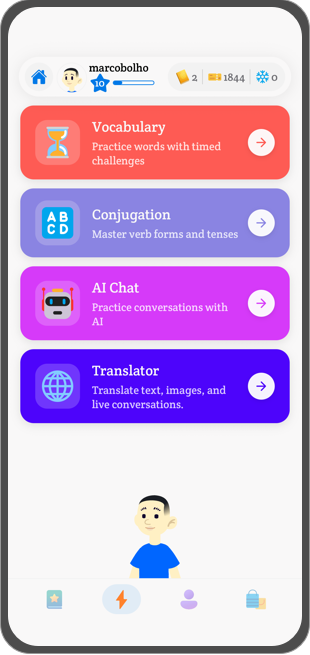
Games & Tools
Essential tools for every learner
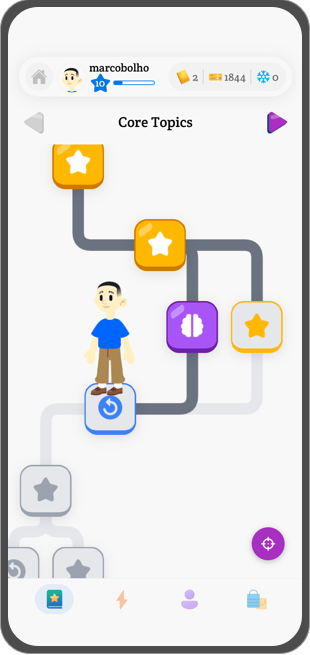
Thousands of Lessons
From beginner to fluent
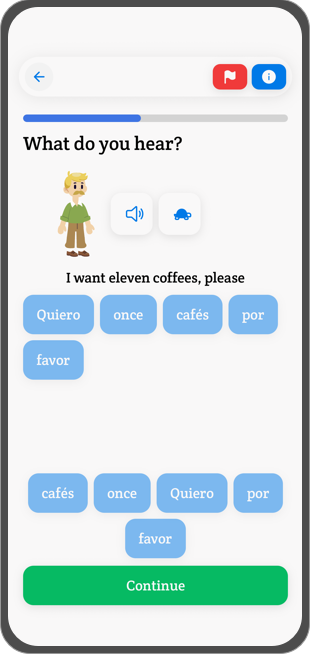
Interactive Exercises
Practice vocabulary & conjugation


Why many learners search for Duolingo alternatives
Duolingo made starting a language feel low-risk: short lessons, streaks, and quick wins help millions build a habit. A familiar pattern still appears after the honeymoon phase. You open the app to keep a streak alive, miss a few prompts, and the session ends unless you wait, watch ads, pay, or ration mistakes through hearts. If you learn by leaning into errors, that can feel backwards—mistakes are information, not a budget to exhaust. When hearts make errors feel expensive, you can become more cautious and more aware of the app’s limits than of the language itself.
According to Semrush competitor data for Duolingo, Duolingo had 43.8 million monthly visits worldwide in February 2026, while Babbel and Busuu each drew more than 3 million visits—evidence that large audiences actively use several kinds of tools, not a single gamified path.
People comparing Duolingo alternatives are often looking for more than a prettier mascot:
- Unlimited practice when they want to drill the same pattern until it sticks
- More natural language—dialogues and phrases they would plausibly say aloud
- Clearer feedback than “correct/incorrect,” especially on grammar
- A path that keeps up with ambition, not one that keeps them in beginner loops indefinitely
If an app keeps your streak alive but slows meaningful practice, it may be optimizing retention ahead of skill depth.
A beginner’s lens: match the app to your frustration
A good Duolingo alternative for beginners does not need to beat Duolingo at every feature—it needs to fix what is slowing you down:
- Hearts or energy limits when you finally have 45 minutes to study → prioritize unlimited practice (PolyChat).
- Lessons without grammar clarity → Babbel or LingoDeer.
- Recognition without speaking confidence → Pimsleur or Busuu for feedback.
- Random or impractical sentences → Memrise, Mango Languages, or Babbel for usable phrases.
- Boredom with the same drill loop → Mondly for variety, or Drops for short visual vocabulary bursts.
If you want a broader view of beginner-friendly design before you choose, see best language learning apps.
How four common philosophies differ
| Approach (example) | Core philosophy | Best for | Main trade-off |
|---|---|---|---|
| Duolingo | Habit-first gamification | Casual beginners who need a daily nudge | Can feel shallow once you want practical fluency |
| PolyChat | High-volume drills, AI practice, few artificial caps | Learners who want repetition and fewer limits | Better if you like active practice; less like a traditional textbook |
| Babbel | Structured lessons aimed at usable conversation | Travelers and pragmatic learners | Less playful, more conventional pacing |
| Busuu | Guided learning plus peer correction | Students who want explanation and human feedback | Community features depend on active participation |
Practice limits and what they reward
Duolingo-style hearts and similar caps can shift mistakes from “useful signal” to “scarce resource,” which makes some learners more cautious and more aware of the app’s rules than of the language. Course-style apps such as Babbel and Busuu more often meter time than errors, which many people find calmer once they want longer, mistake-heavy sessions.
To truly succeed with these Duolingo alternatives, understanding the potential of AI Tools for Fast Language Learning can provide a significant advantage in personalizing your study plan. Let's dive into the options that will take your language skills to the next level.
1. PolyChat
For learners seeking a robust and unrestricted alternative to Duolingo, PolyChat presents a compelling, well-rounded solution. This mobile-first app combines a structured learning path with engaging gamification and practical AI-powered tools, all without the artificial practice limits that frustrate many users. By eliminating the "hearts" or "energy" systems common in other apps, PolyChat allows for deep, uninterrupted study sessions, making it an excellent choice for those who want to accelerate their progress.

The platform’s design is particularly effective for learners who want to build a strong grammatical foundation. Its standout feature is an exceptional conjugation practice tool, which helps users master verb forms through targeted drills. This focus on grammar, paired with timed vocabulary challenges and interactive games, directly addresses a common weakness in purely gamified apps. The integration of AI also helps tailor the experience; you can discover how PolyChat uses artificial intelligence to make learning more effective in their breakdown of AI in language learning.
PolyChat also offers a unique level of flexibility. A key differentiator is the ability to learn one foreign language from another (for example, a native Italian speaker can learn Spanish), a feature highly valued by polyglots and beginners who do not want every course routed through English—see discussions of Duolingo alternatives for non-English base learners. The app also includes a free built-in translator and a personal dictionary that automatically collects words you have learned for targeted review and progress tracking, providing practical support for real-world situations.
Practical rule: If Duolingo frustrates you because it decides when you are done for the day, switch to a tool that lets your motivation set the limit.
PolyChat is strongest as a daily practice system (timed vocabulary, conjugation drills, conversation games) and weaker if you need live tutoring or formal certification alone.
Many apps optimize for recognition—picking the right option from a small set. PolyChat’s drills lean harder on retrieval: pulling forms from memory under time pressure, closer to what spontaneous speaking demands. For a focused comparison of that training-first model, see apps better than Duolingo.
Who is PolyChat best for?
- Serious Learners: Individuals who want to practice without daily limits and focus on core skills like conjugation.
- Polyglots: The ability to learn a new language from a non-native one is a significant advantage.
- Students & Educators: The gamified, structured lessons are a strong supplement for classroom learning.
- Travelers: The built-in translator and practical vocabulary make it a useful travel companion.
Key Information:
- Pros: Unlimited daily practice, market-leading conjugation tool, flexible multilingual learning paths, personal dictionary for review, all-in-one toolkit with a free translator.
- Cons: The app is promoted as free, but pricing details for any premium features are not clearly stated upfront. Its language library (17 languages) is smaller than some competitors.
- Website: polychatapp.com
2. Babbel
Babbel positions itself as a strong Duolingo alternative by focusing on structured lessons built around real-world conversations. Instead of relying solely on gamified repetition, it integrates explicit grammar explanations directly into its curriculum, making it ideal for learners who prefer a more traditional, classroom-like approach. The platform's core strength is its practicality; lessons are designed to teach you phrases you can actually use while traveling or in professional settings.

This focus on practical dialogue makes Babbel a standout choice for goal-oriented learners. Each 10-15 minute lesson builds on the last, following a clear path aligned with the Common European Framework of Reference for Languages (CEFR). For a deeper look at how its features stack up against other services, a detailed language learning apps comparison can offer more context.
Key Details & User Experience
- Best For: Beginners to intermediate learners who want a structured course with clear grammar rules.
- Pros: Excellent, easy-to-understand grammar explanations; practical, real-life conversation topics; courses feel cohesive and well-designed.
- Cons: Smaller language selection compared to competitors; pricing and access can be confusing, as offers vary significantly by region and platform (web vs. mobile app).
- Pricing: Babbel is a subscription service. A lifetime subscription offering all languages is often available, alongside monthly, quarterly, and yearly plans for single languages. Optional Babbel Live classes cost extra.
- Website: https://www.babbel.com
Pro Tip: Use Babbel's review manager consistently. It uses a spaced repetition system to bring back words and phrases you've learned, which is essential for moving vocabulary from short-term to long-term memory.
3. Rosetta Stone
Rosetta Stone is a legendary name in language learning, and its method makes it a distinct Duolingo alternative. It operates on a "Dynamic Immersion" philosophy, teaching you your new language the way you learned your first one-without translation. Lessons are built around matching words and phrases to corresponding images, forcing you to think directly in the target language from day one. This approach is excellent for building foundational intuition and bypassing the mental crutch of constant translation.

The platform heavily emphasizes pronunciation through its TruAccent speech recognition technology, which listens to your speech and provides feedback. This consistent focus on speaking and listening makes it a strong choice for learners who want to build conversational confidence early. Its structured, repetitive nature ensures that core concepts are thoroughly absorbed before moving on.
Key Details & User Experience
- Best For: Beginners who prefer an immersive, intuitive learning style and want to focus on pronunciation and core vocabulary from the start.
- Pros: Strong for developing pronunciation and core speaking/listening habits; clean, consistent course structure across languages; offers a 30-day money-back guarantee.
- Cons: The lack of explicit grammar instruction can be frustrating for some; the repetitive format may feel tedious for advanced learners or those who prefer more variety.
- Pricing: Rosetta Stone is a subscription service, with plans available for 3 months, 12 months, or a lifetime subscription that grants access to all languages. Optional live tutoring sessions are available at an extra cost.
- Website: https://www.rosettastone.com
Pro Tip: Fully commit to the immersion method. Avoid looking up translations externally while doing lessons. Trust the process of associating images and sounds; it will help you start thinking in your target language faster.
4. Pimsleur
Pimsleur offers a powerful audio-first approach that stands in stark contrast to Duolingo's screen-heavy, gamified model. Built on the principles of graduated-interval recall and spaced repetition, the Pimsleur Method is designed to get you speaking and understanding a new language from the very first lesson. Its core strength lies in its 30-minute daily audio lessons, which are perfect for commuters, multitaskers, or anyone who learns best by listening and speaking.

This focus on conversational confidence makes Pimsleur an exceptional Duolingo alternative for beginners whose core frustration is simple: “I have studied, but I still cannot speak out loud.” Each audio lesson prompts you to recall and construct phrases on your own, a process that moves vocabulary from passive recognition to active use. Newer versions of the app complement the audio with reading practice, flashcards, and an AI Voice Coach for pronunciation feedback.
Key Details & User Experience
- Best For: Auditory learners and busy professionals who need a hands-free learning method to practice speaking and listening.
- Pros: Excellent for developing authentic pronunciation and conversational patterns; hands-free format fits easily into a daily commute or workout; the research-backed pedagogy is consistent and effective.
- Cons: Less focus on reading and writing skills compared to app-based courses; the deliberate, repetitive pace can feel slow for learners who prefer a faster learning style.
- Pricing: Pimsleur is a subscription service. You can subscribe to a single language (Pimsleur Premium) or all languages (Pimsleur All Access) on a monthly or annual basis. Lifetime course purchases are also available.
- Website: https://www.pimsleur.com
Pro Tip: Fully commit to the audio-only format first. Resist the urge to look at supplemental materials until after you've completed a lesson, as the method is designed to train your ear and memory without visual aids.
5. Mango Languages
Mango Languages offers a practical, conversation-centered curriculum that makes it a unique Duolingo alternative, especially for those with access to a public library. Its methodology is built around deconstructing real dialogues to teach vocabulary, grammar, and cultural nuances in context. This approach is highly effective for learners who want to understand the building blocks of a conversation rather than just memorizing isolated words.

The platform's institutional partnerships are its biggest draw; millions can use it for free through libraries, schools, and government agencies. This accessibility, combined with a respectable catalog that includes less-common languages like Cherokee and Scottish Gaelic, gives it a distinct advantage. Lessons use color-coded grammar cues, literal translations, and a voice-comparison tool so you can hear native audio and record yourself side by side. Its focus on practical communication makes it a solid choice for learners preparing for real-world interactions.
Key Details & User Experience
- Best For: Learners who can get free access via their local library; anyone wanting to learn less-common or endangered languages.
- Pros: Often free through US public libraries; broad language catalog including unique options; clear, functional focus on building conversational skills.
- Cons: The user interface is more utilitarian and less gamified than other apps; course depth and feature availability can vary significantly between popular and less-common languages.
- Pricing: Free for individuals through thousands of participating libraries and institutions. Paid subscriptions are available for those without free access, with monthly and yearly plans.
- Website: https://mangolanguages.com/
Pro Tip: Check your local library's website before paying for a subscription. Most libraries that offer Mango Languages will have a dedicated portal or link you can use to sign up for a full-access account using your library card number.
6. Memrise
Memrise carves out its niche as a powerful Duolingo alternative by prioritizing rapid vocabulary acquisition through spaced repetition and real-world context. Its standout feature, "Learn with Locals," uses thousands of short video clips of native speakers, helping learners connect words and phrases to authentic accents, expressions, and natural speech patterns. This method makes it a fantastic tool for building a strong vocabulary base and improving listening comprehension.

The platform combines official, professionally curated courses with a massive library of community-generated content, offering endless variety. Its MemBot AI conversation partner lets you practice phrases in low-pressure role-play scenarios with instant feedback. Note that Memrise has moved much of its legacy user-created course library to a separate site, so check the main app for official, curated paths. This combination of memory science, real-world video, and AI practice makes it a well-rounded choice for learners focused on practical communication skills.
Key Details & User Experience
- Best For: Learners who want to rapidly expand their vocabulary and get accustomed to hearing native speakers.
- Pros: Excellent for vocabulary growth and listening to natural speech; short sessions are easy to fit into a daily routine; community courses add significant breadth and variety.
- Cons: The learning path can feel less structured for grammar and full-skill progression compared to curriculum-based apps; pricing and offers often vary between the website and mobile apps.
- Pricing: Memrise offers a free tier with limited features. The Pro subscription unlocks all content, offline mode, and advanced features, available via monthly, yearly, and lifetime plans.
- Website: https://www.memrise.com
Pro Tip: Don't just stick to the official courses. Explore the user-created content to find niche vocabulary decks for your specific interests, whether it's slang, movie quotes, or specialized professional terms.
Use it this way: Pair Memrise with a grammar-focused app if you want fast phrase recognition without sacrificing structure.
7. Busuu
Busuu establishes itself as a powerful Duolingo alternative by combining structured, CEFR-aligned courses with an active community of native speakers. This hybrid model allows learners to follow a clear path with defined goals while getting invaluable feedback on their pronunciation and writing. The platform is particularly effective for those who appreciate accountability, as it offers personalized study plans and progress tracking to keep you on schedule.
The standout feature is its community integration. The Conversations tab lets you complete writing or speaking prompts and submit them for corrections from native speakers in the Busuu community—feedback automated drills rarely provide. Premium tiers also add AI-powered review sessions and, for select languages, McGraw Hill–backed CEFR certificates you can add to a résumé or LinkedIn profile. This blend of self-paced lessons and human interaction makes Busuu a well-rounded choice for serious learners who want to see measurable progress.
Key Details & User Experience
- Best For: Goal-oriented beginners to advanced learners who want CEFR certificates and feedback from native speakers.
- Pros: Excellent community feedback feature for speaking and writing; structured courses with optional completion certificates; handy study plans to support consistency.
- Cons: The quality and depth of advanced content can vary between languages; pricing and promotional offers often differ between the web platform and mobile apps.
- Pricing: Busuu operates on a freemium model. A free plan offers limited access, while Premium and Premium Plus subscriptions unlock all lessons, features like offline mode, grammar review, and official certificates.
- Website: https://www.busuu.com
Pro Tip: Actively participate in the community feature. Don't just submit your own exercises for review; take a few minutes to correct exercises from others who are learning your native language. This builds goodwill and often leads to faster, more detailed feedback on your own work.
Independent roundups echo how much human correction matters. According to italki’s review of Duolingo alternatives, Busuu pairs native-speaker corrections with McGraw–Hill certified courses across 14 languages; comparative pieces there describe it as roughly 20–30% more effective for serious learners than purely automated paths, largely because explanations and community feedback surface why an answer was off.
8. Mondly
Mondly enters the conversation as a Duolingo alternative that doubles down on visual appeal and modern technology. It offers short, daily lessons across 40+ languages, organized into themed modules such as Travel, Family, and Shopping, making it an excellent choice for casual learners who want to pick up essential vocabulary and phrases. The platform’s standout features are its chatbot for conversation practice and its pioneering use of Augmented Reality (AR) and Virtual Reality (VR) to create immersive learning scenarios.
This tech-forward approach makes Mondly particularly engaging for visual and kinesthetic learners. Instead of just tapping flashcards, you can use your phone’s camera to see virtual objects with their names in your target language appear in your own room. This focus on interactive, game-like experiences helps make daily practice feel less like a chore and more like a discovery, especially for beginners who are just starting their language journey.
Key Details & User Experience
- Best For: Casual learners and beginners who enjoy a visually stimulating, game-like approach and want to dabble in many languages.
- Pros: Highly approachable and visually engaging interface; broad language coverage ideal for travel preparation; frequent promotions and occasional lifetime access offers provide great value.
- Cons: Light on in-depth grammar explanations; content can become repetitive for learners progressing to an intermediate level or beyond.
- Pricing: Mondly operates on a freemium model with limited daily content. A Premium subscription unlocks all lessons and features, available through monthly, annual, or often a one-time lifetime payment.
- Website: https://www.mondly.com
Pro Tip: Explore the AR and chatbot features early on. The chatbot helps build confidence for real-world conversations by letting you practice responses in a low-pressure setting, while the AR mode is a great way to connect new vocabulary to physical objects around you.
For beginners who quit “serious” apps after a week because the experience feels stale, Mondly’s themed lessons and chatbot drills can be enough to rebuild consistency—even when grammar depth is lighter than Babbel or LingoDeer.
9. Drops
Drops is the most limited app on this list—and one of the easiest to recommend for the right beginner. If you are overwhelmed by full courses and only want a first layer of vocabulary, its swipe-based, illustration-heavy drills and five-minute sessions lower the barrier to entry.
Drops is not a full Duolingo replacement if your main complaint is hearts or energy caps: its free tier still limits daily practice time, which leaves motivated binge learners underserved, as noted in Android Authority’s Duolingo alternatives roundup.
Use it this way: Pair Drops with a grammar-focused app (Babbel or LingoDeer) if you want fast phrase recognition without sacrificing structure.
- Best For: Absolute beginners and busy learners who need low-pressure vocabulary habit-building.
- Pros: Highly visual sessions; broad language access; easy to repeat daily.
- Cons: Minimal grammar; free plan is time-capped; weak alone for conversation prep.
- Pricing: Freemium with a five-minute daily limit on free; subscription unlocks unlimited access.
- Website: https://www.languagedrops.com
10. LingoDeer
LingoDeer established its reputation as a premier Duolingo alternative by initially focusing on East Asian languages, offering structured, teacher-designed courses where others fell short. It excels by providing explicit grammar explanations within its step-by-step units, a feature often missing in purely gamified apps. This approach makes it a fantastic choice for learners who need to understand the "why" behind sentence structures, especially for complex languages like Japanese, Korean, and Chinese.

The platform's lessons feel like a well-organized curriculum, combining new vocabulary, grammar points, and reinforcement exercises in a logical progression. With audio from native speakers for every word and sentence, LingoDeer ensures learners develop an accurate accent from the beginning. It strikes a good balance between the fun of an app and the rigor of a textbook, making it a strong contender for serious beginners.
Key Details & User Experience
- Best For: Beginners who want clear, detailed grammar instruction, especially for Asian languages.
- Pros: Exceptionally strong foundational courses for Japanese, Korean, and Chinese; clear grammar notes integrated into lessons; high-quality audio and good offline functionality for premium users.
- Cons: Smaller language catalog compared to major competitors; pricing information is primarily found within the app and can vary by region and current promotions.
- Pricing: LingoDeer operates on a freemium model with a premium subscription required for full access. Plans typically include monthly, quarterly, annual, and lifetime options.
- Website: https://www.lingodeer.com
Pro Tip: Don't skip the "Story" sections within each unit. These short, contextual dialogues use the vocabulary and grammar you've just learned, helping you transition from memorizing individual words to understanding them in a real-world conversational context.
11. HelloTalk
HelloTalk offers a compelling departure from structured apps by focusing entirely on human interaction. This platform operates as a language exchange social network where you can find native speakers to chat with via text, voice messages, and video calls. It is one of the best Duolingo alternatives for learners who feel ready to move beyond flashcards and into real-world conversation practice to build fluency.

The app’s built-in tools, like translation and grammar correction features, facilitate smooth communication even when you are a beginner. You can post "Moments" to a public feed for community feedback or join live voice rooms to listen and participate in group discussions. This direct engagement is invaluable, and for those specifically looking to boost their conversational abilities, you can get practical advice on how to improve speaking skills to make the most of each interaction.
Key Details & User Experience
- Best For: Intermediate to advanced learners who need real conversation practice to build confidence and fluency.
- Pros: Direct access to a massive global community of native speakers; excellent built-in correction and translation tools; the core app is highly usable for free.
- Cons: Quality of exchanges can be inconsistent and depends on user initiative; the VIP subscription model feels fragmented with its various add-ons and limits.
- Pricing: A freemium model. The core features are free, but a VIP subscription unlocks unlimited translations, advanced search filters, and removes ads.
- Website: https://www.hellotalk.com/en
Pro Tip: Be proactive and clear about your learning goals in your profile. Specify that you are looking for serious language exchange partners to attract users who are willing to correct your mistakes and engage in meaningful conversation.
12. Tandem
Tandem is another strong Duolingo alternative built entirely around language exchange rather than structured lessons. Like HelloTalk, it matches you with native speakers who are learning your language, but Tandem emphasizes partner discovery by shared interests, age, and location. You can practice via text, audio messages, or video calls, with built-in correction and translation tools to keep early exchanges productive.
Key Details & User Experience
- Best For: Intermediate learners with basic grammar who need free, authentic conversation and cultural exposure.
- Pros: Free core exchange features; partner matching filters; in-app corrections; safety and reporting tools for the community.
- Cons: Exchange quality depends on partner commitment—not a substitute for beginner grammar instruction; Tandem Pro (~$14/month) removes ads and unlocks unlimited translations.
- Pricing: Core features are free. Tandem Pro adds unlimited translations, ad removal, and profile-view insights.
- Website: https://www.tandem.net
Pro Tip: Set clear exchange expectations in your profile (e.g., “15 minutes in Spanish, 15 in English, corrections welcome”) so you attract partners who want structured practice, not casual chat only.
13. italki
italki moves away from app-based curricula entirely, offering a marketplace for one-on-one lessons with human tutors. It serves as an excellent Duolingo alternative for learners who need real speaking practice and personalized feedback. The platform connects students with thousands of professional teachers and community tutors for virtually any language, allowing you to find an instructor who matches your budget, schedule, and learning style.

This direct connection to native speakers is what makes italki so effective for breaking through learning plateaus, especially with conversational fluency. Instead of following a rigid, pre-made course, you can ask a tutor to focus on specific topics, correct your pronunciation in real-time, or explain complex grammar points. This tailored approach provides the accountability and motivation that automated apps often lack.
Key Details & User Experience
- Best For: Learners at all levels who need dedicated speaking practice and personalized instruction.
- Pros: Flexible pay-as-you-go pricing; direct access to native speakers for authentic practice; lessons can be customized to your specific goals and interests.
- Cons: Quality and teaching styles vary significantly between tutors; costs can add up quickly depending on the tutor's rate and how frequently you take lessons.
- Pricing: Students buy italki Credits to pay for lessons. Prices are set by each tutor and can range from a few dollars for a trial with a community tutor to over $50 per hour for a professional teacher.
- Website: https://www.italki.com
Pro Tip: Book discounted trial lessons with 2-3 different tutors before committing. This helps you find someone whose teaching style and personality are a good match for you without a large initial investment.
14. Clozemaster
Clozemaster is a unique Duolingo alternative that focuses entirely on vocabulary acquisition through context. It gamifies language learning by presenting thousands of cloze exercises, which are sentences with a word missing (fill-in-the-blank). By repeatedly exposing you to vocabulary in natural sentences, the platform helps you build reading speed and an intuitive understanding of how words are used, making it an excellent tool for learners who have completed a beginner course and want to expand their vocabulary massively.

This sentence-based approach makes Clozemaster a perfect bridge between structured lessons and consuming native content like books or movies. The drill-style practice is fast-paced and addictive, allowing you to review hundreds of words in a short session. It’s less of a comprehensive course and more of a powerful training tool designed for a specific purpose: vocabulary and reading fluency.
Key Details & User Experience
- Best For: Intermediate learners looking to rapidly expand their vocabulary and improve reading comprehension.
- Pros: Efficient for learning vocabulary in context; excellent "bridge" resource after beginner courses; lightweight and quick for daily practice sessions.
- Cons: Not a full course as it offers limited explicit grammar instruction; best used as a supplement rather than a standalone learning resource.
- Pricing: A generous free version is available. Clozemaster Pro is a subscription service offering advanced features like custom review settings, offline mode, and enhanced statistics, available via monthly, yearly, or lifetime plans.
- Website: https://www.clozemaster.com
Pro Tip: Don't just guess the missing word. Try to translate the entire sentence in your head before looking at the options. This forces you to engage with the grammar and sentence structure, making each exercise more effective.
15. Lingvist
Lingvist is a data-driven Duolingo alternative for learners whose bottleneck is vocabulary volume, not daily streaks. Its AI-powered spaced repetition surfaces high-frequency words first, using fill-in-the-blank flashcards that adapt to your performance. A standout Custom Decks feature lets you paste any article, email, or URL and instantly generate a study deck from the vocabulary inside—ideal for job-specific terms, exam prep, or niche hobbies.
Key Details & User Experience
- Best For: Intermediate learners (or beginners with another grammar resource) who want fast, frequency-based word acquisition.
- Pros: Efficient SRS drills; custom decks from your own texts; clean, distraction-free interface.
- Cons: Not a full course—minimal explicit grammar, speaking practice, or cultural lessons; best as a supplement.
- Pricing: Limited free trial; premium unlocks unlimited learning (typically around $10/month or ~$80/year—check lingvist.com for current regional pricing).
- Website: https://lingvist.com
Pro Tip: Pair Lingvist with Babbel or LingoDeer for grammar structure, then import travel blogs or industry articles into Custom Decks to lock in vocabulary you will actually read or say aloud.
Choosing an app by what you want to improve first
Starting from goals—not brand—often picks the right tool faster.
| Goal | Strong first pick | Why |
|---|---|---|
| Build a daily habit | Duolingo (or a similar streak app) | Lowest friction to start |
| Prepare for travel | Babbel | Practical dialogue framing |
| Improve grammar with external feedback | Busuu | Human corrections and clearer explanations |
| Heavy repetition without hearts or energy | PolyChat | Built for volume and conjugation drills |
| Short visual vocabulary habit (sidekick) | Drops | Five-minute themed drills; pair with a grammar app |
| Boredom with repetitive drills | Mondly | Themed lessons and chatbots for variety |
| Rapid vocabulary from your own texts | Lingvist | Custom Decks built from articles or URLs |
| Free native conversation (exchange) | Tandem or HelloTalk | Partner matching without tutor fees |
Pick by what broke your habit: unlimited practice → PolyChat; clear grammar → Babbel or LingoDeer; speaking-first audio → Pimsleur; native feedback → Busuu; survival phrases fast → Memrise or Mango; consistency only → Mondly or Drops.
Switching apps without losing momentum
- Ignore the streak for a week—it is the part of the old app most likely to pressure you into staying on a mismatching tool.
- Check your real level—if you are strong at recognition but weak at recall, start slightly below where your ego wants to begin.
- Pick one primary replacement from this guide; avoid installing five comparators at once.
- Expect discomfort—a better fit often feels harder because it exposes gaps the old app hid.
Can I transfer my Duolingo progress to another app? Almost never in a direct, one-click way. What transfers is knowledge, not XP. Use a placement test if offered, or start conservatively and move up once you are truly bored, not merely impatient.
Are paid language apps worth it? They can be when the paid tier removes a real bottleneck—ads, harsh limits, or weak feedback—that blocks focused study. They rarely fix a consistency problem on their own.
Should I rely on one app only? Usually no. Most successful learners combine structured lessons, listening or reading input, and some path to output (conversation, tutoring, or correction).
Duolingo Alternatives – 15-Platform Comparison
| Product | Core focus | UX / Quality | Price & Value | Target audience | Standout / Unique |
|---|---|---|---|---|---|
| PolyChat 🏆 | All-in-one gamified app: lessons, conjugation, translator | ★★★★★ Engaging, unlimited practice | 💰 Free app; premium tiers unclear | 👥 Beginners→advanced, travelers, polyglots | ✨ No hearts/energy; market-best conjugation; advanced AI |
| Babbel | Structured dialogue courses + grammar | ★★★★ Clear, goal‑oriented | 💰 Subscription (mid-priced; frequent discounts) | 👥 Beginners, travellers, goal-focused learners | ✨ Explicit grammar + optional live classes |
| Rosetta Stone | Immersion: listening & speaking focus | ★★★★ Strong pronunciation practice | 💰 Subscription (premium tier) | 👥 Pronunciation-focused learners | ✨ TruAccent tech; offline lessons |
| Pimsleur | Audio-first spaced recall for speaking | ★★★★ Excellent for speaking & listening | 💰 Subscription / per-course pricing | 👥 Commuters, speaking-first beginners | ✨ Hands-free audio; AI voice coach (new) |
| Mango Languages | Conversation-first with broad catalog (70+) | ★★★ Practical, institution-friendly | 💰 Often free via libraries; subscription otherwise | 👥 Libraries, schools, practical learners | ✨ Mango Movies & Reader; rare languages |
| Memrise | Vocabulary + real-speaker clips + SRS | ★★★★ Fast vocab gains, short sessions | 💰 Freemium; premium for offline/AI features | 👥 Casual learners, vocab builders | ✨ "Learn with Locals" videos; SRS; AI convo |
| Busuu | Course-based + community corrections | ★★★★ Balanced skill mix; study plans | 💰 Subscription (often on sale) | 👥 Learners seeking structure + feedback | ✨ CEFR-aligned certs; native corrections |
| Mondly | Gamified bite-size lessons; AR/VR options | ★★★ Approachable, visual | 💰 Freemium; Premium unlocks AR/VR | 👥 Casual/dabblers, travelers | ✨ Chatbots, AR/VR practice modes |
| Drops | Visual swipe vocabulary; 5-minute drills | ★★★ Addictive micro-sessions | 💰 Freemium; time-limited free tier | 👥 Absolute beginners building vocab | ✨ Ultra-short visual sessions; best as supplement |
| LingoDeer | Structured, teacher-designed grammar units | ★★★★ Clear explanations (esp. JP/KR/CN) | 💰 One-time purchase or subscription (varies) | 👥 Learners of Asian languages; grammar-focused | ✨ Explicit grammar + native audio |
| HelloTalk | Language exchange: chat, voice, corrections | ★★★ Real human practice; quality varies | 💰 Core free; VIP paid for extras | 👥 Conversation seekers, language exchangers | ✨ Built-in corrections & translations; community |
| Tandem | Language exchange by interests; text/audio/video | ★★★ Free authentic practice; partner-dependent | 💰 Core free; Pro ~$14/mo for extras | 👥 Learners wanting structured exchange partners | ✨ Interest-based matching; in-app corrections |
| italki | 1:1 tutor marketplace (professional + community) | ★★★★★ Highly personalized instruction | 💰 Pay-per-lesson (wide price range) | 👥 Learners needing live tutoring & feedback | ✨ Huge tutor selection; flexible scheduling |
| Clozemaster | Cloze sentence trainer for contextual vocab | ★★★ Fast, drill-style contextual practice | 💰 Freemium; premium adds features | 👥 Intermediate+ learners boosting reading speed | ✨ Massive sentence corpora; rapid drills |
| Lingvist | AI SRS vocabulary; custom decks from any text | ★★★★ Precision vocab gains; minimal grammar | 💰 Paid tiers for full access | 👥 Vocabulary-focused learners; exam/job prep | ✨ Turn any article into a personalized deck |
Final Thoughts
The journey to language fluency is a personal one, and the digital tools we use should reflect our unique goals, learning styles, and motivations. While Duolingo has introduced millions to the possibility of learning a new language, its gamified-yet-rigid structure isn't the only path forward. As we've explored, the world of Duolingo alternatives is rich with diverse methodologies, each offering a distinct approach to mastering a new tongue.
Moving beyond Duolingo means you are taking a more active role in your education. You're no longer just a passive player in a game; you're the architect of your own learning curriculum. The key is to match your specific needs with the right platform's strengths.
How to Choose Your Next Language Learning Tool
The perfect app doesn't exist, but the perfect app for you certainly does. To find it, you need to honestly assess your own learning habits and objectives. Ask yourself these critical questions:
- What is my primary goal? Is it to hold a 15-minute conversation on vacation (Pimsleur, Mango Languages)? Or is it to achieve near-native fluency for a professional career (italki, Busuu with native feedback)? Your end-goal dictates the necessary rigor.
- How do I learn best? Do I thrive on structured, grammar-heavy lessons (Babbel, LingoDeer)? Or do I need real-world conversational practice to stay motivated (HelloTalk, Tandem, italki)? Maybe I need endless, no-penalty drills to make concepts stick (PolyChat, Clozemaster) or rapid vocabulary from custom texts (Lingvist).
- What is my budget and time commitment? Free tools like HelloTalk and the basic tiers of Memrise or Clozemaster offer incredible value. However, a paid subscription to a service like Pimsleur or a package of lessons on italki represents a financial and mental commitment that can often accelerate progress.
Implementing Your New Toolkit for Success
Simply downloading a new app won't magically teach you a language. The most successful learners often build a personalized "stack" of tools. For example, you might use:
- Babbel for your core, structured grammar and vocabulary lessons.
- italki for a weekly one-on-one session to activate what you've learned.
- Tandem or HelloTalk for mid-week exchange practice between tutor sessions.
- PolyChat for daily, high-volume conjugation and vocabulary drills on your commute, without the fear of losing hearts or progress.
- Lingvist for drilling vocabulary pulled from articles or travel guides you are already reading.
This multi-app approach covers your bases: structured learning, practical application, and consistent reinforcement. It prevents the boredom that can set in with a single method and creates a more resilient learning habit. For those on a path toward academic or professional certification, this structured approach is crucial. You can even supplement your app-based learning with dedicated vocabulary resources for the 2026 exam to ensure you're prepared for formal assessments.
Ultimately, finding the right Duolingo alternative is about empowerment. It's about trading a one-size-fits-all model for a custom-fit solution that respects your time, intelligence, and ambition. Whether you're a traveler looking for quick phrases, a polyglot seeking a new challenge, or a professional building a global career, the right tool is out there. Don't be afraid to experiment, combine resources, and build a language learning system that truly works for you. Your journey to multilingualism is waiting.
Ready to break free from learning limits and practice without penalties? PolyChat offers unlimited gamified drills, multi-language learning from any base language, and powerful conjugation practice to build your core skills faster. Try PolyChat today and see how high-volume, low-stress practice can transform your fluency.

Jean-Baptiste Bolh
Co-Founder
Applied AI