10 Better Apps Than Duolingo for 2026

You probably know the exact moment Duolingo stopped feeling enough.
At first, the streak worked. The badges worked. Even the weird example sentences felt harmless because you were building a habit. Then the cracks showed. You could tap through exercises fast, but speaking felt shaky. Grammar stayed fuzzy. Review sessions often felt like pattern matching instead of genuine language use. Worst of all, the heart system could kill momentum right when you were focused and ready to push.
That frustration is common, even among people who stayed with Duolingo for years. Duolingo still dominates the market, with roughly 77 million global downloads in 2025, but popularity and effectiveness aren't the same thing. Serious learners often outgrow beginner-friendly gamification and start looking for tools that teach grammar more clearly, allow more intensive practice, and make room for real conversation.
That's the point of this list.
These are the better apps than duolingo if you want something more useful than endless XP chasing. Some are better for grammar. Some are better for speaking. Some are better if you want authentic listening practice or feedback from native speakers. A few are especially good if you're tired of English-only learning paths and want more flexibility across language pairs.
If you're not sure what kind of learner you are, it's worth spending two minutes understanding different learning styles before you choose an app. It makes the decision much easier.
Below are the apps I'd point ambitious learners toward in 2026, with all trade-offs included. Not every app here beats Duolingo at everything. But each one beats it at something that matters.
Ready to Learn More?
Try PolyChat's interactive language learning games and put your new vocabulary to the test!
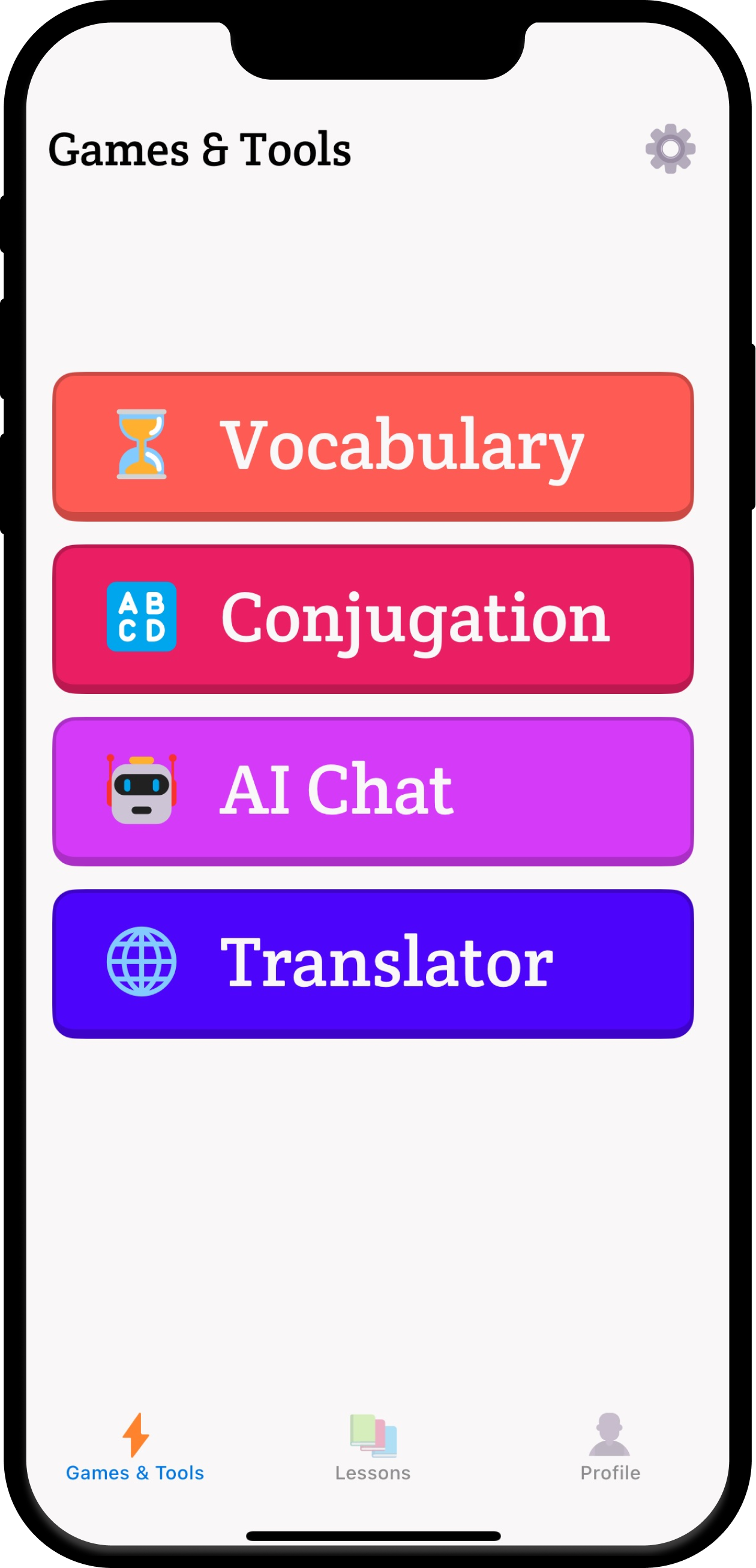
Games & Tools
Essential tools for every learner
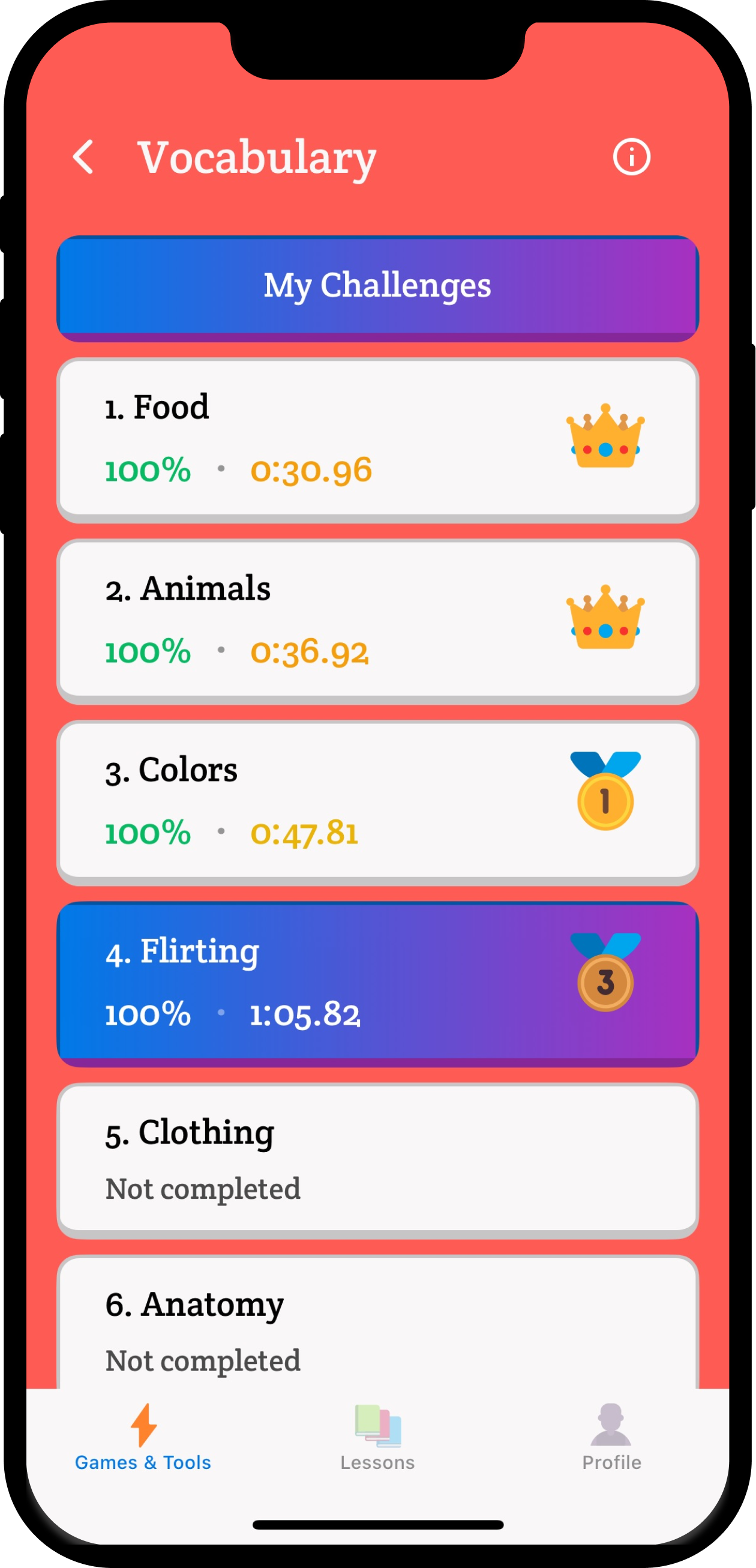
Timed Challenges
Practice vocabulary & conjugation
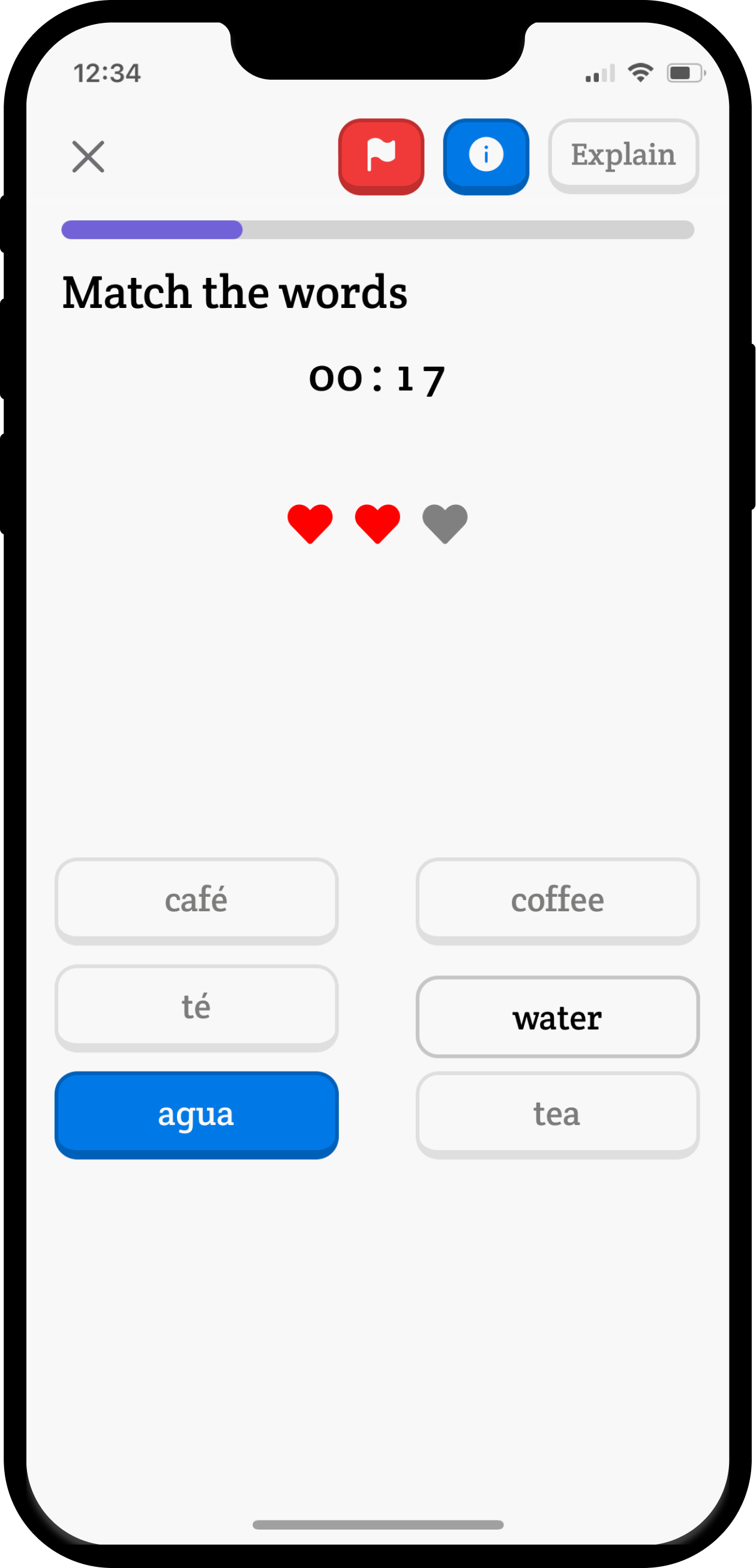
Interactive Games
Learn through engaging gameplay
1. Polychat The All-in-One for Unlimited, Gamified Learning

Polychat fixes one of the biggest problems serious learners have with Duolingo. It doesn't punish momentum.
If you want to do five minutes, you can. If you want to drill conjugations for an hour, you can do that too. No hearts. No energy meter. No artificial ceiling placed on your practice when you're finally locked in.
That matters more than people think. One of the clearest splits between casual and committed learners is tolerance for friction. Casual learners can live with limits. Ambitious learners can't. Polychat is built for the second group.
Why it works better than Duolingo
The app combines short, game-like exercises with tools that help you build usable skill. You get timed vocabulary challenges, conversation games, translation practice, progress tracking, and a personal dictionary that grows as you study. It also supports learning across 15+ languages and allows you to learn one foreign language from another instead of forcing everything through English.
That last part is rare, and it matters. Most comparison lists ignore how restrictive English-first course design is for multilingual users. Polychat's bidirectional approach is one of the strongest reasons it stands out among better apps than duolingo for polyglots, expats, and non-English-native learners. The company's own write-up on gamification in language learning also aligns with what works in practice: games help when they reinforce study, not when they throttle it.
A lot of apps say they're gamified. Polychat feels more like it uses gamification as a delivery method for real repetition. That's a better design choice.
Best for
Learners who want structure and repetition without being boxed into a tiny daily quota.
Especially good for:
- Ambitious beginners: You can build a daily habit without getting stalled by penalties.
- Intermediate learners: Conjugation and translation work gives you more depth than beginner vocab tapping.
- Polyglots: Learning between non-English language pairs is a real advantage.
- Travelers and professionals: The built-in translator and quick game formats are useful when you're learning for practical use, not just entertainment.
Practical rule: If Duolingo motivates you but its limits make you quit mid-session, Polychat is the most direct upgrade.
There is a trade-off. It's a newer app, so the catalog isn't as sprawling as the oldest giants. And like most serious platforms, some features may sit behind a subscription. But the core design choice is the right one: reward effort instead of capping it.
Vs. Duolingo, Polychat feels less like a streak machine and more like a training app.
2. Babbel For Structured, Conversation-Focused Lessons

Babbel is what I recommend to people who are tired of guessing the grammar.
It teaches more like a course than a game. Lessons are short, but they build logically. You learn phrases you would use, and Babbel is much better than Duolingo at explaining why a sentence works the way it does.
That difference shows up in user perception too. While Duolingo led global installs in 2024 with 16.2 million and Babbel had 1.16 million, Babbel is repeatedly favored by serious learners for structured, textbook-style progress rather than rote vocab drills, according to the verified comparison summary tied to this discussion reference.
Best for
Use Babbel if you want a guided path from beginner into solid lower-intermediate territory.
It suits:
- Learners who need clarity: Grammar notes and conjugation coverage reduce the guesswork.
- People preparing for real conversations: Dialogues feel more practical than Duolingo's quirky sentence style.
- Anyone who needs a calm interface: Babbel skips the streak pressure, intrusive animations, and clutter.
For speaking, it pairs well with extra practice outside the app. If that's your weak spot, this guide on how to improve speaking skills is a useful complement because no app, including Babbel, fully replaces live production.
Babbel is better than Duolingo when you want to understand the language, not just survive the next quiz.
The downside is that advanced learners may outgrow it. If you're aiming for high-level nuance or lots of spontaneous conversation, you'll probably need another tool alongside it. But vs. Duolingo, Babbel is a much better fit for learners who want an actual curriculum.
3. Pimsleur For Auditory Learners and Speaking Confidence
Pimsleur is the app for people who learn best with their ears.
Its strength is simple. It gets you listening and responding out loud from the start. If you're someone who freezes when it comes time to speak, Pimsleur often works better than visual-first apps because it trains recall through sound, not just recognition on a screen.
The core lessons are audio-led and work especially well during a commute, a walk, or gym time. That hands-free format is a significant selling point. Duolingo is easy to open. Pimsleur is easier to keep using when your day is busy.
Best for
Pimsleur makes the most sense for:
- Auditory learners: You retain language through repeated listening and response.
- Speaking-anxious beginners: The method pushes active recall without social pressure.
- Busy adults: It's one of the few solid options that doesn't require your eyes the whole time.
What it doesn't do as well is reading, writing, and explicit grammar explanation. If you need to see sentence structure laid out clearly, Pimsleur can feel too implicit. That's the trade-off.
Vs. Duolingo, Pimsleur is less playful but far more direct about building speaking reflexes. Duolingo often trains recognition. Pimsleur trains response. Those are not the same skill.
4. Busuu For Community Feedback from Native Speakers

Busuu gets one thing right that many apps still miss. Human correction matters.
You can work through structured lessons, then submit writing or recordings for feedback from native speakers. That adds a layer of realism Duolingo doesn't offer. It's one thing to tap the right answer. It's another to write something imperfect, send it out, and get corrected by a real person.
The verified market summary also highlights Busuu as strong in business contexts because of native speaker interactions and structured grammar training, within a broader review of Duolingo alternatives in this competitor analysis reference.
Where Busuu beats Duolingo
Busuu is stronger when your goal includes output, not just input.
Its best use cases are:
- Learners who want correction: Native-speaker feedback helps catch unnatural phrasing.
- Professionals: Business-oriented learners often need polished writing and speaking, not just recognition drills.
- People who like benchmarks: CEFR-style progression gives your study some shape.
The app isn't perfect. Community feedback quality varies. Some corrections are excellent. Some are brief or inconsistent. That's the downside of social learning systems.
Still, vs. Duolingo, Busuu feels closer to authentic language use. The moment another person reacts to your sentence, the exercise stops being abstract.
5. Memrise For Real Native-Speaker Exposure Videos

Memrise is one of the best picks if Duolingo has made your listening too clean and too artificial.
Its strongest feature is exposure to native speaker video. You hear real people, genuine accents, and more natural delivery. That matters because many learners stay in the safe zone too long. They get used to carefully controlled app audio, then panic when a real person speaks at normal speed.
Best for
Memrise is especially useful for:
- Learners improving listening comprehension: Native clips create more realistic input.
- People who want practical vocabulary: The app leans toward common words and phrases.
- Anyone who wants low-friction speaking practice: The AI conversation tools give you a place to respond without needing a tutor.
This is one of those apps that complements a grammar-heavy tool well. It doesn't always explain grammar directly, so if you need rule-based instruction, you'll want a second app.
Real listening practice should sound messy, fast, and human. Memrise gets closer to that than Duolingo does.
Vs. Duolingo, Memrise is better when your problem isn't motivation. It's realism.
6. LingoDeer For In-Depth Grammar, Especially for Asian Languages

LingoDeer is one of the cleanest examples of an app built by people who understand that some languages need more explanation, not less.
That's why it's such a common recommendation for Japanese, Korean, and Chinese. Duolingo's style can work reasonably well for simple pattern exposure. It works much worse when learners need clear grammar notes, script support, and tighter sequencing.
Why learners switch
LingoDeer feels more like a proper beginner course. Units build carefully. Explanations are clearer. Practice tends to reinforce a point instead of just tossing another sentence at you and hoping you infer the rule.
Use it if you're:
- Starting an Asian language: Here it shines most.
- Grammar-dependent: You want to know why the sentence changes.
- Combining tools: It pairs well with conversation-focused apps that lack explanation.
Its weakness is that it can feel more academic than conversational. You may finish a session feeling smart but not especially spontaneous. That doesn't make it worse. It just means you should know what role it's playing.
Vs. Duolingo, LingoDeer is less addictive and more instructive. For many learners, that's exactly the upgrade.
7. Rosetta Stone For Pure, Immersive Learning

Rosetta Stone still has a place, but only if its method fits your brain.
It teaches through immersion. You match words and images, absorb patterns through repetition, and work without leaning on translation. Some learners love that because it forces direct association with the target language. Others hate it because they want quick explanations and don't want to reverse-engineer every rule.
According to the verified market summary on the global language learning app space, Rosetta Stone ranks as the best overall Duolingo competitor by G2 in 2026, within a market projected to reach 24.39 billion dollars by 2033 at a 16.15% CAGR. The number matters less than the broader point: there is plenty of room for methods that don't imitate Duolingo.
Best for
Rosetta Stone works best for:
- Learners who like immersion: You want fewer translations and more direct target-language thinking.
- Pronunciation-focused users: Speech feedback is a core part of the experience.
- People who prefer a distraction-free app: It feels serious and uncluttered.
The downside is obvious. If you need explicit grammar teaching, this can be frustrating fast. Vs. Duolingo, Rosetta Stone is less game-like and often less immediately rewarding, but it's also less shallow for the right kind of learner.
8. Clozemaster For Intermediate Vocabulary in Context

Clozemaster is not a beginner app, and that's why it works.
Once you've outgrown absolute basics, the next bottleneck is usually vocabulary in context. Not isolated words. Not flashcards with cartoonish examples. Real sentence exposure at volume. Clozemaster does that through fill-in-the-blank exercises, sorted by frequency, so you keep seeing useful words in usable structures.
Best for
This app is a strong fit for:
- Late beginners and intermediates: You already know the basics and need scale.
- Vocabulary-focused learners: You want more sentence exposure than Duolingo gives.
- Polyglots: The range of supported language pairings is one of its biggest strengths.
What doesn't work is using it as your only app. It can get repetitive, and it won't hold your hand through grammar foundations. But vs. Duolingo, Clozemaster is much better at pushing learners past the baby-steps phase.
If Duolingo taught you to recognize basic patterns, Clozemaster helps you stop living inside beginner content.
9. Lingvist For Efficient, Data-Driven Vocabulary Building
Lingvist is for people who don't care whether learning feels cute. They care whether it works.
The app is lean, focused, and built around high-frequency vocabulary plus spaced review. It also lets you build study material from your own text, which is one of the smartest features in this category. If you work in a specific field or read around a hobby, that customization is useful fast.
The verified market summary tied to this analysis of Duolingo competitors describes Lingvist as using AI-driven adaptive flashcards for 5x faster vocabulary acquisition per benchmarks. Even if you take any benchmark claim cautiously, the broader truth holds up in use: Lingvist is optimized for efficient word learning, not entertainment.
Best for
Lingvist suits:
- Busy professionals: Short sessions still feel productive.
- Learners with domain-specific goals: Custom decks let you target relevant vocabulary.
- People who like measurable progress: The interface is stripped down and purposeful.
If vocabulary is your weak point, this article on the best way to learn vocabulary is also worth pairing with it, because no SRS app fixes poor review habits on its own.
The downside is obvious. Grammar support is light, and the experience can feel more like training software than a language course. Vs. Duolingo, Lingvist is less charming and more efficient. That's a good trade for the right learner.
10. Mondly For a Wide Variety of Languages and AR/VR Features

Mondly is the app I usually put in the "good explorer, weaker finisher" category.
It offers a broad set of languages and a format that's easy to pick up. If you like the accessibility of Duolingo but want more language-pair flexibility and extras like chatbot-style practice, Mondly is a sensible alternative.
It's also one of the few names specifically noted for supporting more flexible learning between languages, which is important because most apps still lean heavily on English-based paths. That multilingual angle is a real advantage in a market where non-English users are often underserved.
Best for
Choose Mondly if:
- You want to sample multiple languages: Breadth is part of the appeal.
- You enjoy tech novelty: AR and VR features can make practice more engaging.
- You want low-pressure conversation practice: The chatbot gives you an easy starting point.
The limitation is depth. Mondly is useful for exposure, habit-building, and light conversation practice. It is not the app I'd choose as my main engine for advanced proficiency.
Vs. Duolingo, Mondly feels more flexible across languages, but not necessarily deeper. That's the trade-off, and it's worth being honest about.
Top 10 Duolingo Alternatives: Feature Comparison
| App | Core Features | UX & Quality (★) | Price / Value (💰) | Best For (👥) | Unique Selling Points (✨ / 🏆) |
|---|---|---|---|---|---|
| 🏆 Polychat: The All-in-One for Unlimited, Gamified Learning | Unlimited lessons & games, advanced conjugation tool, AI features, personal dictionary, 15+ languages | ★★★★★ gamified, progress tracking, bite-sized + deep practice | 💰 Free core + IAPs; high value for unlimited practice | 👥 Motivated learners & polyglots | ✨ Learn between languages, best conjugation tool, free translator, no hearts 🏆 |
| Babbel: Structured, Conversation-Focused Lessons | 10–15 min linguist-designed lessons, speech recognition, spaced repetition | ★★★★ practical, structured progression | 💰 Subscription (monthly→lifetime), 1st lesson free | 👥 Beginners→Intermediates who want real-world convo | ✨ Linguist-crafted dialogues, explicit grammar notes |
| Pimsleur: Audio-First Speaking Method | 30-min audio lessons, question-recall-response, offline downloads | ★★★★ excellent for speaking & listening confidence | 💰 Subscription (per-language or All Access), premium price | 👥 Commuters & auditory learners | ✨ Hands-free audio method, proven accent training |
| Busuu: Community Feedback from Natives | CEFR-aligned courses, placement test, community corrections, AI study plan | ★★★★ peer-corrected, clear CEFR pathing | 💰 Freemium; Premium provides full feedback & offline | 👥 Learners seeking native-speaker corrections | ✨ Human feedback loop, CEFR benchmarking |
| Memrise: Real Native-Speaker Exposure | Short native-speaker videos, MemBot AI conversation, SRS vocab | ★★★★ authentic listening & accents | 💰 Freemium; Pro for full videos & features | 👥 Visual & auditory learners | ✨ Thousands of native video clips, instant speaking practice |
| LingoDeer: In-Depth Grammar Focus | Clear grammar explanations, unit paths, HD native audio, review games | ★★★★ strong clarity for grammar learners | 💰 Freemium; Premium monthly/annual/lifetime | 👥 Beginners (esp. Japanese, Korean, Chinese) | ✨ Explicit grammar notes, strong Asian-language curriculum |
| Rosetta Stone: Immersive, No-Translation Method | Dynamic immersion, image-based lessons, TruAccent pronunciation | ★★★ immersive, intuitive but repetitive | 💰 Subscription or lifetime; mid–high price | 👥 Disciplined beginners preferring immersion | ✨ No-translation approach, strong pronunciation engine |
| Clozemaster: Contextual Intermediate Vocab | Frequency-based cloze sentences, SRS, wide language pairings | ★★★★ gamified, fast contextual vocab growth | 💰 Extensive free tier; Pro for extras | 👥 Intermediate learners (A2–B1+) | ✨ Frequency-ordered sentence practice, ideal after beginner apps |
| Lingvist: Data-Driven Vocabulary Efficiency | AI-driven high-frequency vocab, custom decks from text, SRS | ★★★★ highly efficient, focused sessions | 💰 Subscription with free trial | 👥 Busy professionals & data-driven learners | ✨ Create custom lessons from your own texts, rapid vocab gains |
| Mondly: Breadth + AR/VR Experiments | 41 languages, voice chatbot, daily lessons, AR/VR companions | ★★★ casual, tech-forward but shallow depth | 💰 Freemium; often discounted lifetime deals | 👥 Casual learners & polyglot samplers | ✨ Massive language variety, chatbot + AR/VR features |
Commit to a Better Way of Learning
Duolingo isn't useless. It's just limited.
It remains the giant in the category. In Q1 2025, Duolingo reported 130.2 million monthly active users, 46.6 million daily active users, and $230.7 million in quarterly revenue. That scale tells you something important. Duolingo is great at getting people in the door. It is not proof that it is the best tool once your goals become more serious.
A lot of learners confuse consistency with progress because Duolingo makes consistency visible. You see the streak. You see the XP. You see the league movement. What you don't always see is whether you're getting better at the skills that matter most: recalling words under pressure, understanding natural speech, building sentences on your own, and holding a conversation when the script disappears.
That's why moving on makes sense.
If your main problem is motivation, pick an app that keeps the game elements but removes the friction. Polychat is the cleanest answer there. If your problem is lack of structure, Babbel or LingoDeer will serve you better. If speaking is the bottleneck, Pimsleur, Busuu, or Memrise will give you more usable practice. If you're stuck in the intermediate plateau, Clozemaster and Lingvist are better tools for expanding vocabulary in a way that transfers.
The key is to stop looking for a single "best" app in the abstract and start choosing based on what is broken in your learning right now.
A few practical decisions help:
- If you quit because of limits: Use an app with unlimited daily practice.
- If you don't understand grammar: Use one that teaches rules directly.
- If you can read but can't speak: Use audio-first or feedback-based tools.
- If you know the basics but still feel stuck: Add context-heavy vocabulary practice.
There's also a bigger market shift behind all this. The global language learning apps market was valued at 6.34 billion dollars in 2024 and is projected to reach 24.39 billion dollars by 2033. More apps are competing for serious learners now, which is good news for anyone frustrated by shallow gamification. The strongest alternatives aren't trying to be a copy of Duolingo with different branding. They're solving the parts Duolingo handles poorly.
One more point matters. Better apps than duolingo don't always feel better on day one. Some feel less flashy. Some feel harder. Some demand more attention. That's not a flaw. In language learning, "harder" often means you're finally doing work that transfers outside the app.
So don't choose based on which tool makes five minutes disappear fastest. Choose based on which tool gets you closer to the moment you want: understanding a native speaker, replying without panic, reading without translating every line, or using the language at work, while traveling, or in your everyday life.
Duolingo can start the habit. It usually can't finish the job.
If you're tired of hearts, dead-end streaks, and beginner-level repetition, Polychat is the upgrade worth trying. It keeps the motivation of gamified learning but removes the caps that get in the way of serious progress. You get unlimited practice, strong conjugation tools, conversation and translation games, support for 15+ languages, and the rare ability to learn one foreign language from another. For learners who want daily practice that stays fun and scales with ambition, it's one of the smartest alternatives on this list.