How to Say I Need Help in Spanish Like a Native
The most direct way to say "I need help" in Spanish is Necesito ayuda (neh-seh-SEE-toh ah-YOO-dah). It's a simple, powerful phrase that works in almost any general situation, making it the perfect starting point for any learner. Mastering this one ensures you can communicate a basic need clearly from day one.
Ready to Learn Spanish?
Try PolyChat's engaging language lessons, interactive learning games and put your Spanish vocabulary to the test!
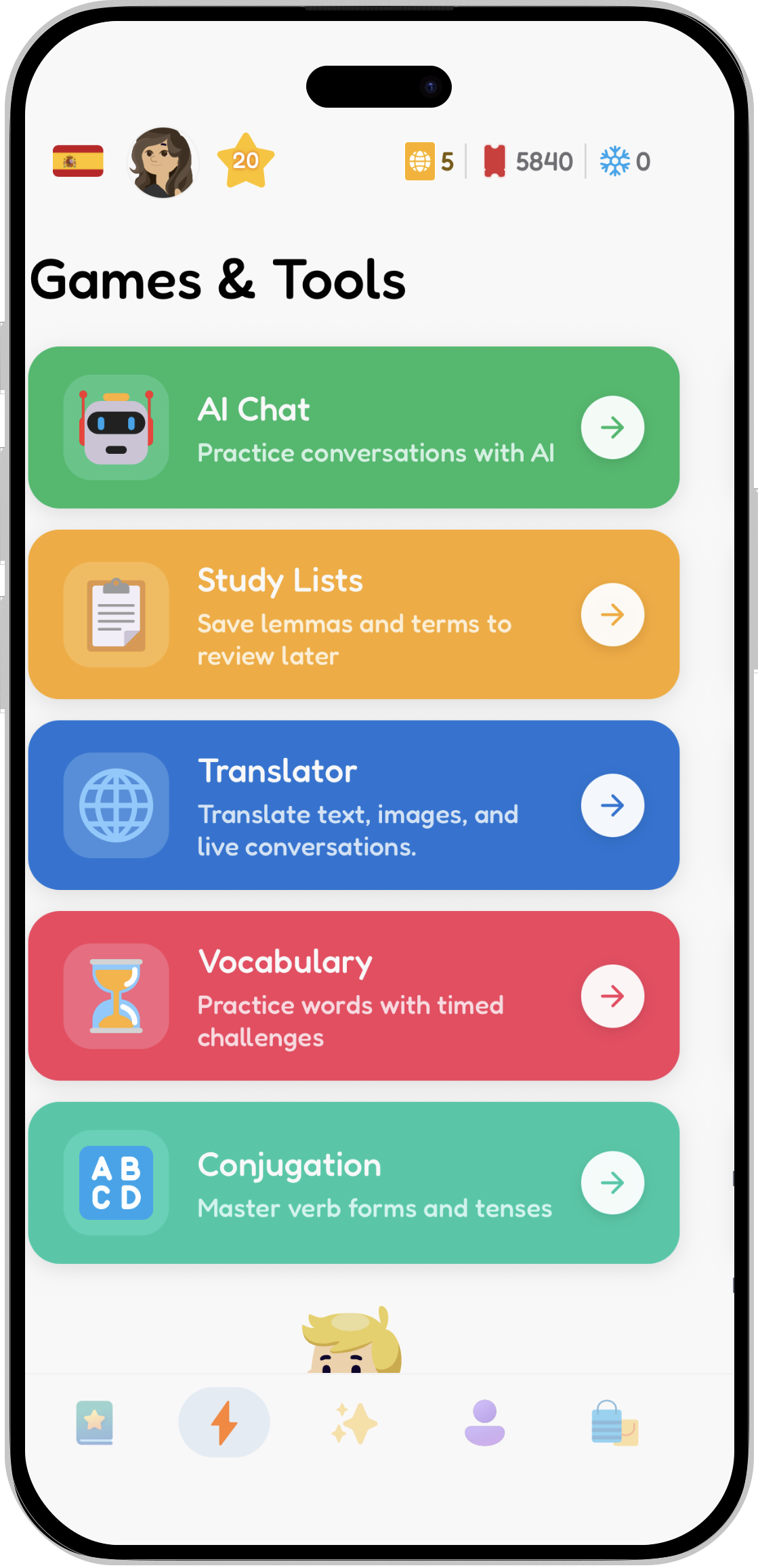
Games & Tools
Tools that every language learner needs at all stages of their learning journey.
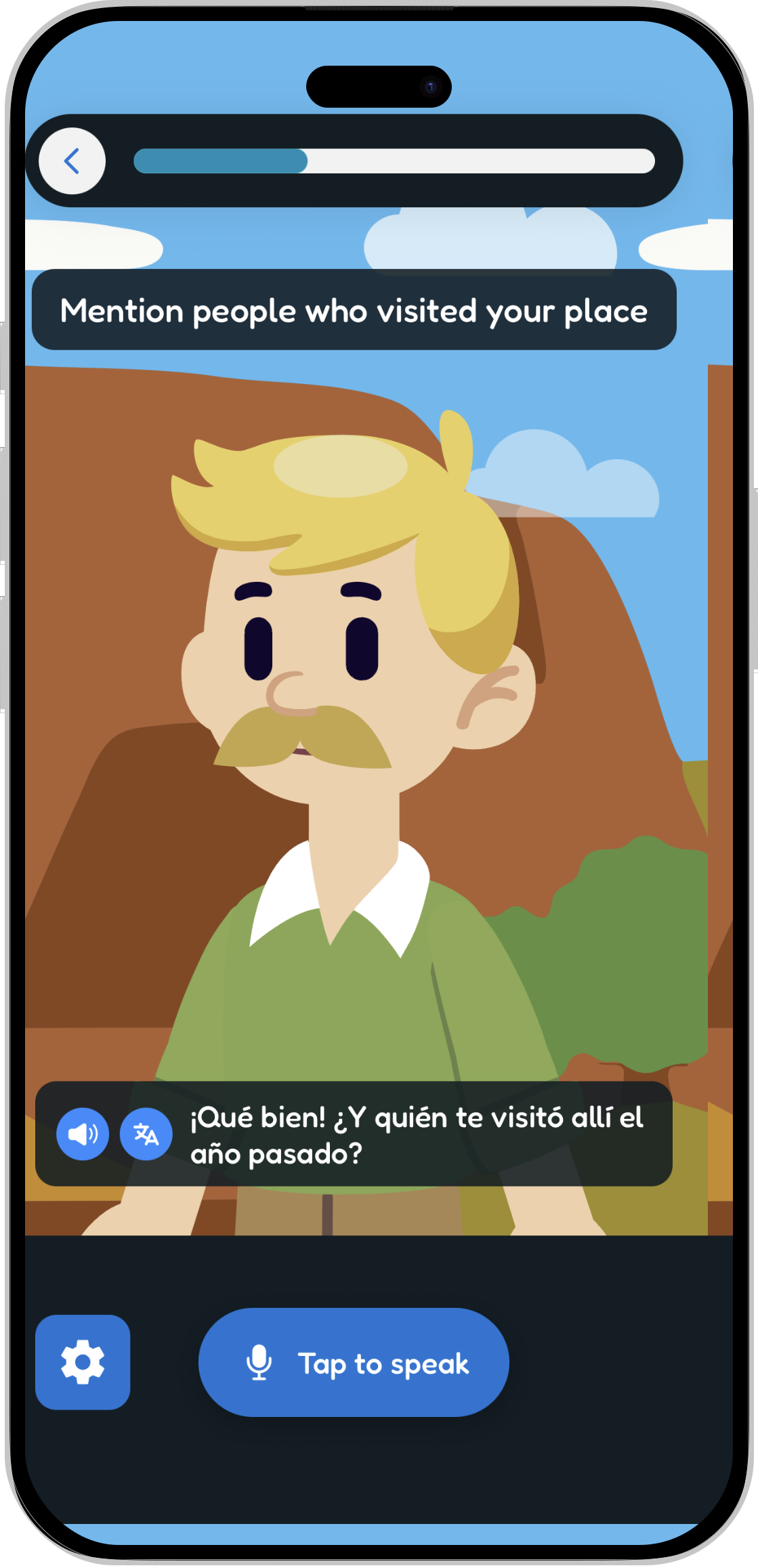
AI Chat Tutor
Practice real conversations with an AI tutor that helps you speak with confidence.
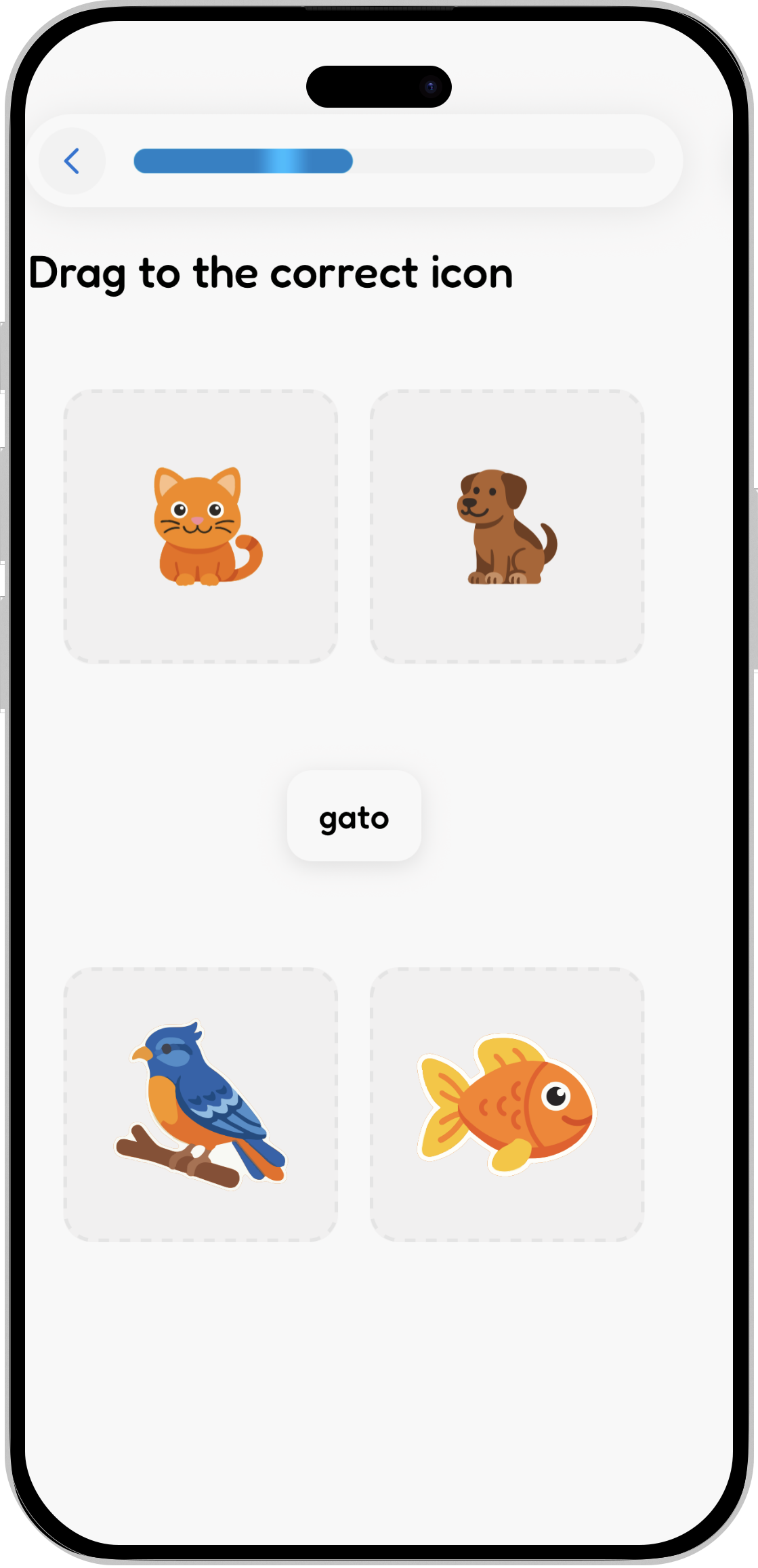
Interactive Games
A variety of games to help you learn and remember new words and phrases.


Your Essential Spanish Phrases for Asking for Help
Knowing how to ask for help in Spanish is more than just a handy travel skill; it's a fundamental tool for connection and safety.
Imagine you're lost on the vibrant streets of Mexico City or trying to navigate a business meeting in Madrid. A phrase as simple as Necesito ayuda can be a total game-changer. With Spanish being the native language for over 500 million people, this is one of the first things you should lock down.
While Necesito ayuda is your reliable go-to, context really matters. You wouldn't use the same tone asking a friend for a hand as you would with a police officer in an emergency.
Choosing the Right Phrase for the Situation
The key is matching your words to the urgency and formality of the moment. A casual request for directions uses different language than a serious emergency. Understanding these nuances is what helps you sound more natural and communicate your needs effectively.
This decision tree gives you a quick visual for figuring out which phrase to use based on your situation.
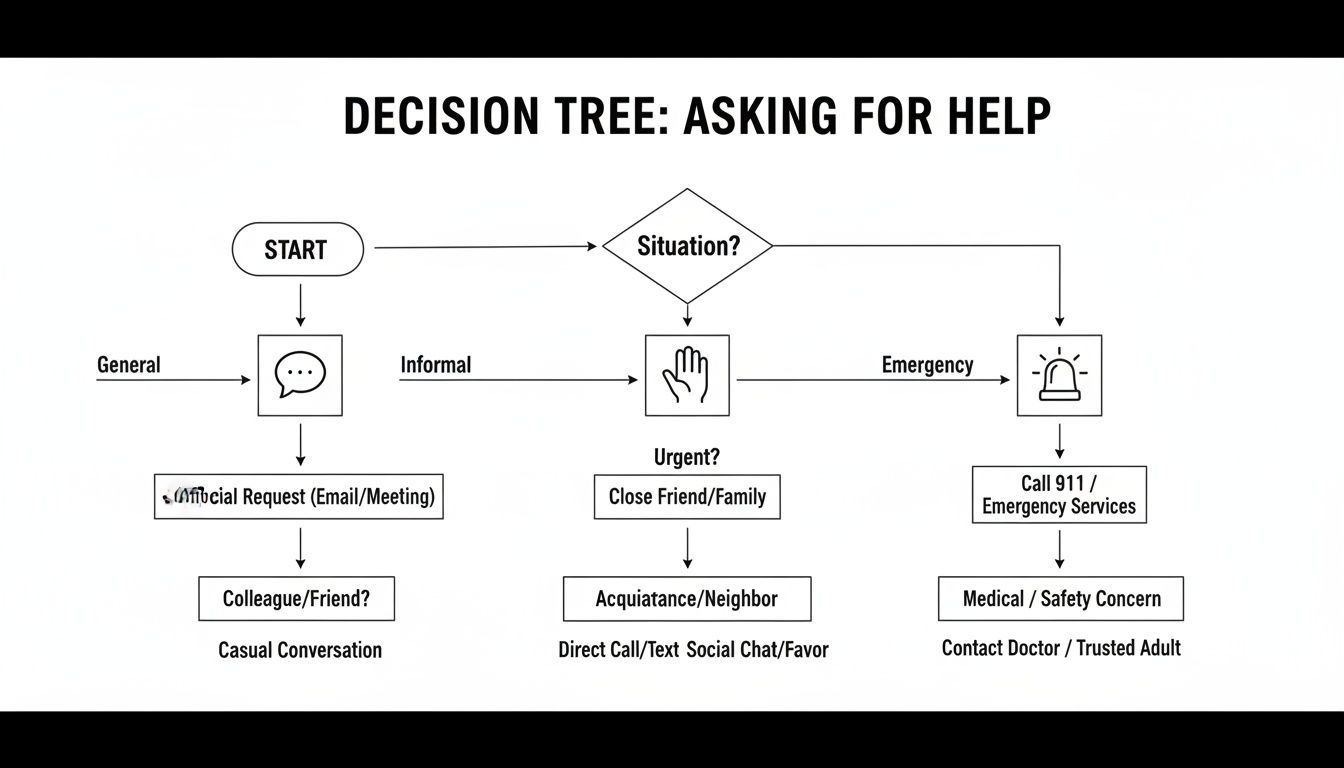
As the chart shows, your first step is always a quick assessment of the situation. Of course, choosing the right words is only half the battle. Nailing the pronunciation is just as critical. If you want to dive deeper, our guide on common Spanish pronunciation mistakes can help you avoid the most common pitfalls.
To make things even easier, here’s a quick-reference table with the essentials.
Quick Guide to Asking for Help in Spanish
This table breaks down the most common phrases, so you can quickly find the right words for any situation.
| Spanish Phrase | English Meaning | When to Use | Pronunciation |
|---|---|---|---|
| Necesito ayuda | I need help | General situations, both formal and informal. | neh-seh-SEE-toh ah-YOO-dah |
| ¿Me puedes ayudar? | Can you help me? | Informal, friendly requests with peers. | meh PWEH-dehs ah-yoo-DAHR |
| ¡Ayuda! / ¡Socorro! | Help! / Help! (SOS) | Urgent, serious emergencies. | ah-YOO-dah / soh-KOH-rroh |
Keep this little guide handy. Whether you're asking for directions or signaling a real emergency, having these phrases ready will give you a major confidence boost.
Navigating Formal and Informal Requests

Knowing the words is the first step, but using the right tone is what really makes a difference in Spanish-speaking cultures. There's a big emphasis on respect baked right into the grammar, and it all comes down to two little words: tú (informal 'you') and usted (formal 'you').
Choosing the right one is a crucial social cue. Use the informal tú with friends, family, or people your own age—it’s warm and familiar. But if you walk up to an older person, a police officer, or a shopkeeper and use tú, it can come across as a bit disrespectful. For those situations, the formal usted is your best bet. It shows politeness and deference.
This distinction directly changes how you ask for help. While the core phrase stays the same, the verb you use will shift to match the level of respect you need to show.
Formal vs. Informal Ways to Ask for Help
When you need to know how to say "I need help" in Spanish, the verb you choose signals who you're talking to. Think of it as adjusting your politeness dial.
-
Informal (Tú): ¿Me puedes ayudar? (meh PWEH-dehs ah-yoo-DAHR) This is your go-to for peers. You might ask a fellow student, "Disculpa, ¿me puedes ayudar con este problema?" (Excuse me, can you help me with this problem?).
-
Formal (Usted): ¿Me puede ayudar? (meh PWEH-deh ah-yoo-DAHR) Use this for authority figures, elders, or anyone you've just met. For example, you could say to a hotel receptionist, "Perdone, ¿me puede ayudar con mis maletas?" (Pardon me, can you help me with my bags?).
Key Takeaway: That one little 's' on the end of puedes carries a lot of social weight. When in doubt, always default to the formal usted form (puede). It's always better to sound a little too polite than accidentally rude.
Nailing this small detail is a huge step toward sounding more natural. It's not just about getting what you need; it's about showing you respect the local culture. This one adjustment can turn a simple question into a respectful interaction, which is especially important if you start using direct commands. If you want to dive deeper into that, we have a whole guide on how to use commands in Spanish correctly.
Communicating Clearly in an Emergency
When things get serious, the nuances of formal vs. informal Spanish go right out the window. Your only goal is to communicate clearly and immediately. In these moments, you need short, direct phrases that cut through the noise and get you help—fast.
The most powerful word you can learn is simply ¡Ayuda! (ah-YOO-dah). Think of it as the direct equivalent of shouting “Help!” and save it for genuine emergencies. You might also hear ¡Socorro! (soh-KOH-rroh), which is a bit more dramatic—like an SOS or distress call. It's common in movies, but absolutely works in a real crisis.
Specific Emergency Vocabulary
Just shouting for help is a good start, but telling people what kind of help you need is way better. It gets the right people moving in your direction much faster.
Drill these phrases until they're second nature:
- ¡Llama a la policía! (YAH-mah ah lah poh-lee-SEE-ah) – Call the police!
- ¡Llama a una ambulancia! (YAH-mah ah OO-nah ahm-boo-LAHN-see-ah) – Call an ambulance!
- ¡Fuego! (FWEH-goh) – Fire!
- Necesito un médico. (neh-seh-SEE-toh oon MEH-dee-koh) – I need a doctor.
These are direct commands and statements. There's zero room for misinterpretation.
When you're under high stress, your brain defaults to what it knows best. If you over-learn these phrases now, you won't have to think when every second counts—you'll just react.
This is especially critical for travelers. The Instituto Cervantes reports that a massive 87% of tourists visiting Spanish-speaking countries aren't native speakers. That's a huge number, and it underscores why having these simple "I need help" phrases locked in is so essential for keeping a bad situation from getting worse.
Putting It All Together in a Crisis
Let's walk through a scenario. Imagine you witness a traffic accident and need to act quickly.
First, you need to get someone's attention. A loud ¡Ayuda! will signal that there's a problem.
Immediately follow up with the specifics. Point toward the accident and say, "¡Necesito ayuda! ¡Llama a una ambulancia!" (I need help! Call an ambulance!).
By combining the general alert with a specific command, you maximize the chance of getting the exact help you need without delay. This two-step strategy—alert, then direct—is the most effective thing you can do in any emergency.
Explaining Exactly What Kind of Help You Need

Okay, you’ve gotten someone’s attention—fantastic. But just saying "I need help" is only half the battle. What happens next?
The key is to give a little context. You don’t need to deliver a perfectly crafted speech, but adding just a few more words can turn a vague plea into a clear request that people can actually act on.
This is where you build on your basic phrase. Luckily, there are two incredibly simple structures that will cover about 90% of the situations you’ll likely find yourself in.
Adding Specifics to Your Request
Let's break down the two most useful ways to explain what's wrong. Think of these as sentence starters that you can tack a single word onto.
- Necesito ayuda con... (neh-seh-SEE-toh ah-YOO-dah kohn...) – This literally means "I need help with..." It’s your go-to phrase for anything involving a physical object or a specific task.
- No entiendo... (noh ehn-TYEHN-doh) – This one means "I don't understand..." and it’s a lifesaver when you’re confused by signs, directions, or something someone said.
With these two little phrases, you can instantly clarify your situation.
For instance, you could say “Necesito ayuda con mis maletas” (I need help with my bags) to a taxi driver or a hotel porter. If you’re staring blankly at a map, you can tell a passerby, “No entiendo las direcciones” (I don't understand the directions).
Pro Tip: Don't get hung up on forming perfect, complex sentences. Your goal is communication, not grammatical perfection. Just bolting a noun onto your starter phrase is often all it takes. Saying "Necesito ayuda con el taxi" (I need help with the taxi) gets the message across loud and clear.
This is the skill that bridges the gap between a frustrating, confusing interaction and a successful one. It empowers you to have a real, albeit simple, conversation that gets you the specific help you need, right when you need it.
Practice and Master Your Phrases with PolyChat

Knowing how to say "I need help" in Spanish is one thing. Actually feeling confident enough to use it when you’re flustered or lost is another challenge entirely. The real bridge between just memorizing words and truly communicating is consistent, interactive practice. This is where tools designed for active learning really make a difference.
To get these essential phrases locked in your brain and ready to go, you need to move beyond flashcards. Platforms like PolyChat or other tools like the one where you can practice with the lunabloomai app help you build the muscle memory needed to speak naturally by putting you in realistic scenarios.
Turning Knowledge into Skill
PolyChat is designed to turn passive learning into an active skill through fun, gamified lessons. Instead of just reading phrases on a screen, you'll find yourself using them in timed vocabulary challenges, interactive conversation games, and conjugation drills. This approach helps lock in phrases like Necesito ayuda and its variations for good.
One of the biggest pluses is the freedom to learn at your own pace. PolyChat ditches the frustrating hearts and energy systems, so you can practice as much as you want, whenever the motivation strikes.
Your ambition to learn shouldn't be capped. Unlimited practice means you can drill these critical phrases until they become second nature, ensuring you’re prepared for any real-world situation you might encounter.
This skill is invaluable for travelers. According to the Instituto Cervantes, a staggering 87% of tourists in Spanish-speaking countries come from non-Spanish regions. That highlights just how much mastering a few key requests can boost your safety and help you make better connections on the road.
As you learn, the platform builds a personal dictionary of words and phrases for you. Combine that with a free built-in translator, and your practice sessions become completely seamless. You can learn more about how it all works in our guide to the PolyChat app for Spanish learners. It’s a method that turns your goal of speaking Spanish into a tangible skill you can actually measure.
Once you start getting the hang of the basics, a few questions always seem to come up. Nailing these little details is what separates a beginner from someone who can navigate real-world situations with a bit more confidence.
A big one is whether you really need to tack on por favor (please) every single time. Short answer? Yes, you should. Slipping it into a phrase like “¿Me puede ayudar, por favor?” is a simple habit that instantly makes you sound more respectful and less demanding. It's a small touch that goes a long way.
Another thing learners worry about is regional dialects. Will the Spanish you learned for a trip to Madrid even work in Mexico City?
Do I Need to Worry About Regional Slang?
For the most part, no. Core phrases like Necesito ayuda are understood absolutely everywhere in the Spanish-speaking world. But, just like in English, different places have their own colorful ways of saying things.
- In Argentina, you might hear someone ask, “¿Me das una mano?” which literally means, “Can you give me a hand?”
- In parts of Latin America, you could hear “¿Me echas un cable?”—another informal way of saying something like, “Can you throw me a line?”
These local flavors are fun to learn over time, but you definitely don't need to memorize them all to get by. Sticking to the standard phrases we've covered is always your safest and most effective bet.
Key Takeaway: Don’t get hung up on regional differences when you're starting out. While local slang is cool, the essential phrases like Necesito ayuda and ¡Ayuda! are universal constants that will be understood from Spain to Chile.
And finally, don't forget that how you ask is just as important as what you say. A friendly expression and making eye contact can signal your need for help before a single word leaves your mouth. Polite language combined with approachable body language is the perfect recipe for getting the assistance you need, wherever you are.
Ready to turn these phrases into fluent conversation? With PolyChat, you can practice in fun, interactive games without limits. Start mastering real-world Spanish today by downloading the app.

Jean-Baptiste Bolh
Co-Founder
Applied AI