Best AI Language Learning Apps to Accelerate Fluency

AI language learning apps are a complete game-changer. Think of them as a personal language tutor, powered by artificial intelligence, that lives right on your phone. They create lessons that adapt to you, give feedback on the spot, and even let you practice real conversations.
These apps represent a massive leap from the static flashcard tools of the past. They're dynamic, responsive learning partners that fit in your pocket.
Ready to Learn a Language?
Try PolyChat's engaging language lessons, interactive learning games and put your new vocabulary to the test!
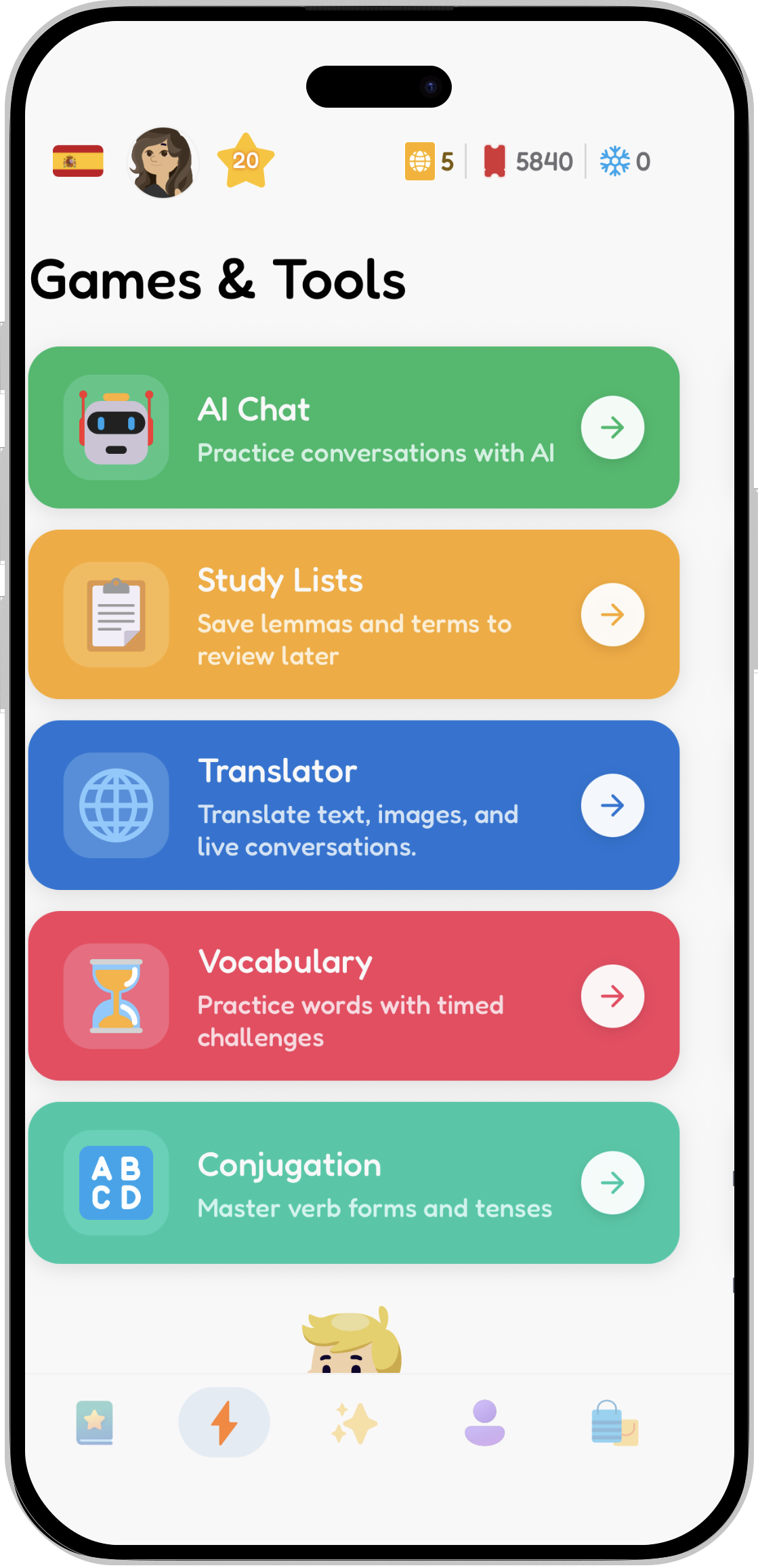
Games & Tools
Tools that every language learner needs at all stages of their learning journey.
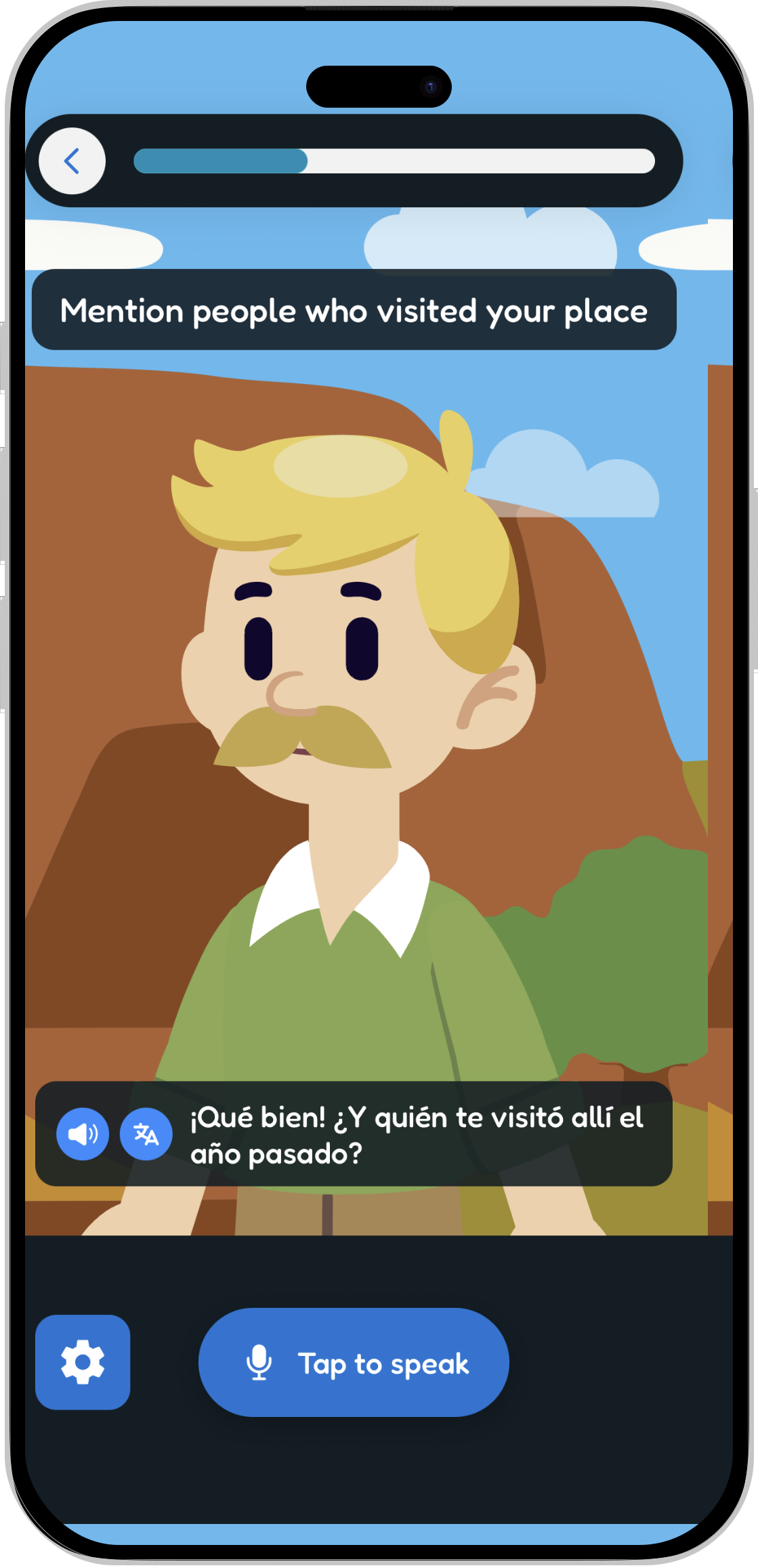
AI Chat Tutor
Practice real conversations with an AI tutor that helps you speak with confidence.
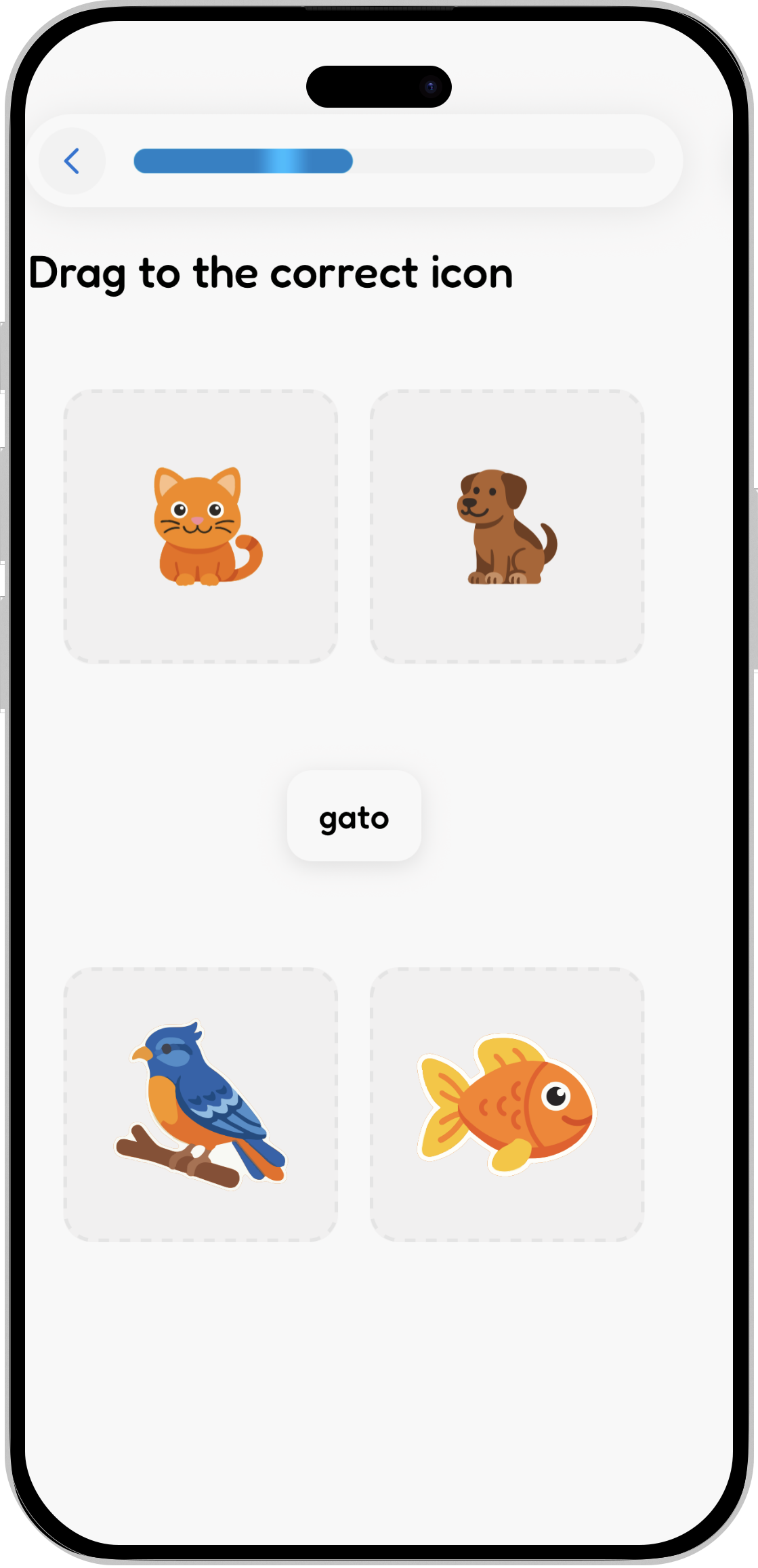
Interactive Games
A variety of games to help you learn and remember new words and phrases.


The Future of Fluency Is in Your Pocket
Forget the old image of dusty textbooks and rigid classroom schedules. The way we learn languages has been completely turned on its head, shifting from boring rote memorization to truly interactive and fun experiences. The jump from simple digital flashcards to today's powerful AI language learning apps is a huge milestone.
What used to be a one-size-fits-all slog is now deeply personal. These smart tools don't just throw information at you; they talk with you. They learn how you learn, adapt to your pace, and build a study path that feels like it was made just for you. It's less like using an app and more like having a dedicated tutor on call 24/7.
A New Era of Accessibility and Growth
This isn't just a small trend; the market demand is explosive. The global digital language learning market is on track to hit $30-37 billion by 2026, with some estimates projecting it to soar as high as $55-120 billion by 2030. This incredible growth shows just how much smartphones have opened up language learning to millions who never had the time or money for traditional classes. You can explore the full market dynamics to see how this is reshaping education.
AI is the engine driving all this success, making the whole process way more effective. Here are the key benefits that really set these modern apps apart:
- Personalized Pacing: The app figures out your strengths and weaknesses, giving you new material that's just the right amount of challenging.
- Instant Feedback: Get immediate corrections on your pronunciation and grammar, so you can fix mistakes before they turn into bad habits.
- Engaging Practice: Fun games and conversation practice turn studying into something you actually look forward to, which keeps you motivated.
By making the learning journey personal, AI-powered tools are slashing estimated dropout rates by as much as 30% compared to older digital methods. Keeping learners engaged is the secret sauce for reaching fluency.
At the end of the day, these advancements make becoming fluent more realistic than ever. It doesn't matter if you're a total beginner just starting out or an experienced polyglot trying to sharpen your skills. The right tech gives you a structured, supportive, and incredibly effective way to get there. The future of language learning isn't just digital—it's intelligent.
How AI Becomes Your Personal Language Coach
Ever wished for a language tutor who’s available 24/7, never gets tired, and knows exactly what you need to work on next? That's the core idea behind today's AI language learning apps. But how does your phone actually transform into this kind of hyper-intelligent coach? It's not magic—it's a clever combination of powerful technologies working together under the hood.
Think of it just like a real-life coach who listens, corrects, and adapts their strategy based on your performance. An AI coach does the exact same thing, but it uses sophisticated algorithms instead of just a keen ear and a whiteboard. These systems are built on a few core pillars that create a learning experience that feels like it was designed just for you.
Comparing Traditional vs AI-Powered Language Learning
To really appreciate the shift, it helps to see the old and new methods side-by-side. The difference isn't just about using a screen instead of a book; it's a fundamental change in how learning is delivered and personalized.
| Aspect | Traditional Learning (e.g., Textbooks, Classes) | AI Language Learning Apps |
|---|---|---|
| Pacing | One-size-fits-all curriculum | Adapts to your individual learning speed |
| Feedback | Delayed (from a teacher) or none (from a book) | Instant, real-time corrections and scoring |
| Practice | Limited to class time or exercises in a book | Unlimited, available 24/7 for endless practice |
| Personalization | Very general; everyone learns the same content | Hyper-personalized based on your strengths and weaknesses |
| Conversation | Dependent on finding a practice partner | Safe, on-demand practice with AI chatbots |
This table shows a clear evolution from a static, one-way street to a dynamic, interactive partnership. AI has fundamentally changed the game by making learning a two-way conversation.
The Brains Behind the Operation
At the heart of any smart app is Machine Learning (ML). This is the part of the AI that acts like an observant coach, watching your performance and learning from it. Every single time you answer a question, practice a word, or finish a lesson, the ML model is taking notes. It’s looking for patterns, figuring out which concepts you’ve totally nailed and where you're still tripping up.
This allows the app to build a truly adaptive learning path. Instead of dragging you through a rigid, one-size-fits-all curriculum, the app dynamically adjusts the difficulty and focus of your lessons. It's like a trainer noticing your form is weak on a specific exercise and immediately giving you a targeted drill to strengthen that muscle.
Teaching the AI to Talk and Listen
Of course, a language coach has to be able to communicate. This is where Natural Language Processing (NLP) comes into play. NLP is what gives the AI the ability to understand and generate human language, making realistic back-and-forth conversations possible. It’s the engine powering those AI chatbots that let you practice ordering a coffee or asking for directions in a completely judgment-free zone.
Understanding how an AI can mimic human dialogue is central to its role as a language coach. The practical applications of conversational AI show just how this technology turns your phone into a virtual tutor. It’s what allows the app to go beyond simple multiple-choice questions and engage you in a genuine chat.
The other half of any good conversation is listening, and that’s handled by Speech Recognition. This tech converts your spoken words into text that the AI can analyze. The best AI language apps use it to give you instant feedback on your pronunciation, comparing your speech to that of a native speaker and pointing out exactly where you can improve. Think of it as the AI equivalent of a coach saying, "Your 'perro' is good, but try rolling that 'rr' a little more."
This is how language learning has evolved, moving from static books to smart, AI-powered tools that respond to you.

The leap from textbooks to AI apps represents a massive shift toward a more interactive and deeply personalized way of learning.
The Impact of a Smarter System
When you put these technologies together, you get a powerful feedback loop that can seriously accelerate your learning. This effectiveness is fueling some incredible market growth. The AI language learning market is on track to explode from $2.4 billion in 2025 to $11.3 billion by 2033, growing at a staggering 21.2% CAGR.
This boom isn't just about fancy tech; it's driven by the AI’s ability to deliver real-time personalization and keep you engaged. It's especially true for apps that get rid of frustrating limits and let you practice as much as you want.
By integrating these AI components, an app becomes more than just a digital flashcard deck—it becomes a partner in your learning journey. It understands you, adapts to you, and pushes you to get better in ways that traditional methods never could.
Ultimately, these systems all work in concert to deliver a seamless experience. You can dive deeper into how AI is shaking up the field in our detailed guide on AI language learning. This synergy is what makes modern apps so effective, turning the complex process of learning a new language into a challenge that feels manageable, motivating, and even fun.
Essential AI Features That Fast-Track Fluency

Knowing how AI works on a technical level is one thing, but seeing what it can actually do for you is where the magic really happens. The best AI-powered apps are loaded with features built specifically to smash through the biggest walls learners hit. These aren't just shiny bells and whistles; they’re tools that genuinely speed up your path to fluency.
Each feature is a direct answer to a common learning problem, turning frustrating roadblocks into moments of real growth. Instead of a generic, one-size-fits-all lesson plan, you get an experience that feels like it was made just for you—and is way more effective than old-school methods. Let's dig into the core AI features that make this all possible.
Adaptive Learning That Grows With You
The biggest problem with traditional learning methods is how rigid they are. Everyone is forced down the same path, no matter their personal strengths or what they're struggling with. AI completely shatters this outdated model with adaptive learning paths.
Think of it like a smart GPS for your brain. If there's a roadblock or a traffic jam, it finds a better route. An adaptive learning system does the same thing for your studies, constantly analyzing your performance—every right answer, every mistake, every little hesitation—to figure out exactly what you need to see next.
- Did you ace a concept? The app moves on, so you don't waste time reviewing stuff you already know.
- Struggling with a tricky grammar rule? It will serve up more targeted exercises and simpler explanations until it finally clicks.
This constant fine-tuning keeps you in that learning "sweet spot," where the material is just hard enough to be interesting but not so difficult that you get discouraged. It's the difference between a generic textbook and a private tutor who tweaks the lesson plan on the fly.
A Judgment-Free Conversation Partner
Let's be honest: one of the biggest things holding learners back is the fear of sounding stupid in front of other people. That anxiety is a massive barrier to getting the speaking practice you need. This is where conversational AI chatbots are a total game-changer.
These AI partners create a safe, judgment-free zone where you can practice speaking whenever and wherever you want. You can trip over words, butcher the pronunciation, and take forever to form a sentence—all without the pressure of a real person listening.
And we're not just talking about simple Q&A bots. The best apps now offer deep, context-aware conversations that feel surprisingly human. They'll ask follow-up questions and even remember things you said earlier, making it feel less like a drill and more like a real chat.
Whether you're practicing how to order coffee or trying to talk about your hobbies, these chatbots give you the reps you need to build real confidence for real-life conversations.
Instant Pronunciation Feedback
Nailing an authentic accent is one of the toughest parts of learning any language. It's incredibly easy to lock in bad habits if you don't have a native speaker correcting you. AI solves this with instant pronunciation feedback.
Using sophisticated speech recognition, these apps listen to you speak and immediately compare your words to a native speaker's pronunciation. The feedback is specific and, most importantly, instant.
- It can pinpoint the exact syllable you're stressing incorrectly.
- It might show you a visual of your sound waves compared to the correct ones.
- Some apps give you a numerical score, offering a clear benchmark to track your improvement.
This tight feedback loop—speak, get corrected, try again—is unbelievably effective for tuning your accent from day one. Good apps also let you play back your own recordings, which is a surprisingly powerful way to hear what others hear. Many platforms like PolyChat also use proven methods to help new vocabulary stick; you can learn more about how https://www.polychatapp.com/blog/spaced-repetition-for-language-learning works in our detailed guide. Advanced features like AI video quizzes can further test your listening and comprehension skills by creating interactive challenges based on real-world content.
These core features—adaptive learning, conversation practice, and pronunciation feedback—are what truly set modern AI language apps apart. They work together to build a learning environment that’s supportive, personal, and helps you make real, measurable progress much faster than you thought possible.
How to Choose the Right AI Language App
The App Store is flooded with AI language apps, all claiming to be the fastest path to fluency. But with so many choices, how do you find the one that will actually stick? The truth is, it’s not about finding the single "best" app, but about finding the best fit for your learning style, goals, and budget.
This choice matters more than ever. Self-learning apps are set to grab a massive 56% of the global online language learning market, which is projected to explode from $24.56 billion to $63.43 billion by 2032. Tapping into this trend means picking the right tool. If you want to see the full numbers on this boom, you can read the research on the online language learning market.
Define Your Learning Style and Goals
Before you download a single app, the most important step is to take a moment for some self-reflection. What kind of learner are you? Do you need a clear, step-by-step roadmap, or do you get bored easily and prefer the freedom to explore?
- Structured Learners: If you thrive on a clear path and love seeing your progress, look for apps with guided lessons, daily study plans, and skill trees. They offer a predictable journey from basic phrases to complex grammar.
- Independent Explorers: If rigid structures make you want to quit, you’ll do better with a sandbox-style app. Platforms like PolyChat give you a full suite of tools—AI conversation practice, vocab games, conjugation drills—and let you decide what to focus on each day.
Your end goal is just as critical. Are you trying to learn a few key phrases for an upcoming vacation, or are you aiming for professional fluency? An app built around a conversational AI is perfect for a traveler. But for a serious, long-term learner, you'll need one with deep grammar lessons and advanced vocabulary.
Create Your Feature Checklist
Not all AI is built the same. Some apps use it for little more than basic spell-check, while others weave it into every part of the learning process. When you're comparing your options, use a checklist to see what’s really under the hood.
Think of it like test-driving a car. You wouldn't buy one without checking the engine, handling, and safety features. You should inspect an app’s core mechanics before investing your time and money.
Pinpoint the app that delivers on what matters most to you. For a head-to-head breakdown of the most popular options, check out our complete language learning apps comparison. It cuts through the marketing fluff and shows you the real pros and cons.
Analyze the Business Model
An app’s business model reveals its true priorities. Many popular apps use a "freemium" model that relies on one incredibly frustrating tactic to get you to pay: the "hearts" or "energy" system.
This system punishes you for making mistakes. Get a few answers wrong, and you’re locked out of your lessons until you either pay up or wait for hours. It’s a design that creates anxiety and actively discourages you from practicing—the exact opposite of what a good learning tool should do. It’s a model built for their benefit, not yours.
In stark contrast, platforms like PolyChat are built on a philosophy of unlimited practice. By getting rid of artificial barriers like the hearts system, these apps empower ambitious learners. They trust that if you have the drive to learn, you should have the freedom to practice as much as you want, whenever you want. This learner-first approach is a dead giveaway of a quality platform that's actually invested in your success.
Feature Checklist for Your Ideal AI Language App
Before you commit, run your top choices through this checklist. It will help you cut through the flashy ads and see which app truly lines up with your goals.
| Feature/Aspect | Why It Matters | What to Look For |
|---|---|---|
| Learning Methodology | This is all about finding a style that clicks with you and keeps you motivated. | Gamified lessons, immersion-based scenarios, or a structured, classroom-like curriculum. |
| AI Conversation Quality | The key to building real-world speaking confidence without feeling judged. | Natural-sounding AI voices, context-aware replies, and the freedom to have open-ended, unscripted chats. |
| Pronunciation Feedback | Absolutely essential for sounding like a local, not a tourist, from day one. | Real-time scoring, waveform analysis to compare your speech to a native’s, and audio playback of your own voice. |
| Business Model | Directly impacts whether you can practice freely or are constantly frustrated. | Apps with no "hearts" or artificial limits. Prioritize platforms that are built around unlimited practice. |
| Content Variety | Keeps learning from feeling like a chore and prevents you from hitting a plateau. | A healthy mix of grammar lessons, vocabulary games, conversation practice, and notes on culture. |
| Language Availability | You can't learn a language the app doesn't offer. | Check for the language you want, but also look for different dialects if that's important for your goals (e.g., Latin American vs. Castilian Spanish). |
By using a framework like this, you can make a choice based on substance, not just marketing hype. The right app won't feel like work; it will feel like a trusted partner on your journey to fluency.
Putting It All Together With a Smarter App

It’s one thing to understand the theory behind a great AI language app. It's another thing entirely to see it all click together in a single platform that actually gets you excited to learn. The best apps don't just bolt on a bunch of features; they weave them into an experience that feels fun, intuitive, and genuinely effective.
This is where an app like PolyChat really shines. It’s a fantastic example of what happens when you combine modern learning science—like gamification and proven teaching methods—with smart AI. It's exactly the kind of tool that can take you from "Hello" to fluent, real-world conversations.
An All-in-One Learning Toolkit
Juggling separate apps for vocabulary, grammar, and speaking practice is a recipe for frustration. You need a comprehensive toolkit in one place. Think of it less like a single dumbbell and more like a complete language-learning gym, with different stations to work every conversational "muscle."
PolyChat nails this by packing a variety of activities that reinforce your skills in different ways. This variety is key to staying engaged and avoiding the burnout that makes so many people quit.
- Timed Vocabulary Challenges: These games force you to recall words on the fly, building the quick-fire recognition you need in a real chat.
- Interactive Conversation and Translation: Here, you get to practice building sentences and understanding context in a zero-pressure zone. It's the perfect bridge between knowing words and actually using them.
- Robust Conjugation Practice: Let’s be honest, mastering verb conjugations is a huge hurdle. PolyChat offers some of the best drills on the market to make this tricky skill feel like second nature.
By mixing and matching these activities, the app ensures that what you learn in one game gets reinforced in another. This creates a much stronger, more connected web of knowledge in your brain.
The most powerful AI language learning apps don't just teach you words; they teach you how to use them. They build a bridge from passive knowledge to active communication by offering a diverse set of practice tools that work together.
The Power of Unrestricted Practice
An app's business model tells you a lot about its real priorities. Many popular apps deliberately slow you down with "hearts" or "energy" systems that punish you for making mistakes. This approach just creates anxiety and discourages the very thing you need most: practice.
PolyChat takes the complete opposite approach, championing a philosophy of unrestricted, limitless learning.
By ditching artificial roadblocks like the hearts system, it puts ambitious learners in the driver's seat. If you have the motivation to power through ten lessons in one sitting, the app won't get in your way. This user-first design is a game-changer for anyone serious about making fast, consistent progress. It trusts you to learn at your own pace and gives you the freedom to practice as much as you want, whenever you want.
A Path for Every Learner
Finally, a top-tier app has to work for everyone, from absolute beginners to advanced speakers. It needs a clear, logical path to guide newcomers, but also enough depth to keep intermediate and advanced users challenged and engaged.
With a structured learning path that covers everything from basic phrases to complex grammar, PolyChat provides a clear roadmap to follow. As you nail different activities, the app automatically builds a personal dictionary of your learned words and phrases, creating a custom-made review list.
This blend of a guided curriculum and personalized practice makes it an awesome tool for anyone on the path to fluency.
When you're picking an app, look for one that brings these elements together: smart AI, a variety of practice modes, and a philosophy that puts you first. A platform like PolyChat shows just how powerful that combination can be, creating a fun, focused, and truly limitless way to master a new language.
Your Journey Starts Now
The path to speaking a new language has completely changed. What used to mean stuffy classrooms or expensive tutors is now something you can tackle right from your phone, all thanks to smart AI language apps. Fluency isn't some far-off dream anymore—it's a real goal you can start chipping away at today.
We've seen how these apps can work like a personal coach, building a learning plan that fits your exact pace and style. They give you a safe space to practice speaking without feeling judged, offering instant feedback to sharpen your accent and build the confidence you need for real conversations. The days of one-size-fits-all lessons are officially behind us.
Time to Take the First Step
The hardest part of any big goal is just getting started. Don't let that initial hesitation stop you. The right app is out there, ready to match your ambition and turn small, consistent efforts into huge gains.
The biggest roadblock to fluency isn't how hard the language is—it's the fear of starting. Modern apps get rid of that friction, making it easier than ever to dive in and see real progress from day one.
An app built for unlimited practice is your best bet. You shouldn't be punished for making mistakes with frustrating systems like "hearts" that force you to stop. Look for a platform that actually encourages you to keep pushing forward.
This is where a smarter app like PolyChat really shines. It blends proven learning techniques with fun, game-like practice and advanced AI, all inside a system that won’t hold you back. With its commitment to unrestricted learning, you can practice as much as you want, whenever you want.
Your language goals are closer than you think. Find a tool that fits your ambition, start your journey today, and see just how far the right tech can take you.
Common Questions About AI Language Learning Apps
As AI language apps pop up everywhere, it's easy to wonder what's hype and what's real. Can an app really teach you a language? Let's cut through the noise and answer some of the biggest questions you probably have.
We'll get straight to the point, so you know exactly what to expect and can find a tool that genuinely works for you.
Are AI Language Apps Really Better Than Traditional Methods?
It’s not about being "better," but about being smarter and more accessible. A traditional classroom gives you a teacher, but an AI app gives you a personal tutor who’s available 24/7, ready to practice whenever you are.
Think of it this way: an AI tutor spots your weak points instantly, drills you on them, and gives you immediate, judgment-free feedback on your pronunciation. It makes your practice time incredibly efficient. While the best approach often mixes different methods, AI apps give self-starters a level of personalized, data-driven learning that used to be impossible for most people.
Can I Actually Become Fluent Using Only an AI App?
An app alone probably won't get you to 100% native-level fluency—that almost always requires real-world immersion. But a high-quality AI app can get you surprisingly far, building an incredibly strong foundation for real conversations.
Modern apps like PolyChat are designed to take you from a complete beginner to an advanced conversational level, covering all the grammar, vocabulary, and speaking practice you need. They get you ready for the real world. To close the final gap to total fluency, you'll want to start talking to native speakers and watching movies, but the app is the essential training ground that gets you there.
What Separates a Good AI App From a Bad One?
The difference is huge, and it comes down to two things: how the AI is actually used and the company's philosophy. A great AI app doesn't just offer a fixed, one-size-fits-all curriculum; it creates a learning path that truly adapts to your performance. The conversational AI should feel natural and engaging, not like you're talking to a robot from the 90s.
But here’s the real secret: look at the business model. If an app uses artificial limits like the frustrating "hearts" system, it’s showing you its priority is its revenue, not your learning. An app that punishes you for making mistakes isn't on your side.
A superior app respects your ambition and gives you unrestricted practice. That user-first design is the clearest sign of a high-quality platform.
How Much Time Should I Commit Daily to See Results?
Consistency is always more important than cramming. Thanks to the hyper-efficiency of AI-driven practice, even 15-20 minutes of focused learning each day can lead to massive gains.
AI language apps are masters of "bite-sized" learning, letting you knock out a quick lesson or a vocabulary game whenever you have a spare moment. The goal is to build a daily habit you can actually stick to. An app that makes learning fun and tracks your progress, like PolyChat, is designed to keep you motivated. It proves you don’t need to block out hours—just a little bit of focused effort, every single day.
Ready to experience a smarter, more effective way to learn? PolyChat combines engaging gamification with advanced AI to deliver a fun and limitless path to fluency. Ditch the frustrating limits and start your journey today by visiting https://www.polychatapp.com.

Jean-Baptiste Bolh
Co-Founder
Applied AI