12 Best Apps Like Duolingo for Serious Language Learners in 2026

Duolingo has become a household name for language learning, offering a gamified, accessible entry point for millions. But what happens when the owl's daily reminders aren't enough, or when its game-like structure feels more restrictive than instructive? Many learners eventually hit a wall, seeking deeper grammar explanations, more practical conversation practice, or a methodology that better aligns with their specific goals. If you're looking for apps like Duolingo but with different strengths, you've come to the right place.
The demand is measurable: language learning apps generated roughly $1.11 billion in 2024 (up from about $1.08 billion in 2023), while Duolingo alone accounted for a large share of revenue and an estimated 60% of total app usage in the category. Scale doesn’t guarantee fit—it explains why so many people still hunt for tools that teach differently once habits outgrow beginner drills.
This guide is built to help you move beyond the basics and find the perfect learning tool for your needs. We will analyze 12 top alternatives, from comprehensive curriculum-based platforms to specialized vocabulary builders. Each entry provides a straightforward breakdown of its core features, pricing, and ideal user profile. You’ll find direct links and screenshots to see exactly how each app works. We'll cover who each app is best for, whether you're a traveler needing quick conversational skills, a student mastering grammar, or a polyglot expanding your repertoire.
We'll examine what makes each option a distinct alternative to Duolingo, complete with quick pros and cons to simplify your decision. As you begin your journey into language learning apps, consider the broader educational landscape where innovative platforms are leveraging artificial intelligence to foster a variety of skills. You might find valuable insights into these tools by exploring other AI learning apps that build real skills. This list is your direct path to finding a language app that not only teaches you a language but does so in the way you learn best.
Ready to Learn a Language?
Try PolyChat's engaging language lessons, interactive learning games and put your new vocabulary to the test!
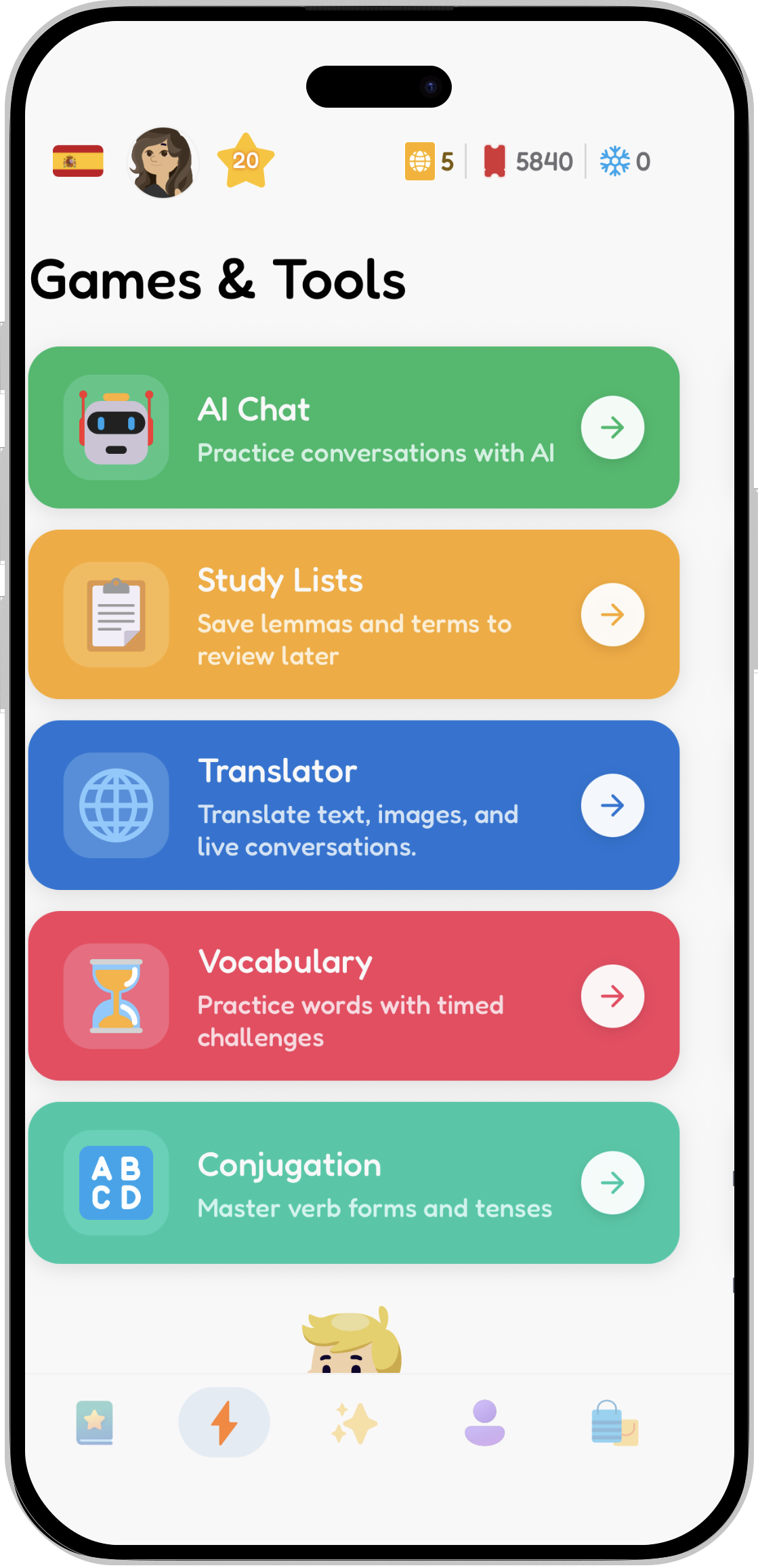
Games & Tools
Tools that every language learner needs at all stages of their learning journey.
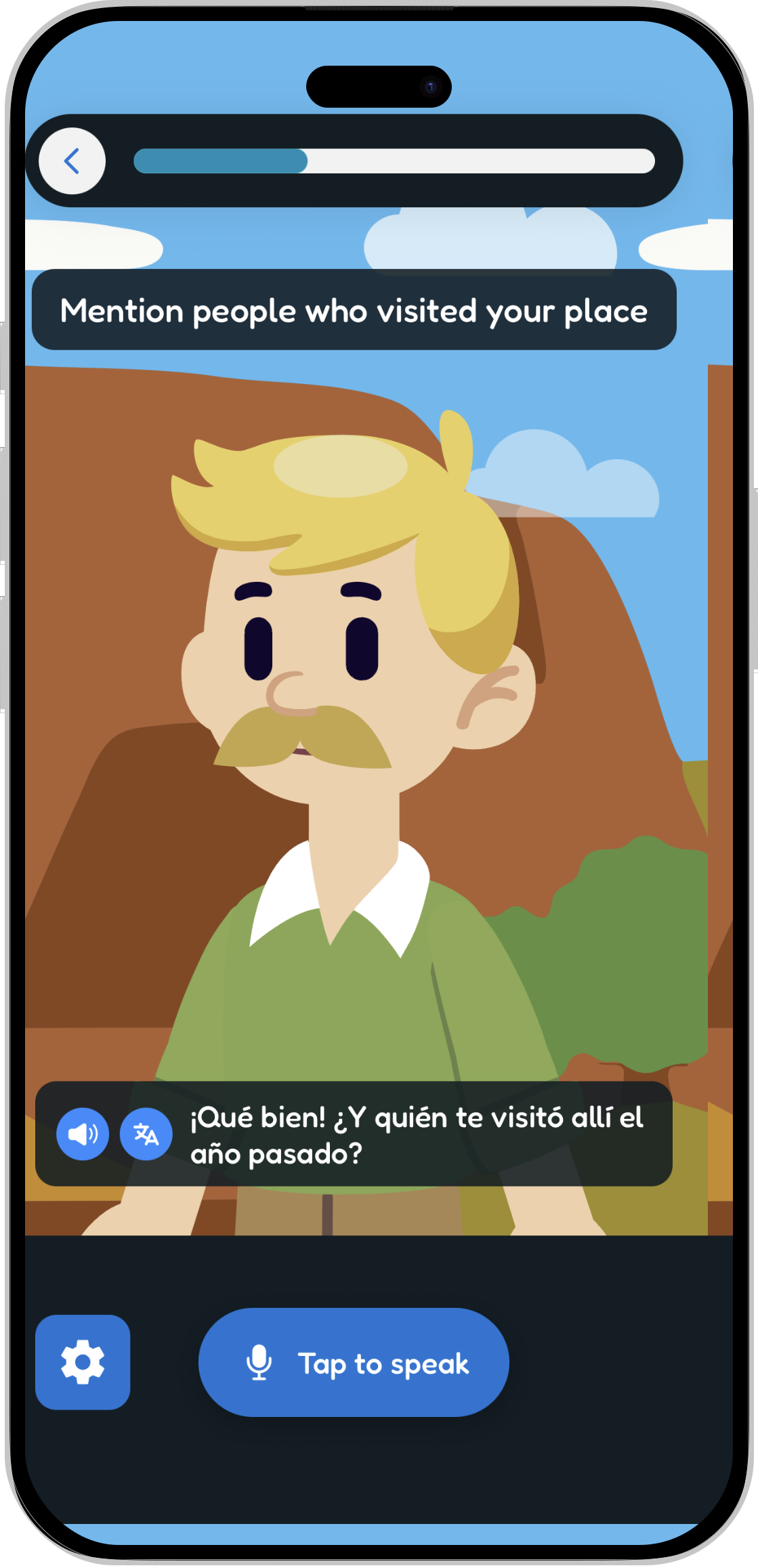
AI Chat Tutor
Practice real conversations with an AI tutor that helps you speak with confidence.
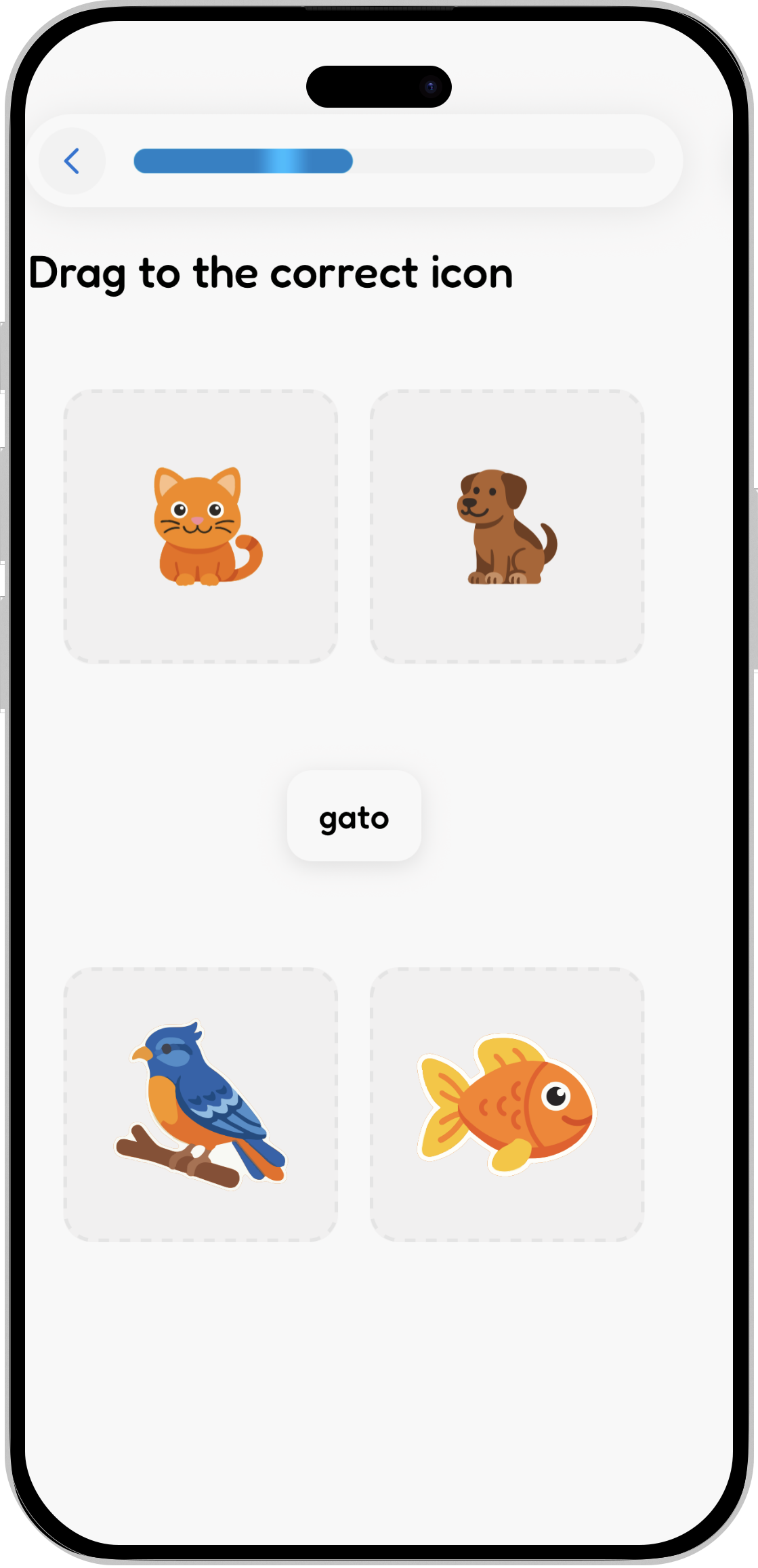
Interactive Games
A variety of games to help you learn and remember new words and phrases.


Why learners still search for apps like Duolingo
Duolingo excels at turning study into a repeatable habit—but habit isn’t the same as progress. Two friction points push people toward similar apps:
- Penalty-heavy practice: Free-tier hearts and limits can make you cautious instead of experimental—yet mistakes are how adult learners stretch beyond phrase-book recall.
- The plateau: Early lessons feel fresh; later ones can feel repetitive or shallow when you need clearer explanations, longer sessions, or speech that sounds like real life.
That mismatch doesn’t mean you’re “bad at languages.” It usually means you’ve outgrown a beginner-first architecture. Compare apps by learning design, not downloads alone—our language learning apps comparison walks through mechanics like grammar depth, speaking loops, and review models.
Practical rule: If mistakes cut your session short, the app is training caution—not retrieval under pressure.
1. PolyChat
Best For: Unrestricted daily practice and mastering verb conjugations.
PolyChat earns its top spot as a powerful and well-rounded alternative for anyone seeking apps like Duolingo but without the frustrating limitations. It delivers a robust, gamified learning experience that respects a learner’s motivation by removing all artificial barriers. Unlike apps that use a “hearts” or energy system to cap daily progress, PolyChat offers unlimited lessons and games, empowering you to practice as much as you want, whenever you want. This makes it an outstanding choice for serious learners who want to make rapid, measurable progress on their own terms.

The platform’s design combines proven pedagogical methods with addictive gameplay. Its timed vocabulary challenges, interactive conversation games, and translation exercises keep practice sessions engaging. A key differentiator is its market-leading conjugation practice tool, a feature often underdeveloped in other apps but critical for achieving fluency. PolyChat builds a personal dictionary as you learn, giving you a clear record of your acquired vocabulary.
Another significant advantage is its flexibility. You can learn any of its 17 supported languages from any other language on the platform, such as learning German from a French base. This is a massive benefit for polyglots or non-English speakers. The inclusion of a free, built-in translator adds practical, on-the-go value for travelers. AI-powered conversation games and drills add dynamic practice beyond static matching exercises—useful when you want output that adapts to what you just studied. The mobile apps have earned strong user ratings (including a 5/5 App Store score at time of writing) for educator-friendly design and smooth day-to-day use.
Key Features & User Experience
PolyChat’s interface is clean and intuitive, making it easy to jump between lessons, games, and progress tracking. The focus is on active, continuous learning without interruption.
- Unlimited Practice: No “hearts” or energy limits to stop your learning streak.
- Strong Gamification: Engaging timed challenges and interactive games keep motivation high.
- Advanced Conjugation Tool: A standout feature for mastering one of the most difficult aspects of language learning.
- Flexible Learning Paths: Start from any of its 17 languages, not just English.
- Integrated Tools: Includes a built-in translator and a personal dictionary that grows with you.
Pricing & Availability
PolyChat is advertised as a free app for iOS and Android. The website emphasizes its free games and lessons, but it does not clearly specify if certain advanced features or certifications are behind a paywall. This lack of transparency on potential paid tiers is a minor drawback.
| Feature | PolyChat | Duolingo |
|---|---|---|
| Practice Limits | None (unlimited) | Free tier has "hearts" system |
| Conjugation | Dedicated, advanced practice tool | Integrated into lessons, less focused |
| Start Language | Flexible (e.g., learn Spanish from Italian) | Primarily English-based |
| Translator | Built-in for free | Not an integrated feature |
| Language Focus | Strong in European languages (17 total) | Wider range, including Asian & fictional languages |
How to stress-test unlimited-practice apps
A single demo lesson rarely shows whether an app survives real study blocks. Try this over several sessions:
- Conjugation or pattern drills — Do repeats improve speed, or only let you pass one round?
- Timed vocabulary — Are you training recall under slight pressure, not just recognition?
- Translation or conversation games right after drills — Does knowledge carry into production?
- Saved words / dictionary — Does review persist after you close the app?
If momentum turns into volume without artificial stops, you’ve found an architecture that matches serious goals—not just daily prompts.
Website: PolyChat
2. Babbel
For learners seeking a more structured, conversation-focused alternative to Duolingo's game-like approach, Babbel presents a strong option. Designed by linguists, its core curriculum guides users through a linear path, starting with practical dialogues you might actually use on a trip abroad. Each lesson builds logically on the last, emphasizing grammar and vocabulary within the context of real-world situations, a key difference from Duolingo's often random sentences.

Babbel is one of the most effective apps like Duolingo because it prioritizes getting you to speak from day one. Lessons are short, typically 10-15 minutes, making them easy to fit into a busy schedule. Learning paths align with CEFR levels, and the first lesson in each course is free before you subscribe. The platform includes speech recognition to help you refine your pronunciation and a spaced repetition system for reviewing vocabulary, ensuring you don't forget what you've learned. This focus on practical application makes it one of the best ways to learn a new language if your goal is conversational fluency.
Babbel: At a Glance
| Category | Details |
|---|---|
| Best For | Beginner to intermediate learners wanting structured, conversation-first lessons. |
| Pricing | Subscription-based; prices vary by region and plan length. A typical US plan might be $17.95/month or cheaper with longer commitments. |
| Availability | Web, iOS, Android. |
| Standout Features | CEFR-aligned paths, expert-designed courses, real-world dialogues, speech recognition, spaced review. |
| Pros | Practical content, clear learning paths, short lessons. |
| Cons | Limited content for advanced (C1) learners in most languages. |
Website: https://www.babbel.com
3. Rosetta Stone
A veteran in the language-learning space, Rosetta Stone offers a deeply immersive methodology that stands in sharp contrast to Duolingo's translation-heavy model. It teaches you a language the way you learned your first one: through context, association, and intuition, with almost no explicit use of your native tongue. This "Dynamic Immersion" method pairs images and audio to build your understanding from the ground up, forcing your brain to think directly in the new language.

Rosetta Stone is a noteworthy choice among apps like Duolingo for learners who prioritize pronunciation. Its TruAccent speech-recognition engine provides immediate feedback on your accent, helping you sound more like a native speaker from the very beginning. The lessons are self-paced, presenting vocabulary and sentence structures through repetition without overwhelming you with grammar rules. This makes it an excellent starting point for absolute beginners who want to build a strong foundational connection between sounds, words, and meanings before getting into complex grammatical details.
Rosetta Stone: At a Glance
| Category | Details |
|---|---|
| Best For | Absolute beginners who want an immersive, no-translation experience with a strong focus on pronunciation. |
| Pricing | Subscription-based; offers 3-month, 12-month, and lifetime plans. A lifetime plan for all languages often costs around $199 during promotions. |
| Availability | Web, iOS, Android. |
| Standout Features | TruAccent speech recognition, Dynamic Immersion method, lessons with minimal native language use. |
| Pros | Excellent pronunciation feedback, clean and distraction-free interface, good for building foundational sound/word associations. |
| Cons | Lack of explicit grammar explanations can frustrate some learners; pacing can feel slow. |
Lessons can be downloaded for offline study, and a free demo lets you test the immersion approach before subscribing.
Website: https://www.rosettastone.com
4. Busuu
Busuu merges structured, self-paced lessons with the power of a global community, offering a unique blend that sets it apart from Duolingo's more isolated experience. The platform's courses are designed around the Common European Framework of Reference for Languages (CEFR), providing a clear path from A1 (beginner) to B2 (upper-intermediate) levels. Lessons cover core skills-reading, writing, listening, and speaking-but Busuu's defining element is its social integration.
What makes Busuu one of the most compelling apps like Duolingo is its community feedback feature. After completing writing or speaking exercises, you can submit your work to be reviewed by native speakers. This direct, human correction on your pronunciation and grammar is invaluable for building confidence and addressing real-world mistakes that an algorithm might miss. It bridges the gap between studying a language and actually using it with people.
Busuu: At a Glance
| Category | Details |
|---|---|
| Best For | Learners who want structured courses combined with feedback from native speakers. |
| Pricing | A free version with limited features is available. Premium plans (Busuu Premium and Premium Plus) unlock all content and features, with pricing varying by region and subscription length (e.g., around $13.95/month, with discounts for longer plans). |
| Availability | Web, iOS, Android. |
| Standout Features | Community feedback on exercises, CEFR-aligned courses, McGraw Hill certificates on level completion, personalized study plans, "Smart Review" for vocabulary. |
| Pros | Human feedback from native speakers, clear lesson structure, optional formal certificates, free tier to test the platform. |
| Cons | Core feedback feature is gated behind a premium subscription; pricing and promotions can differ across platforms. |
Website: https://www.busuu.com
5. Memrise
For learners who find that vocabulary sticks better with real-world context, Memrise offers a compelling, video-centric approach. Its core method revolves around showing thousands of short video clips of native speakers saying words and phrases. This immersion in authentic accents, speech patterns, and environments helps users build a strong foundation for listening comprehension and practical vocabulary, moving beyond the robotic voices common in other apps.

Memrise is one of the most engaging apps like Duolingo because it blends authentic content with smart technology. Beyond its video library, the platform features an AI-powered "MemBot" that allows you to practice your speaking and writing skills in low-pressure chat scenarios. The system also relies heavily on a smart review schedule; you can learn more about how spaced repetition helps with language learning to understand why this is so effective for long-term recall. Lessons are quick and designed for micro-learning, making it easy to build a consistent daily habit.
Memrise: At a Glance
| Category | Details |
|---|---|
| Best For | Visual learners who want to build vocabulary through real-world video context. |
| Pricing | Free version with limited features. Premium subscription is available monthly ( |
| Availability | Web, iOS, Android. |
| Standout Features | Native-speaker video clips ("Learn with Locals"), "MemBot" AI conversation partner, spaced-repetition review. |
| Pros | Real-life video content aids listening and recall, quick sessions suitable for daily practice, conversational AI provides low-pressure practice. |
| Cons | Grammar instruction can be less in-depth compared to other platforms; recent changes have altered the community course features. |
Website: https://www.memrise.com
6. Mondly
For those who love Duolingo's gamified style but want a different flavor of daily practice, Mondly offers a compelling alternative with a high-tech twist. It centers its experience around short, visually engaging daily lessons, challenges, and leaderboards that encourage consistent use. Where it really sets itself apart is through its integration of augmented reality (AR) and virtual reality (VR), allowing learners to interact with a virtual teacher and animated objects in their own space.
Mondly is one of the more technologically forward apps like Duolingo, making it a great choice for visual learners and tech enthusiasts. Its conversation simulations use speech recognition to get you speaking from the start, focusing on common phrases and vocabulary. This approach, combined with its optional AR features, represents a unique application of AI in language learning. Not every “AI conversation” feature is equivalent across apps—some prioritize short daily chats and pronunciation scores; others emphasize longer scripted modules—so judge them by whether speaking practice actually stretches grammar and endurance, not just novelty.
The platform’s broad catalog, offering courses in over 40 languages, also makes it an attractive option for polyglots or anyone wanting to sample a less common language. Mondly organizes 250+ topical lessons with daily, weekly, and monthly challenges if you like streak-style motivation with more conversational variety than Duolingo’s core path.
Mondly: At a Glance
| Category | Details |
|---|---|
| Best For | Visual learners who enjoy gamification and tech; beginners sampling multiple languages. |
| Pricing | Freemium model with limited daily access. Premium subscriptions start around $9.99/month or offer lifetime access during promotions. |
| Availability | Web, iOS, Android. |
| Standout Features | Daily lessons and challenges, speech recognition, AR/VR practice modes, wide language selection. |
| Pros | Engaging gamified exercises, innovative AR/VR features, large number of languages available. |
| Cons | Grammar explanations are often minimal; progression can feel less structured for advanced study. |
Website: https://www.mondly.com
7. Pimsleur
For learners who prefer an audio-first approach, Pimsleur offers a time-tested method built entirely around listening and speaking. Its core is a series of 30-minute audio lessons designed to be completed daily, making it perfect for commutes, workouts, or any time you can't be looking at a screen. The Pimsleur Method is based on graduated interval recall, prompting you to remember and use new words at increasing intervals, which effectively moves vocabulary into your long-term memory.

Pimsleur is one of the most respected apps like Duolingo because it builds speaking confidence from the very first lesson. By asking you to respond to a native speaker and construct sentences on the fly, it develops your ear for the language and refines your accent. The method, developed by Dr. Paul Pimsleur, uses graduated interval recall to move phrases into long-term memory. While the primary focus is audio, Pimsleur Premium adds reading lessons, digital flashcards, and quick-match games on top of the core 30-minute lessons. Full access covers 50+ language courses via subscription. This focus on auditory learning and speaking practice makes it a superior choice for those whose primary goal is to hold real conversations.
Pimsleur: At a Glance
| Category | Details |
|---|---|
| Best For | Auditory learners, commuters, and anyone prioritizing speaking and listening skills. |
| Pricing | Subscription-based. All-Access plan is typically around $20.95/month, with options to purchase courses individually. A 7-day free trial is available. |
| Availability | Web, iOS, Android, and compatible with Amazon Echo devices. |
| Standout Features | 30-minute audio lessons, graduated interval recall, focus on conversational skills, offline mode. |
| Pros | Excellent for pronunciation and listening, fits easily into a busy schedule, methodical and consistent progression. |
| Cons | Less focus on reading/writing, minimal explicit grammar instruction, can be pricey for single-language access. |
Website: https://www.pimsleur.com
8. LingoDeer
For learners who appreciate Duolingo's gamified style but crave more explicit grammar instruction, LingoDeer strikes an ideal balance. It offers a structured, classroom-like curriculum that guides users through concepts systematically. This approach is especially celebrated for its handling of Asian languages like Korean, Japanese, and Chinese, where its detailed grammar notes and character breakdowns provide clarity that many other apps lack.

LingoDeer is one of the most compelling apps like Duolingo because it builds a solid foundation from the start. Lessons are organized into logical units that cover vocabulary, sentence patterns, and crucial grammar points, all reinforced with listening, reading, and typing exercises. Unlike Duolingo’s often-random sentence generation, LingoDeer’s content builds on itself, ensuring you understand the "why" behind sentence structures. It also includes dedicated review modes to help you retain what you've learned. Offline mode supports study on commutes or flights, and the first unit of each language is free so you can test the teaching style before paying.
LingoDeer: At a Glance
| Category | Details |
|---|---|
| Best For | Motivated beginners to lower-intermediate learners wanting structured grammar explanations, especially for Asian languages. |
| Pricing | Freemium model with limited access. Premium subscription is required for full course access, typically around $14.99/month or cheaper with annual/lifetime plans. |
| Availability | Web, iOS, Android. |
| Standout Features | In-depth grammar notes, character-building exercises for specific scripts, structured curriculum, HD audio from native speakers. |
| Pros | Excellent for systematic grammar, high-quality content for Asian languages, digestible lesson format. |
| Cons | Smaller language catalog than major competitors; advanced content can be limited for some languages. |
Website: https://www.lingodeer.com
9. Lingvist
For learners who believe that a massive vocabulary is the fastest path to comprehension, Lingvist offers a data-driven, science-backed approach. Instead of a linear, game-like path, Lingvist uses AI and spaced repetition to teach you the most statistically relevant words in your target language first. Its core methodology involves presenting you with words in context, requiring you to type the correct term to rapidly build your active vocabulary.

Lingvist is one of the more unique apps like Duolingo because it operates like a high-powered vocabulary trainer. The platform tracks your progress with detailed analytics, showing you how many words you've learned and how quickly you're acquiring them. It’s ideal for intermediate learners looking to break through a plateau or anyone who wants to supplement a more grammar-heavy course with massive vocabulary input. Custom decks can be built from your own articles, e-books, or even YouTube transcripts—handy when you need vocabulary tied to work, hobbies, or niche reading.
Lingvist: At a Glance
| Category | Details |
|---|---|
| Best For | Intermediate to advanced learners focused on rapid vocabulary expansion and measurable progress. |
| Pricing | Freemium model with limited daily cards; full access requires a subscription (e.g., around $9.99/month or $79.99/year). |
| Availability | Web, iOS, Android. |
| Standout Features | AI-powered word frequency sequencing, custom deck creation, detailed progress analytics, clean and minimalist interface. |
| Pros | Highly efficient for vocabulary building, data-driven approach, custom content options. |
| Cons | Very limited explicit grammar instruction; best used as a supplement rather than a standalone course. |
Website: https://lingvist.com
10. Mango Languages
For learners who prioritize practical conversation skills and cultural insights, Mango Languages offers a compelling and often free alternative. Its core strength lies in its affiliation with public libraries, schools, and other organizations, making it accessible at no cost to millions. The methodology centers on teaching phrases and dialogues relevant to travel and everyday interactions, which contrasts with Duolingo’s focus on individual word memorization and sometimes peculiar sentences.

Mango Languages stands out as one of the best apps like Duolingo because it integrates cultural notes directly into its lessons, helping you understand the context behind the words you're learning. Its “Intuitive Language Construction” breaks complex sentences into manageable parts so grammar and vocabulary land in real dialogue. The platform uses a unique color-coding system to break down sentence structure, which helps learners visualize grammar and word order. With 70+ languages—including many Indigenous and heritage options rarely found on mainstream apps—and features like “Mango Movies” short films for natural exposure, it is especially strong for learners who want breadth beyond the usual Spanish/French/German trio. While its interface is more straightforward and less gamified than Duolingo, its focus on real-world application makes it an excellent choice for preparing for a trip or for learners who want a simple, direct path to speaking.
Mango Languages: At a Glance
| Category | Details |
|---|---|
| Best For | Travelers and beginners who can get free access through a library. |
| Pricing | Subscription-based, but often available for free through public libraries and other institutions in the U.S. |
| Availability | Web, iOS, Android. |
| Standout Features | Conversation and culture-focused lessons, free access via libraries, color-coded grammar notes, broad language selection including some endangered languages. |
| Pros | Often free, strong focus on practical travel phrases, clear and simple interface. |
| Cons | Less depth for advanced learners, simpler and less gamified than competitors. |
Website: https://mangolanguages.com
11. Clozemaster
For learners who have moved beyond the basics and need to rapidly expand their vocabulary in a real-world context, Clozemaster is a uniquely powerful tool. It gamifies language acquisition through cloze tests, which are fill-in-the-blank sentences. The platform pulls massive amounts of sentence data from open-source collections, exposing you to vocabulary as it's actually used by native speakers. This method is exceptionally effective for cementing words in your long-term memory.

Clozemaster stands out as one of the best apps like Duolingo for intermediate learners specifically because it bridges the gap between structured lessons and consuming native material. Its fast-paced, game-like sessions make it addictive for daily review, helping you build a robust vocabulary through sheer volume and repetition. While it's not a standalone course for beginners, it serves as an excellent, high-intensity supplement to another primary learning app or course, reinforcing what you learn elsewhere with thousands of contextual examples.
Clozemaster: At a Glance
| Category | Details |
|---|---|
| Best For | Intermediate to advanced learners focusing on vocabulary expansion and contextual understanding. |
| Pricing | Free version with limitations. Clozemaster Pro subscription (adds more features) is around $8/month or $60/year. |
| Availability | Web, iOS, Android. |
| Standout Features | Mass-sentence cloze exercises, gamified point system, spaced repetition, fluency fast track for common words. |
| Pros | Highly efficient for vocabulary building, uses real sentences, lightweight and fast sessions. |
| Cons | Not for absolute beginners; offers minimal explicit grammar instruction. Some useful features require a Pro subscription. |
Website: https://www.clozemaster.com
12. Drops
For learners who find traditional study tedious and want to focus purely on vocabulary, Drops offers a vibrant and highly visual alternative. It transforms word learning into a fast-paced game, built around gorgeous illustrations and swipe-based mechanics. The entire experience is designed for 5-minute daily sessions, making it an incredibly easy habit to maintain, even on the busiest of days. Rather than focusing on grammar or sentence construction, Drops is dedicated to helping you rapidly build a large vocabulary base through association.

Drops is one of the more unique apps like Duolingo because it serves best as a powerful supplement rather than a complete course. Its core strength lies in its engaging, game-like interface and themed word packs, covering everything from food to business terms. This approach is excellent for visual learners and anyone looking to quickly memorize words for a trip or to complement a more grammar-heavy study routine. The intentional lack of grammar makes it a specialized tool, but for what it does, it is exceptionally well-designed and effective at making vocabulary stick.
Drops: At a Glance
| Category | Details |
|---|---|
| Best For | Visual learners and users needing a supplemental app for vocabulary building. |
| Pricing | Freemium model with a 5-minute daily time limit. Premium subscription unlocks unlimited time and offline access, starting around $13.00/month. |
| Availability | Web, iOS, Android. |
| Standout Features | Highly visual, illustration-based learning; 5-minute, gamified sessions; extensive themed word packs. |
| Pros | Engaging UI encourages daily use, excellent for visual learners, very quick sessions are easy to fit in. |
| Cons | Minimal grammar and sentence-structure teaching; free version is very limited by time. |
Website: https://languagedrops.com
Language exchange apps
Structured courses get you started; real conversations expose what still breaks under pressure. These two apps are not full curricula—they are where many learners go once Duolingo feels too safe.
HelloTalk

HelloTalk connects you with native speakers for text, voice notes, and video calls on a mutual-learning model—you help others with your language while they help you with yours. Built-in translation, transliteration for non-Roman scripts, and in-line corrections turn chats into practice instead of passive scrolling. The “Moments” feed lets you post updates and get feedback from the wider community, which pairs well with how to improve speaking skills between sessions.
- Best for: Learners who want colloquial, real-world phrasing and low-pressure chat before live calls.
- Limit: Unstructured; quality depends on partners and requires the same safety awareness as any social app.
- Pricing: Freemium; VIP unlocks unlimited translations and other premium tools.
Tandem

Tandem matches you with partners by interests and goals, then supports practice through text, voice, and video with in-chat corrections and translation. “Topics” prompts help break the ice when you are not sure what to say. It is less about lesson design and more about finding a motivated partner who will correct you consistently.
- Best for: Intermediate learners ready to move from app drills to back-and-forth dialogue.
- Limit: Progress depends heavily on partner fit and motivation; you still need a core course or drill app for grammar structure.
- Pricing: Free tier available; Tandem Pro removes ads and expands translation limits.
Practical rule: Use HelloTalk or Tandem for output pressure; pair them with PolyChat, Babbel, or Busuu so mistakes from chat get drilled—not repeated.
Top 12 Language Apps Comparison
| Product | Core features | UX & Quality | Price & Value | 👥 Target | ✨ Key differentiator |
|---|---|---|---|---|---|
| PolyChat 🏆 | Timed vocab challenges, convo & translation games, market-leading conjugation tool, built-in translator | ★★★★★ | 💰 Free app; unlimited daily practice | 👥 Beginners→Advanced, students, polyglots, travelers | ✨ Learn from any language; no hearts/limits; personal dictionary |
| Babbel | Level-based courses, dialogue practice, speech recognition, placement test | ★★★★ | 💰 Subscription; regional pricing varies | 👥 Busy learners, beginners→intermediate | ✨ Linguist-designed dialogues and clear learning paths |
| Rosetta Stone | Immersive image/audio lessons, TruAccent pronunciation feedback | ★★★★ | 💰 Subscription / lifetime options | 👥 Absolute beginners focused on pronunciation | ✨ Immersion/no-translation method for accent training |
| Busuu | Interactive lessons, community corrections, smart review & study plans | ★★★★ | 💰 Freemium; Premium gates some features | 👥 Learners who want human feedback & structure | ✨ Native-speaker corrections and social motivation |
| Memrise | Native-speaker video clips, AI chat partner, spaced repetition | ★★★★ | 💰 Freemium; premium for full access | 👥 Visual/listening learners and casual daily users | ✨ Real-life video content + conversational AI |
| Mondly | Daily drills, speech recognition, AR/VR options, wide language catalog | ★★★ | 💰 Freemium; frequent promotions | 👥 Gamified learners who enjoy tech features | ✨ AR/VR practice and broad language selection |
| Pimsleur | Audio-first graduated recall, offline lessons, conversational focus | ★★★★ | 💰 Paid subscription / per-language pricing | 👥 Commuters and speaking/listening focused learners | ✨ 30-minute listen-and-respond audio method |
| LingoDeer | Clear grammar notes, structured lesson paths, quizzes & review | ★★★★ | 💰 Freemium; subscription available | 👥 Learners of Asian languages and grammar-focused users | ✨ Systematic grammar teaching (Korean/Japanese/Chinese) |
| Lingvist | AI vocabulary sequencing, custom decks, progress analytics | ★★★★ | 💰 Freemium; subscription for full features | 👥 Learners prioritizing fast vocab gains | ✨ Data-driven, frequency-based vocabulary training |
| Mango Languages | Conversation & culture-focused lessons, library/institution access | ★★★ | 💰 Often free via libraries; paid otherwise | 👥 Travelers, casual learners, schools & libraries | ✨ Widely available through public libraries and institutions |
| Clozemaster | Sentence-based cloze practice, gamified quick sessions, SRS | ★★★★ | 💰 Freemium; Pro adds offline/reading tools | 👥 Intermediate→advanced learners for contextual vocab | ✨ High-volume context sentences for rapid review |
| Drops | Visual, swipe-based vocabulary, themed packs, 5‑minute sessions | ★★★ | 💰 Freemium (time-limited); subscription for unlimited | 👥 Visual learners and busy users wanting micro-sessions | ✨ Ultra-short, highly visual sessions for quick recall |
| HelloTalk | 1:1 native chat, Moments feed, translation & correction tools | ★★★★ | 💰 Freemium; VIP for unlimited translations | 👥 Learners seeking colloquial practice with natives | ✨ Real interaction + built-in correction in chat |
| Tandem | Partner matching, text/voice/video, topic prompts | ★★★★ | 💰 Freemium; Pro for ad-free + more translations | 👥 Intermediate+ learners building conversational confidence | ✨ Filtered language-exchange matching |
Apps like Duolingo for travel
Duolingo is brilliant at building a daily habit—but a departure date changes the math. Apps like Duolingo for travel need to get you conversation-ready for predictable situations, not just keep your streak alive. Hearts that stop practice when you miss a tap, and lesson trees that teach random vocabulary before hotel or restaurant phrases, are common frustrations when you are cramming before a flight.
The goal for a traveler is not perfect grammar. It is confident communication in specific, predictable situations: ordering food, buying a ticket, checking in, and asking for help.
Market data backs that shift: language learning apps generated roughly $1.08 billion in 2023 (about 28% year-over-year growth), with strong demand for conversational readiness—not only gamified drills. For how gamification helps and where it gets in the way, see gamification in language learning.

What defines a great travel language app
A travel app is a lifeline on the ground, not a textbook you only open at home.
Non-negotiables:
- Offline access: Lessons and phrasebooks must work on planes, rural trains, and patchy city Wi‑Fi.
- Situational phrasebooks: Curated dialogues sorted by scenario—not a flat dictionary you search under pressure.
High-value categories to prioritize:
- Dining and restaurants: Order, ask about ingredients, request the check.
- Transportation: Tickets, platforms, taxis, and basic directions.
- Accommodations: Check-in, Wi‑Fi, and room issues.
- Emergencies: Pharmacy, urgent help, and clarifying problems.
Confidence builders: Native-speaker audio (regional accents matter), low-pressure speaking practice (AI chat or audio recall), and an integrated translator for stuck moments—so you are not switching apps mid-conversation.
Travel-focused feature comparison
| Feature | Babbel | Memrise | Busuu | Pimsleur | PolyChat |
|---|---|---|---|---|---|
| Phrasebook | Excellent | Good | Good | Good | Excellent |
| Offline access | Yes | Yes (Premium) | Yes (Premium) | Yes | Yes |
| Quick drills | Yes | Excellent | Yes | Yes | Excellent |
| Conversation | Strong (dialogue-based) | Good (AI chat) | Good (community feedback) | Excellent (audio-based) | Strong (AI chat) |
| Pronunciation | Good (speech recognition) | Excellent (native video) | Good (native feedback) | Excellent (audio method) | Good (speech recognition) |
| Translator | No | No | No | No | Yes (free & integrated) |
| Language pairs | Limited | Limited | Limited | Limited | Excellent (any-to-any) |
For a dedicated travel-app roundup, see language apps for travel.
Match the app to your travel style
Weekend city-break (72 hours): Prioritize speed, offline access, and dining/transport phrases. Babbel fits well with short, dialogue-first lessons you can finish before you land.
Backpacker on a budget: You need unlimited practice, a free translator, and flexibility across countries. PolyChat stands out with no heart limits, integrated translation, and learn-any-language-from-any-base pairing for multi-stop trips.
Business traveler: Formal tone and native feedback matter more than streaks. Busuu community corrections help you sound respectful and natural in professional settings.
Frequently asked questions about apps like Duolingo
Are Duolingo-like apps automatically better for beginners?
Not necessarily. Duolingo still lowers resistance for day one. Alternatives shine when you want clearer grammar, fewer practice caps, or more realistic input—often after the beginner honeymoon ends.
What makes people leave Duolingo?
Usually a stack of issues: repetitive exercises, thin explanations on errors, and session friction when you finally have time for a longer study block—not one button in isolation.
Is unlimited practice always better?
Only if the exercises deserve repetition. Unlimited access pairs best with strong review design (spaced repetition, contextual sentences, speaking loops). Volume without quality still wastes time.
Should I delete Duolingo completely?
Many learners pair apps—e.g., Duolingo for a tiny daily cue plus Babbel, Busuu, or PolyChat for depth. If Duoloingo is the part you dread, replacing it outright can be simpler.
How long should I trial a replacement?
Long enough for real life: several sessions, including one rushed day and one longer block. First impressions reward novelty; depth shows up after repeat use.
How much language do I need for a short trip?
Aim for survival phrases, not fluency: greetings, prices, directions, restrooms, and ordering food and drinks. A situational phrasebook beats memorizing hundreds of isolated words.
Are free language apps good enough for travel?
Many free tiers cap offline access or daily practice—painful on the road. A modest premium plan often pays for itself; if you stay free, favor apps without heart limits and with on-device phrase access (PolyChat’s free tier includes an integrated translator and unlimited practice).
For travel, vocabulary or conversation practice?
Conversation practice wins. Learn words inside full phrases you can say under pressure; dialogue drills, native audio, and AI chat beat flashcard-only study before a trip.
One travel app or several?
One comprehensive main app keeps progress coherent. Add a narrow supplement only for a specific gap (e.g., cloze vocabulary). Avoid juggling five interfaces right before departure.
Final Thoughts
The journey to language fluency is a personal one, and the digital tools you choose can significantly shape your path. While Duolingo has introduced millions to the joys of language learning, its gamified, bite-sized approach isn't a one-size-fits-all solution. Our exploration of various apps like Duolingo has shown a rich and diverse market, each with its own philosophy, methodology, and ideal user.
Moving beyond the familiar green owl can open doors to deeper, more specialized learning. Apps like Babbel and LingoDeer provide the structured grammar lessons many users find lacking in Duolingo, making them excellent choices for learners who need a solid foundation. On the other hand, audio-focused methods like Pimsleur train your ear and pronunciation for real-world conversations, a critical skill that simple matching games often neglect.
Choosing Your Next Language Learning Companion
Your decision should ultimately come down to your personal goals and learning style. Before you commit to a subscription, take a moment to reflect on what you truly need.
- For Grammar Aficionados: If you're frustrated by Duolingo's often confusing grammar explanations, consider Babbel or LingoDeer. They prioritize clear, contextual lessons that build a strong structural understanding of a language.
- For Aspiring Conversationalists: To prepare for actual dialogue, audio-first platforms are key. Pimsleur is the gold standard for developing an authentic accent and recall, while Busuu’s community feedback feature offers invaluable practice with native speakers.
- For intermediate learners craving authentic speech: General-purpose gamified apps often thin out past B1. Layer native-media tools (e.g., scripted TV with subtitles, “watch and click” platforms such as Lingopie, or transcript-heavy listening apps like Spoken) alongside structured apps like Babbel so exposure matches real speed and tone—not only app prompts.
- For Vocabulary Power-Learners: If your main goal is to rapidly expand your word bank, look no further than Memrise, Drops, or Clozemaster. These apps use spaced repetition and context-based learning to help you acquire and retain thousands of words efficiently.
- For the Truly Committed: For those seeking an immersive, all-encompassing experience, Rosetta Stone’s Dynamic Immersion method remains a powerful, if demanding, choice.
A Practical Framework for Making Your Choice
Don't fall into the trap of "analysis paralysis." Instead of getting overwhelmed by options, use this simple framework to guide your next steps:
- Identify Your Primary Goal: Are you learning for travel, work, or academic reasons? Is your focus on speaking, reading, or understanding grammar? Be specific.
- Define Your Learning Style: Do you learn best by listening, reading, writing, or doing? Do you prefer structured lessons or a more free-form, exploratory approach?
- Assess Your Time Commitment: Be realistic about how much time you can dedicate each day or week. An intensive program like Pimsleur requires a different commitment than a quick five-minute session with Drops.
- Test Before You Invest: Almost every app on this list offers a free trial or a limited free version. Spend at least a week with two or three top contenders before making a financial commitment. This is the single most important step.
Before you commit, ask what actually blocked you on Duolingo: hearts and practice caps (PolyChat), thin grammar (Babbel, LingoDeer), weak speaking (Pimsleur, HelloTalk, Tandem), or vocabulary plateaus (Memrise, Lingvist, Clozemaster). Your answer should pick the core app—not every app on the list.
Building a personal learning stack
The most effective learners rarely use one tool for everything. A simple three-layer stack covers the gaps Duolingo often leaves:
- Core curriculum: Babbel, Busuu, LingoDeer, or Pimsleur for structured lessons and a clear path.
- Targeted drills: PolyChat for unlimited conjugation and recall, Memrise or Drops for vocabulary, Lingvist or Clozemaster for high-volume review.
- Live output: HelloTalk or Tandem for real conversation pressure at least once a week.
Theory without output stalls; output without review fossilizes mistakes. Match each layer to your weakest skill and keep the daily time slot consistent even when you switch apps.
Switching tools: Your streak isn’t transferable—your word inventory and weak spots are. Export or jot core vocabulary, keep the same time slot each day (habits anchor on cues, not mascots), and narrow month one to one track—conversation, travel phrases, or verb control. For a habit that doesn’t depend on one app’s reward loop, see how to learn a language on your own.
The best language learning strategy often involves combining resources. You might use Babbel for core grammar, Memrise for vocabulary drills, and find a conversation partner through Busuu. The key is to build a personalized toolkit that keeps you engaged, motivated, and consistently moving toward your fluency goals. Your journey from beginner to confident speaker is a marathon, not a sprint, and selecting the right apps like Duolingo is about finding the perfect pacer for your unique race.
If you're searching for an app that combines real-world conversational practice with the fun of gamification, your search may be over. PolyChat is designed for learners who want to move beyond robotic exercises and start having dynamic, AI-powered conversations that adapt to their skill level. Experience a new way to build confidence and fluency by visiting PolyChat and starting your first conversation today.

Jean-Baptiste Bolh
Co-Founder
Applied AI