The 12 Best AI Language Learning Apps of 2026: An In-Depth Review

Learning a new language has always been a blend of dedication, practice, and the right tools. But what if your tools could talk back, understand your mistakes, and build every lesson just for you? That's the promise of artificial intelligence, and it's changing language education. Today's AI-powered apps go far beyond simple flashcards. They're becoming personal tutors, offering instant pronunciation feedback, simulating real-world conversations, and adapting to your unique learning pace.
The emergence of tools like an AI learning path generator even highlights the potential for highly customized educational roadmaps, tailoring entire curriculums to individual needs. With so many options available, from conversation practice to grammar drills, finding the right platform can be overwhelming. This guide cuts through the noise and gets straight to the point.
We've meticulously tested and ranked the 12 best AI language learning apps on the market today. Inside, you'll find in-depth analysis of each app’s specific AI features, teaching methods, language availability, and target audience, complete with screenshots and direct links. Whether you're a complete beginner, a professional aiming to improve communication skills, or an advanced learner looking to finally break past a plateau, this comprehensive review will help you choose the perfect AI partner for your language journey.
Ready to Learn a Language?
Try PolyChat's engaging language lessons, interactive learning games and put your new vocabulary to the test!
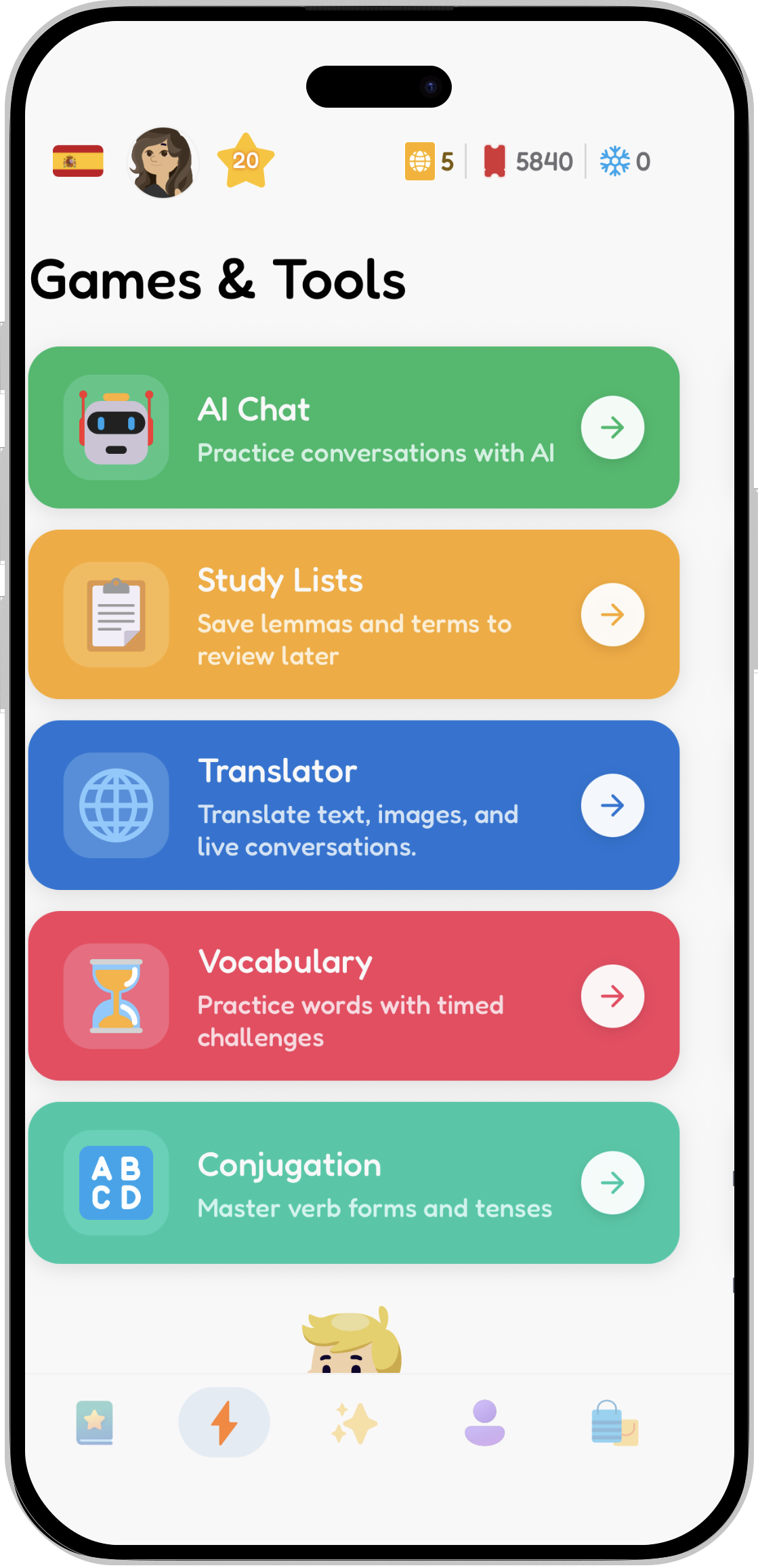
Games & Tools
Tools that every language learner needs at all stages of their learning journey.
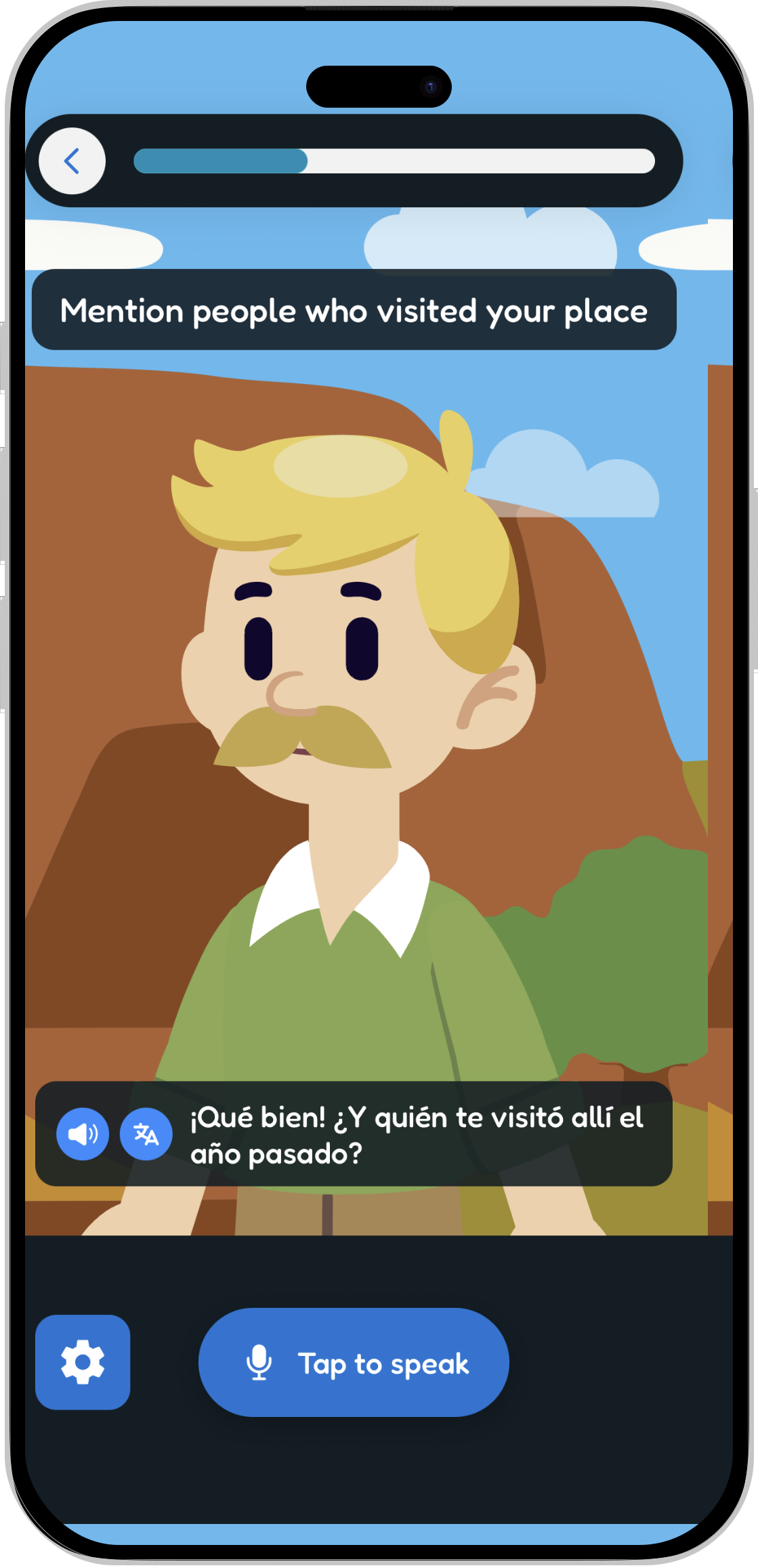
AI Chat Tutor
Practice real conversations with an AI tutor that helps you speak with confidence.
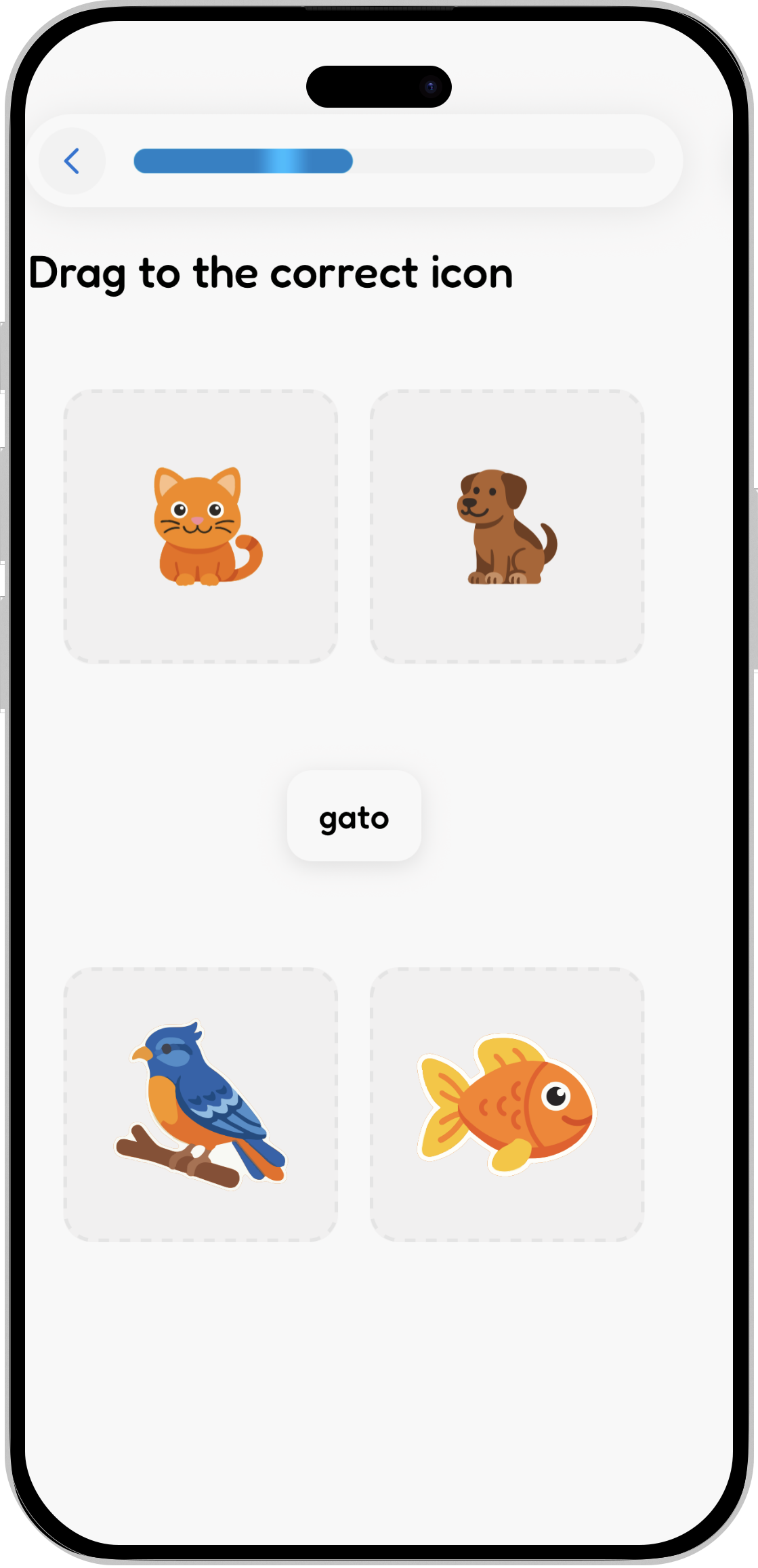
Interactive Games
A variety of games to help you learn and remember new words and phrases.


1. PolyChat
Best For: Rapid, Unrestricted Daily Practice
PolyChat earns its top spot by delivering an exceptional, all-in-one AI language learning experience free from the frustrating limitations of its peers. Its core philosophy centers on unrestricted access, allowing you to complete unlimited lessons, games, and challenges every day. This makes it a standout choice for dedicated learners who want to progress at their own pace without being artificially slowed down by energy or “heart” systems.

The platform’s AI integration is most apparent in its adaptive practice tools. Timed vocabulary challenges and interactive translation games adjust to your performance, keeping you engaged and focused on areas needing improvement. For many learners, especially those tackling Romance or Germanic languages, PolyChat's standout feature is its robust conjugation practice tool. This moves beyond simple memorization, using gamified drills to build an intuitive grasp of verb forms, which is critical for fluent conversation.
What truly sets PolyChat apart, however, is its multilingual flexibility. You can learn one of its 17 languages from any other language on the platform, a powerful feature for polyglots and non-native English speakers. This multi-directional learning path is a significant advantage over apps that default to English as the base language.
Our Take: PolyChat combines the addictive nature of gamification with serious pedagogical structure. The freedom from daily limits is a game-changer for motivated learners, and the specialized conjugation tool directly addresses one of the biggest hurdles in language acquisition. It’s one of the best AI language learning apps available for building a strong vocabulary and grammatical foundation quickly.
Key Details
- Languages: 17 languages with multi-directional learning (e.g., learn French from Spanish).
- Pricing: The app is advertised as free to download and use. Specific details on premium features or potential in-app purchases are not clearly outlined on the website.
- Availability: iOS and Android.
- Unique Strengths:
- No Daily Limits: Unlimited practice without energy or heart systems.
- Advanced Conjugation Drills: Superior gamified tool for mastering verb tenses.
- Multilingual Pairs: Learn a new language from a non-English native tongue.
- Built-in Tools: Comes with a personal dictionary, progress tracker, and a free translator for on-the-go use.
- Limitations: Lacks explicit information on advanced speech recognition or one-on-one tutoring, making it potentially less ideal for users who need coached pronunciation feedback. You can learn more about its specific approach in this overview of AI in language learning.
2. Duolingo
Duolingo is arguably the most recognizable name in language learning, building its reputation on heavy gamification and a structured learning path. It excels at creating a daily practice habit through its famous streak mechanic, reminders, and bite-sized lessons that fit into any schedule. While its core model focuses on translation and multiple-choice questions, the platform has been integrating more AI features to stay competitive.
The service's strongest selling point remains its extremely low barrier to entry. Its free tier is robust, making it accessible to anyone with an internet connection. Recent additions under the premium "Super" plan, now being rebranded as "Duolingo Max," introduce more direct AI interactions. These include AI-powered role-playing conversations and "Explain My Answer" features that provide grammatical context, though these are rolling out slowly and are limited to specific languages like French and Spanish for English speakers.
Key Features & User Experience
- Gamified Path: A linear progression of skills that keeps learners on a set curriculum.
- AI-Enhanced Learning (Duolingo Max): Offers AI-driven role-play chats and personalized feedback on mistakes.
- Massive Language Catalog: Provides courses for dozens of languages, though quality and depth vary significantly.
- Free Access: The core learning path is available for free with ads. A "Super" subscription removes ads and adds features like unlimited "Hearts."
While Duolingo is a great starting point, many intermediate learners find the repetitive exercises and light grammar explanations insufficient for reaching fluency. For those seeking more conversational depth or flexibility, exploring Duolingo alternatives can be a logical next step.
Website: https://www.duolingo.com
3. Babbel
Babbel positions itself as a more serious, curriculum-driven alternative to gamified apps, focusing on building conversational competence from day one. Its courses, created by language experts, are designed around practical, real-world dialogues rather than isolated vocabulary drills. This structure is ideal for learners who want to understand not just what to say, but why they are saying it, with clear grammar rules integrated directly into lessons.

The platform's approach is methodical, building confidence through repetition of useful phrases and dialogues you'd actually encounter. While its core product is a structured course, Babbel is piloting AI features to expand practice opportunities. The "Babbel Speak" feature, for example, allows users to rehearse scenarios with an AI partner, making it a valuable tool for bridging the gap between passive learning and active speaking. This measured integration of AI helps it compete as one of the best AI language learning apps for structured learners.
Key Features & User Experience
- Expert-Crafted Courses: Lessons are tailored for each language pair, focusing on practical grammar and vocabulary for real conversations.
- Dialogue-Based Learning: Emphasizes interactive dialogue drills with speech recognition to help with pronunciation.
- AI Conversation Practice (Babbel Speak): A newer feature being piloted to let users practice speaking in realistic scenarios.
- Structured Review: Uses a spaced repetition system to bring back words and concepts for reinforcement.
Babbel’s strength is its direct path to practical conversation, though its language catalog is smaller than some competitors. The platform operates on a subscription model, requiring payment for full access to a language's course materials. Its focus is now primarily on the self-study app, as its live class offerings have been scaled back.
Website: https://www.babbel.com
4. Rosetta Stone
Rosetta Stone is a legacy name in language education, built on an immersive methodology that avoids English translations entirely. Instead, it teaches through contextual association, pairing images and audio in the target language to build vocabulary and sentence structure intuitively. Its core strength lies in forcing the learner to think directly in the new language from the very first lesson, a method that can be highly effective for building foundational understanding.

While its teaching style is more traditional, its use of speech recognition AI is a key part of the experience. The TruAccent technology analyzes a user's speech and provides immediate feedback on pronunciation, helping to correct accents early on. This focus on speaking from day one makes it one of the best AI language learning apps for learners who prioritize pronunciation accuracy. The platform syncs across desktop and mobile, offering a consistent, if somewhat repetitive, learning journey.
Key Features & User Experience
- Immersive Methodology: Lessons are image-driven and conducted entirely in the target language, removing translation as a crutch.
- TruAccent Speech Recognition: AI-powered technology that provides detailed feedback on pronunciation to match native speakers.
- Structured, Progressive Path: A clear, linear curriculum that builds concepts systematically, though it can feel slow.
- Cross-Device Syncing: Seamlessly switch between learning on a computer and the mobile app.
The lack of explicit grammar explanations can be a point of frustration for some, but it's a deliberate part of the immersive design. For adult learners who appreciate a very structured and predictable course, Rosetta Stone remains a solid choice. You can see how it compares to other platforms in guides on the best language learning apps for adults.
Website: https://www.rosettastone.com
5. Memrise
Memrise carves its niche by blending official courses with user-generated content and thousands of real-world video clips. It’s built on a foundation of spaced repetition to cement vocabulary, but its evolution into one of the best AI language learning apps comes from its AI-powered chatbot, “MemBot,” which facilitates low-pressure conversation practice based on the words you’ve just learned.

The platform’s core strength is its ability to teach vocabulary through authentic context. Instead of just memorizing a word, you see and hear it used by multiple native speakers in short video clips, capturing different accents and intonations. The free version gives access to a significant amount of content, while the paid subscription unlocks all official courses, the AI MemBot, and an ad-free experience. This makes it a great tool for building a practical vocabulary base before diving into complex grammar.
Key Features & User Experience
- AI "MemBot" Chat: Provides a safe space to practice speaking with an AI tutor through various scenarios, helping to reduce speaking anxiety.
- Video-Based Content: Features thousands of short clips of native speakers, exposing learners to authentic pronunciation and colloquialisms.
- Spaced Repetition System: Drills vocabulary and phrases at optimal intervals to move them from short-term to long-term memory.
- Official & User-Generated Courses: Offers a mix of professionally designed courses and a vast library of content created by the community.
While Memrise excels at vocabulary acquisition and provides a fun, authentic learning environment, some users find that the depth of grammar instruction can be limited in certain languages. It's an excellent choice for beginners and intermediates focused on building conversational confidence and a strong vocabulary foundation with real-world materials.
Website: https://www.memrise.com
6. Busuu
Busuu carves out a unique space by blending structured, self-paced courses with a vibrant peer-to-peer feedback system. The platform offers curricula aligned with the Common European Framework of Reference for Languages (CEFR), giving learners a clear sense of progression from beginner (A1) to upper-intermediate (B2) levels in many popular languages. This structure provides a solid foundation often missing from less formal apps.
What makes Busuu one of the best AI language learning apps is its thoughtful integration of technology without abandoning its core community strength. The platform’s AI-powered "Conversations" feature allows users to practice simulated dialogues, providing a safe space to build speaking confidence before engaging with real people. This is complemented by the community feature, where learners submit writing or speaking exercises and receive corrections from native speakers, a powerful form of social learning. A premium subscription is required to access most course content and features.
Key Features & User Experience
- CEFR-Aligned Courses: Guided lessons for 14 languages, providing a clear path to measurable proficiency.
- Community Feedback: Submit written or spoken exercises and receive corrections and tips from native speakers.
- AI-Powered Conversations: Practice speaking through simulated dialogues on practical topics.
- Smart Review: A dedicated feature for reinforcing vocabulary and grammar points you've previously learned.
While Busuu offers a great balance, its course depth for advanced levels (C1 and above) can be limited depending on the language. The AI conversation practice is also a newer feature and may not be as expansive as dedicated chat-based tools.
Website: https://www.busuu.com
7. Pimsleur
Pimsleur is a powerhouse in audio-based language learning, built on a method of graduated interval recall that prioritizes listening comprehension and speaking confidence. Its core offering consists of 30-minute daily audio lessons that require learners to recall and construct phrases from memory, creating a strong foundation for real-world conversation. The program is excellent for commuters or anyone who prefers an auditory, hands-free learning style.

While its foundation is audio, Pimsleur has modernized its platform with a companion app that includes supplementary materials and, more recently, AI features. A key addition is the AI-powered "Voice Coach," which is being integrated into newer and updated courses. This tool listens to a user's speech and provides a score and visual feedback on pronunciation, adding a valuable layer of analysis to the classic audio method. Access is through a monthly subscription model that grants entry to all levels of a chosen language.
Key Features & User Experience
- Audio-First Method: Daily 30-minute lessons focus on listening and speaking through recall.
- AI Voice Coach: Analyzes your pronunciation and gives you a score, available in supported languages.
- Large Language Catalog: Offers courses in over 50 languages, with a consistent pedagogical approach.
- Supplementary Materials: The app includes reading lessons, flashcards, and light quizzes to reinforce audio content.
Pimsleur’s strength lies in building automaticity and a good accent from day one, but its focus on audio means that reading, writing, and explicit grammar instruction are secondary. It is one of the best AI language learning apps for learners who want to start speaking quickly and confidently, even if it means sacrificing a deep understanding of grammatical rules at the start.
Website: https://www.pimsleur.com
8. Mondly
Mondly has made a name for itself by focusing on a visually rich, technology-forward approach to language learning. It appeals to beginners and casual learners who enjoy interactive lessons and are drawn to new tech like augmented reality (AR) and virtual reality (VR). The platform's core loop involves daily lessons, weekly quizzes, and monthly challenges to keep users engaged and practicing consistently.
What sets Mondly apart is its integration of an AI chatbot for conversation practice and its pioneering use of AR/VR. While other apps have AI chat, Mondly’s implementation feels central to its experience, presenting dialogues in a clean, message-like interface. The AR feature, which projects a virtual tutor and animated objects into your physical space, adds a novel layer of immersion. However, the true educational depth can feel limited for those aiming for high proficiency, as grammar explanations are often brief.
Key Features & User Experience
- AI Chatbot: Practice conversations with an AI partner on dozens of real-world topics.
- AR/VR Integration: On supported devices, you can interact with a virtual teacher and objects in AR or immerse yourself completely in a VR environment for practice.
- Broad Language Selection: Offers starter courses for over 40 languages from your native tongue, making it a fun tool for polyglots or travelers.
- Structured Daily Learning: Provides a clear path with daily lessons, quizzes, and vocabulary builders to encourage habit formation.
Mondly's strength lies in its accessibility and engaging interface, making it one of the more entertaining options among the best AI language learning apps. It's an excellent choice for building initial vocabulary and confidence, though serious learners may need to supplement it with more in-depth grammar resources.
Website: https://www.mondly.com
9. Lingvist
Lingvist takes a data-science approach to language learning, focusing on one core principle: efficiency. It uses an adaptive algorithm to teach you the most statistically relevant words in your target language first. By analyzing massive amounts of text, it determines a high-frequency vocabulary that allows you to understand the majority of real-world content as quickly as possible, making it one of the best AI language learning apps for rapid vocabulary building.

The platform’s strength lies in its minimalist, no-fluff interface. It presents you with a sentence-based flashcard system where you fill in the blank for a target word. The AI tracks your performance on each word, using a spaced repetition system (SRS) to show you cards at the optimal moment before you forget them. This is ideal for time-pressed learners who want measurable progress without the distraction of games or complex lesson paths.
Key Features & User Experience
- Adaptive Vocabulary Engine: The AI prioritizes high-frequency words and adjusts the learning pace based on your individual performance.
- Custom Decks: Allows users to create their own vocabulary lists, perfect for studying specific topics or textbook material.
- Progress Analytics: Provides clear data on learned words, study time, and accuracy, helping you track your efficiency.
- Minimalist Interface: A clean and fast study loop on both mobile and web that minimizes distractions and maximizes learning time.
While Lingvist is exceptional for quickly building a functional vocabulary, it is lighter on direct grammar instruction and lacks the conversational role-play features of other platforms. It works best as a powerful supplement to a more comprehensive learning program, especially for intermediate learners looking to break through a vocabulary plateau. A free trial is available, with full access requiring a subscription.
Website: https://lingvist.com
10. Drops
Drops carves out its niche in the language learning space by focusing almost exclusively on vocabulary acquisition through a highly visual and engaging interface. Its core philosophy revolves around short, 5-minute, game-like sessions designed to build a daily habit without feeling like a chore. The app eschews traditional grammar lessons in favor of rapid-fire, swipe-based drills that associate words with clean, minimalist illustrations, making it a powerful tool for visual learners.

While not an AI-centric platform in the conversational sense, its algorithm intelligently spaces repetitions of new words to help cement them in your long-term memory. Drops is ideal for absolute beginners looking to build a foundational vocabulary or intermediate learners wanting to quickly absorb words related to specific topics. The free version is limited to one 5-minute session every 10 hours, encouraging consistent but brief practice. The Premium subscription unlocks unlimited time and access to all content.
Key Features & User Experience
- Visual-First Learning: Connects words directly to images, bypassing the need for translation and creating stronger mental associations.
- Time-Boxed Sessions: Default 5-minute lessons make it easy to incorporate practice into a busy schedule.
- Broad Language Selection: Offers vocabulary for over 50 languages, with word lists organized into practical, thematic collections.
- Gamified Drills: Uses fast-paced, swipe-and-match mechanics that feel more like a game than studying.
Drops excels as a supplementary tool for vocabulary. However, users will need to pair it with another resource for grammar, sentence structure, and actual conversational practice to move towards fluency. It’s not a complete solution, but for what it does, it's one of the most effective and enjoyable vocabulary builders available.
Website: https://languagedrops.com
11. HelloTalk
HelloTalk positions itself not as a structured course, but as a bridge to authentic communication. It is fundamentally a social language exchange platform connecting learners with native speakers around the globe for real-time conversation. While not a traditional AI tutor, it uses assistive AI tools to facilitate these natural interactions, making it an excellent resource for applying what you've learned in a practical setting.
The app's core value lies in creating a low-pressure environment for conversation practice. Users can text, send voice messages, or even have live calls with their language partners. This direct exposure to how people actually speak, complete with slang and cultural context, is something many structured apps lack. AI features like in-chat translation and transcription act as a safety net, allowing beginners to participate without feeling completely lost.

Key Features & User Experience
- Language Exchange Matching: The platform pairs you with native speakers of your target language who are learning your native language.
- Built-in Communication Aids: Includes tools for translation, transliteration for non-Latin scripts, and AI-powered grammar correction suggestions.
- Voicerooms and Moments: Live audio group chats (Voicerooms) and a social feed (Moments) provide community-based learning opportunities beyond one-on-one chats.
- Correction Tools: Native speakers can directly edit your messages to correct mistakes, providing immediate, contextual feedback.
The quality of the exchange heavily depends on the individual partners you connect with, and some users find the conversations can be superficial. However, for learners who are ready to move beyond drills and start having real conversations, HelloTalk is one of the best ai language learning apps for making that transition. A VIP subscription unlocks unlimited translations and other premium features.
Website: https://www.hellotalk.com
12. Speak
Speak carves out its niche by functioning as a dedicated AI speaking coach, putting all its energy into improving conversational fluency. The app is built around the premise that active speaking practice is the fastest way to gain confidence. It guides users through realistic scenarios, prompting them to speak out loud and providing instant, automated feedback on their pronunciation, intonation, and delivery.

The platform is designed as an excellent supplement for learners who feel their speaking skills lag behind their reading and listening comprehension. Its core loop of speaking, receiving a score, and repeating until the delivery is natural is highly effective for accent reduction and solidifying vocabulary. The mobile-first design makes it easy to integrate short, focused speaking drills into a daily routine, addressing one of the biggest challenges for self-learners: getting consistent conversational output.
Key Features & User Experience
- Scenario-Based Drills: Practice speaking in guided, everyday situations with an AI partner.
- Instant AI Feedback: Receive real-time scores and tips on pronunciation, fluency, and grammar.
- Guided Speaking Path: A structured, mobile-friendly curriculum focused on getting you to speak from day one.
- Repetition-Focused Learning: Encourages repeating phrases and conversations until they feel automatic.
While Speak is one of the best AI language learning apps for spoken practice, its intense focus means it is not a complete curriculum. Learners will find its grammar and reading components lighter than all-in-one platforms. Its language selection is also growing but remains more limited than larger, more established apps.
Website: https://www.speak.com
Top 12 AI Language Learning Apps — Comparison
| App | Core features ✨ | Quality & Rating ★ | Price & Value 💰 | Best for 👥 |
|---|---|---|---|---|
| PolyChat 🏆 | ✨ Unlimited daily lessons & games, timed vocab, interactive convo & translation, market‑leading conjugation tool, personal dictionary | ★★★★★ App Store; strong progress tracking | 💰 Free app (in‑app upgrades possible) — high value | 👥 Students, teachers, polyglots, travelers, professionals |
| Duolingo | ✨ Gamified path, spaced practice, AI role‑play/voice experiments | ★★★★ Very habit‑forming & widely used | 💰 Free tier + Plus subscription | 👥 Casual learners, beginners, daily habit builders |
| Babbel | ✨ Linguist‑crafted courses, clear grammar & dialog drills, speech recognition | ★★★★ Practical, structured lessons | 💰 Subscription-based (paid courses) | 👥 Learners seeking structured grammar & real‑life dialogs |
| Rosetta Stone | ✨ Immersive image‑driven method, TruAccent pronunciation tech | ★★★★ Excellent pronunciation coaching | 💰 Subscription / lifetime purchase options | 👥 Immersion learners, pronunciation‑focused users |
| Memrise | ✨ Video clips with native speakers, MemBot AI, SRS for retention | ★★★★ Fast vocabulary gains with authentic input | 💰 Freemium; premium for full features | 👥 Vocab builders, low‑pressure speaking practice |
| Busuu | ✨ CEFR‑mapped courses, Smart Review, community corrections, AI Conversations | ★★★★ Blends structure with peer feedback | 💰 Freemium; premium for corrections & extras | 👥 Structured self‑study + learners wanting feedback |
| Pimsleur | ✨ Audio‑first spoken lessons, graduated recall, AI Voice Coach (select) | ★★★★ Strong for speaking/listening automaticity | 💰 Paid subscription / per‑course pricing | 👥 Commuters, speaking‑first learners |
| Mondly | ✨ AI chatbot dialogs, AR/VR modes, daily themes | ★★★ Highly interactive, tech‑forward | 💰 Freemium; AR/VR may cost extra | 👥 Tech‑curious beginners, casual learners |
| Lingvist | ✨ Data‑driven adaptive SRS, custom decks, fast analytics | ★★★★ Very efficient for high‑value vocab | 💰 Freemium; subscription for advanced analytics | 👥 Time‑pressed learners, vocabulary-focused users |
| Drops | ✨ Visual mnemonics, rapid swipe drills, 5‑minute sessions | ★★★ Highly engaging for quick vocab | 💰 Freemium; premium for unlimited access | 👥 Beginners, travelers, quick‑prep users |
| HelloTalk | ✨ 1:1 native chats, in‑chat translation/corrections, Voicerooms | ★★★ Authentic real‑world practice (varies) | 💰 Freemium; VIP features available | 👥 Conversation practice, cultural exchange seekers |
| Speak | ✨ Scenario‑based speaking drills, instant AI feedback & scoring | ★★★★ Focused fluency & pronunciation work | 💰 Subscription (speaking coach) | 👥 Learners prioritizing spoken fluency |
Choosing Your AI Language Partner: The Final Verdict
The journey to language fluency has been profoundly reshaped by artificial intelligence. After diving deep into twelve of the market's leading platforms, it’s clear that finding the single best AI language learning app is less about a definitive winner and more about finding the right partner for your personal learning style and objectives. The tools we've explored offer distinct philosophies, from Duolingo's gamified habit-building to Pimsleur's audio-first spoken immersion.
Your choice should directly reflect your primary motivation. Are you a beginner needing a structured curriculum to build a solid foundation? Babbel's grammar-infused, conversation-ready lessons are a strong starting point. Do you learn best by memorizing words in a fun, visual way? The quick-fire, five-minute sessions from Drops are perfectly suited for that. This variety is a strength, not a weakness, of the current app ecosystem.
Synthesizing Your AI Learning Toolkit
Relying on a single app is a common mistake that can lead to plateaus. The most successful independent learners create a personalized stack of tools, each serving a specific purpose. Think of it like assembling a team of specialist tutors rather than hiring a single generalist.
A balanced and effective routine might look like this:
- Core Curriculum App (Your "Textbook"): This is for structured learning, grammar, and foundational vocabulary. Babbel, Rosetta Stone, or Busuu fit this role well, providing a clear path forward.
- Vocabulary & Practice App (Your "Flashcards"): Use this for reinforcement and active recall. Memrise, Lingvist, and Drops excel here, using spaced repetition and varied exercises to make words stick.
- Conversation Practice App (Your "Tutor"): This is crucial for turning passive knowledge into active skill. Speak, HelloTalk, and our featured app, PolyChat, provide the AI-driven conversational practice necessary to build confidence for real-world interactions.
This multi-app strategy addresses the common pitfalls of language learning, ensuring you are consistently working on grammar, vocabulary, listening, and speaking.
Making the Right Choice for You
Before you download your next app, ask yourself a few critical questions to guide your decision:
- What is my primary goal? Am I preparing for a trip (focus on conversational phrases), aiming for professional fluency (need business vocabulary), or simply enjoying the cognitive benefits of learning?
- How much time can I realistically commit? If you only have five minutes a day, an app like Drops is perfect. If you can dedicate 30-minute blocks, a curriculum-heavy app like Babbel or a Pimsleur audio lesson is more appropriate.
- What are my biggest weaknesses? If you struggle with verb conjugations, a tool like PolyChat with its dedicated practice modes is a must-have. If you freeze up when speaking, an app like Speak that focuses on pronunciation and repetition will help you break through that barrier.
- What is my budget? While many apps offer free tiers, the most powerful AI features are almost always behind a subscription. Determine what you're willing to invest in your education.
Ultimately, the most effective AI language learning app is the one you use consistently. The initial excitement of a new tool can be a powerful motivator. The key is to select an app that aligns with your goals so that motivation transforms into a lasting habit. Your path to speaking a new language is no longer a solitary one; it's a dynamic partnership with an AI tutor that's ready whenever you are.
Ready to stop worrying about practice limits and start mastering real-world conversations? PolyChat offers a unique approach among the best AI language learning apps with its unlimited practice sessions and robust tools for tackling tricky grammar like verb conjugations. Download PolyChat today and experience how an AI tutor without limitations can accelerate your journey to fluency.

Jean-Baptiste Bolh
Co-Founder
Applied AI