The 12 Best Apps for Learning Foreign Languages in 2026

In the search for the best apps for learning foreign languages, the sheer number of options can feel overwhelming. Deciding which platform will actually help you reach your goals-whether that's ordering a coffee in Rome, closing a business deal in Tokyo, or simply enjoying foreign films without subtitles-is a significant first step. Many learners start with one app, only to find it doesn't match their learning style, lacks depth for advanced topics, or becomes repetitive and loses its appeal.
This guide cuts through the noise. We've compiled a detailed comparison of the top language-learning apps, moving beyond generic marketing claims to give you a clear, practical analysis. Before diving into specific applications, understanding fundamental learning principles like the power of spaced repetition can significantly enhance your language acquisition journey. Many of the most effective apps build their entire methodology around this science-backed concept.
Instead of just listing features, we'll show you:
- Who each app is truly for, from absolute beginners to advanced polyglots.
- Practical use cases to help you envision how an app fits into your daily life.
- Honest pros and cons based on real user experiences.
- Strategic pairing suggestions for combining apps to create a well-rounded learning system.
Each entry includes screenshots, direct links, and a concise breakdown to help you make an informed decision quickly. Our goal is to equip you with the information needed to select not just any app, but the right app for your specific needs, learning style, and linguistic ambitions. Let’s find your perfect match.
Ready to Learn More?
Try PolyChat's interactive language learning games and put your new vocabulary to the test!
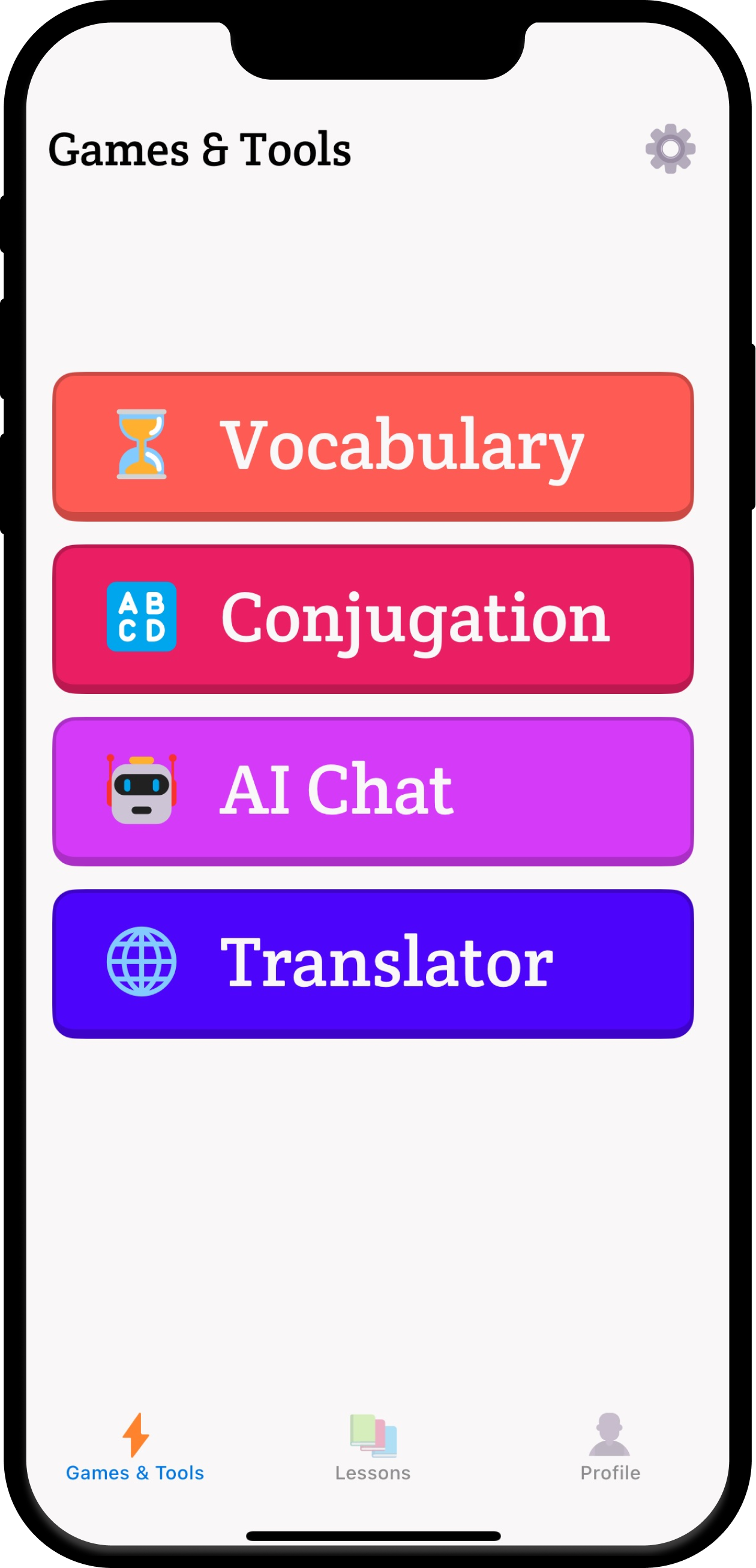
Games & Tools
Essential tools for every learner
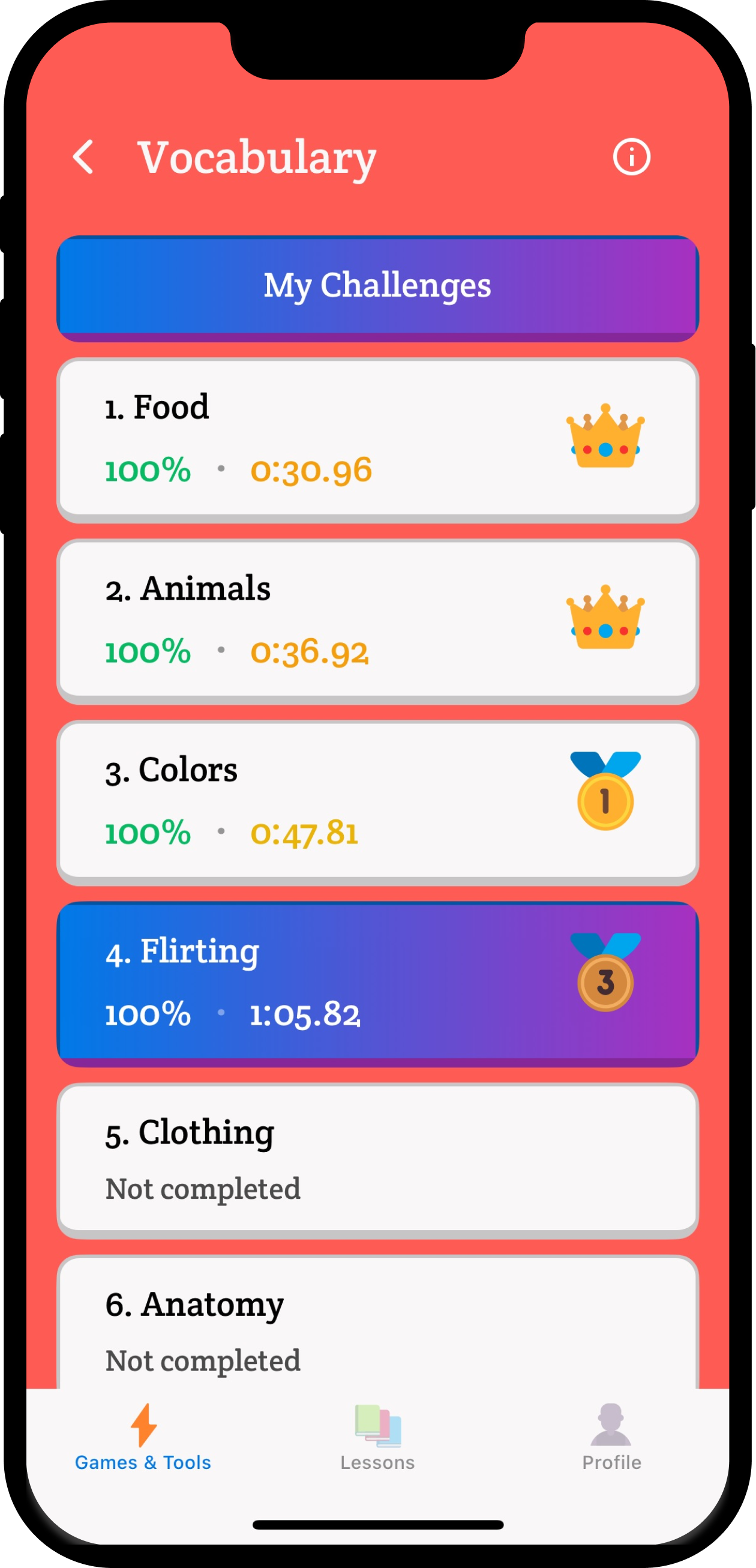
Timed Challenges
Practice vocabulary & conjugation
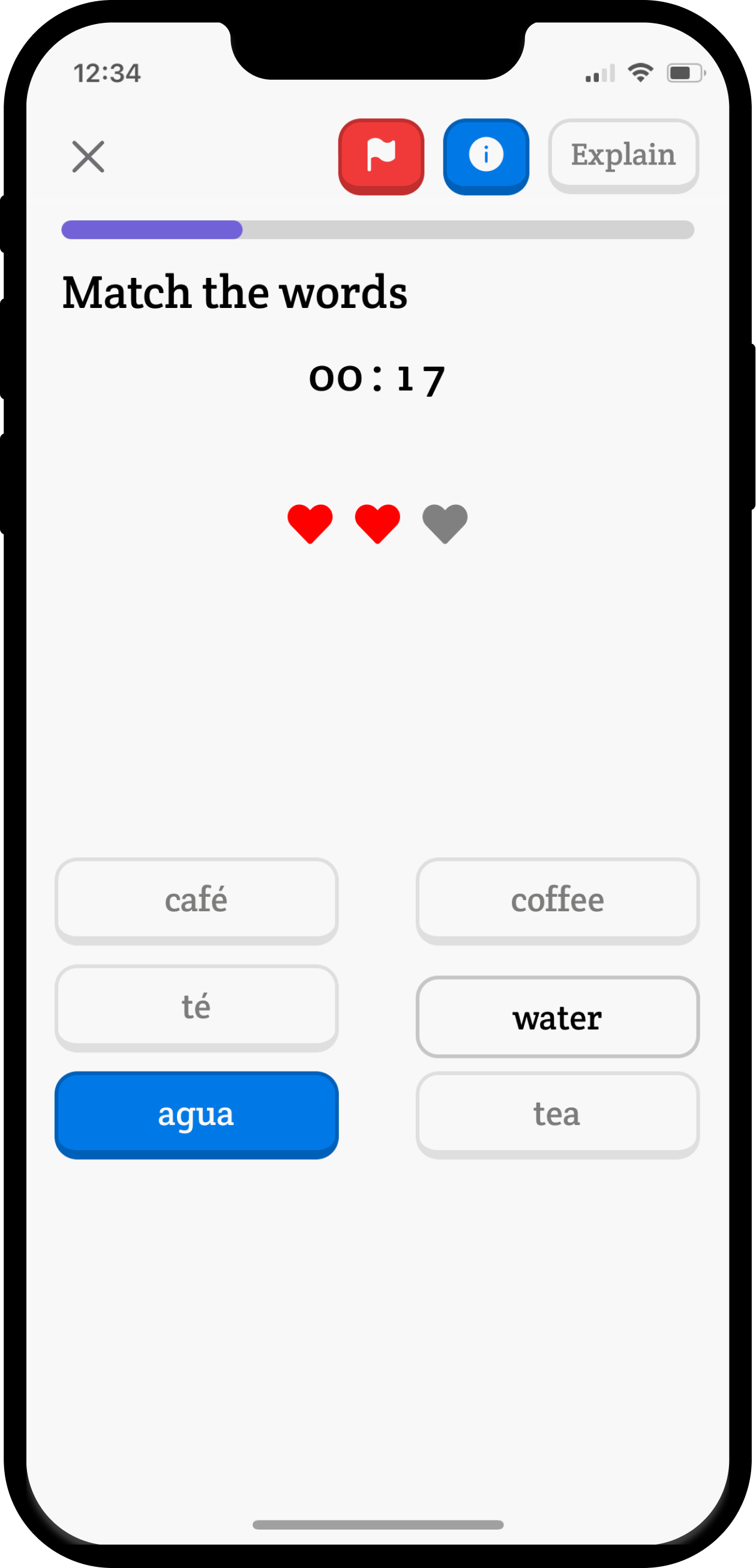
Interactive Games
Learn through engaging gameplay
1. Polychat
Polychat earns its place at the top of our list by offering a robust, gamified learning experience free from the frustrating limitations found in many popular apps. It is a standout choice for learners who want to practice as much as they desire each day. The platform completely removes restrictive "heart" or "energy" systems, allowing you to immerse yourself in the language without artificial stops.

This app stands apart with its powerful focus on core language mechanics, particularly verb conjugation and vocabulary building. Its built-in conjugation tool is frequently cited as one of the best on the market, providing structured practice that is critical for fluency. This dedication to grammar is balanced with fun, bite-sized games and timed challenges that make daily learning feel engaging rather than repetitive.
Polychat is also exceptionally flexible. You can learn one foreign language from the context of another (for example, learning French from a Spanish base), a feature highly valued by polyglots. The app’s use of AI is practical, powering interactive conversation games and a built-in translator for real-world application. For a deeper look into this, you can explore how AI is shaping modern language learning and how Polychat puts these principles into practice.
Key Features and User Experience
- Unlimited Practice: Complete as many lessons, games, and challenges as you want each day without penalties. This makes it ideal for intensive study sessions.
- Advanced Conjugation Tools: The platform provides a dedicated module for mastering verb tenses, a common pain point for learners at all levels.
- Cross-Language Learning: Offers the ability to set your source and target languages independently, catering to multilingual users.
- Gamified Environment: A structured path with hundreds of lessons, timed vocabulary games, and translation challenges keeps motivation high.
- Practical Tools: Includes a free translator and a personal dictionary that expands as you learn new words, providing measurable progress.
Who It's For
Polychat is an excellent fit for self-motivated learners who want control over their study schedule. It’s particularly effective for students and polyglots who need to drill down on grammar and vocabulary, as well as travelers who need practical conversation skills quickly. Anyone frustrated by the restrictive nature of other gamified apps will find Polychat’s "learn without limits" approach a refreshing change.
Website: https://www.polychatapp.com
2. Duolingo
Duolingo is often the first platform people think of for language learning, making it one of the best apps for learning foreign languages due to its sheer accessibility. Its game-like structure, featuring points, streaks, and competitive leagues, is exceptionally effective at building a consistent daily study habit.
The platform guides users through a structured learning path with bite-sized lessons covering vocabulary, grammar, and basic sentence construction. Its biggest advantage is a genuinely functional free version, supported by ads, that provides access to entire courses. For those who want an uninterrupted experience, Super Duolingo removes ads and adds features like unlimited "Hearts" (or attempts). The Family Plan offers a cost-effective option for up to six users.
However, its reliance on gamification can feel repetitive for intermediate or advanced learners who need more conversational depth. While Duolingo builds a solid vocabulary foundation, it's not designed for spontaneous, real-world dialogue. For those who feel they've hit a wall and need to move beyond Duolingo for conversation practice, exploring alternatives is a logical next step.
Key Info
- Best For: Beginners building a vocabulary base and forming a daily study habit.
- Pricing: Free ad-supported version; Super Duolingo from ~$7/month (varies by region/platform); Family Plan available.
- Website: Duolingo
3. Babbel
Babbel positions itself as a more structured, curriculum-driven alternative to gamified apps, making it one of the best apps for learning foreign languages if you prioritize practical conversation skills. Designed by in-house linguists, its courses are aligned with the Common European Framework of Reference for Languages (CEFR), offering a clear and logical progression from beginner to lower-intermediate levels.

The platform focuses on 10-15 minute lessons centered around real-world dialogues you would actually use, like ordering coffee or asking for directions. This approach helps build conversational confidence quickly. Progress is synced across devices, and Babbel is known for its transparent policies, including a 20-day money-back guarantee on subscriptions.
Its strength lies in this expert-led sequencing, which provides a solid foundation that some other apps lack. However, the subscription model is its primary offering, with pricing that can vary significantly by country and platform, requiring you to log in for an accurate quote. While it offers fewer languages than competitors like Duolingo, the quality and depth of its core courses are consistently high.
Key Info
- Best For: Beginners and lower-intermediate learners who want structured lessons focused on practical conversation.
- Pricing: Subscription-based, starting around $7-15/month; pricing varies by region, plan length, and promotions. Babbel Lifetime and some family plans are also available.
- Website: Babbel
4. Rosetta Stone
Rosetta Stone has been a major name in language education for decades, and its transition to a digital platform makes it one of the best apps for learning foreign languages through immersion. Its core methodology, called Dynamic Immersion, avoids explicit translations and grammar rules. Instead, it teaches you to connect words and phrases directly to images and real-world contexts, mimicking how you learned your first language. This approach is built around intuitive understanding and a heavy focus on speaking.

The platform’s TruAccent speech-recognition engine is a standout feature, providing instant feedback on your pronunciation to help you sound more like a native speaker. The program offers clear pricing structures, including monthly and annual plans for a single language, as well as a popular lifetime subscription that grants access to all its language courses. This makes it a great investment for serious, long-term learners or polyglots.
However, the pure immersion style can feel slow or frustrating for learners who prefer having grammar rules explained directly. While it builds strong intuitive connections, it may not be the fastest way to grasp complex sentence structures. Its strength lies in building a foundational, instinctual grasp of the language, particularly for pronunciation and basic vocabulary.
Key Info
- Best For: Learners who prefer an intuitive, immersion-based method and want to perfect their pronunciation.
- Pricing: 3-month plan from ~$12/month; Lifetime access to all languages for a one-time fee (often around $199 during promotions); 30-day money-back guarantee.
- Website: Rosetta Stone
5. Busuu
Busuu offers a well-rounded curriculum that feels more like a structured course than a simple game, making it one of the best apps for learning foreign languages for those seeking a comprehensive approach. Its strength lies in balancing vocabulary, grammar, and practical application. Lessons are designed to build upon each other logically, creating a clear path from beginner to intermediate levels.
A standout feature is the community feedback element, where native speakers correct your written and spoken exercises. This peer-to-peer interaction provides invaluable, real-world context that automated checks often miss. Premium users gain access to AI-powered conversation practice and official certificates from McGraw Hill for certain languages, which can be a great motivator. The "Smart Review" feature uses a spaced repetition system to help you retain vocabulary effectively.
While the free version provides a good taste of the platform, its content is limited. To truly progress, a Premium subscription is necessary. Busuu shines brightest for learners up to a B2 (upper-intermediate) level; advanced students may find they need more specialized resources to achieve fluency.
Key Info
- Best For: Learners wanting a structured course with community feedback and the option for official certificates.
- Pricing: Limited free version; Premium plans start from ~$6/month (often with steep discounts on annual plans, but pricing varies by platform and promotion).
- Website: Busuu
6. Memrise
Memrise carves out its niche by focusing intensely on vocabulary acquisition through spaced repetition and real-world context, making it one of the best apps for learning foreign languages if your goal is rapid recall. Its core method involves showing you words and phrases at increasing intervals, which helps cement them in your long-term memory.

The platform’s standout feature is "Learn with Locals," which presents short video clips of native speakers using words in natural settings. This provides invaluable context for pronunciation and informal usage that often gets lost in more sterile, text-based lessons. A recently added AI chat partner also gives users a space to practice using their newly learned vocabulary in simulated conversations. The user-friendly design and broad language selection make it an inviting and effective tool for quickly building a functional vocabulary.
While Memrise excels at teaching words, its grammar instruction can feel less structured compared to platforms with a dedicated curriculum. Some courses are more robust than others, and learners might find they need to supplement their studies with a grammar-focused resource. Additionally, the Pro subscription is necessary to access all courses and features, and clear pricing information can be hard to find without creating an account first, as promotions change often.
Key Info
- Best For: Learners who want to rapidly build vocabulary with real-world pronunciation context.
- Pricing: Free version with limited features; Memrise Pro unlocks all content from ~$8.50/month.
- Website: Memrise
7. Pimsleur
Pimsleur is a legendary name in language education, and its modern app format makes it one of the best apps for learning foreign languages for auditory learners. The method is built around core 30-minute audio lessons designed to be completed daily. This structure is perfect for commuters, people who exercise, or anyone who prefers hands-free learning away from a screen. Each lesson is a guided conversation that prompts you to speak, recall, and construct sentences, building your speaking confidence from day one.

The platform’s strength is its scientifically-proven method of graduated interval recall, which helps cement vocabulary and phrases into your long-term memory. Lessons are available offline, and your progress syncs across devices. While it excels at developing an authentic accent and conversational skills, it intentionally limits reading and writing practice to focus on audio proficiency. This can feel slow for users who want explicit grammar rules or visual aids.
Pimsleur's subscription model offers flexibility, with options to purchase a single language course or an All Access plan that covers all 51 languages, ideal for polyglots. It’s a powerful tool for those who want to speak and understand a language quickly, but it’s best paired with another app that can fill in the reading and writing gaps.
Key Info
- Best For: Auditory learners, commuters, and anyone needing to build speaking confidence and a good accent.
- Pricing: Single-language subscription from ~$20/month; All Access Plan for all languages from ~$21/month; Lifetime course purchases available.
- Website: Pimsleur
8. Mango Languages
Mango Languages distinguishes itself with a dialogue-based learning method that emphasizes practical conversation from the very beginning. It's one of the best apps for learning foreign languages if you want to quickly learn phrases for travel or specific situations, like business or legal contexts. The platform focuses on deconstructing real-world conversations and teaching grammar and vocabulary through their practical application.

The app’s most significant feature is its wide availability through public library partnerships. Many learners in the US and other countries can access the entire premium platform for free with just a library card, a massive advantage over competitors. Mango also excels in its coverage of over 70 languages, including many less-common, Indigenous, and heritage languages like Cherokee, Scottish Gaelic, and Dzongkha, which are hard to find elsewhere. Its voice comparison tool is also a great feature for practicing pronunciation.
While the focus on practical phrases is useful, learners seeking deep, explicit grammar instruction might find the approach a bit light. The system is designed to help you absorb grammatical patterns intuitively rather than studying rules in isolation. For learners who have access via their library, Mango Languages is an incredible, no-cost resource for building conversational confidence.
Key Info
- Best For: Learners needing practical conversational phrases, and those interested in less-commonly-taught or heritage languages.
- Pricing: Free with a participating library card; Individual plans from ~$18/month; Family plans available.
- Website: Mango Languages
9. LingQ
LingQ takes a radical departure from guided-path apps, positioning itself among the best apps for learning foreign languages for those ready to tackle authentic content. Instead of pre-made lessons, it allows users to import real-world materials like news articles, YouTube videos, ebooks, and podcasts. The platform then turns this content into an interactive lesson where every word is clickable.

The core system revolves around "LingQs" – words you mark as new or known. This method helps you track your vocabulary growth and focus on words you haven't yet mastered. The free version is limited, but Premium unlocks unlimited word saving and imports. Premium Plus adds AI tools and even provides rewards that can be used for tutoring. Exploring different methods is one of the best ways to learn a new language, and LingQ offers a powerful, content-driven approach.
However, its strength is also its biggest challenge. LingQ demands a high degree of self-direction and is most effective for intermediate learners and above. Beginners might find the lack of a structured path overwhelming. It excels at developing reading and listening comprehension with materials you genuinely find interesting but requires you to build your own curriculum.
Key Info
- Best For: Intermediate to advanced learners focusing on reading, listening, and vocabulary acquisition through authentic content.
- Pricing: Free limited version; Premium from ~$12.99/month; Premium Plus available.
- Website: LingQ
10. HelloTalk
HelloTalk transitions learners from structured lessons to authentic conversation, making it one of the best apps for learning foreign languages by connecting you directly with native speakers. The platform functions as a global language exchange community where you can find partners for text, voice, and video chats.

Its built-in tools are designed specifically for language exchange, allowing you to translate messages, correct your partner’s text, and hear the pronunciation of words you receive. While the free version offers core functionality, it has daily limits on translations and the number of new conversations you can start. A VIP subscription removes these restrictions and adds features like unlimited translations and advanced partner search filters.
The experience is highly dependent on finding a reliable and committed language partner, and like any social network, the quality of interaction can vary. However, for intermediate learners who have a foundational vocabulary but need real-world practice, HelloTalk is an excellent tool to improve fluency, learn slang, and gain cultural insights that apps with structured curricula often miss.
Key Info
- Best For: Intermediate learners seeking real-world conversation practice with native speakers.
- Pricing: Free version with limitations; VIP subscription from ~$6.99/month.
- Website: HelloTalk
11. Tandem
Tandem facilitates language exchange by connecting you directly with native speakers around the world. It’s one of the best apps for learning foreign languages if your goal is to move from theoretical knowledge to practical, real-world conversation. The platform functions like a social network for language learners, matching you with partners based on shared interests, goals, and proficiency levels.

You can interact through text, audio messages, or video calls, which makes it easy to find a communication style that works for you. Its simple, direct approach to getting speaking practice is its greatest strength, supported by an active global user base that increases your chances of finding a good match. The app also includes helpful tools like in-chat translation and correction features.
However, the quality of your experience heavily depends on the commitment of your language partner. Finding someone consistent can take time, and conversations can sometimes feel unbalanced if one person is more motivated than the other. Tandem is most effective when used alongside a structured course that provides grammar and vocabulary, as it’s designed for practice, not foundational teaching. Tandem Pro offers perks like unlimited translations and advanced search filters to find ideal partners.
Key Info
- Best For: Intermediate learners who need real-world conversation and speaking practice.
- Pricing: Free to connect and chat; Tandem Pro available from ~$13.99/month, with discounts for longer subscriptions.
- Website: Tandem
12. Lingvist
Lingvist is an AI-powered vocabulary builder designed for rapid acquisition of high-frequency words. It positions itself as one of the best apps for learning foreign languages by focusing on efficiency, using a smart algorithm to present words right before you forget them. This adaptive spaced-repetition system helps you absorb the most useful vocabulary first, making it a powerful tool for quickly ramping up your reading and listening comprehension.

The platform’s minimalist, flashcard-style interface keeps you focused on the task at hand: filling in the blank for a target word within a sentence. A standout feature is the Custom Decks tool, which allows you to upload any text, article, or even an email and automatically generate a study list from its vocabulary. This makes Lingvist exceptionally practical for professionals or students who need to master specific subject matter, from academic papers to business reports.
However, Lingvist's strength is also its main limitation. The app is almost entirely dedicated to vocabulary and offers minimal explicit grammar instruction or conversational practice. While it excels at building a word bank, it should be paired with other resources to develop speaking skills and a deeper understanding of sentence structure. Its course selection is also more limited compared to larger platforms.
Key Info
- Best For: Intermediate learners focused on rapidly expanding their vocabulary with high-frequency words.
- Pricing: Limited free trial; Paid plans start from ~$9.99/month, with discounts for annual subscriptions and students.
- Website: Lingvist
Top 12 Language Learning Apps - Quick Comparison
| App | Core features | UX & Quality (★) | Price / Value (💰) | Target audience & USP (👥 ✨) |
|---|---|---|---|---|
| Polychat 🏆 | Gamified lessons, best conjugation tool, translator, personal dictionary, 15+ languages, no energy limits | ★★★★★ — engaging, progress tracking | Free app (premium details unclear) 💰 | 👥 Beginners→Advanced, travelers, polyglots; ✨ Unlimited daily practice, cross-language learning |
| Duolingo | Bite-sized gamified lessons, huge course catalog, streaks, AI Max features | ★★★★☆ — habit‑forming, large community | Free + paid tiers (Max/Family) 💰 | 👥 Casual learners & beginners; ✨ Best free tier & massive course variety |
| Babbel | CEFR‑aligned, expert‑crafted short lessons, synced progress | ★★★★☆ — clear sequencing for starters | Paid subscriptions, Lifetime options 💰 | 👥 Beginners→lower‑intermediate; ✨ Linguist‑designed practical curricula |
| Rosetta Stone | Immersion lessons, TruAccent pronunciation, web & mobile | ★★★★☆ — strong pronunciation training | Clear monthly/annual/Lifetime pricing 💰 | 👥 Pronunciation-focused learners; ✨ TruAccent + All‑Languages Lifetime |
| Busuu | Structured courses, Smart Review (spaced rep), community feedback, certificates | ★★★★ — balanced skill practice | Freemium; Premium unlocks AI & certificates 💰 | 👥 Structured learners seeking certification; ✨ Community corrections & official certificates |
| Memrise | SRS vocab, native‑speaker video snippets, AI chat practice | ★★★★ — fast vocab gains | Free + Pro subscription 💰 | 👥 Vocab builders & casual learners; ✨ Learn‑with‑locals video content |
| Pimsleur | Audio‑first guided 30‑min lessons, offline support, All Access plan | ★★★★ — excellent speaking/listening | Subscription/All Access, some lifetime options 💰 | 👥 Commuters & audio learners; ✨ Hands‑free, spoken‑practice method |
| Mango Languages | Dialog‑driven lessons, 70+ languages, library access programs | ★★★ — practical phrase focus | Paid; often free via public libraries 💰 | 👥 Learners of rare/heritage languages; ✨ Wide language coverage & library partnerships |
| LingQ | Learn from real content (podcasts, articles), vocab tracking, tutoring | ★★★ — powerful for self‑directed learning | Freemium; Premium for unlimited features 💰 | 👥 Advanced readers/listeners; ✨ Study authentic content and track known words |
| HelloTalk | Global language exchange, in‑app translation & corrections, voice/text chat | ★★★ — varies by partner quality | Free + VIP tiers 💰 | 👥 Conversation practice seekers; ✨ Native‑speaker exchanges with correction tools |
| Tandem | Partner matching by interests/level, text/audio/video calls, Pro features | ★★★ — effective 1:1 practice if partners are active | Free + Pro (advanced search/translations) 💰 | 👥 One‑on‑one conversational learners; ✨ Advanced match filters and Pro perks |
| Lingvist | Adaptive SRS, Custom Decks from any text, visible pricing & discounts | ★★★★ — very efficient vocab ramp‑up | Paid plans with student discounts 💰 | 👥 Vocabulary‑focused learners; ✨ AI‑adaptive focus on high‑frequency words |
Final Thoughts
The journey to fluency is a marathon, not a sprint, and your digital toolkit can be your most powerful ally or your biggest obstacle. As we've explored, the search for the single "best app for learning foreign languages" often leads to a more nuanced conclusion: the ideal solution is rarely a single app, but a personalized combination of them. Your learning style, specific goals, and current proficiency level are the true compass points for navigating this crowded marketplace.
Think of it as building a specialized team. You wouldn't hire a single person to be your coach, sparring partner, and reference librarian. Similarly, you shouldn't expect one app to do everything perfectly. The most successful language learners are those who strategically assemble their resources, creating a robust and flexible learning ecosystem.
Key Takeaways for Building Your App Stack
To recap the core insights from our deep dive, remember these guiding principles when making your selections:
- Define Your "Why": Are you learning for travel, business, or personal enrichment? A conversation-focused app like Pimsleur or HelloTalk is critical for a traveler, while a professional might need the structured, culturally-rich curriculum of Babbel or Mango Languages. Your motivation dictates your primary tool.
- Balance Active and Passive Learning: Don't just drill flashcards. Pair an active, production-focused tool like Polychat (for unlimited speaking and conjugation practice) with a passive, input-heavy app like LingQ or Memrise. This combination trains both your recall and your comprehension skills.
- Don't Underestimate Community: Fluency is built through interaction. Apps like Busuu, HelloTalk, and Tandem connect you with native speakers, providing the real-world feedback and conversational practice that purely algorithmic platforms cannot. This human element is essential for moving past intermediate plateaus.
- Gamification is a Tool, Not the Goal: While Duolingo’s gamified approach is excellent for building initial habits and motivation, be mindful of its limitations. If you find yourself chasing streaks more than genuine understanding, it’s time to supplement it with a more substantial tool that focuses on grammar, like Babbel, or on unlimited, practical conversation, like Polychat.
Your Next Steps to Fluency
Before you download a dozen apps, take a moment to chart your course. Start by identifying the single biggest gap in your current learning routine. Is it a lack of speaking practice? A weak grasp of verb conjugations? A limited vocabulary?
Once you’ve identified that primary need, select one core app from this list to address it head-on. If you’re struggling to form sentences and speak confidently, a tool that lets you practice output without fear is your best starting point. If your vocabulary is stagnant, a spaced-repetition system like Memrise or Lingvist should be your priority.
From there, build outwards. Use your core app for 2-3 weeks. See what it does well and where you still feel a deficit. Then, and only then, add a secondary, complementary app to fill that new gap. By building your digital toolkit intentionally, piece by piece, you create a powerful, personalized system that adapts to your needs as you grow. The world of language learning apps is rich and varied; the right combination will not only make your studies more effective but also far more enjoyable.
Ready to stop memorizing and start speaking? Polychat offers unlimited, AI-powered conversation practice and a dedicated conjugation tool to help you master the building blocks of real-world dialogue. Try Polychat today and turn your knowledge into confident, natural speech.