Duolingo Similar Apps to Supercharge Your Learning (2026)

You’ve probably felt this already. Your streak is alive, the owl is happy, and you can still feel your actual language progress flattening out.
That disconnect is why so many people start searching for duolingo similar apps. They’re not always quitting because they hate gamification. They’re quitting because they want the game to keep serving the learning, not replace it. A beginner can tolerate shallow drills for a while. An intermediate learner usually can’t.
The market is big enough to show how strong that demand has become. Language learning apps generated $1.11 billion in 2024, up from $1.08 billion in 2023, while Duolingo alone accounted for roughly half of all revenue and 60% of total app usage, according to Business of Apps' language learning app market data. That scale matters. When one model dominates, its weaknesses become the pain points that push people to look elsewhere.
Ready to Learn More?
Try PolyChat's interactive language learning games and put your new vocabulary to the test!
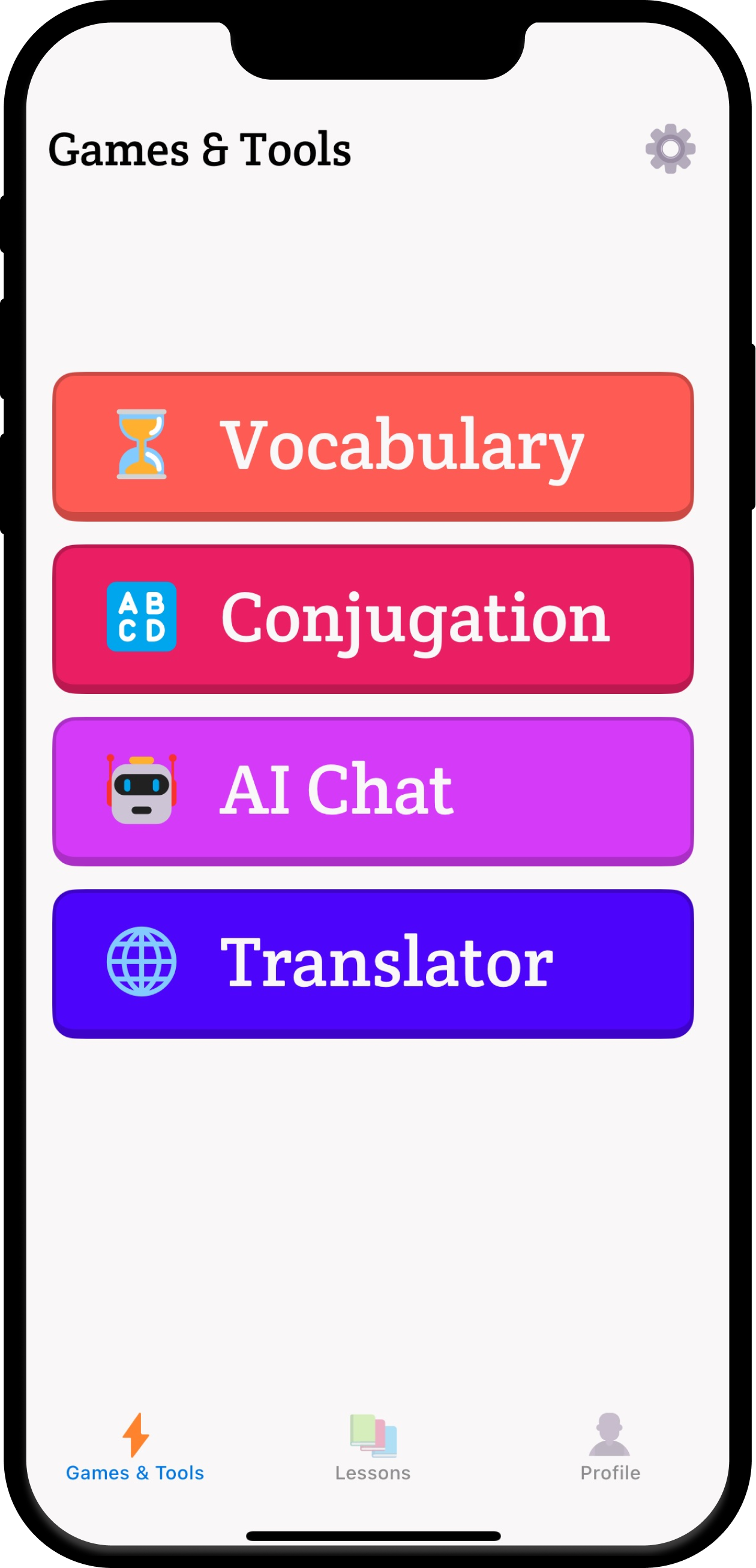
Games & Tools
Essential tools for every learner
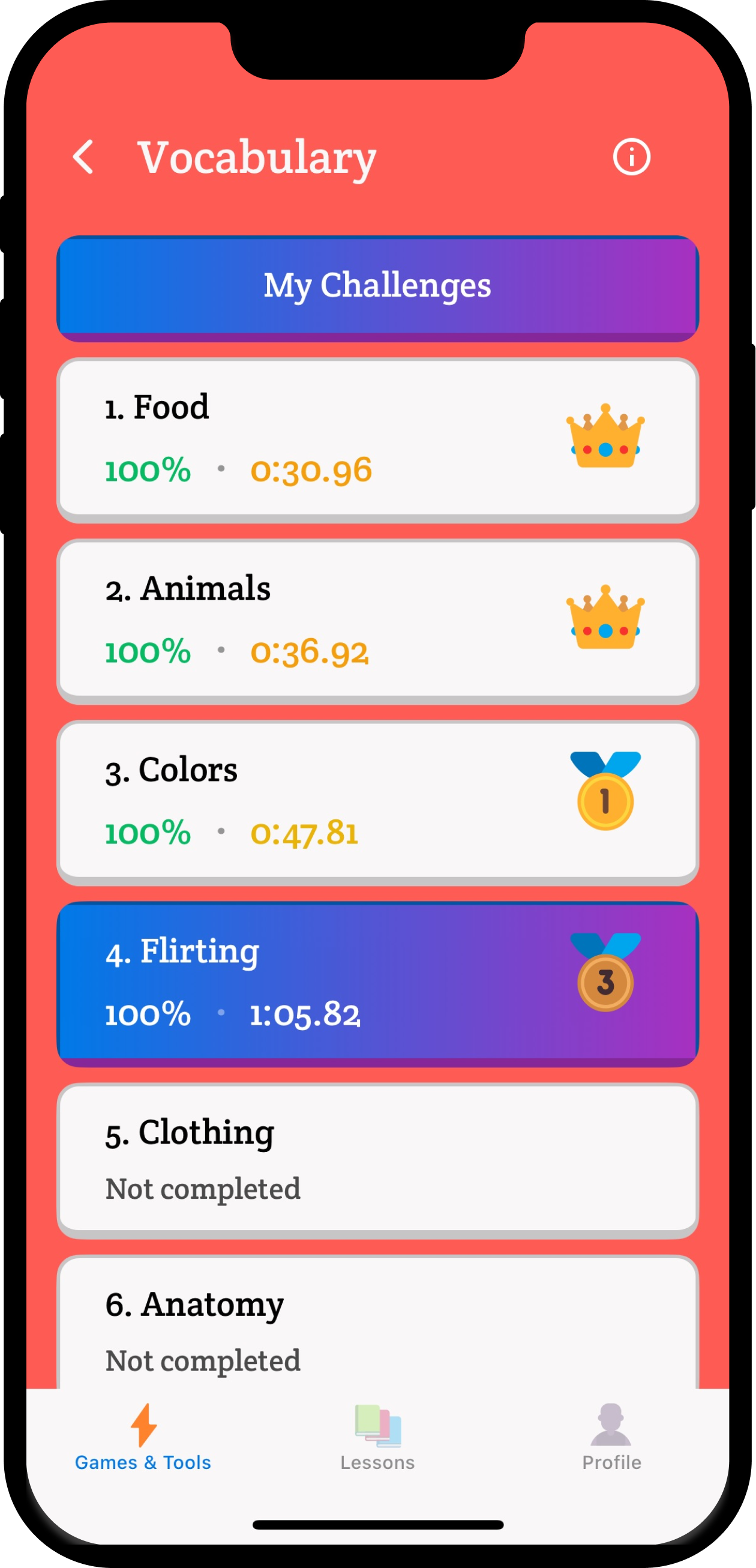
Timed Challenges
Practice vocabulary & conjugation
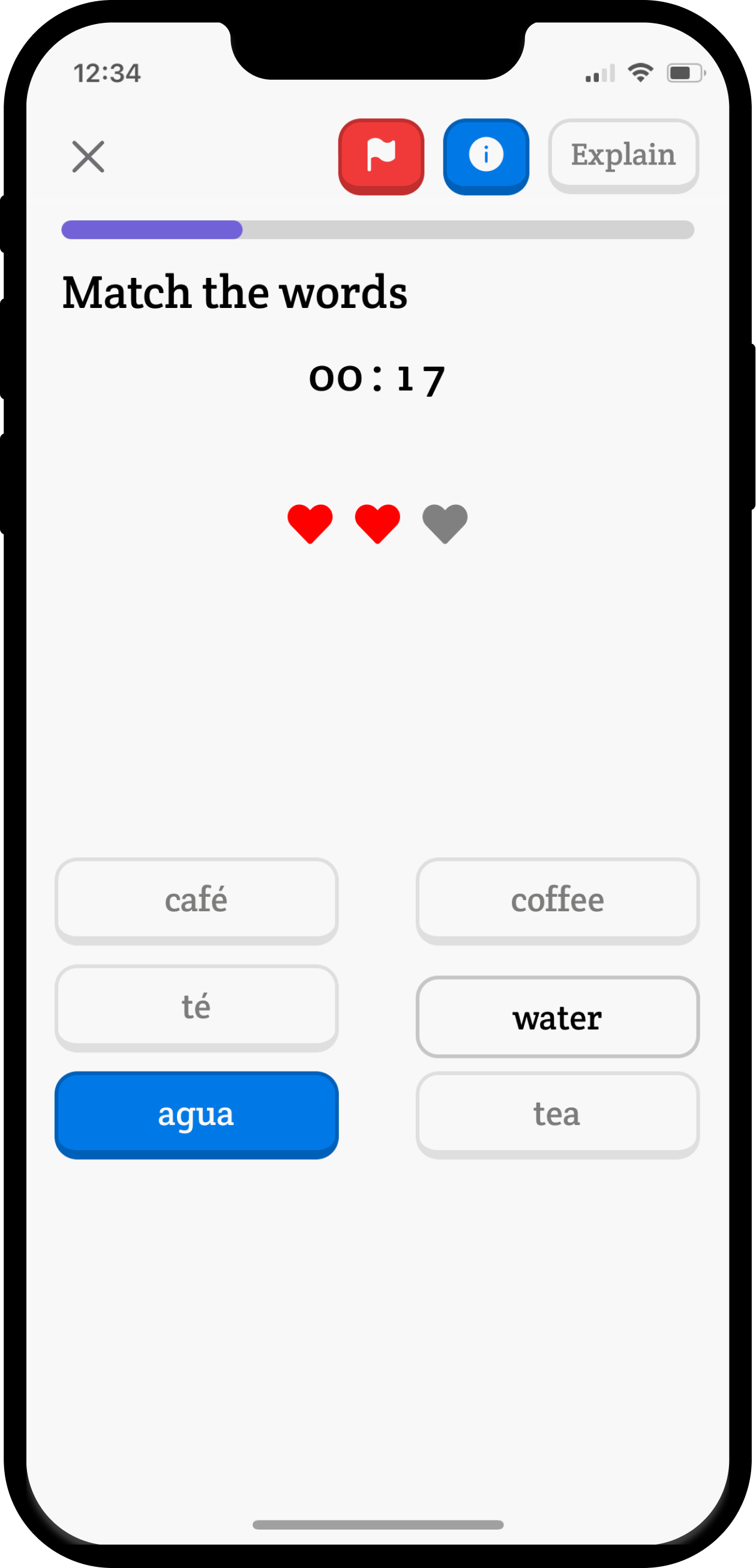
Interactive Games
Learn through engaging gameplay
Beyond the Green Owl Why You Might Need a Duolingo Alternative

A lot of learners don’t leave Duolingo because it failed at the start. They leave because it worked just well enough to get them invested, then stopped matching their ambition.
That pattern makes sense. Duolingo is excellent at turning language study into a repeatable habit. But habit and progress aren’t the same thing. Once you want longer sessions, more grammar clarity, or practice that feels closer to real speech, the design starts to push back.
The heart system changes how you study
One of the biggest structural problems is the penalty model. If mistakes reduce your ability to keep practicing, you stop experimenting. You get cautious. You start optimizing for preserving hearts instead of testing the language.
That’s a bad trade for serious learners. Language growth requires mistakes, especially when you move beyond fixed phrases and start building sentences yourself. The frustration is common enough that Polychat's discussion of apps like Duolingo points directly to daily limits and energy systems as a core reason users seek alternatives, along with interest in unrestricted gamified practice such as timed vocabulary and conjugation challenges.
Practical rule: If an app punishes mistakes by ending your session, it’s shaping your behavior away from real learning.
This isn’t unique to language apps, either. Plenty of tools become less useful when they gate the very activity you’re trying to do more of. If you’ve ever compared other file sharing services after running into limits or friction, the same logic applies here. Once a tool starts constraining normal use, people look for a better fit.
The plateau usually isn’t your fault
Many learners assume they’ve lost discipline when they get bored. Often, the app has stopped offering the right kind of challenge.
A beginner can tolerate unusual sentences and minimal explanations because almost everything feels new. Later, those same design choices become obstacles. You don’t just need more vocabulary. You need feedback that shows why an answer was wrong, practice that lets you stay in the language longer, and exercises that build toward conversation instead of isolated success inside the app.
Mainstream convenience has trade-offs
The broader category has matured into a freemium, gamified market, and Duolingo’s model set the benchmark. That doesn’t mean it set the benchmark for every type of learner. It set the benchmark for accessibility, habit formation, and broad appeal.
For someone studying casually, that may be enough. For someone trying to use the language while traveling, dating, working, or consuming native media, it often isn’t.
- You may need more depth if you keep finishing sessions without feeling challenged.
- You may need more freedom if practice caps interrupt your momentum.
- You may need more realism if app sentences don’t resemble what people say.
- You may need clearer instruction if your errors keep repeating because the app doesn’t explain them well.
That frustration is useful information. It doesn’t mean you’re bad at languages. It usually means you’ve outgrown a beginner-first system.
The 2026 Language App Showdown A Feature Comparison
The biggest mistake people make with duolingo similar apps is comparing them by popularity instead of by learning architecture. Apps can all look “fun” on the surface while teaching in very different ways underneath.
Here’s the short version.
| App | Core lesson style | Practice limits | Speaking and AI | Best fit |
|---|---|---|---|---|
| Duolingo | Gamified, bite-sized drills | Free-tier limits can interrupt sessions | Basic conversational features and short practice loops | Casual learners building a daily habit |
| Babbel | Structured lessons with stronger sentence focus | Subscription model emphasizes access over friction | Better for guided conversation patterns than streak chasing | Travelers and learners who want practical phrasing |
| Memrise | Vocabulary and exposure with chat features | Less centered on punishment mechanics | AI chat is useful but can feel more scripted | Learners who want more listening and phrase familiarity |
| Polychat | Gamified drills, conjugation work, translation and conversation games | Unlimited daily practice model | Interactive conversation games and reinforcement tools | Learners frustrated by hearts and shallow repetition |

Bite-sized doesn’t always mean effective enough
Short lessons are useful. They lower friction and help people show up. But “short” becomes a weakness when the app never gives you room to stay with difficulty long enough to work through it.
If you want to create effective bite-sized learning, the lesson has to do more than be short. It has to fit into a larger progression that builds recall, grammar, and flexibility. Duolingo often wins on convenience. It doesn’t always win on depth.
Babbel generally handles this trade-off better for pragmatic learners. Its lessons feel more like guided instruction. You’re less likely to feel like you’re earning points for pattern recognition alone.
AI features aren’t interchangeable
A lot of people hear “AI conversation” and assume every app is now offering roughly the same thing. That’s not true. The differences are technical and practical.
Copycat Cafe’s comparison of Duolingo alternatives notes that its AI Speaking Partner allows 1,000 daily conversation messages and gives pronunciation scoring on a 0-100% scale, while Rocket Languages uses lessons of about one hour compared with Duolingo’s five-minute modules. Those aren’t cosmetic differences. They reflect different assumptions about how much speaking, correction, and cognitive load a learner can handle in one session.
Some apps use AI as decoration. Others use it as the core practice loop.
That distinction matters most if your goal is speaking. A chatbot that keeps things moving but doesn’t challenge your pronunciation, grammar, or endurance can feel modern without doing much for fluency.
The heart system is not a small feature
Many reviews treat hearts and practice limits like an annoyance. For serious learners, they’re central.
A limit changes session behavior. If you know mistakes might cut your study short, you become less willing to take risks. That’s the opposite of what strong language practice needs. Strong practice usually means pushing into uncertainty, making errors, and then correcting them immediately while your attention is still on the problem.
Duolingo still deserves credit for habit-building. But the same design that keeps a casual user coming back can interrupt the exact kind of sustained repetition a committed learner wants.
Grammar is where the gaps widen
The deeper you go, the more the differences between apps show up in how they explain rather than how they quiz.
Babbel is usually the safer pick if your frustration comes from not understanding sentence structure. It tends to feel more instructional. Memrise is more useful when you want phrase familiarity and lighter conversational support. Duolingo works when you still benefit from repetition without needing much explicit explanation.
For comparison shoppers, this language app comparison is useful because it frames the differences around learning mechanics rather than branding.
What each app gets right, and what it misses
Duolingo
Duolingo still shines at three things: low-friction entry, daily consistency, and making beginners feel like they can start today. That matters. A lot of language learners never begin because the first step feels too heavy.
Its weakness is what happens after the habit forms. If the practice stays shallow, the streak becomes the product.
Babbel
Babbel makes more sense for adults who want practical sentences, clearer grammar, and a less noisy experience. It often feels closer to a course than a game.
The downside is that some learners find it less sticky. Fewer game mechanics can mean lower daily pull if you rely on external motivation.
Memrise
Memrise tends to appeal to learners who want more exposure, phrase recall, and a softer bridge into conversational practice. Its AI chat can be helpful, but verified comparison material notes it can feel more scripted than Duolingo’s conversational AI in some cases.
That makes it useful, but not always the best choice if you want highly dynamic interaction.
Polychat
Polychat is more interesting for a specific user: the learner who likes gamified study but is tired of artificial limits. It combines timed vocabulary, conjugation practice, translation work, and conversation games in an unlimited daily model.
That won’t matter much if you only study for a few minutes and stop. It matters a lot if your best sessions happen when you finally have time and want to keep going.
What works: an app that lets you turn motivation into volume.
What doesn’t: an app that converts motivation into waiting.
The Polychat Advantage Unlimited Learning and Superior Tools
You finally have a free 40-minute block, your focus is there, and you want to get real reps in. Then the app slows you down with hearts, cooldowns, or some other artificial stop sign. For serious learners, that is not a minor annoyance. It breaks the exact condition that makes language practice work: sustained, repeated retrieval while attention is still high.

The case for unlimited practice is about learning mechanics, not brand preference. Migaku’s language app comparison explains why spaced repetition and sentence-based review work better than flatter review models. That matters here because those methods improve through volume and timing. If an app cuts off a learner right when recall is getting difficult and useful, it weakens its own teaching method.
That is why unlimited systems tend to feel better for committed learners. They let you stay with the material long enough to move from recognition into recall, and from recall into production.
Why unlimited practice changes results
Language study is lumpy. Some days support five minutes on the train. Other days give you a long stretch where you can finally drill verb forms, fix weak vocabulary, and push through hesitation. Apps with hard limits flatten those sessions into the same small dosage, even when your motivation and available time are completely different.
In practice, unlimited access matters most in a few places:
- Conjugation training, where repetition builds speed and pattern recognition
- Timed vocabulary review, where the goal is faster retrieval, not just familiar-looking words
- Translation exercises, where passive knowledge has to become active output
- Conversation drills, where longer exchanges expose hesitation, not just correctness
This is also where mainstream app design often frustrates advanced beginners and intermediate learners. The issue is not that practice is hard. The issue is interruption. A learner who is ready to do twenty more useful reps should not be told to wait.
Better tools solve specific bottlenecks
A lot of app comparisons stay too shallow. They compare price, design, and whether the mascot is charming. That misses the core question: which tool helps with the thing currently holding you back?
If verb endings fall apart under pressure, you need targeted conjugation work. If you freeze when you try to answer quickly, you need recall drills and short conversational turns. If you want a broader view of how dialogue systems are being used across products, these 8 conversational AI examples give useful context for how different apps structure interaction and feedback.
Good task design beats decorative motivation loops.
How to test Polychat properly
A quick trial lesson will not tell you much. The right way to evaluate Polychat language practice tools is to stress the parts that usually expose weak app design.
Run a short test like this across a few sessions:
- Start with conjugation practice. Check whether repeated exposure improves retrieval, not just whether you can pass one round.
- Switch into timed vocabulary. This shows whether the app trains speed of recall instead of simple recognition.
- Move straight into translation or a conversation game. The handoff matters. You want to see whether isolated drills carry into active use.
- Save weak words to a personal dictionary. Many apps generate activity, but fail at reinforcement after the session ends.
I look for one thing above all here. Can the app turn momentum into more useful reps, or does it keep interrupting the session?
Who gets the most value from this model
Unlimited practice fits learners who are blocked by friction, not by challenge. They are willing to work. They just do not want the app getting in the way of the work.
It is also a practical option for multilingual learners because the platform supports study from more than one base language instead of assuming English every time. That changes the experience more than many app reviews admit. Studying through a language you already use comfortably can reduce mental switching and make explanations easier to absorb.
There is a trade-off. An unlimited model asks for more active effort. Learners who mainly want passive exposure, light entertainment, or a very gentle daily nudge may prefer something looser. But if your recurring complaint is that mainstream apps keep interrupting your best study sessions, this model addresses the right problem.
Matching the App to Your Learning Goal
There isn’t one winner for everyone. There’s only an app that fits what you’re trying to do right now.

A lot of frustration with duolingo similar apps comes from choosing by app-store reputation instead of by actual goal. The right choice for a tourist is different from the right choice for a B2 learner trying to stop sounding robotic.
The casual learner
If your main problem is getting yourself to open an app consistently, Duolingo still has a place. It’s accessible, familiar, and easy to use in tiny pockets of time.
That doesn’t make it ideal for long-term fluency. It makes it useful for habit formation. If you’re brand new and keep quitting heavier courses, sticking with a mainstream app for a while can be reasonable.
Best fit:
- Duolingo if you need low pressure and strong daily prompts
- Memrise if you want a slightly softer move toward phrase familiarity and chat features
The pragmatic traveler
Travelers usually need survival language, listening comfort, and useful phrases. They don’t need to master every corner of grammar before the flight.
Babbel often fits this learner better than Duolingo because it tends to keep a tighter connection to practical usage. It feels less like completing app tasks and more like preparing for predictable real-world situations.
Good signs you’re this learner:
- You care about booking rooms, ordering food, and asking for help
- You need useful phrases more than a game loop
- You want clearer explanations when something changes form
The frustrated Duolingo graduate
This is the most common reader for a piece like this. You’ve done the streak. You know basic words. You can feel the app getting repetitive, and the restrictions make it worse.
This group usually needs one of two things. Either more structure, or more freedom.
If you want grammar explained more clearly, Babbel is the safer move. If you want to keep the gamified energy but remove the brakes, an unlimited-practice option makes more sense.
When learners say an app feels “too easy,” they often mean the app stopped asking for the kind of effort that produces growth.
The intermediate or advanced learner
This group is underserved. A lot of recommendation lists still act like every learner is choosing their first app.
That misses a real problem. A discussion of the gap for intermediate and advanced learners notes that many users report Duolingo becomes “too easy and restrictive,” and points to tools like Spoken and Lingopie for unscripted native audio, authentic media, and explanations of real-speech nuance. That’s important because once you move past beginner material, authenticity starts to matter more than gamification.
For this learner, specialized tools often beat general-purpose apps.
Look at:
- Spoken for unscripted native audio and transcript-based nuance
- Lingopie for authentic TV dialogue and emotional tone
- Babbel if you still want guided structure
- Memrise if you want a lighter bridge rather than full immersion
The ambitious polyglot
Polyglots and high-volume learners often care less about whether an app is cute and more about whether it wastes momentum.
This learner benefits from tools that support repeated drilling, fast switching between practice types, and flexible language pairs. Unlimited sessions matter here because advanced learners often work in bursts. They don’t want a system that assumes every study day should be short and gentle.
A simple way to decide is to ask one question: What frustrates you more, confusion or interruption?
- If the answer is confusion, choose a more explanatory app.
- If the answer is interruption, choose an app with fewer artificial limits.
- If the answer is boredom, choose authentic-media tools.
- If the answer is inconsistency, stay with the app you’ll consistently open.
That answer usually tells you more than any top-10 list.
How to Make the Switch and Keep Your Momentum
Switching apps can feel like wasting effort, especially if you’ve built a long streak. It isn’t wasted. You’re not throwing away progress. You’re changing tools because your needs changed.
Treat the move as a level-up, not a restart.
Run a quick learning audit
Before installing anything new, write down what you can already do.
Keep it simple:
- Vocabulary check: List words and topics you already handle comfortably.
- Grammar check: Note where you still freeze. Verb endings, word order, gender, cases, listening speed.
- Speaking check: Record yourself answering a few basic prompts.
- Reading check: Try a short native text and mark where comprehension breaks down.
Many learners switch apps emotionally, only to then choose something that repeats what they’ve already mastered.
Move your knowledge, not your streak
A common focus is on the number they’re leaving behind. The streak is the least transferable part of your learning.
What transfers is your actual inventory of words, phrases, and weak spots.
Try this process:
- Export or manually save core vocabulary into a notebook, flashcard app, or the new app’s saved-word system.
- Keep your first month narrow. Don’t study everything. Pick one track such as conversation, travel phrases, or verb control.
- Set a session goal instead of a streak goal. Examples: finish one conversation drill, review saved words, or complete one grammar-focused block.
- Use a replacement habit. Study at the same time of day you used the old app.
If you want a practical self-study framework, this guide on how to learn a language on your own is worth reading because it focuses on building a routine that doesn’t depend on one app’s reward loop.
Switching advice: Keep the time slot. Change the tool. Habits survive best when the cue stays the same.
Expect a brief dip
A new interface always feels less comfortable at first. That doesn’t mean it’s worse. It means you haven’t automated it yet.
Give the new app enough time to reveal its real strengths. A deeper app can feel slower on day one because it asks more from you. That’s often exactly why it becomes more useful later.
Use the first month differently
Your first month after switching should answer one question: Does this app help me do the kind of practice I need?
Don’t judge it only by fun or novelty. Judge it by whether you can sustain the right behaviors. Longer focused sessions. Better correction. Less friction. More relevant exercises.
If those improve, the switch was worth it.
Frequently Asked Questions About Duolingo Alternatives
Are duolingo similar apps better for beginners?
Not always. Duolingo is still very good at getting beginners started because it lowers resistance. Alternatives become more attractive when you want deeper explanations, more realistic material, or fewer limits on practice.
What’s the biggest reason people leave Duolingo?
Usually it’s not one feature by itself. It’s the combination of repetition, limited explanation, and friction during longer study sessions. For motivated learners, practice caps often become the final straw.
Is an unlimited-practice app automatically better?
No. Unlimited access only helps if the exercises are worth repeating. But when the app uses strong review methods and contextual practice, removing artificial limits gives serious learners more room to improve.
Should I replace Duolingo completely?
Not necessarily. Some learners keep it as a habit tool and use another app for speaking, grammar, or authentic input. That said, if Duolingo is the part of your routine you keep avoiding, replacing it outright may be cleaner.
Which app is best for intermediate learners?
That depends on the gap you’re trying to close. If you need structure and grammar, choose a more instructional app. If you need real speech and native-style usage, look at media-driven tools. If you want more volume without session caps, choose an unlimited practice model.
How long should I test a new app before deciding?
Long enough to use it in your real study conditions. That usually means several sessions, including one on a busy day and one when you have time to go deeper. A quick first impression isn’t enough.
If Duolingo helped you start, that’s useful. If it’s now slowing you down, it’s reasonable to move on. Polychat is one option for learners who want gamified practice without hearts or daily caps, especially if you value conjugation drills, conversation games, and longer uninterrupted sessions.