Discover how to learn vocabulary fast: Practical, science-backed techniques

The real secret to learning vocabulary isn't about cramming more words into your head. It’s about understanding why your brain keeps letting them slip away in the first place. Once you get that, you can use smart, science-backed strategies that work with your brain's natural learning process, not against it.
Ready to Learn a Language?
Try PolyChat's engaging language lessons, interactive learning games and put your new vocabulary to the test!
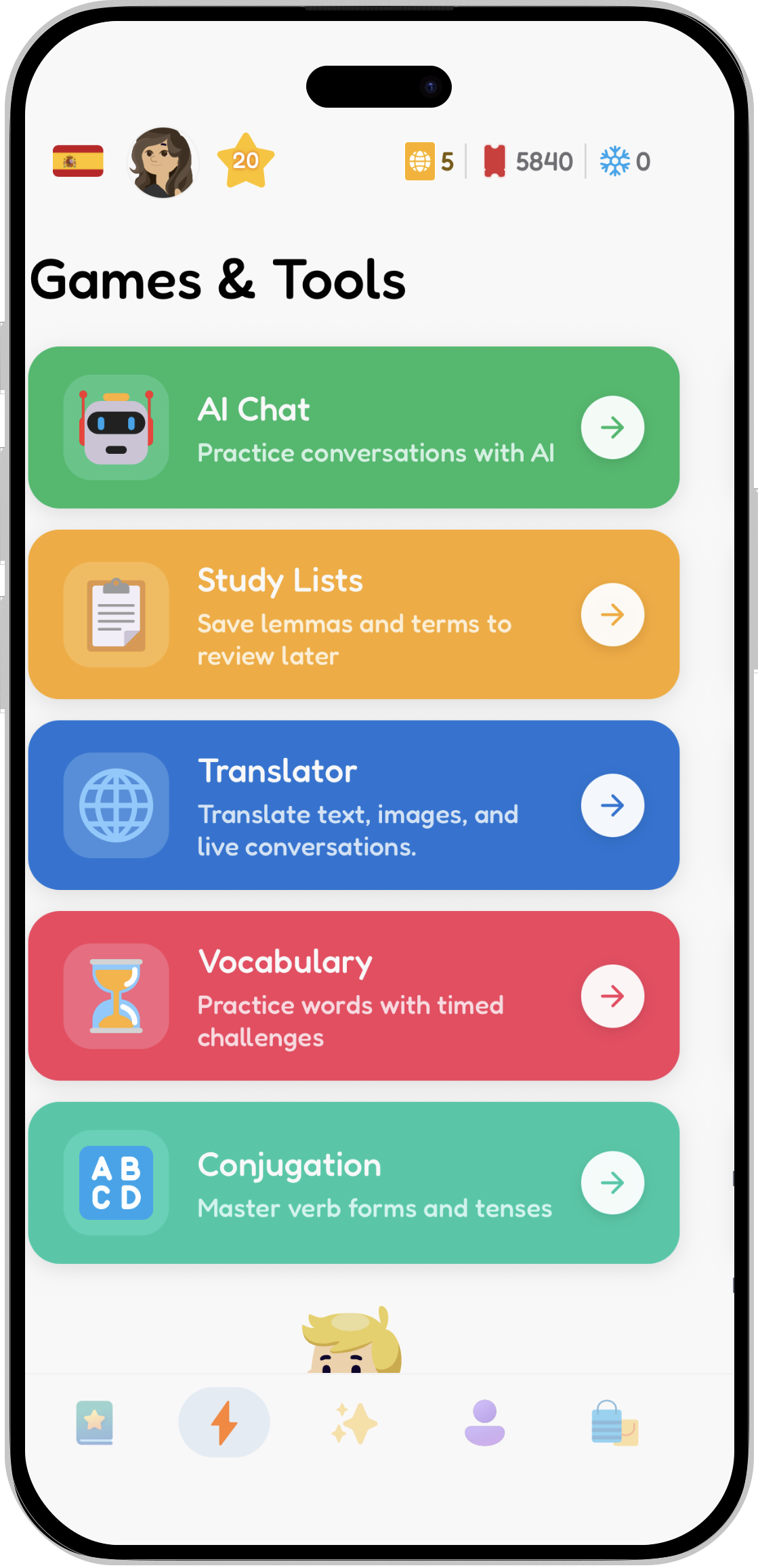
Games & Tools
Tools that every language learner needs at all stages of their learning journey.
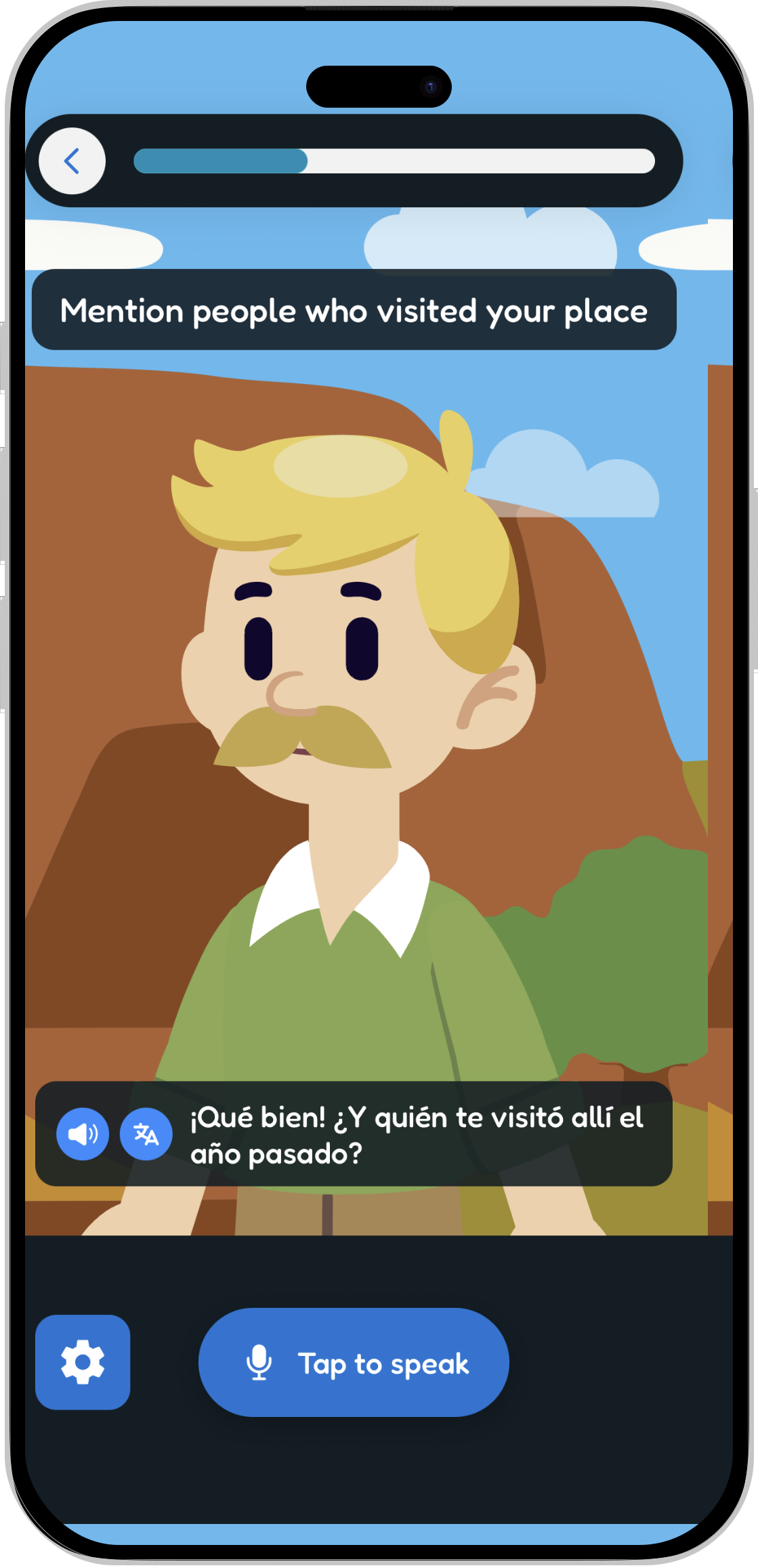
AI Chat Tutor
Practice real conversations with an AI tutor that helps you speak with confidence.
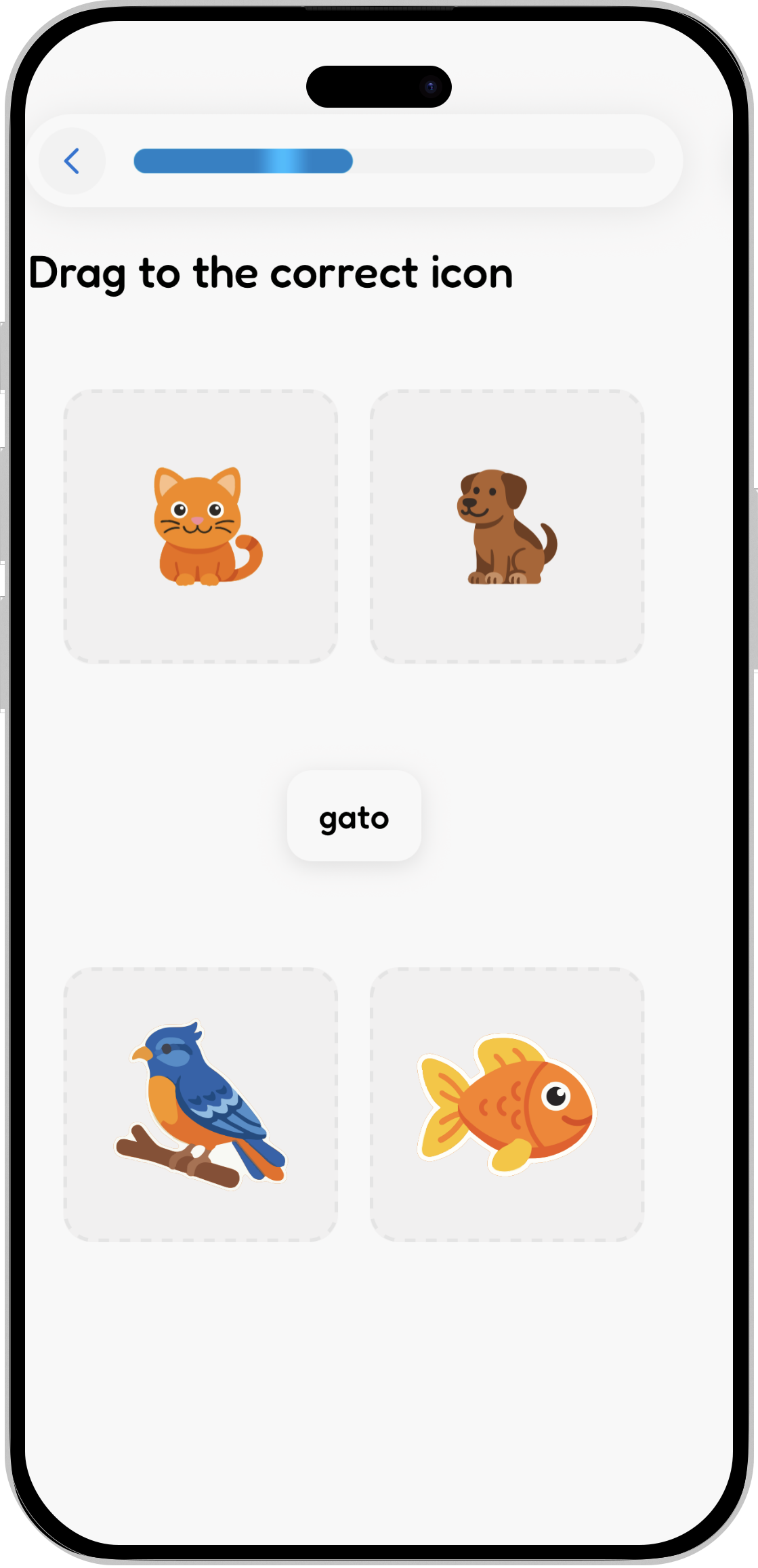
Interactive Games
A variety of games to help you learn and remember new words and phrases.


Why New Words Go In One Ear and Out the Other
Ever feel like you learn a new word one day, only to find it's completely vanished by the next? That’s not a personal failing; it’s your brain doing its job. Our brains are built for efficiency, which means they’re constantly trying to discard information they think is useless. A new word, seen only once, is basically flagged as junk mail.
This is exactly why mindlessly flipping through a giant stack of flashcards is one of the least effective ways to build a vocabulary that actually sticks. Without context or some kind of meaningful connection, a new word has nothing to hold onto. It's like trying to grab smoke.
Your Motivation is the Real Superpower
Honestly, the biggest game-changer isn't having a "good memory"—it's being genuinely motivated. How much you care directly impacts how well your brain stores new information. When you're truly interested in something, your brain pays attention and is far more likely to shuttle a new word from your flaky short-term memory to your reliable long-term storage.
In fact, your inner drive can seriously speed things up. Studies show that motivated learners retain way more vocabulary than people who are just going through the motions. A positive mindset can transform vocabulary practice from a soul-crushing chore into a fun, achievable challenge. You can dig into the research on just how motivation supercharges vocabulary acquisition if you want to see the proof.
Your brain doesn't just learn words; it learns connections. The stronger and more personal the connection, the more likely the word will stick.
A great way to build those strong connections and fight your brain's forgetful nature is to use a powerful mnemonic maker with letters to create memorable hooks for new words.
Turn Forgetting into a Learning Tool
Here’s a wild idea: instead of fighting the fact that you forget things, use it to your advantage. The whole trick is to interrupt the "forgetting curve" at exactly the right moment. This means strategically reviewing and engaging with a word just before it disappears from your memory completely.
So, what does that look like in the real world?
- Stop Passively Reviewing: Don't just re-read a word on a list. That’s nearly useless. Instead, actively try to recall its meaning from scratch. Force yourself to use it in a sentence, or even better, try explaining it to someone else. This effort sends a powerful signal to your brain: "Hey! This is important!"
- Build a Web of Connections: Link new words to something you already know. It could be a vivid image, a personal story, a funny sound, or even another word. This creates a rich web of associations, making the word much harder for your brain to misplace.
Once you get these principles, you can stop using brute force and start using a much smarter, more effective method for growing your vocabulary fast.
Adopting Science-Backed Learning Techniques
If you want to learn vocabulary fast, you have to stop relying on brute force. Mindlessly reading a list of words over and over again just doesn't work. The key is to start using methods that work with your brain's natural wiring, not against it.
This means moving away from passive review (just staring at a word and its definition) and embracing active, engaging strategies. It’s not about studying harder; it’s about studying smarter. This one shift will completely change the speed of your progress.
The Power of Spaced Repetition
Here's a hard truth: your brain is designed to forget. A psychologist named Hermann Ebbinghaus discovered something called the Forgetting Curve, which shows how quickly we lose new information unless we do something to stop it. This is where a Spaced Repetition System (SRS) comes in. It’s the perfect weapon against forgetting.
Instead of cramming, an SRS shows you new words at gradually increasing intervals. You might see a word again in one day, then three days, then a week, and so on. This timing is strategic. It interrupts the forgetting process right as the memory is starting to fade, forcing your brain to strengthen the connection for the long term.
A key takeaway from memory research is that timing is more important than time. Reviewing a word for 30 seconds at the perfect moment is far more effective than staring at it for five minutes when the memory is already strong.
Making Your Brain Work with Active Recall
While SRS tells you when to study, Active Recall tells you how. It's the simple but incredibly powerful act of pulling information out of your memory instead of just passively putting it in. Think about it: instead of just flipping a flashcard over to see the answer, you force your brain to try and remember it first.
That mental struggle is everything. It’s like lifting a weight at the gym; the effort is what builds the muscle. Every time you successfully recall a word's meaning without help, you're sending a strong signal to your brain: "Hey, this is important. Keep it."
Here are a few ways to put this into practice:
- Self-Testing: Don't just read your word list. Cover up the definitions and quiz yourself.
- Concept Mapping: Try drawing connections between new words and concepts you already understand.
- Teach It: Explain a new word to someone else. If no one's around, just explain it out loud to yourself.
This infographic breaks down the core pieces—motivation, strategy, and mindset—that all successful vocabulary learners share.
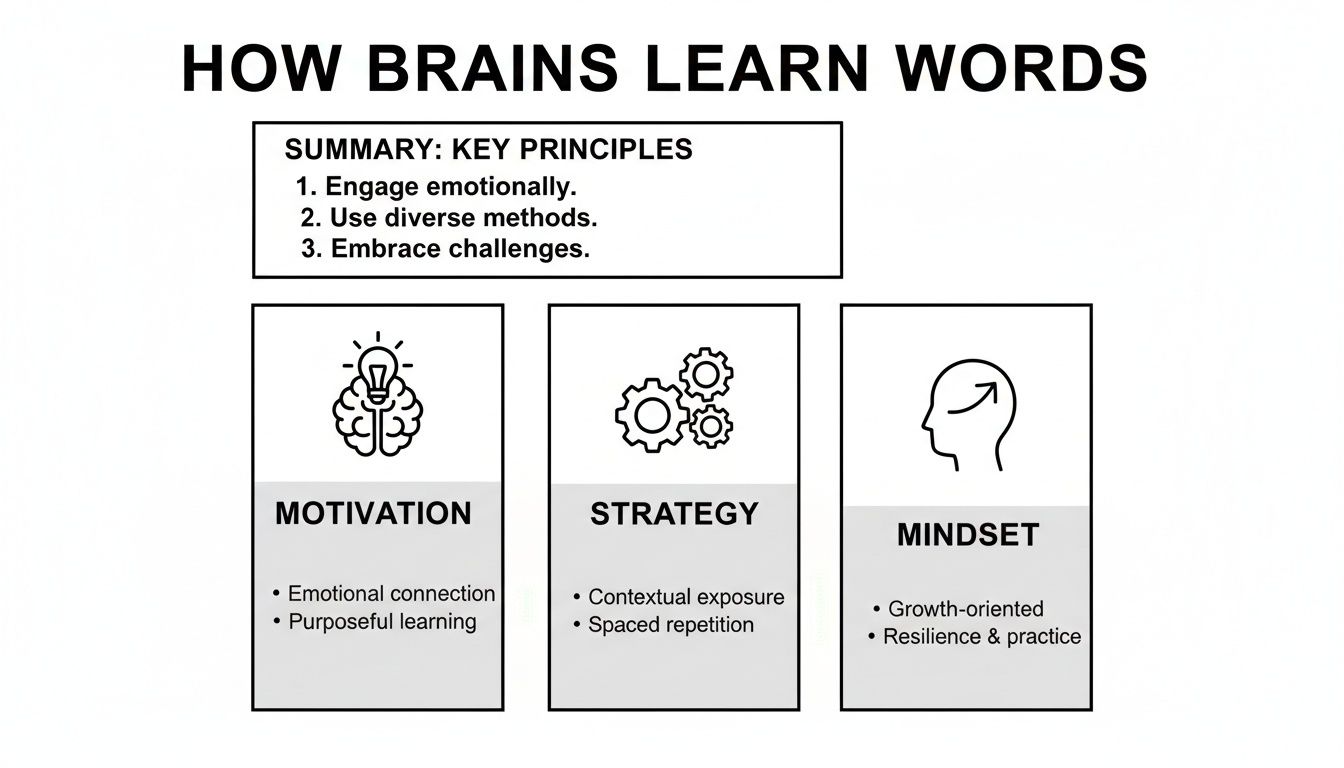
It’s a great reminder that having the right techniques (strategy) works best when you also have a strong reason to learn (motivation) and a positive approach (mindset).
Creating Unforgettable Mental Hooks with Mnemonics
For those really stubborn words that just won't stick, mnemonics are your secret weapon. A mnemonic is just a memory device—a silly story, image, or phrase—that creates a "hook" to hang a new word on. The more vivid, personal, or even absurd the connection, the better it works.
For example, imagine you're trying to learn the Spanish word caber, which means "to fit." You could create a mental image of a taxi cab driver trying to stuff a giant bear into his back seat. The scene is ridiculous, which makes the link between "cab-bear" and "to fit" almost impossible to forget.
To help you decide which technique to use and when, here's a quick breakdown of how these smart learning strategies compare.
Smart Learning Techniques Comparison
| Technique | How It Works | Best For | Retention Boost |
|---|---|---|---|
| Spaced Repetition | Reviews information at increasing intervals to combat the natural forgetting curve. | Long-term memorization of a large number of words and facts. | Excellent. Creates durable, long-lasting memories by reinforcing them over time. |
| Active Recall | Forces you to retrieve information from memory rather than passively reviewing it. | Deepening understanding and strengthening memory pathways for core vocabulary. | High. The act of retrieval itself makes memories much stronger and more accessible. |
| Mnemonics | Creates a memorable story, image, or acronym to "hook" a new word to something you already know. | Difficult, abstract, or easily confused words that need an extra creative push to stick. | Very High. Creates unique, powerful neural connections that are hard to break. |
By layering these proven methods, you move beyond simple memorization. You start building a robust, interconnected web of knowledge that makes your new vocabulary faster to learn and much harder to forget.
Building a Sustainable Daily Learning Routine
Knowing the best techniques is only half the battle. The real secret to learning vocabulary fast is consistency—turning powerful methods like spaced repetition and active recall into an effortless daily habit.
Forget those overwhelming, hour-long study plans. The goal here is to build a simple, sustainable routine that fits into your life, not the other way around. This is about creating a system that gets results without burning you out. Trust me, a manageable schedule is far more effective than sporadic, intense cramming sessions. You don't need hours a day, just a few focused minutes used wisely.

The 20-Minute Daily Blueprint
A killer routine doesn't have to be long. A focused 20-minute daily commitment is more than enough to see serious progress. The key is to blend different activities to keep your brain engaged and cover all the bases of vocabulary acquisition.
Here’s a simple way to break it down:
- Morning (10 minutes) New Words: Start your day by picking up 5-10 new words. Don't just pull them from a random list; find them in an article you're reading or a podcast you're listening to. The goal is to see them in their natural habitat, not just as isolated definitions.
- Midday (5 minutes) Micro-Practice: Use a small break, like during your lunch or commute, for a quick, fun review. This is the perfect time for a gamified session. Apps like PolyChat are fantastic for this because they let you jump into quick vocabulary games without frustrating limits, reinforcing what you’ve learned in a low-pressure way.
- Evening (5 minutes) SRS Review: Before you call it a day, do a quick run-through of your Spaced Repetition System (SRS). This is non-negotiable for long-term memory. It signals to your brain that these words are important and worth holding onto.
This structure is totally flexible. If you miss the morning session, just tack it on in the evening. The main thing is to hit those three core areas—new learning, practice, and review—at some point each day.
The most effective learners don't find more time; they make better use of the small pockets of time they already have. Five minutes on the bus is more valuable than an hour you never get around to scheduling.
Designing Your Weekly Structure
Your daily plan builds consistency, but your weekly structure is all about balance. You need to mix focused, "deep work" sessions with more relaxed, immersive activities. This is how you avoid mental fatigue and keep your motivation from tanking.
A balanced week could look something like this:
- Focused Study Days (3-4 days/week): Stick to your 20-minute blueprint. These are your core learning days where you’re actively building and reviewing vocabulary.
- Immersion Days (2-3 days/week): On these days, swap your focused study for something you actually enjoy. Watch a movie in your target language, listen to a playlist of foreign music, or try cooking from a foreign-language blog. It’s a great way to expose yourself to words in the wild.
- Rest Day (1 day/week): Seriously, take a day off. Giving your brain a break is essential for memory consolidation. Don't skip it.
Developing a consistent learning routine definitely takes some self-discipline. If you need some help building sustainable habits, you might want to explore these actionable self-discipline techniques.
Ultimately, the best routine is the one you can stick with. And if you're looking for tools to help build that routine, check out our guide on the best vocabulary building apps to make the process more engaging. Start small, be consistent, and watch your vocabulary grow.
Learn Words in Their Natural Habitat
Let's be honest, rote memorization only gets you so far. Words don't exist on flashcards in the real world; they live and breathe in conversations, articles, music, and stories. If you really want to learn vocabulary fast, you have to move beyond isolated word lists and start meeting words where they actually live.
This whole approach is about understanding the nuance, the connotation, and the real-world usage of a word—stuff a simple dictionary definition will never teach you.

Think of it like this: you could read a fact sheet about a lion that says "large, carnivorous feline." Or, you could watch a documentary showing it hunt, interact with its pride, and navigate its environment. Which one gives you a real understanding? It’s the same with words.
Go Sentence Mining in the Wild
One of the most powerful ways to learn in context is through something called sentence mining. Instead of just yanking a single word out of a text, you grab the entire sentence it came from. This simple shift gives your memory a powerful anchor.
Find something you genuinely enjoy reading or listening to—a blog about your favorite hobby, a podcast you can't get enough of, or an article about current events. When you hit a new word, don't just scribble it down.
- Capture the whole sentence. This preserves all the grammatical structure and surrounding clues that give the word its meaning.
- Pop it into your flashcard system. Your flashcard should show the full sentence on one side and the definition on the other.
- Focus on the usage. When you review, your goal isn't just to spit back a definition. It's to understand how that word functions within that specific context.
This method turns passive reading into an active learning exercise. You’re not just collecting words; you’re collecting real-world examples that make the vocabulary actually stick.
Research consistently shows that encountering a new word in just three different, authentic contexts is far more powerful for long-term retention than drilling it thirty times in a list. Context builds the intuitive understanding needed for fluent, confident communication.
Immerse Yourself in Interactive Dialogues
Static text is great, but interactive conversation is even better. This is where modern learning tools can seriously speed things up. Platforms like PolyChat are designed around this very idea, using interactive conversations to teach you vocabulary in a way that feels natural.
Instead of just reading a dialogue, you actually participate in it. This forces you to use new words in real-time, helping you get a feel for their subtle meanings and when it’s appropriate to use them. This kind of active engagement is what moves vocabulary from your passive knowledge (words you recognize) to your active knowledge (words you can actually pull out and use in a conversation).
Learning words in context is fundamental to not just memorizing, but truly acquiring a language. It directly builds your ability to use new words on the fly, a key skill you can read more about in our guide on how to improve your speaking skills. By focusing on real-world examples, you build a flexible, usable vocabulary that's ready for action.
Using Gamification to Stay Motivated
Let's be real—even the most effective study methods can start to feel like a grind after a while. This is where gamification changes the game, turning what feels like a chore into something you actually want to do. It’s not just about slapping points and badges onto a task; it's about tapping into our core human drives for achievement, progress, and a little friendly competition.
When learning becomes a series of small, rewarding challenges, you build unstoppable momentum. Think about the rush of hitting a new level in a game, unlocking a rare achievement, or seeing your name climb the leaderboard. These aren't just silly distractions. They are powerful psychological triggers that fuel the consistency needed to truly master new words.
Making Your Progress Feel Real
One of the biggest reasons people quit learning a language is feeling like they're stuck in neutral. Gamification cracks this problem by making your growth impossible to ignore. Things like progress bars, daily streaks, and skill trees give you immediate, visual proof of just how far you’ve come.
Seeing that tangible evidence is a massive motivator. Instead of just hoping your study sessions are working, you see concrete proof every single time you open the app. This creates a positive feedback loop that keeps you hooked, turning the long journey of learning into an engaging quest.
Tapping Into Your Competitive Spirit
Nothing gets the blood pumping like a little friendly competition. Leaderboards, for instance, play on our natural desire to see how we stack up against others. Watching your rank jump up after a killer practice session gives you a powerful reason to stay sharp.
Some apps and tools take this even further with features designed to keep you locked in and rewarded.
- Daily Streaks: These are pure habit-forming gold. The simple desire to not "break the chain" is often all it takes to get you to log in for a quick 5-minute session, even on your laziest days.
- Achievement Badges: Unlocking a badge for mastering 50 new words or hitting a 10-day streak provides a clear target to aim for and a real sense of accomplishment when you get there.
- Timed Challenges: Quick-fire vocabulary games add a layer of excitement and urgency that forces your brain to recall words faster and sharpens your focus.
Gamification works because it brilliantly reframes the entire learning process. It shifts your focus from the huge, intimidating goal of "becoming fluent" to the immediate, achievable goal of "just beating this next level." That simple mental shift can make all the difference.
Learning Without Frustrating Roadblocks
Here’s where many language apps get it wrong. They use a "hearts" or "energy" system that punishes you for making mistakes by locking you out of your own lessons. This is incredibly discouraging, especially when you’re wrestling with tough new words. It creates anxiety around making errors, which are a non-negotiable part of learning anything new.
A more supportive design, like the one in PolyChat, makes a world of difference. By getting rid of these frustrating limits, you’re free to learn at your own speed. You can push yourself, make a dozen mistakes, and try again as many times as you need without being penalized. This freedom builds resilience and encourages the kind of fearless exploration that’s crucial for learning vocabulary fast. To see how this approach works in practice, check out our guide on effective gamification examples in education.
Your Top Vocabulary Questions, Answered
Let's dive into some of the questions I hear all the time from language learners. These are the sticking points that can really slow you down if you don't have a clear strategy.
How Many New Words Should I Learn Per Day?
Everyone wants a magic number, but the honest answer is that 10-20 new words a day is the sweet spot for most people. It feels manageable but still adds up fast.
But here’s the real secret: the number of words you learn is far less important than the number of words you keep.
It’s way better to truly master 10 words—to know them inside and out—than to skim a list of 50 and forget half of them by next Tuesday. Quality always trumps quantity. The goal isn't just to see words, it's to remember them, and that's where your review process makes all the difference.
Word Lists vs. Learning in Context: Which Is Better?
This is a classic debate, but learning from context is hands-down more powerful for actually using a language. Word lists can be a great starting point, a way to quickly get a batch of related terms into your brain. But on their own, they’re just… lists. They lack the soul of the language.
When you see a word in a real sentence, a story, or a conversation, you learn its personality—its nuance, its connotation, and how it actually connects with other words. That's the stuff that leads to fluency.
My advice? Use a hybrid approach. Start with a list to introduce yourself to a new set of words. Then, immediately hunt them down in the wild. Look for them in articles, hear them in podcasts, or find them in contextual app exercises. That’s how a word goes from being a piece of data to a tool you can actually use.
What's the Single Biggest Mistake People Make When Learning Vocabulary?
Easy. The biggest and most common mistake is passive review. Just reading a word and its translation over and over again is an incredibly slow way to learn. It feels like you're studying, but you're creating a memory that's weak and fragile, one that will disappear the moment you’re put on the spot.
If you want to build a strong, reliable vocabulary, you have to embrace active recall.
This means forcing your brain to pull the word out of your memory without any help. It’s the difference between recognizing a face in a crowd and having to remember someone's name from scratch. That little moment of mental struggle is what forges a strong neural connection.
Here are a few simple ways to make sure you're using active recall:
- Flashcard Self-Quizzing: Don't just flip the card. Cover the answer and force yourself to guess it first. The effort is what matters.
- Gamified Challenges: Use apps with timed quizzes or translation games. The pressure forces you to think fast and retrieve information on demand.
- Sentence Building: Take a new word and try to write your own, original sentence with it. This is one of the best ways to test if you truly understand it.
Switching from passively looking at words to actively trying to remember them is probably the most powerful change you can make to learn vocabulary faster.
Ready to stop wasting time and start learning effectively? PolyChat is built around these principles, combining gamified active recall and contextual learning to help you build a vocabulary you can actually use.

Jean-Baptiste Bolh
Co-Founder
Applied AI