Top 12 Language Apps for Travel in 2026: A Complete Guide

Traveling opens up a world of new experiences, but navigating a foreign country without knowing the language can feel overwhelming. From ordering food to asking for directions, communication is key to a smooth and immersive trip. Thankfully, your smartphone can be your most powerful ally. This guide dives deep into the best language apps for travel, moving beyond simple feature lists to give you practical, real-world insights. We’ll show you which tools are perfect for last-minute cramming and which build a solid conversational foundation before you even pack.
Each review includes detailed analysis, screenshots, and direct links to help you decide. We'll examine critical travel-friendly features like offline modes, AI-powered conversation practice, and specialized phrasebooks, so you can choose the right tool to make your journey seamless. When planning your adventure, especially to regions with limited connectivity, download offline lesson packs and phrase lists before you leave so your tools stay usable on the road.
Our goal is to help you find the perfect communication companion, whether you're a polyglot preparing for a new challenge or a beginner just hoping to order a coffee with confidence. Let's find the app that will transform your next trip.
Ready to Learn a Language?
Try PolyChat's engaging language lessons, interactive learning games and put your new vocabulary to the test!
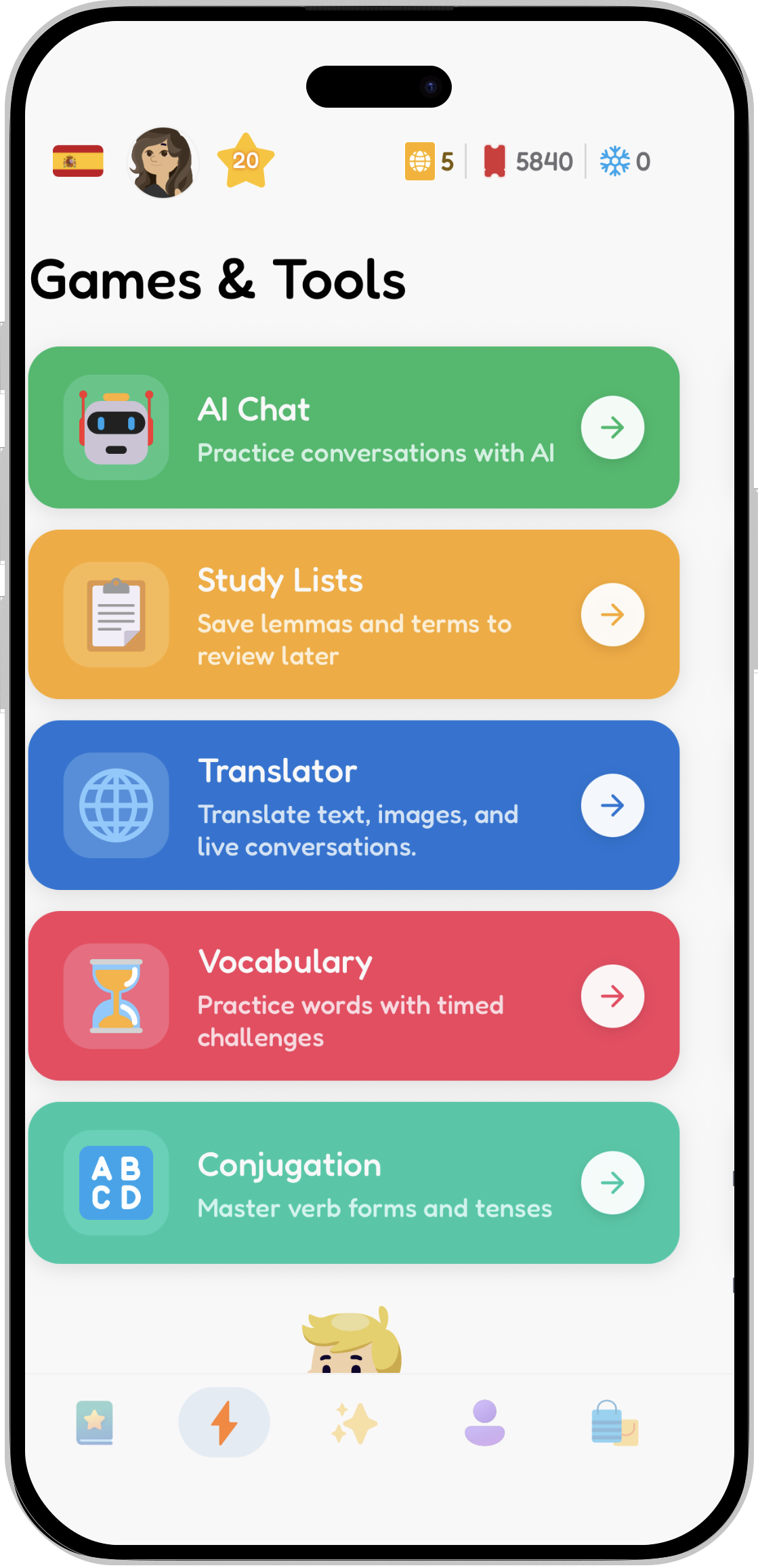
Games & Tools
Tools that every language learner needs at all stages of their learning journey.
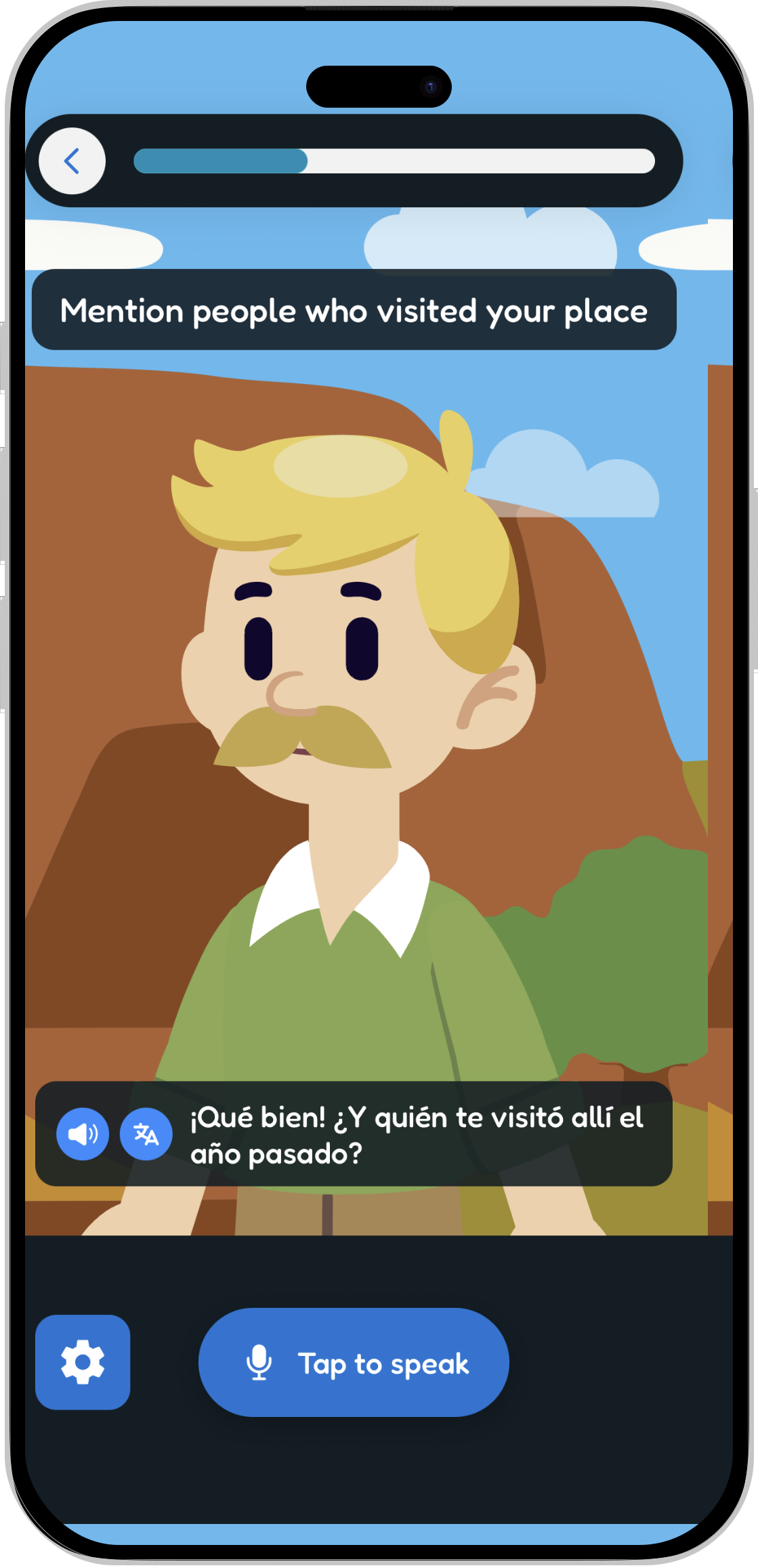
AI Chat Tutor
Practice real conversations with an AI tutor that helps you speak with confidence.
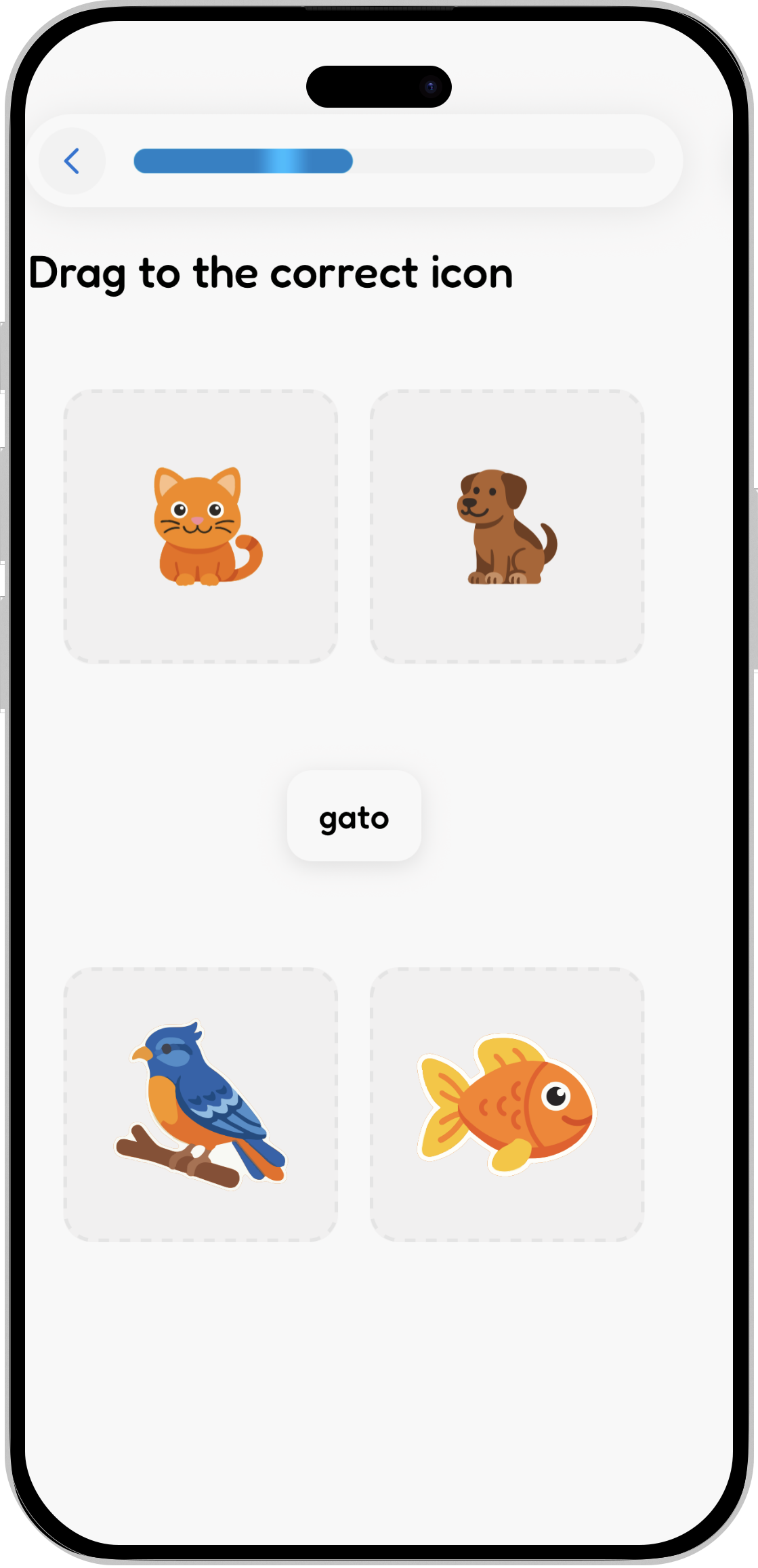
Interactive Games
A variety of games to help you learn and remember new words and phrases.


1. PolyChat
PolyChat earns its top spot as a premier choice among language apps for travel by offering a potent combination of gamified learning, powerful practice tools, and crucial on-the-go features. Its standout quality is the complete removal of frustrating usage limits. Unlike apps that restrict daily progress with hearts or energy systems, PolyChat allows for unlimited practice sessions, which is ideal for cramming on a long flight or dedicating a full day to language immersion before your trip. This flexibility ensures your learning momentum is never interrupted.

The app integrates a free translator directly into its ecosystem, providing a safety net for travelers who need immediate help with a sign, menu, or quick conversation. Its structured learning path, built on bite-sized lessons and timed challenges, is perfect for building a solid vocabulary foundation quickly. The ability to learn any of its 17 languages from any other base language is a significant advantage for polyglots or non-English speakers. For instance, a native French speaker can learn Japanese directly, a feature many other platforms lack. These elements combine to create a strong, well-rounded tool for any traveler.
Standout Travel Features
- Unlimited Daily Practice: No "hearts" or "energy" systems mean you can practice as much as you want, whenever you want. This is a game-changer for long travel days or intensive pre-trip study sessions.
- Built-in Free Translator: An essential tool for any traveler, allowing for quick translations without needing to switch apps.
- Targeted Practice Tools: The app includes what it calls the market’s best conjugation practice tool and timed vocabulary games, which are excellent for mastering the verb tenses and words you'll actually use abroad.
- Flexible Language Pairing: Learn from your native language or even from another foreign language you've already mastered.
Pros & Cons
| Pros | Cons |
|---|---|
| No play limits, enabling continuous, marathon learning sessions. | The pricing structure for premium features (if any) is not clearly advertised on the main website. |
| Powerful, focused tools for conjugation, vocabulary, and translation. | The depth of content for advanced learners in less common languages might be less extensive than for popular ones. |
| Gamified lessons with progress tracking keep learning engaging. | May not fully replace the need for intensive immersion to reach C1/C2 fluency. |
| Strong user validation with a 5/5 App Store rating and positive testimonials. | |
| The core app, including the translator, is free to download and use. |
Who Is It Best For?
PolyChat is an excellent fit for travelers who want to build conversational confidence quickly without being held back by artificial limits. It's particularly effective for beginners and intermediate learners who benefit from structured, game-like lessons. Polyglots will also appreciate the flexible language-pairing options. Combining these methods with other techniques is one of the best ways to learn a new language for comprehensive skill development.
Access PolyChat: polychatapp.com
2. Duolingo
Duolingo is perhaps the most recognizable name in language learning, primarily because its gamified, bite-size lessons make it incredibly easy to start and maintain a daily habit. This makes it one of the better language apps for travel preparation, as you can build a foundational vocabulary by committing just a few minutes each day.
The platform excels at motivating beginners. Its famous streak counter and experience points system encourage consistency, turning study into a game. For travelers, the dedicated phrasebook units are particularly useful for quickly learning survival phrases like "Where is the bathroom?" or "How much does this cost?".
The free version’s heart system, which limits the number of mistakes you can make, can interrupt longer study sessions. Upgrading to Super Duolingo removes these limits and ads. The newer Max tier adds GPT-4 powered features for AI-driven roleplay and explanations, though it's not yet available for all languages. While Duolingo is great for vocabulary, those seeking deeper conversational skills might find it less effective than other options.
- Best For: Building a consistent, daily learning habit before a trip.
- Standout Feature: Gamified structure with streaks and leaderboards.
- Website: https://duolingo.com
3. Babbel
Babbel offers a curriculum-based approach to language learning, focusing on practical conversation skills you’ll actually use abroad. Its structured, goal-driven lessons are designed by linguists to build your confidence for real-life situations, making it one of the most effective language apps for travel for those who prefer a clear learning path over a gamified one.

The platform’s strength lies in its balance of grammar and useful phrases. Lessons are short (10-15 minutes) and often center around travel-specific topics like ordering food or asking for directions. A key benefit for travelers is the offline mode, which allows you to download lessons and practice on a plane or subway without needing data. The newer Babbel Speak feature also adds guided conversation practice with AI to help you prepare for interactions.
While Babbel is a paid subscription service, it provides a more direct and focused learning experience than many free apps. The pricing and plan details can sometimes be confusing, as they may differ depending on the platform (web vs. app) and current promotions, so it's best to check the final cost during the in-app checkout process.
- Best For: Structured, pre-trip study sprints to build conversational confidence.
- Standout Feature: Offline mode for downloading lessons and learning on the go.
- Website: https://babbel.com
4. Memrise
Memrise shifts the focus from gamification to practical, real-world listening skills. It uses thousands of short video clips of native speakers to help you understand how words sound in authentic, everyday conversations. This approach makes it one of the most effective language apps for travel, as it prepares your ears for the speed and accents you'll actually encounter abroad.

The platform is built around scenario-based courses that teach phrases directly relevant to travel, like ordering food or asking for directions. Its AI chat partner, MemBot, lets you rehearse these conversations, building your confidence before you even leave home. This combination of listening to real people and practicing simulated dialogues is a powerful way to prepare for spontaneous interactions.
While Memrise excels at teaching useful phrases and building listening comprehension, it offers less explicit grammar instruction than some other apps. A free version is available with some limitations, while a paid subscription unlocks all content and features. The app has also moved away from its older, community-created courses to concentrate on its official, polished content.
- Best For: Developing listening comprehension for real-world accents and practicing travel-specific conversations.
- Standout Feature: Short video clips of native speakers and an AI chat partner (MemBot).
- Website: https://www.memrise.com
5. Pimsleur
Pimsleur’s method is built around listening and speaking, making it ideal for auditory learners or anyone preparing for real-world conversations. Its core consists of 30-minute audio lessons designed to be completed daily. This approach makes it one of the most practical language apps for travel, as you can practice hands-free during a commute, at the gym, or even on the plane to your destination.

The program's strength lies in its spaced repetition system, which prompts you to recall words and phrases at specific intervals to move them into your long-term memory. A standout feature for travelers is the Hands-Free Driving Mode, which allows for safe, focused practice while on the move. Offline downloads are also available, ensuring your learning isn't interrupted by a lack of Wi-Fi.
While Pimsleur excels at building speaking confidence and perfecting pronunciation, it is less focused on reading and writing. Users who need to develop literacy skills might find the audio-first format a bit slow. A subscription gives access to one language, or an All Access plan covers over 50 languages, with pricing that is higher than many app-based competitors.
- Best For: Building conversational confidence and pronunciation for auditory learners.
- Standout Feature: 30-minute, science-backed audio lessons with a Hands-Free Driving Mode.
- Website: https://pimsleur.com
6. Rosetta Stone
Rosetta Stone is a legacy name in language learning, built on a unique immersion method that teaches you exclusively through the target language. This "no translation" approach forces you to connect words with images and context, which can be highly effective for internalizing grammar and vocabulary before a trip. For travelers, this method helps build intuitive understanding rather than just memorizing translations.

Its TruAccent speech recognition engine is a key feature, providing instant feedback on your pronunciation to help you sound more like a native speaker. This is great for practicing key phrases and building the confidence to speak with locals. The platform's structure is more formal and course-like, making it less suitable for quick, last-minute cramming compared to other language apps for travel.
Rosetta Stone offers subscription plans and frequently runs promotions for lifetime access to all its languages, which is a great value for dedicated learners or families planning multiple trips. While its lessons are less "snackable" than gamified apps, the depth and structured pronunciation practice make it a solid choice for travelers who have more time to prepare and want to build a strong conversational foundation.
- Best For: Travelers wanting to perfect their pronunciation and build an intuitive understanding of a language.
- Standout Feature: TruAccent speech recognition for detailed pronunciation feedback.
- Website: https://www.rosettastone.com
7. Mondly
Mondly stands out by focusing on visual, phrase-based learning, which makes it one of the most practical language apps for travel. Its curriculum is built around real-world scenarios, allowing you to dive directly into themed modules like ordering at a restaurant, navigating public transport, or checking into a hotel. This approach helps you quickly acquire functional survival phrases instead of abstract grammar rules.
A core part of the experience is the built-in chatbot, which uses speech recognition to simulate conversations. You can practice ordering coffee or asking for directions in a low-pressure environment, which is excellent for building confidence before you travel. Mondly offers daily lessons that are short and easy to fit into a busy pre-trip schedule, making it simple to build a base vocabulary.
The platform's mobile app offers affordable annual subscriptions, making it a budget-friendly choice. However, while Mondly is great for getting a traveler up to speed with essential phrases and basic conversations, its content depth may feel limited for those seeking long-term, comprehensive fluency. The progression can feel less structured compared to more academic-focused apps.
- Best For: Quickly learning travel-specific phrases and practicing basic conversations.
- Standout Feature: Chatbot with speech recognition for simulated travel dialogues.
- Website: https://mondly.com
8. Busuu
Busuu offers a balanced approach that combines structured lessons with interactive community practice, making it a strong choice for travelers who want to build a solid foundation before their trip. The curriculum is aligned with the CEFR (Common European Framework of Reference for Languages), so your learning path feels guided and goal-oriented. This structure helps you progress from basic greetings to more complex travel-related scenarios.
A key element for travelers is the social feature, where you can submit writing or speaking exercises and receive corrections from native speakers. This provides real-world feedback on your pronunciation and phrasing, which is excellent preparation for actual conversations abroad. The ability to download lessons for offline use is also a significant plus, allowing you to study on a plane or in areas with poor connectivity.
The free version is quite limited, so a premium subscription is necessary to access most core features, including offline mode and advanced grammar lessons. Pricing can be a bit confusing as it’s presented during checkout and varies by tier, but the investment unlocks a more complete learning tool. Busuu is one of the more well-rounded language apps for travel, especially for learners who appreciate structured content.
- Best For: Learners who want a CEFR-aligned curriculum combined with feedback from native speakers.
- Standout Feature: Community feedback feature for corrections on speaking and writing.
- Website: https://www.busuu.com
9. Mango Languages
Mango Languages offers a unique, conversation-based approach that prioritizes real-world dialogue and cultural understanding. For anyone preparing for a trip, its structure is exceptionally practical, teaching grammar and vocabulary through scenarios you'll actually encounter abroad. A key advantage is its accessibility; many public libraries in the United States provide free access with just a library card, making it a budget-friendly choice.

The platform’s standout feature is its inclusion of cultural notes, which explain social customs and etiquette to help travelers avoid common faux pas. Pronunciation tools allow you to record your voice and compare it directly to a native speaker's, refining your accent before you even land. This focus makes it one of the better language apps for travel for those who want to connect with locals respectfully.
While the interface is more academic and less gamified than some alternatives, its organized, course-like structure is effective. The main drawback is that access often depends on your local library’s subscription. If your library doesn't offer it, you will need to purchase a subscription directly. Its offline mode is also a major plus for using the app on a plane or in areas with poor connectivity.
- Best For: Travelers wanting to learn conversational skills and cultural nuances for free.
- Standout Feature: Integrated culture notes and free access through many public libraries.
- Website: https://mangolanguages.com
10. Drops
Drops is a visually driven vocabulary builder that turns learning into a fast-paced game. Instead of complex grammar drills, it focuses on connecting words to memorable, custom illustrations through quick, five-minute sessions. This makes it one of the most efficient language apps for travel, especially for last-minute cramming of essential nouns and phrases.

The platform is designed around rapid-fire repetition. You drag and drop words to match images or tap true/false, reinforcing vocabulary related to travel-specific topics like food, transportation, and directions. Its strength lies in this single-minded focus on word association, allowing you to quickly build a mental picture-dictionary for your destination.
While the free version limits you to one five-minute session every ten hours, upgrading to Premium unlocks unlimited practice time and access to all content. Drops won’t teach you how to construct sentences or engage in deep dialogue, but its unique, game-like approach is perfect for travelers who need to quickly memorize hundreds of useful words before they board their flight.
- Best For: Last-minute vocabulary cramming and visual learners.
- Standout Feature: Highly visual, five-minute, game-like vocabulary sessions.
- Website: https://languagedrops.com
11. Google Translate
While not a learning app in the traditional sense, Google Translate is an essential safety net and one of the most critical language apps for travel. It serves as an indispensable on-the-go tool for those moments when you're completely stuck, need to read a sign, or want to have a quick, functional exchange without the pressure of recalling every word from memory. Its power lies in its immediacy and accessibility.

For travelers, the standout features are the camera and conversation modes. Pointing your phone camera at a menu or train schedule and seeing it instantly translated feels like magic. The conversation mode provides a near-real-time interpreter in your pocket, significantly reducing friction in everyday situations. While it won't replace learning basic Italian phrases for tourists, it acts as a powerful supplement.
The app's translation quality can vary depending on the language's complexity and popularity, so it's best used as a practical aid rather than a sole communication method. New features like Live Translate for earbuds and model options for accuracy versus speed are rolling out, but availability can depend on your device and region. Despite these limitations, its offline functionality and sheer utility make it a non-negotiable download for any international traveler.
- Best For: Instant, real-world translation when you're stuck on a word or phrase.
- Standout Feature: Camera mode for instantly translating text on signs, menus, and more.
- Website: https://translate.google.com
12. iTranslate
While not a full-fledged learning curriculum, iTranslate is an essential tool for any traveler's digital toolkit. It functions as a powerful, on-demand translator, perfect for moments when you need an immediate and accurate translation on the ground. Its primary strength lies in bridging communication gaps instantly, making it one of the most practical language apps for travel when you need to ask for directions or read a menu without a moment's delay.

The app's Conversation Mode facilitates simple, voice-to-voice dialogues, and the built-in phrasebooks provide quick access to common travel expressions. What makes it particularly reliable for travel is its robust offline functionality. By downloading language packs ahead of time, you can get text and voice translations even in areas with poor or nonexistent internet connectivity, a common scenario when traveling abroad.
The free version offers basic online translation, but the true travel-ready features like offline mode, camera translation, and unlimited voice conversations require an iTranslate Pro subscription. It is best used as a companion to a course-based app, providing a safety net for real-world situations where your learned vocabulary falls short. The interface is clean and straightforward, focusing on speed and utility.
- Best For: Instant, on-the-go translations and offline use in low-connectivity areas.
- Standout Feature: Powerful offline translation packs for text and voice.
- Website: https://itranslate.com
Travel Language Apps: 12-Platform Feature Comparison
| App | Core Features | UX & Rating ★ | Value / Price 💰 | Target Audience 👥 | Unique Strength ✨ |
|---|---|---|---|---|---|
| 🏆 PolyChat | Gamified lessons, unlimited plays, 17 languages, AI translator, top conjugation tool | ★★★★★ — bite-sized + progress tracking | 💰 Free core app; premium tiers unclear | 👥 Travelers, students, educators, polyglots, pros | ✨ Unlimited daily practice; personal dictionary; market-leading conjugation |
| Duolingo | Bite-size lessons, streaks, hearts, AI (Max) | ★★★★☆ — very habit‑friendly | 💰 Freemium; Super/Max subscriptions | 👥 Beginners, casual learners, commuters | ✨ Fast onboarding; AI tutor (Max) |
| Babbel | Structured level courses, offline, Babbel Speak | ★★★★☆ — clear progression | 💰 Subscription; price varies in‑app | 👥 Pre‑trip learners, focused students | ✨ Offline lessons; guided conversation practice |
| Memrise | Native‑speaker videos, MemBot AI chat, scenario phrases | ★★★★☆ — strong listening practice | 💰 Freemium; paid for advanced features | 👥 Travelers prioritizing listening | ✨ Real native videos for accent/intonation |
| Pimsleur | Audio‑first 30‑min lessons, Driving Mode, offline | ★★★★☆ — excellent speaking drills | 💰 Subscription / per‑course purchases | 👥 Commuters, hands‑free learners | ✨ Hands‑free, audio‑led speaking confidence |
| Rosetta Stone | Immersion lessons, TruAccent speech recognition | ★★★★☆ — robust pronunciation feedback | 💰 Subscription; lifetime deals at times | 👥 Serious learners, pronunciation focus | ✨ TruAccent speech accuracy feedback |
| Mondly | Chatbot with speech recognition, themed modules | ★★★☆☆ — quick phrase practice | 💰 Affordable annual mobile plans | 👥 Budget travelers, quick preps | ✨ Visual phrase modules + chatbot |
| Busuu | Guided courses, community corrections, AI practice | ★★★★☆ — structured + feedback loop | 💰 Subscription; tiered features | 👥 Learners wanting corrections & structure | ✨ Native‑speaker corrections & review loop |
| Mango Languages | Conversation lessons, culture notes, pronunciation tools | ★★★★☆ — course‑like with cultural focus | 💰 Often free via participating libraries | 👥 Travelers wanting cultural context | ✨ Library‑linked free access & cultural notes |
| Drops | Ultra‑visual 5‑min vocab bursts, themed packs | ★★★☆☆ — fast memorization | 💰 Freemium; Premium for unlimited use | 👥 Time‑poor learners, last‑minute cram | ✨ 5‑minute visual bursts for quick recall |
| Google Translate | Text/voice/camera translation, conversation mode | ★★★★☆ — indispensable backup | 💰 Free | 👥 On‑the‑go travelers needing instant help | ✨ Camera + Live Translate for real‑world use |
| iTranslate | Offline packs, voice‑to‑voice, phrasebooks | ★★★☆☆ — simple, reliable UI | 💰 Freemium; offline requires paid plan | 👥 Offline travelers, quick translators | ✨ Strong offline translation packs |
Speak Like a Local, Not Just a Tourist
Navigating the world of language apps for travel can feel like exploring a new city without a map. We've journeyed through a dozen distinct tools, from comprehensive platforms like Babbel and PolyChat to specialized aids like Pimsleur and Drops. The clear takeaway is that there is no single "best" app; instead, there is a "best fit" for your specific travel style, timeline, and learning preferences.
Your choice ultimately hinges on your personal goals. Are you planning a trip a year in advance? A structured, curriculum-based app like Babbel or Mango Languages provides a solid foundation. Are you flying out next week? A combination of a robust phrasebook from Memrise and a powerful translation tool like Google Translate will be your most practical companions. The key is to be honest about your commitment and needs.
Making Your Final Decision
To select the right tool, consider these final points:
- Learning Style: Do you learn best by listening (Pimsleur), through visual games (Drops), or by constructing sentences (Babbel)? Match the app's core method to your natural learning inclination.
- Time Commitment: If you only have 10-15 minutes a day, an app built for short bursts of activity like Duolingo or Mondly is more realistic than a 30-minute audio lesson. Consistency with a simpler tool is far more effective than sporadic use of a complex one.
- Offline Functionality: This is non-negotiable for travel. Before you commit, verify that your top choice allows you to download lessons, phrasebooks, or translation packs. A lack of Wi-Fi should not mean a lack of communication.
- Real-World Application: Prioritize apps that focus on conversational skills and practical travel scenarios. While knowing the word for "penguin" is fun, knowing how to ask for the bill or find the train station is essential.
The most effective strategy often involves a two-app approach: one for structured learning and one for on-the-ground support. Pairing a course-based app like PolyChat with an instant translator like iTranslate covers both your long-term learning goals and your immediate, real-world needs.
Ultimately, the goal isn't fluency; it's connection. Learning even a few greetings, a "please," and a "thank you" shows respect and opens doors that would otherwise remain closed. The right language app is more than just software; it's your key to unlocking a deeper, more authentic travel experience. It transforms you from a passive observer into an active participant in the culture you’ve traveled so far to see. Download your chosen tools, start practicing today, and prepare to explore the world with new confidence.
Ready to move beyond basic vocabulary and start building real-world conversational skills for your next trip? PolyChat is designed specifically for travelers who want to speak confidently, not just memorize words. Give its AI-powered conversation practice and travel-focused lessons a try at PolyChat and see how quickly you can prepare for authentic interactions.

Jean-Baptiste Bolh
Co-Founder
Applied AI