Duolingo vs Babbel: The Right Language App for You in 2026

You’ve probably got one of two problems right now. Either you’ve been using Duolingo and you’re wondering why your streak feels stronger than your speaking ability, or you’re looking at Babbel and asking whether paying for structure will get you further.
That’s the core duolingo vs babbel question. Not which app has the prettier interface, or which mascot is more memorable. The question is what kind of learner you are, what outcome you want, and how much friction you’re willing to tolerate every day to get there.
I’ve used enough language apps to know this much: users often choose too early based on price, popularity, or vibes. They should choose based on learning design. The app’s design determines what you practice, what you avoid, and where you’re likely to stall. If your goal is casual vocabulary exposure, one type of app works fine. If your goal is conversation, pronunciation, and long-term progress, the wrong app can waste months.
Ready to Learn a Language?
Try PolyChat's engaging language lessons, interactive learning games and put your new vocabulary to the test!
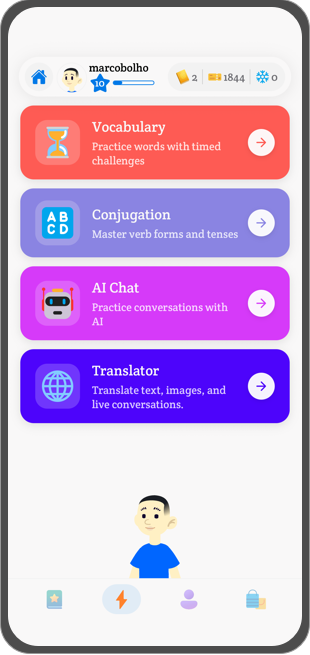
Games & Tools
Essential tools for every learner
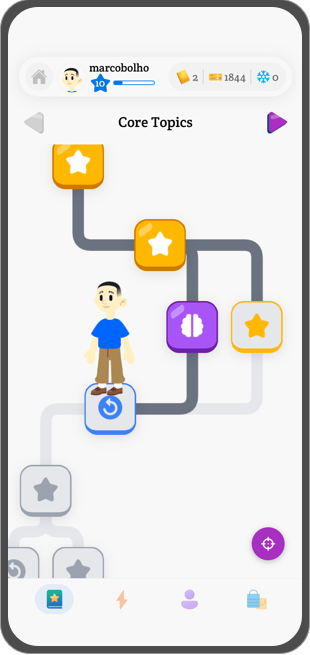
Thousands of Lessons
From beginner to fluent
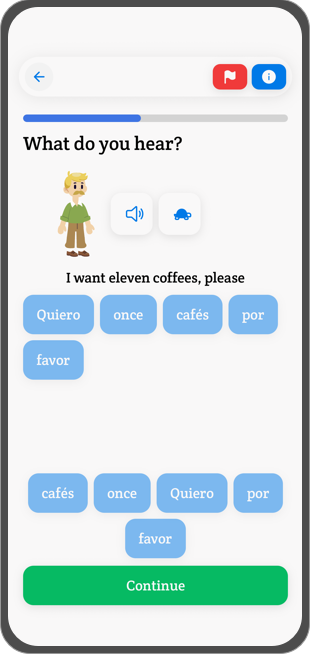
Interactive Exercises
Practice vocabulary & conjugation


The Ultimate Language App Showdown
You download a language app because you want a result. Six months later, the question is whether the app trained you to use the language or just trained you to keep opening the app.
That is the core duolingo vs babbel split.
Duolingo wins attention fast. Babbel asks for more focus up front. That difference is not cosmetic. It affects what you practice, how much effort each lesson demands, and how far the app is likely to take you before you need something better.
A quick market view helps explain why the experience feels so different. Duolingo operates at mass scale with a freemium model built to pull in huge numbers of curious learners. Babbel runs more like a paid course business aimed at adults who are already willing to commit time and money. LingoBright’s language app market roundup also describes Duolingo as the bigger mainstream app, while Babbel tends to attract a smaller but more committed paying audience.
That business setup shapes the product. Duolingo has strong incentives to make daily use easy, rewarding, and sticky. Babbel can afford to be less playful because its users are usually buying structure, not entertainment. If you want context for why habit loops work so well in language apps, this explanation of gamification in language learning is useful.
Here’s the practical comparison:
| Category | Duolingo | Babbel |
|---|---|---|
| Core approach | Gamified habit building | Structured practical lessons |
| Best for | Casual beginners, daily consistency | Learners who want guided progression |
| Lesson feel | Fast, repetitive, game-like | Slower, more thematic, more deliberate |
| Speaking focus | Secondary | Stronger than Duolingo |
| Audio emphasis | Lighter | Heavier |
| Language breadth | Much broader catalog, including niche and novelty options | Smaller catalog focused on major learner demand |
| Free access | Stronger | More limited |
| Long-term ceiling | Lower for serious conversation | Better, but still limited |
The table matters, but the long-term trade-off matters more. Duolingo is often better at getting you through week one, week three, and month two. Babbel is often better at making those months add up to something more useful if your goal is to speak, understand, and respond in real situations.
I would put it plainly. Choose Duolingo if your biggest obstacle is consistency and you need the lowest-friction way to build a study habit. Choose Babbel if you care more about practical progress than entertainment and you can tolerate a more classroom-like experience.
A lot of readers compare apps by asking which one has more features. The better question is what kind of competence the app is built to produce. That is where the right choice becomes obvious.
Core Philosophies Gamification vs Conversation
You can spend 15 minutes a day on either app for three months and end up with very different results. One path gives you a strong study habit. The other gives you a better shot at handling simple real-life exchanges. That difference starts with what each app is trying to train.
Duolingo trains return behavior first
Duolingo is designed to keep you coming back. Short exercises, streaks, point systems, and quick feedback make it easy to start, even on low-energy days.
That design solves a real problem. Many beginners do not fail because the material is too hard. They fail because the friction of sitting down to study feels too high. Duolingo reduces that friction better than almost any language app I’ve used.
But the same design creates a ceiling. Fast taps and repeated recognition tasks can build familiarity without building enough recall. You may recognize a sentence on the screen and still struggle to produce anything similar in a conversation. If you want to understand why these systems keep people engaged, this explanation of gamification in language learning covers the mechanics well.
Babbel aims at usable language sooner
Babbel makes a different bet. It assumes you care less about streak psychology and more about whether a lesson helps you say something useful later.
That changes what progress feels like. Lessons are usually built around situations, short dialogues, and direct explanations. You spend less time chasing points and more time seeing how words fit an actual use case. For adult learners, that often feels slower at first and more productive after a few weeks.
I’ve found that this matters most once the beginner novelty wears off. At that stage, motivation no longer comes from a cartoon badge. It comes from noticing that you can follow a basic exchange, respond with less hesitation, or remember a phrase when you need it.
The real choice is what kind of progress you want
Both approaches can help at the beginner level. They just push your time in different directions.
Duolingo is stronger if your main problem is consistency. It gets you to open the app, do a lesson, and keep the chain going. That is not trivial. A mediocre plan you stick with beats an ambitious plan you abandon after ten days.
Babbel is stronger if your main problem is effectiveness. It does a better job of connecting study time to practical output, especially for learners who want travel phrases, basic conversations, and a clearer sense of why a lesson matters.
Use that trade-off to choose:
- Choose Duolingo if you need the easiest possible daily habit and want low-pressure exposure.
- Choose Babbel if you want your lessons to build toward conversation, not just recognition.
- Use neither as your only tool if your target is strong speaking ability or fluency past the lower-intermediate stage.
The mistake is judging both apps by the same standard. Duolingo is trying to make practice easy to repeat. Babbel is trying to make practice easier to use. If you know which outcome you care about, the better choice usually becomes clear.
Feature Deep Dive Lesson Structure Experience and Audio
The philosophy only matters if the app still works for you on day 30, not just day 3. Long-term progress usually breaks on something more ordinary: lesson design that stops feeling useful, audio that does not train your ear, or a study flow that never turns into usable language.

Lesson flow feels completely different
Duolingo is built for momentum. Lessons are short, fast, and easy to restart if you lose focus. You translate, match, tap, listen, and assemble sentences in quick bursts. That format lowers resistance, which is useful if your real problem is getting yourself to study at all.
Babbel asks for more attention per session. Its lessons usually center on a topic or real situation, so the experience feels less like a string of mini-puzzles and more like a guided practice block. It is less stimulating, but the logic from one exercise to the next is usually clearer.
That difference affects what you retain.
| Experience area | Duolingo | Babbel |
|---|---|---|
| Session style | Bite-sized and fast | More focused and thematic |
| Mental load | Low | Moderate |
| Ease of daily habit | Very high | High if you already have discipline |
| Sense of continuity | Weaker | Stronger |
If you study in small scraps of time, Duolingo fits your day better. If you want lessons to build toward a usable base, Babbel usually gives you a stronger sense of progression.
Grammar support changes the kind of learner each app rewards
Duolingo often expects you to notice patterns through repetition. That works for some learners, especially early on, and it can keep the pace brisk. The problem shows up later, when you keep missing the same structure and the app gives you correction without enough explanation to fix the mistake.
Babbel is more explicit. It usually tells you what rule you are practicing and why the sentence works that way. For adult learners, that saves time. Guessing can feel interactive, but it is still guessing.
This is one of the biggest long-term differences between the apps. Vocabulary exposure is easy to gamify. Reliable sentence building is harder. If your goal includes speaking with fewer pauses and less second-guessing, clearer grammar support matters because it reduces confusion before bad habits stick.
Audio quality changes the training effect
Many comparisons get lazy at this point and treat audio as a side feature. It is not. Audio changes whether you are learning to recognize a language or learning to process it fast enough to use it.
According to Test Prep Insight’s Babbel vs Duolingo comparison, Babbel puts more direct emphasis on audio exercises and gives pronunciation work more weight inside the lesson flow. That matches the user experience. Duolingo often keeps you in reading and tapping mode longer. Babbel pushes more listening and repetition, which is closer to what you need if you want basic conversational control.
I have run into the same problem with Duolingo that many learners do. You can get pretty good at recognizing a sentence on screen while still being shaky when you hear it spoken naturally. That gap matters because recognition feels like progress right up until you need to respond in real time.
Pronunciation feedback also matters, even if neither app is close to a live tutor or conversation partner. Babbel generally treats speaking practice more seriously. Duolingo includes speaking tasks, but they often feel lighter and less central to the lesson. If you care about sounding less robotic, the app that makes you hear, repeat, and correct yourself more often will usually pay off faster. For readers comparing older app models with newer adaptive tools, this broader shift is part of why AI language learning tools that combine structure with interaction keep getting attention.
If your goal is speaking, silent success inside an app can fool you. Listening pressure and repeated output are what expose weak spots.
AI features show the apps moving in different directions
Duolingo has moved faster with AI-facing features, especially in its higher tiers. Babbel still feels more conservative, sticking closer to expert-built lessons and familiar course design. Duolingo experiments more. Babbel stays measured.
That gap is visible in the product, not just in the marketing copy. Whether it matters for you depends on how you weigh novelty against stability. New features can be useful, or they can be decoration. The honest test is whether the app gives you more meaningful practice rather than just a newer interface. If a feature does not improve recall, output, or comprehension, it is a UI update with a label on it.
- Babbel is the safer pick if you want a steadier course experience that does not change shape every few months.
- Duolingo is more appealing if you like frequent updates and a more experimental feel, and you are willing to accept that not every new feature will earn its place.
The day-to-day friction points
Each app has a different failure mode.
Duolingo can keep you active while letting your practice stay shallow. The repetition is easy to tolerate, but it does not always push you into the kind of recall that leads to better speaking. Some sentence content also feels built to keep the lesson varied rather than to prepare you for likely real-world use.
Babbel has the opposite problem. The material is usually more grounded and practical, but the experience can feel plain. If you depend on streaks, rewards, and constant novelty, you may respect Babbel more than you actually use it.
What works and what doesn’t
Duolingo works well when you need:
- Fast access: You can study in very short gaps of time.
- Low resistance: Starting a lesson feels easy even when your energy is low.
- Habit support: The app gives you frequent reasons to come back.
Babbel works well when you need:
- Connected lessons: Sessions feel like they build on each other.
- Clearer explanations: You spend less time wondering why an answer was wrong.
- More listening and speaking practice: Better fit for learners who care about conversation.
The wrong move is expecting either app to carry the whole job. Duolingo can help you stay consistent without pushing you far enough. Babbel can give you better raw material without doing much to keep motivation high. The better lesson experience depends on the outcome you care about most, and audio plus lesson structure usually decide whether your study time turns into usable language or just familiar-looking words.
Choosing the App for Your Specific Language Goal
You download a language app because you want a result, not because you want another daily task. The right choice depends on what you want six months from now. Do you want to recognize more words on signs and menus, or do you want to hold a real conversation without freezing?

If you want travel phrases and functional basics
Babbel is usually the better fit.
For a trip, you need language you can use under pressure. Asking for directions, ordering food, checking in, handling simple problems. Babbel tends to teach those patterns more directly, and that matters because travel rewards recall, not recognition. Tapping the right answer from a list feels good. Producing the phrase yourself at a train station is the ultimate test.
Duolingo can still help if starting feels intimidating. It lowers the barrier to practice. But if your deadline is a departure date, practical dialogues beat game momentum.
If you want a low-pressure daily habit
Duolingo is stronger.
That does not make it better for every learner. It makes it better for a specific type of learner. If your biggest problem is consistency, Duolingo solves that problem better than Babbel. The app is built to get you back in with very little friction, even on tired days when you only have five minutes and do not want to think hard.
For hobby learners, overworked professionals, and people who have quit more structured courses before, that design can be the difference between studying a little and not studying at all.
The trade-off is long-term depth. A strong habit is useful only if the app keeps pushing your skills forward in the direction you care about.
If you need grammar and clearer progression
Babbel is the safer choice.
Many adult learners do better when the app explains what is happening. If you are the kind of person who gets annoyed by marking an answer wrong without telling you why, Babbel will probably feel less frustrating. The lessons usually build with more intention, so your study time feels closer to an actual course and less like isolated drills.
That matters for long-term retention. Clear explanations help you form rules you can reuse, especially once the language stops being predictable.
If you are comparing several tools for structured study, this broader language learning apps comparison helps put Babbel and Duolingo in context.
If your goal is conversational fluency
Neither app is enough on its own.
This is the point many comparisons soften too much. If your end goal is speaking with ease, both apps have limits that show up sooner than many learners expect. Duolingo is good at keeping you active, but it often lets you stay in recognition mode for too long. Babbel gives you more useful material, but the practice still happens inside a controlled system. Real conversation is less forgiving.
The long-term question is simple. Does the app make you retrieve words from memory, understand messy audio, and respond without prompts? If not, it can start your learning, but it will not finish it.
Multilingual Mastery notes a version of this same trade-off. Duolingo often feels too passive once learners want more than beginner progress, while Babbel gives better structure but can lose users who need more stimulation to keep going. That is the core decision. Better curriculum does not help if you stop using it. Better engagement does not help if your skills stay shallow.
The plateau usually comes from the tool, not just the learner
A lot of learners blame themselves at this stage. They should not.
Both apps can get you through the beginner phase. You can build basic vocabulary, notice patterns, and feel less lost in the language. But your goal changes as you improve. Early on, exposure is enough. Later, you need output, listening range, and flexible recall. That is where app design starts to matter more than convenience.
Use Duolingo if you want broad exposure and the easiest possible habit. Use Babbel if you want more intentional progress in one language. If you want real fluency, treat either app as a base layer and add conversation, reading, listening, and writing outside the app.
That choice determines whether your study time turns into usable language or just familiar-looking words.
Learning Outcomes What the Research Actually Shows
App marketing is loud. Independent evidence is quieter. The published claims around both apps are useful, but only if you read them for what they actually measure.
According to Palteca’s review of the learning evidence around these apps, one internal Duolingo study found that learners who completed the A2-level Spanish course reached reading and listening scores comparable to students after four university semesters. Separate analysis cited for Babbel pointed to about 15 hours of Babbel usage being roughly equivalent to one college semester for developing conversational ability.
Those claims are not interchangeable. Duolingo’s cited result is about recognition skills inside a specific internal framework. Babbel’s cited result points toward practical conversation. That distinction lines up with how each app actually feels in daily use.
Recognition progress versus functional progress
Two learners can use the same app for the same amount of time and walk away with very different reports. That usually is not about effort. It is about what kind of progress the app is built to train.
| Type of progress | What it looks like | App more aligned with it |
|---|---|---|
| Recognition progress | You identify phrases, understand prompts, and complete exercises accurately | Duolingo |
| Functional progress | You respond in familiar real-life scenarios with more confidence | Babbel |
This is why one person says “I learned a lot” and another says “I still froze when I had to speak,” and both can be telling the truth. Choose the app that targets the kind of progress you actually want, not the one that looks more productive on screen.
The retention gap most reviews skip
Finishing lessons is not the same as remembering them. Most app comparisons stop reporting at the point where the novelty fades. That is the exact stage where design starts to matter more than marketing.
Duolingo is excellent at getting people started. Babbel often gives people a clearer learning path. Neither automatically solves the plateau that shows up once familiar lesson types stop feeling like growth. If you want a fuller picture of what to add around app practice, this guide on the best way to learn a language covers the input, output, and review mix that usually carries learners past that plateau.
The app that gets you to study this week is not always the app that helps you remember what you studied next season.
Comparing Price Subscription Tiers and Real Value
Price matters, but in duolingo vs babbel, value matters more than price.
Duolingo’s big advantage is obvious. You can start without paying, and for many learners that’s the reason the app wins by default. Free access lowers the risk. It also makes experimentation easy if you’re unsure you’ll stick with the language.
Babbel asks for commitment earlier. That can feel annoying, but it also changes your mindset. Paying for an app often pushes learners to treat lessons as deliberate study rather than casual tapping.
What you’re really paying for
The key distinction is simple.
- Duolingo’s free tier is part of the product experience.
- Duolingo’s paid tiers mainly remove friction and restrictions.
- Babbel’s subscription is the main path to the product itself.
That means Duolingo’s paid value depends a lot on how much the free experience irritates you. If ads, limits, and interruptions don’t bother you, the upgrade may feel optional. If they constantly break your flow, you may end up paying just to make the app usable at your preferred intensity.
Babbel works differently. You’re not paying to remove annoyances as much as paying to access a more structured course.
Real value depends on your study style
Many comparisons often get lazy. They treat pricing as if everyone uses apps the same way.
If you study casually a few minutes at a time, Duolingo often offers better immediate value because it lets you get started with very little commitment. If you already know you want a more serious course-like experience, Babbel may offer better value because the learning path is more aligned with that purpose.
For a broader roundup of how these tools compare across different needs, this guide to language learning apps comparison is useful.
A better way to judge cost
Ask yourself three questions before subscribing:
- Will I use this app often enough to justify paying? A stronger course is still wasted if you avoid it.
- Am I paying for more learning, or just fewer frustrations? That matters with freemium products.
- Does the app’s design match my end goal? Cheap practice that trains the wrong skill is still expensive in time.
Paying for an app doesn’t buy fluency. It buys a particular kind of practice. The value depends on whether that practice moves you toward your real goal.
If you’re comparing raw dollars alone, you miss the bigger cost. Months spent on the wrong method are more expensive than a subscription.
When You Need More The Case for Unlimited Learning
You sit down for a serious study session, make a few mistakes, and the app tells you to stop unless you pay. That moment matters more than people admit. If you want 10 minutes of light practice, it is annoying. If you want an hour of concentrated reps, it breaks the session at exactly the wrong time.

Why restrictions matter more than people admit
Duolingo’s hearts system is the clearest example. As Mezzoguild notes in its Babbel vs Duolingo comparison, ambitious learners often get frustrated by limits on practice and by features that do not fix that underlying problem.
The core issue is simple. Serious learners need volume. They need room to guess, miss, correct, repeat, and keep going. If mistakes trigger a slowdown or force you into a waiting loop, the app is shaping your behavior in the wrong direction.
That design choice has long-term consequences. It trains caution instead of output, and it makes intensive practice harder to sustain.
Casual learners can live with that. Driven learners usually stop tolerating it.
Babbel solves one problem and creates another
Babbel removes that specific friction. You can work through lessons without the same feeling that the app is rationing your practice. For learners who are tired of being interrupted, that alone can feel like relief.
But long-term use exposes a different trade-off. Babbel is more course-like, which helps with structure, but it does less to pull you back in on low-motivation days. If you rely on fast feedback loops, streak pressure, or short reward cycles to stay consistent, Babbel can start to feel dutiful instead of sticky.
I see this as the primary split between these apps. Duolingo is better at keeping study alive. Babbel is better at making study feel purposeful. Once your goal shifts from habit-building to sustained progress, you start noticing what each app is missing.
What to look for instead
If both apps feel limiting, stop comparing brands and start comparing training environments. The right upgrade usually has a few clear traits:
- Unlimited daily practice: You should be able to make mistakes and continue.
- Structured progression: More reps help only if they build toward something.
- Output practice: Recognition alone will not carry you into conversation.
- Reinforcement tools: Conjugation work, review cycles, and retrieval practice matter over months.
- Session variety: Repeating one exercise format too long kills attention.
PolyChat is one example of that middle ground. It combines structured lessons, gamified practice, AI features, and reinforcement tools without a hearts or energy system. Pimsleur is another useful contrast if your main priority is speaking and listening through an audio-first routine.
The more serious your goal, the more expensive artificial limits become. The real cost is not the subscription. It is the lost practice time and the weaker training pattern.
That is the bigger reason to move beyond duolingo vs babbel. The question is not which app has more features. The question is which app design supports the kind of learner you are trying to become. If you want casual vocabulary exposure, limits and lightweight drills may be fine. If you want real speaking progress, you need a tool that lets you practice at full speed and points that effort toward useful output.
Final Verdict Your Clear Path Forward
If you want the shortest answer to duolingo vs babbel, here it is.
Choose Duolingo if your main problem is consistency. It’s better at making you come back tomorrow. For total beginners, casual hobbyists, and anyone testing the waters, that matters a lot.
Choose Babbel if your main goal is practical progress in one language. Its structure, clearer explanations, and stronger audio emphasis make it a better fit for learners who care about speaking more than streaks.
Choose neither as your only tool if your target is real conversational fluency. Both can help you start. Neither should be mistaken for the full journey.
Here’s the plain-language decision guide:
| If this sounds like you | Best fit |
|---|---|
| “I need a free, easy way to start and build a habit.” | Duolingo |
| “I want more useful phrases, better structure, and clearer instruction.” | Babbel |
| “I get frustrated by limits and want to practice hard without being stopped.” | Look beyond both |
| “I want to speak naturally in real situations.” | Use an app as a base, then add conversation and input elsewhere |
The deeper lesson is simple. App design shapes your outcome. Duolingo’s design prioritizes repeat engagement. Babbel’s design prioritizes guided learning. Those are not interchangeable strengths.
If you’ve been stuck, it probably isn’t because you’re lazy or bad at languages. It may be because the app you chose was optimized for a different job than the one you need done.
Start with the goal. Then choose the tool that trains for that goal. If you want fun and habit, Duolingo is hard to beat. If you want a more grounded path toward useful speech, Babbel is the better pick. If you want unrestricted practice with a broader set of tools, you’ll likely need to move beyond the two biggest names.
The important thing is to start now, with the right expectation. Don’t ask one app to do everything. Ask it to do its actual job well, then build from there.
Frequently Asked Questions About Duolingo and Babbel
Can I become fluent using only one of these apps?
No. You can build a strong base, but app-only learning usually leaves gaps. Babbel can help you build more practical sentence patterns. Duolingo can help you stay consistent long enough to internalize the basics. Real fluency still requires listening to natural speech, speaking under pressure, and exposure to language that does not arrive in a neat exercise format. Use either app as a core tool, not the whole plan.
Which app is better for learning non-European languages?
Duolingo usually has the advantage if your priority is range. It offers more languages overall, including less common options. Babbel is stronger when it supports the language you want and you care more about lesson quality than catalog size. If your target language sits outside Babbel’s focused set, the decision gets easy quickly.
Is Babbel worth paying for when Duolingo is free?
Sometimes. Babbel is worth paying for if free access is not your main concern and you already know you want a more structured, practical learning experience. It is especially appealing for adults who do not want their study time filtered through constant gamified friction. If you are still unsure whether you will stick with a language, Duolingo’s free tier is the safer place to begin.
Which one is better for speaking?
Babbel. Its stronger audio emphasis and more conversation-oriented lesson design make it more useful for learners who want to sound functional sooner. Duolingo can support speaking practice, but it usually is not the main thing the app optimizes for.
What if I want something more ambitious than both?
That is usually the point where the duolingo vs babbel comparison stops being the right one. If you want structure, gamification, broader practice, and no artificial limits on how much you can do in a day, look beyond the two-app comparison and consider tools built for sustained progress, not just engagement.
If you want a middle path between game-like motivation and structured study, take a look at PolyChat. It’s built for learners who want daily practice without hearts or energy limits, along with lessons, reinforcement tools, AI features, and support from beginner through advanced levels.

Jean-Baptiste Bolh
Co-Founder
Applied AI