A Practical Guide to Spanish Present Tense AR Verbs
If you're serious about learning to speak Spanish, mastering present tense -ar verbs is the first real hurdle you need to clear. Think of them as the most common building blocks in the language—once you understand how they work, you can start putting together real sentences almost immediately.
Ready to Learn Spanish?
Try PolyChat's engaging language lessons, interactive learning games and put your Spanish vocabulary to the test!
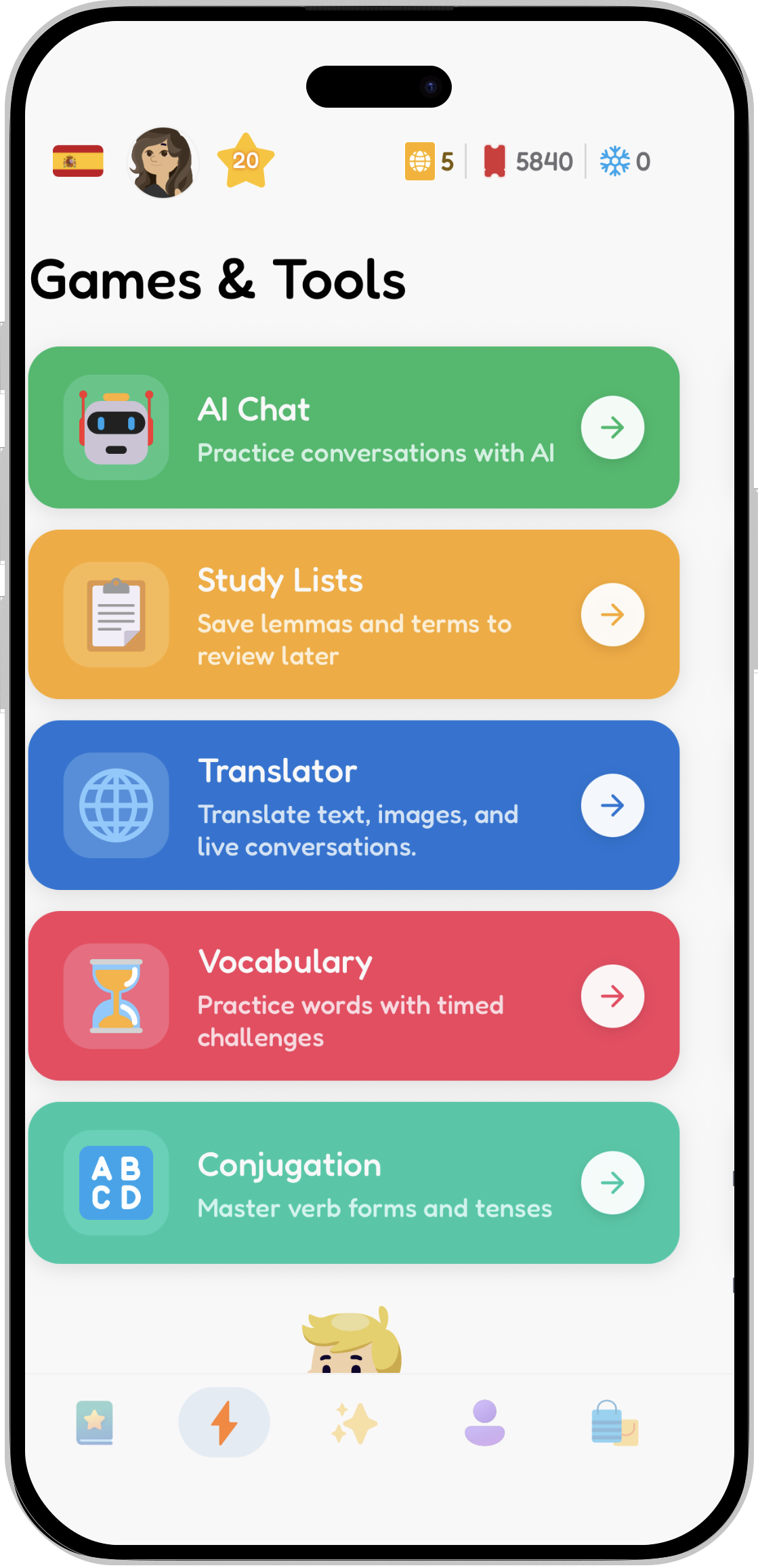
Games & Tools
Tools that every language learner needs at all stages of their learning journey.
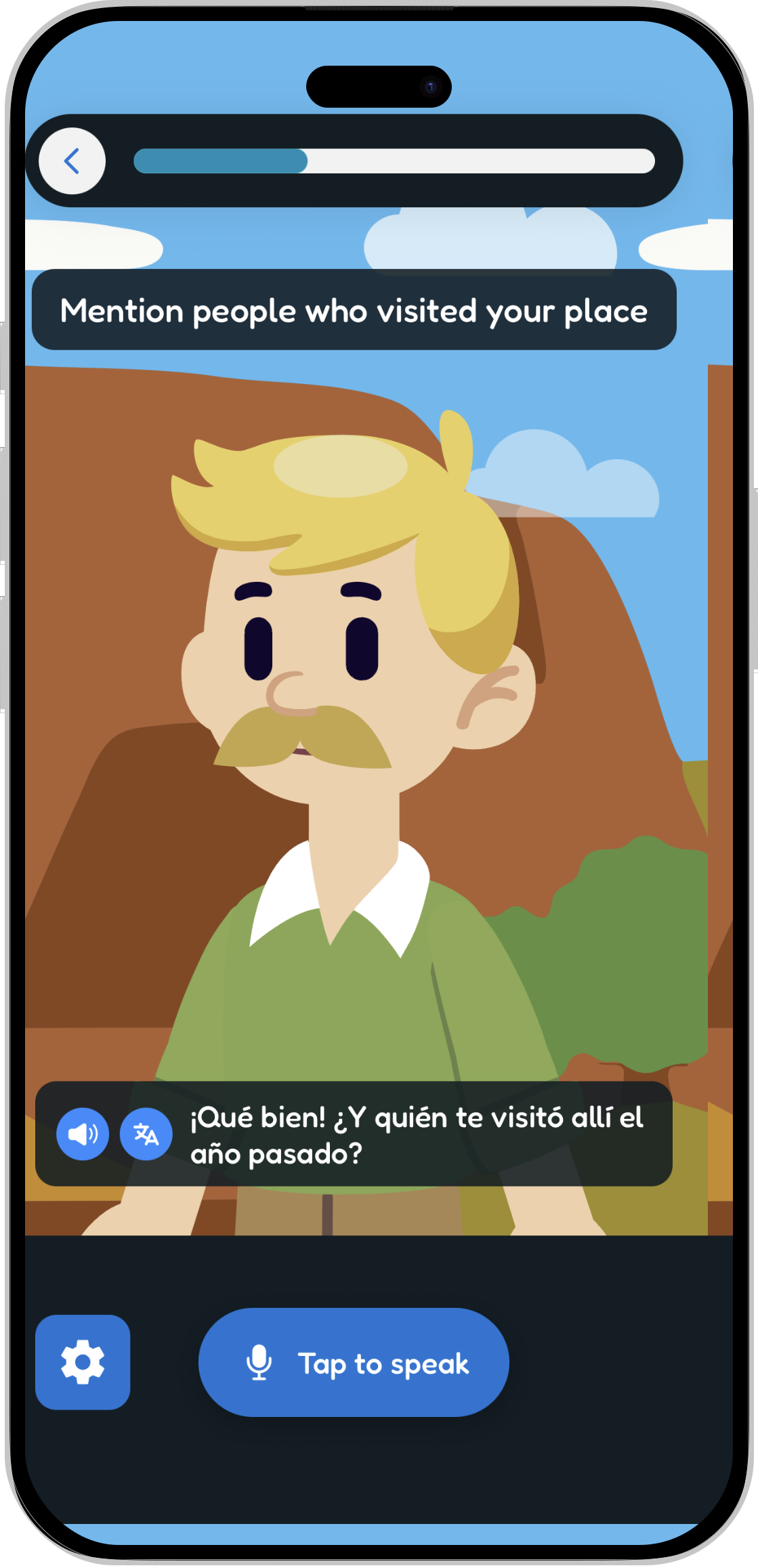
AI Chat Tutor
Practice real conversations with an AI tutor that helps you speak with confidence.
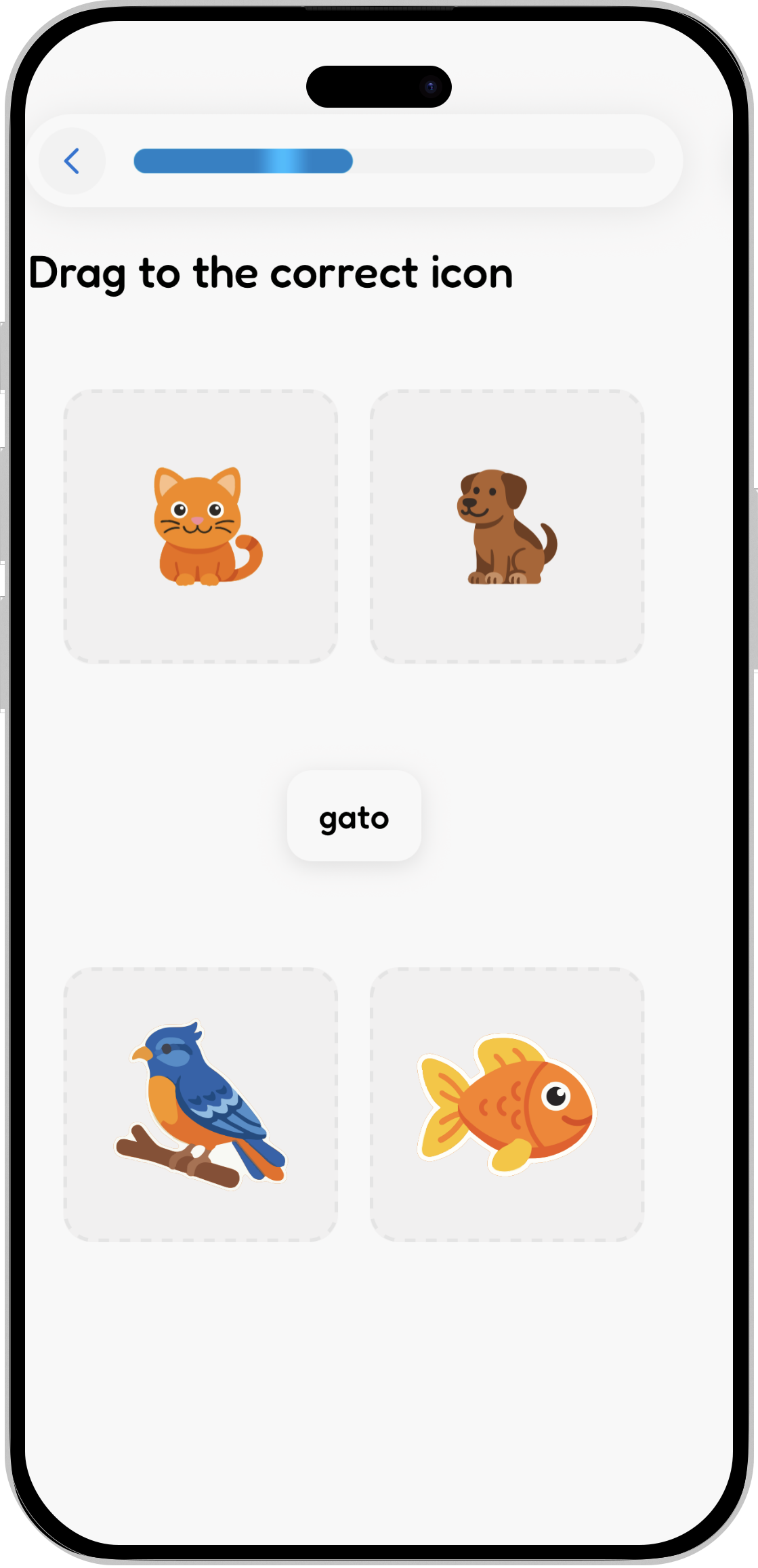
Interactive Games
A variety of games to help you learn and remember new words and phrases.


The Foundation of Spanish Conversation
Welcome to the true starting point of your Spanish journey. Learning to use present tense -ar verbs is like learning the three most important chords on a guitar; they form the basis for countless songs and, in this case, countless real-world conversations.
Spanish verbs are sorted into groups based on their endings, and the -ar group is by far the biggest and most common one you'll encounter.
Imagine you have a socket wrench set. The main part of the verb (like habl- from hablar, "to speak") is the wrench handle. To make it work, you have to attach the right socket—the ending—depending on who is doing the action.
Understanding Subject Pronouns
Before we start snapping on those verb endings, we need to know who we're talking about. In Spanish, we use subject pronouns for this, and each one gets its own special verb ending. It's a matching game.
Here are the players:
- Yo (I)
- Tú (You, informal)
- Él / Ella / Usted (He / She / You, formal)
- Nosotros / Nosotras (We)
- Vosotros / Vosotras (You all, informal - mostly used in Spain)
- Ellos / Ellas / Ustedes (They / You all, formal or used everywhere outside of Spain)
Getting these pronouns paired with the right verb ending is the name of the game. You wouldn't say "I speaks" in English, and the same logic applies here. Nailing these combinations is a core part of building a solid foundation in basic Spanish grammar.
This predictable pattern is your secret weapon. Once you learn the system for just one regular -ar verb, you've pretty much learned the system for hundreds of them. This single skill gives you a massive return on your study time.
The Power of a Single Pattern
This is why we start here. Mastering this one conjugation pattern gives your communication skills an immediate and powerful boost.
You’ll suddenly be able to talk about what you do, what your friends do, and what groups of people do, all by following a simple, repeatable formula. While we're focusing on the formula here, it's worth knowing there are alternative approaches to learning grammar that don't rely on memorizing charts.
Ultimately, knowing how to use present tense -ar verbs is what lets you leap from just memorizing vocabulary lists to actually building sentences and expressing your own thoughts. It's the framework that holds your first Spanish conversations together.
The Simple Two-Step Conjugation Formula
The idea of "conjugating verbs" can sound intimidating, but for regular present tense -ar verbs, it’s actually a simple and incredibly predictable two-step formula.
Once you nail this pattern, you’ll be able to correctly use hundreds of the most common verbs in Spanish. Think of it as a master key that unlocks a massive portion of the language right away.
Let's walk through it using one of the most useful -ar verbs you'll learn: hablar (to speak).
Step 1: Find the Verb Stem
First things first, you need to find the core of the verb, known as the stem. This is the part that holds the verb's meaning, and finding it is super easy.
Just take the verb in its original form (the infinitive, or "to ___" version) and chop off the last two letters: the -ar ending. That's it.
- Hablar (to speak) → Drop the -ar → The stem is habl-
- Cantar (to sing) → Drop the -ar → The stem is cant-
- Estudiar (to study) → Drop the -ar → The stem is estudi-
This stem, like habl-, is your foundation. It won’t change. Now you're ready for the second step, where the real action happens.
Step 2: Add the Correct Ending
With your stem ready to go, all you have to do is stick the right ending onto it. The ending you choose depends entirely on who is doing the action—the subject of the sentence.
Each person (I, you, we, etc.) has its own unique ending. Let’s see how this works with our stem, habl-:
- Yo (I): Add the ending -o.
- habl- + -o = Yo hablo (I speak)
- Tú (You, informal): Add the ending -as.
- habl- + -as = Tú hablas (You speak)
- Él / Ella / Usted (He / She / You, formal): Add the ending -a.
- habl- + -a = Él habla (He speaks)
- Nosotros / Nosotras (We): Add the ending -amos.
- habl- + -amos = Nosotros hablamos (We speak)
- Vosotros / Vosotras (You all, informal): Add the ending -áis.
- habl- + -áis = Vosotros habláis (You all speak)
- Ellos / Ellas / Ustedes (They / You all, formal): Add the ending -an.
- habl- + -an = Ellos hablan (They speak)
And that’s the entire magic formula: Find the stem, add the ending.
This same pattern works for nearly every regular -ar verb you’ll come across, from trabajar (to work) to comprar (to buy). It’s this reliable system that makes learning the present tense so manageable for beginners.
Once this pattern clicks, it becomes second nature. Getting this down pat gives you a solid foundation to then tackle other verb groups, like the ones in our guide to ER verbs in Spanish. This is a huge step toward building real conversational fluency.
Putting Your -ar Verbs to Work in Real Life
Alright, you've got the two-step formula down. That’s the theory. But knowing the rules is one thing; actually using them to talk about your day is where Spanish really starts to feel real. The trick is to zero in on the high-frequency verbs—the ones you’ll hear and use all the time.
Think about your daily routine for a second. You work, study, listen to music, and talk with friends. All these common actions are powered by present-tense -ar verbs. By mastering just a small handful of these essential verbs, you unlock the ability to describe a huge chunk of your everyday life. It’s a massive shortcut.
Your Everyday -ar Verb Toolkit
Let's build your practical toolkit right now. These verbs are about to become your new best friends for making sentences about your job, your hobbies, and what you’re doing this weekend. You'll notice they all follow the exact same conjugation pattern we just covered.
Here are ten of the most common regular -ar verbs to get you started:
- Trabajar (to work)
- Estudiar (to study)
- Hablar (to speak, to talk)
- Comprar (to buy)
- Escuchar (to listen)
- Mirar (to watch)
- Necesitar (to need)
- Ayudar (to help)
- Cocinar (to cook)
- Viajar (to travel)
This list is incredibly powerful. Learning to conjugate just these ten verbs lets you express hundreds of different ideas. Seriously.
Seeing Verbs in Action: Example Sentences
The best way to make these patterns stick is to see them in the wild. The examples below show you how to use these verbs to talk about totally normal, real-life situations, from your job to your weekend plans.
Using Trabajar (to work):
- Yo trabajo en una oficina. (I work in an office.)
- ¿Tú trabajas los sábados? (Do you work on Saturdays?)
- Mi hermana trabaja como doctora. (My sister works as a doctor.)
Using Estudiar (to study):
- Nosotros estudiamos español juntos. (We study Spanish together.)
- Ellos estudian para el examen. (They are studying for the exam.)
This focus on the present tense is completely intentional. In English, the simple present tense makes up a massive 57.51% of all verb usage, and that number climbs even higher in casual conversation. Prioritizing these same conjugations in Spanish gives you the most efficient path to actually communicating. If you're a language nerd, you can dive into the full findings on English verb tense frequency.
Key Takeaway: You don’t need to know every single -ar verb to start speaking Spanish. Focus on a core group of 20-30 of the most useful ones, and you will be absolutely amazed at how much you can say.
Expanding Your Conversational Reach
Let's keep the momentum going with a few more examples that show just how versatile these verbs are.
Using Comprar (to buy) and Necesitar (to need):
- Yo necesito comprar leche en el supermercado. (I need to buy milk at the supermarket.)
- ¿Qué compras tú? (What are you buying?)
Using Escuchar (to listen) and Mirar (to watch):
- Él escucha música cuando trabaja. (He listens to music when he works.)
- Nosotros miramos una película esta noche. (We are watching a movie tonight.)
Every single sentence you form reinforces these patterns, moving them from your shaky short-term memory into your long-term skill set. This is how you build fluency. For more tips on building these conversational muscles, check out our guide on the best way to learn conversational Spanish.
Soon enough, you’ll be firing off these sentences without even thinking about the rules. It just becomes automatic.
Of course. Here is the rewritten section, following all your requirements for a natural, human-written style.
How to Handle Common Irregular AR Verbs
Just when you get the hang of that simple two-step conjugation rule, Spanish throws you a few curveballs. It’s true that most present tense -ar verbs are completely regular, but a handful of the most common ones like to break the rules.
Don't let that scare you. Their irregularities follow clear, predictable patterns of their own.
Think of these verbs as having a slight personality quirk. They act normal most of the time, but in certain situations, their spelling changes just a little bit. Getting these exceptions down is a huge step forward because they include verbs you'll use in almost every conversation.
Understanding Stem-Changing Verbs
The most common type of irregular -ar verb is what we call a stem-changer. Remember how the stem (like habl- in hablar) usually stays the same? Well, for these verbs, a vowel in the stem morphs into something else for most subjects.
This change happens for every subject pronoun except for nosotros (we) and vosotros (you all, used in Spain). This creates a distinct pattern that learners have affectionately nicknamed "boot verbs." If you draw a line around the conjugated forms that change on a chart, the shape looks just like a boot, leaving nosotros and vosotros outside.
The Boot Verb Rule: The vowel in the stem changes for yo, tú, él/ella/usted, and ellos/ellas/ustedes. It stays completely normal for nosotros and vosotros. This little visual trick makes the whole concept so much easier to remember.
Common Stem-Changing Patterns
For -ar verbs, you'll really only run into two main stem-changing patterns. Let's break them down.
1. The E to IE Change
In this pattern, the letter 'e' in the verb's stem flips to 'ie'. The perfect example is pensar (to think). The stem is pens-, but that 'e' will become 'ie' for all the forms inside the boot.
- Yo pienso (I think)
- Tú piensas (You think)
- Él piensa (He thinks)
- Nosotros pensamos (We think) - See? Stays regular!
- Vosotros pensáis (You all think) - Regular here, too.
- Ellos piensan (They think)
Other super common e → ie verbs include cerrar (to close), comenzar (to begin), and despertar (to wake up).
2. The U to UE Change
The other pattern to watch for is when the 'u' in the stem changes to 'ue'. The most famous example here is jugar (to play)—in fact, it's the only common -ar verb that follows this pattern, making it easy to spot.
- Yo juego (I play)
- Tú juegas (You play)
- Él juega (He plays)
- Nosotros jugamos (We play) - Back to the regular pattern!
- Vosotros jugáis (You all play) - And again!
- Ellos juegan (They play)
To make this pattern even clearer, here's a side-by-side look at how a regular verb compares to these two types of stem-changers.
Comparing Regular vs Stem-Changing AR Verbs
| Pronoun | Regular Pattern (Hablar) | Stem-Changing Pattern (Pensar) | Stem-Changing Pattern (Jugar) |
|---|---|---|---|
| Yo | hablo | pienso | juego |
| Tú | hablas | piensas | juegas |
| Él/Ella/Usted | habla | piensa | juega |
| Nosotros/as | hablamos | pensamos | jugamos |
| Vosotros/as | habláis | pensáis | jugáis |
| Ellos/Ellas/Ustedes | hablan | piensan | juegan |
Notice how the endings stay exactly the same across the board. The only thing that ever changes is that little vowel inside the stem for the "boot" forms.
The Special Case of Estar
Finally, there's one more major irregular -ar verb you absolutely have to know: estar (to be). This one is a bit of a lone wolf. It’s only irregular in the yo form, where it picks up a unique ending you just have to memorize.
For yo, you say estoy. For every other subject, it actually follows the regular -ar verb pattern perfectly, just adding accent marks to guide the pronunciation.
- Yo estoy (I am) - This is the only irregular part!
- Tú estás (You are)
- Él está (He is)
Learning these few irregulars will make a massive difference in how natural your Spanish sounds. While the regular verbs are the backbone, these quirky ones are the essential details that bring your sentences to life.
This diagram really shows how central these kinds of verbs are to just talking about your day.

It highlights how verbs like trabajar, estudiar, and comprar are the building blocks for expressing everyday routines and actions in Spanish.
Common Mistakes to Avoid
Every single person learning a new language makes mistakes. It’s not just normal—it’s how you get better. When it comes to present tense -ar verbs, a few classic slip-ups trip up most beginners. The good news is they're predictable.
Spotting these pitfalls early helps you build the right habits from the get-go. Think of it like learning a new dance. You’re going to step on some toes at first, but once the instructor points out the tricky steps, you learn to anticipate them and start moving smoothly.
Forgetting to Drop the -ar
This is, without a doubt, the most common beginner mistake. In the excitement of adding the new ending, it's easy to forget the first crucial step: chopping off the original -ar. You end up with a clunky verb that doesn't quite work.
- Wrong: Yo hablaro español. (I speako Spanish.)
- Right: Yo hablo español. (I speak Spanish.)
Drill this into your head: it's a two-step process. First drop, then add. Every single time.
Mixing Up Verb Endings
Another classic fumble is confusing the endings for different subjects, especially tú (-as) and él/ella/usted (-a). They sound almost identical, but that tiny little 's' completely changes who you're talking about.
- Wrong: Tú habla con el profesor. (You speaks with the teacher.)
- Right: Tú hablas con el profesor. (You speak with the teacher.)
Pro Tip: Spend a few minutes just drilling these two endings. Say them out loud, back-to-back: "hablas, habla, hablas, habla." It feels a bit silly, but that muscle memory will lock in the difference and save you a lot of future headaches.
Overlooking Pronoun Omission
In English, we need the subject. We say "I work" or "She studies." But in Spanish, the verb ending itself does most of the heavy lifting, making the pronoun unnecessary a lot of the time.
Native speakers constantly drop pronouns because the verb already tells you who's doing the action. While saying "Yo trabajo" is perfectly correct, just saying "Trabajo" is often more natural and fluid.
- Grammatically Correct but Less Natural: Yo trabajo en la ciudad.
- More Common and Natural: Trabajo en la ciudad.
Learning when to let go of the pronoun is a huge step toward sounding more authentic. And focusing on this in the present tense is a smart move. Research shows that the present tense is used far more frequently than other tenses, and learners tend to get the hang of it much faster. You can dig into the research on verb tense acquisition and frequency if you're curious.
Your Questions About AR Verbs Answered
As you start getting the hang of present tense -ar verbs, you'll naturally run into a few questions. This is totally normal. Think of this section as a quick FAQ to clear up those nagging doubts and help everything click into place. Answering these common questions now will make you a much more confident Spanish speaker down the road.
We’ll tackle the things learners ask most often, starting with the big picture and then zeroing in on the details you'll actually use in conversation.
How Many AR Verbs Are There, Really?
One of the first things people wonder is, "Is this verb group actually that important?" The answer is a resounding yes. Spanish has three types of verbs (-ar, -er, and -ir), and the -ar group is, by a huge margin, the largest and most common.
There isn't an official count, but it's estimated that well over half of all Spanish verbs end in -ar. This is fantastic news for you. It means that by mastering this one single pattern, you've unlocked the biggest piece of the Spanish vocabulary puzzle right from the start.
Why Do Some AR Verbs Change Their Stem?
So you've learned the regular pattern, and then a verb like pensar (to think) comes along and becomes pienso. What gives? These are called stem-changing verbs, and they change for a simple reason that has to do with how Spanish pronunciation has evolved over time.
Think of it less as a random exception and more as a predictable spelling adjustment. The vowel in the middle of the word shifts to make it sound smoother and more natural when the new ending is added. The great thing is, these changes also follow patterns, like the famous "boot verb" rule, so you're not just memorizing a list of quirks.
The most important thing to remember is this: the verb endings themselves (-o, -as, -a, -amos, -an) almost always stay the same, even when the stem gets a little weird. Keep your focus on nailing those endings, and the stem changes will start to feel natural with a bit of practice.
Can I Always Drop the Subject Pronoun?
You’ll hear "Hablo español" (I speak Spanish) far more often than "Yo hablo español." In Spanish, you can—and usually should—drop the pronoun because the verb ending already tells you who is doing the action. That -o ending on hablo is a dead giveaway that it means "I."
But there are a couple of key times when you'll want to keep it:
- For Emphasis: If you want to stress that you, specifically, are the one doing something. "Ella habla inglés, pero yo hablo español." (She speaks English, but I speak Spanish.)
- For Clarity: Sometimes the context can be a little muddy, especially with the
-aending which could mean he, she, or you (formal). Tossing in él, ella, or usted clears up any confusion.
If you ever get stuck on a specific grammar point or conjugation puzzle, getting a quick answer from an AI Spanish Teacher chatbot can provide that instant clarification you need to keep moving forward.
Ready to stop staring at charts and start actually mastering conjugations? PolyChat offers the best conjugation tools on the market, packed with unlimited games and interactive lessons to build your skills fast. Download the app and see just how quickly you can level up your Spanish. https://www.polychatapp.com

Jean-Baptiste Bolh
Co-Founder
Applied AI