Empezar Conjugation: Empiezo, Empecé, Empiece and Every Tense (Chart)
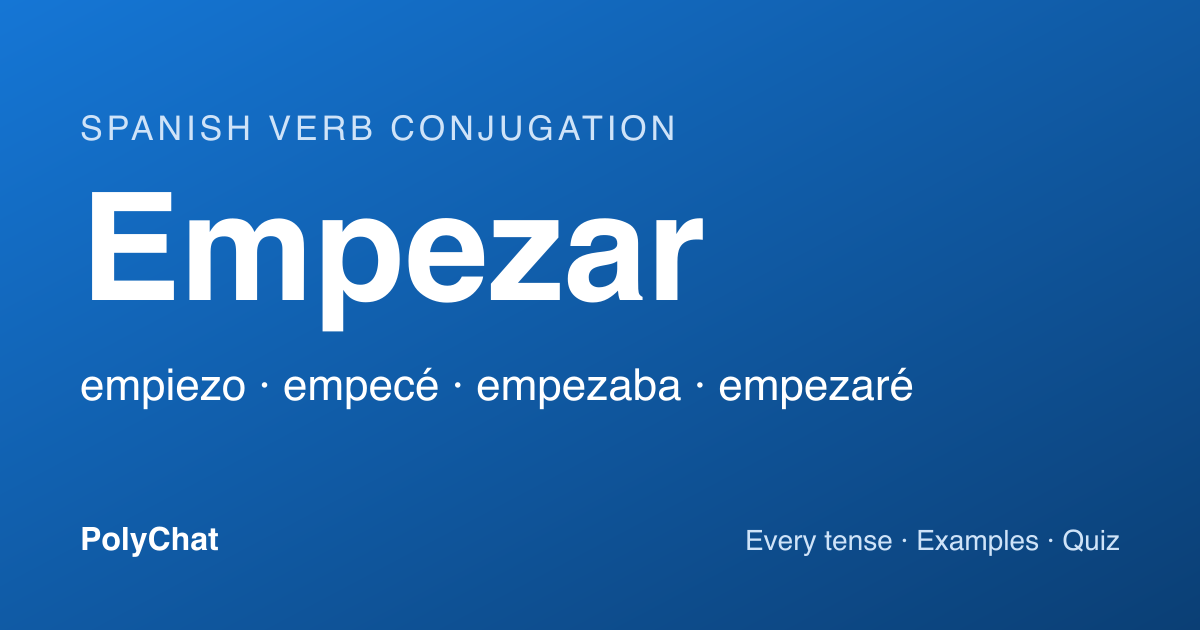
Empezar means "to begin" or "to start." It has two changes: an e→ie stem change in the present (empiezo, empiezas, empieza, empezamos, empezáis, empiezan), and a z→c spelling change before e, which gives the preterite empecé and the subjunctive empiece.
Ready to Learn a Language?
Try PolyChat's engaging language lessons, interactive learning games and put your new vocabulary to the test!
Games & Tools
Tools that every language learner needs at all stages of their learning journey.
AI Chat Tutor
Practice real conversations with an AI tutor that helps you speak with confidence.
Interactive Games
A variety of games to help you learn and remember new words and phrases.


Empezar Conjugation Chart
Indicative: present, preterite and imperfect
| Pronoun | Present | Preterite | Imperfect |
|---|---|---|---|
| yo | empiezo | empecé | empezaba |
| tú | empiezas | empezaste | empezabas |
| él / ella / usted | empieza | empezó | empezaba |
| nosotros / nosotras | empezamos | empezamos | empezábamos |
| vosotros / vosotras | empezáis | empezasteis | empezabais |
| ellos / ellas / ustedes | empiezan | empezaron | empezaban |
Future, conditional and present perfect
| Pronoun | Future | Conditional | Present perfect |
|---|---|---|---|
| yo | empezaré | empezaría | he empezado |
| tú | empezarás | empezarías | has empezado |
| él / ella / usted | empezará | empezaría | ha empezado |
| nosotros / nosotras | empezaremos | empezaríamos | hemos empezado |
| vosotros / vosotras | empezaréis | empezaríais | habéis empezado |
| ellos / ellas / ustedes | empezarán | empezarían | han empezado |
Subjunctive
| Pronoun | Present subjunctive | Imperfect subjunctive |
|---|---|---|
| yo | empiece | empezara |
| tú | empieces | empezaras |
| él / ella / usted | empiece | empezara |
| nosotros / nosotras | empecemos | empezáramos |
| vosotros / vosotras | empecéis | empezarais |
| ellos / ellas / ustedes | empiecen | empezaran |
Commands (imperative)
| Person | Affirmative | Negative |
|---|---|---|
| tú | ¡empieza! | ¡no empieces! |
| usted | ¡empiece! | ¡no empiece! |
| nosotros | ¡empecemos! | ¡no empecemos! |
| vosotros | ¡empezad! | ¡no empecéis! |
| ustedes | ¡empiecen! | ¡no empiecen! |
Gerund: empezando (estoy empezando) · Past participle: empezado (he empezado)
What Makes Empezar Irregular
Empezar is an -ar verb with regular endings, but two changes can happen to its stem:
- e→ie when the stem is stressed: empiezo, empiezas, empieza, empiezan, but empezamos, empezáis. The same split applies in the subjunctive.
- z→c before e: Spanish rarely writes ze, so the preterite yo form is empecé, and the subjunctive is empiece, empieces, empecemos, empecéis, empiecen.
Everything else is regular: empezaba, empezaré, empezando, empezado. Comenzar (to commence) follows exactly the same pattern: comienzo, comencé, comience.
How to Use Empezar
To say you start doing something, use empezar a + infinitive: Empecé a estudiar francés (I started studying French). The "a" is required.
Empezar por means "to start with" or "to begin by": Empecemos por el principio (Let's start at the beginning). Empezar con is used for what something starts with: La película empieza con una boda.
Empezar and comenzar are interchangeable; comenzar is a bit more formal.
Common Expressions With Empezar
| Expression | Meaning | Example |
|---|---|---|
| para empezar | to start with | Para empezar, no tenemos dinero. |
| empezar de cero | to start from scratch | Tuvimos que empezar de cero. |
| volver a empezar | to start over | Si te equivocas, vuelve a empezar. |
| empezar con buen pie | to get off to a good start | Empezamos el año con buen pie. |
| empezar la casa por el tejado | to put the cart before the horse | Eso es empezar la casa por el tejado. |
Empezar in Example Sentences
- La clase empieza a las nueve. (The class starts at nine.)
- Empecé a trabajar aquí en 2020. (I started working here in 2020.)
- Cuando empezaba a llover, nos fuimos. (When it was starting to rain, we left.)
- Empezaremos el proyecto la semana que viene. (We'll start the project next week.)
- No empieces sin mí. (Don't start without me.)
- Está empezando a hacer frío. (It's starting to get cold.)
Common Mistakes With Empezar
- "Empezé" instead of empecé. The z becomes c before e.
- "Empiezamos" instead of empezamos. Nosotros keeps the e.
- Dropping the "a." "Empecé estudiar" is wrong; say empecé a estudiar.
- "Empieze" instead of empiece. The subjunctive also changes z to c.
Frequently Asked Questions
Is empezar a stem-changing verb?
Yes. Empezar changes e to ie in the present indicative and subjunctive, except for nosotros and vosotros (empiezo, empezamos).
What is the preterite of empezar?
Empecé, empezaste, empezó, empezamos, empezasteis, empezaron. Only the yo form has the z→c change.
What is the subjunctive of empezar?
Empiece, empieces, empiece, empecemos, empecéis, empiecen.
What's the difference between empezar and comenzar?
They mean the same thing and conjugate the same way. Comenzar sounds slightly more formal.
Keep Practicing
The quiz below mixes pronouns and tenses from the chart above. For more practice, these guides pair well with empezar:

Jean-Baptiste Bolh
Co-Founder
Applied AI